Feathered Forecasters: Is There an Avian Answer to Natural Disasters?

Natural disasters are a fairly regular thing nowadays, happening all over the globe, from landslides to flooding to hurricanes. These events often claim many lives, and they’re only going to become commonplace now the world is in the grip of climate change. Weather forecasting can sometimes be unreliable as to when these disasters will happen, and prior notice can save hundreds of lives.

Our ancient ancestors used birds to predict weather fronts, and this has carried down through the ages. But is this just an old wives’ tale, nothing more than a myth belonging to the pages of folklore? As the world warms, we need to prepare for what could be the worst, if we don’t reverse it first. So, is there an avian answer?

Well, one such study thinks there is. In 2014, a crack team from the University of California set out to find out whether birds really could notice devastating weather patterns before us and our satellites did. And what they found was truly astonishing. Like all the best discoveries, they found the breakthrough they needed quite by accident. They realised that a group of Golden Winged Warblers fled their breeding grounds with no warning in the Cumberland Mountains, Tennessee. It turns out that they fled 24 hours in advance of several terrifyingly powerful supercell storms that would go on to spawn 84 tornadoes and kill 35 people.
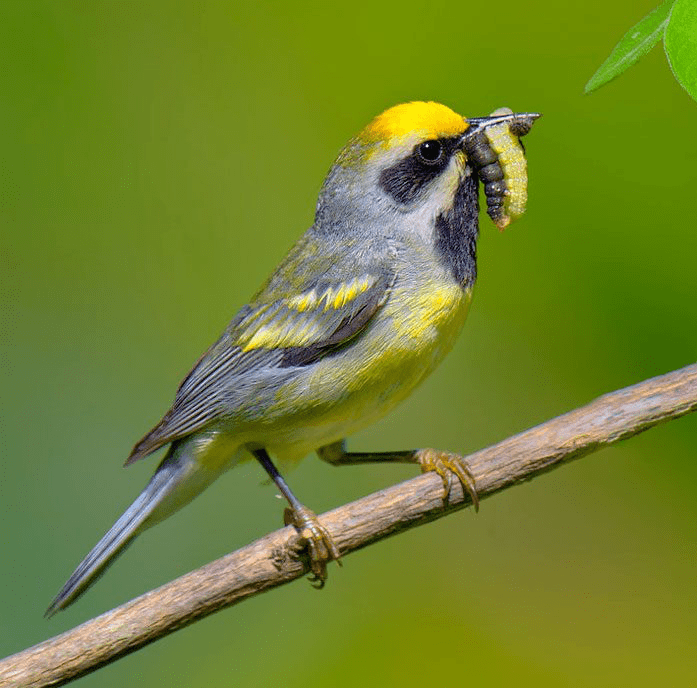
A Golden Winged Warbler (https://www.birds.cornell.edu/home/golden-winged-warbler-conservation-strategy-and-resources/)

At the time, the researchers were studying the minute birds to see if they could fly with GPS devices attached to their backs. They’d only just returned from their South American wintering grounds when they abandoned ship 24 hours before the storms arrived. What came as a surprise was that each bird acted independently of one another, with one ending up all the way down in Cuba! Many seeked refuge on Florida’s Gulf Coast, but one thing connected each little songbird. They all knew which way to fly to avoid the storm.

They all either moved south-east ahead of the storm, or swerved around to come up behind it. And all this was in spite of the 2500km migration they’d only just completed! The warblers evacuated their breeding grounds when the tornadoes were still around 900km away, and at this time weather conditions in the mountains were completely normal. Atmospheric pressure, wind speed and temperature were all at the usual numbers. So how did they know?
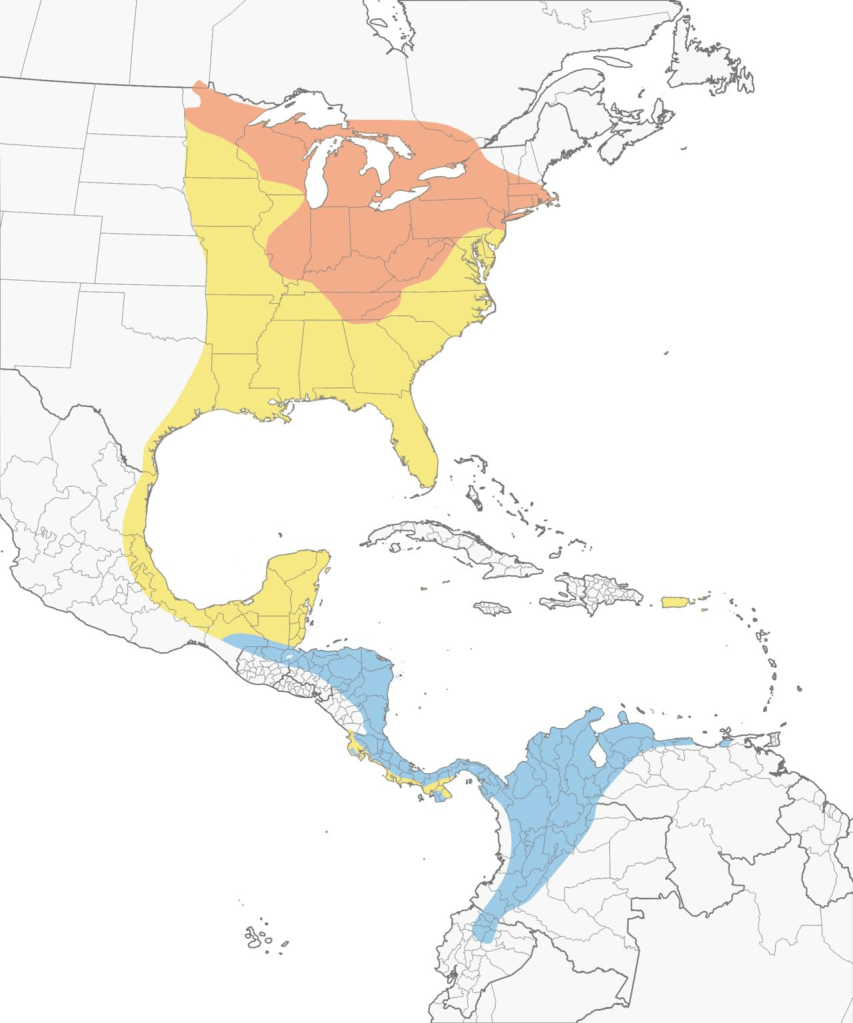
Blue: wintering grounds Red: breeding grounds (https://www.allaboutbirds.org/guide/Golden-winged_Warbler/maps-range)

After the storm had blown over, the Golden Winged Warblers returned to their breeding grounds in the Cumberland Mountains and resumed breeding business as usual. Here the researchers recaptured the ones with geolocators, and found that the little birds had flown at least 1500km in total! And this evidence isn’t alone. There are several instances of birds completing sudden, unplanned migrations to avoid extreme weather conditions.

About a decade earlier before our plucky team of California researchers, a Marbled Godwit who had been fitted with a state of the art satellite tracker undertook its normal migration from Alberta to Baja California, its wintering grounds, where it remained for a well-earned rest for several weeks. Nothing surprising there. But then, just before the arrival of the infamous Hurricane John, the bird took to the wing and flew all the way back east to Texas! A report was published in the ornithological journal, North American Birds (read that here) which included the statement ‘as almost nothing is known about individual bird’s responses to approaching tropical cyclones, this bit of information is most intriguing’, which I think sums it up perfectly.
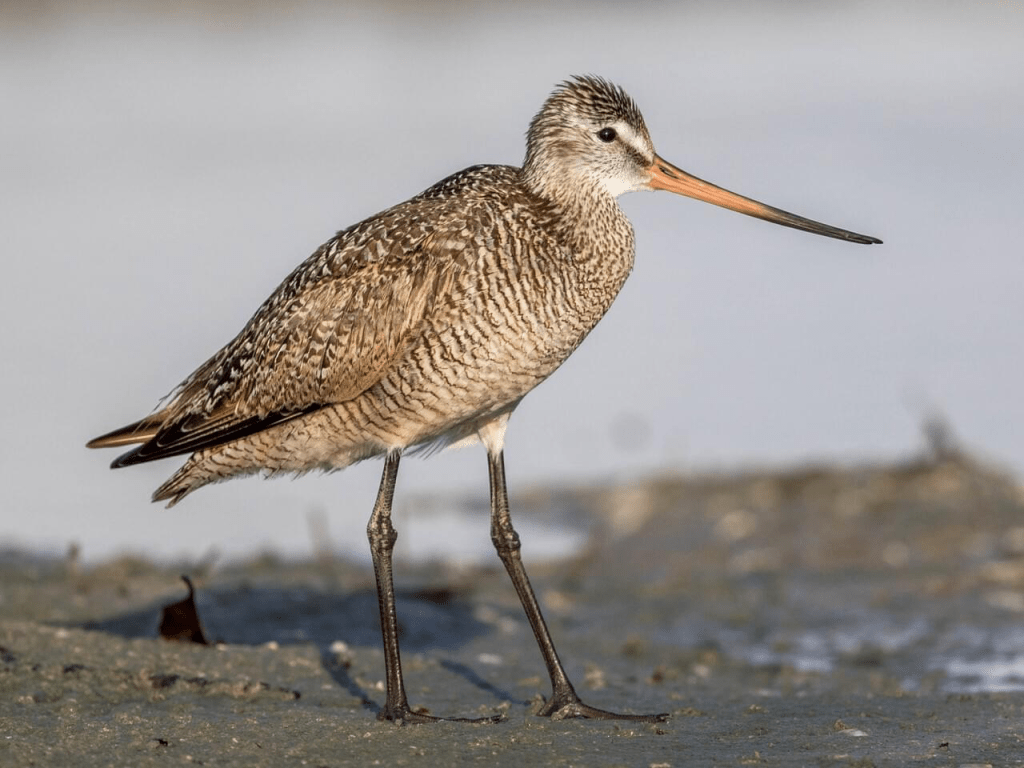
Marbled Godwit (https://www.allaboutbirds.org/guide/Marbled_Godwit/photo-gallery/64811431)

But a more recent study is truly groundbreaking. What if birds could predict hurricanes not a day or two, but months in advance? Enter Dr Christopher Heckscher, from Delaware State University. Alongside one ruddy-coloured little thrush, he accurately predicted the entire 2018 hurricane season before most meteorologists did! But how exactly was this possible?

Dr Heckscher had been studying the Veery for 20 years, and had been amassing data as to how the bird’s nesting habits correspond to the severity of hurricane seasons. Veeries, a small North American thrush, nest in the forests of the northern United States and southern Canada, and overwinter in the Amazon. Their migration route is somewhat perilous, taking them through prime storm zones in the Atlantic Ocean and the Gulf of Mexico.
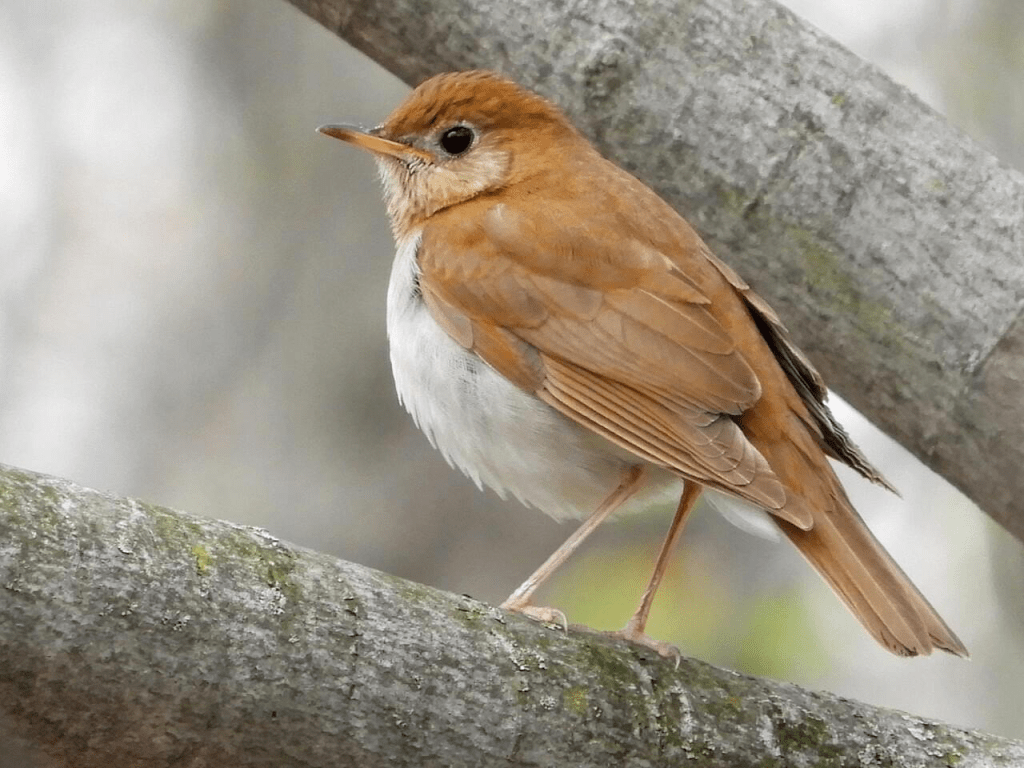
Veery (https://www.allaboutbirds.org/guide/Veery/photo-gallery/303693841)

But here’s the catch. Veeries usually produce just one succesful brood a year, with most early nests failing due to predation or bad weather conditions. They’re hardy, and will keep trying until they hatch chicks or too much time passes, in which case they’ll moult their feathers and leave their breeding grounds. Dr Heckscher found that in the years that had played host to a more severe hurricane calendar, the Veeries somehow knew to finish breeding and moult earlier, in order to avoid the storms on their migration south!

He may have only studied a few pairs, but he collected data over a period of many years, and you have to admit the evidence is quite compelling. Every correlation is statistically strong. Dr Heckscher doesn’t know how the Veeries could predict the hurricanes months in advance as of yet, but he has got a few theories. He thinks that the thrushes may be attuned to the precipitation patterns are linked to the El Niño and La Niña cycles that have huge impacts on hurricanes and their movements.
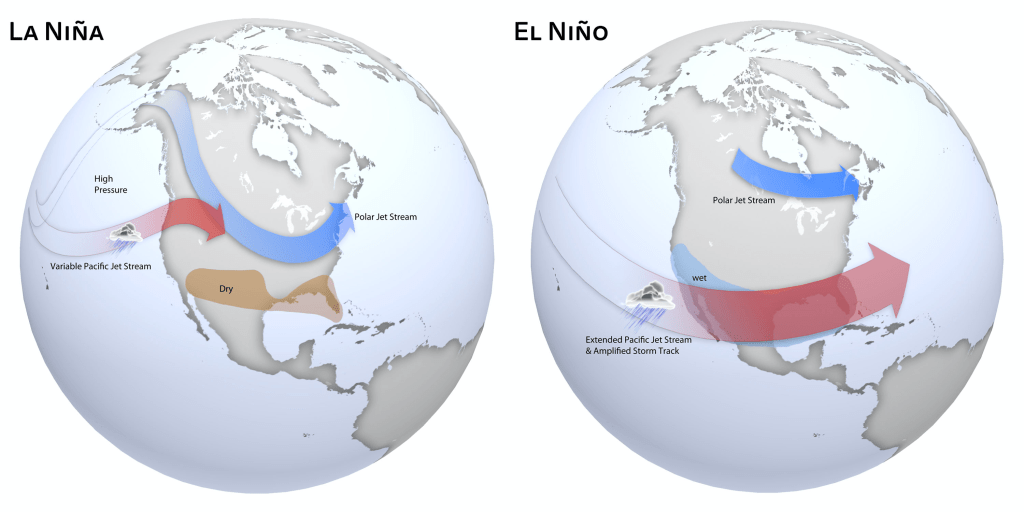
El Niño and La Niña (https://www.neefusa.org/story/climate-change/el-nino-and-la-nina-whats-difference)

And about Dr Heckscher’s phenomenal prediction, he predicted a hurricane season that would be a little stronger than usual, with an accumulated clone energy (ACE) of between 70 and 150, while meteorologists forecasted a season where the hurricanes were taking it a bit easier, with an between 60 and 130. Dr Christopher’s forecast ended up almost bang on, with the ACE that year being a round 129! Incredible!

So, based on the findings of some clever researchers, it seems that there is an avian answer to our struggles with storms. Imagine if we could observe birds like the Veery more, and in turn be able to predict hurricanes and tsunamis months in advance. There would be so much more time to put precautions in place or evacuate. Who’d have thought it? Birds could actually make the world a safer place!

Sources:

birdspot.co.uk/bird-brain/can-birds-predict-storms

hakaimagazine.com/news/can-birds-help-us-avoid-natural-disasters/

aba.org/american-birding-podcast-veery-meteorology-with-christopher-heckscher

sora.unm.edu/sites/default/files/journals/nab/v061n01/p00150-p00154.pdf
Plumage Parade: Britain’s Most Colourful Birds

When you see the brilliant splendour of hummingbirds and birds-of-paradise in the Americas, and Sunbirds and Rollers in Africa, you might begin to feel a little jealous. After all, here in Britain, we don’t have birds like that. It’s all plain old browns and blacks, with an occasional flash of blue or orange. Well, what if I told you that this was in no way true? You don’t have to travel hundreds of miles to see vibrant colour in the avian world. Its right here! So relax, and regale yourself in Britain’s most colourful birds.
Mandarin Duck (Aix galericulata)

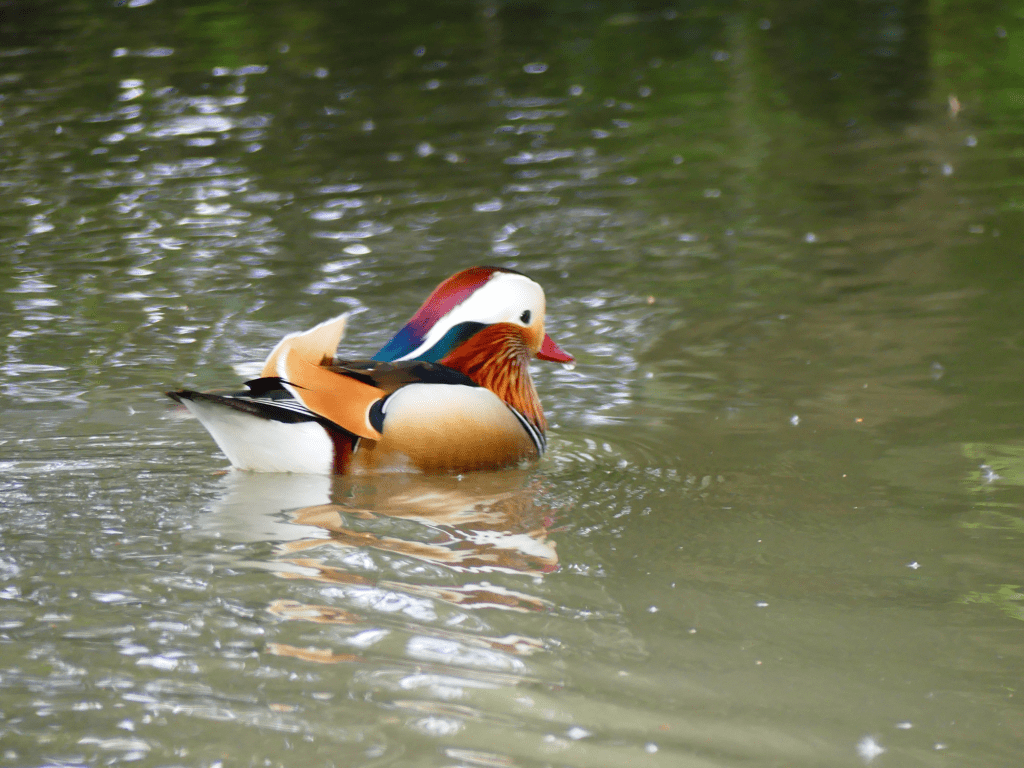
The Mandarin Duck is a classic example of beauty brought to us, for exactly that reason. The Mandarin Duck is typically an Asian waterfowl, but in the early 20th century, many escaped from private collections and began their own self sufficient population. The males are genuinely all the colours of the rainbow, from the red bill to the crown that fades from blue to green. The male Mandarins could easily be something out of a fantasy, summoned to real life. The females are generally less obvious, but still stand out among our resident ducks. Grey and brown, with a white eyestripe, they may be drab, but are unique among our native wildfowl. Look out for these ducks in urban parks and lakes, and remember to look up as well as down. They nest in trees!

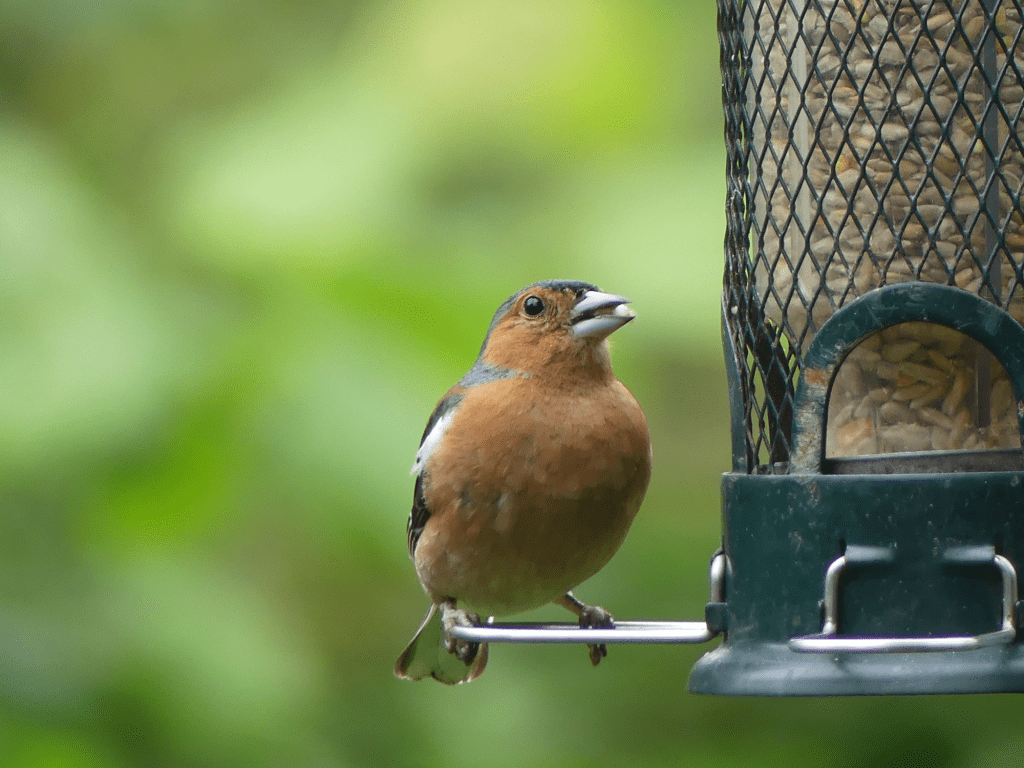
Eurasian Chaffinch (Fringilla coelebs)

A common garden bird across the UK, the Chaffinch is similar to the Mandarin Duck, in that the male is more colourful than the female. Bright, brilliant orange almost all over betrays its presence, and there’s usually more than one when a bird feeder is involved. At this time of year, they will often join up with other finch species to rove forests and farmland in search of a source of food. Safety in numbers is another factor in this tendency, as predators will also have less to eat at this time of year. They really are beautiful, but in recent years populations have taken a hit, as with other finch species, thanks to the disease Trichomonosis.

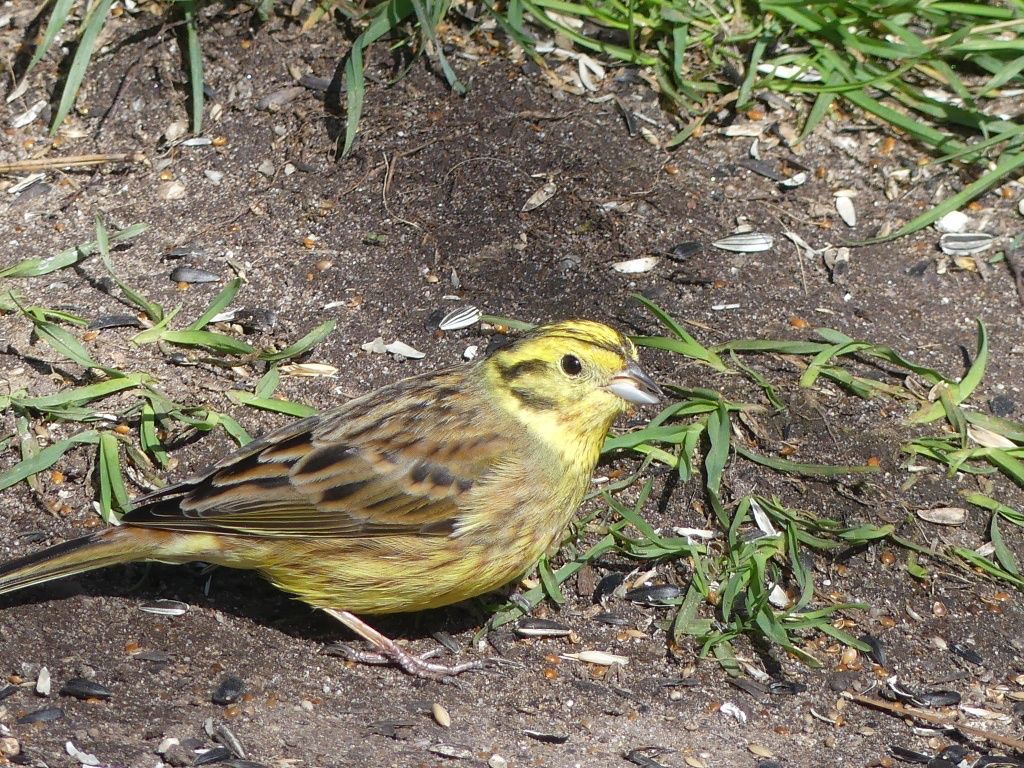
Yellowhammer (Emberiza citrinella)

Famous for its call which is often likened to ‘a little bit of bread but no cheese’, the Yellowhammer is a striking lemon yellow bunting, usually to be found on agricultural land. However, they have been in decline over the last few decades, largely due to the intensification of farming. Their Latin name, ‘citrinella’, does really portray its wonderful colour, and they are a sight to behold. Like the Chaffinch, during the colder months, it will join up with mixed flocks with other buntings, sparrows and finches to rove the farmland looking for seeds in the stubble of crop fields which have been harvested.

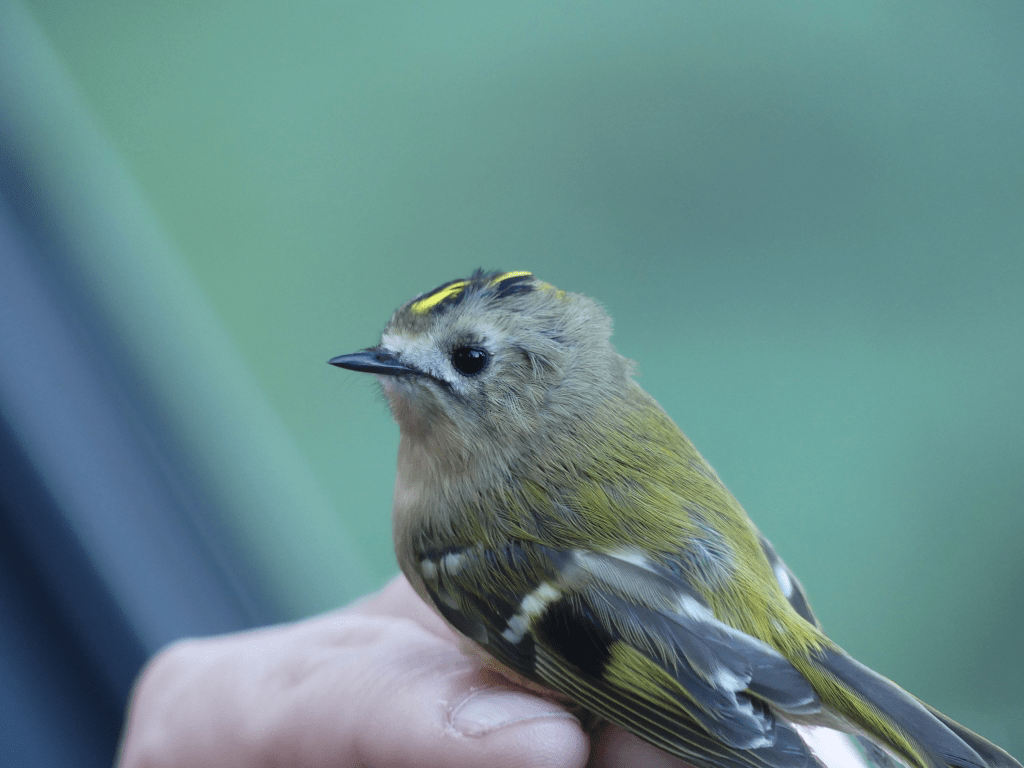
Goldcrest (Regulus regulus)

Possibly a controversial entry to this list, the Goldcrest could be considered more cryptic than colourful. But its oil pastel blend of khaki green and flashy grey, coupled with a dapper stripe of sunlight yellow makes this midget of the bird world a sight to behold, if you can find it. It’s more often heard than seen, its tell-tale ‘seee’ sound a calling card if you every hear it. It really is tiny too, Britain’s smallest bird in fact, weighing in at 5.5g, about the weight of a 20p coin. Imagine holding one to ring it! It must feel like holding a single feather, not a whole bird’s worth!

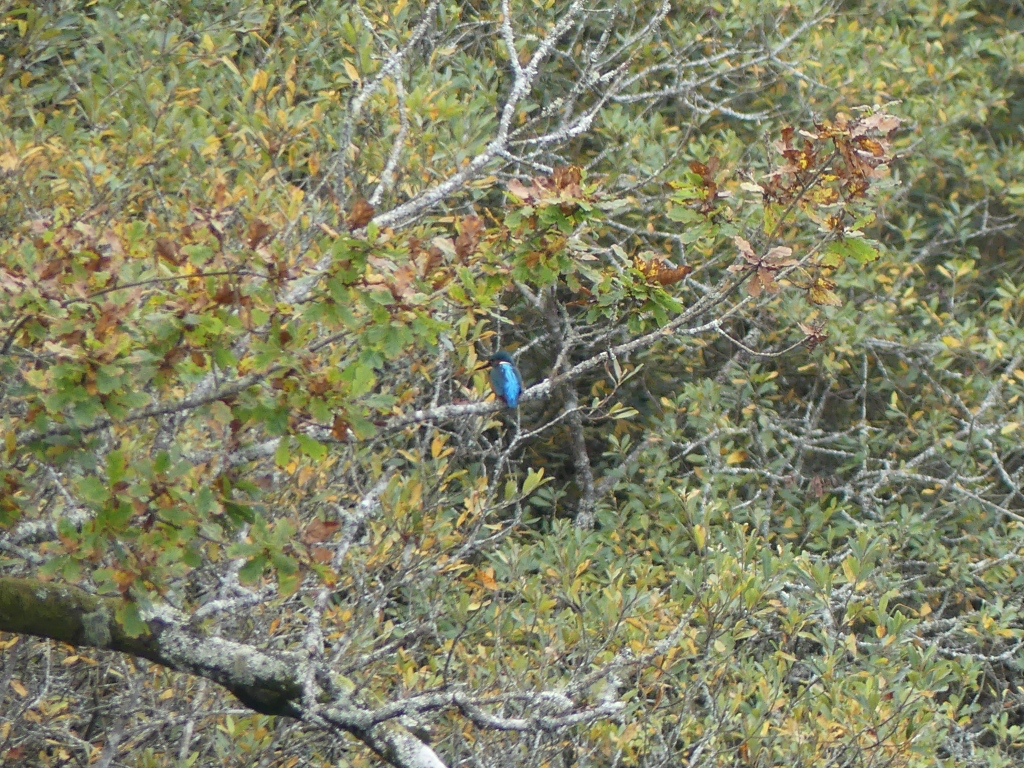
Common Kingfisher (Alcedo atthis)

Possibly the most striking bird on this list, and a fan favourite too, the little blue fisherman is next up on the list. Often known as ‘Blue Lightning’ for its rapid flight across the water, its an elusive bird, and notoriously hard to photograph. Its eye-catching turquoise-blue and orange plumage make this bird a real stunner. If you’re lucky, you might see them plunging into fast flowing water, and emerging with an unfortunate minnow or stickleback clasped in its dagger like beak.

Common Redstart (Phoenicurus phoenicurus)

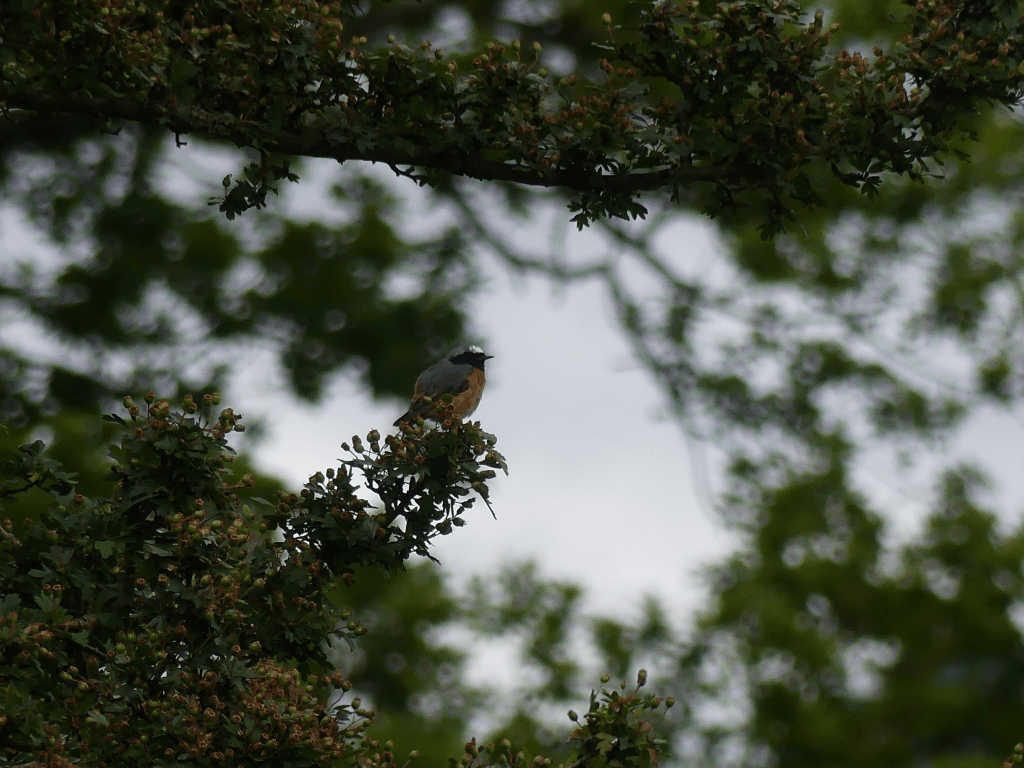
The Redstart is thought by many to be Britain’s answer to the Rainbow Lorikeet, AKA our ‘prettiest’ bird. You can see where they’re coming from, as the Redstart is another looker, maybe even on a level with the Kingfisher. The Redstart is yet another case of the male being more colourful than the female, with the ladies being a smooth caramel tan. The males have a glorious orange breast, not dissimilar to a Robin’s, but they are definitely more of a woodland bird, with their song a sure sign of Spring in Britain’s precious temperate rainforest habitat.

Eurasian Bullfinch (Pyrrhula pyrrhula)

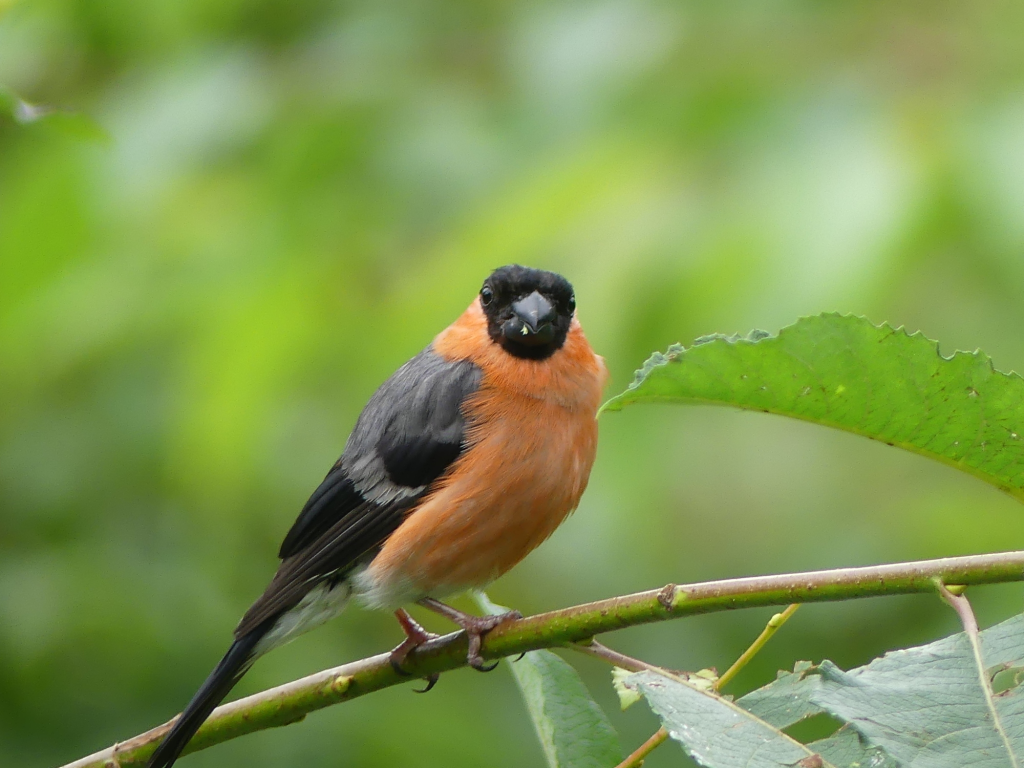
Well, what have we here? A bird with a pinky red breast, all over greeting cards with snow in the background? Its not a Robin, if that’s what you were thinking. In fact, I think the Bullfinch is an easy match for a Robin, and should be more Christmas cards than it already is. Quite surprisingly (in my opinion), the Bullfinch is named for its heavy bill and frontheavy appearance, reminiscent of a bovine farm animal. In Spring, they become a tree-bud specialist, using their bill to snack on trees like ash. They are labelled as orchard pests, but in fact this is not exactly true, and though they may occasionally munch an apple tree, that’s not their preference. What’s the point in stereotyping birds?

Eurasian Blue Tit (Cyanistes caeruleus)

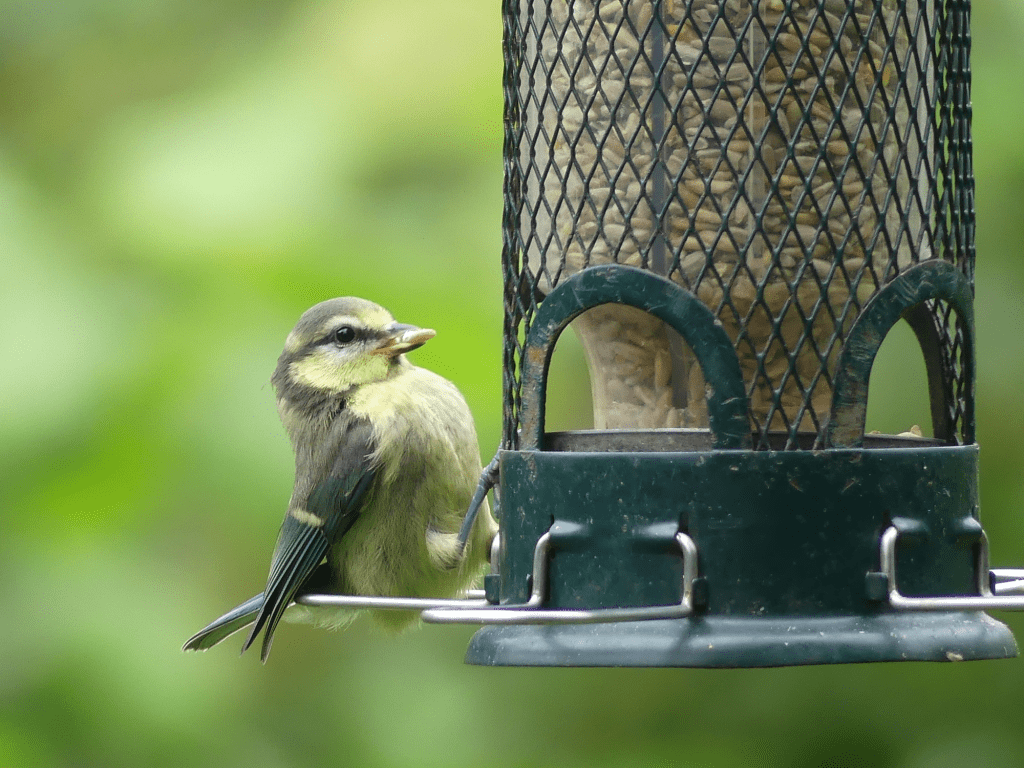
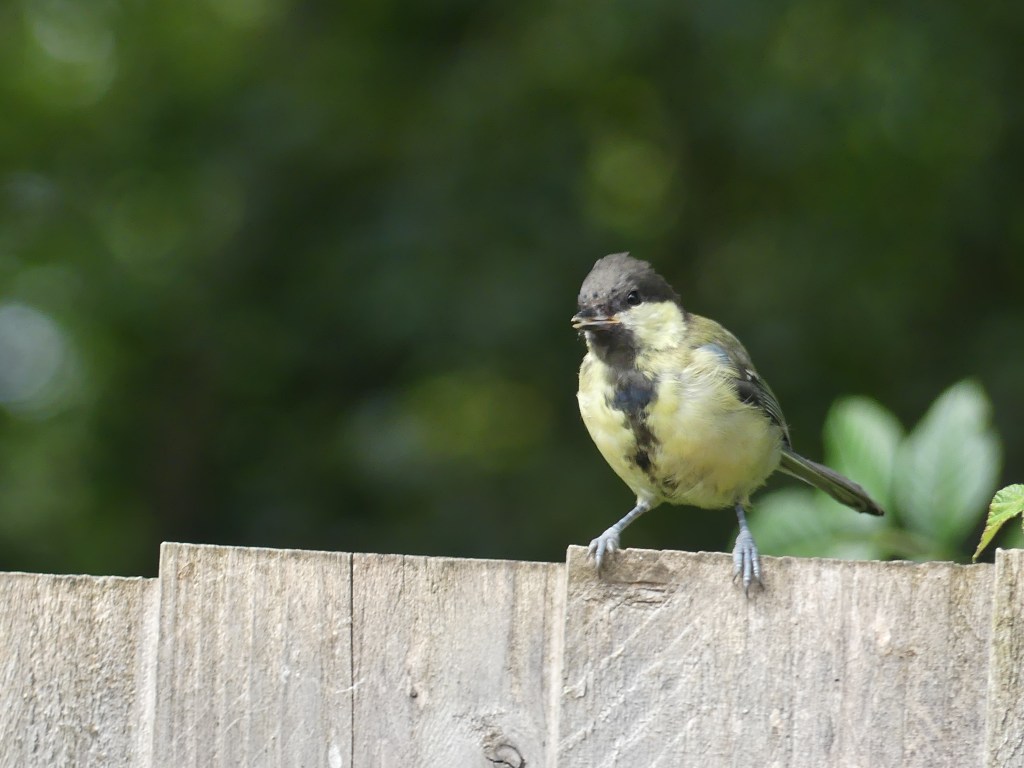
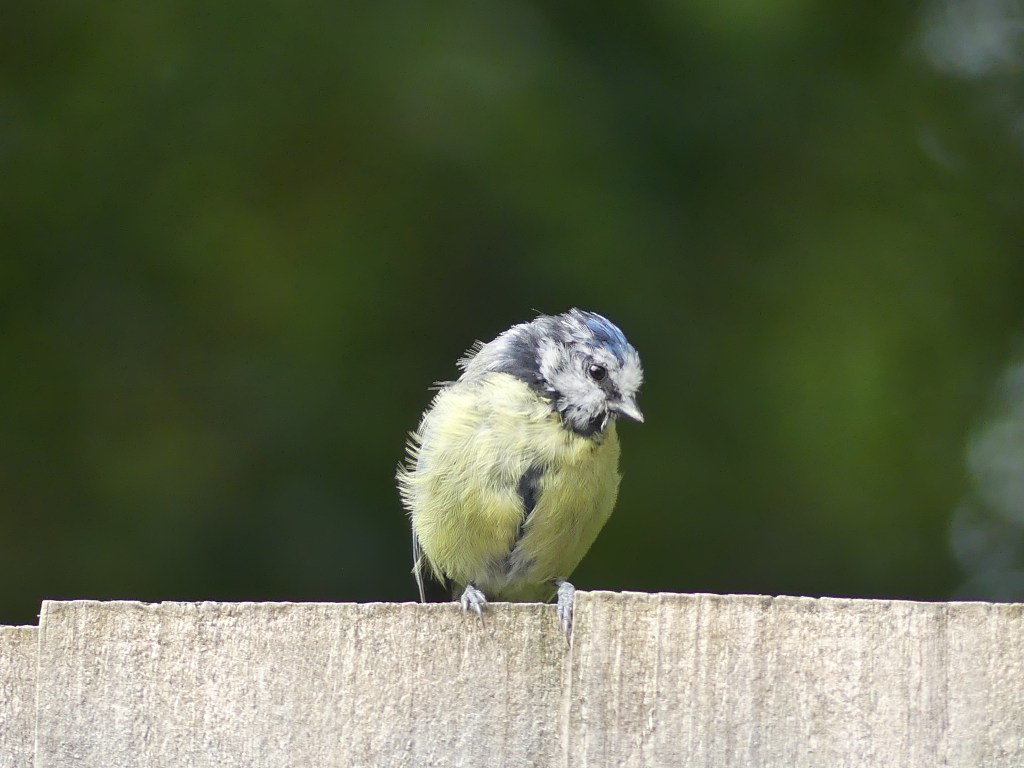
A common garden bird that had to enter into this top 10, the Blue Tit is the gardener’s friend thanks to its voracious appetite for aphids. Green, yellow and sky blue feature prominently on this bird’s plumage, making it distinctive and easy to identify. They are attractive little things, and weigh in at about 11 grams, half the size of a bird they often overlap in gardens, the Robin. They’re really quite dainty, and almost graceful as they hop along a fence or a feeding pole.

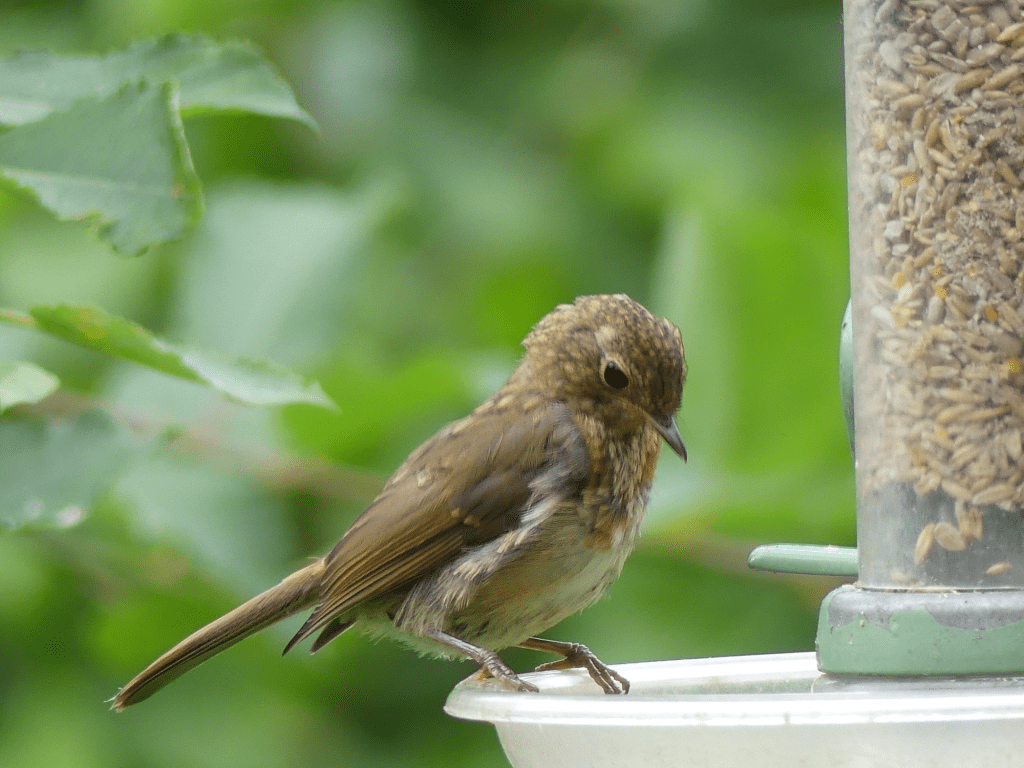
This is a young bird, so it hasn’t fully developed its plumage.

European Goldfinch (Carduelis carduelis)

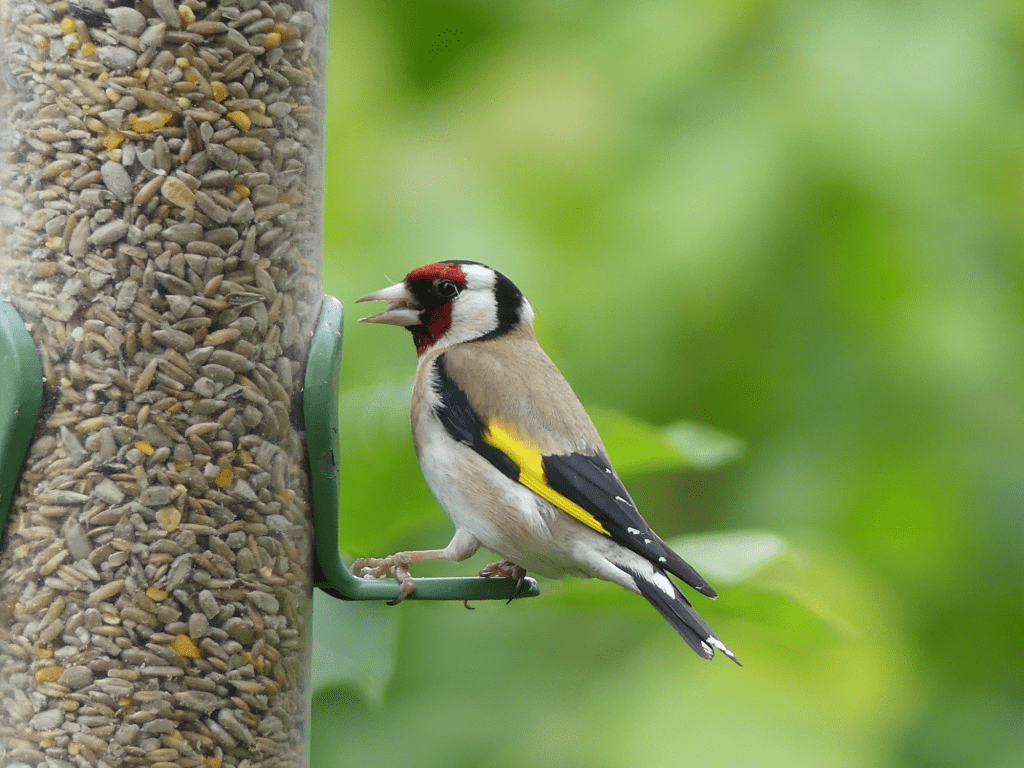
The third finch to enter into this list (gosh, they really are a colourful bunch), the Goldfinch is not just gold. Its scarlet red face and rich coffee brown back, coupled with the striking wings of black and, of course, golden yellow make for a memorable sight when you spot them visiting your garden, or feeding on seeds as a charm (the collective noun for Goldfinches). Try putting out nyjer seed to attract them to your green space, but remember that this stuff needs a special feeder, because its so small it slips through the gaps in a normal one!

European Robin (Erithacus rubecula)

And finally, we couldn’t leave him out could we? The little robin red-breast, who perches on a gardener’s shovel as he churns up the earth. Did you know that in their natural woodland habitat, they follow animals like boar to get to the worms they disturb from the ground? They’ve adapted here in Britain to treat us as wild boar, and take the worms that are dug up by many a gardener! But the odd thing is, this is a rare occurrence in Europe. They just like to do it here, and we still don’t really know why that is. But its probably that their usual woodland habitat is so fragmented here, whereas in parts of Europe it is largely intact. Also , they actually still have wild boar, and we barely have any because we hunted them to extinction.

A young Robin. You can just see the orange breast beginning to come through.

And that’s it for my top 10 most colourful birds on Britain. I’m pretty sure I’ve missed a few obvious ones, but these are just the birds I’ve managed to photograph! Oh well, it just means that I’ll have to do another post at a later date, when I’ve updated my photography and gone to more places. I hope you’ve found it interesting and informative, and enjoyed the dazzling avian colour that Britain has to offer!

Eyeworth Ponds

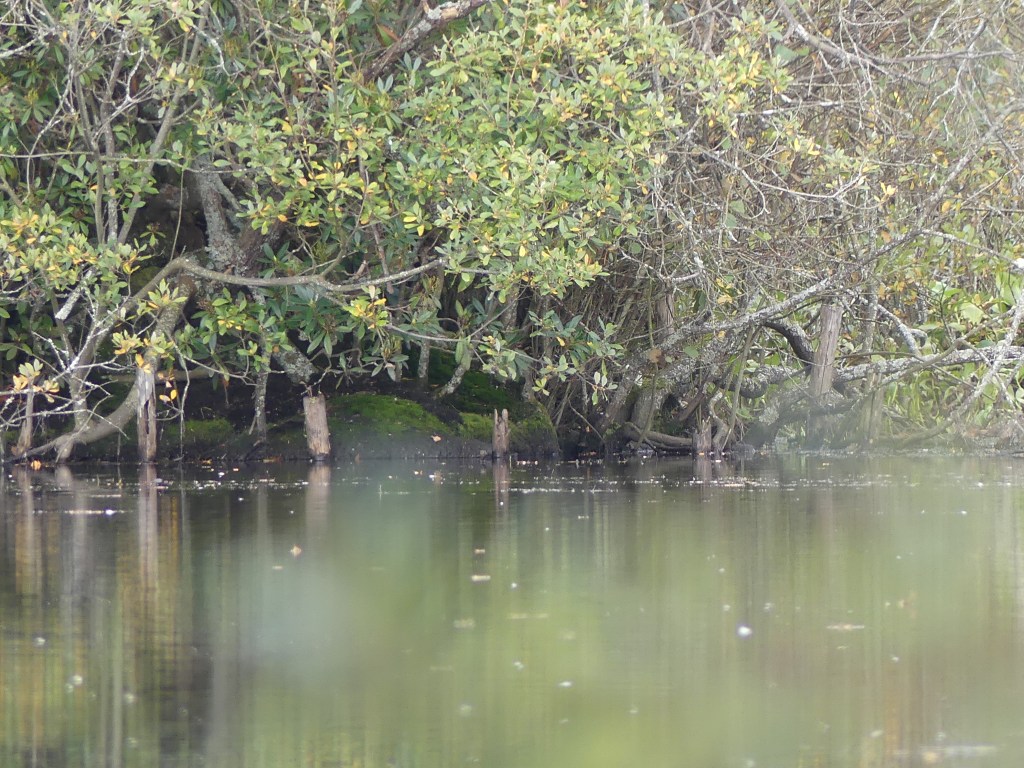
On a Sunday lunchtime, many people will be at home, gathered around a roast dinner, or at a restaurant for a carvery. However, at just gone midday, a group of young people was gathered on the banks of Eyeworth Ponds, near the village of Fritham, in the north of the New Forest National Park. They were eating packed lunches and squinting towards the opposite bank, searching for something of interest. Something of interest here, of course, would be hidden among the trees and rafts of lilies.

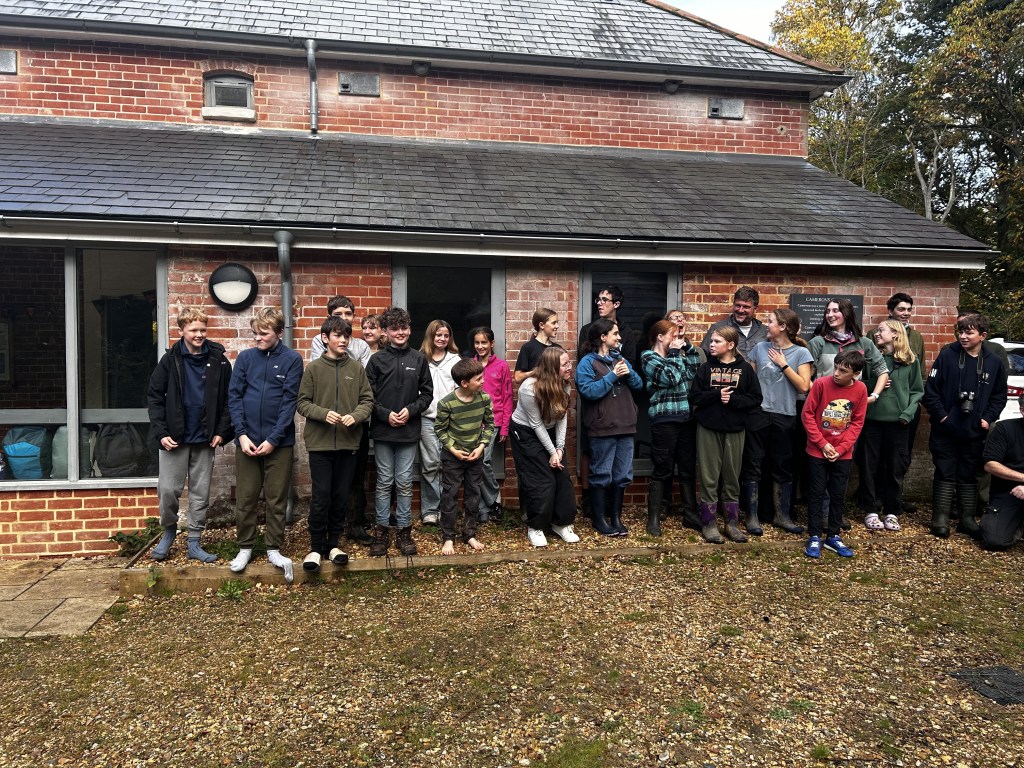
As you might be able to tell from my two previous posts, I was on the Wild New Forest Wildlife Camp and today was the last day of the camp. Eyeworth Ponds was to be our final stop before doubling back on ourselves and heading back to Cameron’s Cottage. We’d spent the morning walking among the precious heathland habitat that the New Forest National, with birds flitting and flying all around us before dropping into the abundant gorse and heather. From Meadow Pipits to the nationally scarce Dartford Warbler, the sheer diversity of species was incredible.

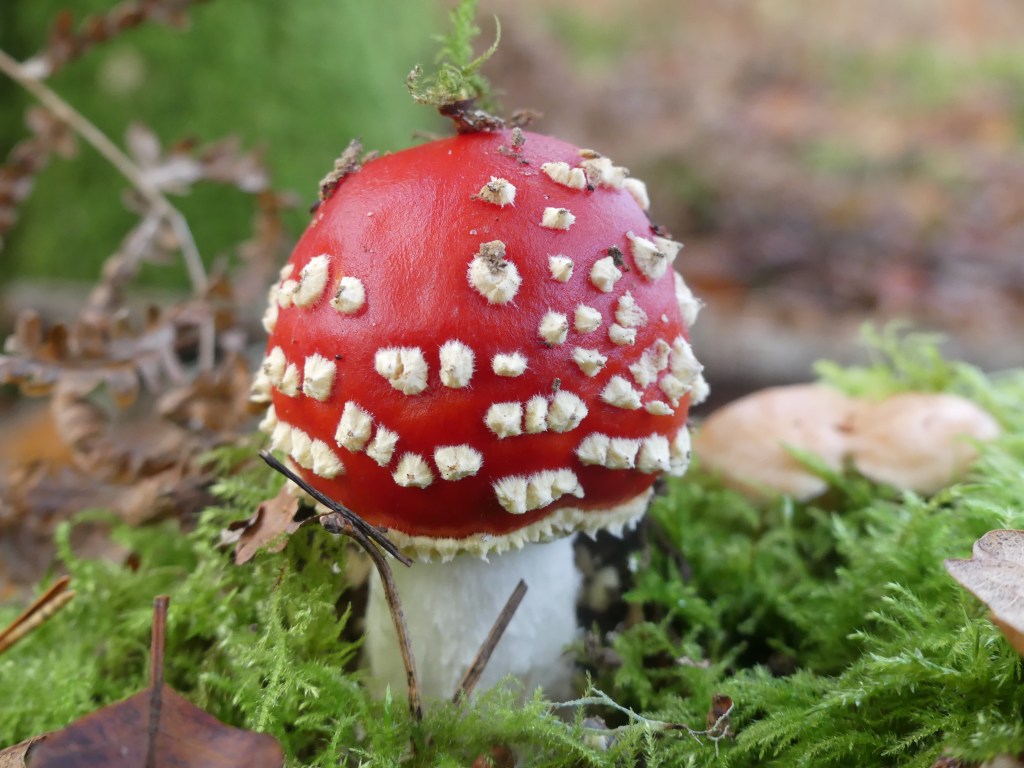
We found this Fly Agaric too.

And so I sat, boots dangling over the rippling water, scanning with binoculars and camera while thoughtfully snacking on a chocolate bar. There didn’t seem to be very much out there. There was little in the way of ducks, bar a single Moorhen bubbling under cover of an alder’s overhanging boughs, trailing in the water. So I took my sandwich from my lunchbox and started to eat. This required two hands, so binoculars were not operated for a moment. However, as soon as I raised them back up to my eyes and began to scan again, they froze on one thing.

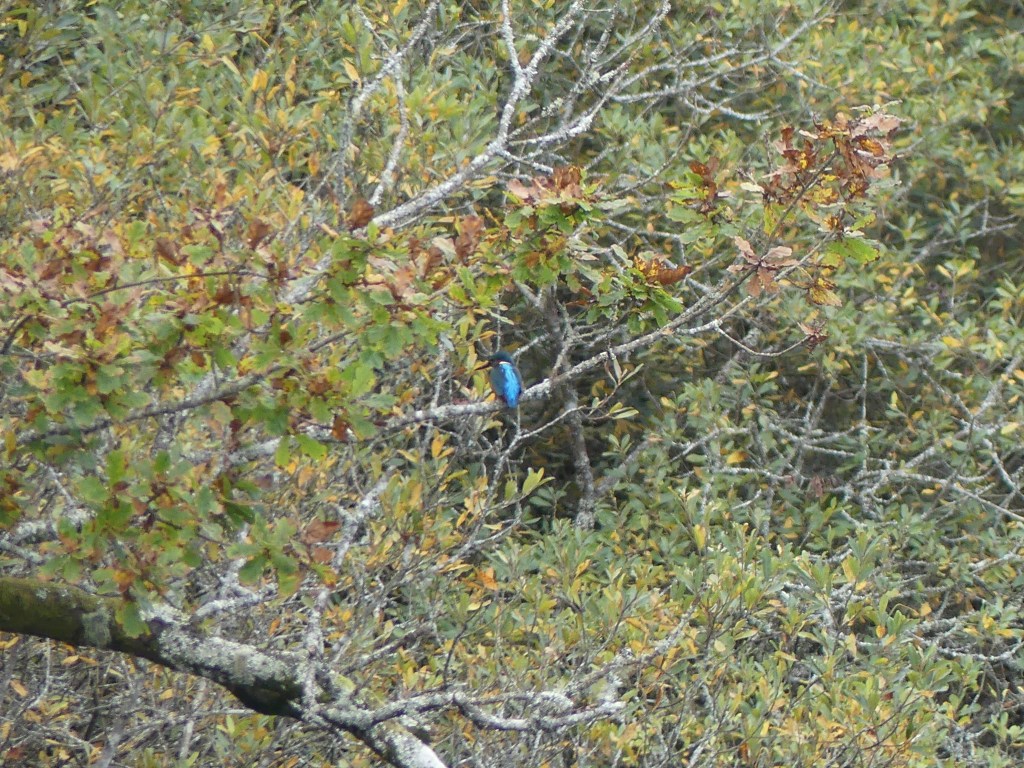
On the far bank, there was a particularly brave tree, leaning precariously far out over the deep water, which I now realised was interspersed with signs of fish. But on one of these bare branches, sat a small, agile-shaped bird, its plumage a brilliant blue. It turned around, and its breast and stomach winked at me a glorious sunset orange. I just couldn’t stop myself. In as loud a voice as I could muster without shouting, I called out ‘there’s a Kingfisher over there’.

And that there was, sat across the water for all to see, if one would only take the trouble to look around for it. It was an understatement to say that they were beautiful. They look like an ocean sunset, only upside down (haha!), and this one you didn’t have to travel to the coast for. They have to be one of Britain’s most colourful birds, if not winning the title by far. They could easily have just come out of the Amazon rainforest, perfectly at home among the birds-of-paradise and the banana-billed toucans.

Everybody was now fixed on the Kingfisher, binoculars and cameras raised. After five minutes of posing for its adoring fans, it flashed off to the right, a bolt of blue lightning against the light green background. It flew low across the lilies, and came to perch upon a log protruding from the water momentarily, before alighting once more in an overhanging tree, this time more hidden within its protective boughs. By now, it was out of range of most optical equipment, and even harder to see with the naked eye, so the group settled back down to scanning and eating alternately,. looking for another encounter, with the first still fresh on their minds.

The Kingfisher’s second perch. He’d flown off by now.

The Kingfisher seemed to have completed a task beyond all of our expectations, however, and it seemed to have brought everybody out to play. A pair of Mallards, one dashing and one drab, appeared on the far bank, paddling beneath the Kingfisher’s previous haunt. The bubbling calls increased tenfold, as around a dozen moorhens appeared, scattered across the edge of the pond. The place had come to life, and I was transfixed.

It had, once again, been a succesful and enjoyable morning, and the walk back to Cameron’s Cottage now awaited us. Who knew what we might see on the way back? But with that Kingfisher, my thirst was now well satisfied. Birding at its best can bring unexpected things, and I certainly didn’t expect to find that treasure here. Stay tuned for more blogs about the camp, and all in all, a pretty good Sunday morning!

New Forest Ringing Session

The morning dawned bright and early, and as we set off up through the woods, smoky breath settled like mist above us. The New Forest National Park is a picturesque place, full of unique habitats and special species. And the Wild New Forest Wildlife Camp was a brilliant way to experience it. It was a Saturday morning and we had set off on the walk through the woods towards the ringing location, near Telegraph Hill. A Redwing called above us, a newly arrived Thrush here on our shores to spend the winter.

At the woodland edge, we crossed the narrow road and set off on the track that wound its way through the vast heathland before us, with thick stands of holly on the left merging into another patch of woodland in the distance. That was where we were headed, but we were looking out for birds on the way too. Several Ravens flew over immediately, their harsh caw ripping the chill air. A Stonechat called from the top of a gorse bush, before plunging deep into the thorny world beneath it, dotted with yellow blooms.

A Raven flying over

30 minutes later, we had arrived at the back of the truck, the parcel shelf strewn with ringing equipment. The trees now hung over us, shielding us from the sharp rays of the rising sun. The ringing team, who were also young people on the camp that had prior experience with bird ringing, had arrived earlier to set up nets and prepare the demonstration, and they now returned from the woods, laden with wriggling cloth bags containing very precious cargo. The session was led by licensed ringer Marcus.

Before I continue, I just thought I’d better say that bird ringing does not harm the bird in any way, or cause it any stress and pain. It is always rapidly removed from the nets, and being inside the bag calms it down before it is weighed, aged, sexed and its wings are measured, and then the data is recorded. After this it is ringed, and released. Most of this happens very quickly, and birds are often processed in under five minutes. After they are ringed and released, they are often caught in different ringing stations up and down the country. Those who have caught it for the second time can cross reference the unique ring number and figure out where it came from, and this helps science to learn more about the species’ movements and help to understand the birds more. Here are a few highlight species from the ringing session.

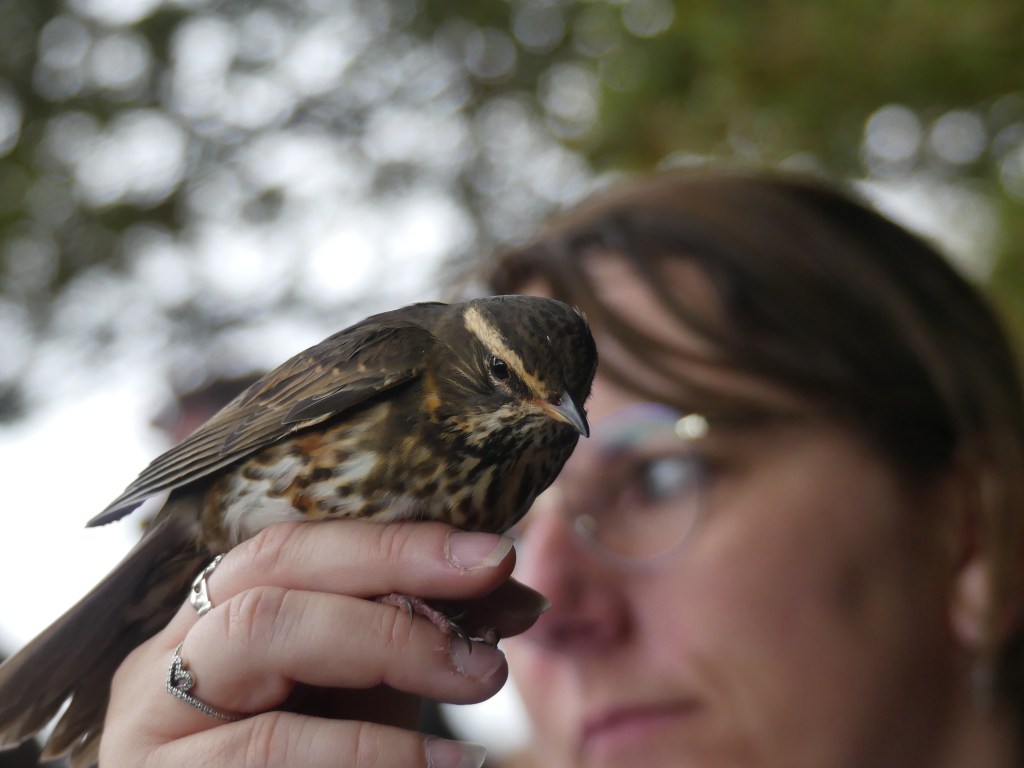
Out of one of these white bags came a bird we had seen many times, often in small flocks, on the way up, flying over and calling with their high pitched voices. A Redwing, with its pale yellow eyestripe and speckled breast, sat in the hand of Emily, often lifting its wings to reveal their rusty red underneath, which is of course their namesake. Redwings provide a brilliant example of visible migration, with many groups arriving in off the North Sea onto the East Coast, and in amazing numbers. During autumn, hundreds are regularly sighted arriving from Iceland and Scandinavia at sites like Spurn Point. However, there is likely to be a lot more Redwings arriving than we realise, because many migrate at night.

Redwing in the hand
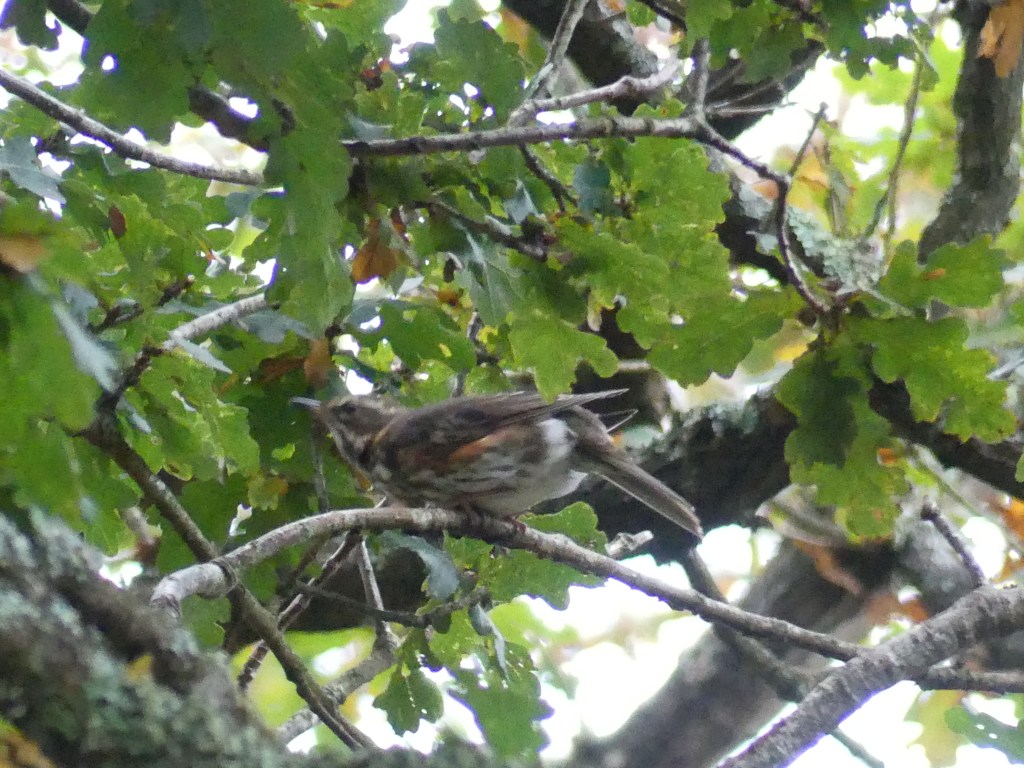
The Redwing flew into a tree after being released.

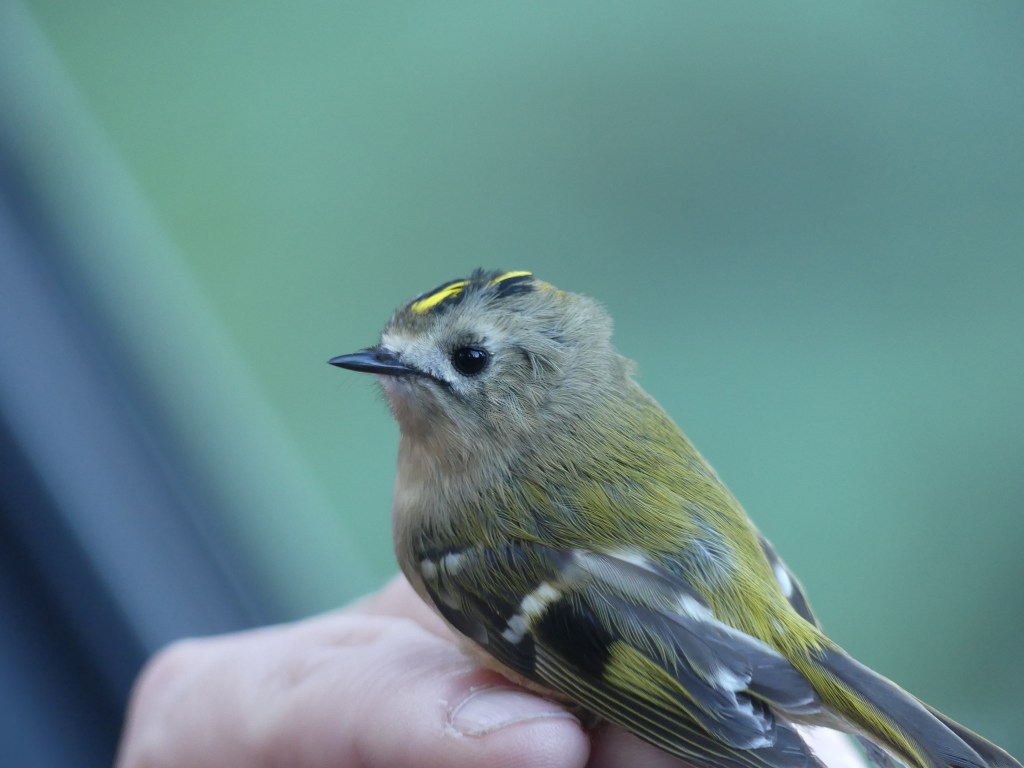
Another really cool bird to see in the hand was Britain’s smallest, a tricky sight to pick out among the highest boughs of a tree. Weighing in at 5.5g, the weight of a 20p coin, a Goldcrest was sat in the hand of Emily, beautifully fragile and delicate, a striking dash of rich yellow splashed across its crown. This tiny bird is the subject of many a myth and legend, and the fact that birds arrive here from Scandinavia and continental Europe has backed up the stories that suggest they fly on the back of other bigger birds in order to reach our shores. With their minuscule size, it certainly seems believable, doesn’t it?

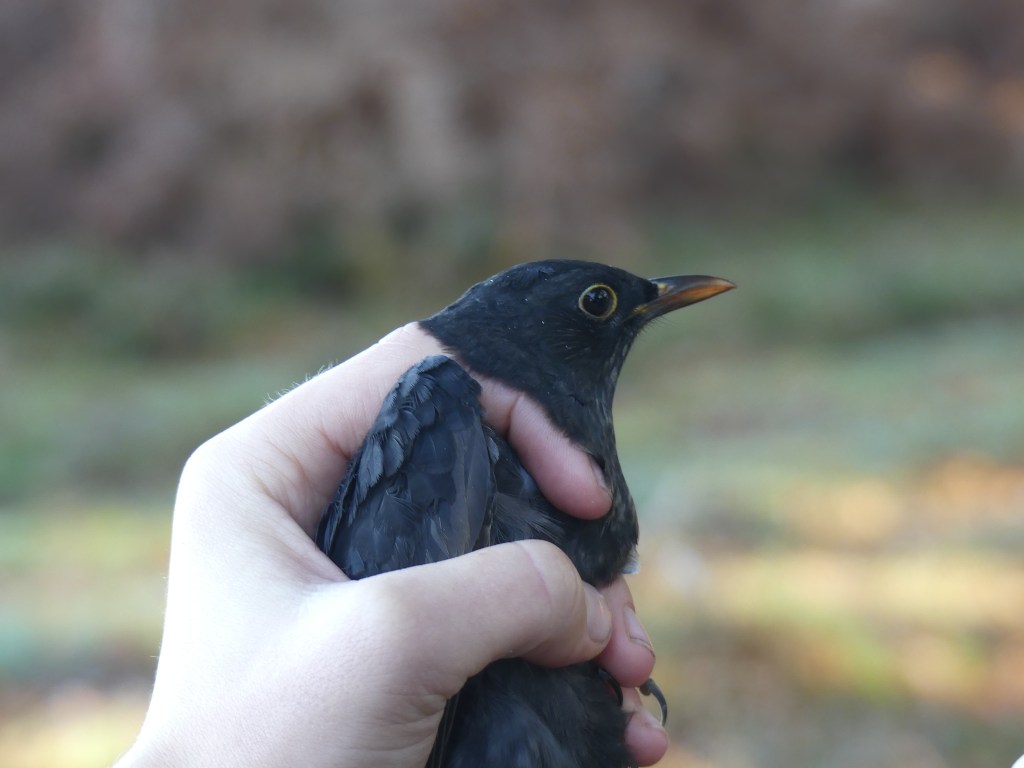
A relative of the Redwing was next out of the bag, but this Thrush was a glossy, slightly ruffled, smoky black. Yes, I know what you’re going to say. Blackbirds are common as mud, aren’t they? Well, I guess they are, but they are breathtaking to see in the hand. Features you wouldn’t normally notice become apparent and clear, such as the yellow eye ring and the faint detail in the feathers. At this time of year, our resident population is boosted by large numbers of this species arriving from the continent to overwinter here. This bird was a younger one, due to the fact that its bill didn’t yet have the adult’s yellow colour to match the eye-ring.

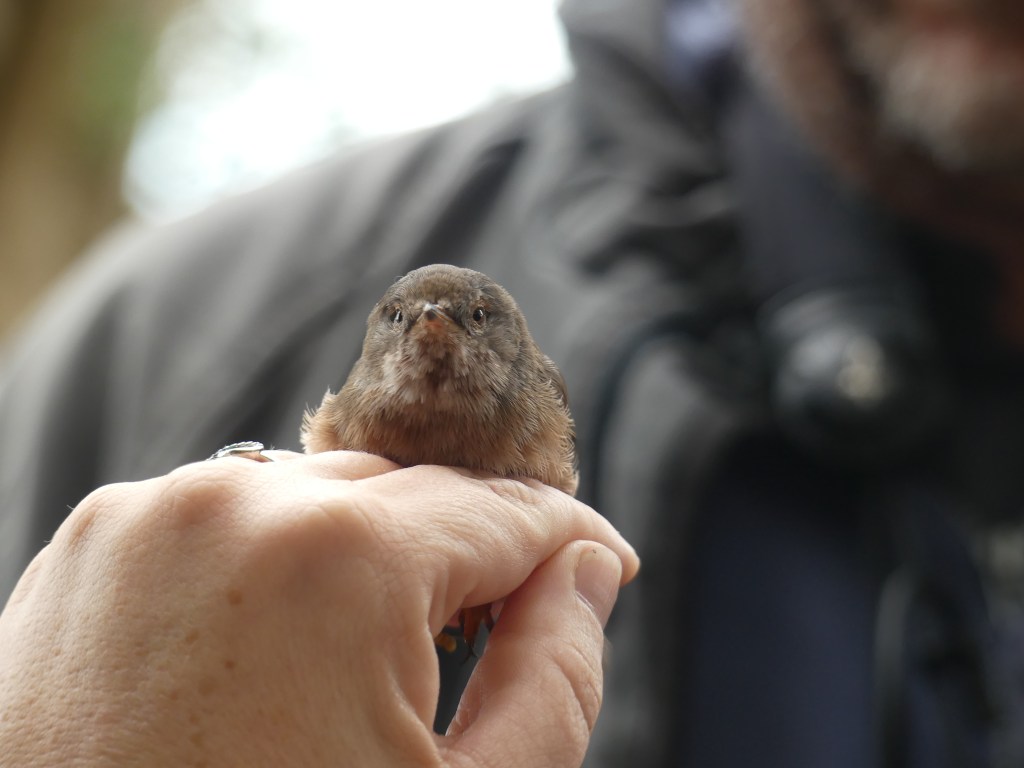
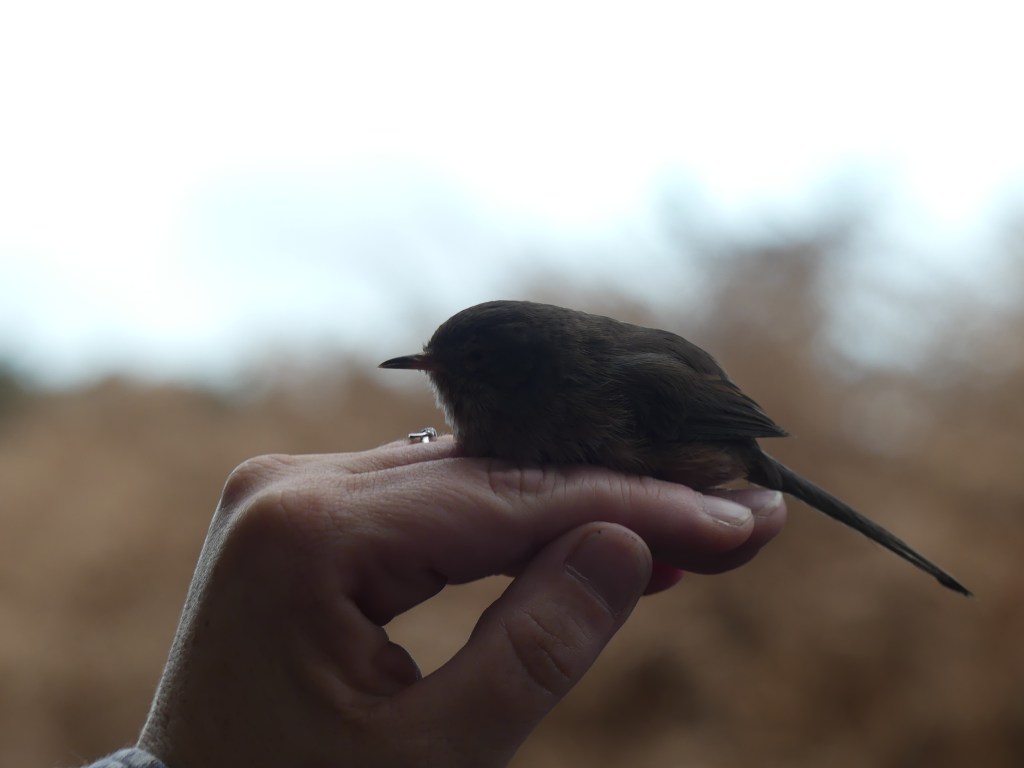
There was one lifer among the birds we caught that day, and it was one of the target species for the session, and a bird that the New Forest is famous for. Around half of the UK population lives here, and they are a true heathland specialist. The males can be seen with a jaunty puffed up crest, almost like a mohawk, as they sit atop windswept heathland, the unlikely king of their domain. I am of course talking about the Dartford Warbler, an absolutely phenomenal bird to see. This particular individual was a female, and lacked the crest, but still retained the rick rusty brown colour.

The long tail seems really disproportionate to the body!

The final bird to enter my top five for the ringing session was Britain’s only other Kinglet species, the first of which we had already witnessed in the hand this morning. First came the Goldcrest, then its rarer counterpart, the Firecrest. Named for its crest that’s reminiscent of a lick of flame, it is just 0.1g heavier than a Goldcrest, and comes in at Britain’s second smallest bird. Their breeding distribution in Britain is mainly restricted to southeast and eastern England, and they are much more common as a winter visitor, when our roughly 550 pairs are boosted by birds from the continent. I couldn’t get a photograph because, as they are such a sensitive species, it was probably wiser not to. But they are really cool birds!

In the ringing session, we had many other brilliant species in the hand, including Linnet, Stonechat, Chaffinch, Robin, Blue and Great Tits, and several Wrens. We spent pretty much the entire morning there, and it wasn’t just the ringing that proved exciting. A Peregrine Falcon, having been perched in a far off birch tree isolated on the heath, suddenly chose its moment in the spotlight and leapt from its perch, flying rapidly off away to the left. That was incredible, and shows how the beauty of nature is often in its unpredictability, and you have to be quick and attuned to find it.

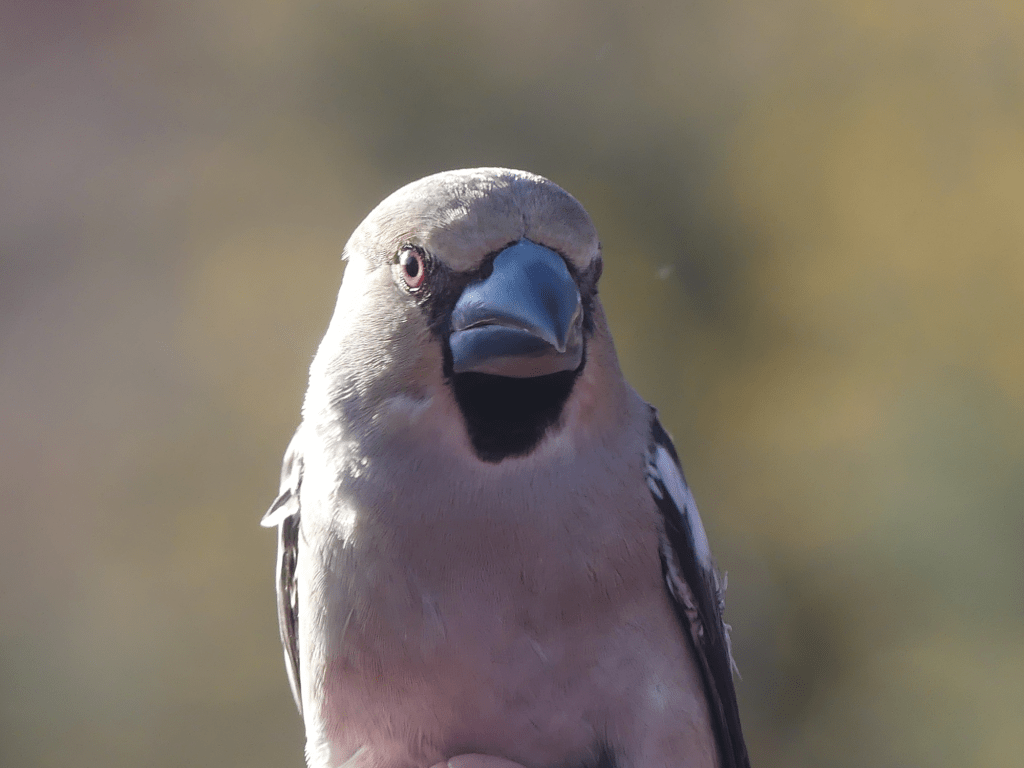
Several Hawfinches, another rare New Forest specialty, flew over our heads between the trees. They are our largest finch, and their huge, heavy bills are designed to crack large seeds like those from a cherry tree. Despite their imposing size compared to many other songbirds living in these parts, they are incredibly shy birds, and are difficult to see. They have declined heavily in recent years, largely due to deforestation and disturbance.

A Hawfinch from the Spring camp’s ringing session

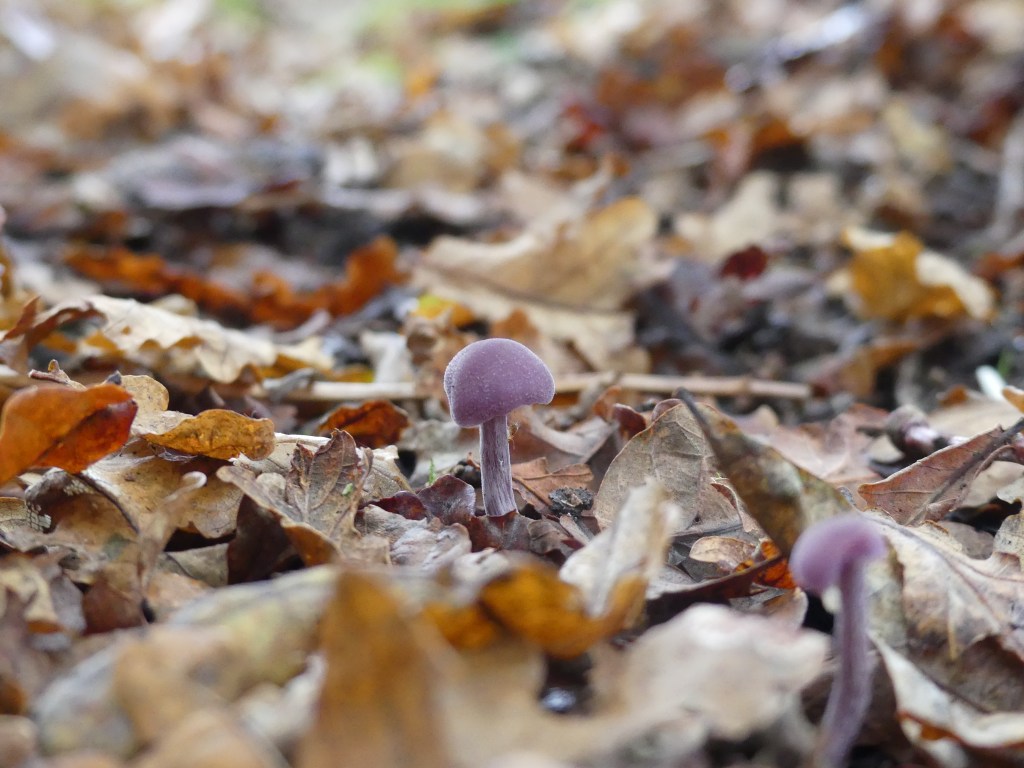
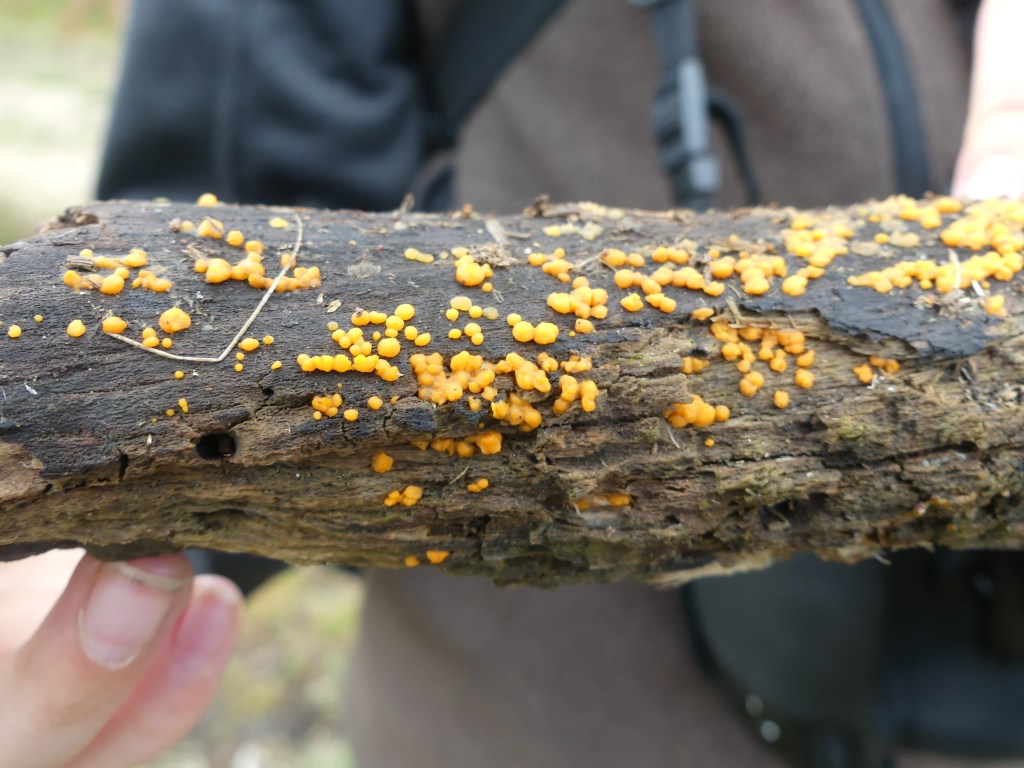
That morning, we got a brilliant array of species in the ringing nets, with birds from two different habitats featuring, as nets were set up both on the heath and in the woods. When there was a lull in the ringing excitement, I set about photographing the various mushrooms and fungi that were hiding in the woods, and came up with several different species such as Amethyst Deceiver (named for its colour) and Jelly Spot Fungus. All in all, a really enjoyable morning!

Amethyst Deceiver
Jelly Spot Fungus

The Wild New Forest Camp

The Autumn Wild New Forest Wildlife Camp took place from the 25th October to the 27th, 2024, and it was an absolutely brilliant experience. Easily as good as the Spring camp, the activities took a completely new perspective as the season changed, with many of them remaining the same, like the Bio-Blitz, but looking for different species. For example, you’re going to find a lot more fungi in autumn than spring.

The main aim of the camps is to bring together young people who love nature. From the start its been a success, because many people, me included, find that most people they meet at school or around them don’t share an interest and passion for nature. For somebody who knows precious few people to talk about their passion with, suddenly everybody in the building has a common interest. And that has to be what I like the most, just being around like-minded people.

It was a really incredible experience and in the next few blogs, I’m going to share exactly what we did and how it went (nothing went badly by the way). I really enjoyed it, because everything was nature-based. There wasn’t a single moment during the entirety of the weekend where the natural world and a passion for it didn’t feature prominently. And it all began on that Friday evening.

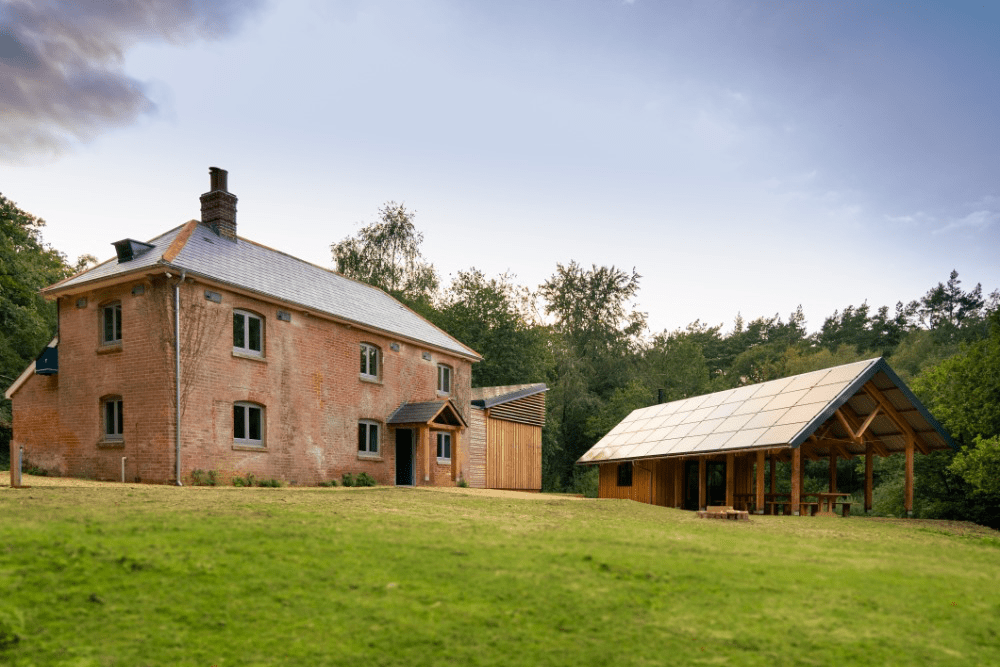
The camp was held at Cameron’s Cottage, a unique outdoors centre designed to accommodate young people to spend time in nature. It is based within the RSPB Franchises Lodge reserve, a large and dramatic woodland deep within the New Forest National Park. All around the cottage lie the woods, glorious in their crisp autumn bloom. And just the separation, the isolation from the hustle and bustle of the outside world, is what makes this experience so special. A weekend truly in nature, surrounded on all sides by it.

Camerons Cottage https://www.cameronbespolka.com/cameron-s-cottage

Finally, the camp is run by Marcus Ward and Emily Louise, directors of Wild New Forest Guided Tours. They give guided walks and tours around the New Forest almost every other day, and pack a schedule full of talks and walks. True to form, they run the camp brilliantly, arranging a packed itinerary for all the young people that come on the camp. So big thanks for them for making this all possible, and also to the RSPB and Cameron Bespolka Trust, who both sponsor the camp and make it happen.

The Cameron Bespolka Trust is a charity set up with one main goal; to connect young people with nature. It was set up following the tragic death of 16 year-old Cameron, and they have worked hard to pass on his love of birds and nature to other young people. Their work ranges from school visits and weekend camps, to projects like Cameron’s Cottage. And every single time, its all about getting children outside in nature, rather than indoors and in cities. Their work is truly an inspiration for the rest of us, and they are just brilliant! Learn more about them here.

The camp this time around was quite different to the Spring edition. Of course, we still had activities such as lamping, Bio-Blitzing, and moth trapping. But there were many differences, many of them due to the time of year. Autumn’s nature is a completely different world to that of Spring, and this was reflected in what we found during the weekend. We found a lot more fungi than wildflowers, for example, and the array of bird species was wildly dissimilar.

We were also in a different location, this time in what felt like the middle of nowhere, a renovated woodsman’s cottage deep in the woods. It was the perfect base to be immersed in nature, because you are fully surrounded by nature, with a 10-minute walk to the nearest road. Back in Spring, we were at the CET (Countryside Education Trust), which was on a working farm, but here we were among the watchful trees of the RSPB Franchises Lodge reserve.

Which leads me perfectly on to the fact that from Cameron’s Cottage, we were able to walk to everywhere we were doing activities. In the Spring, we had a pair of minibuses to ferry us from place to place, as few of them were in walking distance of the CET. There were pluses to this, such as the fact that we were able to visit the incredible Lymington and Keyhaven Marshes on the coasts, but it was brilliant to be able to visit sites such as Eyeworth Ponds this time around, with a bird and fungi walk on the way!

We also set up camera traps in the surrounding woods, something that we weren’t really able to do at the CET. A camera trapping team (me included) headed off into the forest to set them up, looking for places that seemed to be a good spot for passing mammals. We were looking for churned up ground and deer tracks, as well as good points to cross the stream and marks in moss and on logs spanning the water. We even placed one watching over a fresh deer carcass, in case a fox came to call overnight. We didn’t manage to catch much in case you were wondering, unless it was laughter-inducing videos of ourselves setting them up!

The Camp was incredible, and I loved my second experience with Wild New Forest. As I have talked about above, it was a completely different camp, but equally valuable and enjoyable, and we spent virtually the entire weekend out of doors, searching for the weird and the wonderful species of the New Forest’s slice of the natural world. Stay tuned for more blogs about the Camp, featuring brilliant bird ringing, fungi photography and more…

Murmatory Mutterings: The Science Behind Murmurations

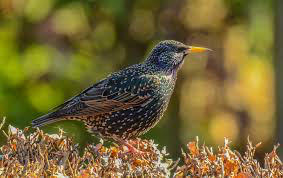
Many people regard the Common Starling as a rather common bird, swarming garden bird baths before anybody else can get a look-in, and crowding out electricity pylons on many an evening. But one thing they do sets them apart from all other birds and animals. They produce one of nature’s most awe-inspiring, beautiful, confusing phenomena. A murmuration.

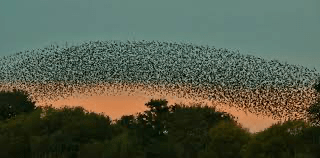
A swirling, twirling, curling cloud of glossy black, interspersed with rays of evening sunlight shining through. Each Starling moving as if in unison, with the organisation of a military march, and the spectacle of a circus. A hypnotic dancing display, which we don’t really fully understand. It could be anything really, and we are yet to find a solid answer. But one is quite clearly for certain, and that is that this natural wonder of the world is truly breathtaking.

Photo from Inaturalist

So, what do we know? Well, one thing that’s for definite is that these murmurations happen at a similar time every day, at dusk before the Starlings settle down to roost. They begin to happen from about November into early March, so that’s another piece of evidence. They only really happen in noticeable numbers during the colder months, and the best murmurations can usually be viewed during December and January. The latter is probably because of the fact that during the winter, our resident starlings are supplemented by thousands of others from the continent.

What is really surprising is that there is no leader for a flock of starlings in a murmuration. Unlike a migrating flock of geese, there is no bird to direct proceedings. And yet, they all stay in sync without fail. So what forces are at work there? Also, unlike a flock of geese, this offers no aerodynamic advantage. So why do they do it? These are just two of the questions that remain of our understanding of this natural phenomenon.

So, first of all, why do Starlings murmurate? Many scientists are of the opinion that it attracts other Starlings in the surrounding area, to add to the current flock’s numbers. There are several advantages to this; spending the night together increases body heat and keeps out the colder, for example. And it reduces the chance that an individual will be picked off overnight by a predator like an owl or a marten. Safety and warmth in numbers, after all.

Another theory is that their murmurating is an intimidation tactic, the starling’s way fo scaring away potential predators. After all, a massive flock of birds looming and forming into humongous different shapes is unsettling at best, if you don’t know what you’re looking at. Another, often separate part of this idea is that a murmuration is triggered by the approach of a predator such as a hawk or a falcon, and is a defensive mechanism.

These incredible happenings aren’t only beautiful to look at. In 2022, researchers and scientists in Italy undertook the most detailed analysis ever of these aerial acrobats. They came up with a mathematical model and cross referenced it with real-life birds, before simulating it artificially. The fact that these birds all imitate their neighbours within a murmuration could pave way for new science that has the potential to track space debris!

So yes, there is a lot of evidence that Starlings do this by mimicking the birds immediately around them. The lucky number appears to be seven, with any one individual following the seven Starlings closest to them. Sounds easy enough right? Well bear in mind the three principles a Starling must adhere to when partaking in a murmuration. The first, the attraction zone, means that in an area, you move towards the next bird. The second is the Repulsion Zone AKA don’t fly towards there, or you’ll go into another bird and you’ll both fall. The third and final rule is Angular Alignment, to follow your neighbour’s direction. And that, in a nutshell, is how they do it.

Photo from StarlingsintheUK.co.uk

In my birding experience, I have had limited luck with Starling murmurations, although not for want of trying! We’ve gone all over Devon trying our luck, but we’ve just never been in the right place at the right time. It doesn’t discourage me though, and this winter I plan to go looking at every opportunity!

So, in the above blog post, I have tried my hand in explaining an almost unexplainable topic. Without all of the evidence that only evolution knows at this time and climate, we have no way of fully understanding the mythically tantalising Starling murmuration. Science is well on the way to understanding it however, and has formulated theories that definitely might be how it actually works.

Autumn Birding

Its the time of year when the avian world once again begins its twice annual journeys, heading for and from places across the globe. It is one of nature’s greatest spectacles, and yet the autumn migration always tends to be a little less noticeable than Spring, but no less breath-taking. Even now, influxes of Arctic breeding birds are arriving on our shores, to escape the bitter Northern winter. Pink-Footed Geese, in mind-bogglingly vast flocks, arrowing across the skies. Waxwings, varying year to year from just a handful of individuals to thousands, storm berry bushes in supermarket car parks in the East. Fieldfares and Redwings bring a completely different colour palette to our array of British thrushes.

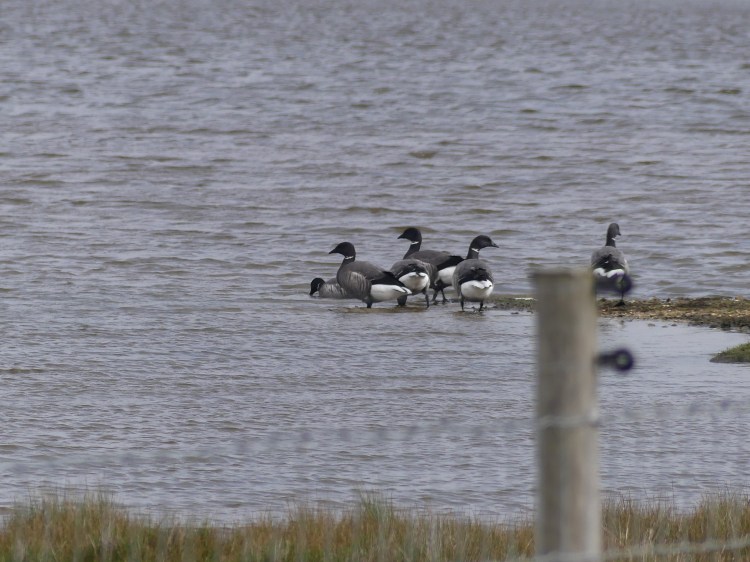
The Exe Estuary is famous for its wintering numbers of Brent Geese

Birds passing through, stopping over to rest, are rife along our coastline, and are often blown further inland by storms out to sea. Yellow Browed and Palla’s Warblers, smart green warblers with a dashing stroke of sunshine painted across their faces, turn up anywhere and everywhere from Spurn Point to Stanford Reservoir. Black Terns suddenly appear overnight on our wetlands, and Curlew Sandpiper fly in with the Dunlin to provide many an ID conundrum.

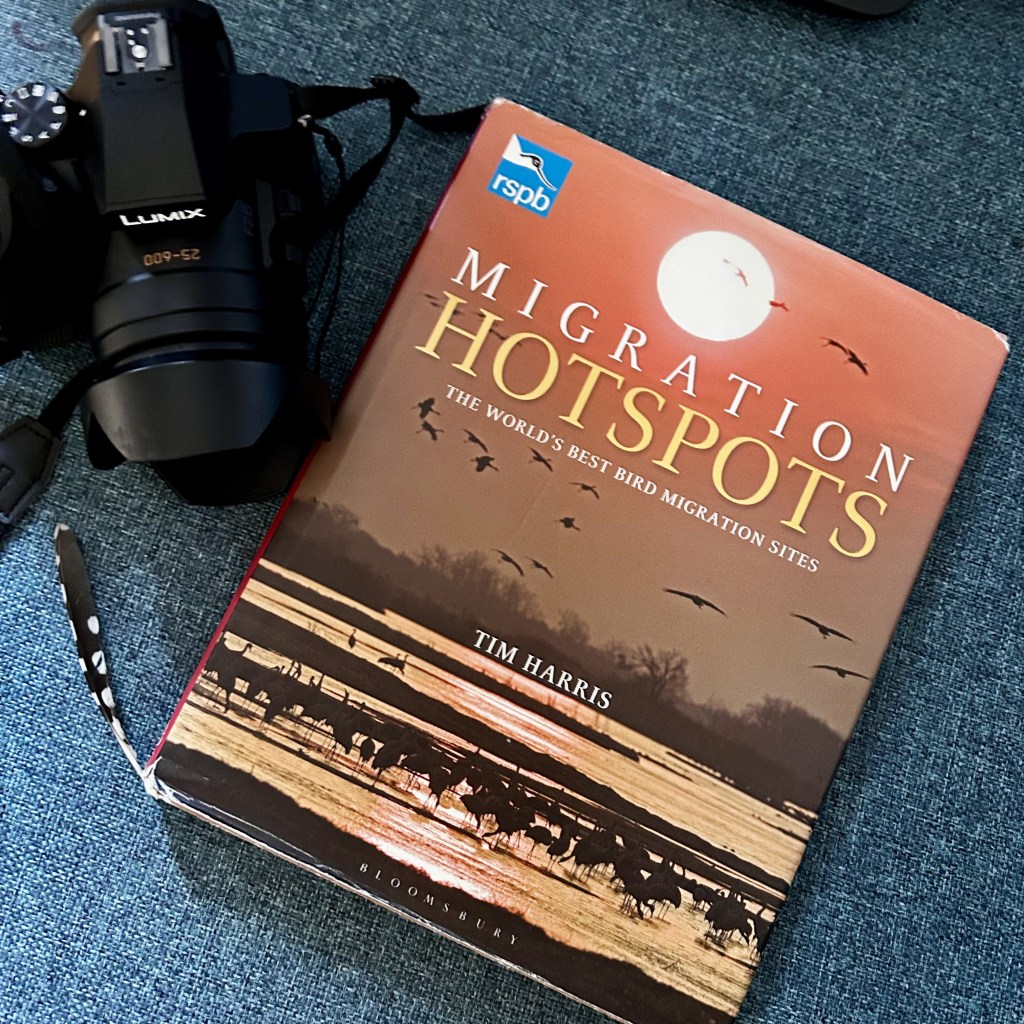
Migration Hotspots by Tim Harris. One of the best books on migration you’ll find anywhere!

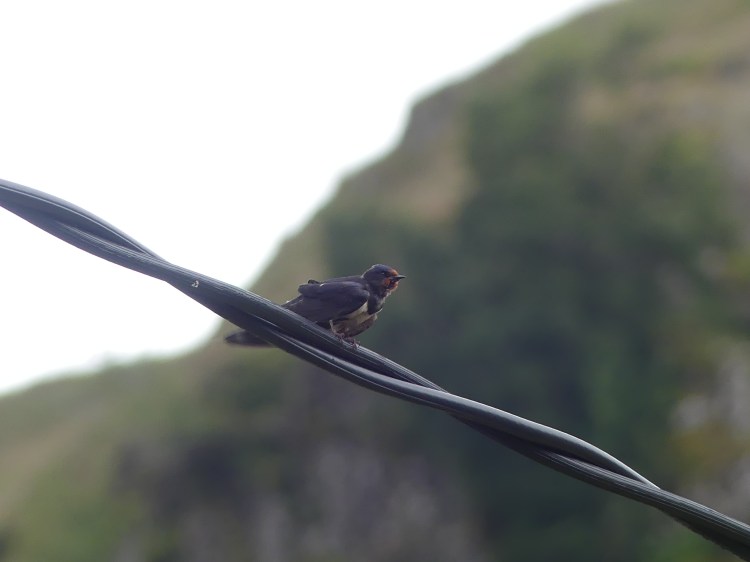
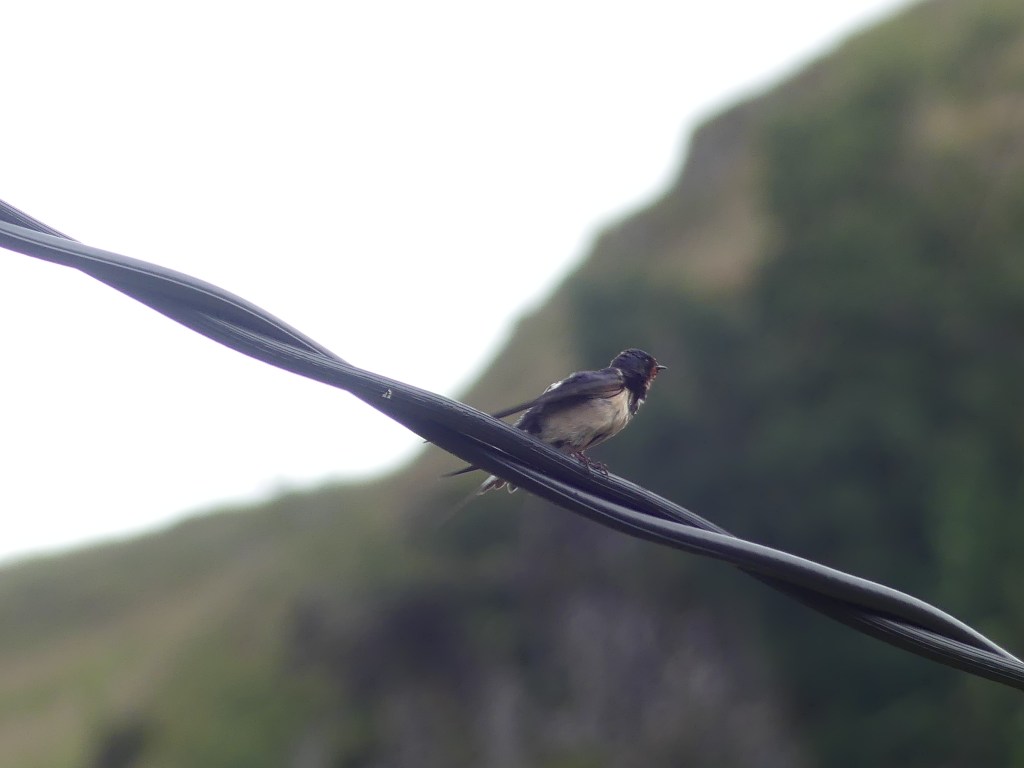
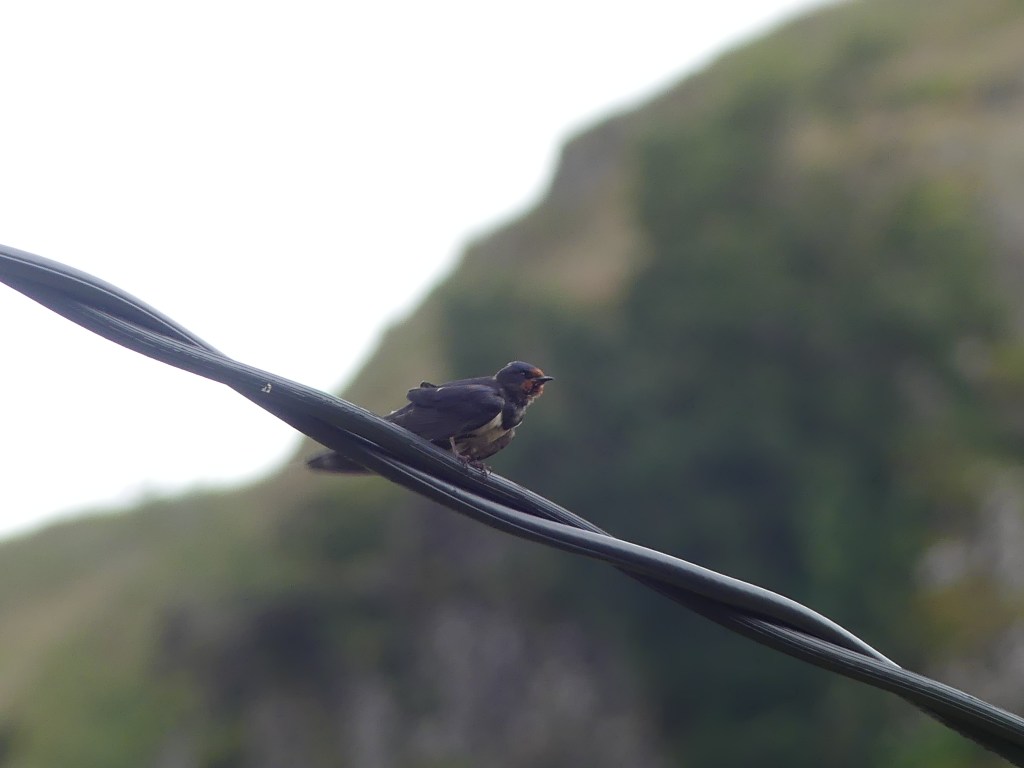
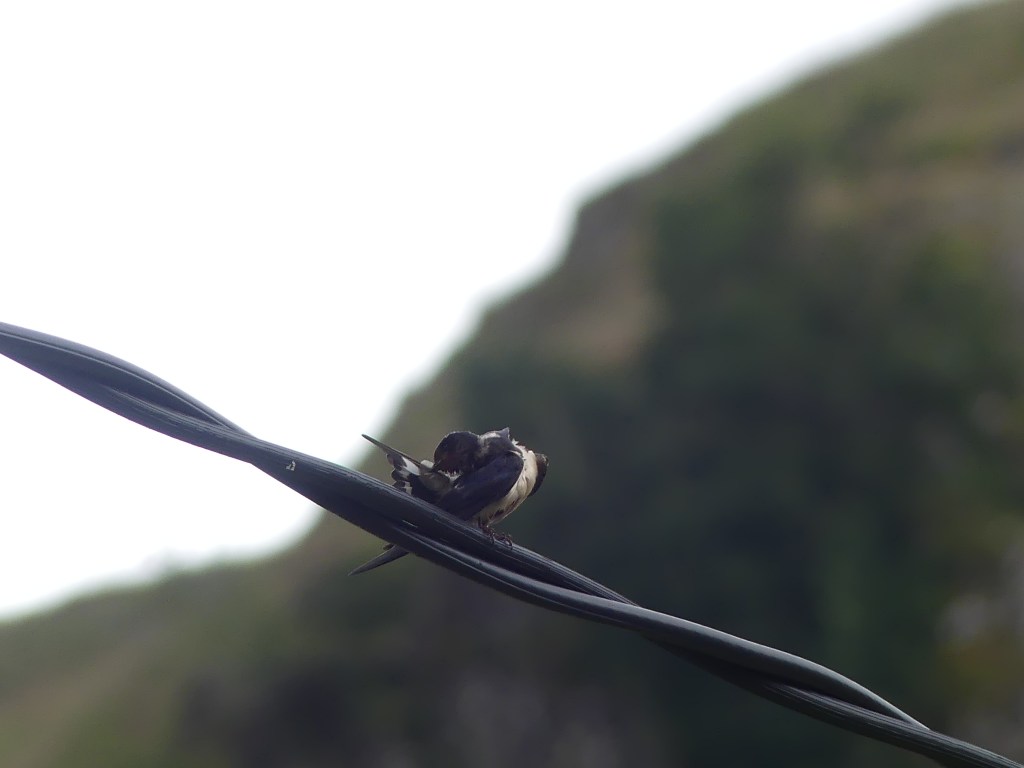
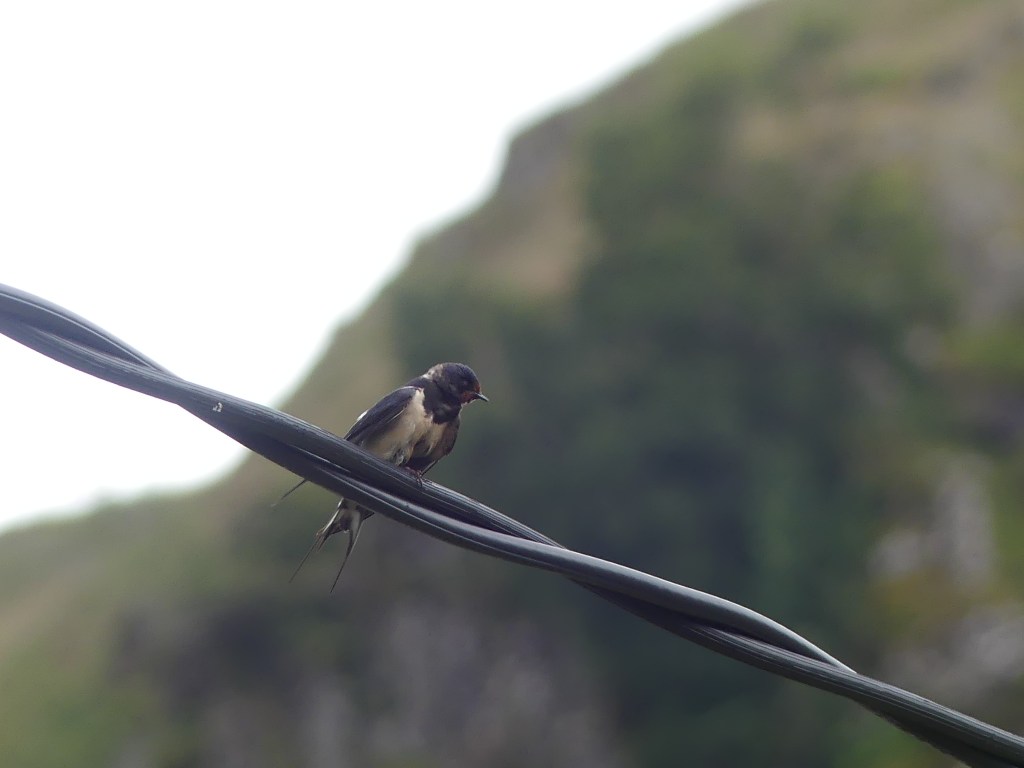
And then there are the departing birds that visited us to breed, but are now flying away back to wintering grounds, many of them in Sub-Saharan Africa. Swallows and Swifts take their aerial acrobatics elsewhere, with the former often to be seen gathering on power lines that span coastal towns and villages, preparing for their imminent journey south. A large proportion of our breeding warblers, from Whitethroats to Sedge Warblers, leave us during the Autumn, heading for warmer climes.

So long, farewell

With these departing, arriving and passing birds, however, come a fair few surprises, such as the Long Billed Dowitcher that has recently been hanging around the Exe Estuary (not sure if it still is). Usually, this is an American bird, gracing the States with its spear of a bill. By all accounts, it should not be here. But migration is not an exact science. Birds get blown off course, become disorientated and lose their way, or even chased off their route by a predator. When they arrive here, they are known as vagrants. Hurricane Milton has caused devastation in Florida, but expect a few intriguing American visitors on British shores before too long.

So, those are the four main scenarios to be expected for birders during autumn migration season. One of the most notable collective departures is that of our seabirds, deserting their colonies until next year, and flying out to sea in huge numbers, before dispersing and making their own way until next spring. During this time, most seabirds will act as solitary, while coming together to feed. They will return to find their mate, or court for a new one. Many seabirds mate for life. Some of the best places to watch this spectacle lie on our east coast, with spots such as Bempton Cliffs and Flamborough Head acting as launch pads for auks, fulmars, and kittiwakes.

Seawatching at this time of year, whether from a headland or from the deck of a boat, can be especially rewarding, with birds passing down through our seas. From Long Tailed Skuas to Great Shearwaters, warp up warm and head out for some scarce seabirds. Spots such as Portland Bill and Cornwall have an unmatched pedigree for turning out exceptionally rare vagrants. Pelagic boat trips, specifically for seawatching, are a real treat, as (in my opinion) the best way to get good views of these avian wonders.

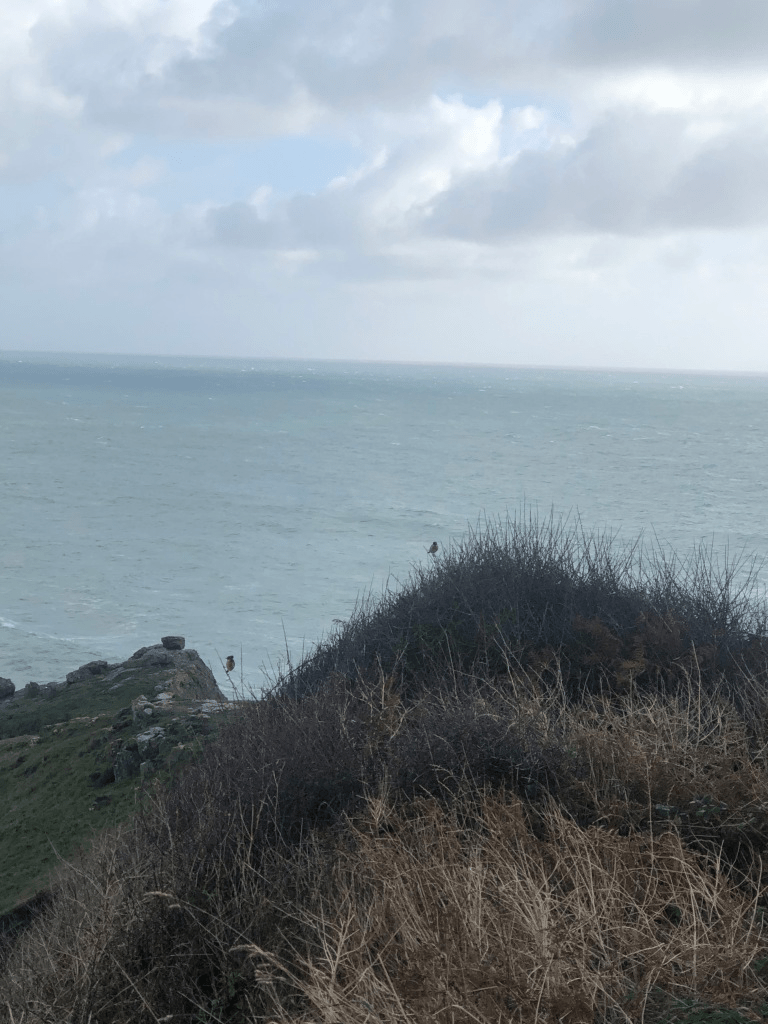
The Lizard in Cornwall is famous for its seawatching prowess. This photo features two Stonechats on the edge of the cliffs.

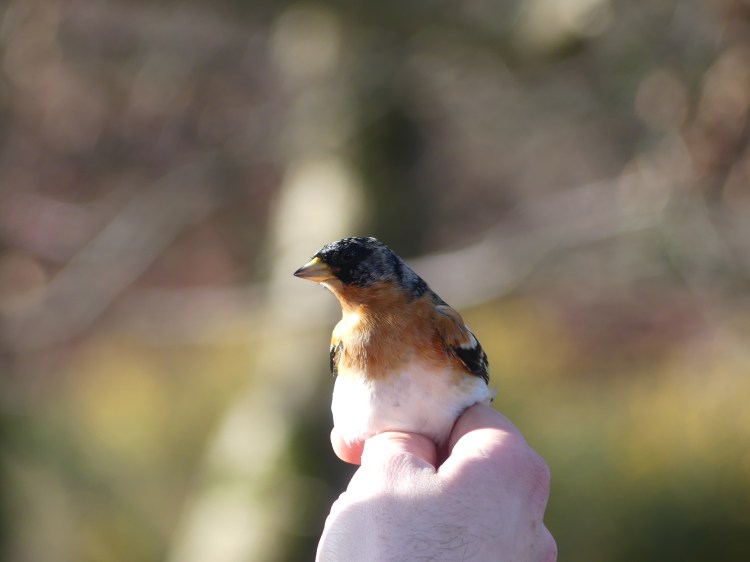
Back to land now, and woodland birds will be easier to track down, with the leaves quickly falling off the trees and weaving their crunchy autumn carpet with red and gold thread. Many of them, such as Tits and Finches, will join together in small, mixed-species flocks, to rove the woodlands in search of food. Bolstered by the arrival of the beechmast loving Bramblings, these groups provide some brilliant birding. And with predators having less food in the colder months, safety in numbers becomes even more important!

A male Brambling

Safety in numbers is actually a great way to lead me onto my next segment, which is of course, about Starling murmurations. As we enter the colder months (usually from October to March), these boisterous garden birds will gather together to form one of nature’s most mesmerising phenomenons. In the evening, before settling down to roost in a copse or a reedbed, hundreds of Starlings rise into the biting air to move as one, swirling and whirling, contorting into different shapes. Nothing is more breathtaking, and recent science suggests that the birds are able to do this because they follow the movements off the birds immediately around them. They really do act as if the whole flock is just one bird.

So, there’s my overview on the new birding season, with autumn a great time to get out and go looking for something new. It may be colder, and the days shorter, but there is a completely different array of nature on offer here, just as good as the warm Spring breeding season.

Ospreys and the River Exe

The Osprey is an iconic fish eating raptor, one that mate for life and returns to the same nest site every year. But recently, they’ve been randomly sighted at different spots across the country, in places you wouldn’t exactly expect to find them. The Osprey breeding strongholds of Scotland, the Lake District and more recently sites like Rutland Water, are certainly the places you’d be in with the best chance of spotting them, simply because here they’ll be providing for their young, and therefore out fishing more often. But when autumn arrives, and the breeding season is over for these birds, its time to head back to Africa for the winter. And best route for the Ospreys is to head down into southern England and across the Channel.

Birds, while migrating, have to sustain their flight for miles and miles in order to reach their destination. This could easily be 5,000km (3,106 miles), and these birds are perfectly equipped to fly over 400km in one day while on these annual journeys. But stopping off for rest and sustenance is crucial. After all, you can’t really expect anybody to travel these sorts of distances in one go? And this is why they’re currently being spotted all over the park. From the Thames estuary, to the Isle of Wight, they’ve been spotted resting and feeding on the banks of our rivers and lakes.

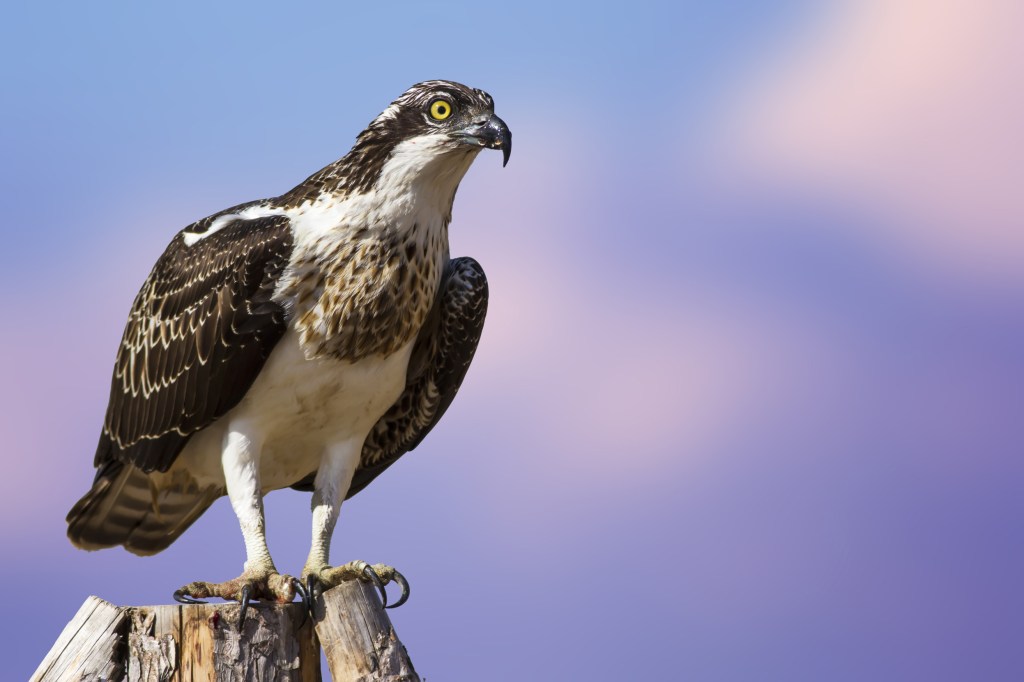
Osprey from the RSPB

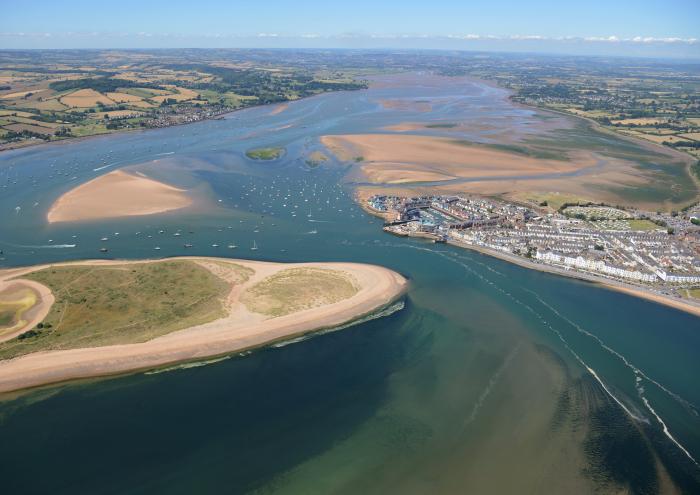
A few such sightings have come on the Exe, an estuary nationally important for its avian life, which just so happens to be fairly local to us. They’ve been spotted fishing, hovering or simply flying overhead. These majestic birds have been spending their precious time preparing for the next leg of their perilous migration. And believe me, it is perilous. Hunting pressures, draining of waterways, and disturbance play huge factors in making their journey so difficult. The odds are that less than half of the young Ospreys will live to their second year of life, showing the threats they face, both natural and human.

The Exe, among the other estuaries that exist along our south coast, are all crucially important for the migration of British Ospreys, because they pose as the last point of call before the channel crossing, during which they will have no access to food, water or resting points. Only when they reach the continent will they again be able to stop off when needed, and that makes their fuelling up at places such as the Exe even more crucial. If not done properly, they might not even get across the English Channel.

The Exe Estuary from South East Devon Wildlife

Ospreys have been completing this migration for centuries, but it hasn’t always been plain sailing for them here. Considered a threat to fish farms and stocks, they were routinely shot and killed by gamekeepers and sportsmen, and were considered vermin by many. Even in the last few weeks, one has been found shot in Perthshire Scotland. Egg collecting, a hobby made popular in Victorian times, helped to bring this species to its knees, until finally, in 1847, Ospreys became extinct in England and Wales. In Scotland, they disappeared by 1916. They didn’t breed in England for over 150 years!

But the world of conservation hadn’t given up just yet. In 1954, Ospreys bred in Scotland for the first time in decades, at Loch Garten, now an RSPB reserve. Despite this being a natural recolonisation, organisations such as the RSPB needed to give them a lot of protection and help for them to raise their young successfully. In England, it took a little longer, but after a male translocated to Rutland Water in 1997 raised a single chick with a ringed female, they were finally back! The Osprey was saved, and now there are around 300 breeding pairs in Britain. Now you might just be lucky to see one of these majestic birds of prey passing through near you!

The Farewell Flight is now Open

Hello! This post is all about hirundines, that family of birds whose exploits on the wing are almost unchallenged in the natural world. I thought I would write this post while many of these birds are making preparations for their return migration back to Africa. So this post is to explain what they’re doing, before they’ve gone and its too late for you to look out for any of these behaviours. You could even compare them to humans packing for a holiday, except these guys are packing themselves full of insects while they’re available! Read on…

Swallows!

So, what are the hirundines? The simple answer for Britain is four intriguing species. The Barn Swallow, the Common Swift, the Western House Martin and the Sand Martin. According to a height analogy explained to me by Nick Baker, Swallows fly low across the fields, House Martins around the height of, naturally, a house, and Swifts like to control the higher airspace. The Sand Martin is less common, and you’re really unlikely to see it in urban areas, unlike the three former hirundines.

There are two definitions of a hirundine, according to the Collins English Dictionary. The first is ‘of or resembling a Swallow’. The second is ‘belonging to the bird family hirundinidae, which includes swallows and martins’. Personally, I prefer the latter, simply because it takes into account the existence of other species within the family. The former however is still true. Most of the species within hirundinidae do look like Swallows. One thing they all have in common though, from the Wire-Tailed Swallow to the Purple Martin, is that they’re all adapted to a life largely spent on the wing, with some almost exclusively.

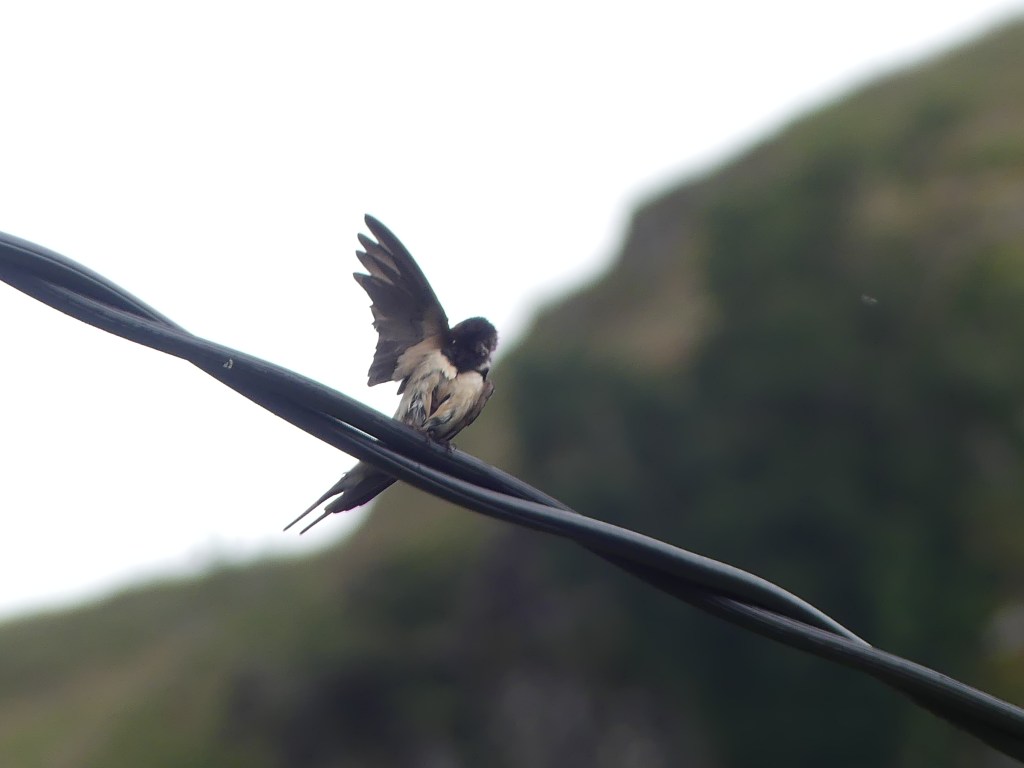
Barn Swallow Preening

And all that flying is crucial to their lifestyle, for their migration is one long and exhausting journey. Spending their winters in Africa, British Swifts have to migrate 3,400 miles to reach our shores and bring their beautifully evocative screaming calls to our shores. Yet they manage to complete this journey in around just four week’s time! Want to know how? Well, a Swift’s flying speed would be at home on our National Speed Limit motorways, with them clocking speeds of almost 70mph. Once they’re here, they leave no time to waste, arriving from early May and leaving around mid-July. So, by the time you’re reading this, most of them will have left. But have no fear! They should be back next year!

After arriving here, any hirundine’s main purpose will be to find a suitable nest site in order to breed. In times before urbanisation and modernisation, these birds would nest in tree cavities, on sheer cliff edges and in other hard to reach places. But now, they have come to rely on our infrastructure, and many have chosen to nest in the remarkably similar eaves of our houses. Raising their young will become the main feature of their holiday, and TONNES of insects are needed to support our population. That’s if they get here first, because their migration, despite their incredible speed, is truly perilous. Just four years ago, back in 2020, a freak Mediterranean storm left dead Swallows and Swifts littering the streets of Greece, helpless to the wrath of the Earth’s weather systems. This of course affected the numbers of birds that reached Britain, and that severely dropped, leaving expectant swallow and swift lovers ringing in to conservation organisations and newspapers alike.

By now, large parts of the breeding is complete and Swifts are already largely departed, with House Martins beginning to follow suite, but some of them will remain until October, along with the Swallows. Feeding up is crucial to their return migration, so many will be catching as many insects as they can in order to build up body reserves to fuel their next 3,400 mile migration exploit. As we move in to late summer, expect to see large numbers of Swallows gathering on power lines, in their own departure lounge, preparing for their journey.

What are you looking at?

And by October, almost every single hirundine will be gone, travelling to their African wintering grounds ready to return next year. The emphasis is on the word almost, because a few plucky Swallow individuals have successfully attempted to overwinter in England! This may sound like interesting news to some, but it shows the effects a warming planet have on our wildlife.

Swifts alone will pass through the airspace of around 25 different countries en-route, proving how well travelled our feathered friends are. They’ll probably get to see more countries than a lot of us ever will.

But the next few generations are facing challenges that their ancestors didn’t have to. And that, unsurprisingly, is thanks to us (we really know how to screw things up don’t we?). According to the latest Breeding Bird Survey, Swifts have dropped by two thirds since 1995, while Swallows are about half as numerous as they once were and should be now. House Martins declined by 57% between 1969 and 2018, and there are many reasons to this. For one, there just aren’t as many insects as there used to be. Use of pesticides, loss of habitat to development and climate change are killing off the pillars that hold up the entire food chain. Without them, society collapses. And that is no exaggeration. On top of this, we seem to despise the very possibility of any other creature living in our houses, including birds nesting. The once clever adaptations to nesting in roof eaves are finally backfiring, with modern housebuilding not allowing for these plucky visitors. And people even buy bird netting to completely prevent the avian world from getting anywhere near them. And this is simply crazy. Has the country rapidly developed a bird phobia? Its not like they’ll do any damage. They simply want to nest in the already existent gaps in your house. Why would you begrudge them this?

And then there’s the problem of our poorer, wetter and colder summers, growing ever less warm and sunny. No Brownie points for guessing why, simply because the answer is staring the whole planet in its deluded face. It is, of course, Climate Change, created by humanity thickening the atmosphere with greenhouse gases, and wrapping the planet in a blanket that is far too warm. Thats what’s driving these irregular weather patterns. That’s what’s interrupting evolutionary links that have existed for millennia. That’s what can prove deadly to not just our hirundines, and the whole natural world. We arrived centuries late to the party, and think we can destroy what has existed long before us. This planet’s history. That’s what frustrates me the most. People don’t seem to care for our planet’s past, and how it set itself up to live many millennia into the future.

So, to conclude this hirundine post, these birds are truly incredible. From perilous migrations, to insect chasing acrobatics, their adaptations to a life on the wing make them some of the most accomplished fliers in the avian world. But they need our help, and our society needs to make changes to accommodate not just Swallows, Swifts and Martins, but the entire natural world.

It’s Bird Moulting Season

Have you ever noticed a bird looking completely different in the winter, after you’d seen it in the summer? Different colours, patterns and plumages are actually completely normal. Or have you suddenly realised that you’re not seeing as many birds as usual in your garden? There’s likely a few reasons for this, but one of the main causes is that your resident visitors are hunkered down, shedding their old feather tissues and growing new ones.

Where are they?

So what triggers the moult? The process occurs in response to several hormonal changes that are brought about by the change in season. It’s a complex process that we don’t know huge amounts about, because when birds are in moult their main aim is to stay hidden and secretive. Without their feathers in perfect condition, they cannot fly away, which is of course their main defence against predators. Shedding these old and damaged feathers keep the bird largely grounded, and its a risky time for our feathered friends.

Prime time for moulting is the month of August, which of course we have just began. The weather is at its warmest theoretically, and so it is the best opportunity to start this process. Later or earlier in the year, and it’ll be too cold without their main feather insulation. You can see the one flaw in this evolutionary feat. With our summers and Augusts frequently experiencing a lot more rain and low temperatures than in the years gone by, moulting birds will be vulnerable and have to adapt quickly.

August is also prime baby bird time!

Moulting is not painful for the birds involved. Their feathers have evolved to drop out seamlessly and naturally when the time is right. During the year, a bird’s feathers will simply just stop growing, and by now they’ll simply be dead tissues awaiting the hormonal triggers that allow them to just drop off. A dead tissue can be of no more use than it already is, so all species birds grow new ones.

You can identify a moulting bird by missing primary flight feathers, that will leave gaps in the outline of the wing. But for some species its quite a bit easier. The humble Mallard is a duck familiar to many people across the globe, and it among other ducks goes through a several month moulting process in which they achieve a plumage known as the eclipse. They will lose their often brightly coloured plumage and replace it with a dark, plain and sober dress code. Now, define eclipse. It means to cover, hide or deprive something of brightness. Mallards deprive themselves of their stark plumage that is attractive to both females and predators, and moult so during the autumn they are able to camouflage themselves with this drab phase.

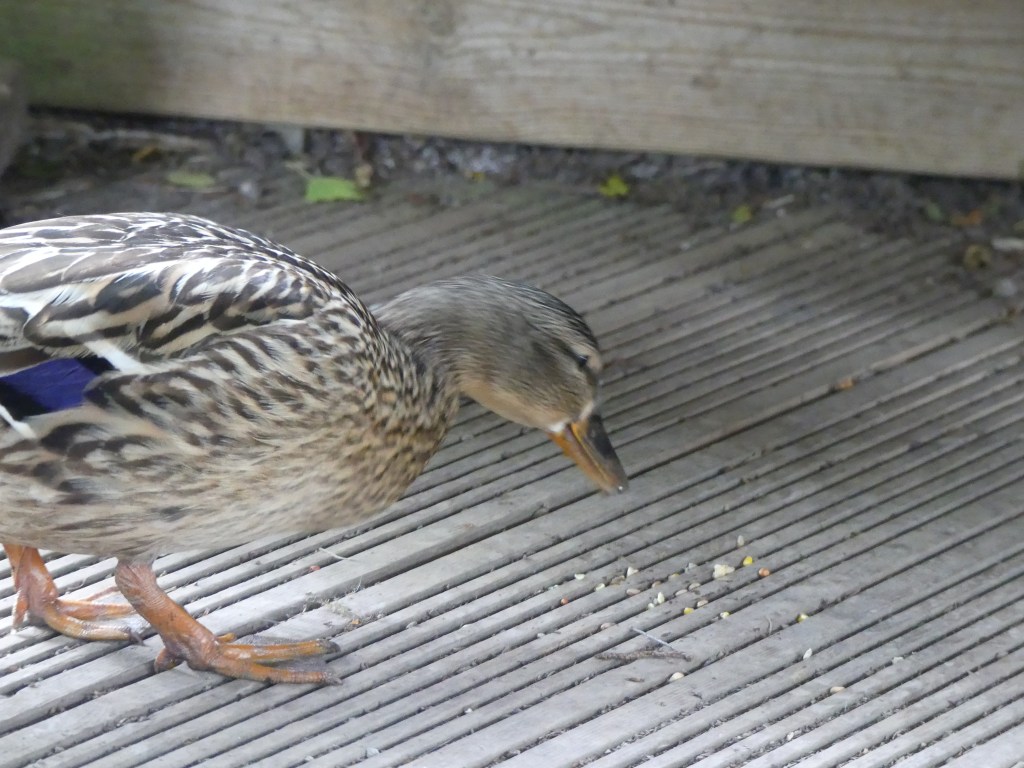
A female Mallard. Its plumage is reminiscent of a male’s eclipse moult.

Which leads me nicely on to how many times a year birds moult. Birds usually moult once or twice a year. For example, the Black Tailed Godwit has a brick-red head, chest and neck in the breeding season, but during winter it becomes a drab grey and white. This is the same with many waders and waterbirds, with explosive, regal breeding phases and drab, inconspicuous winter plumages. Other birds may only moult once a year, such as the Blue Tit, that quintessential garden bird across most of the UK. If they are visiting the garden this time of year, they’re likely to be looking a bit ruffled in certain places. My resident birds certainly have scruffy head feathers, and that’s because the Blue Tit and many other species undergo the moult in phases. First to go are the covert feathers, the tertials follow, the rest of the body comes penultimately, and finally the head is dealt with.

Looking pretty ruffled!

And that concludes my guide to the moulting season. In general, a moulting bird can take six whole weeks to complete this process, which is actually remarkably quickly when you look at the size of the little things. I hope this blog proved helpful to those who have read it, and that you have learned something new about the avian world!