
In the corner of the garden lies a pond. At first glance, it appears modest and slightly shaded from the overhanging tree next door. But a cluster of tall, stout-stemmed plants clings to the far edge. Your eyes are immediately drawn to, not their unflattering bulbous joints, but to their dazzling pink flowerheads, resplendent and incongruous against the overcast English skies. And yes, the Himalayan Balsam is a stunning plant, and you can see why the Victorians introduced it to Britain in the first place.
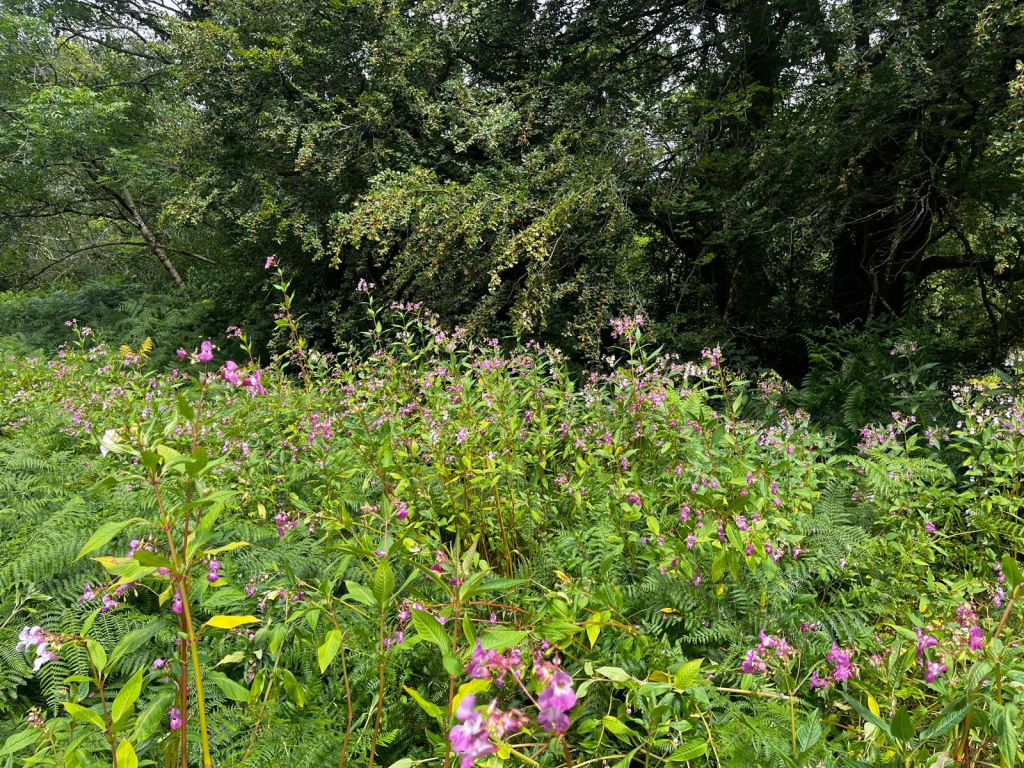
The sad truth is that it is an impostor, one that wreaks havoc for our waterways and native plant species. And it’s not alone, with around 2,000 non-native species having established breeding populations in the UK according to the Non-Native Species Secretariat. They’re not all negative, of course. Species like the Rabbit have been here long enough to have integrated into our environment and now play a key role in the maintenance of rare open habitats. And there are several positive stories of non-native species on our shores, one of which I guarantee you have never heard of and I can’t wait to tell you about. But I also have to cover some significantly negative invasive species in this blog, and ponder whether, in time, they ever really could become a functioning part of the UK’s mosaic of ecosystems.
In the past year or so, with the Dartmoor Youth Rangers, I’ve done a fair bit of volunteer work to remove invasive species, mostly Himalayan Balsam and Western Skunk Cabbage, which like the Balsam was introduced to the UK as an ornamental species for gardens, and escaped to aggressively dominate some of our fragile wetland habitats. Pulling up Balsam is an addictively satisfying practise; I highly recommend it to anybody who would like a less mainstream form of stress release.
They pull up with little resistance, and their scarlet roots, usually hidden in the soil, emerge looking like alien fingers. What gave me the idea for this blog was the amount of bees and wasps I saw feeding on the nectar from the plant. Initially it frustrated me; don’t pollinate what I’m trying to remove! But if it’s supporting so many of these pollinators, then might it have a place somewhere here, in much smaller and controlled numbers? And so I did some digging, deciding to write up a showcase of some of the UK’s most detrimental invasive species and see if I could find some benefits to them. I even threw in a completely positive one towards the end, just to keep you hooked!
Before we go any further, we need to come up with a definition for an invasive species. In light of this revelation, I propose ‘a non-native species that causes harm to or alters an environment, either negatively or positively’. The word invasive immediately screams of harmful connotations, but in this context it simply means it wouldn’t be here without human introduction. This can come in many forms, for example cagebirds or house plants. If they find a way to escape or simply spread out of their designated purpose or area, as it is their instinct to do, they often find they can multiply fairly rapidly, usually because they can outcompete a native species or have no natural predators here.
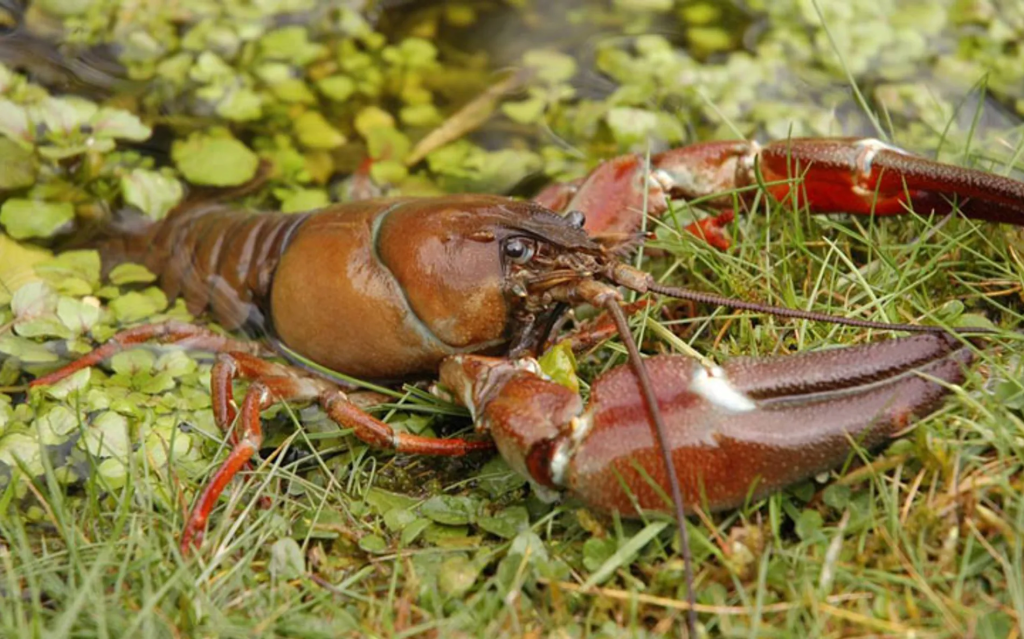
Starting off with a bang, I give you the American Signal Crayfish. Being honest, it’s a beastly thing and one I struggled to find any true benefits for. It was introduced to the UK in the 1970s for the restaurant industry, but their populations quickly grew out of hand, and heavy floods damaging enclosure ponds allowed them to crawl right into adjacent waterways. They’ve proved incredibly destructive, feeding voraciously on native fish and invertebrates. Their tunnels erode and undermine river banks, and more still, they spread a deadly plague to our native but hugely threatened White-Clawed Crayfish, who have halved in number since the 1970s, roughly the time when the Signal Crayfish were introduced.
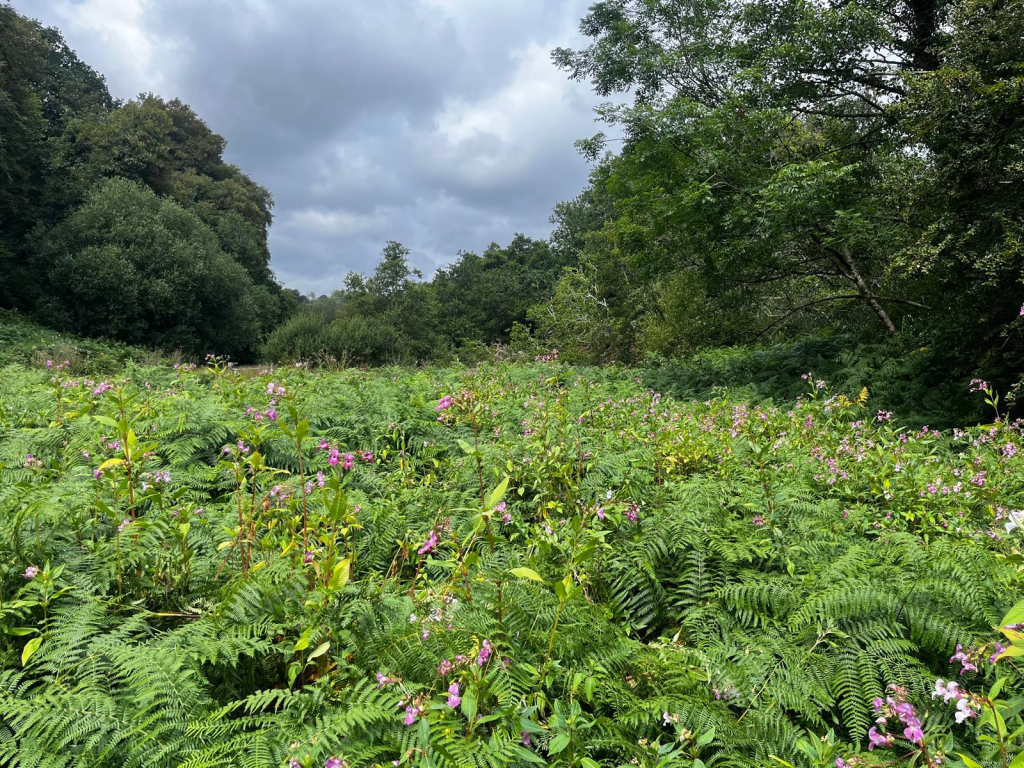
If you’ve been paying attention, you’ll know at least a little about Himalayan Balsam. As the name suggests, the plant originates from Asia, where it is a highly successful species due to its ability to block out light for other species and eliminate competition. Frustratingly, it’s also very good at doing that here in the UK, after being introduced by the Victorians as an ornamental garden plant. Clustering along water edges, meadows and floodplains, it can entirely eliminate other native flowering plants such as Meadowsweet and Bluebells, posing a huge problem for many already struggling species. It’s also a perennial species, meaning that it dies back in the winter, and then you can properly realise the damage large swathes of Balsam can do; it leaves everything bare, devoid of life. And it has no chance to recover, because by the time native flowering species and even the grass itself begin to return in the Spring, the Balsam is already there and dominant.
When it dies back, it can even cause heavy erosion of riverbanks. Without roots of any kind in the ground, the soil is literally just balanced there, and with rivers rising with heavy rainfall in the colder months, it just gets pulled away. The eroded soil, carried on by the water, can choke aquatic habitats, bury fish spawn and alter the water depth, leaving fragile freshwater ecoystems in ruin. And this cycle continues without intervention, because the balsam’s seeds are also carried in that water, washing up all over the place and spreading this demonic species.
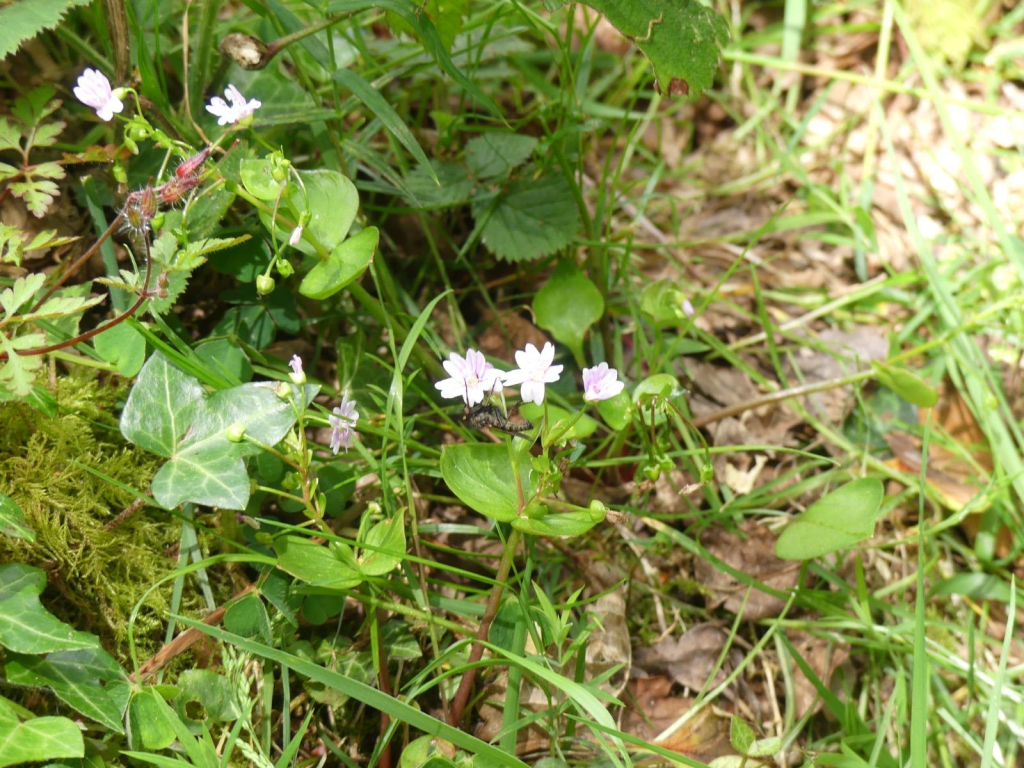
Now I’ll admit, it’s hard to find a silver lining in such an ecological mess, but as I mentioned earlier, the flowers do support our pollinators. They can produce massive amounts of nectar at faster rates than most of our native flowering species, and it flowers well into summer and autumn, when other food sources are dwindling for our struggling pollinator populations. The only problem with this is that conservationists believe that the balsam is distracting bees, butterflies, moths and other groups from our local flowers, ones we’ve grown up with like the Forget-Me-Not and the Cuckoo Flower; currently, thanks to the invasive Balsam, they’re not getting pollinated at the rates they should, and over time that could be highly damaging, not just to the flowers but for other species that rely on them, such as the Orange-Tip Butterfly, for whom the Cuckoo Flower is the foodplant of their caterpillars.
Moving on, most people in the UK will have some sort of connection with the Grey Squirrel. Shock horror, it’s North American and shouldn’t exactly be here, but to the Victorians (seeing a connection here?) they were considered fashionable and sought-after additions to manor gardens and parks. It’s very hard to imagine them being a status symbol today, for the obvious reason that they are almost everywhere. In fact, there are around 2.7 million living here, almost as many as the 3.5 million Red Squirrels that once called these shores home. Now there are between 140,000 and 290,000 of these cuter, much less destructive squirrels left, having been driven by the savage and intimidating Greys to the edges of their range here, for example in Scotland, on the Isle of Wight and the Isle of Man.
So, just how did they do it? The bigger, stronger Greys outcompete the Reds for just about everything. They eat all the acorns while they’re still green, while the Reds have to wait until the food matures; the Greys carry the squirrelpox virus, which is almost entirely fatal to their rusty cousins; and the Greys are needlessly destructive, stripping the bark from broadleaf trees to feed on the inner layers, and this will often consign the tree to its death. On a side note, they can also create standing deadwood through this process, benefitting many insects and species like the Lesser Spotted Woodpecker. But, to summarise, by simply existing in the wrong place, the Greys have caused huge amounts of damage, that currently it’s hard to imagine we can fully reverse.
Onto a species whose being here makes even less sense at first glance than the Squirrels, the Ring-Necked Parakeet. That’s right, Parakeets. In London. While you let that sink in, let me tell you exactly how this came to fruition. To be honest, it’s probably more obvious than it seems! Native to central Africa and South Asia, they were brought over as cagebirds and pets in the 1960s, and escaped through random, erratic releases throughout the late 1900s. Since then their numbers have grown to over 30,000 according to the BTO, with our increasingly mild winters and plentiful urban food aiding their meteoric rise. Recently they have been showing signs of spread, with sightings as far north as Manchester and Newcastle. So, why are they considered invasive, apart from the fact that they shouldn’t really be here? Well, have you ever seen a Parakeet on a bird feeder? As unwieldy and unflattering as they look hanging from a cylinder slung over a tree branch, they tend to dominate feeding stations where they’re present, and often outcompete species such as the Nuthatch and the Great Spotted Woodpecker for increasingly scarce tree-hole nesting sites. They’re also considered an agricultural pest in some areas, with flocks of the birds moving through and demolishing fruit orchards and crops.
However, they do directly benefit a couple of species, one of which being what I believe is the most overlooked species of bird in the UK. In case you forgot about it, it is, of course, the Stock Dove. By enlarging existing tree holes and cavities for themselves, the Parakeets also create more suitable nesting habitat for the Doves. Any birds breeding near a Parakeet nest would also benefit from their obsessive mobbing of potential predators, and when you really think about it, these Parakeets are rather imposing birds when chasing after you, screeching and squawking their heads off.
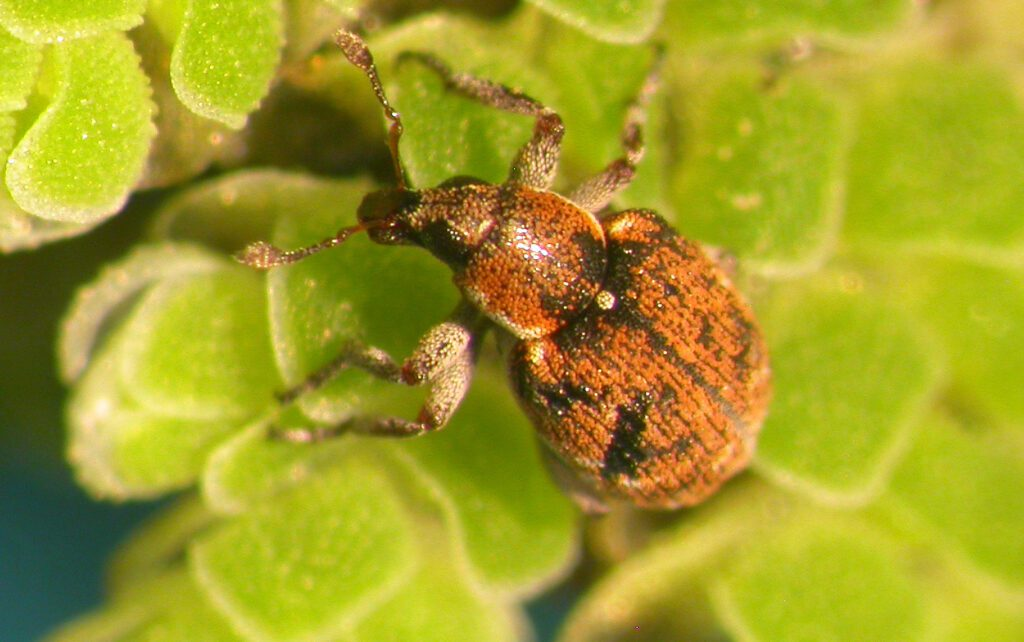
And finally, I told you I’d have an entirely positive invader, although this one’s slightly different. The Azolla Weevil was introduced to the UK by ecologists themselves, in order to control another, more damaging invasive species. The Water Fern, whose thick red and green surfaces carpet bodies of water, can deoxygenate the water and suffocate fish, invertebrates and water plants. There are even several cases of livestock mistaking large swathes of the plant for solid ground, stepping onto it and falling into deep water. The Weevil’s release and populations are strictly controlled by the Environmental Agency, but it is still highly effective in controlling the Water Fern numbers, as, back home, it’s sole food plant is the latter. Without the use of damaging chemicals and pesticides, the risk of harming the ecosystem is low. A positive invasive species then!
All of the species I’ve showcased here, with the exception of the Azolla Weevil, are highly damaging to our ecosystems and native wildlife, despite any benefits and positive effects they may have on the side. Invasive species in the UK are controlled through a number of methods, such as widespread trapping for creatures like the Grey Squirrel and mass hand pulling, often by volunteers, for plant species with shallow roots, such as Himalayan Balsam. Most of these species will likely never be fully eradicated from our shores; regrettably, that ship has sailed. But we can signifcantly control their negative impacts through methods such as these.
Due to Climate Change, Britain can expect, especially in the south, to an increasingly warm climate within the next few decades, not dissimilar to that of the Mediterranean. Naturally, species that traditionally are adapted to living in these sorts of environments such as the Holm Oak and the Bee-Eater are likely to, and in some cases have already begun, colonising. Meanwhile, traditionally migratory species such as the Swallow have already begun to take advantage of our milder winters, with several individuals having been found to overwinter in Cornwall in recent years. There’s going to be a lot more competition for our native species soon, and some of them are likely to be pushed out of certain areas. My reasons for ending on this point is that these new arrivals could have an effect rather similar to what invasive species are doing here at the minute. One thing’s for sure, the next few decades are going to be very interesting for our biodiversity.

