
Natural disasters are a fairly regular thing nowadays, happening all over the globe, from landslides to flooding to hurricanes. These events often claim many lives, and they’re only going to become commonplace now the world is in the grip of climate change. Weather forecasting can sometimes be unreliable as to when these disasters will happen, and prior notice can save hundreds of lives.
Our ancient ancestors used birds to predict weather fronts, and this has carried down through the ages. But is this just an old wives’ tale, nothing more than a myth belonging to the pages of folklore? As the world warms, we need to prepare for what could be the worst, if we don’t reverse it first. So, is there an avian answer?
Well, one such study thinks there is. In 2014, a crack team from the University of California set out to find out whether birds really could notice devastating weather patterns before us and our satellites did. And what they found was truly astonishing. Like all the best discoveries, they found the breakthrough they needed quite by accident. They realised that a group of Golden Winged Warblers fled their breeding grounds with no warning in the Cumberland Mountains, Tennessee. It turns out that they fled 24 hours in advance of several terrifyingly powerful supercell storms that would go on to spawn 84 tornadoes and kill 35 people.
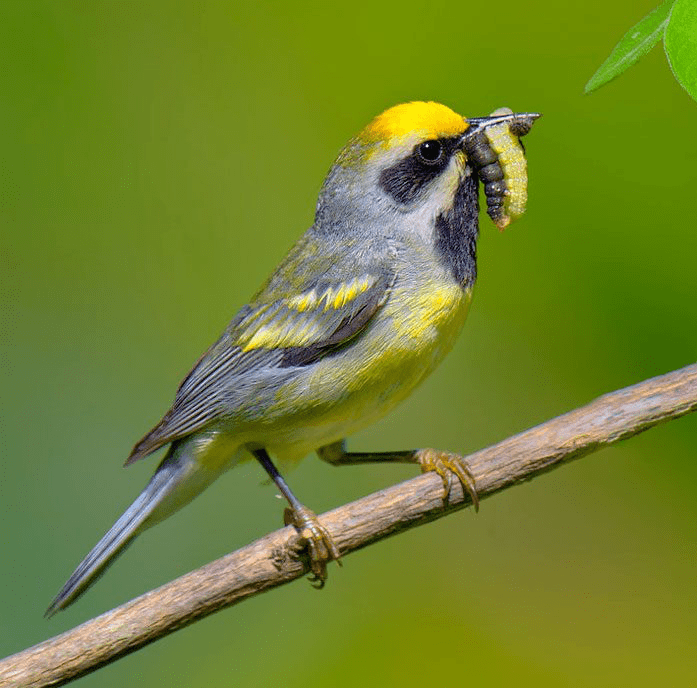
At the time, the researchers were studying the minute birds to see if they could fly with GPS devices attached to their backs. They’d only just returned from their South American wintering grounds when they abandoned ship 24 hours before the storms arrived. What came as a surprise was that each bird acted independently of one another, with one ending up all the way down in Cuba! Many seeked refuge on Florida’s Gulf Coast, but one thing connected each little songbird. They all knew which way to fly to avoid the storm.
They all either moved south-east ahead of the storm, or swerved around to come up behind it. And all this was in spite of the 2500km migration they’d only just completed! The warblers evacuated their breeding grounds when the tornadoes were still around 900km away, and at this time weather conditions in the mountains were completely normal. Atmospheric pressure, wind speed and temperature were all at the usual numbers. So how did they know?
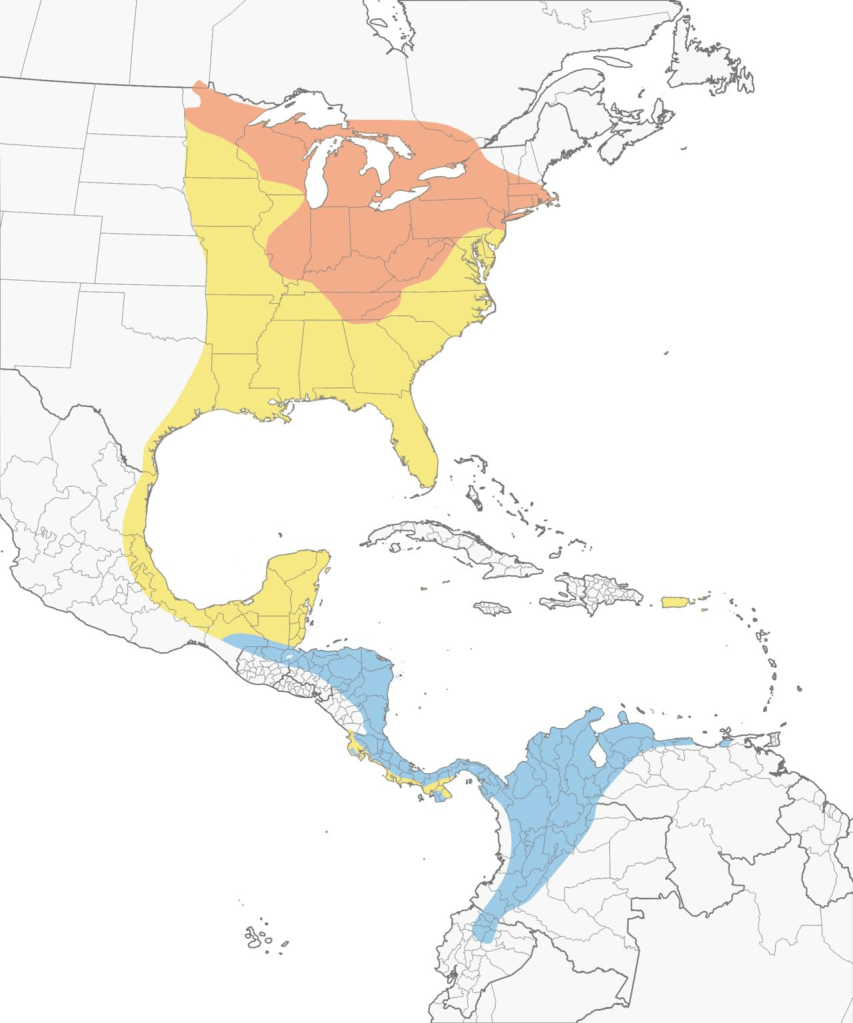
After the storm had blown over, the Golden Winged Warblers returned to their breeding grounds in the Cumberland Mountains and resumed breeding business as usual. Here the researchers recaptured the ones with geolocators, and found that the little birds had flown at least 1500km in total! And this evidence isn’t alone. There are several instances of birds completing sudden, unplanned migrations to avoid extreme weather conditions.
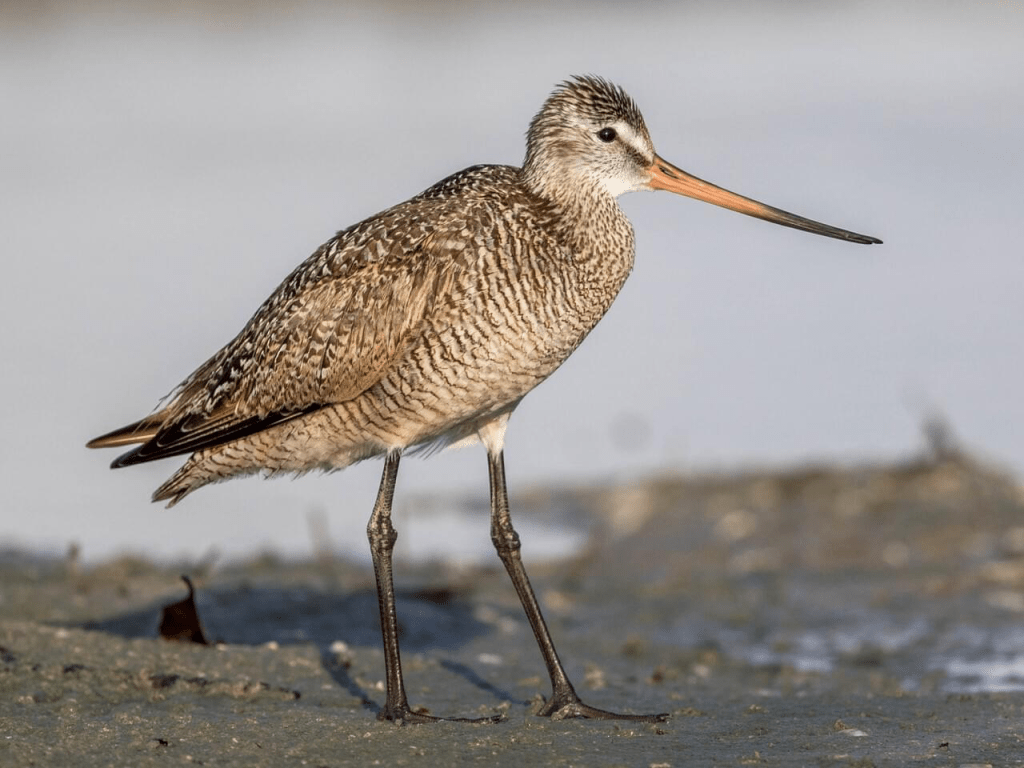
About a decade earlier before our plucky team of California researchers, a Marbled Godwit who had been fitted with a state of the art satellite tracker undertook its normal migration from Alberta to Baja California, its wintering grounds, where it remained for a well-earned rest for several weeks. Nothing surprising there. But then, just before the arrival of the infamous Hurricane John, the bird took to the wing and flew all the way back east to Texas! A report was published in the ornithological journal, North American Birds (read that here) which included the statement ‘as almost nothing is known about individual bird’s responses to approaching tropical cyclones, this bit of information is most intriguing’, which I think sums it up perfectly.
But a more recent study is truly groundbreaking. What if birds could predict hurricanes not a day or two, but months in advance? Enter Dr Christopher Heckscher, from Delaware State University. Alongside one ruddy-coloured little thrush, he accurately predicted the entire 2018 hurricane season before most meteorologists did! But how exactly was this possible?
Dr Heckscher had been studying the Veery for 20 years, and had been amassing data as to how the bird’s nesting habits correspond to the severity of hurricane seasons. Veeries, a small North American thrush, nest in the forests of the northern United States and southern Canada, and overwinter in the Amazon. Their migration route is somewhat perilous, taking them through prime storm zones in the Atlantic Ocean and the Gulf of Mexico.
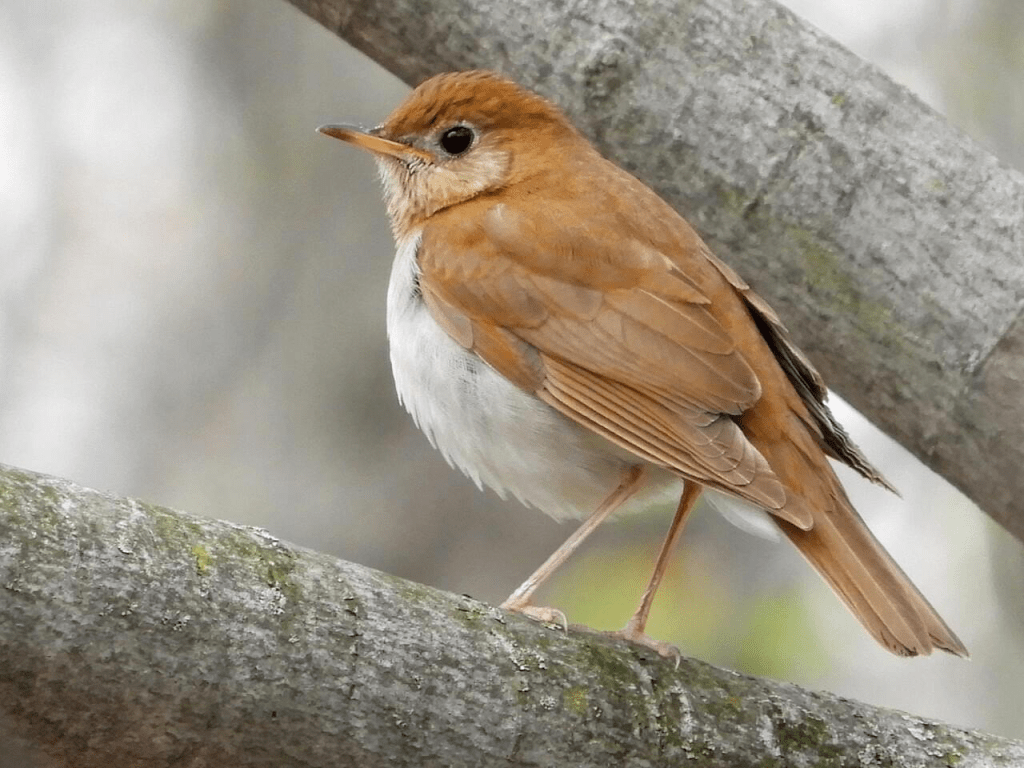
But here’s the catch. Veeries usually produce just one succesful brood a year, with most early nests failing due to predation or bad weather conditions. They’re hardy, and will keep trying until they hatch chicks or too much time passes, in which case they’ll moult their feathers and leave their breeding grounds. Dr Heckscher found that in the years that had played host to a more severe hurricane calendar, the Veeries somehow knew to finish breeding and moult earlier, in order to avoid the storms on their migration south!
He may have only studied a few pairs, but he collected data over a period of many years, and you have to admit the evidence is quite compelling. Every correlation is statistically strong. Dr Heckscher doesn’t know how the Veeries could predict the hurricanes months in advance as of yet, but he has got a few theories. He thinks that the thrushes may be attuned to the precipitation patterns are linked to the El Niño and La Niña cycles that have huge impacts on hurricanes and their movements.
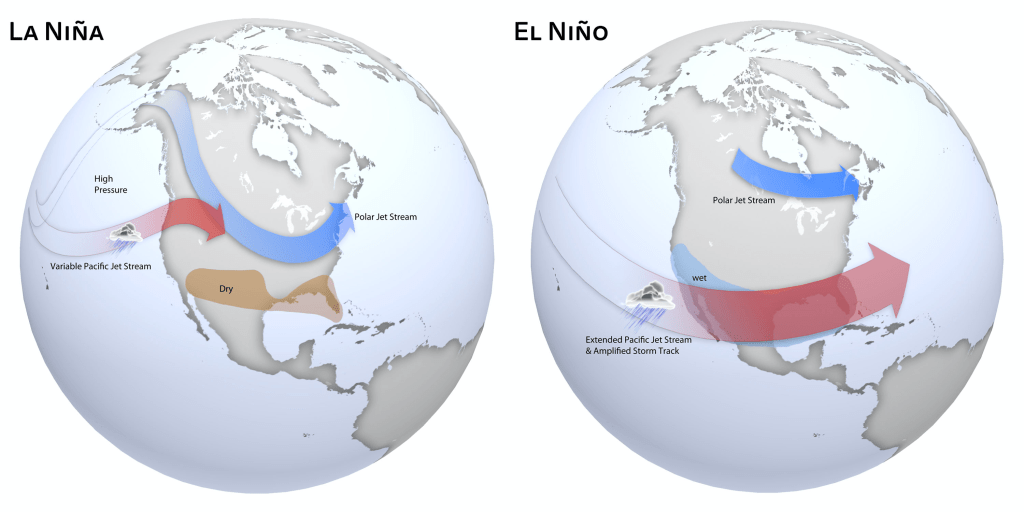
And about Dr Heckscher’s phenomenal prediction, he predicted a hurricane season that would be a little stronger than usual, with an accumulated clone energy (ACE) of between 70 and 150, while meteorologists forecasted a season where the hurricanes were taking it a bit easier, with an between 60 and 130. Dr Christopher’s forecast ended up almost bang on, with the ACE that year being a round 129! Incredible!
So, based on the findings of some clever researchers, it seems that there is an avian answer to our struggles with storms. Imagine if we could observe birds like the Veery more, and in turn be able to predict hurricanes and tsunamis months in advance. There would be so much more time to put precautions in place or evacuate. Who’d have thought it? Birds could actually make the world a safer place!
Sources:
birdspot.co.uk/bird-brain/can-birds-predict-storms
hakaimagazine.com/news/can-birds-help-us-avoid-natural-disasters/
aba.org/american-birding-podcast-veery-meteorology-with-christopher-heckscher
sora.unm.edu/sites/default/files/journals/nab/v061n01/p00150-p00154.pdf

