Flight of the Barn Doors

Mallorca so far had been incredible, with so many birds, insects and plants already having been seen just from our villa! On top of the birding, it had been great to have time off from the stress of daily life back home, and I was really getting into the swing of just being relaxed. But we were yet to go off on a big birding trip, and on Thursday we decided to undertake one.

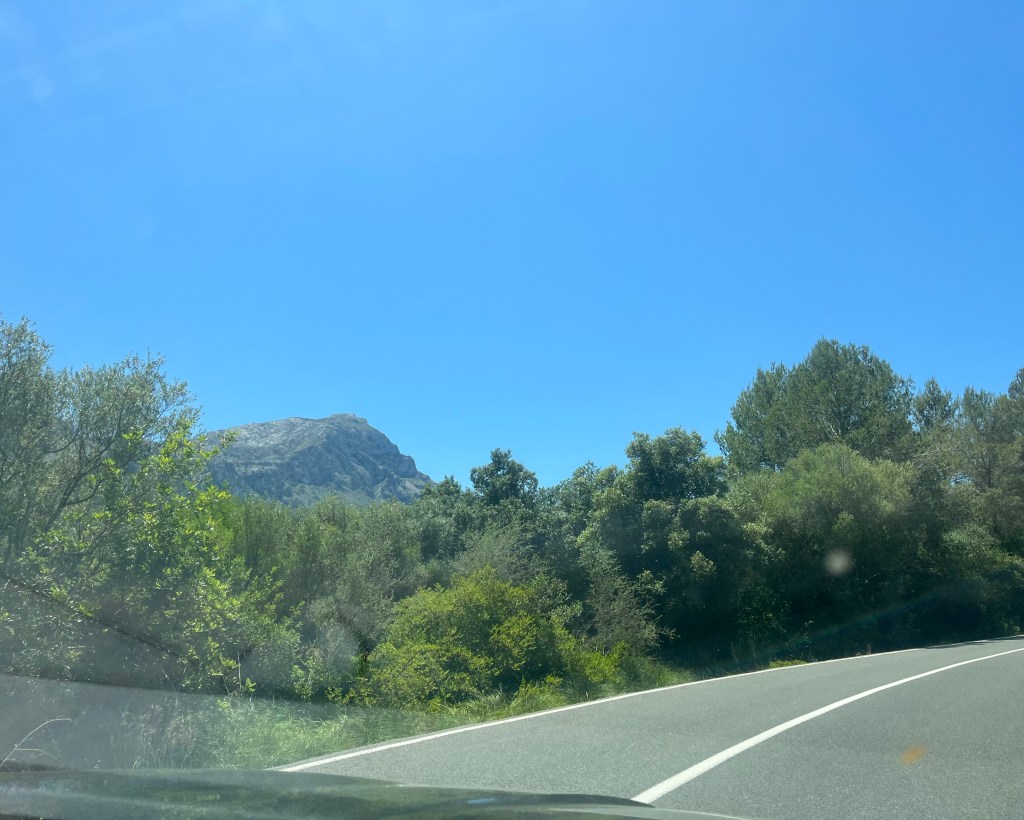
The road up to the Tramuntana Mountains is slightly frightening. It’s high, it’s bendy and on the outside lane there is nothing but a metal barrier and some bushes between you and a sizeable drop. The lay-by we parked in was also fairly terrifying, but I would argue that it was worth it. I would also argue that it was worth braving the immense heat, all for the quality of birding we experienced that afternoon alongside Pere Tomas, who is in my opinion Mallorca’s finest bird guide. He’s also my good friend, and we were heading out into the mountains with him and a tour group to do a spot of raptor-watching.
So high up!

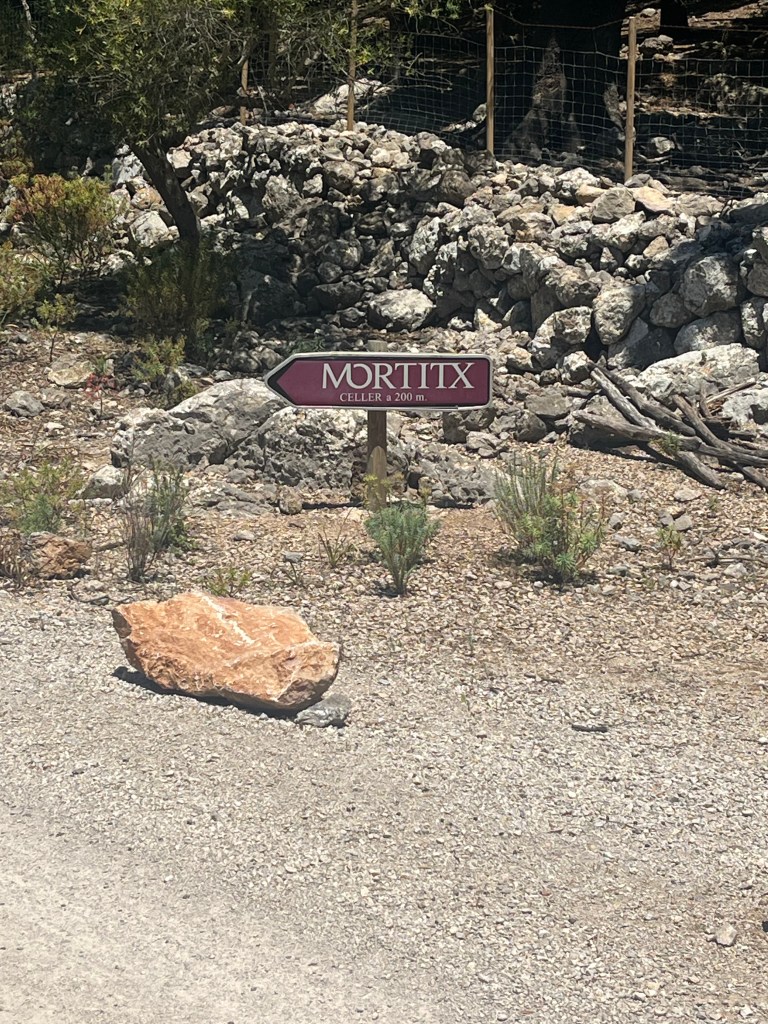
There were to be three main target species; the Griffon Vulture, the Black Vulture, and the jewel in the crown, the Bonelli’s Eagle, with a pair holding territory in the Mortitx Valley, the section of the Tramuntana Mountains we were travelling through. The Serra de Tramuntana is a UNESCO World Heritage Site, complete with dramatic landscapes, rocky outcrops and diverse flora and fauna. It is also one of the most breathtaking places I’ve ever been lucky enough to visit, and boasts Mallorca’s highest peak, the Puig Major, at a height of 1436 metres above sea level. The Mortitx Valley certainly fits the bill, with its rugged terrain offering a blend of habitats such as woods and vegetation, coastal cliffs, rocky ridges, and mountains.
The Mortitx sign


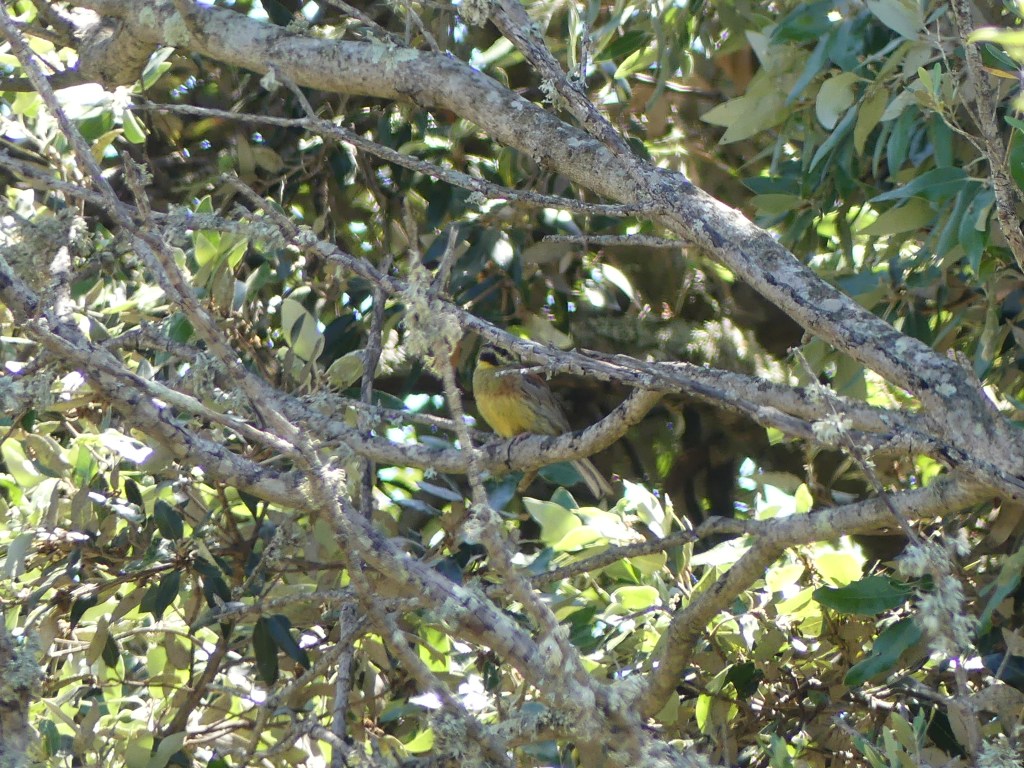
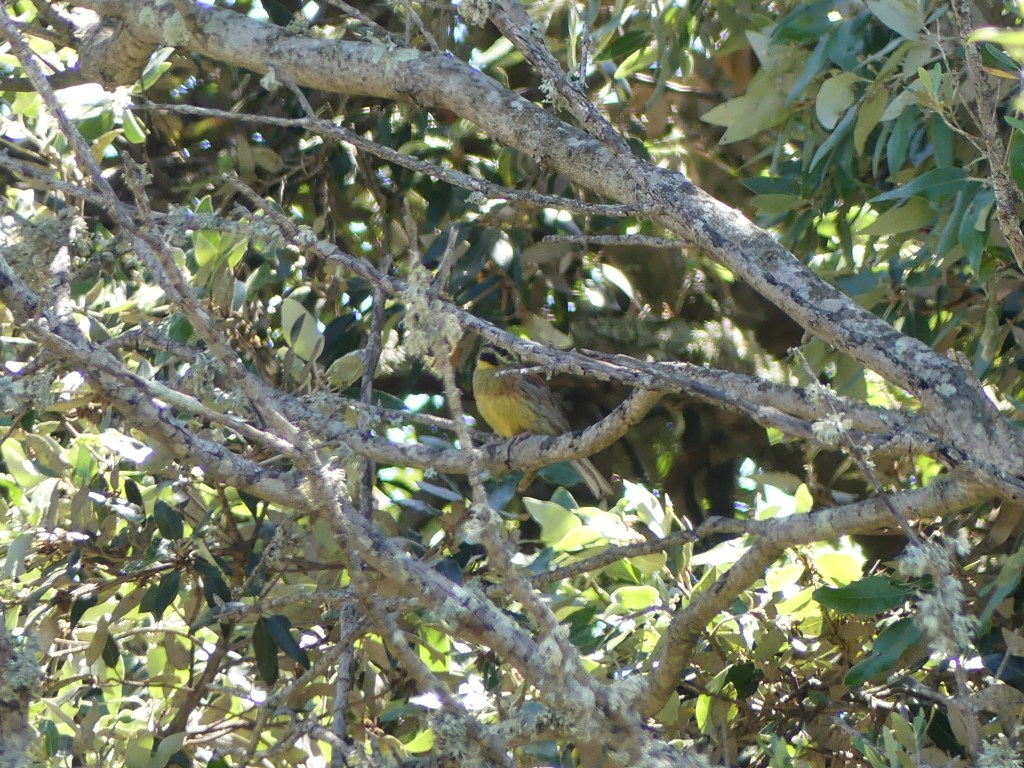
Instead of one of the three species mentioned above, we kicked things off raptor-wise with a Red Kite, flying low over our heads before soaring off over the rocks and disappearing over a ridge. We were quite high up at this point, but soon the path took a downwards route, and we trekked down into the valley. We stopped to identify and admire a pair of Cirl Buntings trickily concealed within a bush. Cirl Buntings, while they may be relatively common on farmland in Mallorca and across the continent, are currently restricted in the UK to small patches in the south of Devon and Cornwall, under the unyielding protection of the RSPB. They were once widespread across Britain, but due to the intensification of agriculture, they experienced huge, rapid and devastating declines that left them on the brink of disappearance. However, the population has bounced back admirably, going from 118 pairs in 1989 to just over 1000 recorded last year in 2024. If all goes well, hopefully this striking bird will be all over UK farmland once again in the years to come.
Male Cirl Bunting

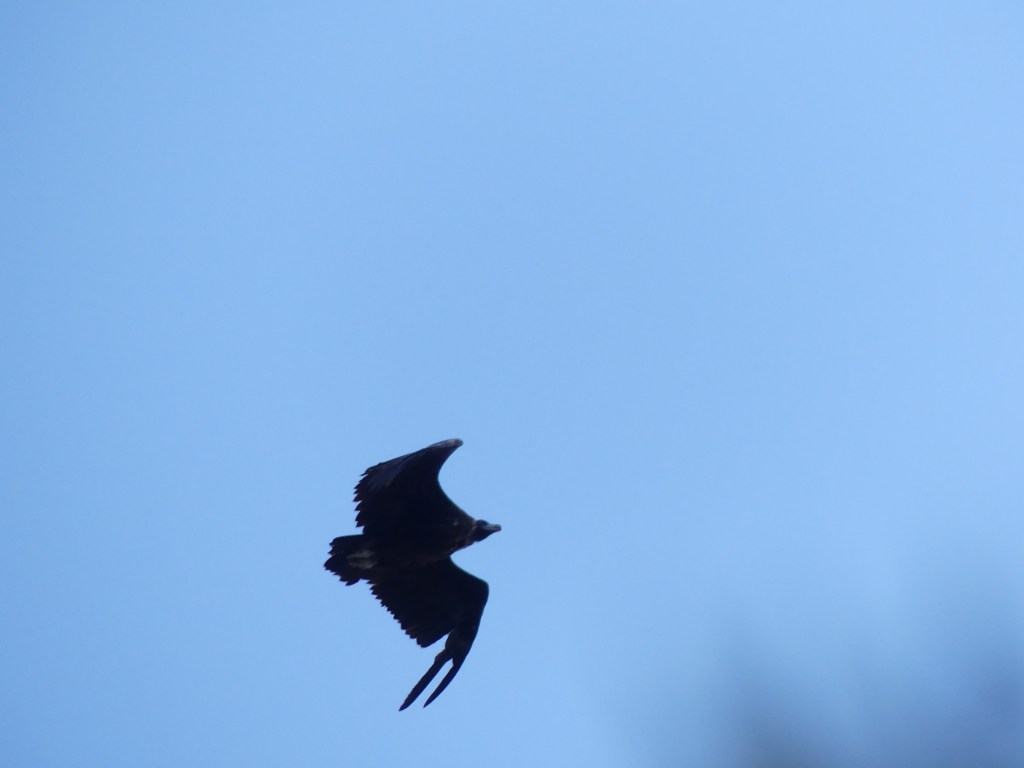
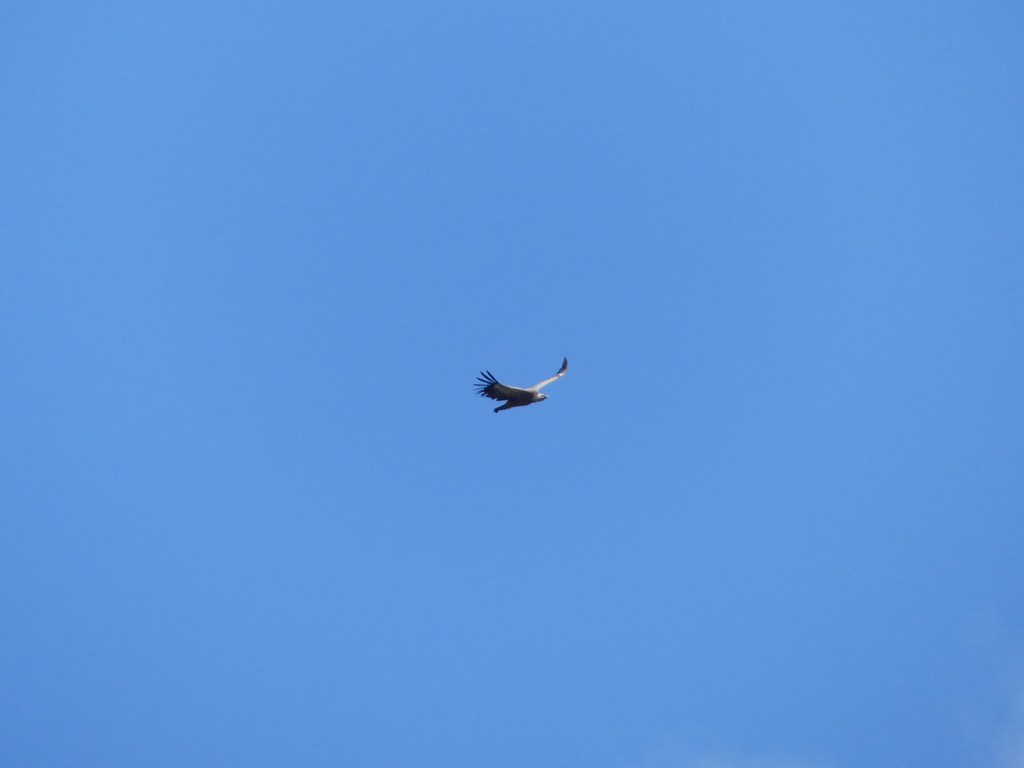
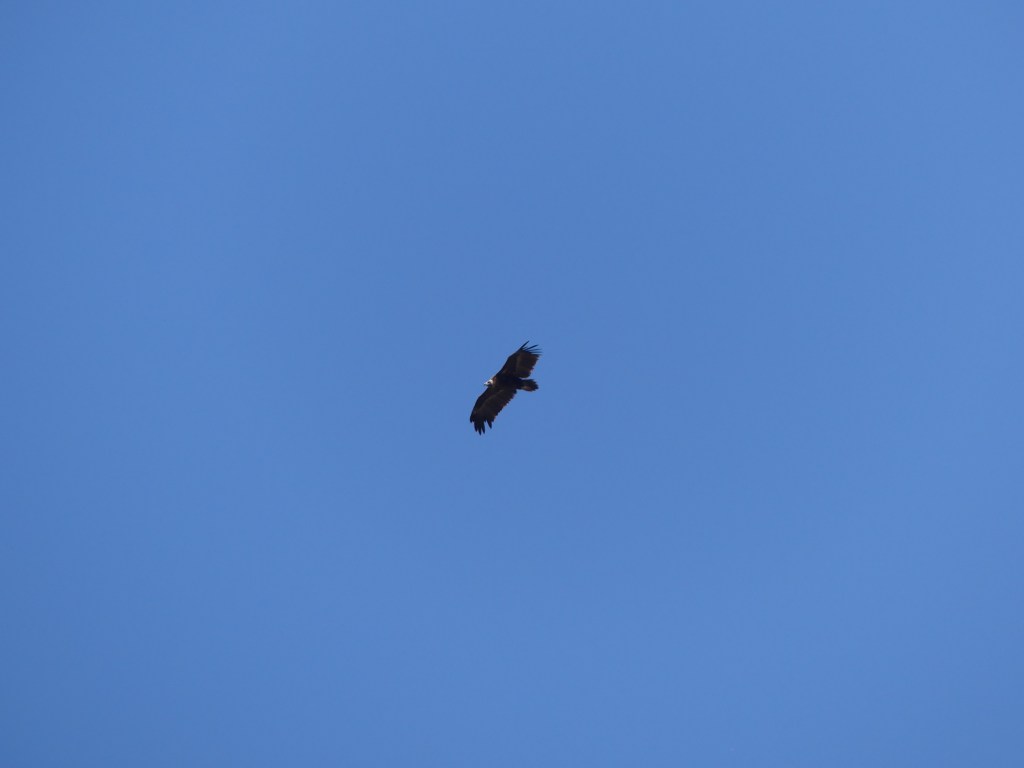
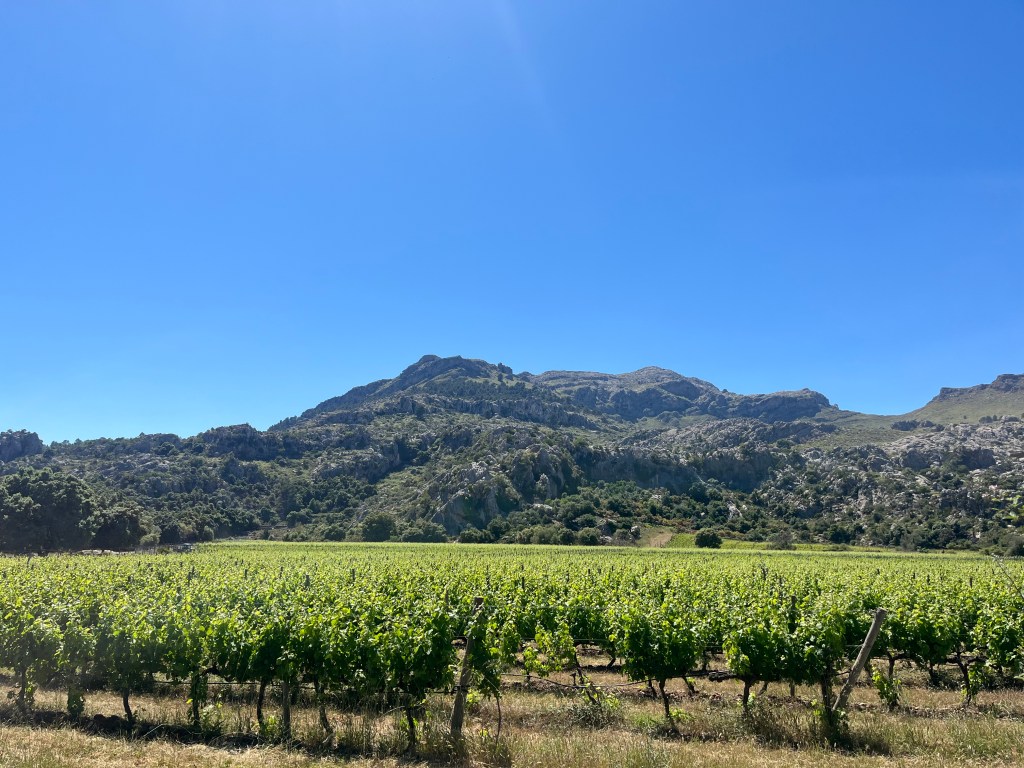
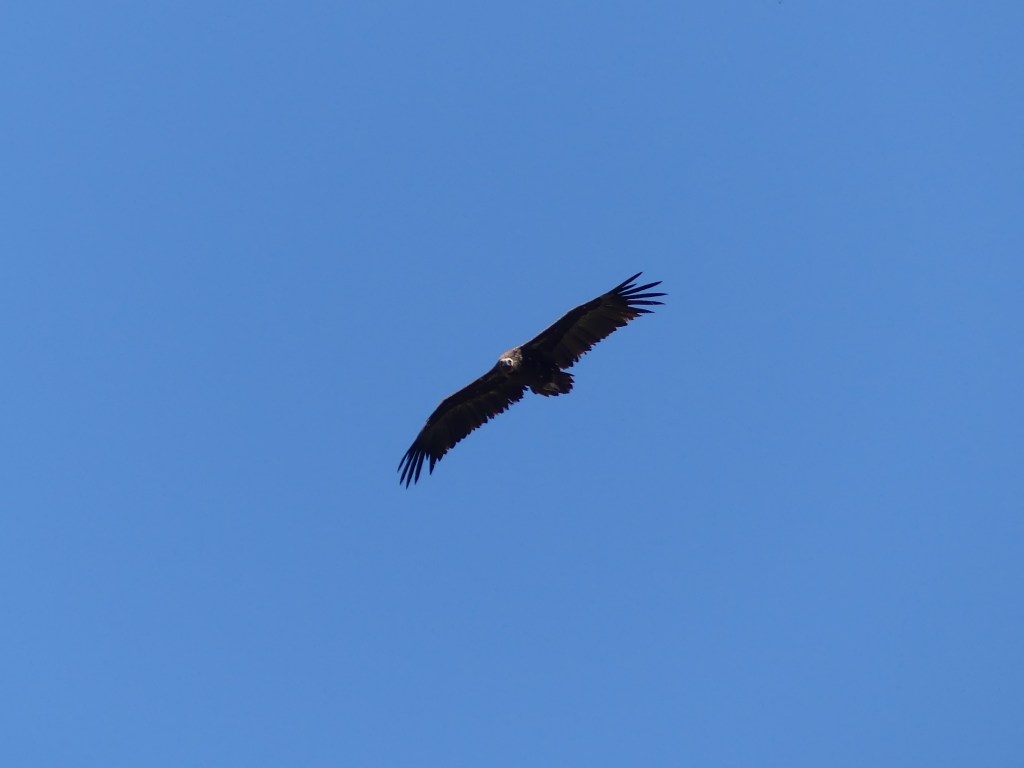
By now, it was mid-afternoon, and the heat was really starting to kick in. There was little shade on the scrubby mountainside, and we paused beneath stunted trees every so often for a well-earned rest. Sardinian Warblers, a Mediterranean specialty, were everywhere around us, calling loudly and flitting from bush to bush. The male birds are truly stunning, with their jet-black head making them unmistakeable on the island. As we leaned over a fence and scanned a vivid green vineyard, we caught our first sighting of one of the Tramuntana Mountains’ most famous residents. High over our heads flew a Black Vulture, its huge wings broad like barn doors. It scanned the ground below it with merciless determination, and quickly used the thermals the heat was forming to circle higher above us. The Black Vulture is the largest bird of prey in Europe, with its wings able to grow to 3 metres (9.8 feet) long! It’s sheer size was clearly evident even from our viewing point far beneath the bird, and you could see how it earned its title!
Huge Black Vulture
Vineyards


Abruptly, as if telepathically summoned by the first bird, more vultures began to arrive. They congregated to wheel even higher above in the cloudless sky, and very soon another raptor, the Griffon Vulture, arrived to join the party. Its size was considerably smaller compared to the now seven Blacks, and it was a lot paler. Its wings also did not give off the barn door impression like that of the Black Vulture, but rather they curved slightly, with shorter ‘fingers’ at the end of the wings. Another more astounding difference between Griffons and Blacks however, is their feeding adaptations.
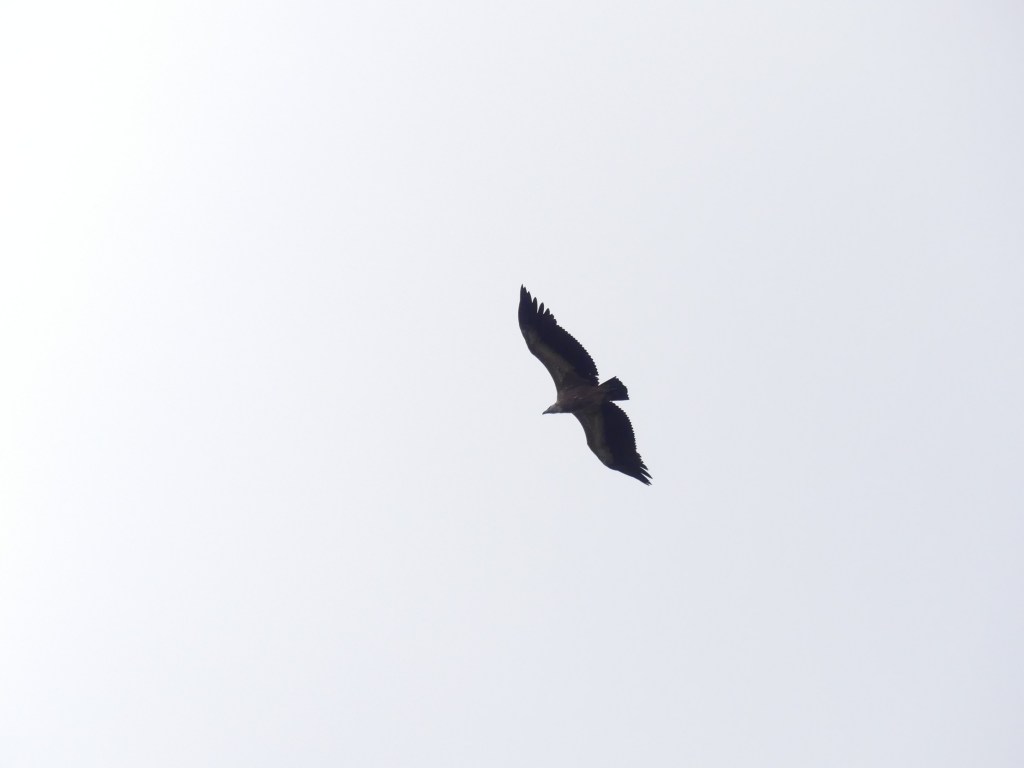
Griffon Vulture

Black Vultures, being considerably larger, will gain access to a carcass first out of sheer dominance. Their feathers extend along their neck, so if they were to shove their whole head deep into the carcass, the feathers would become sticky with blood, potentially restricting their flight ability. This is why the Blacks are adapted to eat the muscles and flesh of the carcass, essentially the outer bits. Whereas the Griffon has no feathers on its neck, only down which does not affect its flight and can be shed and regrown in a matter of days. The Griffon accesses the carcass second, and therefore must eat the bits the Blacks didn’t touch. So, with no ‘nice’ meat left, they must eat the organs and tissues deeper inside the carcass, and they must get their entire head and neck inside to reach it. So they come out of the carcass dripping with blood and fluids, without that effecting their ability to fly. This means that queues at carcasses will always be as orderly as possible, but it also allows the Blacks and the Griffons to thrive alongside each other without the need for competition. Evolution at its finest!

Eventually we managed to tear our eyes away from the spectacles directly above us, and I realised my eyes were watering from staring at the sky for too long. Pere led the group onwards, which also consisted of birders from both Germany and the USA, which are coincidentally two places I hope to visit someday in order to do some more birdwatching. It was great to meet birders from different countries, and hear about their experiences, as well as their views on various topics such as the Bonelli’s Eagle reintroduction.

We hiked further into the mountains, eventually coming to a pause at a vantage point that allowed us views all the way to the Mediterranean Sea. This was, according to Pere, one of the best spots to watch the Bonelli’s Eagle pair hunting, as there was more prey compared to other parts of the mountain range. This was due to the fact that the soil was deeper, less rocky and better quality here, so more vegetation could grow, allowing cover for prey animals such as rabbits and Red-Legged Partridges.
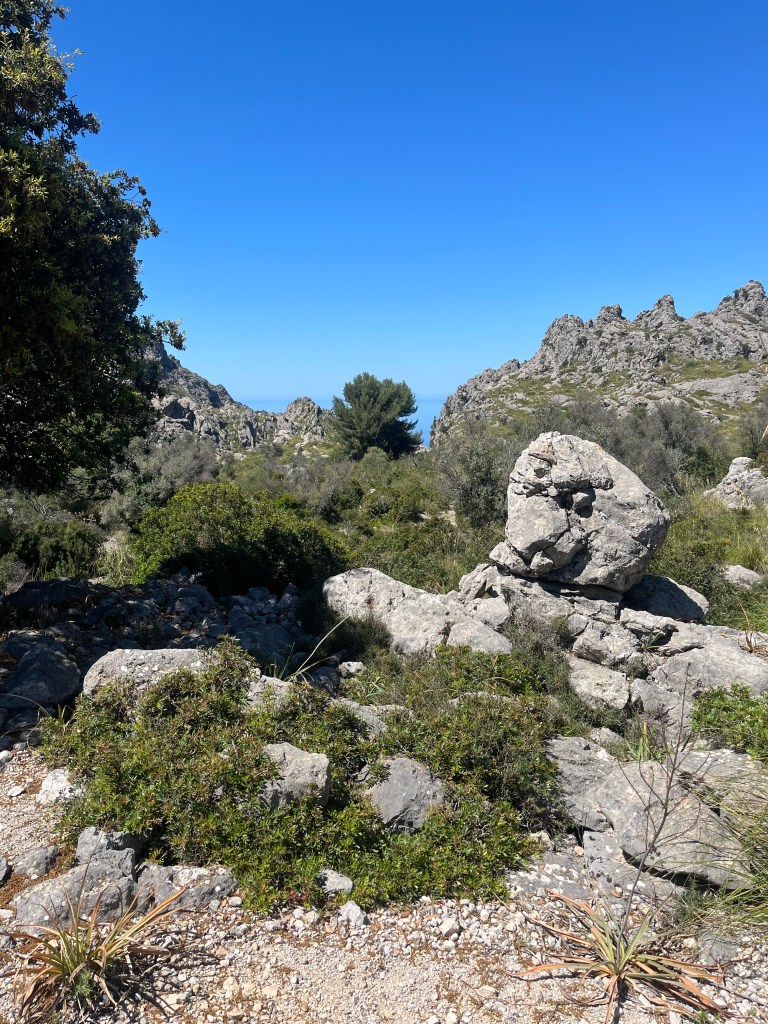
Our vantage point

The Bonelli’s Eagle was a species that was only reintroduced back to Mallorca in 2011, after going extinct during the 1970s due to intense human persecution, collisions with power lines and habitat degradation. As one of the top predators on the island, they were crucial to the food chain within Mallorca’s ecosystem, so they were (relatively) swiftly reintroduced in 2011, with 25 juvenile birds from mainland Spain released on the island. By 2014, the first wild chick had been born, and by 2021, there were 40 birds on the island, including around 9 breeding pairs.

However, despite this majestic bird having returned, its also had an intriguing effect on the Booted Eagles which were once common in these valleys. The Bonelli’s Eagles are a very territorial species, hence the fact that there was only one pair in the Mortitx Valley. And the Booted Eagles just disappeared as soon as they arrived. The exact reason why is still puzzling ornithologists on the island, but its suspected that the Bonelli’s were just quite agressive towards their new neighbours. In fact, there is even video footage of a Bonelli’s Eagle parent feeding their chicks the carcass of a Booted. However, there’s no need to worry for the Booted Eagle. Their population is still really high on the island, and they are thriving in other spots.

After a while, we’d had plenty of black vulture action, but little sign of the Eagles. Although we always had to keep in mind that there was a single pair in the Mortitx Valley, and if they didn’t want to play ball, we were unlikely to get a sight of them. However, the valley ran down to the coast, and it was possible to view the coastal cliffs and the Mediterranean Sea through our binoculars . Flitting around this little coastal opening were several birds which were immediately reminiscent of Common Swifts, but were clearly smaller. They were also more rounded, and their wings were a lot less pointy as well as being noticeably shorter. Given that Crag Martins nest on sheer cliff faces, and that was exactly where I was seeing them, I couldn’t think of another likely species these birds could be. So that was how I got my first lifer of the day, one I wasn’t particularly expecting in the Eurasian Crag Martin.
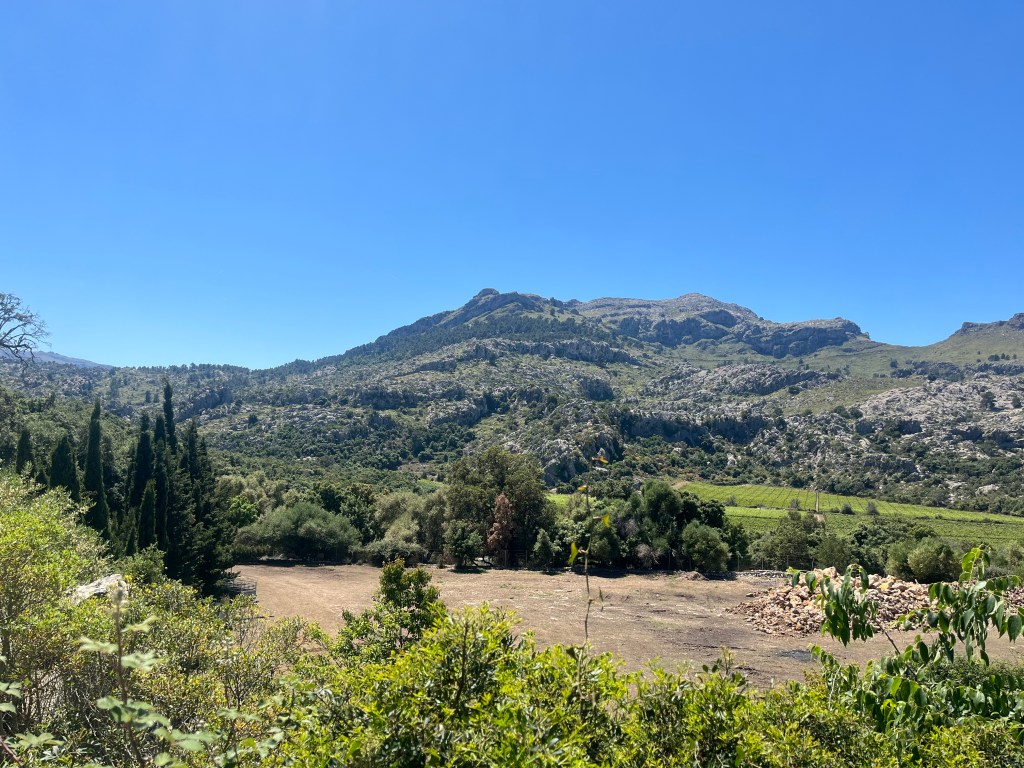
It was a beautiful valley

Another species we saw on that trip wasn’t actually a bird, but it was equally interesting and exciting. The African Monarch, also known as the Plain Tiger, is a species of butterfly whose food plant, milkweed, is not native to Mallorca but has recently established itself on the island. The African Monarch is certainly a stunner, with its orange wings with black borders and white spots and streaks. We saw several on our foray into the mountains, which is perfect habitat for these butterflies despite them being non-native, as the species favours open, arid areas such as those found in its native Africa.

By now, it was getting on towards four o’clock, and still we had seen no sign of the Bonelli’s Eagles, despite enjoying even more great views of both Black and Griffon Vultures. So everybody came to the conclusion that it would be wise to call it a day, and we turned around and began the trek back through the valley towards the cars. On our return to the lay-by, we paused to watch as two Red Kites glided low over our heads, flying off towards the woodlands on the opposite mountainside. Raptors, after all, were the Serra de Tramuntanas’ specialty, and we couldn’t leave without one more view of a breathtaking bird.
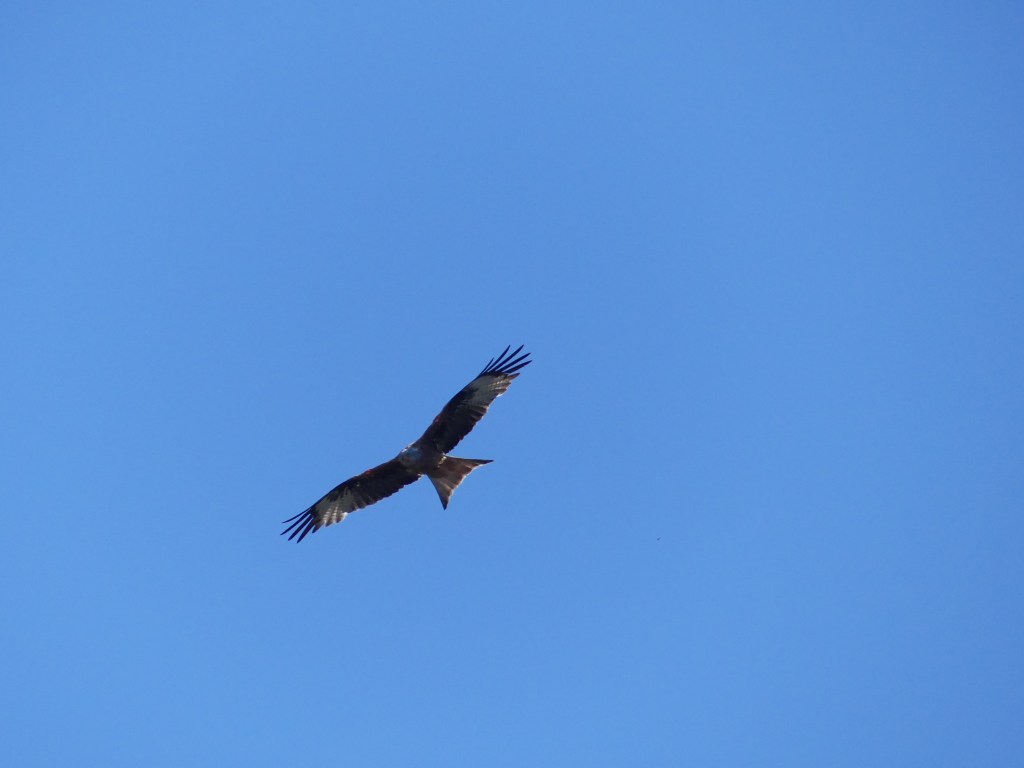
Red Kite

Before our visit that day, I’d never really ventured into the Mallorcan mountains. On our two previous trips, we’d mainly stayed at a lower elevation, visiting sites such as the Reserva Natural de S’Albufereta and Son Bosc. I’m very grateful I had the chance to experience such a dramatic, awesome landscape, which is teeming with life if you know where to look. Those mountains are a place where I felt completely free from the constrains of daily life. After all, how could routine reach me up here? It was exhilarating, even if the sun decided it wanted to bake me to a crisp.

At first glance, the Tramuntana Mountains might just seem like unforgiving, remote rocky outcrops; home of vultures, not humans. But alongside Pere, I’d say we conquered those mountains, and saw some pretty great birds as well. Whatever Mallorca has in store for me next, I say bring it on!
Mallorca’s Birding Brilliance

In my last post, I wrote the first instalment of the latest Mallorca series, detailing the first impressions of where we were staying and the surrounding area, as well as giving a few sneak peeks as to the birds and wildlife we were fortunate to encounter during our week-long stay. But why is Mallorca so amazing for birding, with between 25 and 30 thousand birdwatching tourists visiting annually? Well, as we had discovered on both of our previous trips to the island, there are several reasons which interlink to create the perfect birding paradise.

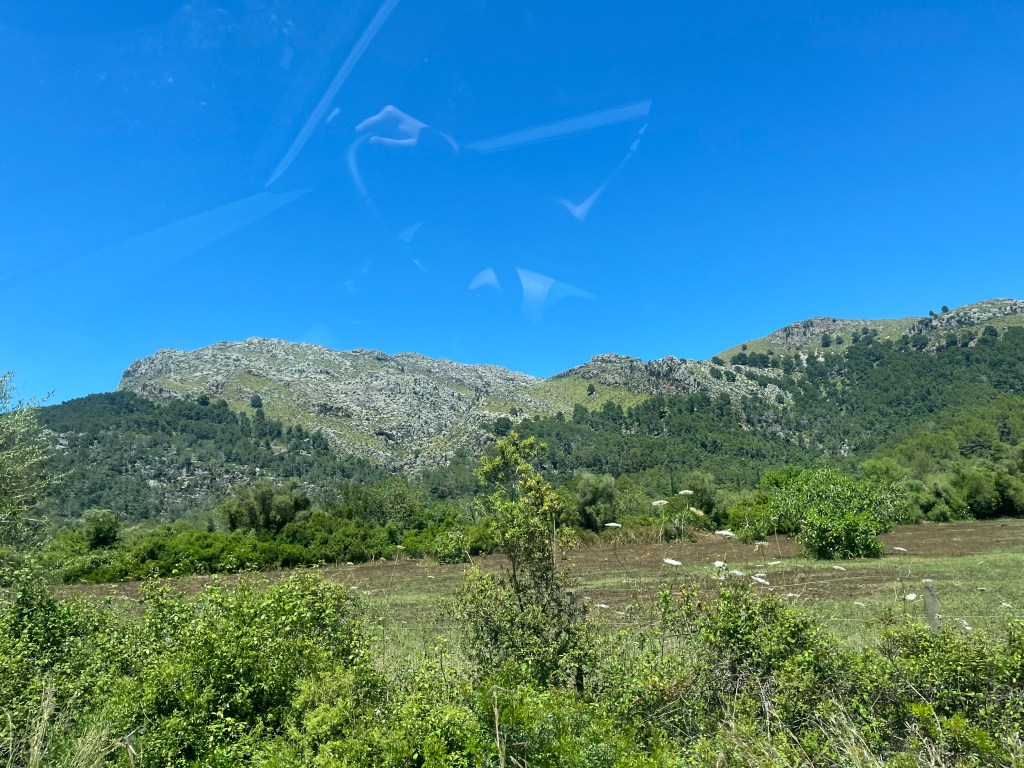
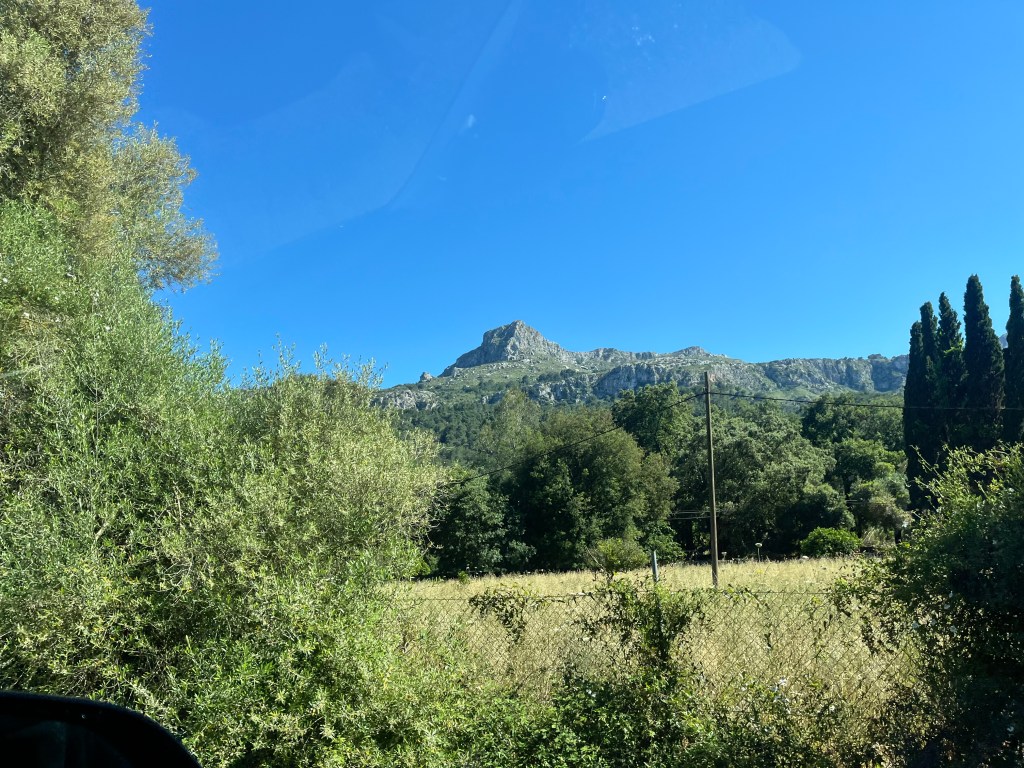
Mountains through the car window

It should be mentioned that Mallorca is home to several endemic species, as well as hosting crucial populations of others. The Balearic Warbler is probably the most well-known, with it only breeding on the Balearics, excluding Menorca. It thrives in the open, rocky and partially vegetated coastal areas that are found across the islands, especially on smaller islands like Dragonera and Cabrera. Another species endemic to Mallorca can be seen in other spots around the Mediterranean, and even in the English Channel at the right time of year! It is, of course, the Balearic Shearwater, a species prized on pelagics and seawatches on the south coast of England and Ireland. They nest in crevices and caves on the cliffs that are plentiful around the islands’ coastlines. With the Shearwater, it is worth noting that the word endemic describes a species that only breeds in one particular place. So despite it being seen further afield in other seasons, it is still endemic to Mallorca!

Recently, a new species was recognised by the IUCN, that only breeds on the Balearics, Corsica and Sardinia. These populations have been split from the Spotted Flycatcher, and are now known as the Mediteranean Flycatcher, due to studies showing that the populations on the above Mediterranean islands exhibit genetic differences, as well as slight differences in their plumage and other physical characteristics. Mallorca is also home to several endemic subspecies, such as the Balearic Woodchat Shrike. This subspecies differs from the Woodchat Shrike due to the lack of a white patch on the primary feathers and a deeper bill, and also has a case to become a separate species in the future.

Black Vultures are a species that are currently thriving in Mallorca thanks to dedicated conservation efforts bringing them back from the brink of local extinction. But Mallorca’s breeding population is the only one in the world currently sustainably based on an offshore island, making Mallorca’s birds crucial for ornithologists to study. But now I’ve outlined just a few of Mallorca’s more well-known specialty species, let’s delve into why Mallorca is just so good for birds.

The Black Vulture’s wingspan can be up to three metres in length!

To start with, the location of the island is perfect. Providing one of the largest stop-off points between Europe and Africa, it is strategically placed to entertain migrants that need to rest and recuperate on their journeys in Spring and Autumn. And Mallorca has the diverse range of habitats to accommodate many different species, from waders and wildfowl on huge wetlands such as S’Albufera, to passerines pausing on Cap de Formentor, a breathtaking headland jutting out into the northern Mediterranean Sea. Around 33% of Mallorca is still woodland, its mountains play host to several species of large raptors, and the open plains in the middle of the island are full of birdlife.

But another reason lies in Mallorca’s agricultural stance. 55.5% of Mallorca is covered by farmland, but the island is increasingly embracing practices that benefit both people and nature, with a large shift towards sustainable and regenerative farming methods. Much of Mallorca’s produce is now produced organically with no pesticides, and agroforestry (integrating trees and shrubs into farmland to increase diversity and sustainability) is gaining traction on the island. Above all, these practices aim to improve soil health, enhance biodiversity and battle climate change, all while being sustainable and affordable.

Cirl Buntings are a species that are particularly benefitting from these agricultural practices

Mallorca’s Key Habitats

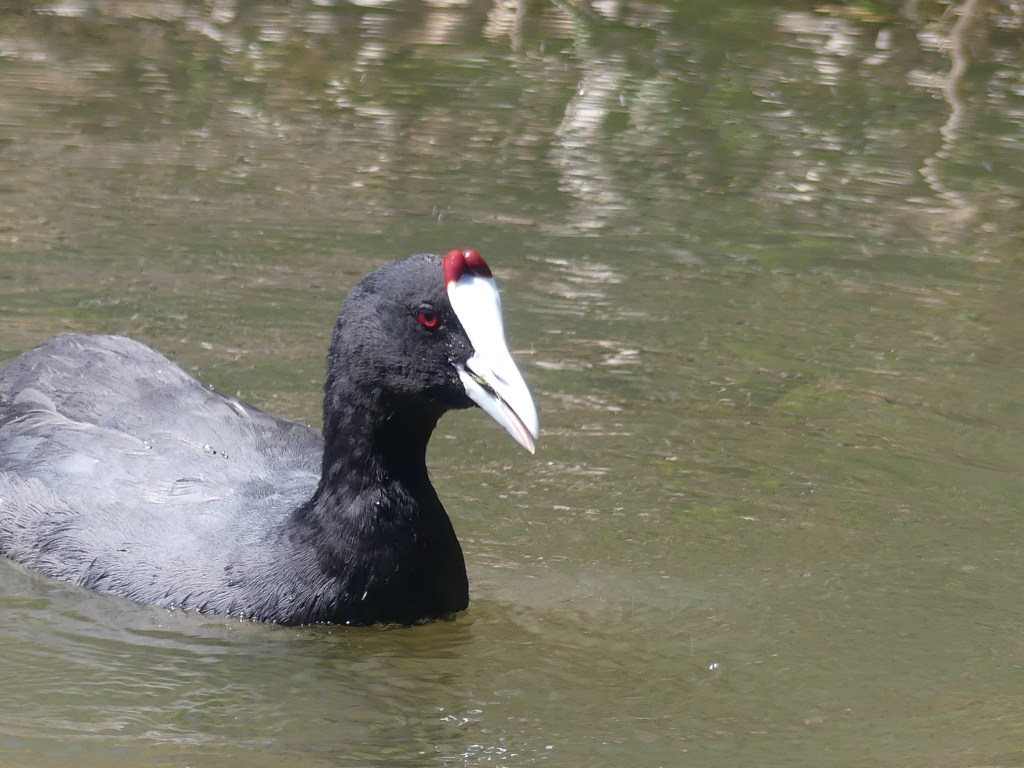
Wetlands play a big part in Mallorca’s ecosystem, with large sites such as S’Albufera, S’Albufereta, along with smaller ones such as Maristany, playing host to many species of birds and wildlife. They offer a mix of reedbeds, marshes, lagoons and canals, providing habitat for several species that can be relatively hard to find in other parts of Europe. Red Knobbed Coots, one of Europe’s most endangered waterbirds, can be found within the park boundaries of S’Albufera, while the above sites are some of the best places to spot Eleonora’s Falcons that feed on the insects above the marshes. Mallorca is one of the best places in the world to spot these incredibly agile falcons.

Red Knobbed Coot

Another of Mallorca’s key habitats is the mountainous regions in the west of the island. A far cry from the bustling wetlands, these rocky, open spaces complete with stunted vegetation give life to raptor species from the Black Vulture to the Bonelli’s Eagle. The rugged landscapes of sites such as the Serra de Tramuntana create ideal conditions for raptors to soar high in the sky, with the high ridges generating thermals for the birds to climb effortlessly. With the mountains offering many ideal nesting sites, as well as open, more vegetated spaces for hunting, why would they want to leave? The mountains are also home to other desirable species such as the Common Rock Thrush and Eurasian Crag Martin, both cliff and mountainside specialists.

All around Mallorca’s coastline, from Formentor to the islands of Dragonera and Cabrera, you’ll find rocky, coastal scrubby habitats, which are the perfect living conditions for many of the passerine species that call Mallorca home or are just stopping by on migration. The Balearic Warbler loves this kind of habitat, along with the Moltoni’s Warbler, a rare Mediterranean species that only breeds in the Balearics, Corsica, Sardinia and northern Italy, which all have one thing in common; that scrubby, open habitat that this species really loves. Dominant plant that make up this habitat on Mallorca include Kidney Vetch, Mallorca St John’s Wort, Mediterranean Heath and Rosemary, which are all adapted to the low rainfall, strong sea breezes and the highly alkaline soils that all feature heavily on the clifftops of Mallorca.

In Spring, Mallorca’s cliffs are packed with birds, all looking to take advantage of the protection the cliffs offer from predators and harsh weather. The cliffs are covered with vegetation and natural crevices, providing plenty of nest sites that give shelter from the elements. The proximity to the sea also plays a part in birds’ decisions to nest on the cliffs, with seabirds like Shags and Audouin’s Gulls (considered one of the rarest gull species in the world) taking full advantage of this. Eleonora’s Falcons will also nest in the cliffs, with their breeding season uniquely timed with autumn passerine migration (about July to October) so that they can prey on the many tired birds passing through.

Mallorca is a truly special place for birds and birdwatchers alike, and I hope that you have understood that from this blog. It is quite possibly my favourite birding destination, and it’s migration seasons, Spring and Autumn, are truly spectacular, from soaring raptors to tiny passerines, and everything in between. It was incredible to be back there again, and I hope I can express my sheer joy in birding on that beautiful island through this post, and those to come.

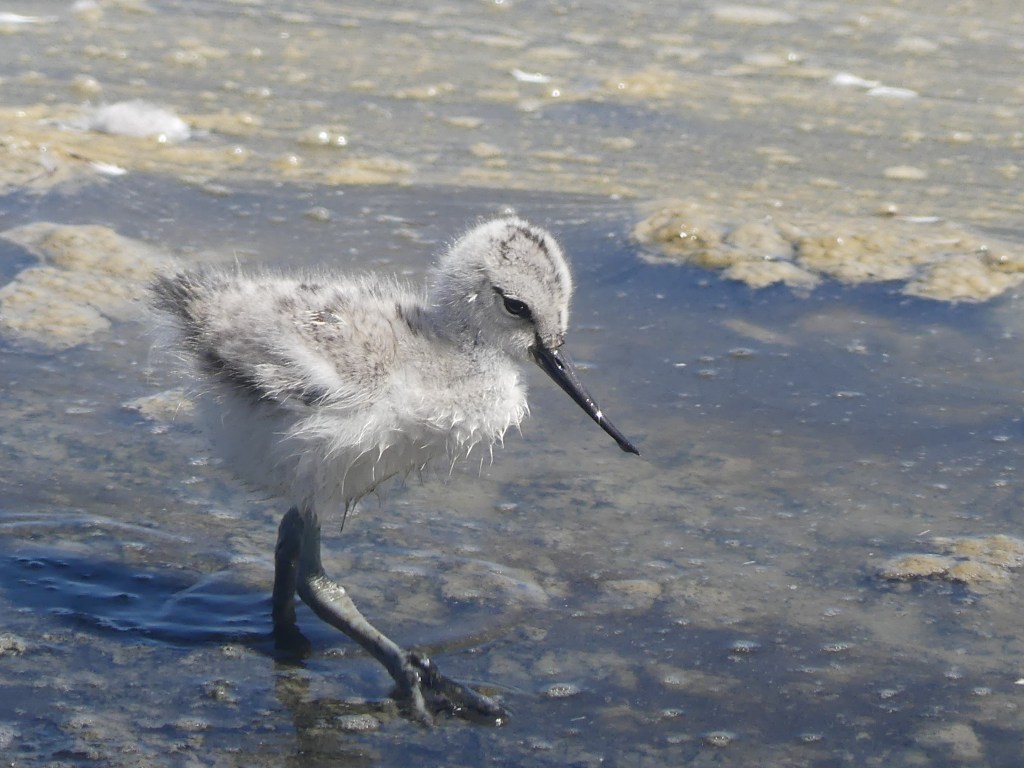
A very young Avocet!

Mallorca (again!)

Two weeks ago, I went on holiday with my family to the tiny island paradise of Mallorca. But, despite being one of the most popular holiday destinations in Europe, its also brilliant for birdwatching, as I’d found out in my two previous visits. You can read about them as well in the blog archives, but I will warn you the writing about my first trip is nowhere near as, uhmm, established as it is now, mainly due to the fact that I was about 8 years old then! It was still an incredible trip, though, as was the second one, just two years ago. Anyway, looking at the maps, you could see that the villa we’d be staying in this time around was ridiculously close to the site that had given me so many memories in previous years, the incredible wetland known as Reserva Natural de s’Albufereta. In fact, it almost backed onto it! Around most of the villa was agricultural land, but unlike most of the UK’s, it was truly buzzing with life. But more on that later.
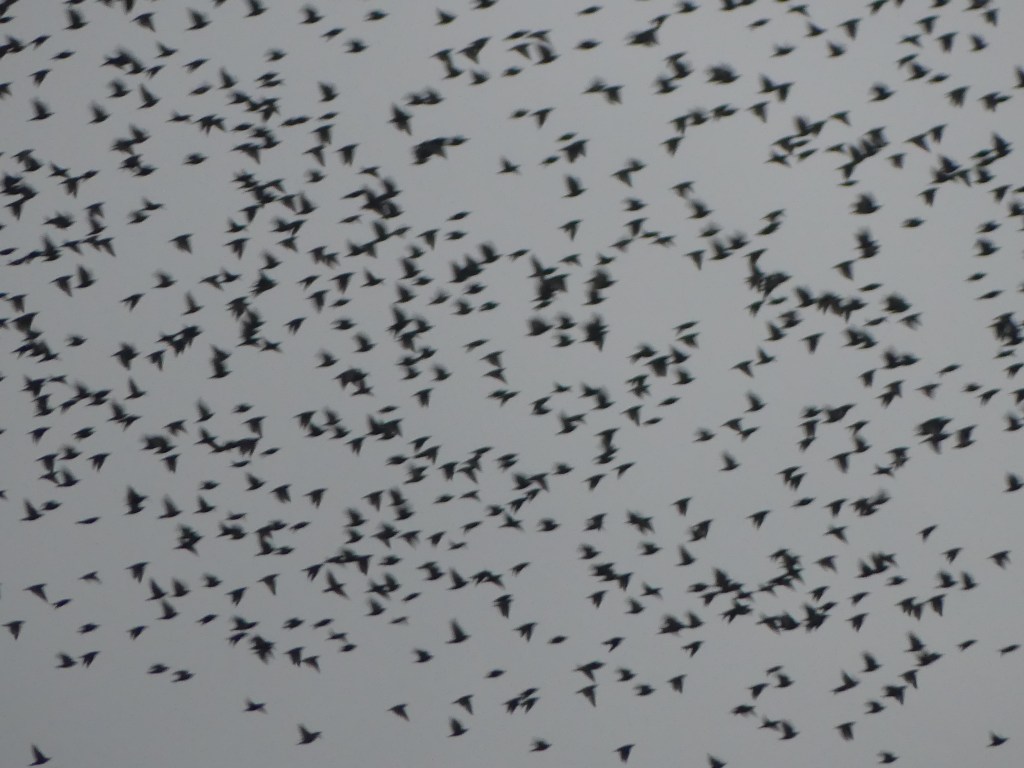
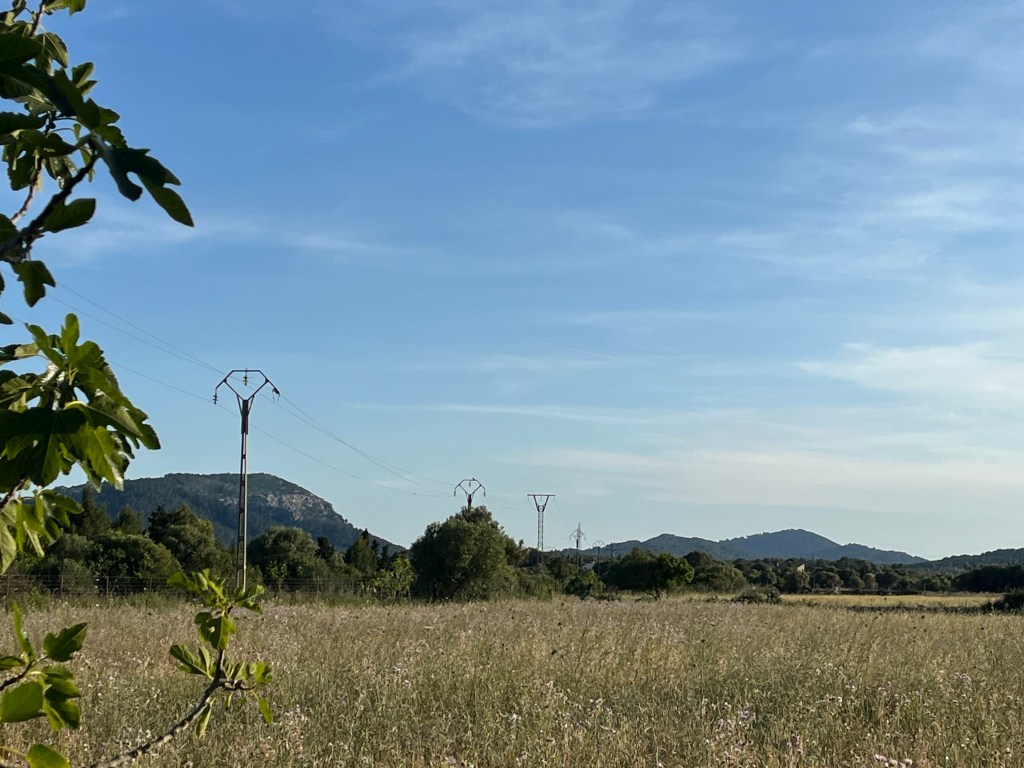
View from the villa

To my slight frustration, it was to be a family holiday, so (regrettably) I couldn’t go off birding every day. We spent a lot of time exploring both Pollenca and Port de Pollenca, as well as relaxing and just taking a bit of time off around the pool and table tennis table. I did my best to communicate with the parts of Spanish I can speak, with mixed results (I still have a lot to learn!). The food and drink was incredible, and there was nothing but warm weather over the whole trip, which was a big change to adapt to after spending so much time in the UK. And after a few days we were all coated in mosquito bites. But that was one of the few negatives of a highly enjoyable trip, which did thankfully incorporate a few day’s birdwatching.

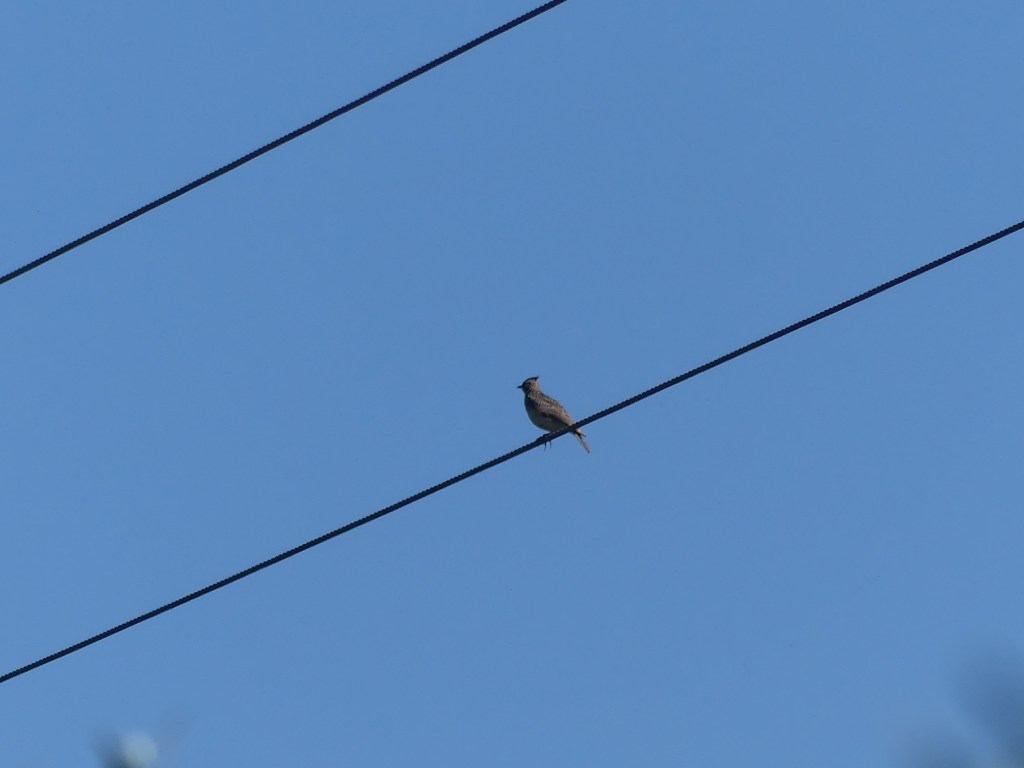
We arrived at our home for the next week in the dead of night, and with the bleating of goats echoing through the darkness, we settled in rapidly. But as soon as I woke up the next morning, I could tell that this was the perfect location, from a birding perspective. Serenading me from an above power line was a Thekla’s Lark, a small, brown, speckled and streaked bird flashing its elegant crest in the moist morning air. It’s song was soft and tuneful, and stuck a smile on my face as I watched my first lifer of the trip. These Larks thrive in grasslands and scrubby areas, and given the meadows we had next to us, you could see why this individual was here. They are smaller than a Skylark, but their main confusion species in Europe is with the shockingly similar Crested Lark, which luckily for me and my ID skills, only occurs on Mallorca as a rare migrant or vagrant. They get their name from Alfred Edmund Brehm, who named them after his late sister, Thekla, in 1857.

Thekla’s Lark

Soon the Lark flew away, and my eyes panned around my surroundings. To the right of the villa’s garden lay a tall meadow dashed and dotted with blue, orange, red and yellow. But the noise was astounding. It was absolutely heaving with insects, with what sounded like thousands of crickets and grasshoppers buzzing like there was no tomorrow. I’d genuinely never heard anything quite like that, definitely not anywhere in Britain.

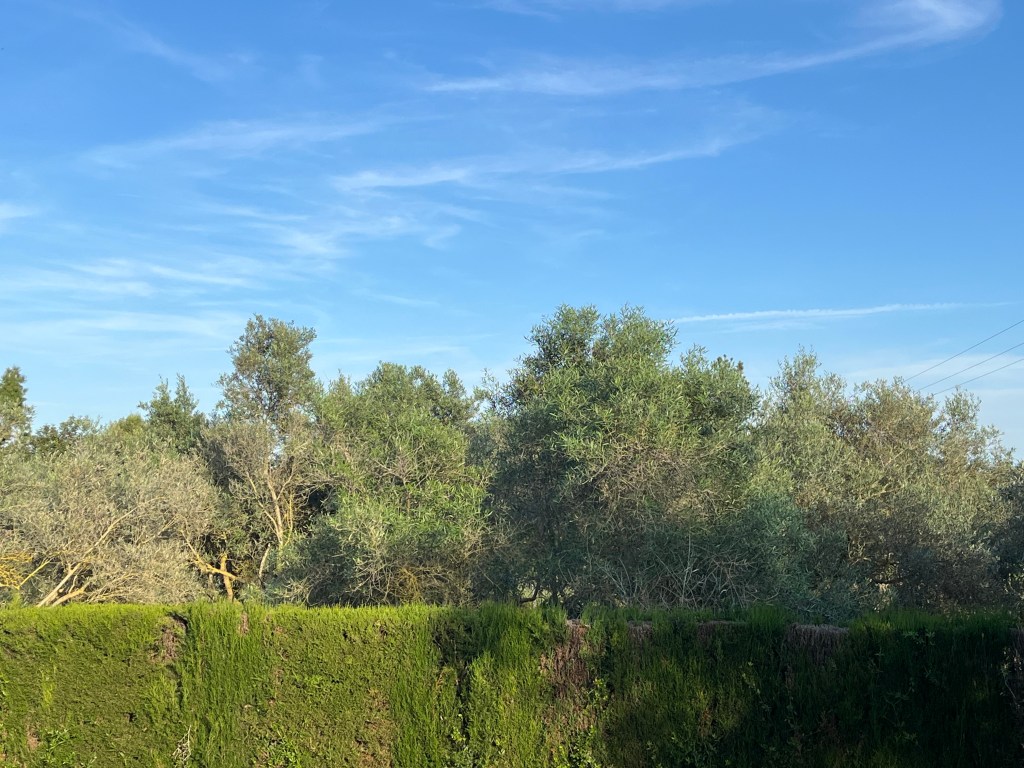
And then, extending around the back and the right side of the villa’s garden were olive groves, literally teeming with birds, which must of course mean that it was also full of insects. There were Zitting Cisticolas, Serins, House Sparrows, and Great Tits flitting between boughs. There were also chickens being kept in a section of the grove, clearly enjoying the abundance of insects as well.

So there I was, stood on gradually warming tiles with a glass of apple juice, silently taking in the sounds of so many insects and birds living happily on the agricultural land around me. Curious, I ducked behind the hedge that separated me and the olive grove and found on its far fringe a waterless stream bed, that must fill up during the wetter part of the year. Who knows, maybe it even led into the very nearby s’Albufereta?

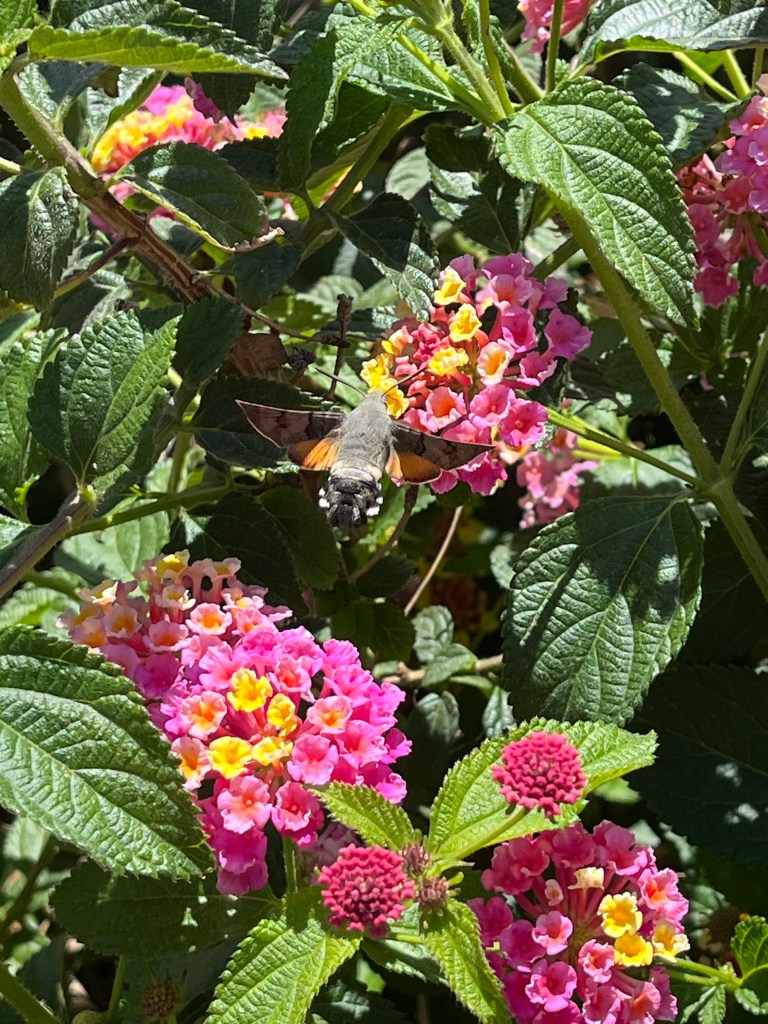
Around the front of the villa lay a bed full of flowering plants alive with bumblebees, butterflies and Hummingbird Hawkmoths. Purple, red, orange and yellow flowers adorned shrubs and bushes, while insects zoomed between blooms. I had hardly ever seen such an abundance of insects, and it was mesmerising to watch them go about their lives.

The olive grove

The villa, as I said previously, was right on the back of Albufereta, which would explain why we had a Marsh Harrier flyby later in the week. But that was honestly just the tip of the iceberg in terms of what we had around us. There were two sets of mountains either side of us, looming over the farmland and meadowland that sat beneath them. Mallorca’s mountains are crucial habitats, supporting many special species including the only island breeding Black Vultures in the world, which are coincidentally the biggest raptor found in Europe, with a wingspan that can be up to 3 metres.

Black Vulture!

Speaking of vultures, I had quite the encounter on our third morning in the Balearics. I’d just ducked inside the villa to grab a glass of water when suddenly there were shouts from outside calling me back out again. I rushed out, sweeping my binoculars and cameras up in my arms as I went, and found myself looking up at four huge birds, with another trailing a bit behind them in the distance. Three out of the four birds directly above me were black vultures, huge dark beasts, with a smaller, paler Griffon Vulture in amongst them. The bird behind them was a medium sized eagle, and as it came over the pattern on the underside of its wings was reminiscent of a honey buzzard. I was fairly shocked to discover that this was in fact a Bonelli’s Eagle, which I confirmed via google and my bird guide. My heart was actually beating faster than normal as I watched those birds glide effortlessly overhead, and towards the mountains.

Griffon Vulture

As dusk fell that night, we heard several Stone Curlews, their calls almost eerie in the twilight. They are, here in Mallorca, a relatively common farmland bird, camouflaged amazingly well against ploughed soil. All you can really look for when scanning fields like those is the yellow eye ring, that stands out from the rest of the streaky brown wader. They sounded very nearby, and I felt sure that they would be enjoying the bounty of insects this particular stretch of farmland provided, just like the Corn Buntings we’d been watching earlier. Corn Buntings are rather large buntings, of a stocky build. They’re brown and streaky, and their primary food source is seeds and grains. But in the breeding season, they supplement their diet with insects, which explained why I’d seen one with a huge grasshopper in its beak. The amount of insects also explained the amount of Eleonara’s Falcons we’d seen over these fields, an island specialty here in Mallorca. But I’ll talk more about them in another post.

Corn Bunting at dusk

So, there are a lot of insects. Which ones were we actually able to identify? Well, we saw a lot of cool ones, including an Egyptian Bird Cricket, which was absolutely humongous and apparently liked climbing trees. One evening, it literally just sprung over the stone wall separating us from the buzzing meadow, and leapt onto the trunk of an olive tree. It’s called a bird cricket because of its slight flight capabilities and its size, meaning that when seen from a bit of a distance, it’s often mistaken for a small bird! We also saw several Milkweed Bugs, their stark red and black colouration a sign of their distastefulness to any potential predators. Another kind of cricket, the European mole cricket, appeared in the villa garden, a species that is now critically endangered in the UK with a single known colony in the New Forest. Butterfly wise, there were what felt like hundreds of Clouded Yellows almost everywhere we went, which made sense as they are abundant on Mallorca in May due to the arrival of individuals from North Africa. There were also many Common Blues, fluttering around alongside the Clouded Yellows.

Hummingbird Hawkmoth was another insect species that we saw a lot of!

I hope that you’ve enjoyed reading this introductory blog to my holiday in Mallorca. I hope that you’ve been able to visualise what a biodiverse place it was from my writing, and to think it was right around our villa as well! Keep an eye out for the next one, which will include some of Mallorca’s most breathtaking birding sites, and why the island is really so good for birds.

Mallorca, in my opinion, is one of the places where I am happiest. The amount of biodiversity is incredible, and it just feels so much wilder than back home. A lot of it’s wilderness feels completely untouched, like the mountains. When you compare those to Dartmoor, it’s fairly easy to see which has had more human intervention. I haven’t mentioned him yet in this post, but another reason that Mallorca is just so good is because Pere Tomas, ornithologist, biologist, tour guide and birdwatching extraordinaire lives on the island. He is my good friend, and a good friend of my family too. He’s an incredible man, and I assure you he will feature heavily in this series of blogs. I always feel on top of the world in Mallorca, and I can truly say, with all of my heart, that it’s great to be back.

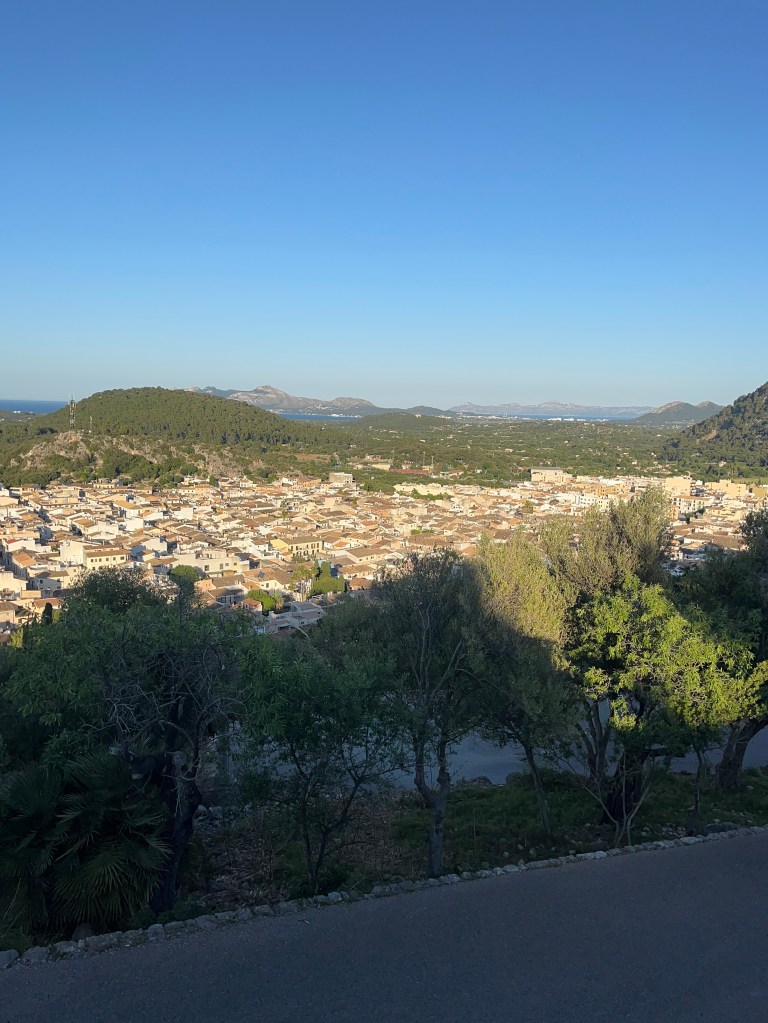
Quite the view!


Sorry for my Absence

Hi! This is just a quick update on why I haven’t been posting for a couple of months. First of all, I think I need to say sorry for not having written for an extended period of time. But its been a very busy spring, whether I’ve been revising for school exams or training for the South West Regional Swimming Championships, I haven’t been able to find much time for the Bovey Birder, to my regret and frustration.

As I have been coming up to the End of Year 8, I have had exams in every subject which will determine which sets I go into next year. These are fairly important as next year I pick my GCSE options before completing the coursework in Year 10. So there have been plenty of sleepless nights and early morning flashcard sessions due to this, but after all that they have gone very well so I’m pleased with that.

Another big factor to my absence has been the relentless swim training that led up to the South West Regional Championships, which concluded last weekend. Essentially, the weekday routine was; school, couple of hours at home, then training. It’s been tiring, but it was worth it. I swam four events; 50 breastroke (41:54), 50 butterfly (34:40), 100 breastroke (1:28:21) and 200 butterfly (2:51:81). In the 200 butterfly I made the final and finished sixth, which I was very happy with considering I started the day seeded 15th. And afterwards, we still managed to pop into Ham Wall for some birding on the way back (I will be writing about that soon). I’ve also managed to get up to Emsworthy Mire to go Cuckoo spotting!

I’ve also remained committed to the Dartmoor Youth Rangers, having done many activities over the last few months including archeological maintenance work, bird surveys, hedgerow surveys, building boardwalks and even lambing. Its good and enjoyable work, and it builds a wealth of experience for the future. I think I would enjoy a job title like ‘Dartmoor Ranger’, so it’s brilliant for the CV. Also, its really fun!

So, in a nutshell, I should be back for good now, and come to think of it, I’ve already at least one of a burst of new posts lined up. I just thought I’d better give you an update and say sorry for my continual absence over the last few months. Watch this space!

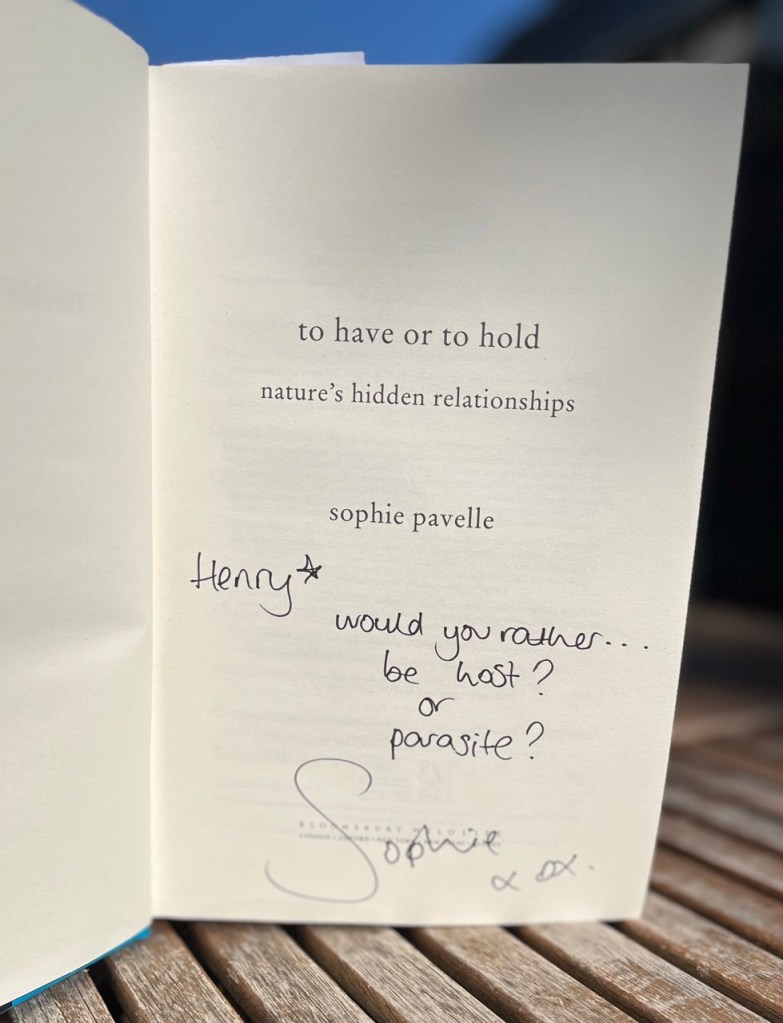
Would you rather be a parasite or a host?

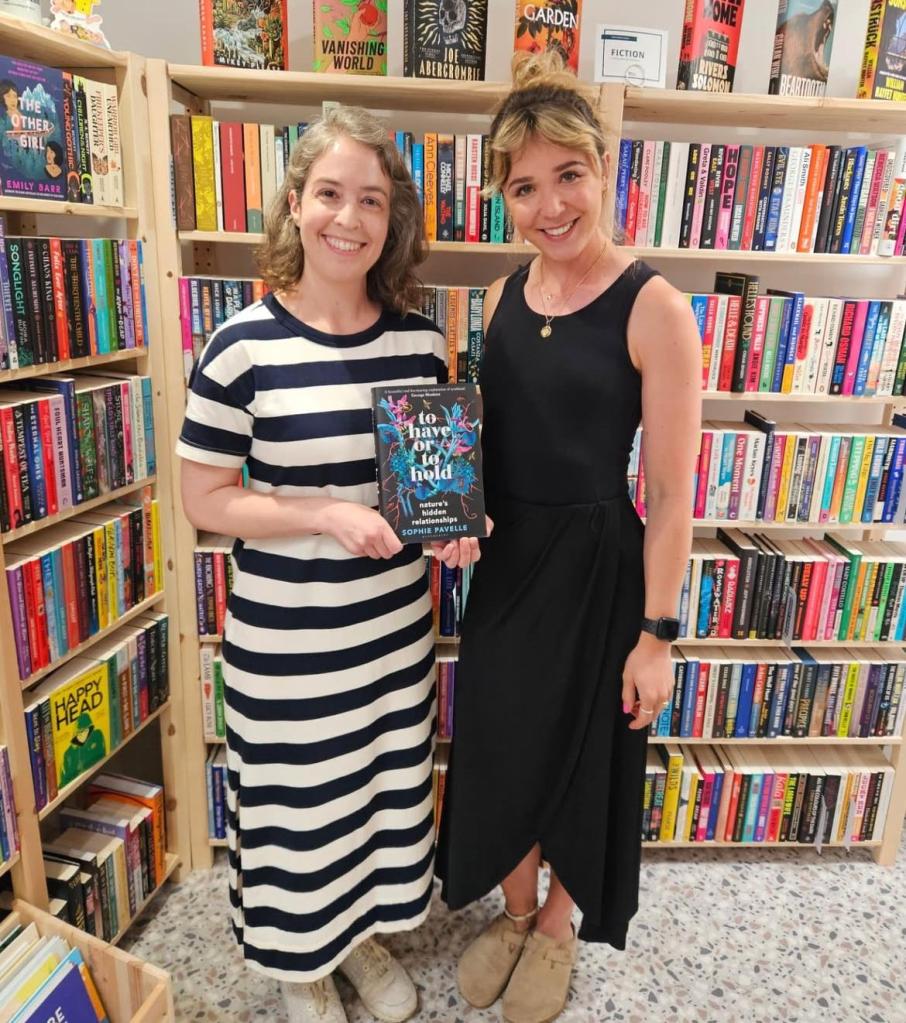
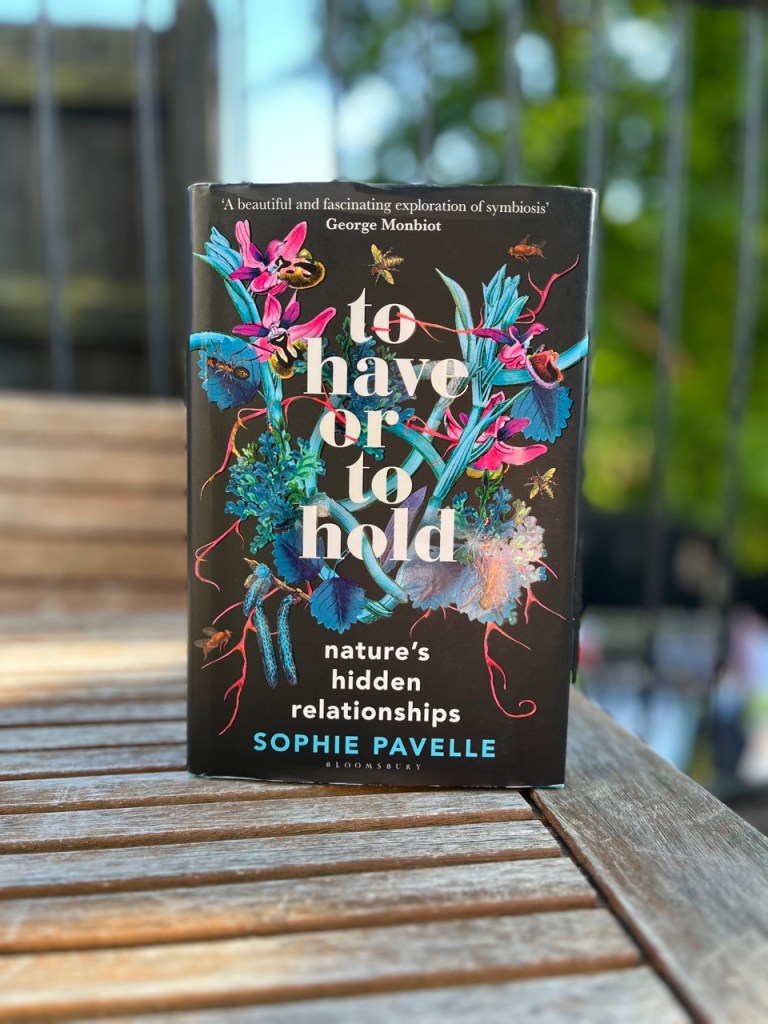
Sophie Pavelle is a brilliant author and science communicator, who as it stands, has authored two great books, ‘Forget me not’ and ‘To Have or to Hold’, which both document very different things. The former follows her journey to spot and learn more about 10 climate-threatened species, and the latter explores the complex scientific subject of symbiosis, in a fun and engaging way. I was lucky enough to meet her on Wednesday night. Read on for more…

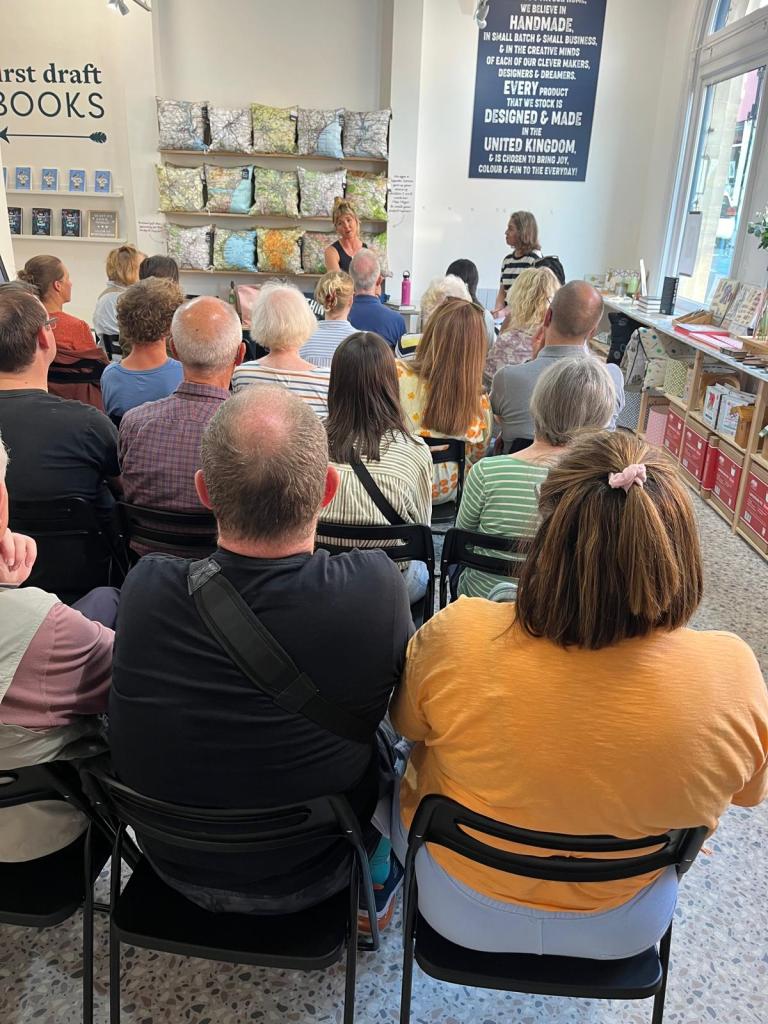
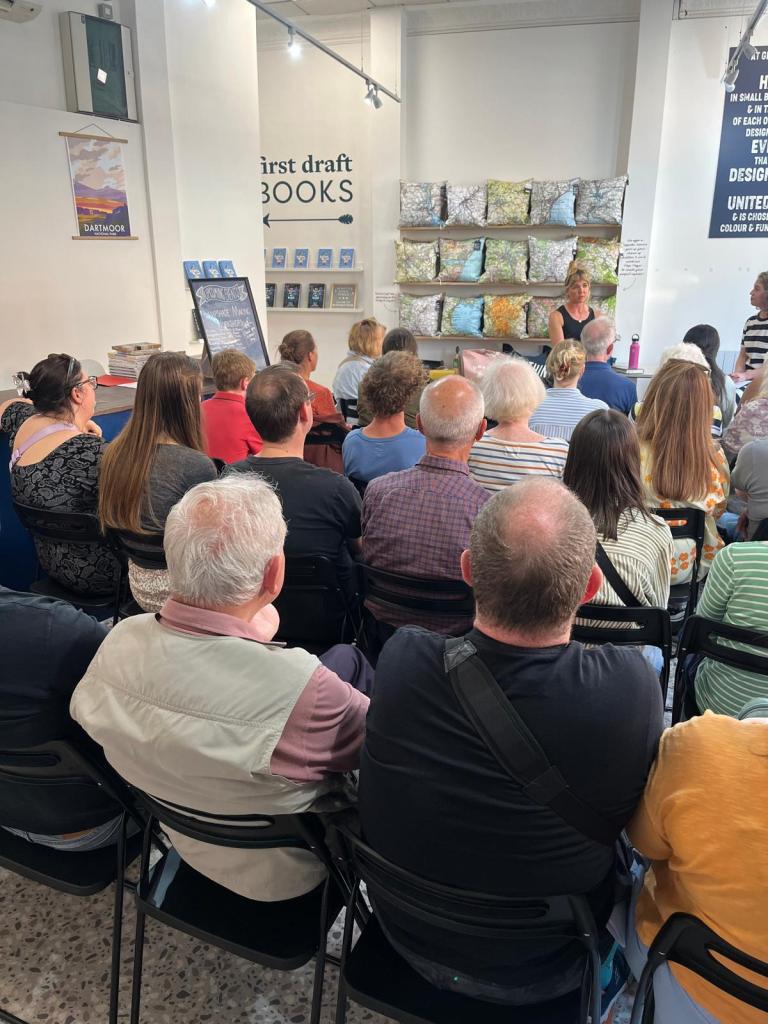
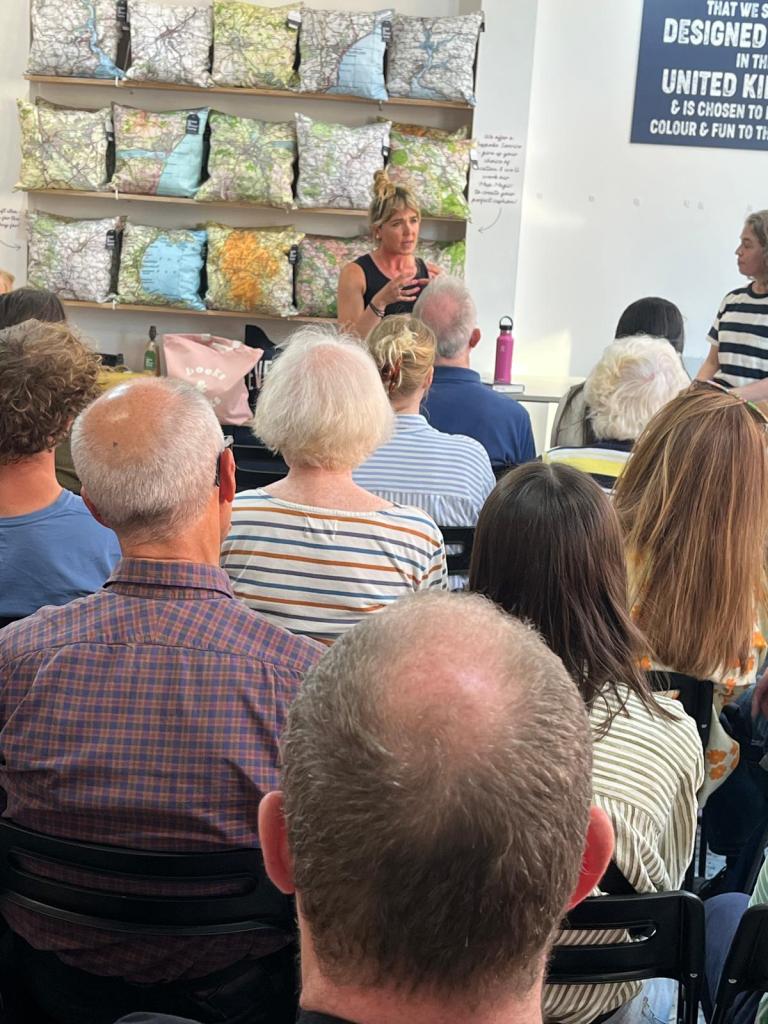
Its Sophie Pavelle and Leslie from First Draft Books
Sophie and Leslie (from First Draft Books) leading the talk

Sophie came to Bovey Tracey to give a talk on her book at First Draft Books, an excellent independent bookshop within Grace and Favour Home, my parents’ shop. It was truly enlightening as to the knowledge and secrets hidden in the pages of ‘To Have or to Hold’, from rare ants to 3mm worms that hijack photosynthesis. There really is something in the book for everybody.

Following a First Class Degree in Zoology at the University of Bristol and a Distinction in Science Communication from the University of the West of England, Sophie has gone on to work with several prominent organisations including the Beaver Trust, where she worked as Communications Coordinator for four years and presented the award-winning documentary ‘Beavers Without Borders’. She is based in Devon, and so is an ambassador for the Wildlife Trusts and sits on the board for UNESCO Exeter City of Literature. So she’s a pretty amazing person, having done all this before she turned 30!

Before you read on, I thought I’d introduce a glossary as it gets quite technical:

Glossary

Symbiosis: A close and long-term relationship between two different species

Parasitism: A symbiotic relationship where one species benefits more than the other

Mutualism: A symbiotic relationship where both species benefit

Commensalism: A symbiotic relationship where one species benefits while the other is neither harmed nor any better off

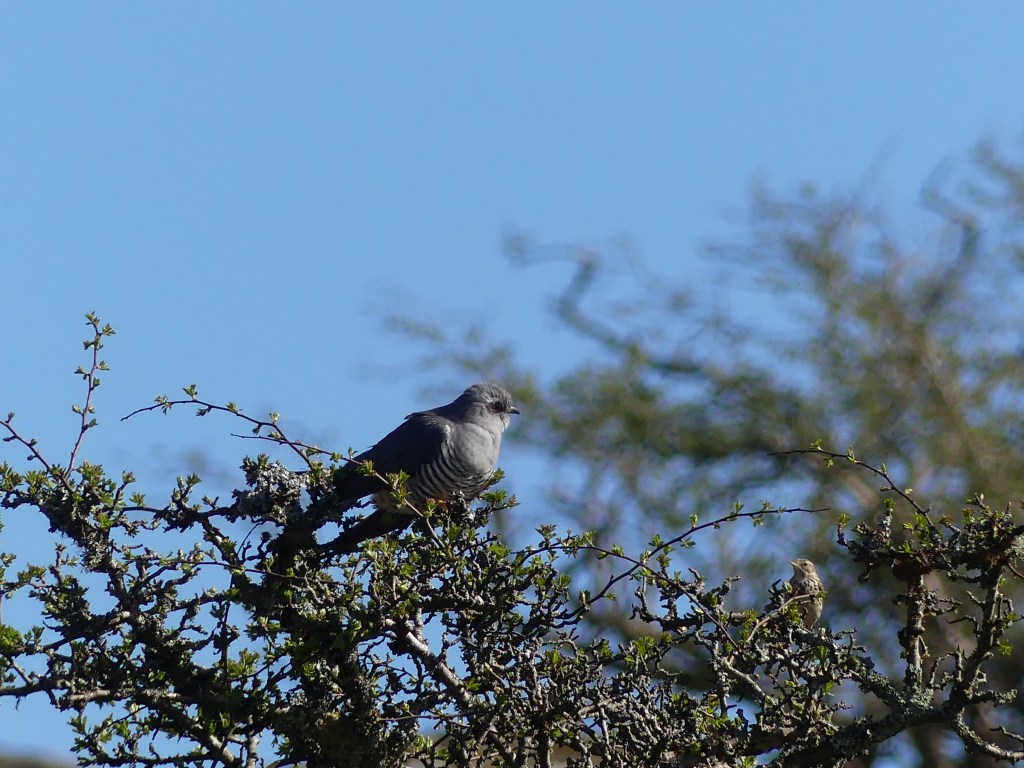
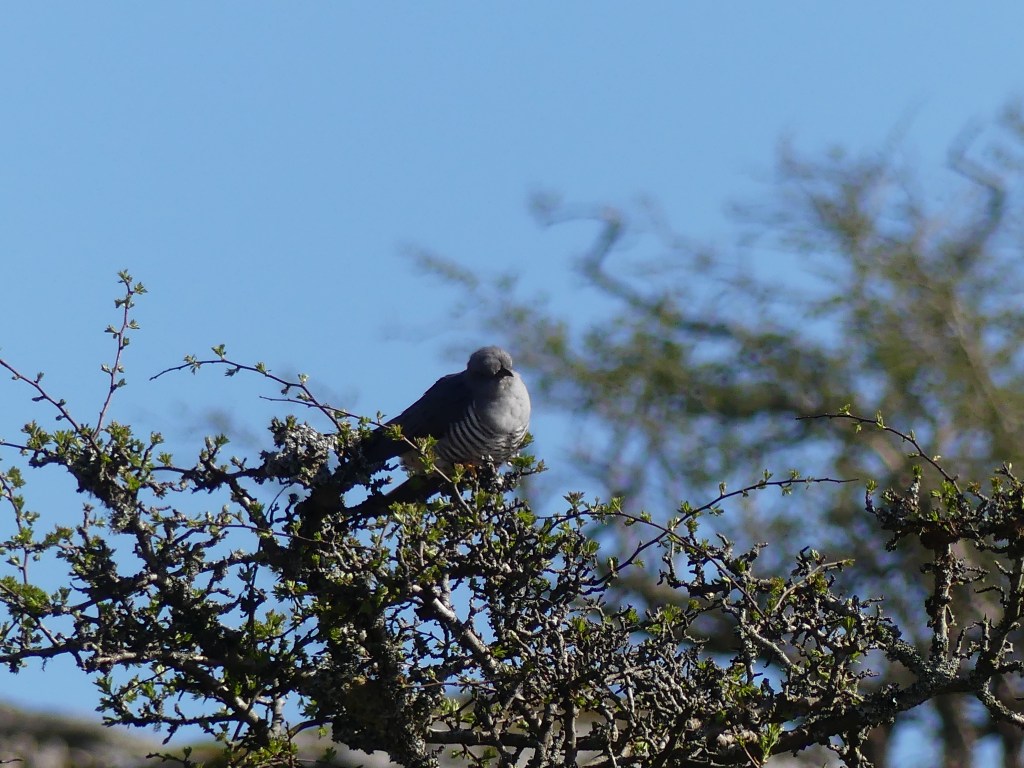
So, you are probably wondering about the title of this post. Well, it’s what she signed in my copy of the book, and a big part in the actual text itself. Symbiosis is one of the most complex concepts in the animal world, and is described as ‘a close, long-term relationship between two or more different species’. A large part of that is parasitism, where the parasite usually benefits more than the host. Take, for example, a Cuckoo. It benefits in that it doesn’t have to spend its energy incubating and feeding a chick, whereas the host, often a Meadow Pipit on Dartmoor, gets an extra chick to deal with. But there is no one fixed definition for parasitism. Say if the Cuckoo chick pushes out several of the Pipit’s brood, as they are inclined to do, then there are less mouths to feed, less energy needed by the parent, and each chick is likely to get more and better food, so as to grow up stronger. In symbiosis, there truly are two sides to every story.

Cuckoo

Another example of symbiosis that many people will recognise is the Oxpecker, eating the flies of off the backs of Buffalo. This is a prime instance of symbiosis, and one that most people will have learnt about in school biology lessons, maybe concerning topics like food chains. Here the Oxpecker gets its meal and the Buffalo gets a bit of a clean! And have you ever noticed a Robin hovering around near your shovel when you’re digging in your garden? This is because Robins in England have a symbiotic relationship with humans, where they eat the worms churned up from the soil. In lots of European countries, Robins are less of a garden bird and are more likely to follow Wild Boar and eat the worms churned up by their rooting around. So humans replace the boar in this symbiotic relationship, mainly as Boar were hunted to extinction a long time ago in Britain! It can be debated, but I would probably say that this is an example of commensalism, as the humans don’t really benefit other than seeing a beautiful bird, but then again nature is good for your mental health, so maybe its mutualism?

I hope that the Cuckoo example proved to you that parasites aren’t just a group of disgusting worms or bugs that crawl under skin, suck blood or spread disease. I mean sure, those exist too, but these are but a minuscule segment of the story of parasitism. There are also two other kinds of symbiosis; mutualism, meaning that both species benefit from the interaction and commensalism, meaning that one species benefits while the other one gets nothing but loses nothing either. An example of the former would be a bee pollinating a flower (both benefit), while an example of the latter would be a barnacle hitching a ride on a whale. They don’t harm the whale, but the barnacle gets to travel through nutrient-rich waters. But remember to keep an open mind, as again there will often be different scenarios. Symbiosis is not a fixed thing, and varies on a huge scale. And so we don’t necessarily know as much as we would like to know about it.

Sophie took a very interesting view on the current state of nature across the world, which really resonated with me, as I’ll be honest its exactly what I’d been thinking for years! She said that humans were simply a parasite of the Earth, taking what we want from it. But we don’t want to be the kind of parasite that over time strips the host of everything, eventually killing it. After all, it is in the best interest of a parasite to keep its host alive. So surely we want to keep our host alive, if we want to continue living here?

I am very much looking forward to reading the book, but especially the last chapter, as it features a species of ant whose last stronghold in the UK is Chudleigh Knighton Heath, a Devon Wildlife Trust Reserve literally just down the road from me. This is, of course, the Narrow-Headed Ant, which alongside other ant species, has an incredible behaviour not seen in any other kind of animal. This is an incredible symbiotic relationship where the ants ‘herd’ the aphids and move them along to different sections of the plant, while also protecting them from potential predators, such as ladybirds. It’s a lucrative business, with the aphids producing honey-dew from their rear ends, a sugary substance which is the perfect snack for the ants. The aphids need the ants to do this, as if too much of the honey-dew builds up on the aphids, then potentially harmful bacteria can build up all over their bodies, restricting their movement and eventually killing them.

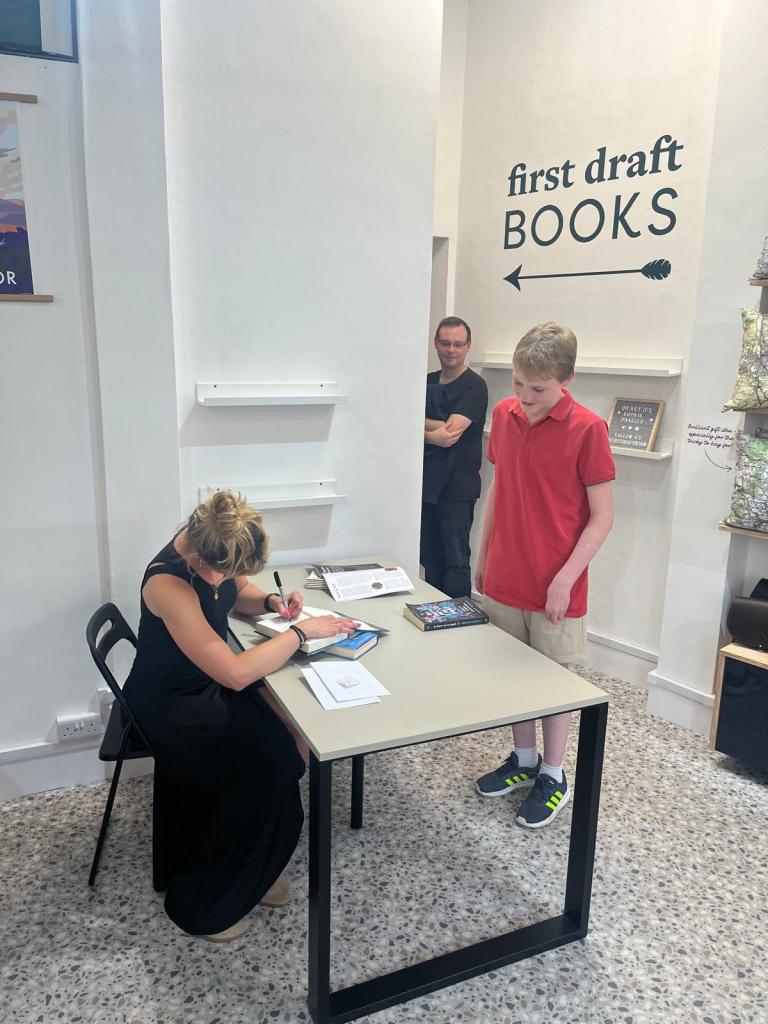
At the end of the talk, I was lucky enough to meet Sophie, which was incredible as for the past few years I had been reading her book and following her adventures via social media. It was great to talk to her, and we ended up talking about Cuckoos (my all time favourite bird) and Emsworthy Mire (my all-time favourite place). She even ended up giving me the copy of the book that she’d brought with her to read from, which was absolutely brilliant. Thanks Sophie!

Me talking to Sophie Pavelle

Overall, I am really looking forward to reading the book (‘To Have or to Hold’, in case you forgot) and I recommend that you do too. Sophie had been on tour with the book all week before the evening’s talk, and it has been met with a glowing reception from the nature community. Plus, if it takes after the first book (‘Forget Me Not’) then it must be incredible! So, if you’ll excuse me, I’ve got some reading to do.

Planks and Perseverance

Boardwalks are a common feature of many popular sites for strolls and walks, whether alone with the dog or alongside a large family group. So its only natural that many people will take these feats of engineering for granted, despite them helping to keep their feet dry when walking in a boggy area! However, there is actually a lot of work and planning that goes into constructing a boardwalk. A 5 metre stretch took the Dartmoor Youth Rangers (me included) around 3 hours to build fully! Often, rangers and volunteers can spend weeks working on the same section of walkway! So, as I learnt today, they take a lot of work!

It was a grey and drizzly April day as the group of Youth Rangers and the team of fully-fledged rangers assembled in the Erme Valley near Ivybridge, preparing to head down into Longtimber Woods and build a section of boardwalk along a walking route popular with dog walkers and woodland-goers. We sat atop of a hill in a field, the wind buffering us slightly as the bitter cold set in. The Land-Rover was loaded with all the tools and equipment we’d need for the day, and we followed on behind it as we descended towards the woods. A stack of timber waited under the tree-cover for us, ready to be magically transformed into a boardwalk. But before we get to the construction, what actually is a boardwalk?

Longtimber Woods

Well, a boardwalk is a raised path or walkway typically made up of wooden planks or boards, hence the name ‘boardwalk’. They are usually constructed over boggy ground, or over a section of path that often floods after rainfall. On Dartmoor, some examples include over a valley mire, such as at Emsworthy or around the edge of a pond. The main idea behind a boardwalk is to minimise the environmental impacts of trampling and erosion, while also providing a safe and comfortable route for walkers and explorers.

Boardwalks are crucial to preserving habitats like the many within Dartmoor, but also to educating people about the nature they are surrounded by. By providing a clear, obvious walking route preferable to taking an alternative course (in this case, straight through the mud), erosion to thriving ecosystems such as marshland and sand dunes can be avoided, while boardwalks also help minimise disturbance to ground nesting birds, which is especially important at this time of year on Dartmoor. Most boardwalks in nature reserves will also have signs and information about the species that live there. Plus, if walkers don’t fancy getting their feet wet, it’s the perfect way to keep dry while still fully experiencing the environment.

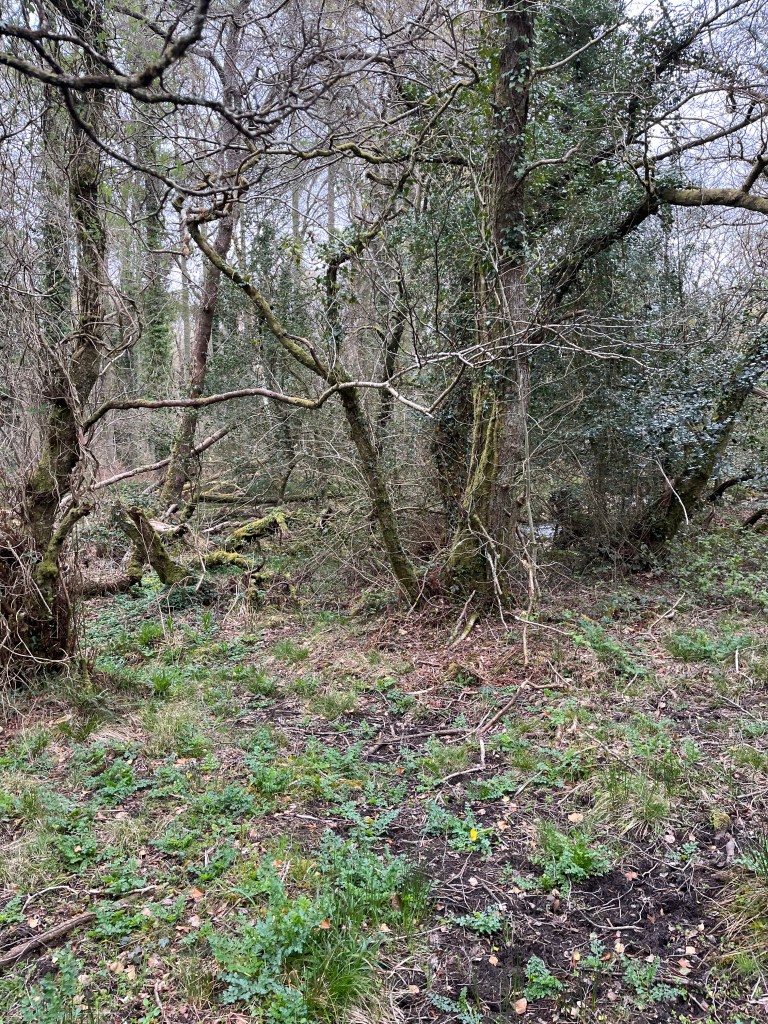
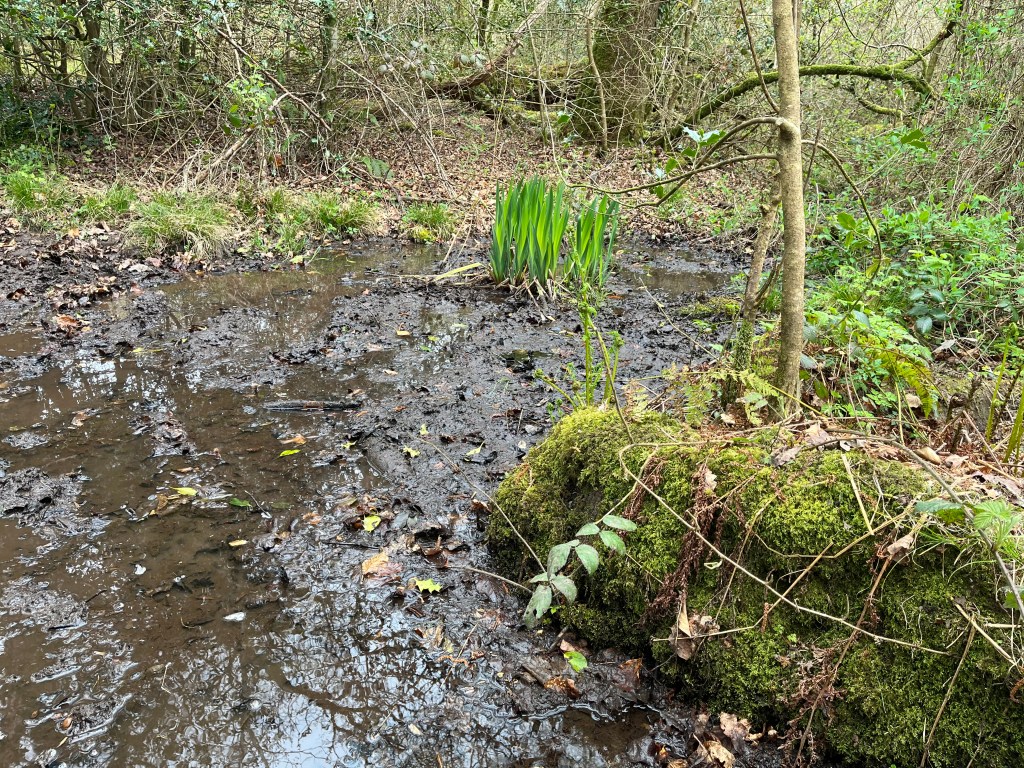
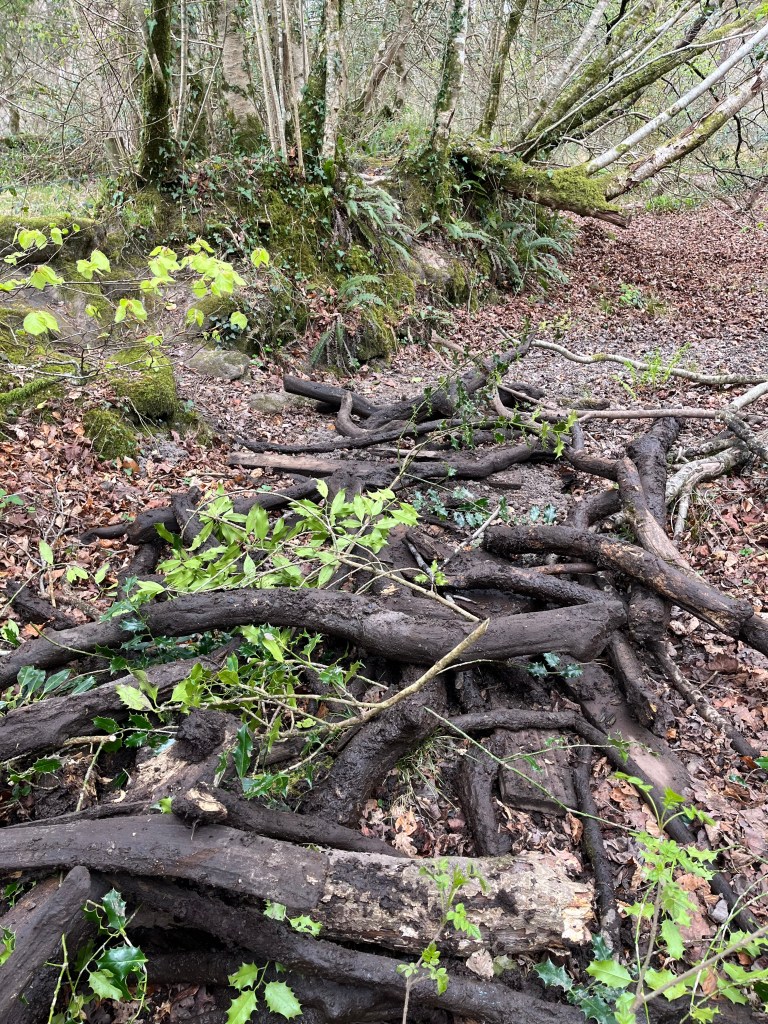
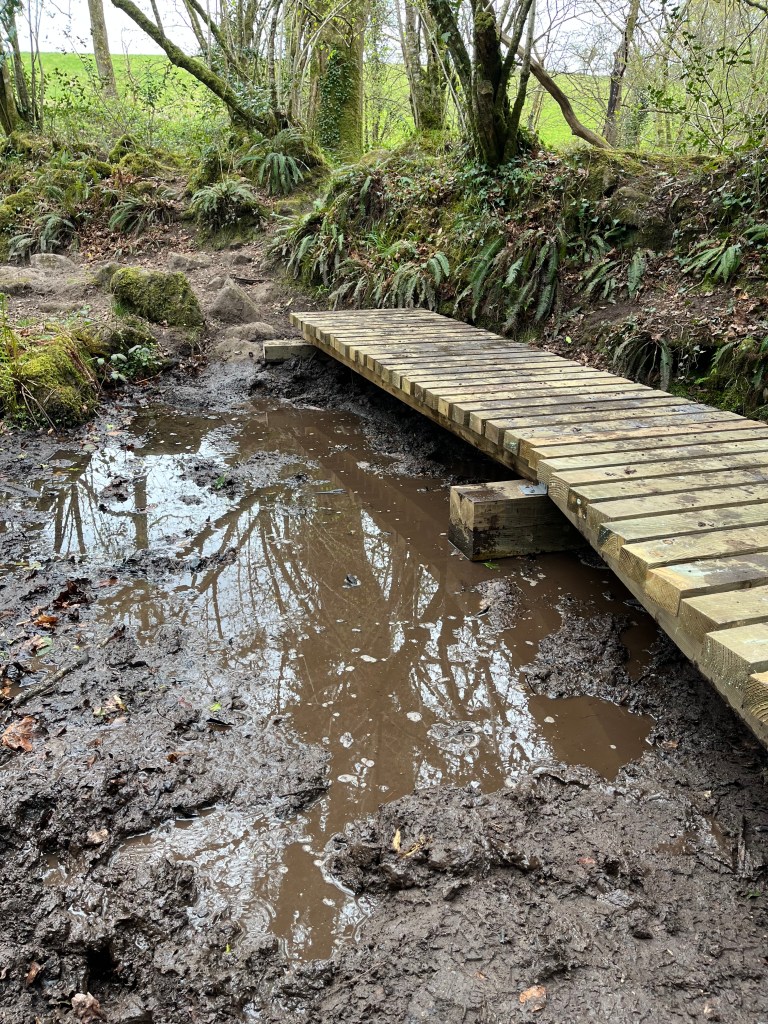
When we arrived at the spot we were to be building upon, it was pretty obvious why this small stretch of footpath needed it. Bearing in mind that we were visiting when the woods were relatively dry (it hadn’t rained for about a week beforehand), it was surprisingly boggy, with shin deep brown water and squelchy, oozing mud. There were several plants that love this kind of environment in residence, the most prominent of which was a large stand of iris out in the centre. The water level was actually higher than it would have been due to people having thrown in logs and sticks in attempts to create makeshift bridges and the ancient, mossy stone wall that ran down the side of the footpath was showing worrying signs of erosion from where people had walked across it to avoid the mud. Clearly here, a boardwalk would solve a lot of problems.

The bog in question
What we removed from the bog.

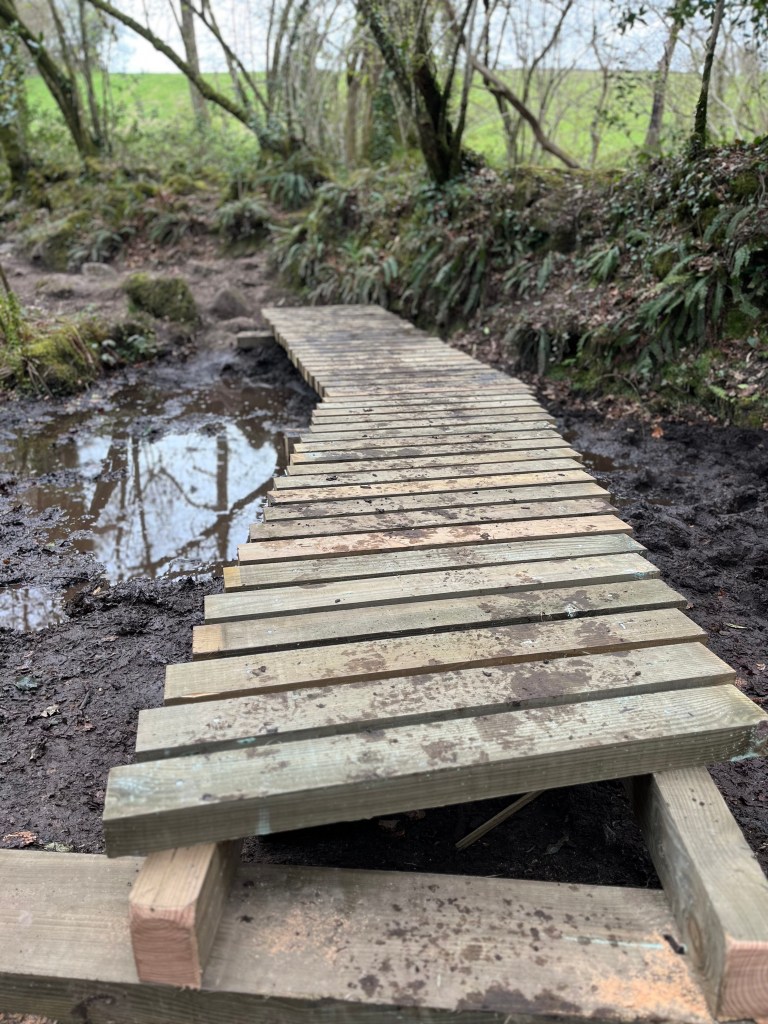
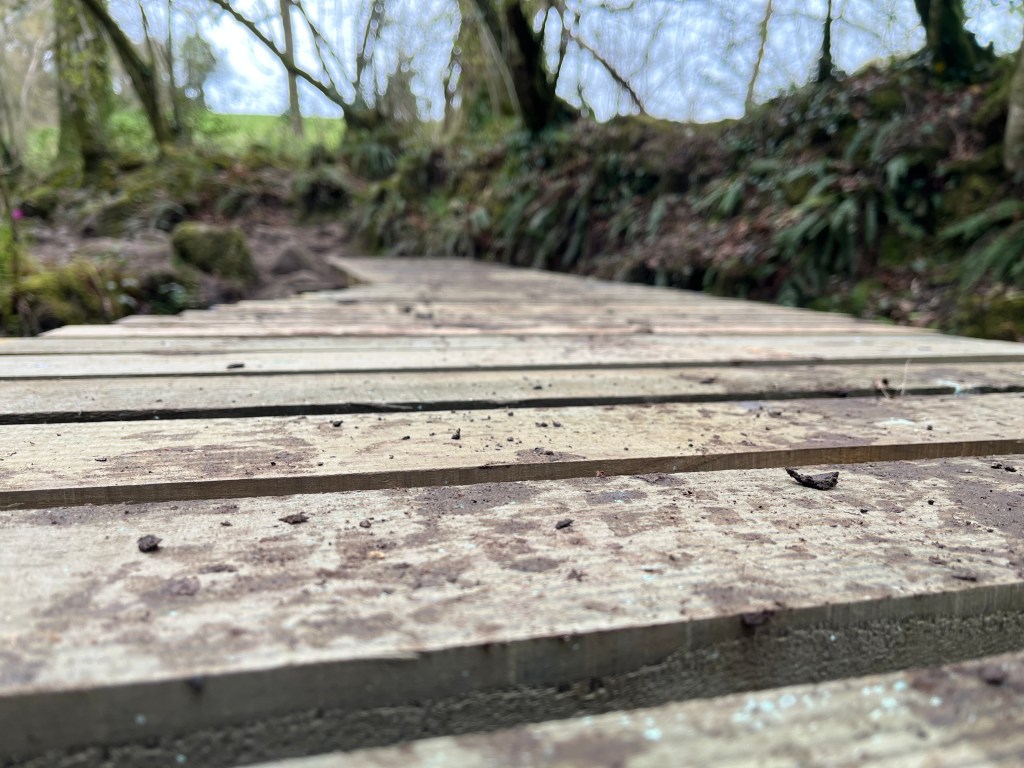
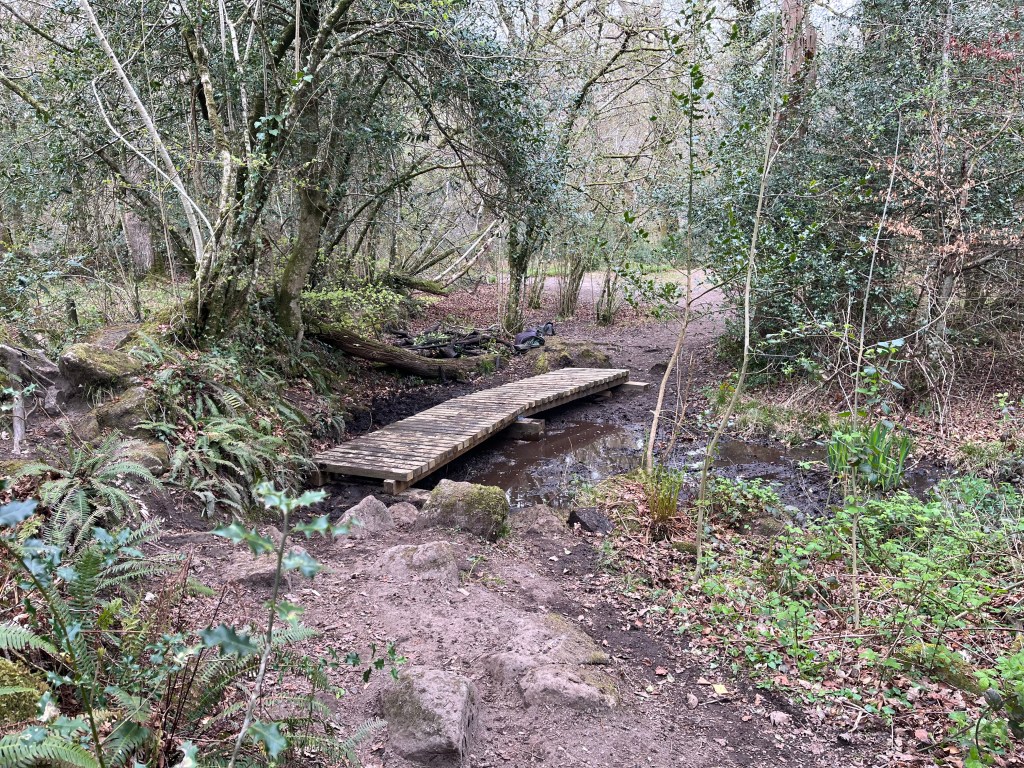
And so the hard work began in earnest. To start with, we sunk several thick wooden sleepers into the mud. Once they were stabilised and wouldn’t wobble when pushed, we bracketed two long stringers (elongated lengths of timber) at the edges of the four sleepers, that bridged the gaps between them. Finally, the 42 planks of decking wood, sturdy and just long enough to span the distance between the two stringers, were all arranged in formation across the boardwalk, before being nailed in place. There was a small gap between each decking piece, but don’t worry; it was difficult to fit your finger through them, let alone a foot! It was only a short stretch of boardwalk, but it was an efficient way of reconnecting the footpath. Now the popular dog walker’s route was saved, and nobody need get wet feet again (well, unless another section of path floods and becomes a bog). Also, the ranger team were very impressed with our handiwork!

Boardwalk!

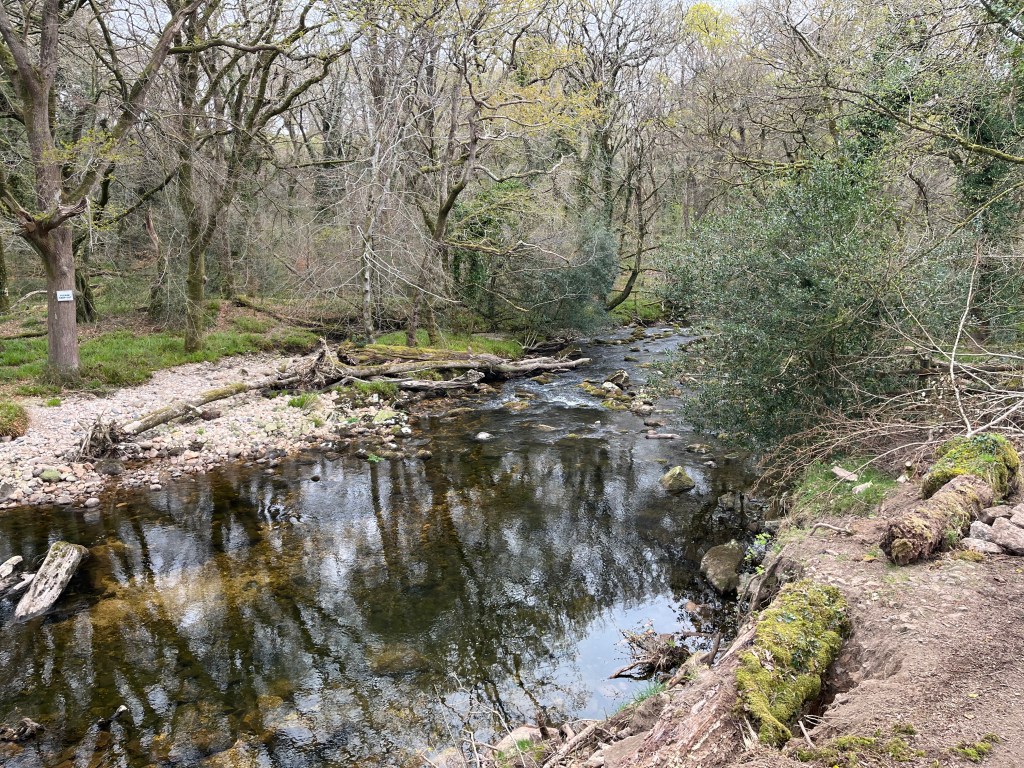
For the whole day the River Erme was deafening in our ears as we worked. It was a sight to behold, wide and tumbling but with large islands of rocks and pebbles that created slow moving stretches and still pools. This stretch of the river looked like perfect Dipper habitat in my opinion, fast moving-water with lots of rocks to perch on. The Erme passes alongside some of the best preserved archaeological remains on the moor, touring stone circles and rows, barrows and early tin mining workings. In the 4th and 5th centuries, the Erme valley floor was significantly altered by tin-streaming operations, which have in turn created a natural valley floor where the river now flows. The Erme is certainly a river with a lot of history under its belt.

The River Erme

Birdlife wise, there were a fair few species hanging around the woods to check out our boardwalk, the most exciting of which were my first two Swallows of 2025! Ladies and gentleman, they have returned! There was also a fishing Grey Heron, taking advantage of the slower moving parts of the river, and a loudly ‘yaffling’ Green Woodpecker (by yaffling, I mean it’s call, which sounds very much like some croaky laughter). Both the Chiffchaffs and Willow Warblers were out in force as well, their calls and songs serenading us as we worked.

All in all, it was a brilliant day, despite having the first grey clouds we’d seen in a while. Building the boardwalk allowed me to improve my skills with several tools including a saw and a hammer, as well as demonstrating to me the importance of exact measurements! A huge thanks to everybody who helped make the event happen, but especially to Ranger Ella and Assistant Ranger Ethan for opening up such a brilliant opportunity, and as always to Kats for organising it all! In the summer, I plan to take a walk up in Ivybridge and check out how our boardwalk is holding up! And the next time you use a boardwalk to traverse wet ground, remember how much work and effort went into building it so you can keep your feet dry.

Shapwick Starlings

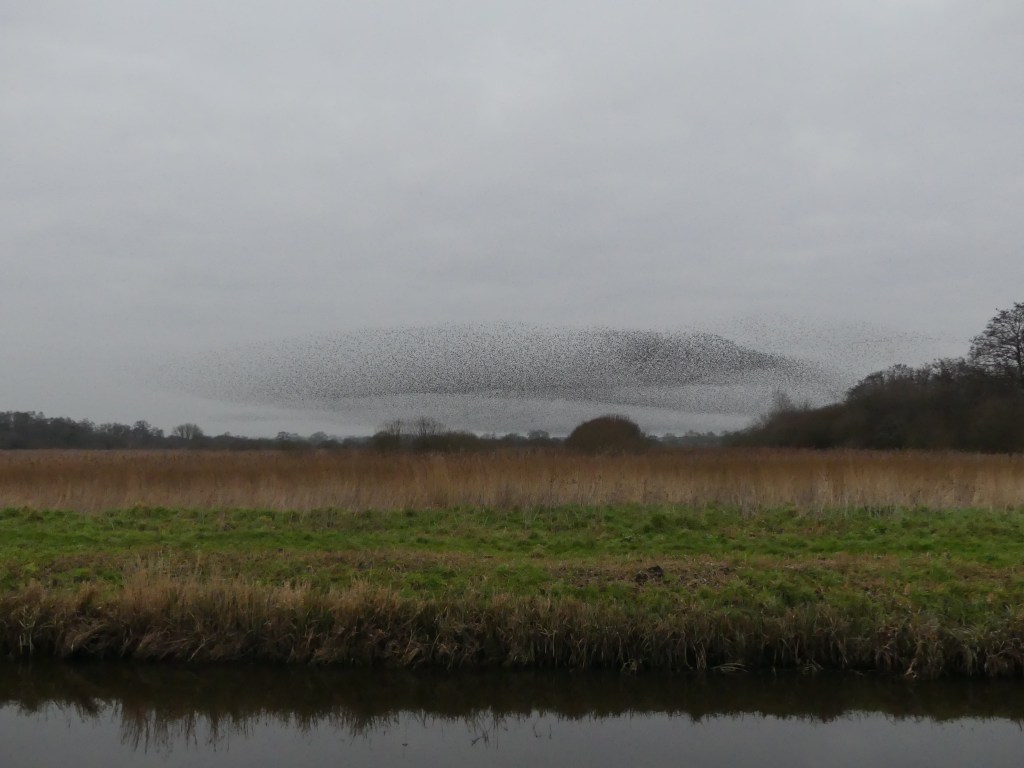
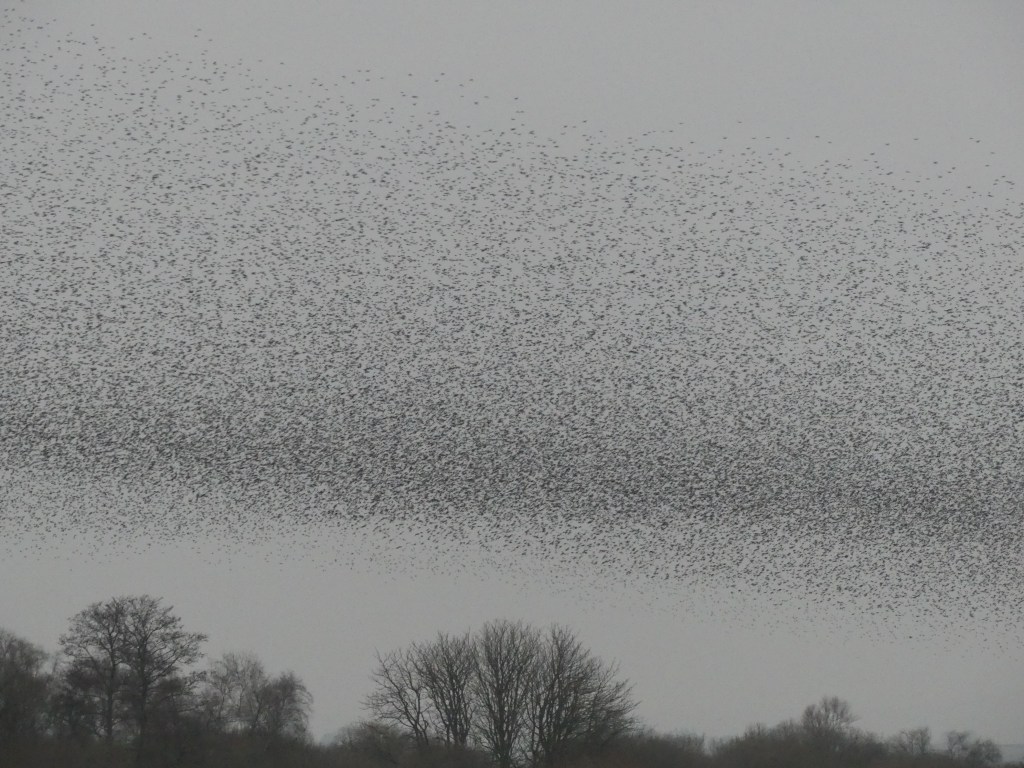
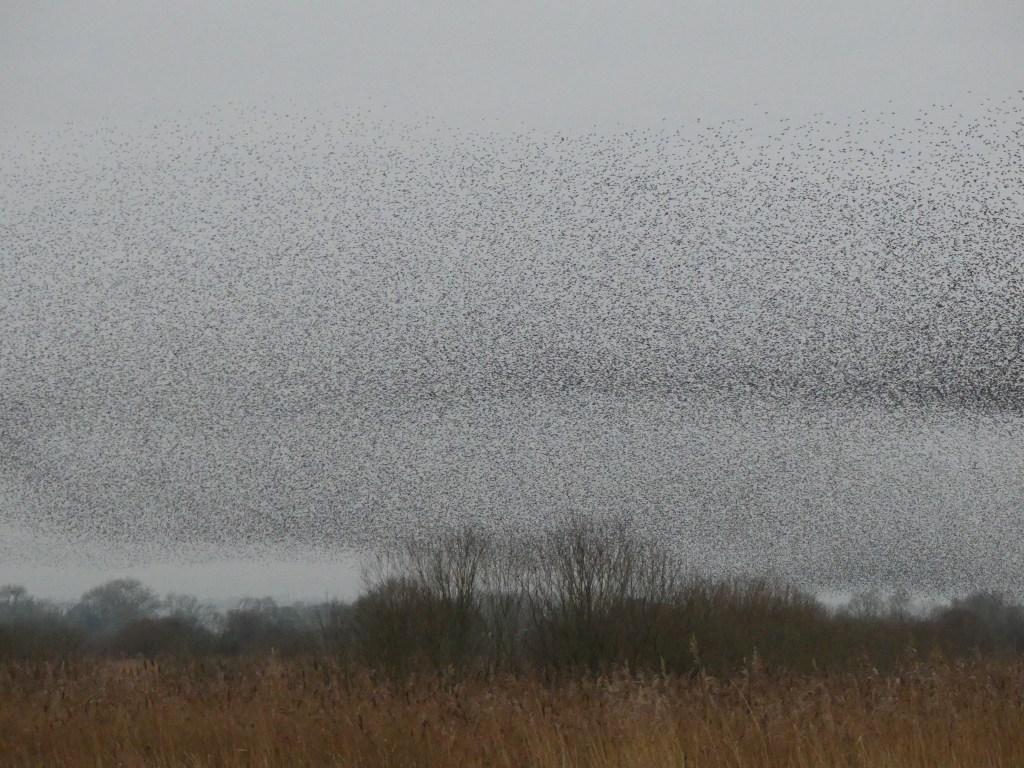
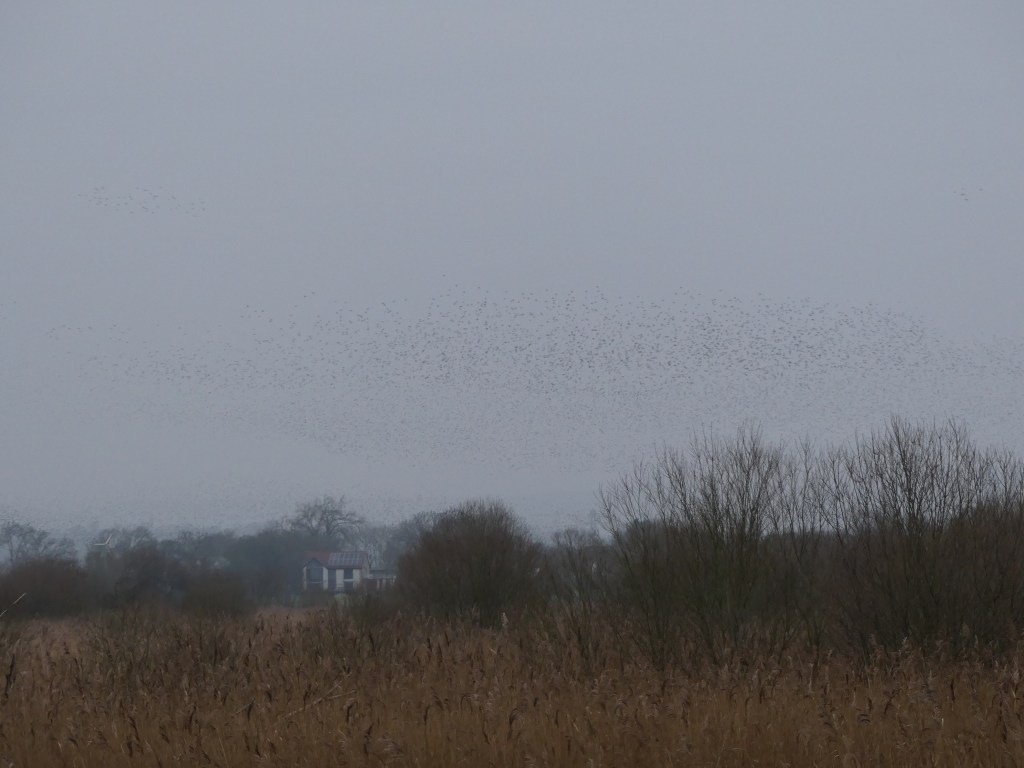
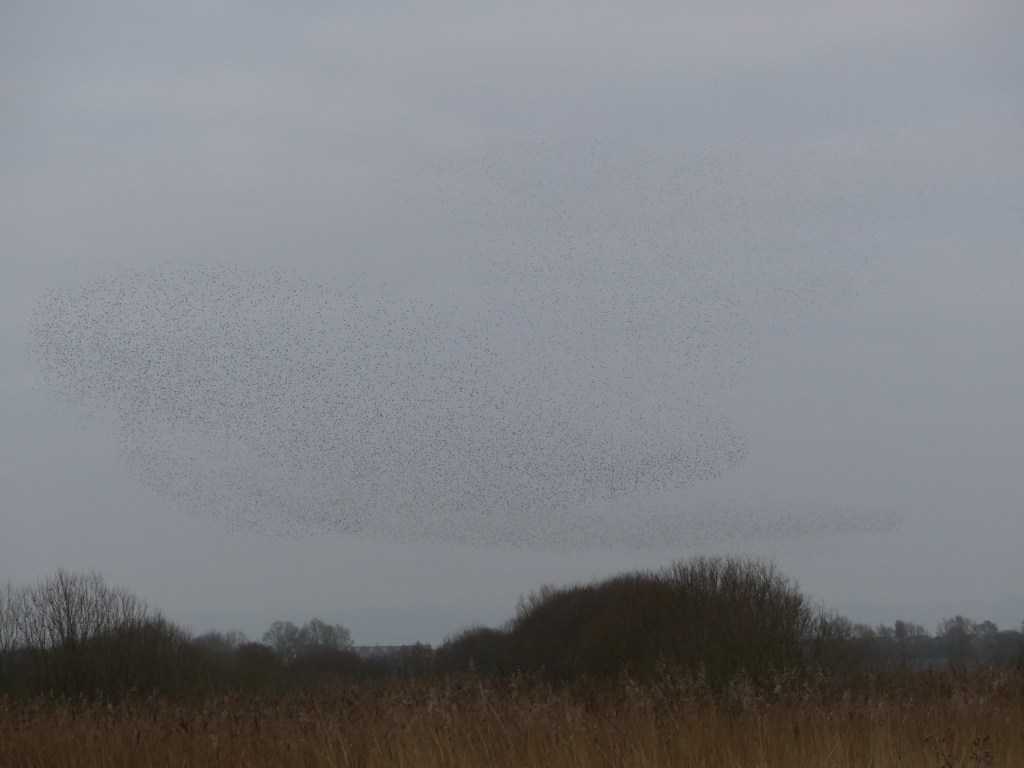
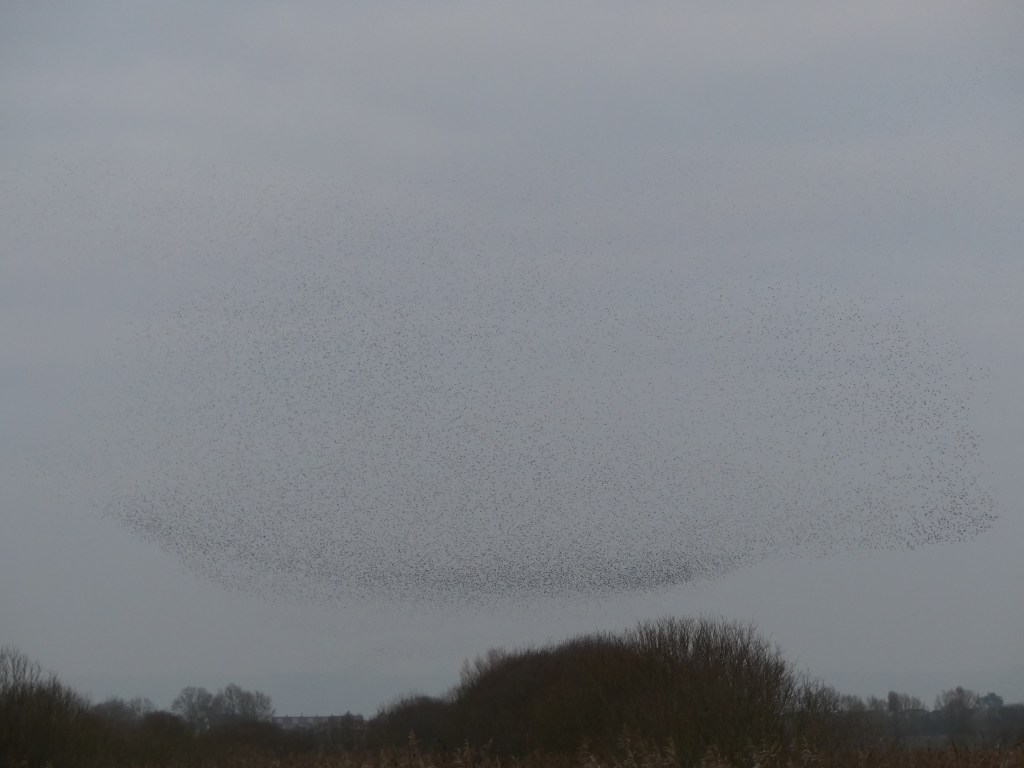
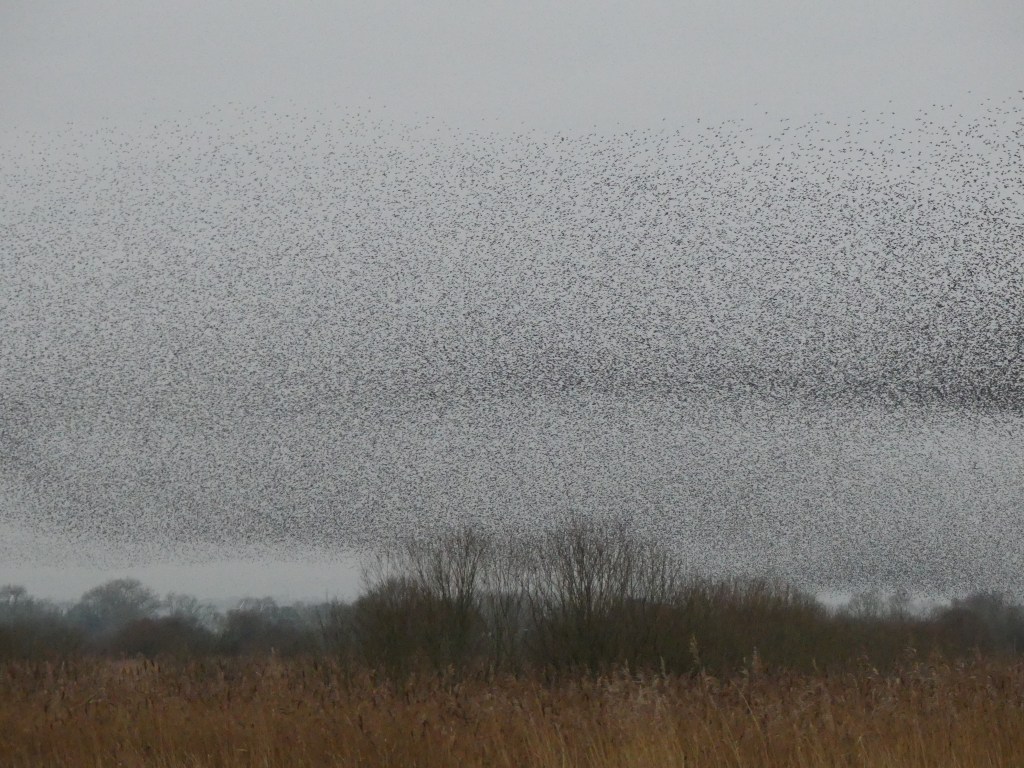
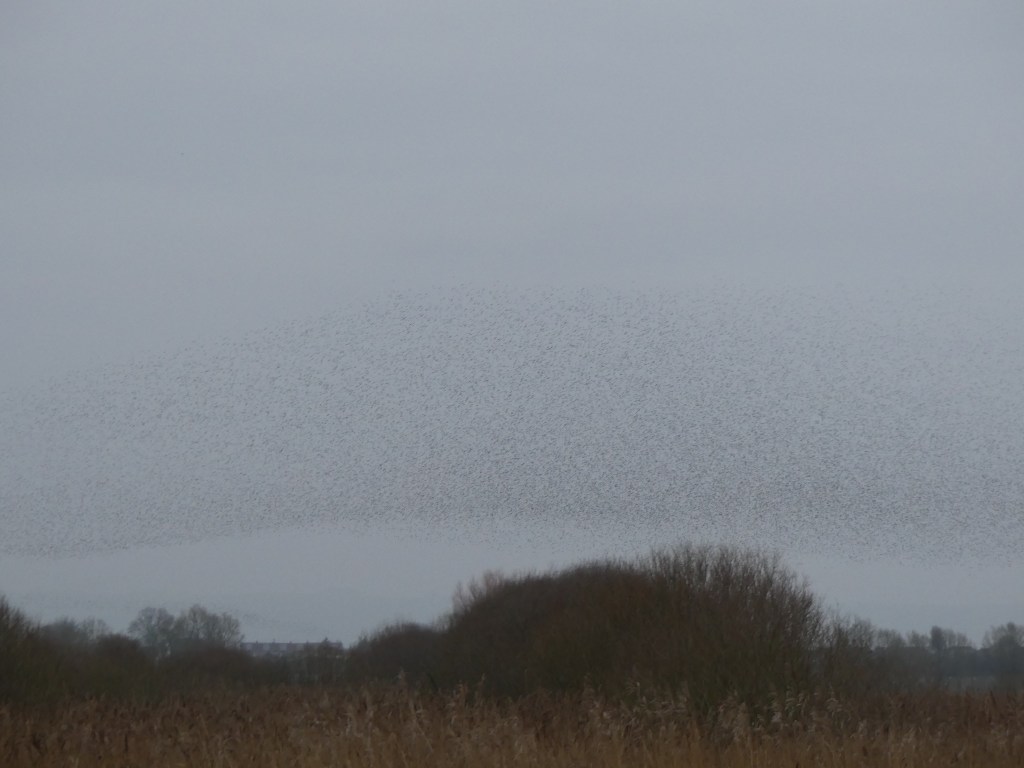
About a month ago, we visited the Shapwick Heath National Nature Reserve starling roost to round off an incredible birthday birding weekend. The highlight of the evening was the murmuration that unfolded before our eyes, a dancing, twisting, mesmerisingly beautiful cloudy mass of birds. There was quite a crowd there too; keen birdwatchers, photographers and filmmakers, families and many others. There must have been at least 200 people lined up along that one stretch of path, craning their necks to get a glimpse of the spectacle. It’s incredible how a natural phenomenon can bring people together like that.

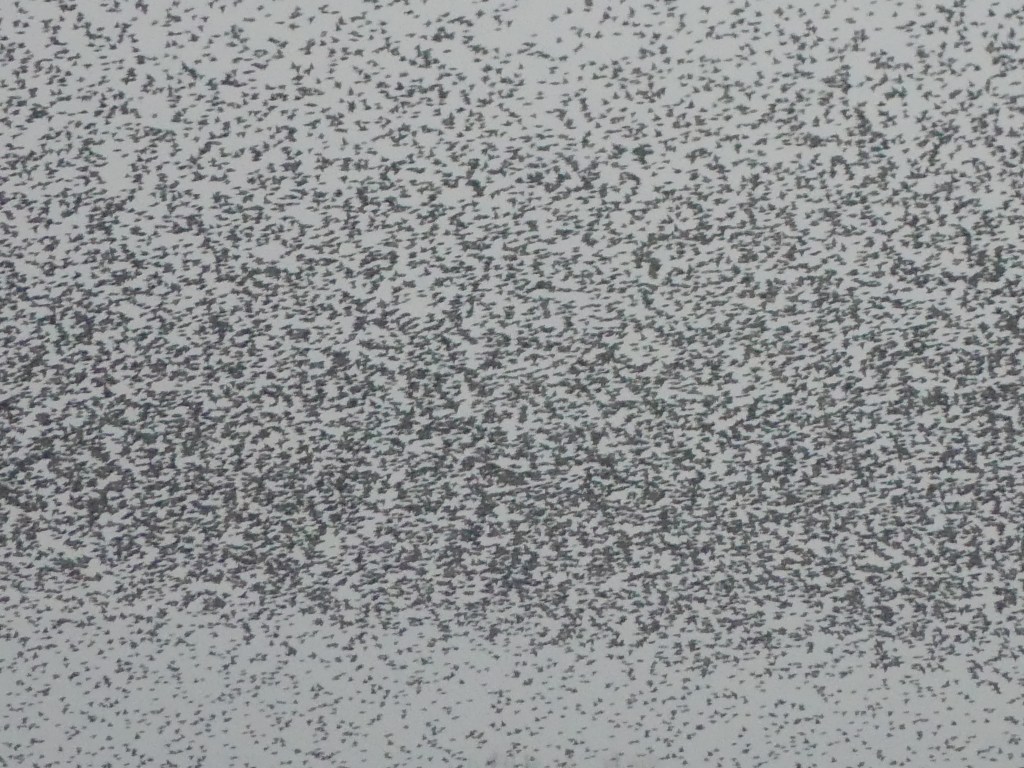
As for the murmuration itself, well it defies belief really doesn’t it? There must have been just shy of 100,000 birds in that one flock, all magically connected by an invisible thread formed by evolution and the need for community. The shape started off small, but steadily began to grow in both size and confidence. The flock was small at the start, almost half-heartedly going through the movements, as if warming up. But as more birds began to arrive, in little groups ranging from a dozen to 70 or 80, the power of the wave soon began to take hold. The noise, when the murmuration came closer, was like that of a blowing gale. Thousands of wings, beating the same rhythmic pulse. I’m honoured to have been able to witness and experience such a thing.

It’s incredible to think, really, that a birds everyday life always seems unremarkable and common, is actually anything but. Such a happening in the human world would take more planning than I’m willing to go through at this moment in time. Just imagine it. You’d need 100,000 people, and a way for them to not bump into each other. You’d need to find a method of getting them to move as one mega-organism, which, short of implanting a futuristic control chip in all their minds, I don’t think would be physically possible.

But the Starlings, they just show up on the day and do it. No planning, no practise, and no convincing others to come and join in (unlike humans). Nonchalantly, they just fly to the site and get on with it. Forming this twirling, swirling, physics-defying spectacle is just something that happens, part of everyday life for them, in the winter at least anyway. And who knows, maybe science will soon reveal a social aspect forming part of the need to murmurate. I mean, we know that it is in order to roost communally and adhere to that age-old natural law, safety in numbers, but maybe it could be something more? Like meeting up with friends or family? Call me crazy, but that’s how I like to imagine it!

Such a thing is why we have expressions in the English language like ‘my breath caught in my throat’ and ‘my heart skipped a beat’. This is the kind of beauty that can’t be replicated in a man-made form. It is the sort of thing where beauty is found in the fact that we know so little about it, and its easier just to stare and let your jaw drop in awe. On that bitterly cold night, I felt an unimaginable amount of different things, washing over me in rapidly occurring waves. Joy, confusion, anxiety, curiosity. But the backstop behind it all never ceased to be a sense of awe. I’d never really felt anything like it, to be honest. And it felt good.

All of a sudden, in the blink of an eye every last bird had disappeared, dropping into the reeds to finally commence their communal roost. It definitely seemed a little anticlimactic, after such an inspiring, breathtaking performance on the Shapwick stage. Immediately it struck me as mind-boggling how near on 100,000 birds had all vanished into that one stretch of reedbed. It was like a magic trick, just another part of the wonder of the murmuration.

So, what do we actually know about the murmurations? There is little in the form of rock-hard facts when it comes to researching this natural phenomenon, but one thing that’s for certain is that they all happen at around the same time of day, up and down the country, and that’s in the evening as the sun goes down. Another thing we know is that it always coincides with a communal roost, whether that be beneath a pier, such as in Blackpool, or within a reedbed, like here at Shapwick Heath NNR.

The community angle is a good one to take, as a lot of it just makes sense. The more birds there are together, the more body heat and warmth there is, and obviously then there’s safety in numbers. If you’re a Starling, you’re going to want to be at a sizeable roost because then if a fox or marten was to come along, you’d be less likely to become an evening snack. Some scientists even think that the murmuration is a way of attracting more birds to the roost, to add to the current flock’s numbers. So that’s one theory to explain the murmuration, and I think it actually does make a lot of sense, from an evolutionary point of view.

Another theory is that the murmuration is completely for show, and is an intimidation tactic used to frighten off any potential predators that might be lurking around the roost site. If you don’t know what you’re actually looking at, a murmuration can be both unnerving and startling. If this were to be true however, it clearly doesn’t always work as some of the most breathtaking murmurations happen when a bird of prey like a Peregrine Falcon darts through and splits the murmuration in two, trying to pick off a single bird.

Murmurations have certainly left their mark on the history books, as well as touching the lives of people in the modern world too. The Ancient Romans believed that the undulating patterns created by the Starlings mirrored the changing moods of their many gods. Roman religious leaders, known as augurs or diviners, interpreted the shapes created by the birds to make major decisions, about such crucial things like key battles and political debates. They were a way of seeing whether the gods approved of the idea or not. This was known as ‘taking the auspices’. So there you have it. Starlings even spoke for the Roman gods!

As I have already mentioned a ridiculous amount of times in this blog, such is my admiration for them, a starling murmuration is one of nature’s greatest spectacles and a truly breathtaking sight. I feel incredibly honoured and privileged to have seen such a phenomenon, that is as of yet unexplained by science. I have written two previous posts detailing them, so if you want to have a read of those too click here or here. To watch a video of the murmuration, visit my instagram account (@the_bovey_birder).

Birthday Birding Bash

A month ago it was my birthday, and to be honest, I pretty much spent all the time birding. Visiting two sites with special places in my memories and on this blog was both nostalgic and rewarding, with a few rare birds and natural phenomenons thrown in, of course. Across the two days, there turned out to only be one lifer (however it was a big one), but my year list is now off to a brilliant start, and I’m hoping that 2025 is going to be a big birding year. So without further ado, we began on a walk towards RSPB Bowling Green Marsh.

Blue and Great Tits fluttered from tree to tree above us as we walked down the path that was parallel to the River Clyst, which was about to open up onto its estuary. I looked up from by binoculars to find a glorious male Bullfinch, in all its rosy pink glory, staring right back at me. As I watched, transfixed by its stare, a female flew in onto the branch above it, her breast a dusky, dusty brown. The chittering of a large group of House Sparrows, taking over a nearby hedge brought me back to my senses, and I continued on my way down the path, occasionally pressing myself into the leafy green border when the ping of a bike bell rent the air.

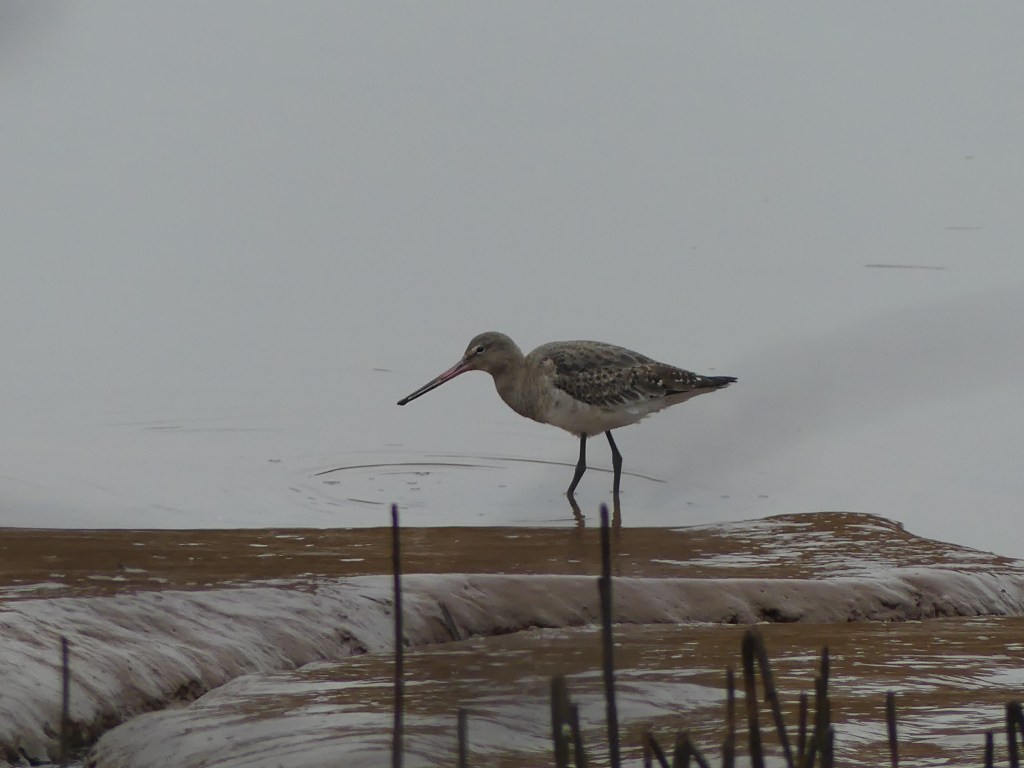
The tide by now was almost in, leaving a small group of Black Tailed Godwits on the edge of the water, legs obscured by swaying grasses. A Redshank weaved between them, while a much happier looking group of Teal paddled about out in the middle of the water. We trudged onto the bridge, laden with a scope, binoculars, camera and several rucksacks, and I raised my head to acknowledge the pair of Ravens flying over our heads with a harsh ‘kraw’. It was a bird I hadn’t necessarily expected to see on a visit to the Exe Estuary, and definitely welcome.

Black Tailed Godwit

The bridge opened up onto a raised boardwalk that provided a pedestrian highway over the marshland and reedbeds. Several viewpoints lay along its right hand side, looking out over prime wetland habitat. Wistfully I thought back to last Spring, when the dense shrubbery on the left had concealed many deafening Cetti’s warblers, a reddish brown bird more often heard than seen. At the first viewpoint we saw one of our main target species for the day at pretty much the first time of asking, and it was a raptor that never failed to take your breath away.

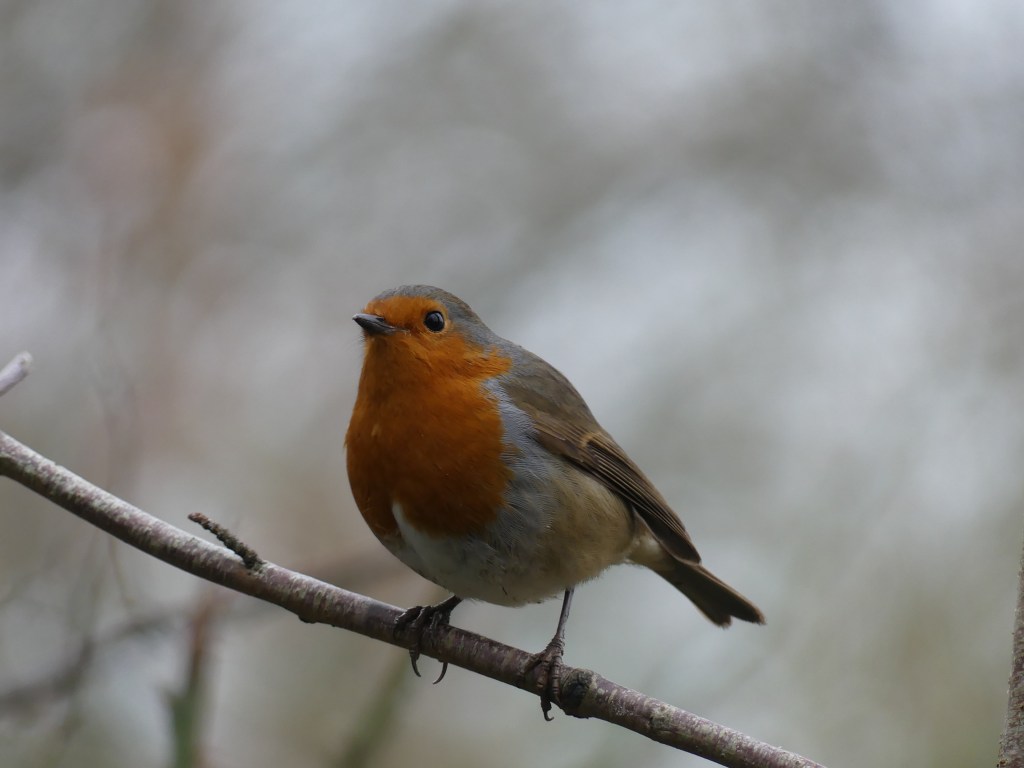
A Robin came to see what we were up to

From here all you could see was extensive reedbed, until your eyes found Darts Farm and the road on the other side. It started with several Carrion Crows making a mighty ruckus, clearly agitated. And then a richly coloured bird of chocolate brown, with a coffee cream patch on its face rose from the reeds, gliding on powerful wings. Had it let its feet dangle beneath her, they would’ve become entangled in reeds, and her head was constantly scanning, searching for prey in the reeds below. A female Marsh Harrier, surveying her queendom.

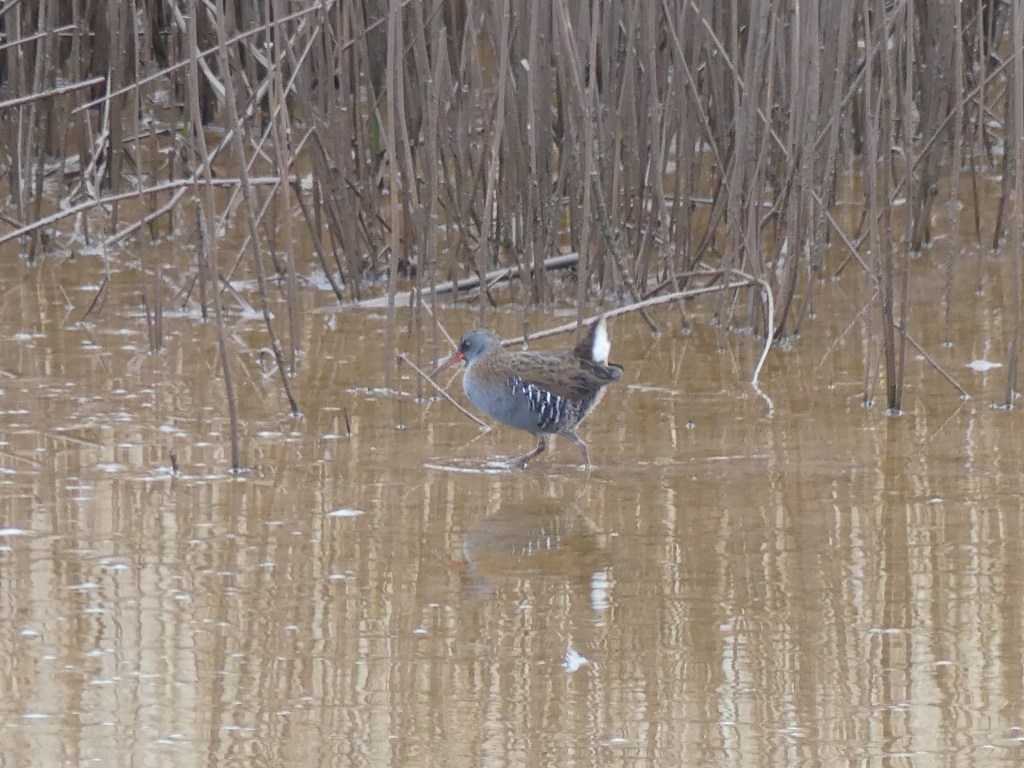
The grey clouds hung over us as we tramped along the echoing boardwalk, passing cyclists and families as we went. The next viewpoint proved a window to several pools and channels on the edge of the reedbed, fringed by swaying rushes. A squealing call brought my binoculars right up to my eyes, slightly reminiscent of that of a pig. However, I certainly hadn’t expected to see the caller out in the open. With an admirable blue-grey breast, and a brown patterned back, the bird ran with a speed that took me completely aback, flashing a white rump as it went. Suddenly another bird popped out as the first one concealed itself once again in the reeds, and the two Water Rails, relatives of the Coot and Moorhen, took it in turns to run out of the reeds looking for food. When the cold snaps come in the winter, Water Rails are forced out into open water, and this is the best time to see them. We’d seen them here on our last visit a couple of weeks ago, and this seemed to be a favoured spot for them.

Water Rail

My eyes were torn away as my ears were clogged with honking, and I directed my binoculars upwards to see a group of Brent Geese flying in a miniature v-formation, a flurry of greys and white. The Exe was famous for them, with its huge wintering numbers nationally important. Brent Geese prefer to feed on eelgrass that is slightly submerged in water, so parts of the Exe are perfect for them.

The boardwalk ended, and suddenly we were on solid ground again. The air around us was filled with cacophonous calls growing in volume, a telltale sign of a winter wetland close by. Just a spiked metal fence and a loosely packed hedge separated us from the marshes, and the birds certainly knew this too. As we walked past, we startled a resting Egyptian Goose on the water’s edge, and it watched us warily before tucking its head back behind its wing.

The lane led down to the RSPB Hide, complete with a nature garden and Lapwing shaped bike racks. Silently, we entered, shutting the door carefully behind us so as not to disturb the myriad of species in front of us. The thing about a wetland is that you never know where to look first. Do you scan through the massive group of Wigeon in front of you, or admire the beauty of the dabbling Pintails further out. Do you watch as the Cormorant fans it’s wings on an islet, or follow the Lapwing’s energetic bouncing bursts of flights? It’s a dilemma that few birders have managed to answer, such is the wonder of a wetland in winter.

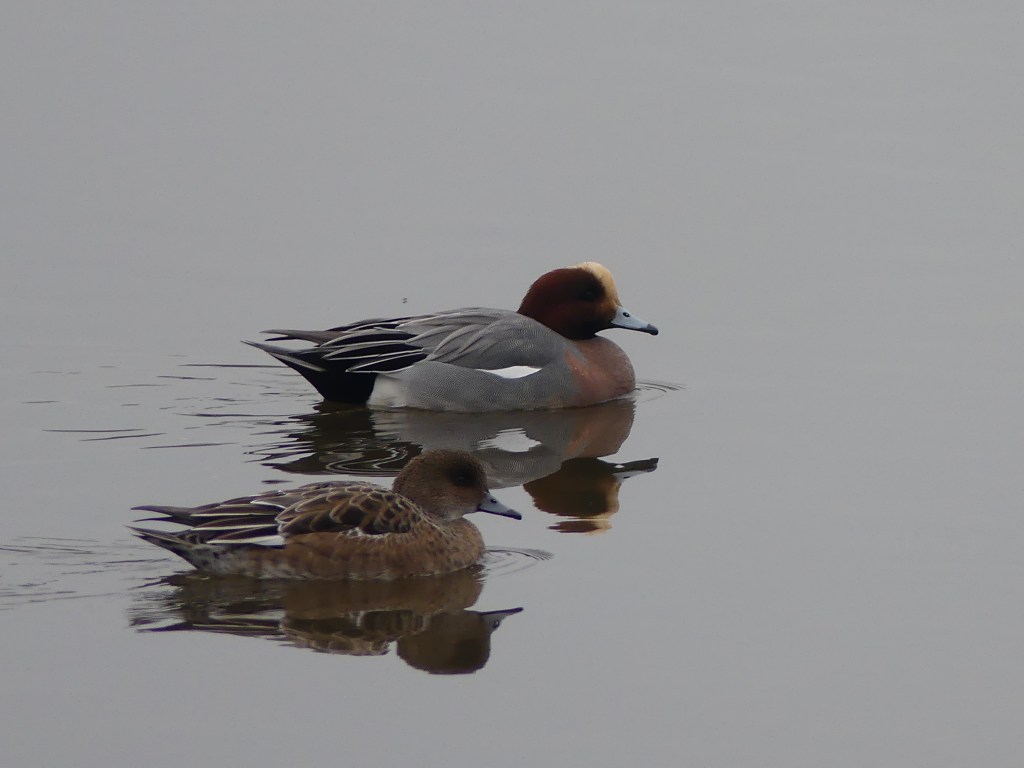
A pair of Wigeon

Out at the back was a bird which looked very out of place, like an odd Tufted Duck. It was on its own, and regularly diving beneath the surface of the water before popping up again a couple of meters away from where it began. But this was in fact an immature male Greater Scaup, a sea-duck by nature that often ventured slightly inland during the winter months. An inconspicuous chocolate brown, like a female tufted duck, it can be told apart from its counterpart by its larger size, steeper forehead and larger broad bill. They’re a fairly scarce duck to see, and this bird was a long-stayer at Bowling Green.

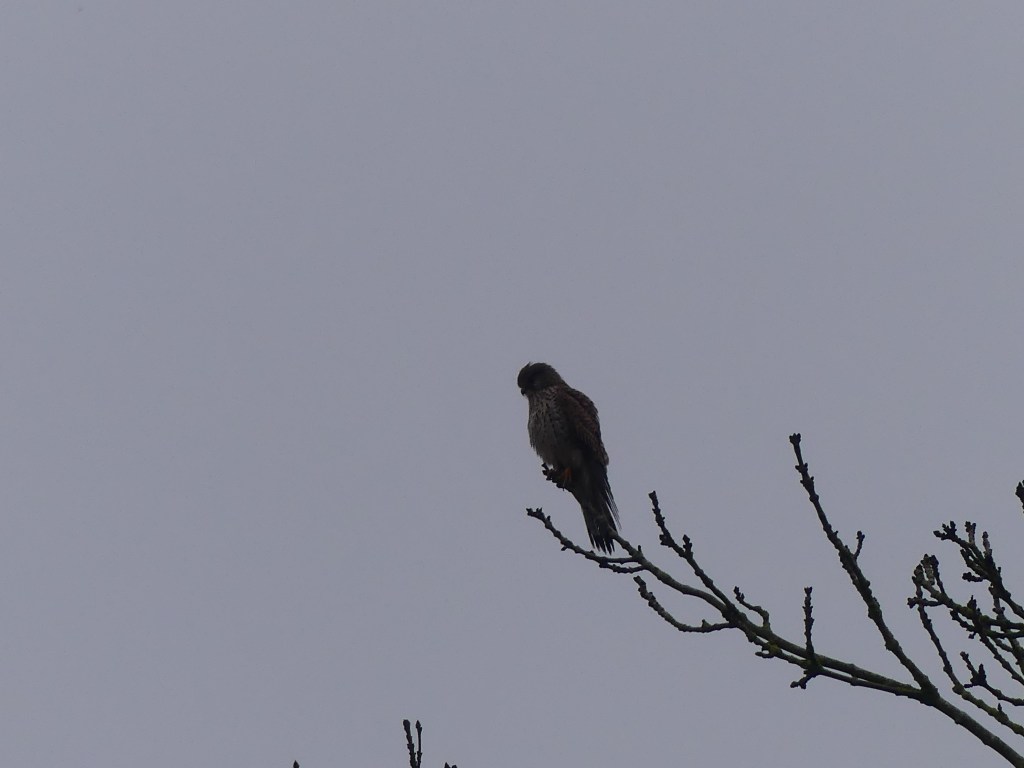
After around 90 minutes in the hide, we left as soundlessly as we could and continued down the lane, heading for the next viewpoint that looked over the mudflats exposed by the retreating tide. As we headed down the path after passing through another creaky iron-wrought gate, a Kestrel, tiny but mighty, flew low over our heads before coming to perch in a tree barely a couple of metres away from us. Light for a photo was going to be tricky, but the positioning of the bird was an opportunity few would miss. After pausing for a few shots, we headed up the wooden steps and onto the viewpoint.

The Kestrel in question

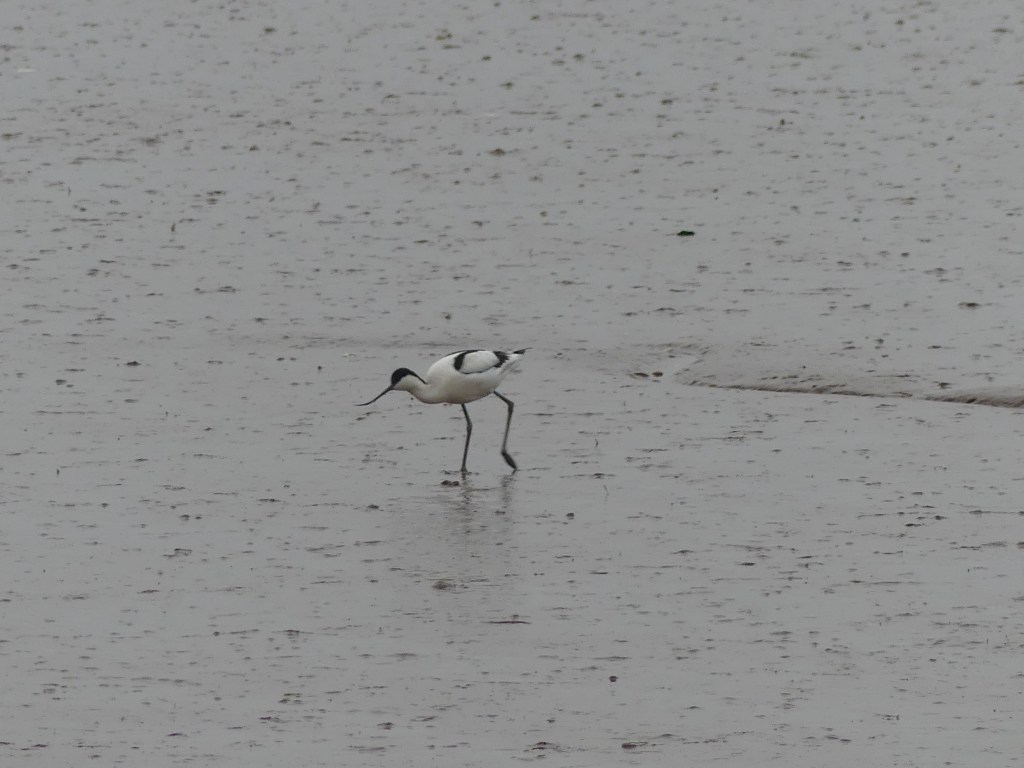
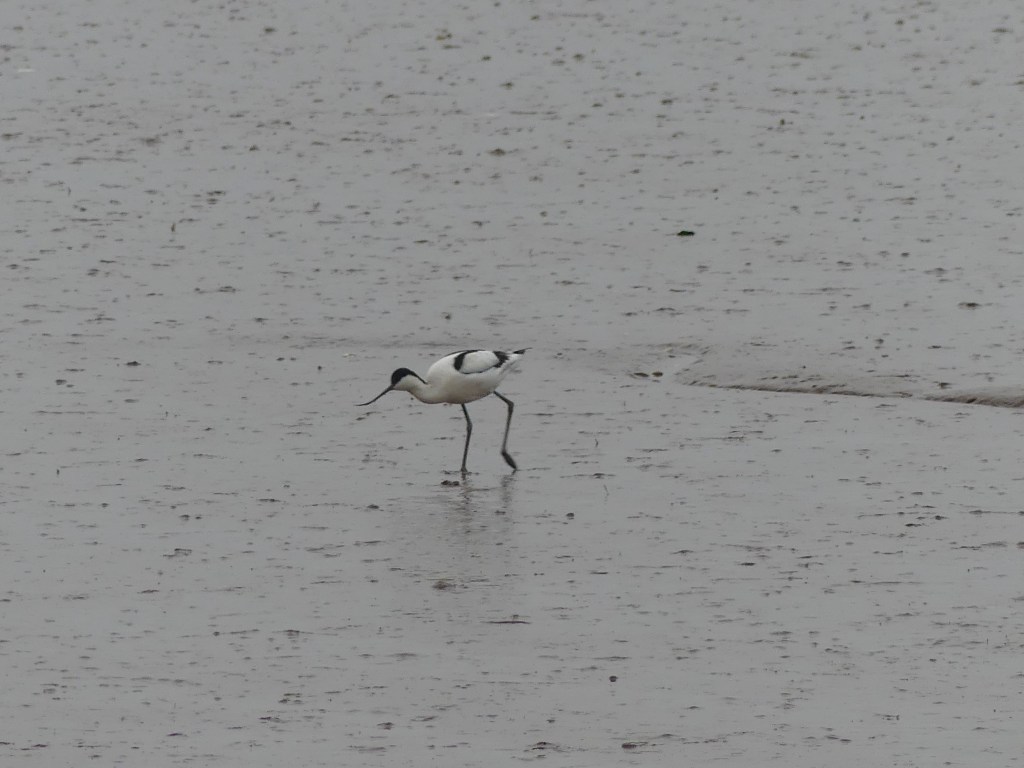
Immediately a group of Avocets caught my eye, in all their piebald splendour. The Exe plays host to a national important wintering population of these waders, and is one of the best places to see them in the UK. The Avocet even features on the logo of the RSPB, being one of their first conservation success stories. Scanning to the right with the scope, I picked up a Dunlin in its drab winter plumage, moving sprightly about the mudflats, dipping its bill deep into the dirt at intervals.

An Avocet

I looked up from the scope as a loud, piping call cut through the air around us. Two Oystercatchers, with blood-orange bills, came flying in, landing on the mudflats in amongst the Avocets. Next to arrive was a Curlew, followed by several Cormorants putting in a flyby visit. The variety of species on these mudflats has been barely touched by me, and there was a lot more further out there taking advantage of the tidal riches that nature has provided.

After another hour of watching the waders go by, we headed back up the lane and across the boardwalk, back towards Darts Farm where our trip had started. The chittering of another House Sparrow filled bush was our 2 o’clock chorus as we packed up the gear into the car. Tomorrow would hold another birding trip, but further afield than today at Bowling Green.

Ham Wall

We awoke bright and early next morning to begin the trip to Somerset, and its abundant marshland habitats. The site in question was none other than RSPB Ham Wall, famous for Bitterns and Starlings alike. As soon as we had parked, a male Bullfinch flew low over our heads before alighting on a snag of bramble opposite us. Its rosy pink breast lit up the drab grey morning air, and could surely only be a good omen for the day’s birding ahead. It was bitterly cold, and I was grateful for the many layers I was wearing. There was very little sun to be spoken of, rather just a desert-like sky of grey. The wind blew an ear-chilling gust that wove its way inside my coat, and I was only too glad when we were ready to start walking.

RSPB Ham Wall is one of the first major RSPB reserves I ever visited, and I made many memories those five years ago that I still cherish fondly. Even the car park seemed familiar, the crunch of the gravel beneath my boots and the Grey Heron flying off towards the marshes. I’d been waiting a long time to come back, and now I was finally here I could hardly contain my excitement.

With the sound of wetland birds ringing in our ears, we started off down the trail, surrounded by reed-bed habitat on both sides. The gravelled path winded through the beige colour of reeds, uniform and swaying. After a while, we came to a boardwalk which led on a slight upward incline out of the reed-bed. Suddenly, a small robin-sized bird burst out of the thicket on my right to perch momentarily on the boardwalk at my feet. It was a smooth, reddish-brown colour, and its tail pointed skywards, reminiscent of that belonging to a Wren. This could only be a Cetti’s warbler, a usually shy bird that makes up for its introverted behaviour by being astonishingly loud. Its deafening bursts of song in Spring mean that you are always more likely to hear it than see it. I’d never dreamt of seeing one so close, and it was quite the encounter, even if it only lasted for a few seconds.

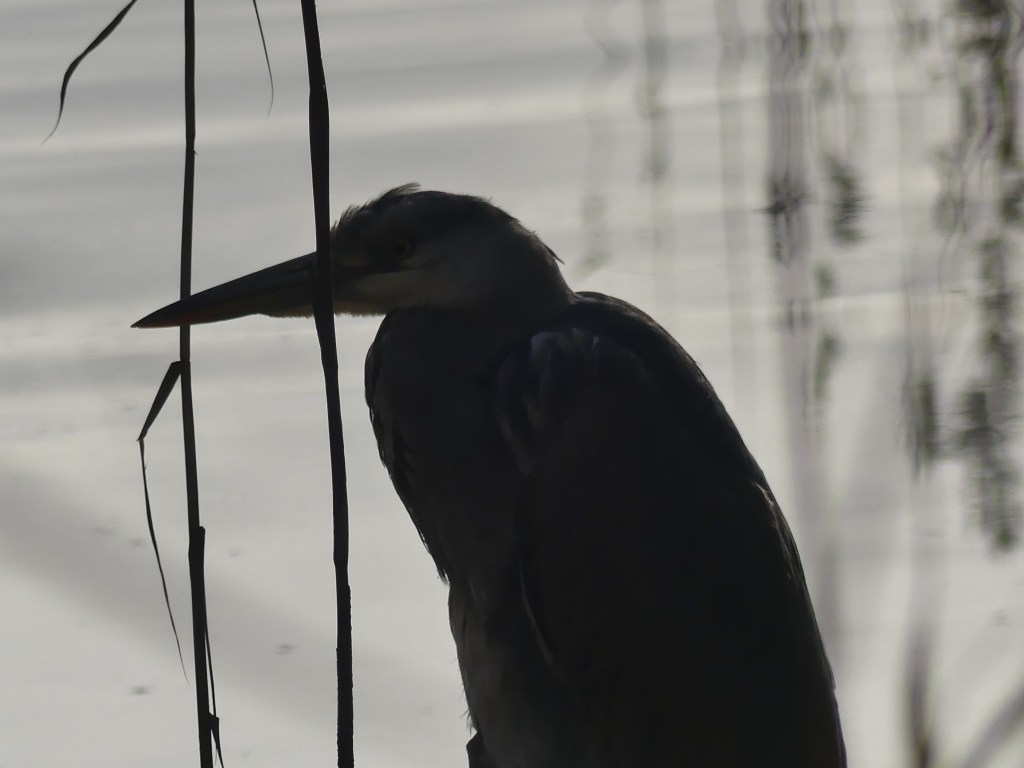
The boardwalk led us out onto a more solid path, and we unpacked the scope on the bridge that overlooked so many of the channels and streams that snake across the Ham Wall reserve. On the water below paddled several Teal, with the male’s striking green and red head colours unmistakable to the naked eye. A Grey Heron stalked along the bank, powerful bill poised in anticipation of its prey. And low over the reeds flew a Herring Gull, causing several Mallards to skitter over the water into momentary flight.

Grey Heron

A Dunnock hopped across the path as we departed, grey breast a similar shade to the ground we walked on. Soon enough we came to Viewpoint 1, which overlooked one of the larger bodies of water at Ham Wall and featured several small islands on which sat many wildfowl. From Gadwall to Wigeon, Pintail to Tufted Ducks, it was hard to name a winter duck that wasn’t out there. Several Mute Swans were also out on the water, their white plumage striking against the backdrop of the reeds which fringed the water.

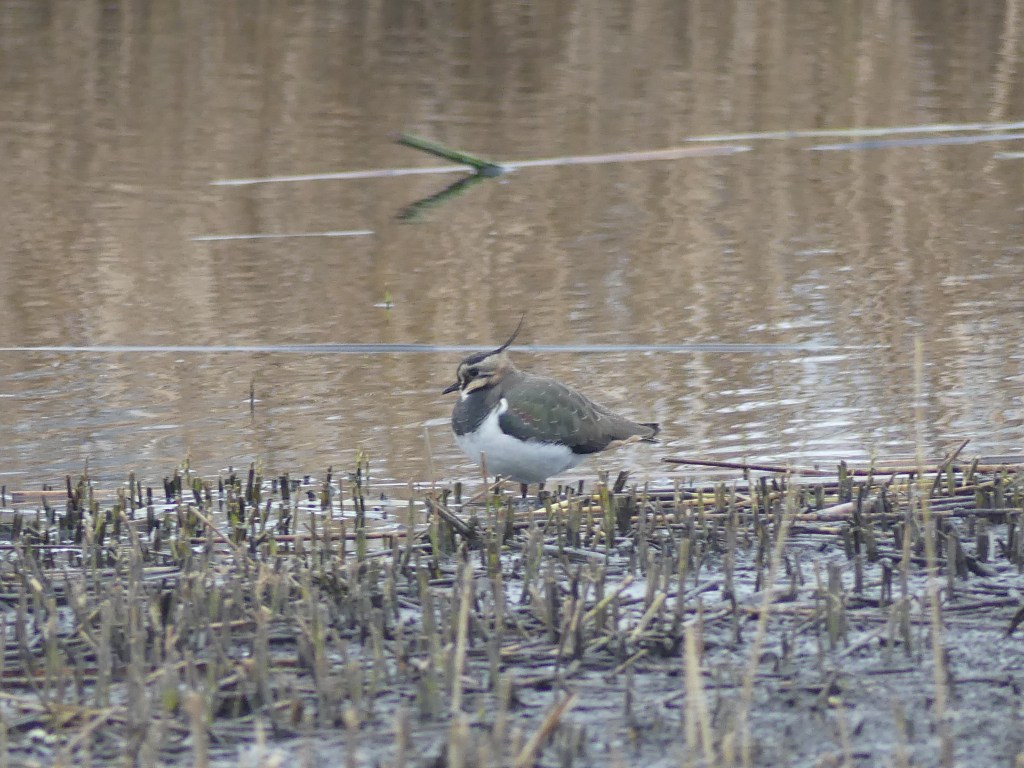
A I watched a deceit of Lapwings (genuinely, that’s their collective noun!) came flying into the foreground, slow irregular wingbeats coupled with some half-hearted aerial acrobatics. Their shrill cry startled a few of the nearby Teal, who made a hasty exit, but nobody else seemed to mind, and the Lapwings stood on the little island that was more duck footprints and churned up mud than actual vegetation. Most stuck their heads beneath their wings, apparently exhausted from their excursion, while others began to preen themselves for the birders’ cameras.

Lapwing

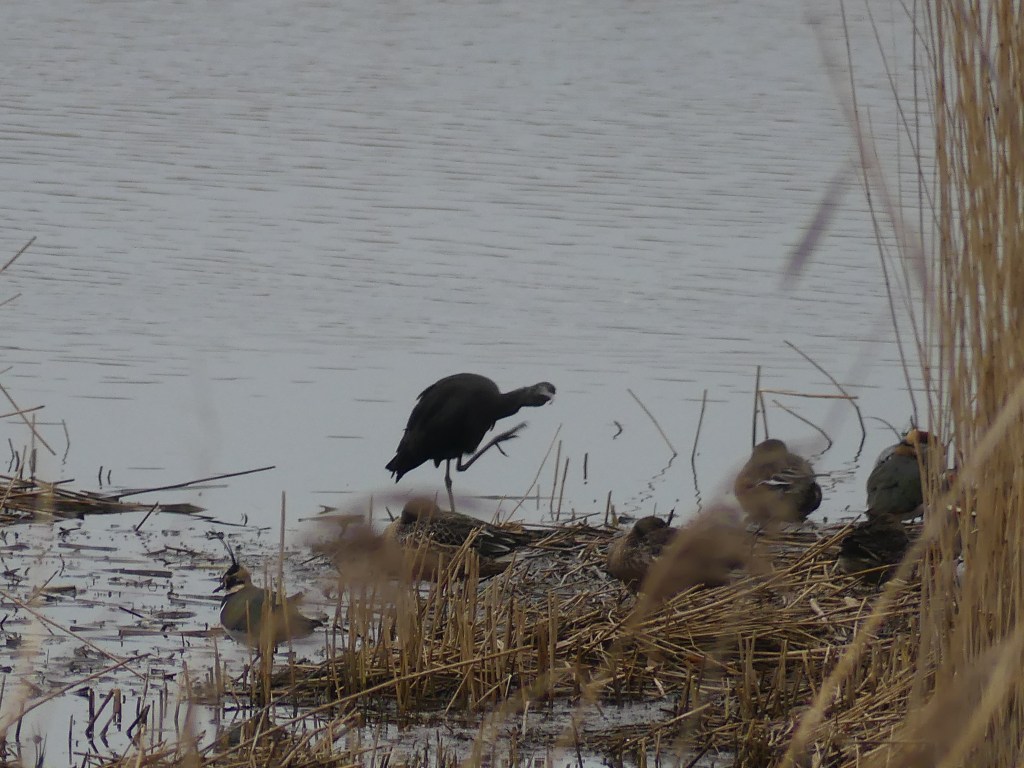
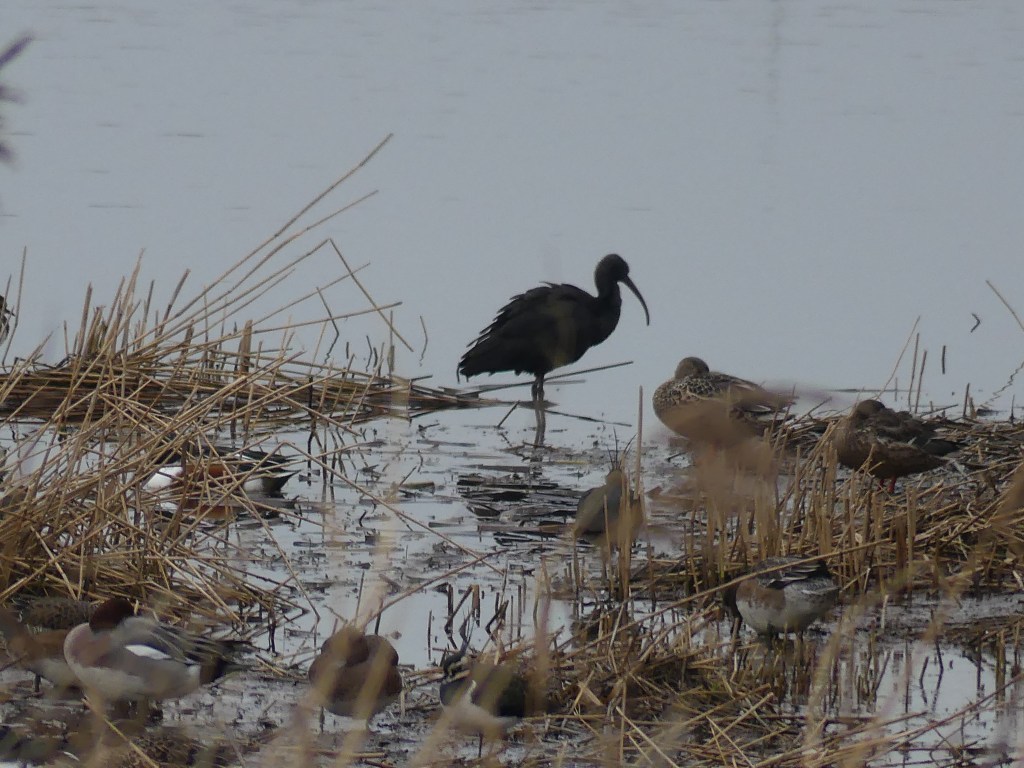
These Lapwing certainly caught my attention, for there had been much news of a stunning Glossy Ibis hanging around on the reserve, and it seemed to like associating with the local Lapwing. The glossy Ibis is a chestnut wading bird, reminiscent of an Egret, which breeds in parts of Southern Europe. It can be found in many places across the world, from Asia to South America, but is a rare visitor to the UK. However, due to population increase in the South west of Europe, and climate change warming Britain’s weather, they have become more common visitors in recent years. They are a rare treat to see here, and I must admit I was very excited at the prospect of seeing my first!

To my frustration, the Ibis wasn’t in among those Lapwings, so we moved on, deciding to return later to see if we could spot it. We headed on a path that went further out through the reedbeds, seemingly cutting right through, which gave excellent views on both sides. The channels and open water were buzzing with life, just like at the viewpoint, and two Grey Herons seemed to be building an early nest within the secrecy the swaying reeds afforded. It was amazing to see them flying through the air with their fish-murdering beak stuffed with twigs and sticks, but it still felt really early for this kind of behaviour. It was only January, right?

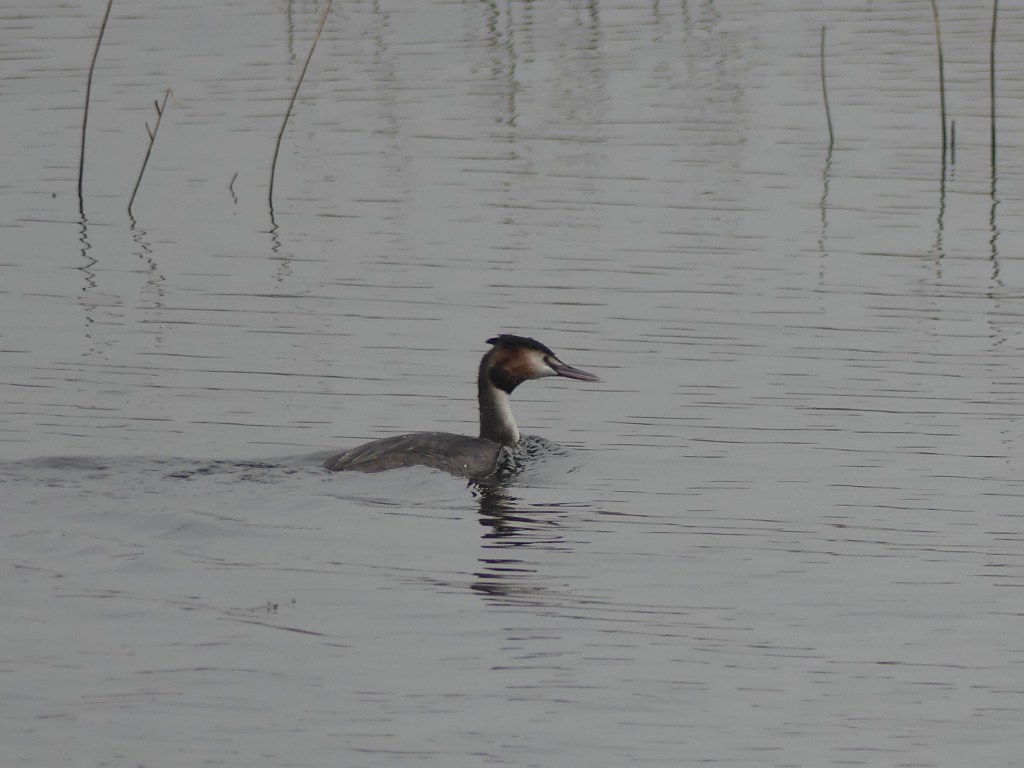
I was distracted by a Great Crested Grebe surfacing in all its slender beauty. The bird sat low in the water, and its drab grey and white winter plumage was already flecked with small brush-strokes of ginger and chestnut. I followed it’s movements with my binoculars, having to readjust and take my eyes from the lenses every now and then when it dived. Honestly, you never know where they’ll turn up once they’ve gone down! It almost seemed playful, like a game of hide and seek between me and this regal bird.

Great Crested Grebe

Ham Wall, is of course, famous for one special species. The Bittern. It is one of the best places in the country to hear them, and if you’re lucky, see them. Their cryptic plumage affors them a camouflage like no other, and one of their intriguing behaviourial traits is to stand up, slim and tall, looking like any of the other reeds around them. I’ve seen pictures of this incredible gift online, but would be hard-pressed to ever see it myself. The Bittern is one of the UK’s greatest conservation success stories.

Bitterns are a species completely dependent on vast reedbed habitats, and when many reedbeds and marshland habitats were drained throughout history to make way for new arable land, populations plummeted. It was considered extinct as a breeding bird in Britain during the 1880s, but the hardy birds attempted to recolonise one of their largest old haunts, the Norfolk Broads, in the early 120th century. In the 1950’s the population peaked at about 80 booming males, but by 1997 had dropped to just 11 males. Luckily, the RSPB now stepped in, researching and restoring the aBittern’s favourite reedbed habitats. With the restoration of these habitats, Britain’s loudest bird is booming once again, with 234 calling males recorded in 2023.

I mention this because the hide we were stood in now had been where I caught a glimpse of my first ever Bittern, about 5 years ago, at the exact same time of year. In fact, I think there were only a couple of days between the two exhibitions. The one I saw back then had flown right by close to the hide, its broad wings almost brushing the lenses of my binoculars in that fleeting moment. I’ve cherished that memory ever since, but to this day I have not seen another. That doesn’t mean I’ll stop trying though!

After a quick snack and drink break, we headed back along the path up onto the main track, strolling along listening for whatever birds were around us. A disturbance of the branches above us caused me to look up into the towering oak which hung over us. A Jay, pink with a flash of blue on its wing, looked down on us, an acorn from its stash clutched firmly in its beak. After a moment, it began the simple task of ignoring us, and continued to hop from bough to bough, soon crossing into a more spindly birch, which was tightly entangled with a rowan, connected by the strong leaves of high-climbing ivy. What an encounter!

The sun was now getting lower and lower in the sky, so we headed quickly back to Viewpoint 1, to see if we could catch a glimpse of the special bird I mentioned earlier. To my delight, there it was, sat preening among the now awake Lapwings. There was now a small crowd of birders gathered round the fence which separated the banks of the water and the gravelled floor of the viewpoint, and the discovery of a second bird among a group of Tufted Duck sat on the fringe of the reedbeds caused even more excitement. I felt on top of the world, and I knew that this experience would be very hard to match in the future. Pure exhilaration if I’ve ever felt it!

Glossy Ibis

But there was one more surprise to end the day with. Crossing the road to nearby Shapwick Heath NNR, another swathe of restored reedbed habitat, we joined the gathering crowd to await one of nature’s greatest spectacles. It began with just a small group of birds, gathered above the reeds, but then they began to arrive. The flock continued to grow, with the addition of many small groups flying over our heads to join the Maine event. The Starlings were up for it tonight, and even more just kept flying over our heads! There goes another 10, oh look there goes 30, and look at that one that must be 70 odd birds!

Soon enough, the murmuration gathered momentum, forming incredible shapes in the dying sunlight. The mass of small black birds twisted and contorted into shapes that would be gruesome for any single organism to create, and the noise was enought o make your heart stop and for your breath to get stuck in your throat. If you couldn’t see the bird shadow which hung over your head, you’d pull your coat on and say that it was getting windy. The rush of wings created a breeze like no other, and the sound was like that of the winds that plagued a harbour. An author would be hard-pressed to come up with something as far-fetched as what we were watching, but they needn’t worry, for nature has delivered!

It was almost dark by the time the Starlings all dropped into the reeds as one to roost communally, and it was high time for us to be heading back to Devon as well. It had been a birthday weekend I wouldn’t soon forget, from glossy Ibises to dancing Starlings. Good luck topping this, next year!

If you want to read more about the science of Starling murmurations, click here to read my blog about it.

2024 Review

As 2024 comes to a close, so ends another year and another rollercoaster birding ride. This year has been one where I have really expanded my birding range, from the wilds of the Scottish Highlands to the raucous Spring setting of Keyhaven and Pennington Marshes. Its clearly been one to remember, with a wealth of encounters that will forever hold a place in both my memory and my heart. Learning from the many people I’ve met along the way has continued to shape me into the birder I am, and for this I am eternally grateful. There’s been ups and downs. We’ve seen the best of the good, the bad and the ugly. So here are my highlights from 2024, through the eyes of a 12 year-old birdwatcher.

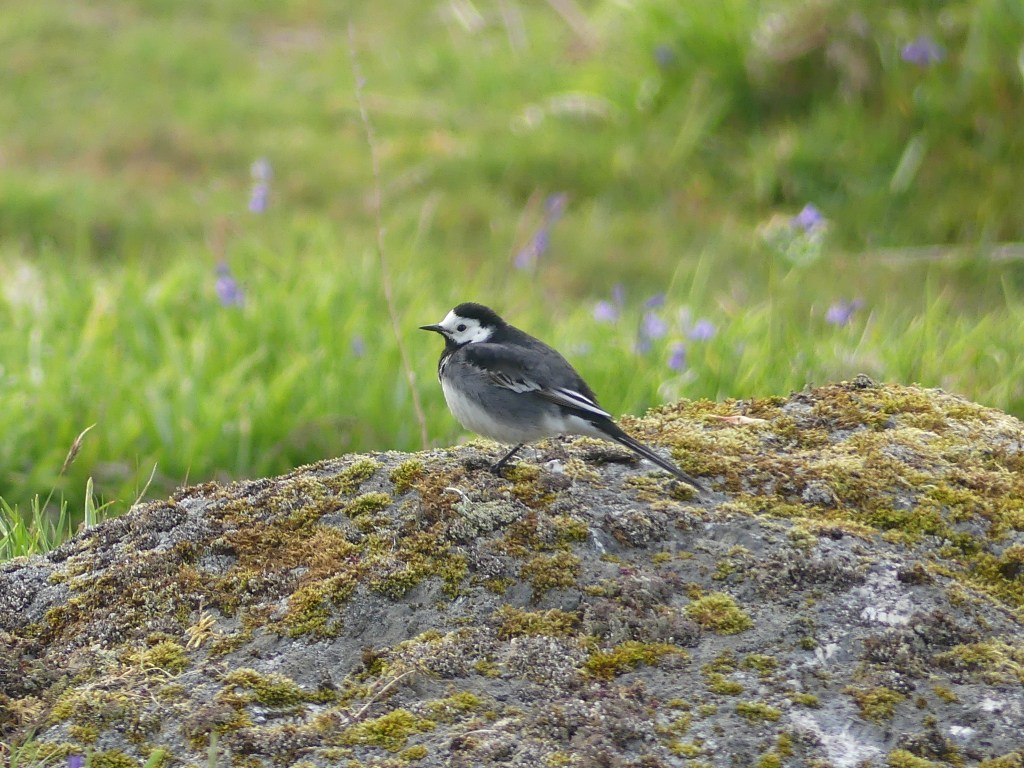
Pied Wagtail (Emsworthy Mire)

Top Five Favourite Places This Year

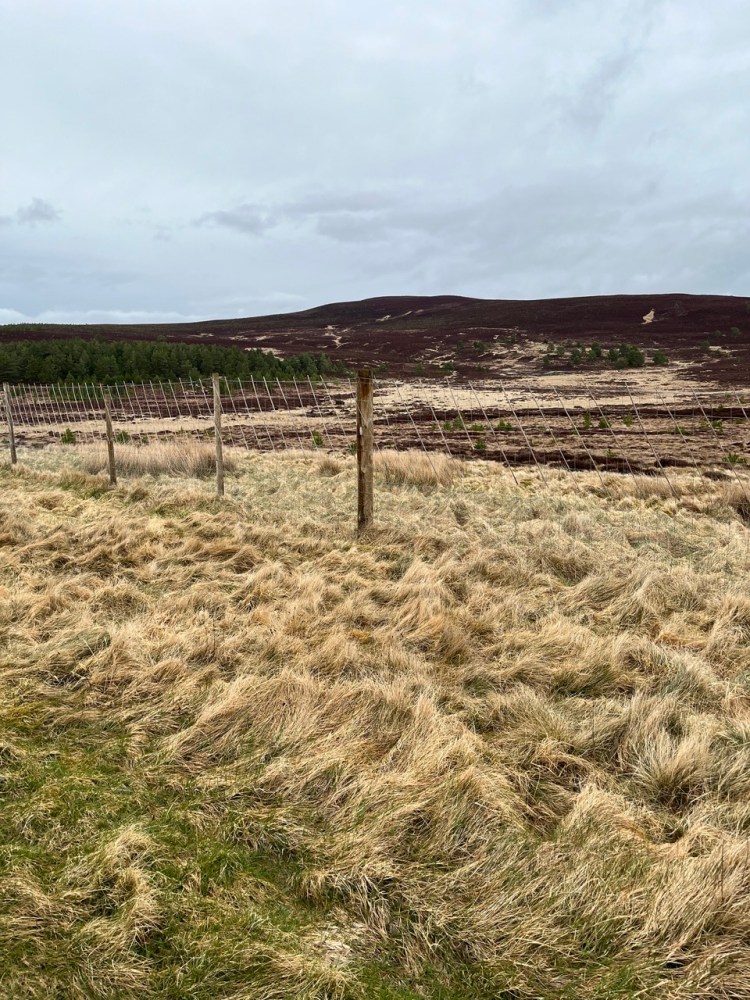
Scotland was the definition of a rollercoaster, but never in a bad way. The week I spent there was one of the best of my life, and being at a hotel completely for wildlife watchers brought me into contact with incredible people and places. Acting on a tip-off from the person who set the entire trip in motion (Simon Pawsey; more on him later), we enjoyed a mini raptor extravaganza high on a wind buffeted moor called Dorback, that had large areas of it cordoned off to deny access to grazing animals such as deer, and allow trees and plants to regenerate fully and naturally. The effects were clear, with many young trees sprouting amongst the heather, scattered in the foreground of mountains.

Dorback

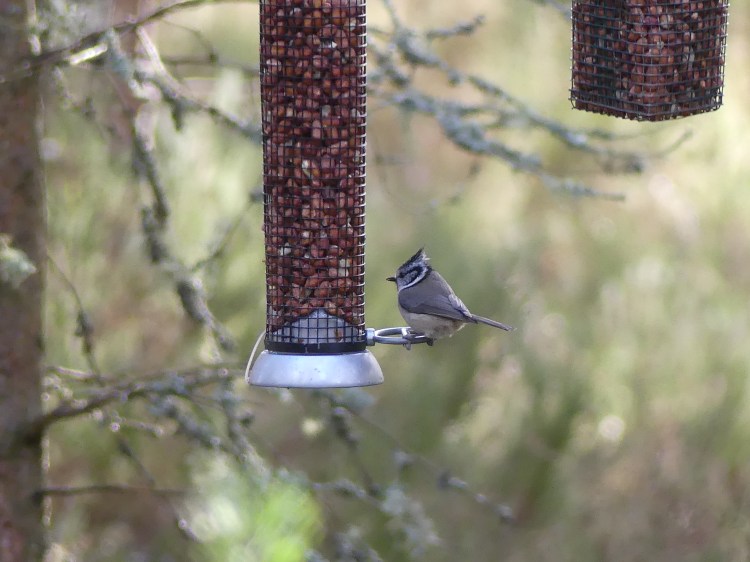
Another memorable one was Spey Bay, so good we visited twice! There the River Spey met the North Sea in a chaotic tumble of stone and spray, forming an amazing array of habitats, a natural mosaic if you like. Then there was Strathdearn, a mountainous setting where patience paid dividends. With the River Findhorn running along its bottom, Strathdearn forms a raptor highway between the tall peaks of the west and the Cairngorms National Park, allowing birds to take a route that doesn’t take them over farmland or grouse moorland where they could face persecution and other dangers. Loch Spynie was home to several noisy colonies, while the resident birds of Dell Wood sported some trendy hairstyles!

Blast from the past! (Crested Tit, Dell Woods)

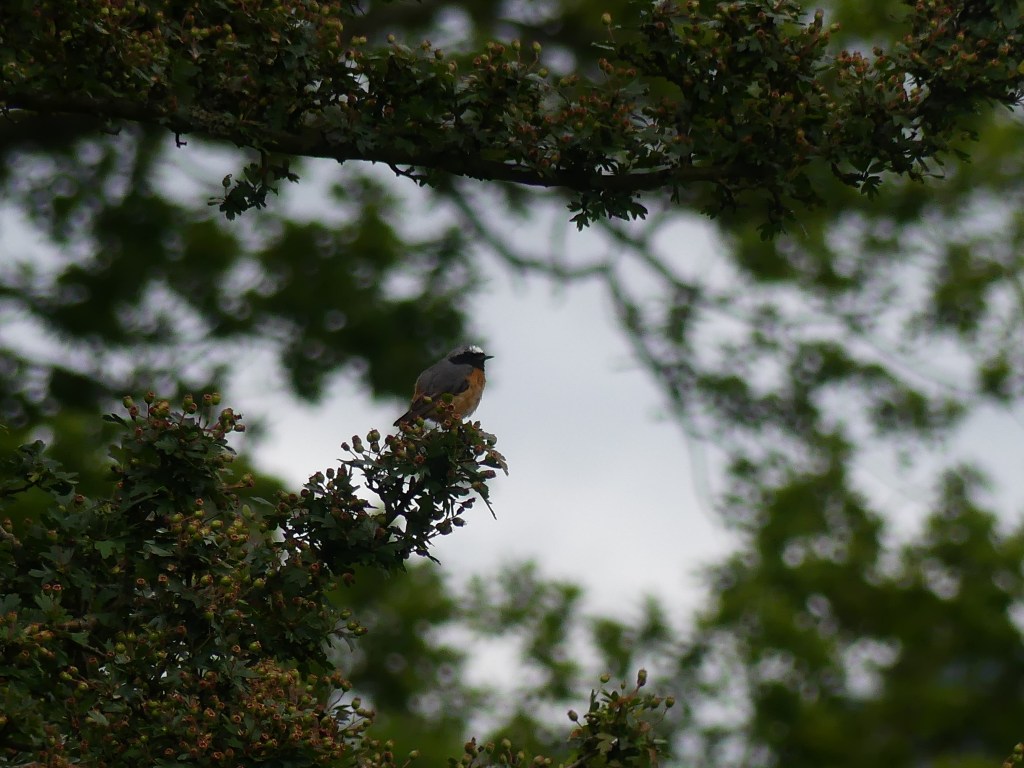
The BTO Birdcamp was a wondrous weekend, and what sets this adventure apart from Scotland is that nearly all my time was spent with people my age, who all shared a common birding interest. It genuinely felt like our accommodation was in the middle of nowhere, taking a long drive through winding country lanes to arrive there, with the building itself concealed by a tangled patch of woodland. RSPB Haweswater was a wet and misty experience, but moods were never dampened as we trudged through the valley. Derwent Water was also good fun, with some obligingly posing birds offering great photo opportunities. Finally, Leighton Moss proved to be the jewel in the crown, and a change of scenery from the hill-filled Lake District. To see 64 species that Sunday was incredible.

Redstart, Derwent Water

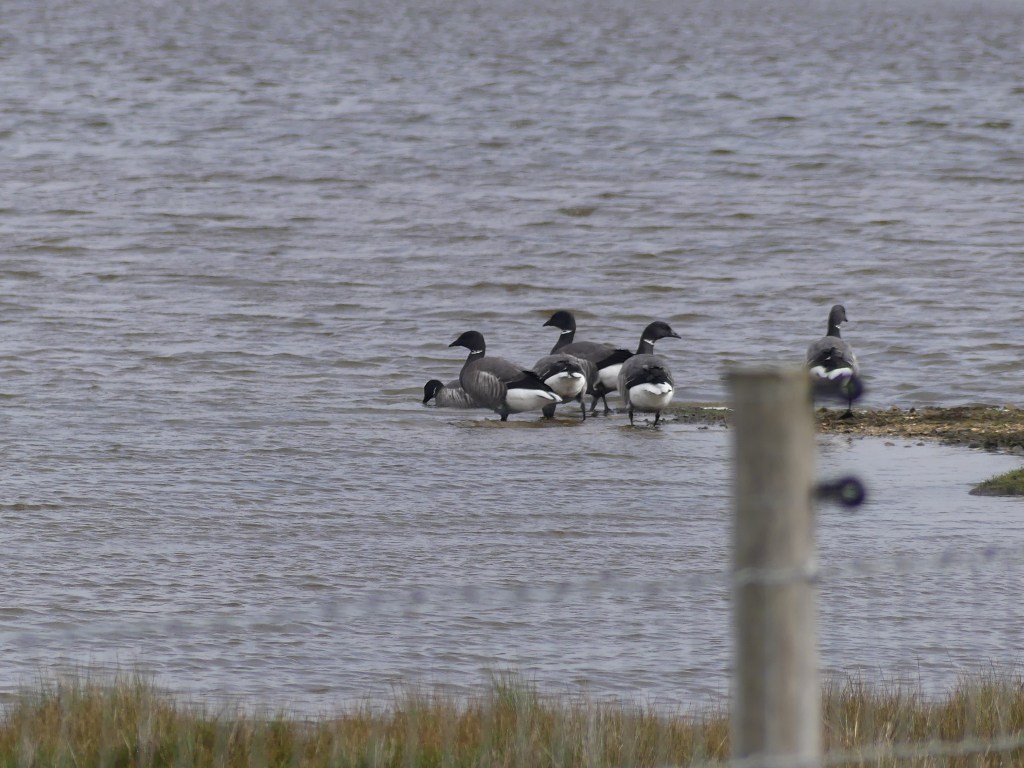
Across two weekends this year, both Wild New Forest Wildlife Camps were incredible experiences for me. The difference between them was seasonal, with one in the Spring and one in the Autumn, and both took place in the heart of the New Forest National Park, albeit with two different places of accommodation. These camps have had the two best bird ringing sessions I have ever had the good fortune to be able to witness, and the fast fun of the BioBlitz is an unrivalled feeling. The atmosphere at Keyhaven and Pennington Marshes was loud and crazy, but in a good way that only birds can create. We saw waders on the nest, and a special scarcity that was an unexpected lifer for me. And Eyeworth Ponds seemed relatively quiet and inconspicuous, until a certain visitor was spotted on the far side of the lake and suddenly everything turned just a little frantic.

Brent Geese (Keyhaven and Pennington Marshes)

RSPB Arne is just a place of magical nostalgia for me, bringing on flashbacks whenever I step under its hallowed trees. The bird crazy 8-year-old within me runs riot whenever I walk along the trails, and probably always will do. The Shipstal Trail hides natural treasure around every corner. And the mosaic of habitats is just incredible. Farmland on one side of you while you’re standing beneath towering oak woodland, and then heathland sprawls right down to the edge of the marshland, fed by the lapping waves of Poole Harbour. Thats what makes this place so special.

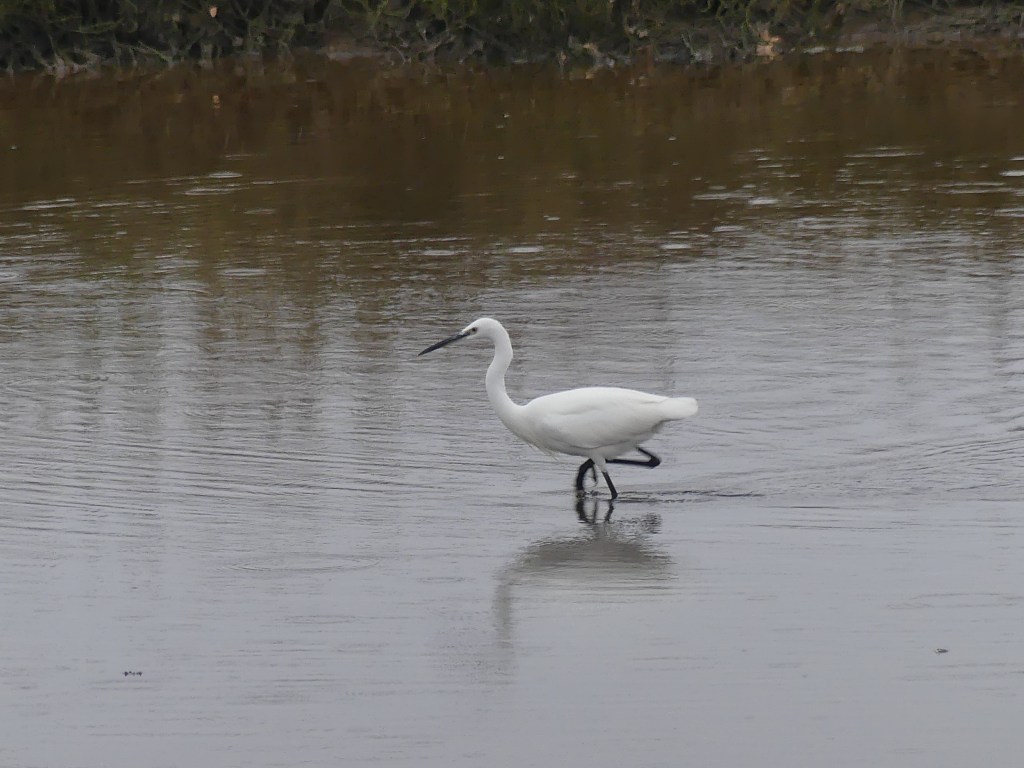
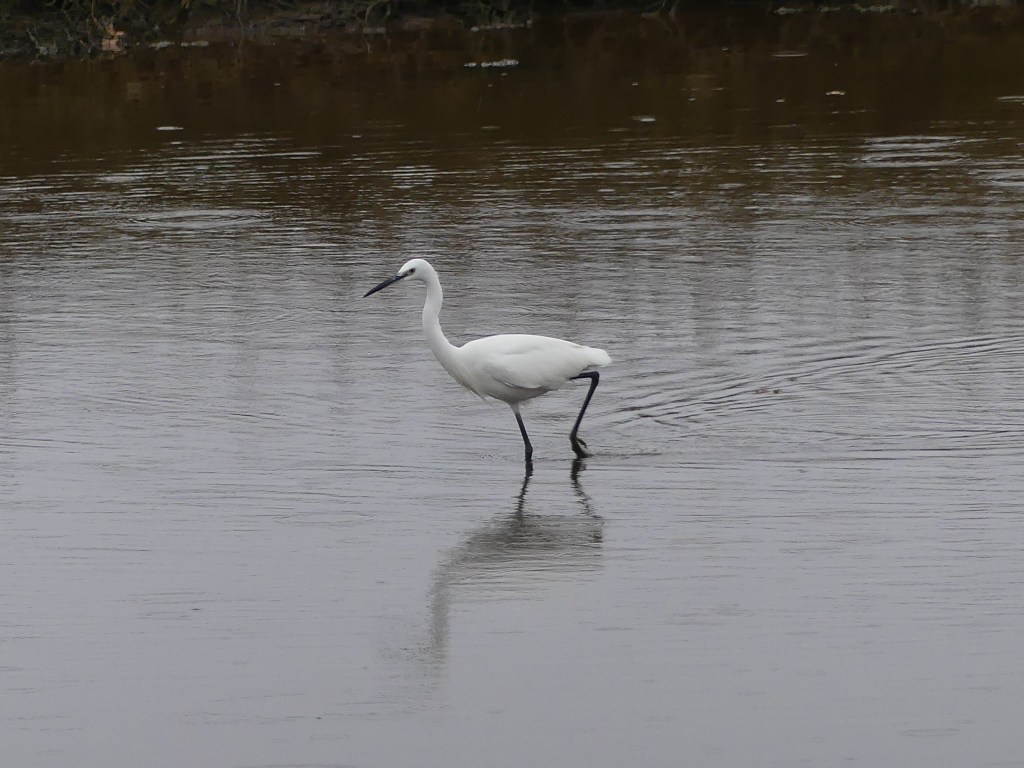
Little Egret (RSPB Arne)

Top Five Favourite Birds This Year

When I said Strathdearn required patience, my first encounter with Britain’s biggest raptor definitely fitted this bill. The sun was gradually getting lower in the sky as the larger part of our party left to head back to the hotel, having enjoyed a windy afternoon’s birding in the valley. It was just Nick Baker and us, three people crowded over a scope and scanning the horizon hoping for something to pop up. To be honest, there had been little about except a couple of Oystercatchers that afternoon, and according to a group we passed, we’d missed a Golden Eagle by a margin of about three minutes. I was mulling this over when I noticed a group of gulls in the distance, seemingly agitated by something among them. We quickly got the scope locked on to the intruder, which looked to be really quite huge. It was quite clearly an eagle, but which? Its wings were broad and powerful, with long fingers stroking the air as it glided, barely flapping as it came closer and closer towards us. A White Tailed Eagle was the culprit, showing the importance of never giving up!

Heading back down south to the New Forest now, where an autumn ringing session pulled a true treat out of its hat. The Wild New Forest ringing sessions are legendary, and this one was no different. The Firecrest is a very scarce bird, more likely to be seen during winter in southern England than at any other time. Its breeding population is small and concentrated, and you’d be very lucky to see one Britain’s second smallest bird outside of the colder months. A young male was sat in the hand, being ringed and processed right before our eyes! I never thought I’d get to see one so close up, and now I think about it, I probably won’t get to again! But I’ll always have that experience, and will never forget it either.

From Britain’s biggest raptor, to its smallest, the Merlin is the stuff of folklore. With the famous sorcerer named after it, this minuscule falcon breeds in the uplands of Scotland and Northern England, coming down to farmland and coastal marshland in the winter. Strathdearn during our trip seemed to be full of birds of prey, because we saw my first Merlin two days before the Eagle encounter, from the exact same lay-by! This bird was a lot closer, however, and it didn’t seem thrilled that a Kestrel seemed was invading its personal space. It was an epic, a true birding blockbuster, as they faced each other before a chase ensued. The Merlin, which seemed cautious, flew off to perch in a nearby tree, while the Kestrel settled itself on top of the deer-stalking hut. Who needs television? All the drama you need is out there in nature!

Am I going a bit overboard on the raptors now? Up next is a falcon that arrives in the summer to breed, enjoying the wealth of insects that our mild climate accommodates. Apparently this was a bit of a surprise to see in Scotland. The Scottish breeding population could be fewer than five pairs, and even our expert guide for the day Will Hall couldn’t contain his surprise when it flew over our heads in the car park at Loch Spynie. It was heading off towards the edge of the Loch and the reedbed around it, which was prime Hobby habitat anyway, due to the abundance of insects bound to be next to the water’s edge. It also turned out to be my first Hobby, and I must admit it had been a species that had proved elusive despite my efforts.

The Hobby flew over our heads as we walked.

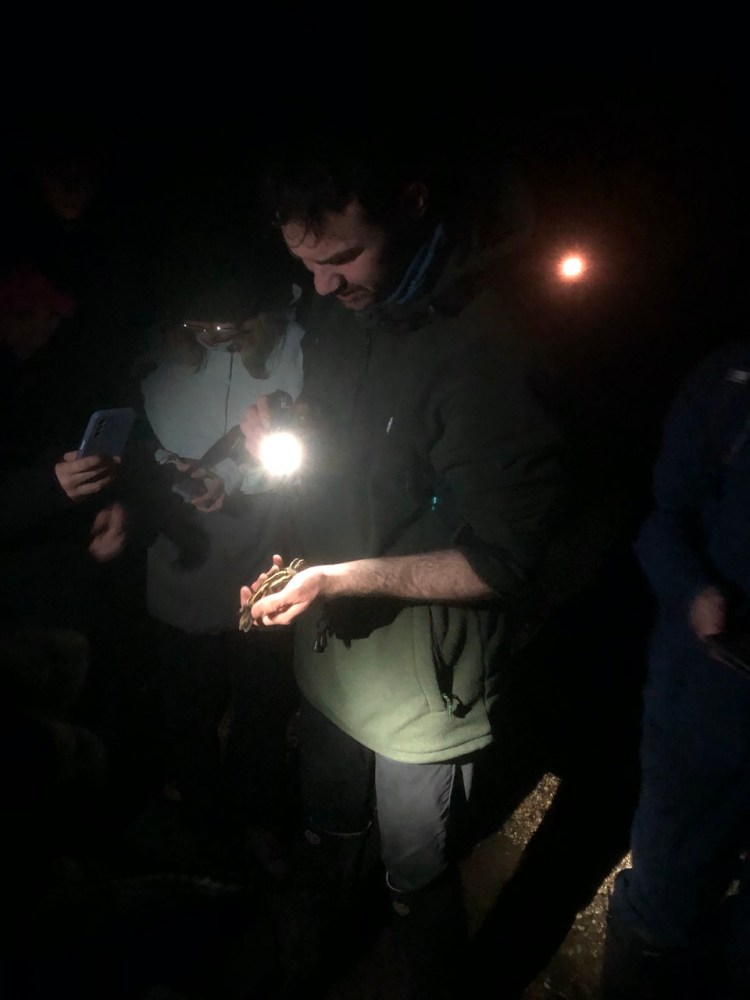
If you asked me to name a species that moved like a clockwork toy, I would immediately blurt out Jack Snipe. This cryptically plumaged, smaller relative of the Common Snipe is one of those species that is truly a tricky customer, and it is rarely seen in the open. Also, it’s bobbing motion when feeding is really quite funny, and they are an endearing and cute bird. If it wasn’t for the evening we spent lamping in the New Forest, I probably still wouldn’t have connected with this special species. But thanks to Wild New Forest, I got to see one really close up, and you can see why they’re rarely spotted and photographed. Their plumage was so similar to the soft, boggy ground we were stood on that when Tommy put him down to release him, you wouldn’t have known he was there if we hadn’t just seen him!

Some other birds of note I’ve seen this year came with incredible experiences, such as seeing a Hawfinch close up in the hand during a New Forest ringing session, its thickset bill, designed for cracking open large seeds, strong, powerful and glinting in the early morning sun. The Black Grouse lek was also really special. Despite the distance we watched from, you could almost taste the tension in the air as the males battled it out for the females, who watched on almost nonchalantly. You could even hear them, voices rising through the sheets of torrential rain. The pair of Slavonian Grebes at Avielochan was breathtaking, as the chestnut birds with the macaroni sideburns paddled and dived just a metre from the hide!

Then there was the glorious male Black Throated Diver, in all its monotone splendour. Its hard to imagine that the simple colours black and white can create something so beautiful, but this bird’s plumage was something else! Brief views of both Hen Harrier and Goshawk were also highlights, and I hope to catch up with these species more in 2025. And finally, a special mention goes to the Dartford Warbler that was caught in the Wild New Forest ringing nets. The New Forest is this bird’s main stronghold in Britain, and it occurs in few other places. Brilliant!

Black Throated Diver (Lochindorb)

People I’ve Met

2024 has been quite the journey, and along the way I’ve met many people who have shared their knowledge and welcomed me into their world of birding. In turn, they have helped to shape me into the birder I am today, and will be heading into 2025. I’ll begin with Simon Pawsey, who I did actually meet last year at Birdfair 2023. But he is the one who set the whole Scotland trip in motion, after knowing me for about two days. He’s a great man and a brilliant birder, so thank you Simon.

Me with Simon and Marion at Birdfair

I met both Marion Muller and Sue Williams upon my arrival at the Grant Arms Hotel. And I mean literally. As soon as we had walked in the door, laden with bags and gear, we met both of them! It was quite the welcome, and they did so much for us during our stay. Sue gave us the tour that evening, and introduced us to Nick Baker, ecologist and entomologist extraordinaire. Both Sue and Marion were really enthusiastic and talked to us almost every day, and I saw Marion and Simon again at this year’s Birdfair.

Nick Baker and Will Hall took us out birding on two separate days, and led one each. Both of their expertise and willingness to share their knowledge with me was incredible, and we had some truly memorable encounters. They are brilliant people, and I’m really grateful that I had the opportunity to go birdwatching alongside them. Iolo Williams was also at the hotel at this time, leading a guided wildlife holiday. He came over to talk to us a couple of times at breakfast, and even invited me over to his! I’d grown up watching him on Springwatch, and now here I was talking to him, now I’m eating breakfast with him. Its just incredible!

Me and Nick
Me and Will
Me and Iolo

It was indirectly through Iolo that we met Dawn Balmer and her husband Pete, as we sat down with them to do Iolo’s quiz. Well, really the quiz was cancelled and Sue had given us the sheet to do at 10:30PM as we were still down in the bar, but same thing really. Dawn is the Head of Surveys at the BTO, and her and Pete’s bird spotting is truly next level. We were lucky enough to spend a morning at Spey Bay with them, and they were identifying specks far out at sea, and at a rate that I couldn’t even keep up with! I can only hope to get that good someday.

It was on a Leica sponsored nature walk at Birdfair 2024 that I met Harry Read, photographer and ecologist, and Elle Kaye, taxidermist and conservationist. It was great to be able to go birding alongside them, as they also had a wealth of knowledge they were happy to share. I even found my first ever Kestrel feather on that walk! I also met James Lidster and Toby Carter while on the Zeiss Young Birders’ Masterclass session, and I learnt quite a bit from that. But of course, I enjoyed the outside birding bit more than the powerpoint on bird ID (still very interesting of course).

Me with Toby

The Bovey Birder Awards 2024

And finally, welcome to the inaugural BoBAs (Bovey Birder Awards)!

Bird of the Year

And the winner is: Black Grouse (Tetrao Tetrix)

My first experience of a Black Grouse lek is one that I will never forget. You could almost taste the tension in the air as the Blackcock faced off against each other, fluffing themselves up in fury. The Greyhens didn’t seem too bothered, almost nonchalant, as they watched their potential mates battle it out.

Funniest Moment

And the winner is: A Speaker Playing the Garden Warbler’s Song

You might be confused by the winner of this prize, and I can understand that because you have very little to go on. On a nature walk with Nick Baker at Global Birdfair 2024, we headed down the hill quietly and expectantly, as a Garden Warbler was singing from a nearby shrub. However, behind that shrub was a set of mist nets for catching birds to ring, and playing from a speaker beneath it was the song we had been hearing!

Surprise Sighting

And the winner is: Eurasian Hobby (Falco Subbuteo)

Ordinarily, this wouldn’t be a shock to find in the summer months. But when one sped over us as we headed towards Loch Spynie, not even Will Hall could hide the surprise on his face. There are over 2,000 pairs nesting in Britain. But its estimated that less than five of those are in Scotland each year. I must say, it wasn’t the place I expected to find that particular lifer!

Magical Moment

And the winner is: A Marsh Harrier (Circus Aeruginosus) Food Pass

Now this was incredible. Birdcamp was an incredible experience, and this was a breathtaking way to round off the trip on that last day. Leighton Moss is a place of natural wonder, full of life at every turn. And as we watched a pair of Marsh Harriers perform this incredible feat, my heart beat faster and faster. The male rose to a height above the female, and dropped the food into the female’s outstretched talons!

Best ID Trick

And the winner is: Nick Baker

On that same nature walk as the tape lure mishap, Nick taught the group a quick and easy way to tell the difference between Swallows, House Martins and Swifts in flight. Swallows flew the lowest, beneath the House Martins, who flew at around the size of a house, and Swifts would usually be above them! Its not guaranteed to give an exact identification, but for distant birds that are moving quickly, it really gives you an idea of what to call.

Cutest Moment

And the winner is: Rabbit and Wheatear!

Thank you!

I hope you had a great 2024, and thanks for coming along for the ride! The blog would be absolutely nothing if people didn’t read it, so thank you! Fingers crossed 2025 is a brilliant birding year, and brings many more birds, people and places. One thing you can be sure of is that it will all be documented right here at the Bovey Birder blog!

Avocet, Bowling Green Marsh

Return to Arne

It had been four years since I had visited Arne. Back then, I was a bird-crazy 8-year old, who got a buzz whenever he looked through a pair of binoculars. I’d certainly changed a lot since then, in many respects. Many special times in my life had been and gone, and I’d grown alongside them, both in mind and in body. I’d met people, I’d visited places, and I’d seen a load more birds. The nostalgia was crazy though, and I really felt as if I could remember everything. There was the bench that looked out over the harbour, and there was the towering oak tree that dominated the centre of the trail, forcing it to split off around it. That was the strangest thing. It felt like Arne hadn’t changed a bit.

A pair of Collared Doves sat beneath the feeders, a frantically hopping Dunnock whizzing in between them. All were pecking eagerly at the damp ground, littered with the bird food dropped by the rather keen Woodpigeons above them. The Blue and Coal Tits took their morning meal with better manners, flitting to and fro to eat. The feeding station lay next to the RSPB tent and sightings board, and seemed to be constantly busy, now swarmed by half a dozen Chaffinches. Following a brief look at this board, we set off along the Shipstal trail, marked red on the map.

‘I’m watching you’

Even as you begin to walk on the trail, it becomes clear that Arne is very special indeed, thanks to its huge array of habitats. Just from where we stood, we saw farmland, woodland, heathland and Poole Harbour. Its a bit of a cheat code really, and the wildlife here is nationally important. Did you know that all six of the UK’s reptile species live on this one reserve? And its mosaic of habitats makes for some brilliant birding!

As I walked, a Cattle Egret glided down onto the fields to my left, its yellow beak glinting in the morning sun. As its name suggests, the Cattle Egret has a habit of tailing cattle, and snapping up the insects from the churned up ground. Sometimes they’ll even sit on top of a cow! That was actually my first Cattle Egret of 2024, so I ambled on feeling pretty happy. I hoped this was a good omen, but the clouds seemed to be getting darker and darker.

It was a blustery day, and the tops of the trees swayed in the breeze. The heath was windswept and almost looked deserted, with nothing but two Meadow Pipits getting tossed around above it. As I watched on, eyes drifting over the heath towards the waves crashing on the sandbar, a dark bird with a fairly long tail bounced up from a gorse bush, and flew right past my eyes, giving me a split second to ID it. I recognised it from the weekend, as we’d seen a fair few of them on the Wild New Forest Camp. A Dartford Warbler, a heathland specialist and a tricky customer to find.

A Dartford Warbler from the Wild New Forest ringing session.

After it had become apparent that I wouldn’t find the Dartford again, the bird having disappeared within a second stand of gorse, we carried on, conscious that the clouds looked as if they would open up any moment. Here, the path took an incline, and followed the curve of the cliff which looked out over the water. A small group of Oystercatchers, hunkered down against the elements, sat on the shoreline among the wind-tossed seaweed. As I watched through my binoculars, a Shelduck flew in, and immediately started bullying the resident Mallards, as even from here, the substantial size difference was apparent. The sleepy Mallards shuffled along the sand obligingly, and finally the Shelduck settled down.

Just metres from the drama, a hulking grey mound crouched in the long grass, watching with its beady eye. A Grey Heron, hunched, waiting for an opportunity to strike for its fish lunch. That opportunity did not arise for the entirety of my time at that viewpoint, however, and the bird seemed content to sit and watch the other birds. It didn’t even bat an eye as a Little Egret flew, and took up position beside the original occupant. Snowy white with a pitch black bill, these two herons were quite different in their appearance, but both belonged to the same family, Ardeidae.

Little Egret (Egretta Garzetta)

In a thick holly shrub beside my vantage point, I abruptly became attuned to the constant twittering emanating from within. Suddenly, out flew about two dozen Long Tailed Tits, fluttering away to my right to hide in the heathland that I was surrounded by. The high pitched ‘seee’ of a Goldcrest sounded in the stretch of woodland that now beckoned to me, and I started off down the wooden steps, binoculars at the ready. But no sooner had I entered the woods than another call was brought to my attention. Four high and thin notes, a zit zit zit zit. The call of the rarer of the two British kinglets, a Firecrest, was now somewhere in the boughs above me! However, my scanning efforts proved fruitless, and the bird soon stopped calling.

Further along the path lay a two-storey hide, looking out across the marshland, yet another habitat on the grounds of RSPB Arne. The hour I spent in there proved to be particularly fruitful, with a large group of Teal full of other interesting birds to pick out. A pair of Wigeon for example, hunkered down among the many Teal. Or a Redshank, picking its way through the shallow water among the ducks, disturbing them from their slumber. A group of Black Tailed Godwit came in to land, further scattering the Teal, much to their annoyance. Within the group, I managed to pick out a Godwit which was shorter and stockier than the rest, and with a very zoomed in picture, I could just make out the pixelated image of a barred tail. The Bar-Tailed Godwit is a bird which turns up on our shores often during their migration, and hangs around with the overwintering Black-Tailed birds.

Flock of birds in the distance

But something that looked nothing like a Godwit had flown in alongside them, and stood out like a sore thumb. It looked like a rather small Curlew, with a shorter bill and a dark stripe on the top of its head. A Whimbrel, another migrant wader passing through, had dropped in to visit Arne! I still don’t know why it was in with the Godwits though. You wouldn’t expect it, would you?

A Curlew, not a Whimbrel. If they were side by side, you would be able to pick out the differences.

By the time we left the hide, the heavens had finally opened, and after a frantic rush to pull on coats and hoods, we walked promptly off to the next patch of woodland, this boardwalk interspersed with puddles and ponds on either side. However, here we found a large yellow fungi, looking very much like a puffball. But it was actually a Common Earthball, a mushroom often mistaken for the Common Puffball, of which the latter is edible. The Earthball is responsible for many mushroom poisonings each year, but its is not deadly. Very cool to look at though!

Common Earthball (Scleroderma Citrinum)

Up ahead, the path opened up into a wide metal gate, which then gave way to a narrow path between two fields of a working farm. A charm of Goldfinches roved through the one on our left, which was full of seeds and stubble from the year’s crops. As we walked, a big red tractor came through, carrying what looked like a bundle of stubble from the other field. Nature friendly farming is actually what humanity used to do, and it worked out fine. If we use it properly, we could feed the entire population and still provide for and support nature, not push it into the corners of the country. The hedge was dripping with the water from the rainfall, and many a drop from the overhanging shrubbery dripped down our backs. But it was in good spirits that we soon found ourselves back at the RSPB tent and cafe, and we were glad to get inside and escape the elements.

Now to explain a bit more about Arne, now I’ve given an account of what we saw there. Arne covers more than 565 hectares of the Arne peninsula, and is a mosaic of habitats supporting a huge range of flora and fauna. As I mentioned earlier in the blog, it is one of the few remaining places in the UK where all six species of our native reptiles can be found, and this is thanks to its blend of ancient woodland and open heathland. If you were wondering, these reptiles are the Common and Sand Lizards, Slow Worm, Adder, Grass Snake and the rare Smooth Snake.

Autumn is rutting season for the resident population of Sika Deer, an East Asian deer that was introduced to British deer parks in the 1860s. There are now small pockets across Britain, and the rut is a true sight to behold. But they have also caused problems by overgrazing and hybridising with the native Red Deer, so they are classed as an invasive species, and are a mixed blessing. And because they have no natural predators in Britain anymore, they are multiplying a little too rapidly. So wildlife agencies and charities often employ deer-stalkers, people who hunt and kill the old and the sick deer, therefore still adhering to natural selection as would a wolf or a lynx. This helps to keep the population down.

The Arne peninsula looks over Poole Harbour, with internationally important numbers of waders gathering in the harbour each winter. This includes crucial numbers of Avocet, and a population of Spoonbill that is growing each year. Poole is Europe’s largest natural harbour, and a popular tourist destination. The famous Poole Harbour ospreys, which were reintroduced to the area in 2017, had their first breeding attempt in the Spring of 2022, hatching two chicks. Sometimes Ospreys can be seen fishing on the reserve.

Arne is a true gem in the crown of the southwestern natural world, and is internationally important for many species. The RSPB manages it specifically with these species, and others, in mind, and as a result, they are working hard to maintain this beautiful mosaic of habitats. I highly recommend a visit, as at any time of year, you’re always likely to see something that will take your breath away, and leave you wanting to witness more.