The morning dawned bright and early, and as we set off up through the woods, smoky breath settled like mist above us. The New Forest National Park is a picturesque place, full of unique habitats and special species. And the Wild New Forest Wildlife Camp was a brilliant way to experience it. It was a Saturday morning and we had set off on the walk through the woods towards the ringing location, near Telegraph Hill. A Redwing called above us, a newly arrived Thrush here on our shores to spend the winter.
At the woodland edge, we crossed the narrow road and set off on the track that wound its way through the vast heathland before us, with thick stands of holly on the left merging into another patch of woodland in the distance. That was where we were headed, but we were looking out for birds on the way too. Several Ravens flew over immediately, their harsh caw ripping the chill air. A Stonechat called from the top of a gorse bush, before plunging deep into the thorny world beneath it, dotted with yellow blooms.
30 minutes later, we had arrived at the back of the truck, the parcel shelf strewn with ringing equipment. The trees now hung over us, shielding us from the sharp rays of the rising sun. The ringing team, who were also young people on the camp that had prior experience with bird ringing, had arrived earlier to set up nets and prepare the demonstration, and they now returned from the woods, laden with wriggling cloth bags containing very precious cargo. The session was led by licensed ringer Marcus.
Before I continue, I just thought I’d better say that bird ringing does not harm the bird in any way, or cause it any stress and pain. It is always rapidly removed from the nets, and being inside the bag calms it down before it is weighed, aged, sexed and its wings are measured, and then the data is recorded. After this it is ringed, and released. Most of this happens very quickly, and birds are often processed in under five minutes. After they are ringed and released, they are often caught in different ringing stations up and down the country. Those who have caught it for the second time can cross reference the unique ring number and figure out where it came from, and this helps science to learn more about the species’ movements and help to understand the birds more. Here are a few highlight species from the ringing session.
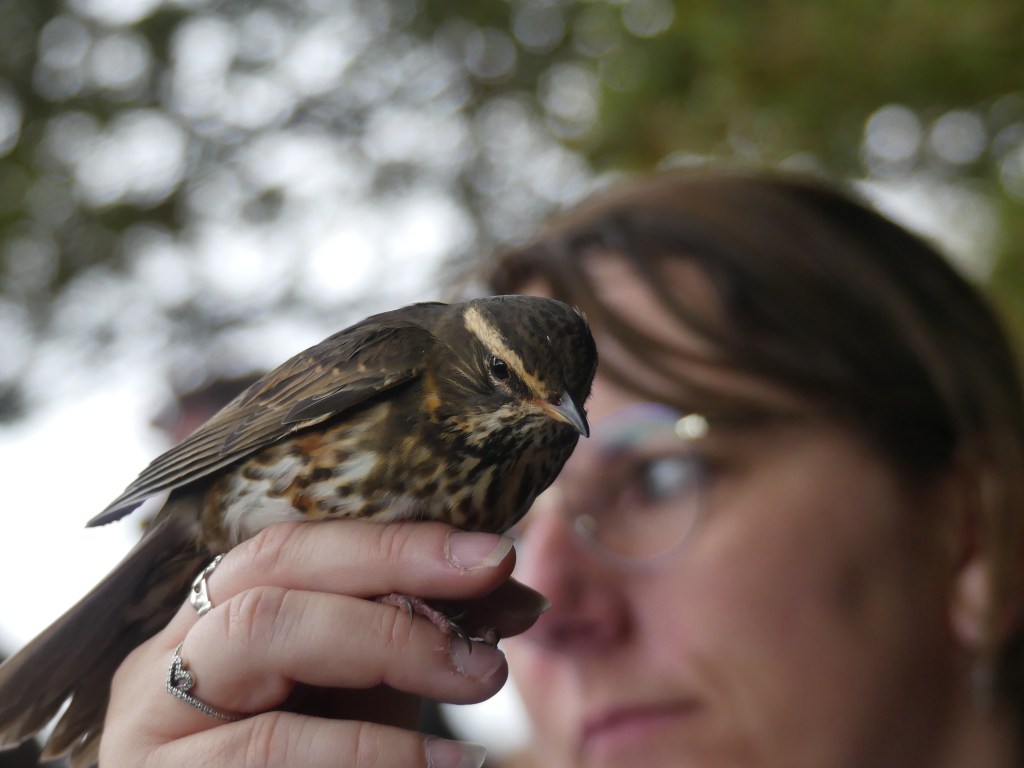
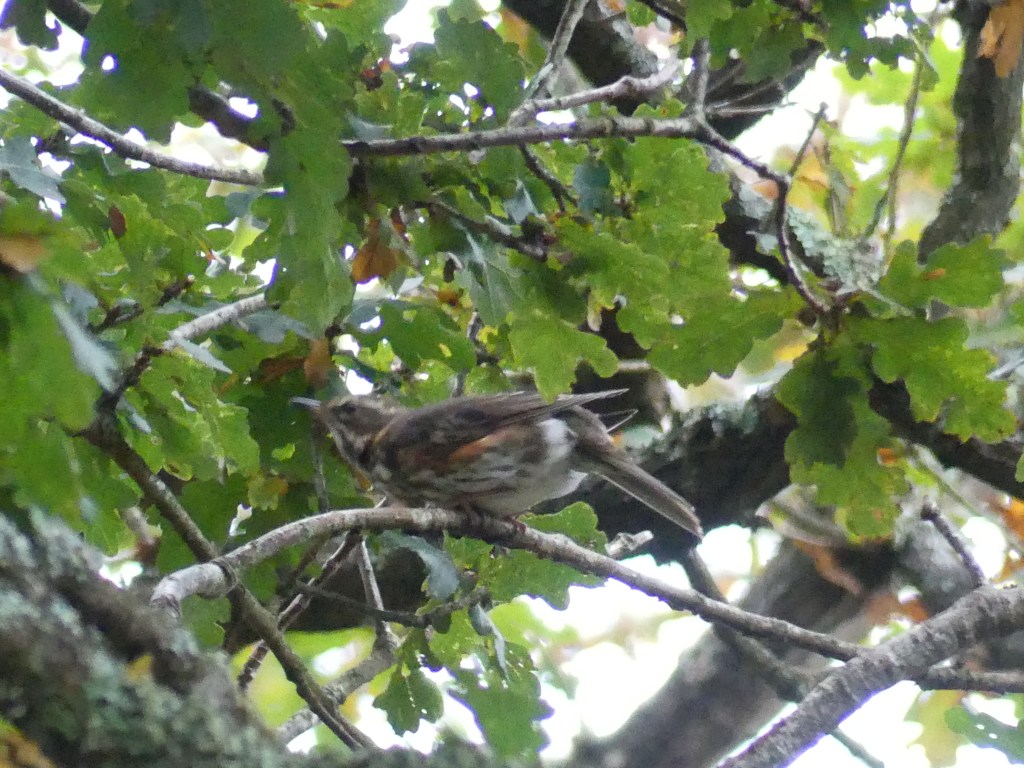
Out of one of these white bags came a bird we had seen many times, often in small flocks, on the way up, flying over and calling with their high pitched voices. A Redwing, with its pale yellow eyestripe and speckled breast, sat in the hand of Emily, often lifting its wings to reveal their rusty red underneath, which is of course their namesake. Redwings provide a brilliant example of visible migration, with many groups arriving in off the North Sea onto the East Coast, and in amazing numbers. During autumn, hundreds are regularly sighted arriving from Iceland and Scandinavia at sites like Spurn Point. However, there is likely to be a lot more Redwings arriving than we realise, because many migrate at night.
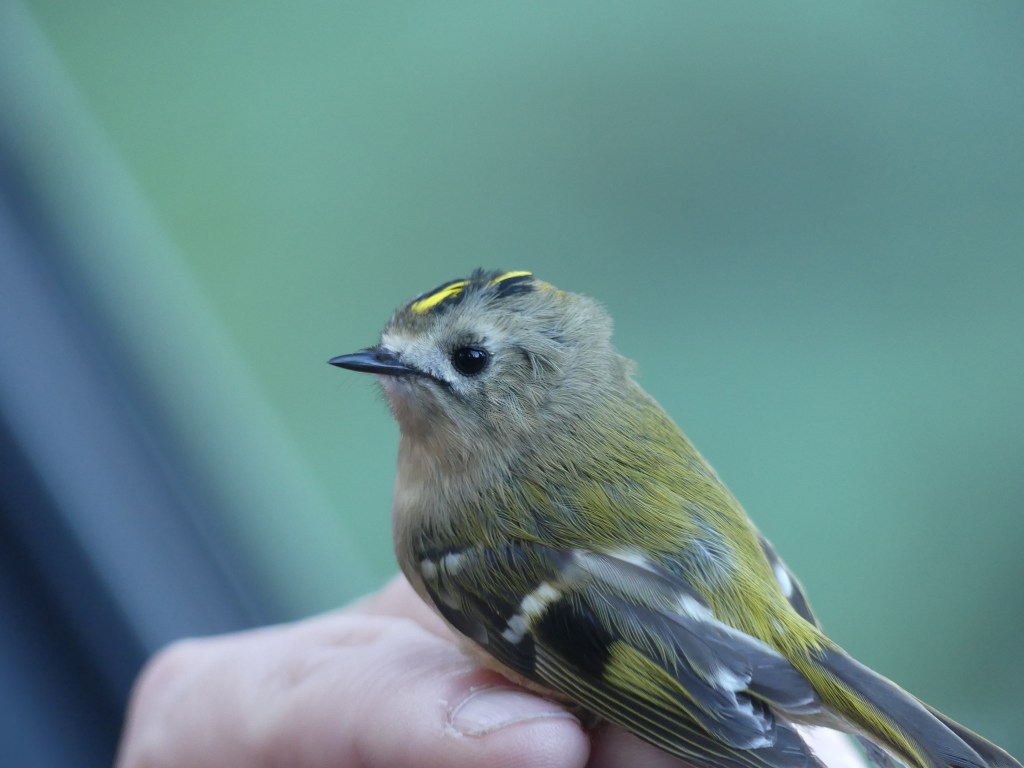
Another really cool bird to see in the hand was Britain’s smallest, a tricky sight to pick out among the highest boughs of a tree. Weighing in at 5.5g, the weight of a 20p coin, a Goldcrest was sat in the hand of Emily, beautifully fragile and delicate, a striking dash of rich yellow splashed across its crown. This tiny bird is the subject of many a myth and legend, and the fact that birds arrive here from Scandinavia and continental Europe has backed up the stories that suggest they fly on the back of other bigger birds in order to reach our shores. With their minuscule size, it certainly seems believable, doesn’t it?
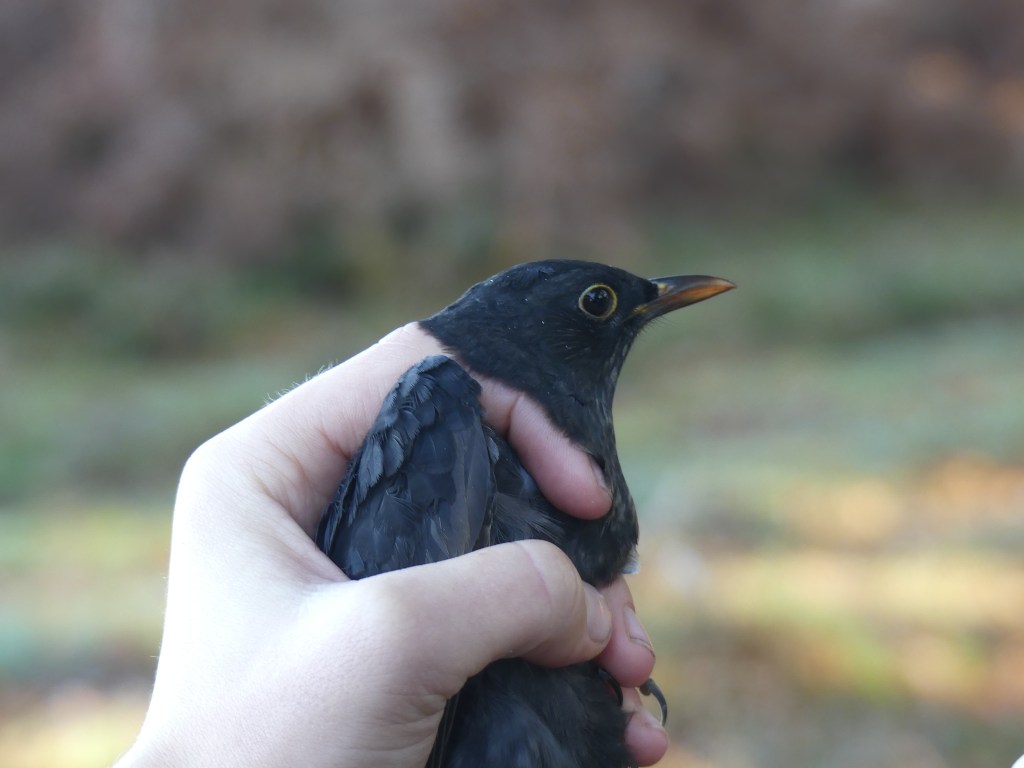
A relative of the Redwing was next out of the bag, but this Thrush was a glossy, slightly ruffled, smoky black. Yes, I know what you’re going to say. Blackbirds are common as mud, aren’t they? Well, I guess they are, but they are breathtaking to see in the hand. Features you wouldn’t normally notice become apparent and clear, such as the yellow eye ring and the faint detail in the feathers. At this time of year, our resident population is boosted by large numbers of this species arriving from the continent to overwinter here. This bird was a younger one, due to the fact that its bill didn’t yet have the adult’s yellow colour to match the eye-ring.
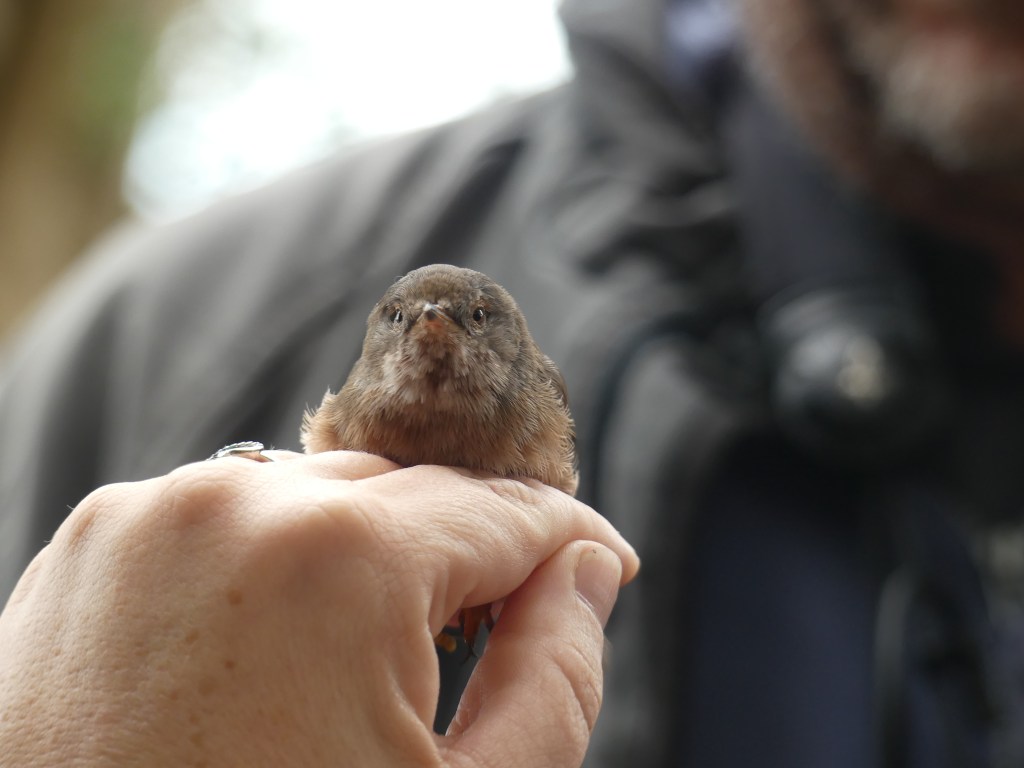
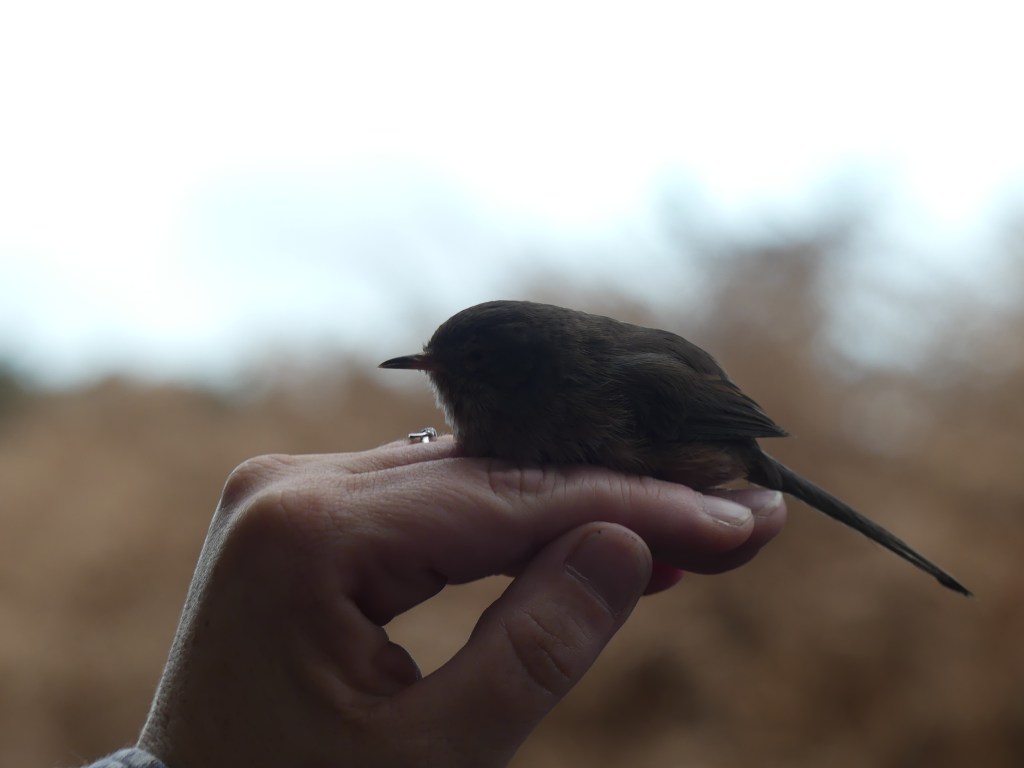
There was one lifer among the birds we caught that day, and it was one of the target species for the session, and a bird that the New Forest is famous for. Around half of the UK population lives here, and they are a true heathland specialist. The males can be seen with a jaunty puffed up crest, almost like a mohawk, as they sit atop windswept heathland, the unlikely king of their domain. I am of course talking about the Dartford Warbler, an absolutely phenomenal bird to see. This particular individual was a female, and lacked the crest, but still retained the rick rusty brown colour.
The final bird to enter my top five for the ringing session was Britain’s only other Kinglet species, the first of which we had already witnessed in the hand this morning. First came the Goldcrest, then its rarer counterpart, the Firecrest. Named for its crest that’s reminiscent of a lick of flame, it is just 0.1g heavier than a Goldcrest, and comes in at Britain’s second smallest bird. Their breeding distribution in Britain is mainly restricted to southeast and eastern England, and they are much more common as a winter visitor, when our roughly 550 pairs are boosted by birds from the continent. I couldn’t get a photograph because, as they are such a sensitive species, it was probably wiser not to. But they are really cool birds!
In the ringing session, we had many other brilliant species in the hand, including Linnet, Stonechat, Chaffinch, Robin, Blue and Great Tits, and several Wrens. We spent pretty much the entire morning there, and it wasn’t just the ringing that proved exciting. A Peregrine Falcon, having been perched in a far off birch tree isolated on the heath, suddenly chose its moment in the spotlight and leapt from its perch, flying rapidly off away to the left. That was incredible, and shows how the beauty of nature is often in its unpredictability, and you have to be quick and attuned to find it.
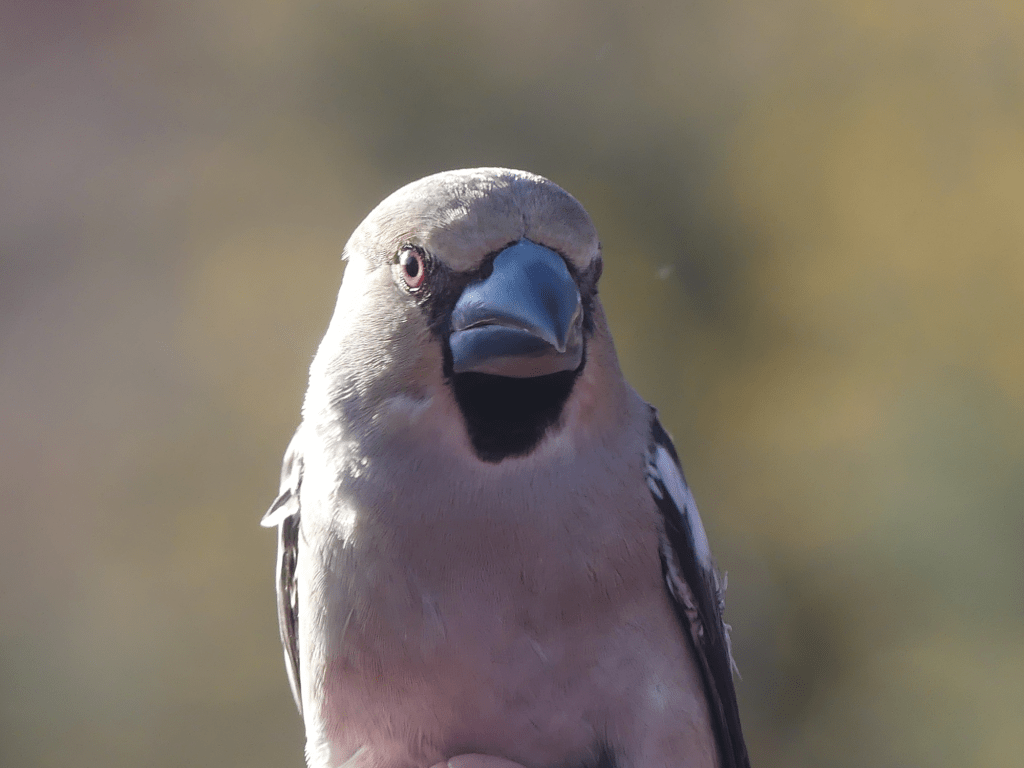
Several Hawfinches, another rare New Forest specialty, flew over our heads between the trees. They are our largest finch, and their huge, heavy bills are designed to crack large seeds like those from a cherry tree. Despite their imposing size compared to many other songbirds living in these parts, they are incredibly shy birds, and are difficult to see. They have declined heavily in recent years, largely due to deforestation and disturbance.
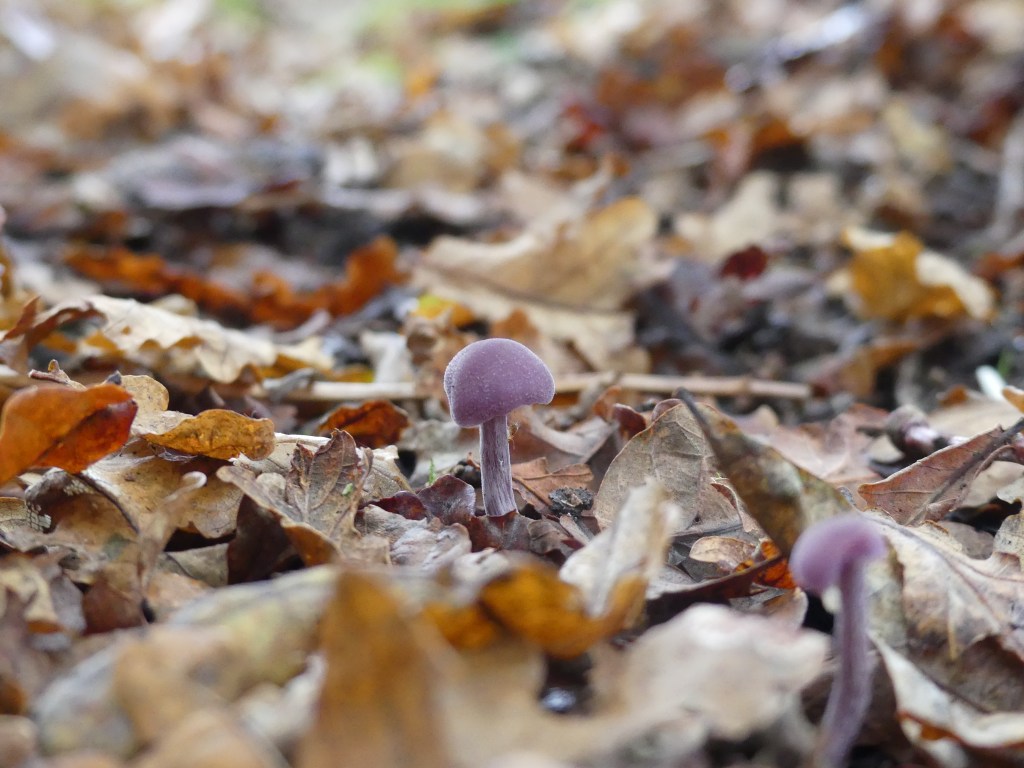
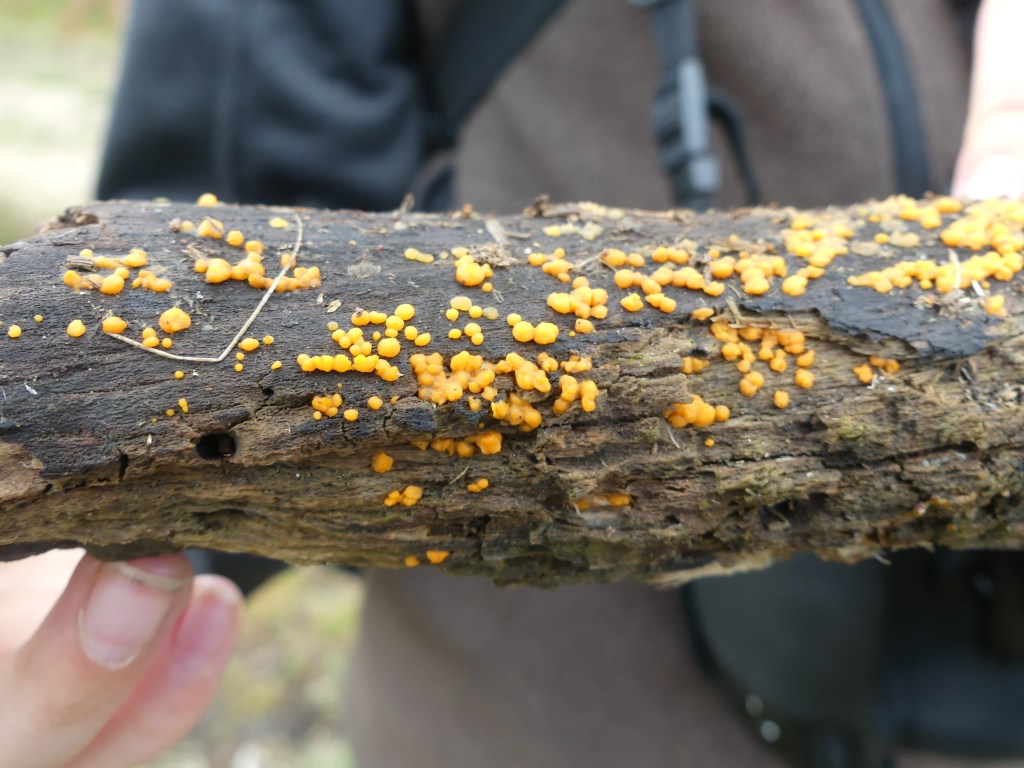
That morning, we got a brilliant array of species in the ringing nets, with birds from two different habitats featuring, as nets were set up both on the heath and in the woods. When there was a lull in the ringing excitement, I set about photographing the various mushrooms and fungi that were hiding in the woods, and came up with several different species such as Amethyst Deceiver (named for its colour) and Jelly Spot Fungus. All in all, a really enjoyable morning!