
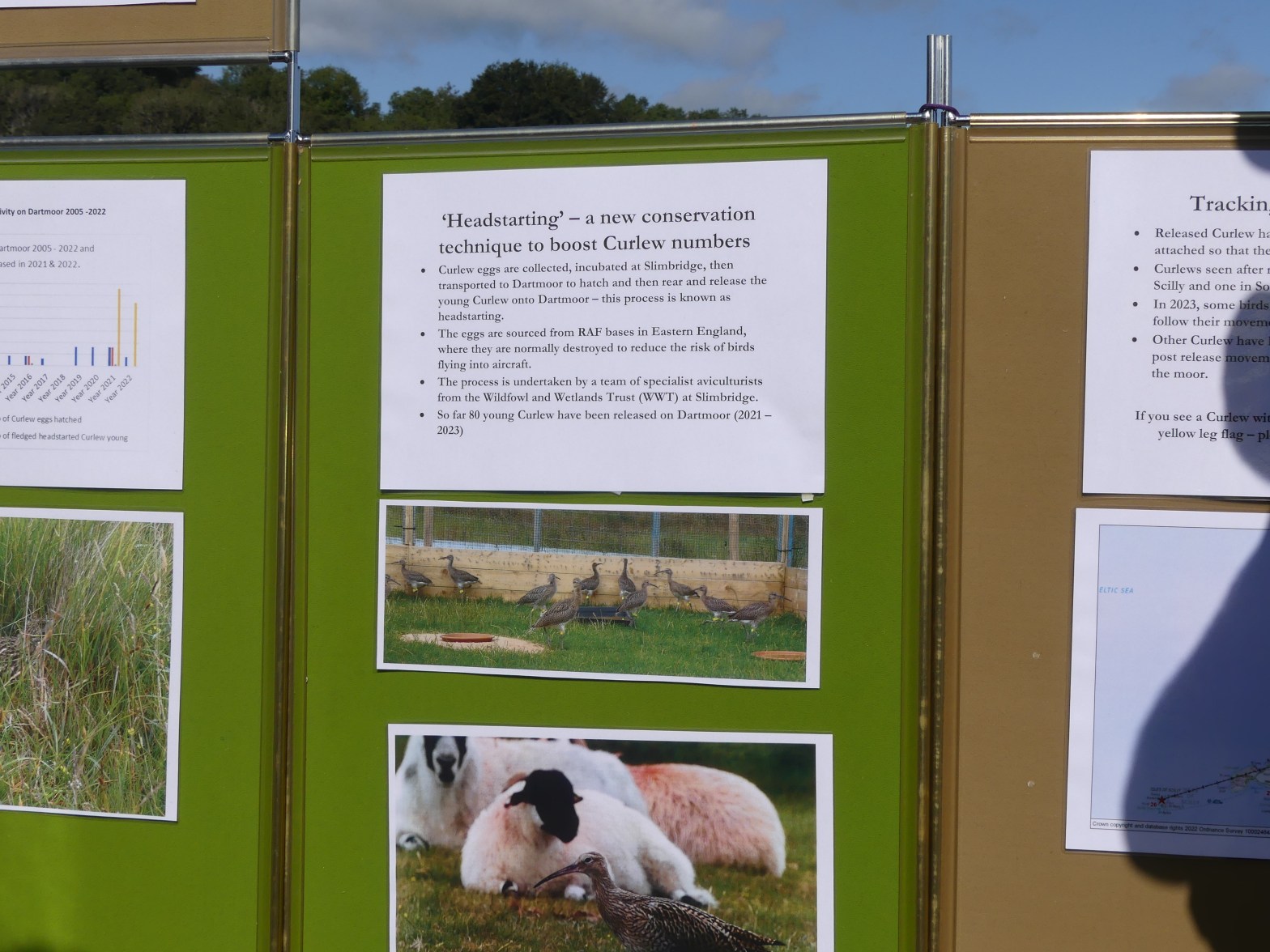
The Eurasian Curlew is one of those waders, that switches habitats dramatically according to the season. By summer, it is a moorland bird, breeding on the ground in cover afforded by gorse and scrub. By Winter, it is a bird of the estuaries and coast, feeding in the tidal mudflats many places around Britain entertain. But it has been hit hard, with breeding populations declining heavily across Britain. And this organisation has been set up to help save the Dartmoor birds.
At the Meldon Wildlife Festival, we came across a stall for the Dartmoor Curlew Recovery Project, and the people there were brilliant to talk to, really giving an insight into the world of Devon Curlew conservation. And the organisation is, unfortunately, needed desperately today. A Curlews soft bubbling call is sadly growing rarer all over the UK, but Dartmoor has been one of the worst effected, with numbers having declined by 85% since 1985. The bird is on the Red List for conservation concern, and Dartmoor is one of the most important Southern breeding populations.
The King, Charles III, has taken a particular interest in the long-term safety of this species, and he has been an important part of the monitoring of the breeding birds on Dartmoor, since 2005. The research showed that there were as little as one or two breeding pairs every year, and that scavengers and predators, namely crows and foxes, posed a significant threat to unhatched eggs and young. 5 years ago, in 2018, the King led a National Curlew Summit on Dartmoor, to come up with a short-term and long-term plan to help this bird.
Possible solutions were identified, and plans put in place to give the wader a hand to bounce back. Landscaping to enhance habitats, and small-scale predator control should both prove to be important over the next few years, and the method of head-starting to boost the numbers allowed the rearing and eventual release of young Curlews. The eggs came from an unusual source, an RAF base in East Anglia, where eggs are removed from the side of the runway to protect aircraft. These eggs are transported to a special facility at WWT Slimbridge, and then prior to hatching, are taken to Dartmoor National Park where the hatched chicks are brooded by special warming lamps, before release into a moorland pen.
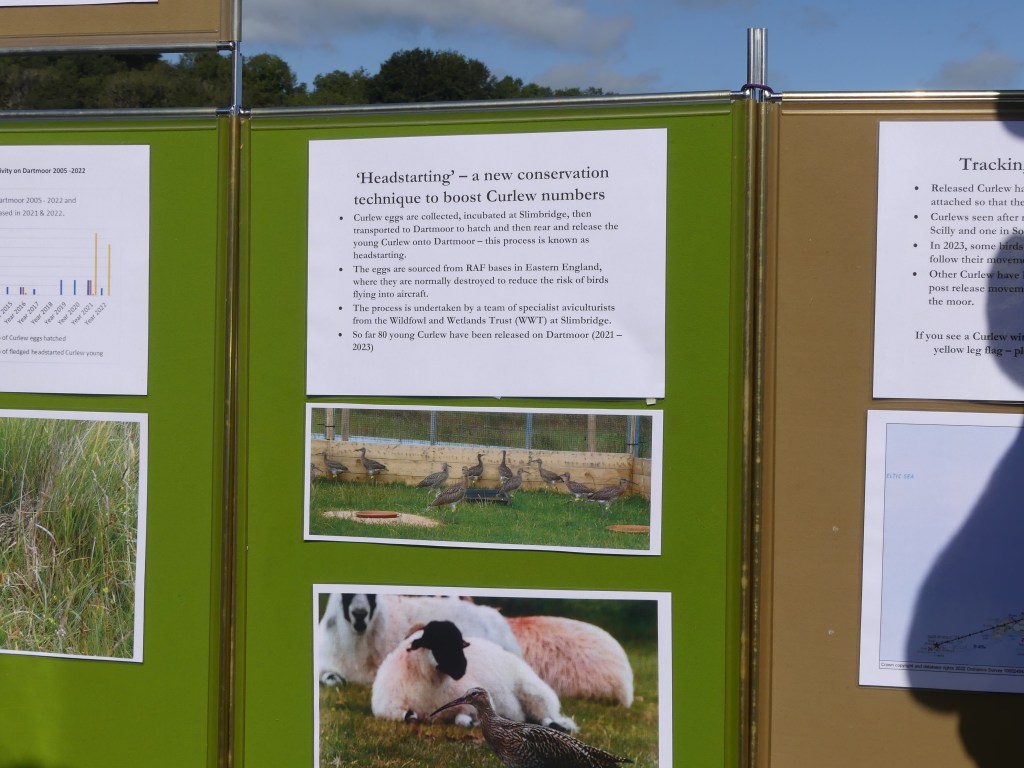
Following around seven weeks of anxious waiting, the young waders are released into the wild, with the hope that they have got to know their Devon surroundings and will return to breed in a couple of years. Eurasian Curlews usually breed from two onwards, so the birds should return home soon. In 2021, 33 Curlew were successfully reared and 27 released. If all goes to plan, these creatures could become the pioneers of a new breeding population on Dartmoor.
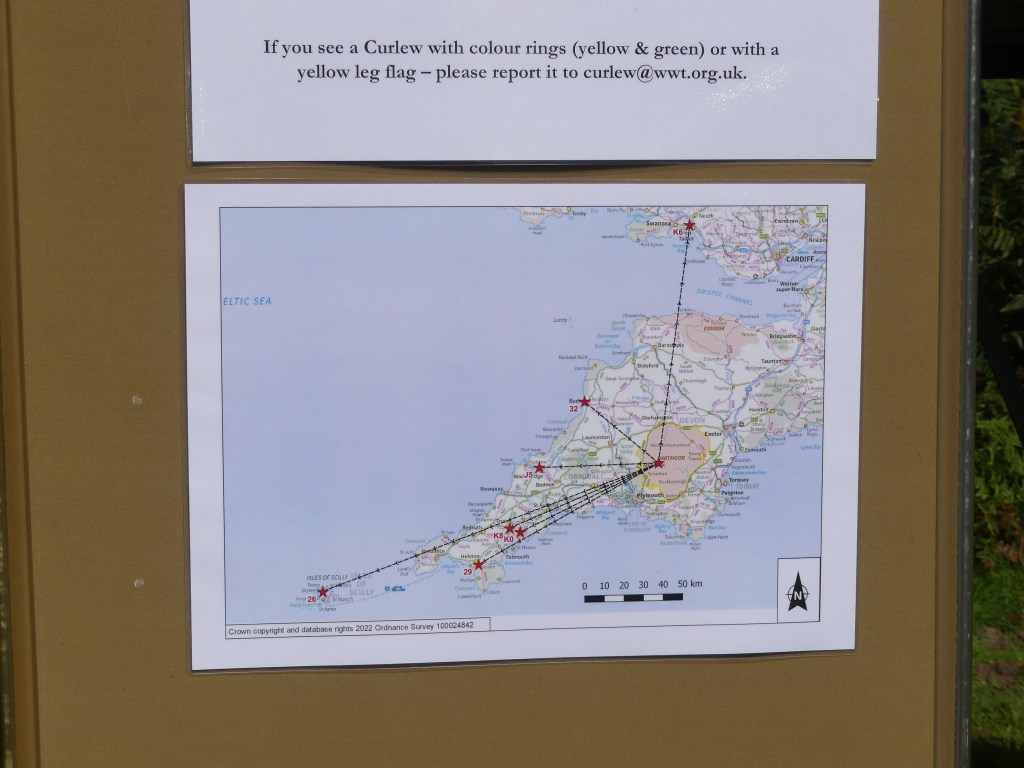
The released Curlew can be separated by large yellow colour rings and flags, easily seen from relative distances. This allows them to be spotted feeding on estuaries and rivers and marshlands, where they spend the winter. If you do sight any of these birds, report it by emailing into curlew@wwt.org.uk.
This project could be crucial to preserving Dartmoors Curlews, but also for other populations across the UK. This is the first project of its kind in the country, and any information learned will prove valuable in years to come.


One thought on “Dartmoor Curlew Recovery Project”