
Named for it’s shape akin to that of a certain mythical creature, Dragonera lies off the south-west coast of Mallorca, a stones throw from the picturesque coastal Balearic town of Sant Elm. It’s roots run deep into it’s rugged, uninhabited cliffs, and it’s relationship with people has proven rather complicated over the years. But it’s a major hotspot for biodiversity, hosting over 361 species of plant and endemic animals galore. Welcome to the Dragon Isle.
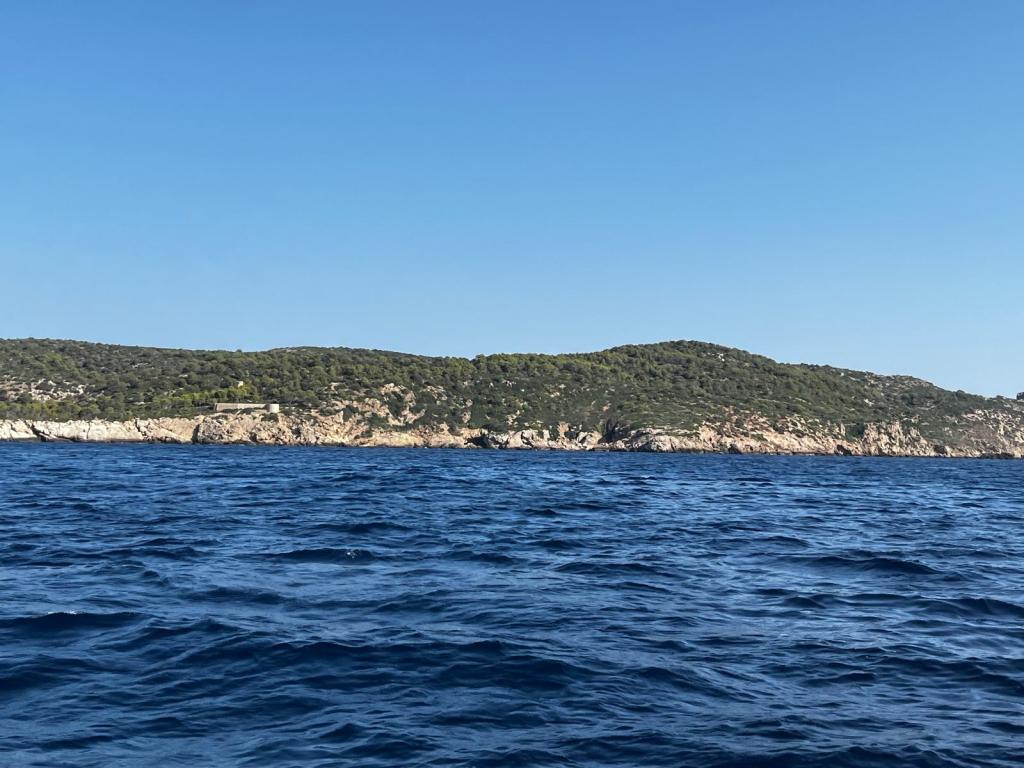
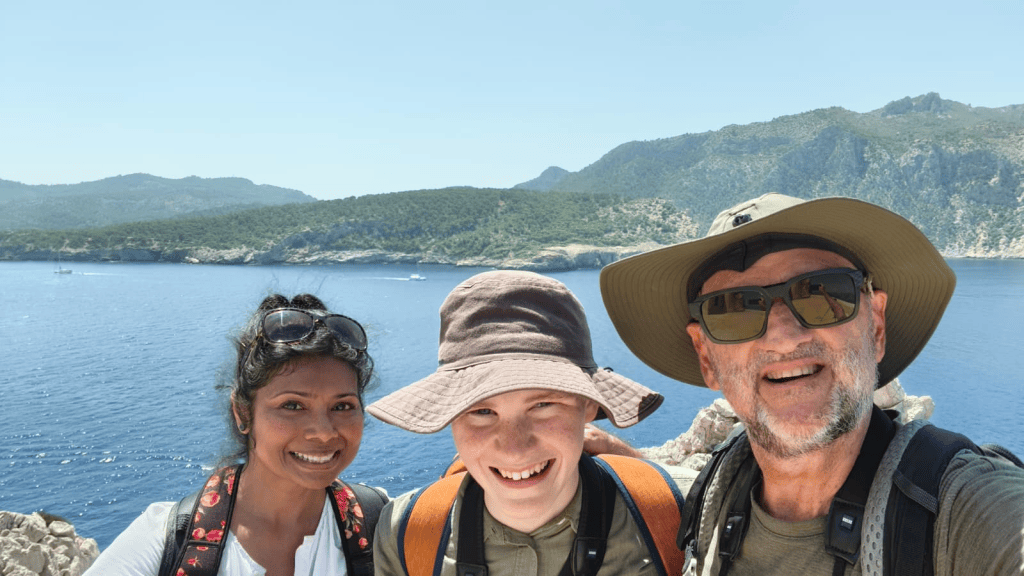
To give some context after what I hope was quite a dramatic entrance to this blog, I’ve recently returned from a family holiday in Mallorca, where I’ve done my best to make the most of some of the brilliant birding on offer. Whether that’s photographing the many juvenile Mediterranean Flycatchers around our villa or traversing mountain ranges in search of vultures, it was a blast. And on the last full day of our trip, I was lucky enough to strike out via a 15 minute boat trip for a spot that’s been on my bucket list for years now, ready to dive into this amazing place alongside my old friend Pere Tomàs of Mallorca Nature Tours, and the brilliant Tahmina Watson.
As I’ve mentioned, the island’s history is long, sometimes treacherous and deeply intrigueing. From the 16th to the 18th centuries, the island was used as a hideout for pirates and smugglers, the perfect pinpoint from which to target Mallorca’s main trading harbour, Port de Palma. The island has also hosted three historic lighthouses, two of which are active currently. These have proved crucial lifelines since their construction and remain so for ships passing through the surrounding seas, especially in perilous weather conditions.
The original lighthouse was built at the peak of Na Pópia, the highest point of the island, reaching heights of around 350-360 metres above sea level. It was dismantled in 1910, and far vell (the old lighthouse) still remains a popular destination for hikers taking the trail to the summit. Llebeig, at the southwestern tip of the island, was constructed between 1905 and 1910, alongside Tramuntana, built between 1907 and 1910, on the northern point. This was done because far vell, at the time the highest lighthouse in Spain, had its light constantly blocked from the view of ships by mist and fog.
Then, in 1974, the island was bought by a private company looking to turn it into a luxury resort. Naturally, there was lots of opposition to this from the ecology sector, with the island being a crucial stronghold for so many different species. So much so, that in 1977, the island started being occupied by activists and ecologists to protest the development. Their food and water shipments, provided by local fishermen, were even cut off at one point by the Guardia Civil. But the community was unmoved, and the Consell de Mallorca eventually bought it in 1987, declaring it a Natural Park in 1995. The duel for Dragonera is now considered the birthplace of modern Balearic activism and environmentalism, and just goes to show what a determined group of people can do in the name of conservation.
Today, the island and surrounding marine protected area support all manner of flora and fauna, with pressure on the delicate ecosystem minimised by the Parc’s rule of only 150 people being allowed on the island at a time. It’s sheer coastal cliffs and rocky sloped landscapes provide a home for animals such as the unique Dragonera Lilford’s Wall Lizard subspecies (more on them later, they’re really cool), Eleonora’s Falcon and Balearic Shearwater in the breeding season, Shag and Audouin’s Gull, while the seagrass meadows and coral surrounding the island host hugely diverse fish and invertebrate populations.
The Mediterranean scrub and resilient, stunted trees that cover the island also host species like the Balearic Warbler, a notoriously shy bird and many, many Mediterranean Flycatchers. The island is also a crucial stopover for migratory birds making their way between Europe and Africa in Spring and Autumn, and can see a huge variety of species make their way through on passage.
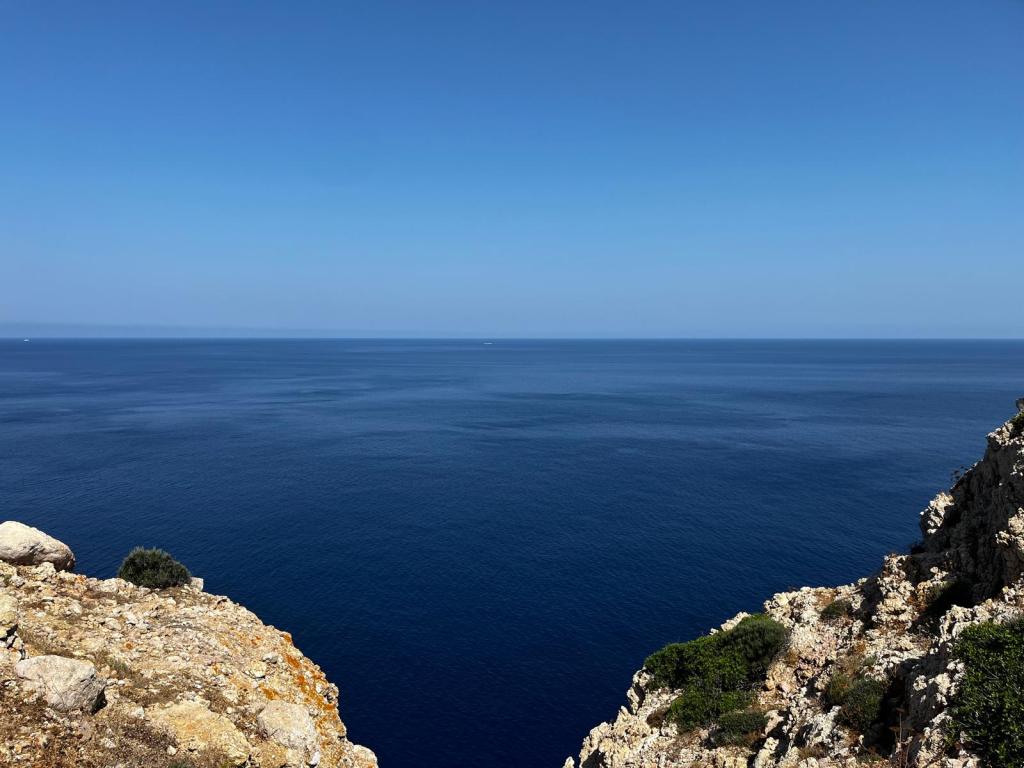
But the Natural Park doesn’t just carry benefits for the wildlife. The Marine Protected Area creates crystal-clear water all around the area and decreasing pollution. The island is also great for hikers, with several routes of varying difficulty traversing the island. It’s incredible, panoramic views of the surrounding seas and coastline are a hook for locals and tourists alike, and the island being vehicle free brings cleaner air and more space for nature. The very existence of the Natural Park is a monument to a massive local civic triumph, and there are many structural remnants on the island which hold the key to some historical heritage.
So, Dragonera’s a win-win for all of us, but especially the endemic species it supports. The word endemic means a species or subspecies that can’t be found anywhere else in the world, and Dragonera is a haven for not just plants and animals endemic to the Balearics, but also a select few endemic to just the island. The explanation for this is that geographical isolation has caused the flora and fauna of Dragonera to develop specific and unique traits.
For example, Dragonera hosts 361 species of plants, 18 of which are endemic to the Balearics. A large proportion of these have been forced to adapt to the windy, sea-salt-filled conditions, especially those around the cliffs. Intensive conservation projects, such as the eradication of invasive mice and rats from the island in 2011, led to the resident Lilford’s Wall Lizards (Dragonera subspecies) gaining some very curious tendencies. Breeding seabird populations, such as that of the endemic Balearic Shearwater, also boomed as a result of the project, demonstrating the impact invasive species can have and how nature can thrive with their removal.
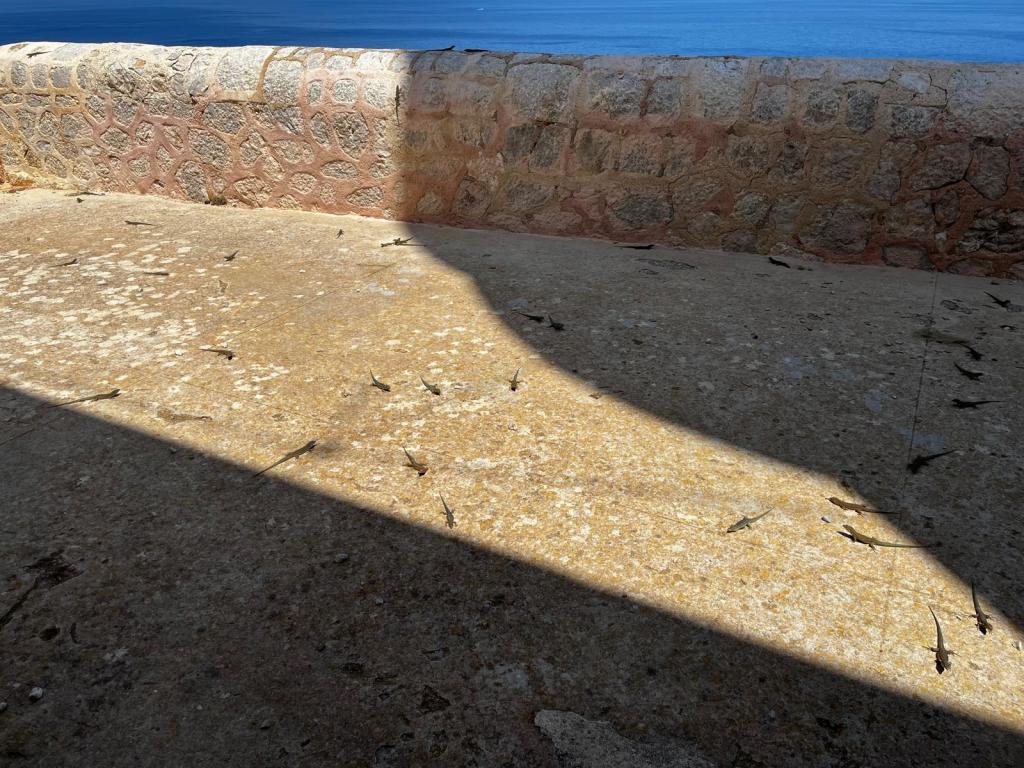
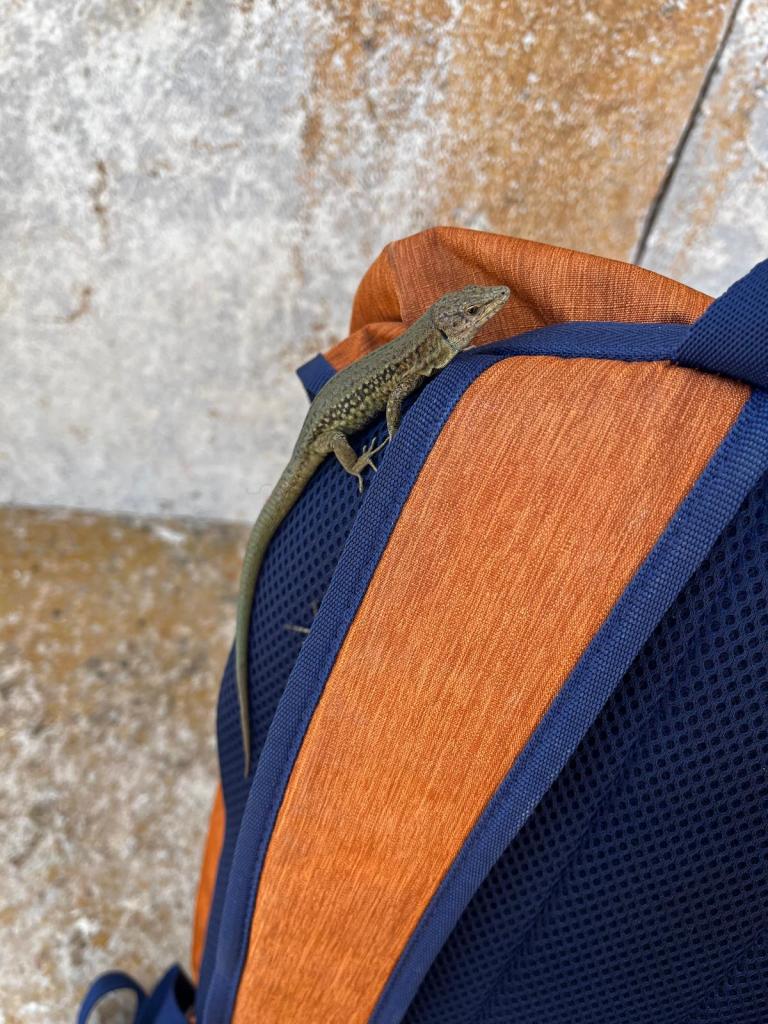
A bit more on those Lizards, then. As I’ve mentioned, Dragonera hosts a unique subspecies of Lilford’s Wall Lizard (Podarcis lilfordi gigliolii), and they are among some of the most curious wild animals I have ever come across. With no natural predators on the island, they don’t fear human visitors either, and during our lunch stop at Llebeig lighthouse, they were everywhere. Dozens of them, crawling over our feet and bags. I had to keep mine tightly zipped closed, or else I might get back on the boat later with a rare lizard on me! These charismatic reptiles evolved from the original Lilford’s Wall Lizard, which went extinct on mainland Mallorca with the introduction of feral cats and rats. As a result, each island has its own subspecies, having been genetically isolated for over two thousand years.
There are also two Shearwater species that nest within the Natural Park, the endemic Balearic Shearwater and the larger Scopoli’s. The Balearics are critically endangered, with roughly 1800 to 3000 breeding pairs remaining. They nest on the rugged cliffs around Dragonera, feeding in the marine protected area and surrounding waters. In winter, however, they become a largely pelagic species, spending their time out at sea in the northeast Atlantic and the English Channel, resulting in many sightings in UK waters during the colder months. The larger Scopoli’s feeds out on the open sea during the breeding season, and nests on a smaller island close to the Sant Elm Harbour. It also happened to be the only lifer of the day’s trip for me, with one flashing right by the boat on our way back to the mainland. Just to clarify, the Balearics had already finished breeding and left out to sea, so it was just the Scopoli’s around when we were there.
Dragonera also hosts one of the largest breeding colonies of Eleonora’s Falcon in the Mediterranean. These amazing raptors arrive to breed during late summer to nest on the limestone cliffs. They tend to arrive around July and August, raising their young until October. You’re probably thinking that, compared to most birds, this is a strangely timed breeding season, but that’s the genius of it. Colonies perfectly time the hatching of their chicks with the passerine migration season, changing their diet from insects and giving the falcons a bounty of prey passing through with which to raise their young. They’re among the more social of raptors, engaging in social mobbing of potential predators around their colonies and nesting just metres away from each other. Don’t let that fool you, though; they defend these small territories fiercely!
For my final species spotlight sort of paragraph, I give you the Balearic Warbler. Can’t see it? Don’t worry, we didn’t either. It’s one of the hardest birds to see in Europe, not just because you have to travel to Mallorca, but because of its shy, skulking nature. Pere told stories of birders who had noticed a possible warbler fly into a bush, and stand by that same area for over an hour, seeing nothing. Dragonera, however, is one of the best places to see it, although the time of year of our visit was hardly perfect. The birds wouldn’t be singing anymore, and we could search every bit of scrub on the island and still not see anything. We’d have to rely on luck, which sadly we had little of that day.
Mine, Pere’s and Tahmina’s trip to Dragonera together was, quite possibly, one of the most amazing days I’ve had birding. The breathtaking landscape, the panoramic views and the lizards, combined with some great views of Eleonora’s Falcon and Scopoli’s Shearwater, made for a great time. Mallorca Nature Tours, Pere’s company, run tours like this to sites all over the island, and we’ve never not had a good time together yet. I highly recommend you look him up if you’re ever headed out there; tell him Henry sent you!
 The Bovey Birder