
A month ago it was my birthday, and to be honest, I pretty much spent all the time birding. Visiting two sites with special places in my memories and on this blog was both nostalgic and rewarding, with a few rare birds and natural phenomenons thrown in, of course. Across the two days, there turned out to only be one lifer (however it was a big one), but my year list is now off to a brilliant start, and I’m hoping that 2025 is going to be a big birding year. So without further ado, we began on a walk towards RSPB Bowling Green Marsh.
Blue and Great Tits fluttered from tree to tree above us as we walked down the path that was parallel to the River Clyst, which was about to open up onto its estuary. I looked up from by binoculars to find a glorious male Bullfinch, in all its rosy pink glory, staring right back at me. As I watched, transfixed by its stare, a female flew in onto the branch above it, her breast a dusky, dusty brown. The chittering of a large group of House Sparrows, taking over a nearby hedge brought me back to my senses, and I continued on my way down the path, occasionally pressing myself into the leafy green border when the ping of a bike bell rent the air.
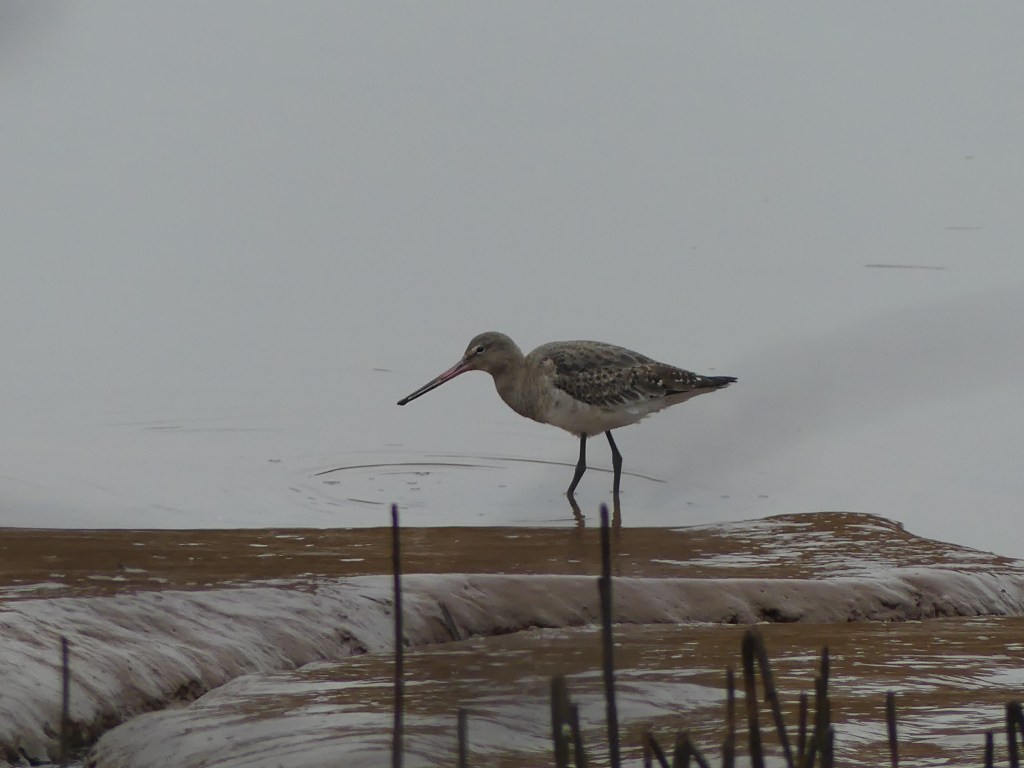
The tide by now was almost in, leaving a small group of Black Tailed Godwits on the edge of the water, legs obscured by swaying grasses. A Redshank weaved between them, while a much happier looking group of Teal paddled about out in the middle of the water. We trudged onto the bridge, laden with a scope, binoculars, camera and several rucksacks, and I raised my head to acknowledge the pair of Ravens flying over our heads with a harsh ‘kraw’. It was a bird I hadn’t necessarily expected to see on a visit to the Exe Estuary, and definitely welcome.
The bridge opened up onto a raised boardwalk that provided a pedestrian highway over the marshland and reedbeds. Several viewpoints lay along its right hand side, looking out over prime wetland habitat. Wistfully I thought back to last Spring, when the dense shrubbery on the left had concealed many deafening Cetti’s warblers, a reddish brown bird more often heard than seen. At the first viewpoint we saw one of our main target species for the day at pretty much the first time of asking, and it was a raptor that never failed to take your breath away.
From here all you could see was extensive reedbed, until your eyes found Darts Farm and the road on the other side. It started with several Carrion Crows making a mighty ruckus, clearly agitated. And then a richly coloured bird of chocolate brown, with a coffee cream patch on its face rose from the reeds, gliding on powerful wings. Had it let its feet dangle beneath her, they would’ve become entangled in reeds, and her head was constantly scanning, searching for prey in the reeds below. A female Marsh Harrier, surveying her queendom.
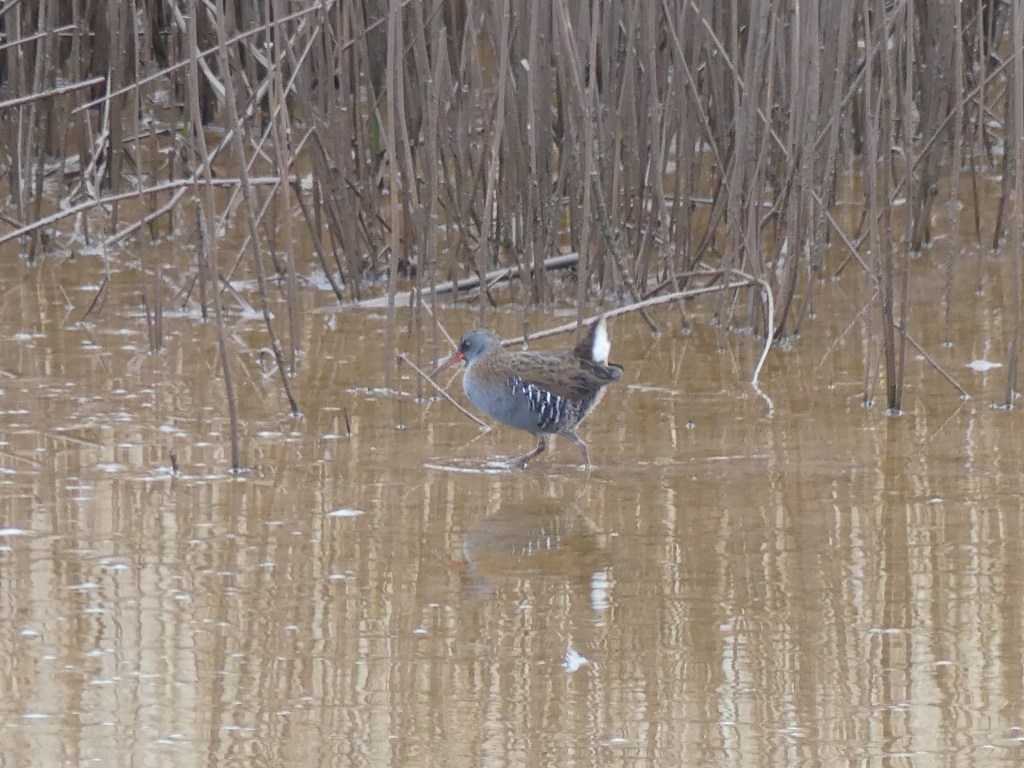
The grey clouds hung over us as we tramped along the echoing boardwalk, passing cyclists and families as we went. The next viewpoint proved a window to several pools and channels on the edge of the reedbed, fringed by swaying rushes. A squealing call brought my binoculars right up to my eyes, slightly reminiscent of that of a pig. However, I certainly hadn’t expected to see the caller out in the open. With an admirable blue-grey breast, and a brown patterned back, the bird ran with a speed that took me completely aback, flashing a white rump as it went. Suddenly another bird popped out as the first one concealed itself once again in the reeds, and the two Water Rails, relatives of the Coot and Moorhen, took it in turns to run out of the reeds looking for food. When the cold snaps come in the winter, Water Rails are forced out into open water, and this is the best time to see them. We’d seen them here on our last visit a couple of weeks ago, and this seemed to be a favoured spot for them.
My eyes were torn away as my ears were clogged with honking, and I directed my binoculars upwards to see a group of Brent Geese flying in a miniature v-formation, a flurry of greys and white. The Exe was famous for them, with its huge wintering numbers nationally important. Brent Geese prefer to feed on eelgrass that is slightly submerged in water, so parts of the Exe are perfect for them.
The boardwalk ended, and suddenly we were on solid ground again. The air around us was filled with cacophonous calls growing in volume, a telltale sign of a winter wetland close by. Just a spiked metal fence and a loosely packed hedge separated us from the marshes, and the birds certainly knew this too. As we walked past, we startled a resting Egyptian Goose on the water’s edge, and it watched us warily before tucking its head back behind its wing.
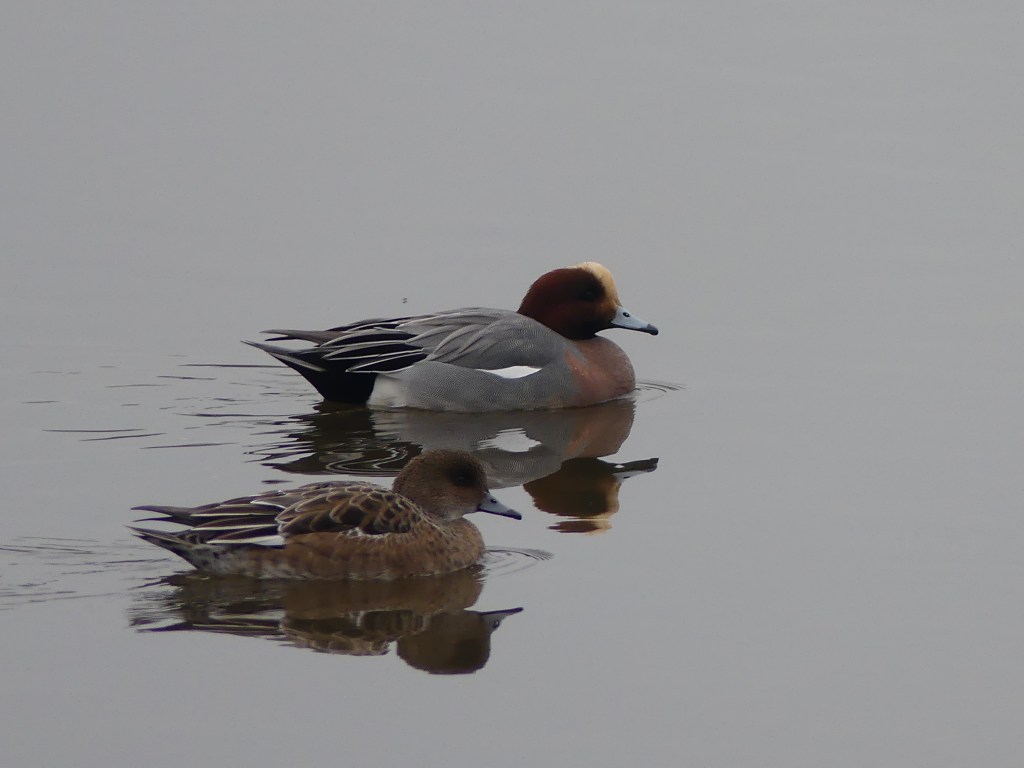
The lane led down to the RSPB Hide, complete with a nature garden and Lapwing shaped bike racks. Silently, we entered, shutting the door carefully behind us so as not to disturb the myriad of species in front of us. The thing about a wetland is that you never know where to look first. Do you scan through the massive group of Wigeon in front of you, or admire the beauty of the dabbling Pintails further out. Do you watch as the Cormorant fans it’s wings on an islet, or follow the Lapwing’s energetic bouncing bursts of flights? It’s a dilemma that few birders have managed to answer, such is the wonder of a wetland in winter.
Out at the back was a bird which looked very out of place, like an odd Tufted Duck. It was on its own, and regularly diving beneath the surface of the water before popping up again a couple of meters away from where it began. But this was in fact an immature male Greater Scaup, a sea-duck by nature that often ventured slightly inland during the winter months. An inconspicuous chocolate brown, like a female tufted duck, it can be told apart from its counterpart by its larger size, steeper forehead and larger broad bill. They’re a fairly scarce duck to see, and this bird was a long-stayer at Bowling Green.
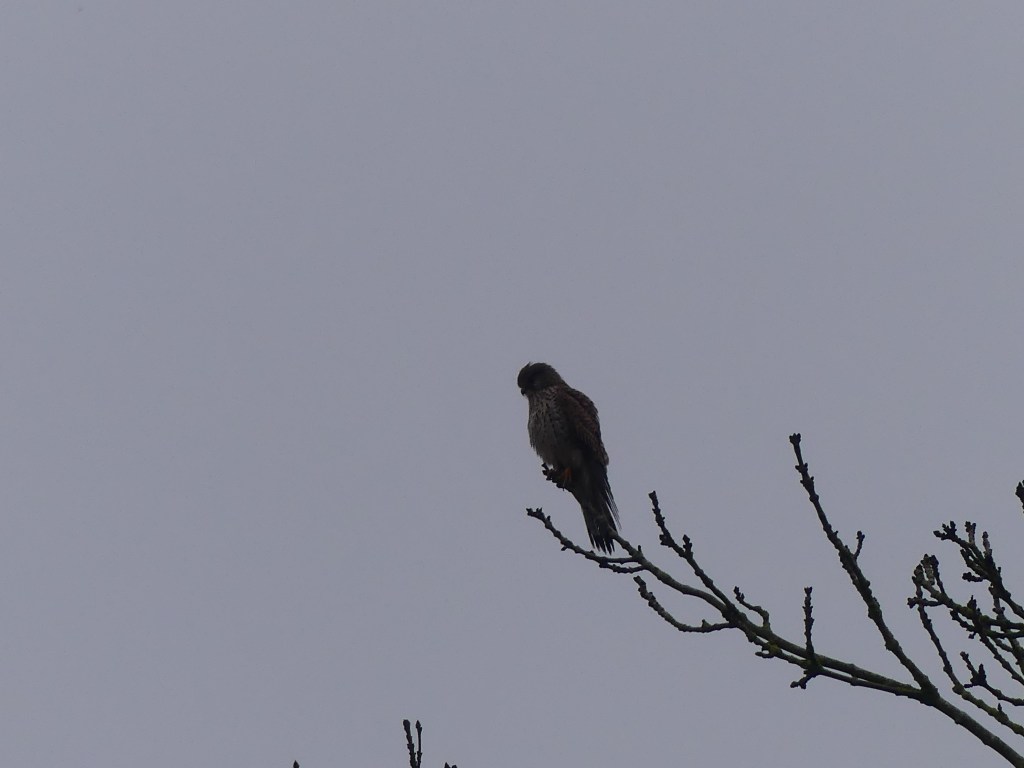
After around 90 minutes in the hide, we left as soundlessly as we could and continued down the lane, heading for the next viewpoint that looked over the mudflats exposed by the retreating tide. As we headed down the path after passing through another creaky iron-wrought gate, a Kestrel, tiny but mighty, flew low over our heads before coming to perch in a tree barely a couple of metres away from us. Light for a photo was going to be tricky, but the positioning of the bird was an opportunity few would miss. After pausing for a few shots, we headed up the wooden steps and onto the viewpoint.
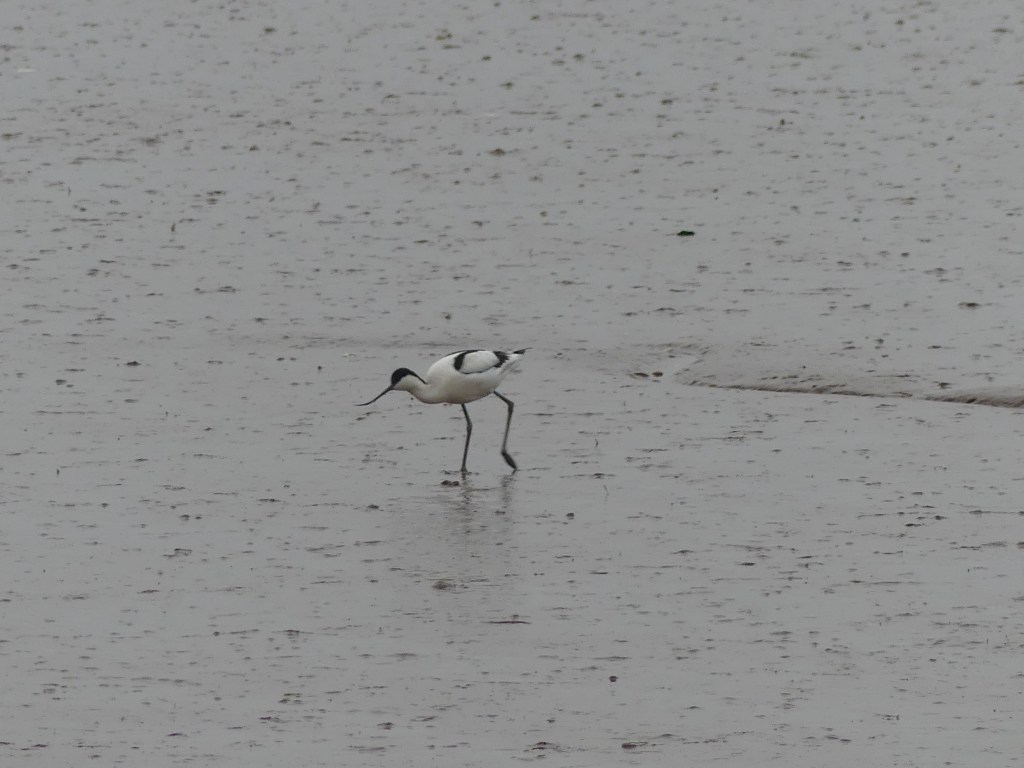
Immediately a group of Avocets caught my eye, in all their piebald splendour. The Exe plays host to a national important wintering population of these waders, and is one of the best places to see them in the UK. The Avocet even features on the logo of the RSPB, being one of their first conservation success stories. Scanning to the right with the scope, I picked up a Dunlin in its drab winter plumage, moving sprightly about the mudflats, dipping its bill deep into the dirt at intervals.
I looked up from the scope as a loud, piping call cut through the air around us. Two Oystercatchers, with blood-orange bills, came flying in, landing on the mudflats in amongst the Avocets. Next to arrive was a Curlew, followed by several Cormorants putting in a flyby visit. The variety of species on these mudflats has been barely touched by me, and there was a lot more further out there taking advantage of the tidal riches that nature has provided.
After another hour of watching the waders go by, we headed back up the lane and across the boardwalk, back towards Darts Farm where our trip had started. The chittering of another House Sparrow filled bush was our 2 o’clock chorus as we packed up the gear into the car. Tomorrow would hold another birding trip, but further afield than today at Bowling Green.
Ham Wall
We awoke bright and early next morning to begin the trip to Somerset, and its abundant marshland habitats. The site in question was none other than RSPB Ham Wall, famous for Bitterns and Starlings alike. As soon as we had parked, a male Bullfinch flew low over our heads before alighting on a snag of bramble opposite us. Its rosy pink breast lit up the drab grey morning air, and could surely only be a good omen for the day’s birding ahead. It was bitterly cold, and I was grateful for the many layers I was wearing. There was very little sun to be spoken of, rather just a desert-like sky of grey. The wind blew an ear-chilling gust that wove its way inside my coat, and I was only too glad when we were ready to start walking.
RSPB Ham Wall is one of the first major RSPB reserves I ever visited, and I made many memories those five years ago that I still cherish fondly. Even the car park seemed familiar, the crunch of the gravel beneath my boots and the Grey Heron flying off towards the marshes. I’d been waiting a long time to come back, and now I was finally here I could hardly contain my excitement.
With the sound of wetland birds ringing in our ears, we started off down the trail, surrounded by reed-bed habitat on both sides. The gravelled path winded through the beige colour of reeds, uniform and swaying. After a while, we came to a boardwalk which led on a slight upward incline out of the reed-bed. Suddenly, a small robin-sized bird burst out of the thicket on my right to perch momentarily on the boardwalk at my feet. It was a smooth, reddish-brown colour, and its tail pointed skywards, reminiscent of that belonging to a Wren. This could only be a Cetti’s warbler, a usually shy bird that makes up for its introverted behaviour by being astonishingly loud. Its deafening bursts of song in Spring mean that you are always more likely to hear it than see it. I’d never dreamt of seeing one so close, and it was quite the encounter, even if it only lasted for a few seconds.
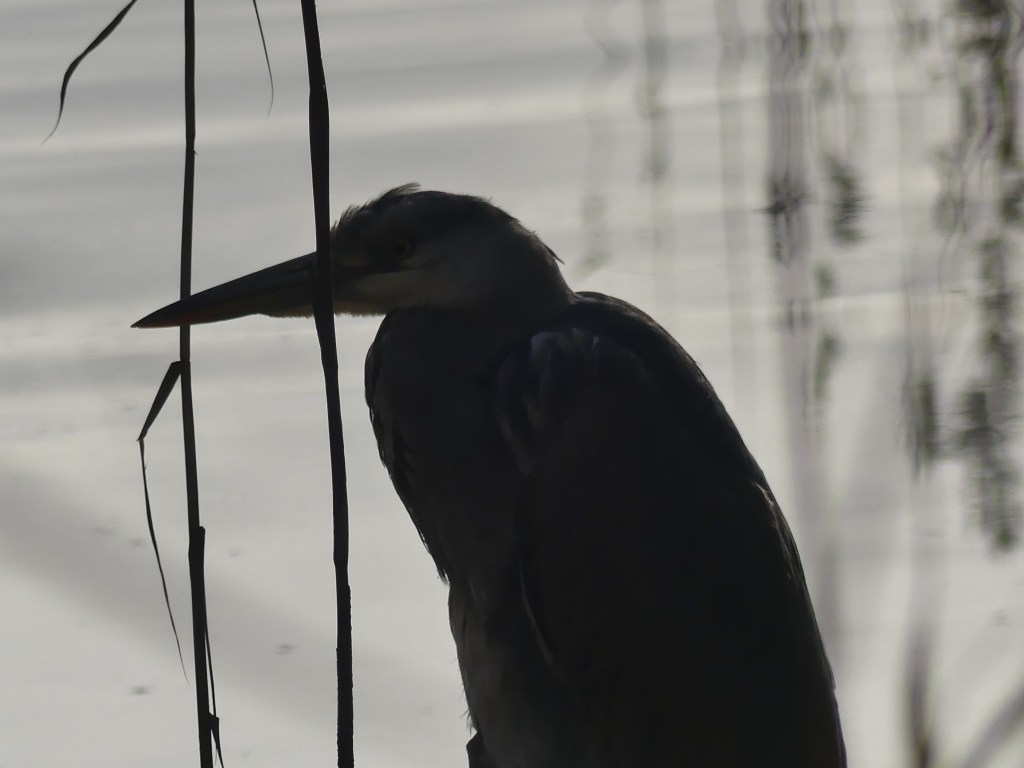
The boardwalk led us out onto a more solid path, and we unpacked the scope on the bridge that overlooked so many of the channels and streams that snake across the Ham Wall reserve. On the water below paddled several Teal, with the male’s striking green and red head colours unmistakable to the naked eye. A Grey Heron stalked along the bank, powerful bill poised in anticipation of its prey. And low over the reeds flew a Herring Gull, causing several Mallards to skitter over the water into momentary flight.
A Dunnock hopped across the path as we departed, grey breast a similar shade to the ground we walked on. Soon enough we came to Viewpoint 1, which overlooked one of the larger bodies of water at Ham Wall and featured several small islands on which sat many wildfowl. From Gadwall to Wigeon, Pintail to Tufted Ducks, it was hard to name a winter duck that wasn’t out there. Several Mute Swans were also out on the water, their white plumage striking against the backdrop of the reeds which fringed the water.
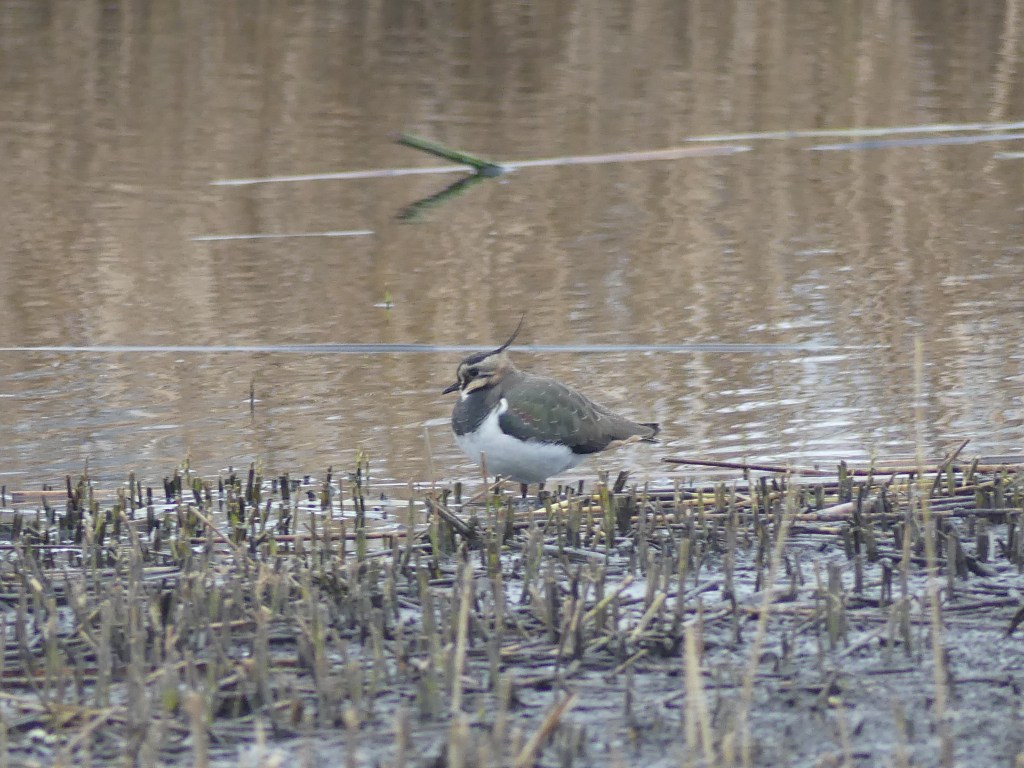
A I watched a deceit of Lapwings (genuinely, that’s their collective noun!) came flying into the foreground, slow irregular wingbeats coupled with some half-hearted aerial acrobatics. Their shrill cry startled a few of the nearby Teal, who made a hasty exit, but nobody else seemed to mind, and the Lapwings stood on the little island that was more duck footprints and churned up mud than actual vegetation. Most stuck their heads beneath their wings, apparently exhausted from their excursion, while others began to preen themselves for the birders’ cameras.
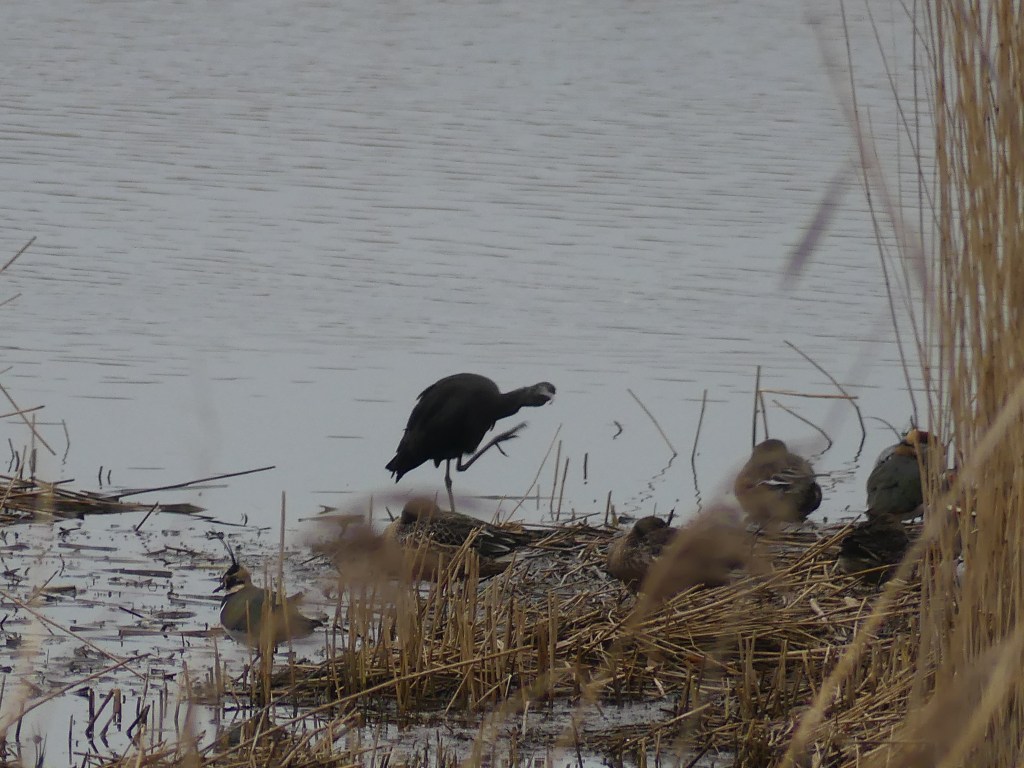
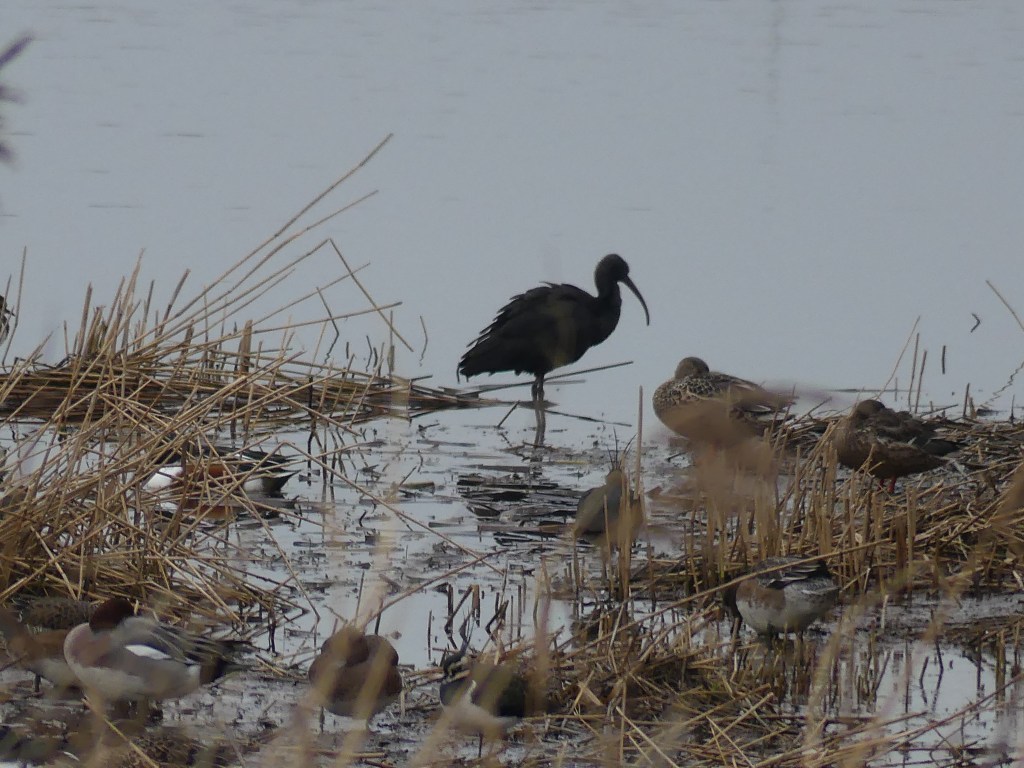
These Lapwing certainly caught my attention, for there had been much news of a stunning Glossy Ibis hanging around on the reserve, and it seemed to like associating with the local Lapwing. The glossy Ibis is a chestnut wading bird, reminiscent of an Egret, which breeds in parts of Southern Europe. It can be found in many places across the world, from Asia to South America, but is a rare visitor to the UK. However, due to population increase in the South west of Europe, and climate change warming Britain’s weather, they have become more common visitors in recent years. They are a rare treat to see here, and I must admit I was very excited at the prospect of seeing my first!
To my frustration, the Ibis wasn’t in among those Lapwings, so we moved on, deciding to return later to see if we could spot it. We headed on a path that went further out through the reedbeds, seemingly cutting right through, which gave excellent views on both sides. The channels and open water were buzzing with life, just like at the viewpoint, and two Grey Herons seemed to be building an early nest within the secrecy the swaying reeds afforded. It was amazing to see them flying through the air with their fish-murdering beak stuffed with twigs and sticks, but it still felt really early for this kind of behaviour. It was only January, right?
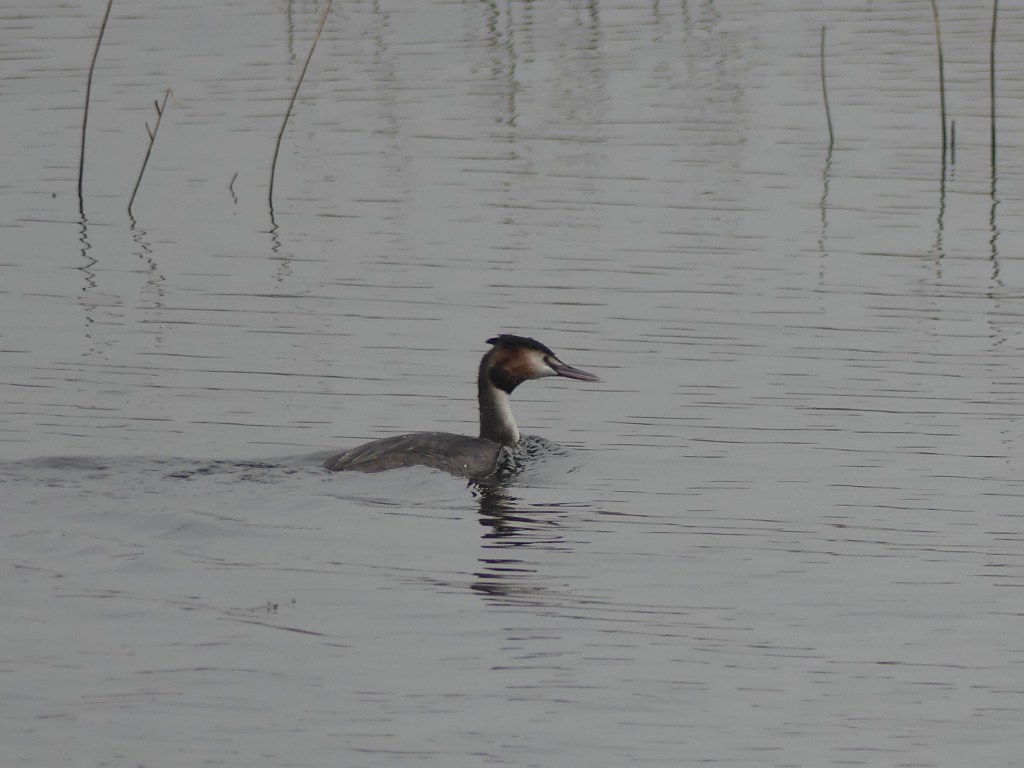
I was distracted by a Great Crested Grebe surfacing in all its slender beauty. The bird sat low in the water, and its drab grey and white winter plumage was already flecked with small brush-strokes of ginger and chestnut. I followed it’s movements with my binoculars, having to readjust and take my eyes from the lenses every now and then when it dived. Honestly, you never know where they’ll turn up once they’ve gone down! It almost seemed playful, like a game of hide and seek between me and this regal bird.
Ham Wall, is of course, famous for one special species. The Bittern. It is one of the best places in the country to hear them, and if you’re lucky, see them. Their cryptic plumage affors them a camouflage like no other, and one of their intriguing behaviourial traits is to stand up, slim and tall, looking like any of the other reeds around them. I’ve seen pictures of this incredible gift online, but would be hard-pressed to ever see it myself. The Bittern is one of the UK’s greatest conservation success stories.
Bitterns are a species completely dependent on vast reedbed habitats, and when many reedbeds and marshland habitats were drained throughout history to make way for new arable land, populations plummeted. It was considered extinct as a breeding bird in Britain during the 1880s, but the hardy birds attempted to recolonise one of their largest old haunts, the Norfolk Broads, in the early 120th century. In the 1950’s the population peaked at about 80 booming males, but by 1997 had dropped to just 11 males. Luckily, the RSPB now stepped in, researching and restoring the aBittern’s favourite reedbed habitats. With the restoration of these habitats, Britain’s loudest bird is booming once again, with 234 calling males recorded in 2023.
I mention this because the hide we were stood in now had been where I caught a glimpse of my first ever Bittern, about 5 years ago, at the exact same time of year. In fact, I think there were only a couple of days between the two exhibitions. The one I saw back then had flown right by close to the hide, its broad wings almost brushing the lenses of my binoculars in that fleeting moment. I’ve cherished that memory ever since, but to this day I have not seen another. That doesn’t mean I’ll stop trying though!
After a quick snack and drink break, we headed back along the path up onto the main track, strolling along listening for whatever birds were around us. A disturbance of the branches above us caused me to look up into the towering oak which hung over us. A Jay, pink with a flash of blue on its wing, looked down on us, an acorn from its stash clutched firmly in its beak. After a moment, it began the simple task of ignoring us, and continued to hop from bough to bough, soon crossing into a more spindly birch, which was tightly entangled with a rowan, connected by the strong leaves of high-climbing ivy. What an encounter!
The sun was now getting lower and lower in the sky, so we headed quickly back to Viewpoint 1, to see if we could catch a glimpse of the special bird I mentioned earlier. To my delight, there it was, sat preening among the now awake Lapwings. There was now a small crowd of birders gathered round the fence which separated the banks of the water and the gravelled floor of the viewpoint, and the discovery of a second bird among a group of Tufted Duck sat on the fringe of the reedbeds caused even more excitement. I felt on top of the world, and I knew that this experience would be very hard to match in the future. Pure exhilaration if I’ve ever felt it!
But there was one more surprise to end the day with. Crossing the road to nearby Shapwick Heath NNR, another swathe of restored reedbed habitat, we joined the gathering crowd to await one of nature’s greatest spectacles. It began with just a small group of birds, gathered above the reeds, but then they began to arrive. The flock continued to grow, with the addition of many small groups flying over our heads to join the Maine event. The Starlings were up for it tonight, and even more just kept flying over our heads! There goes another 10, oh look there goes 30, and look at that one that must be 70 odd birds!
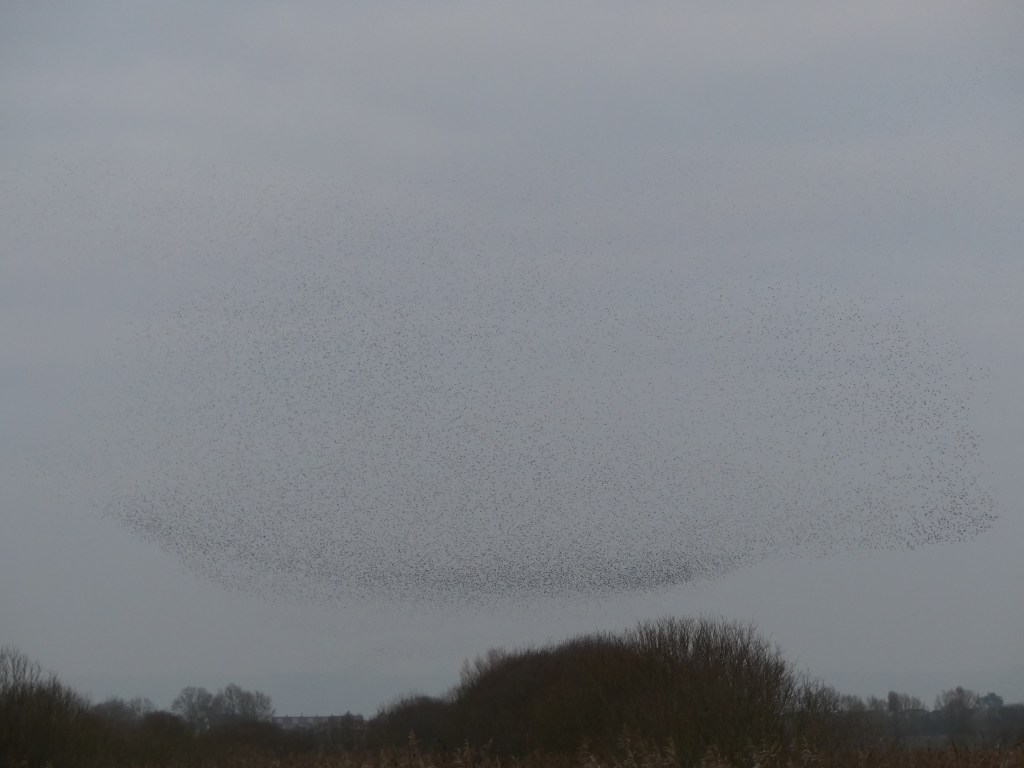
Soon enough, the murmuration gathered momentum, forming incredible shapes in the dying sunlight. The mass of small black birds twisted and contorted into shapes that would be gruesome for any single organism to create, and the noise was enought o make your heart stop and for your breath to get stuck in your throat. If you couldn’t see the bird shadow which hung over your head, you’d pull your coat on and say that it was getting windy. The rush of wings created a breeze like no other, and the sound was like that of the winds that plagued a harbour. An author would be hard-pressed to come up with something as far-fetched as what we were watching, but they needn’t worry, for nature has delivered!
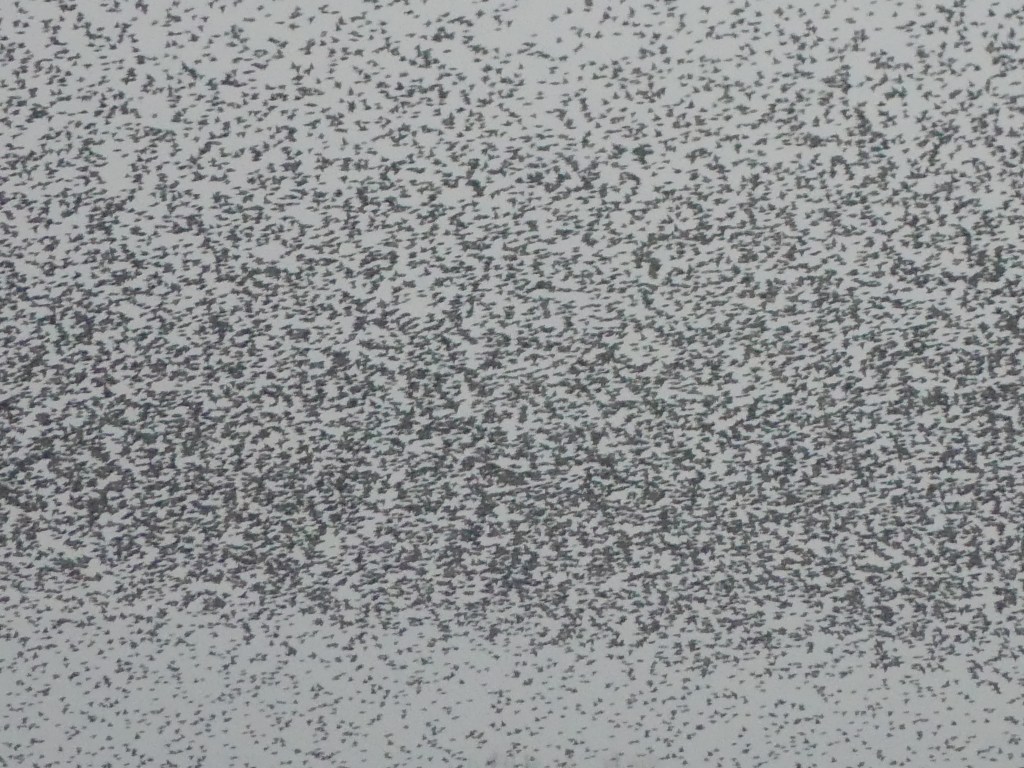
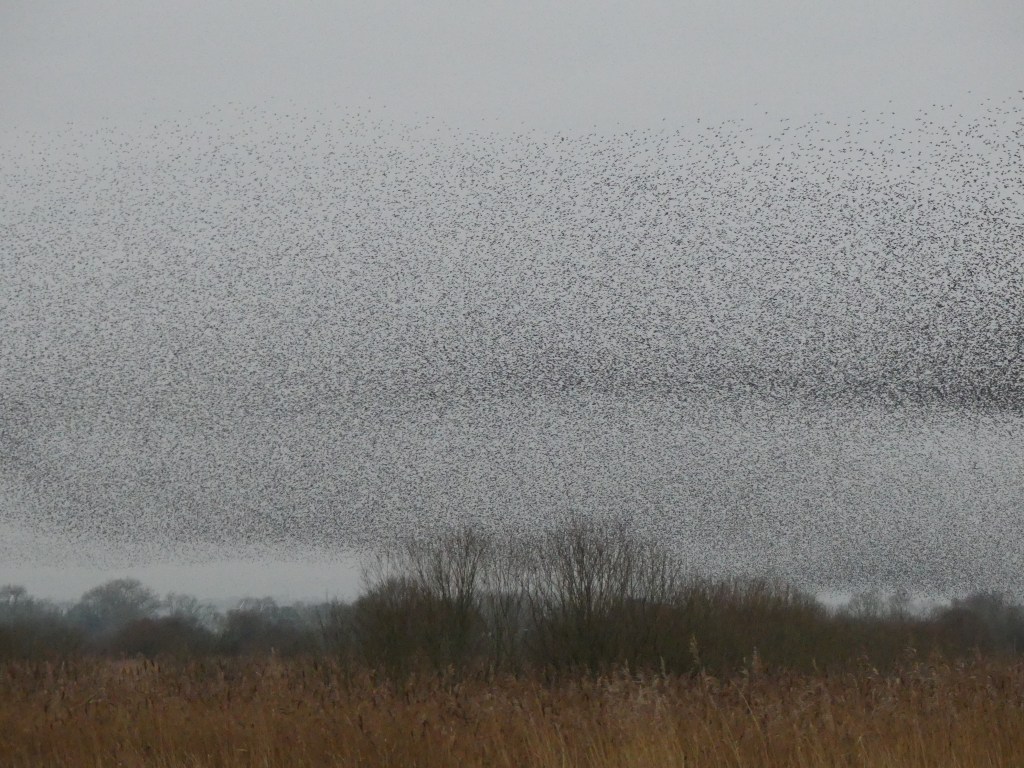
It was almost dark by the time the Starlings all dropped into the reeds as one to roost communally, and it was high time for us to be heading back to Devon as well. It had been a birthday weekend I wouldn’t soon forget, from glossy Ibises to dancing Starlings. Good luck topping this, next year!
If you want to read more about the science of Starling murmurations, click here to read my blog about it.


One thought on “Birthday Birding Bash”