
Mallorca so far had been incredible, with so many birds, insects and plants already having been seen just from our villa! On top of the birding, it had been great to have time off from the stress of daily life back home, and I was really getting into the swing of just being relaxed. But we were yet to go off on a big birding trip, and on Thursday we decided to undertake one.
The road up to the Tramuntana Mountains is slightly frightening. It’s high, it’s bendy and on the outside lane there is nothing but a metal barrier and some bushes between you and a sizeable drop. The lay-by we parked in was also fairly terrifying, but I would argue that it was worth it. I would also argue that it was worth braving the immense heat, all for the quality of birding we experienced that afternoon alongside Pere Tomas, who is in my opinion Mallorca’s finest bird guide. He’s also my good friend, and we were heading out into the mountains with him and a tour group to do a spot of raptor-watching.
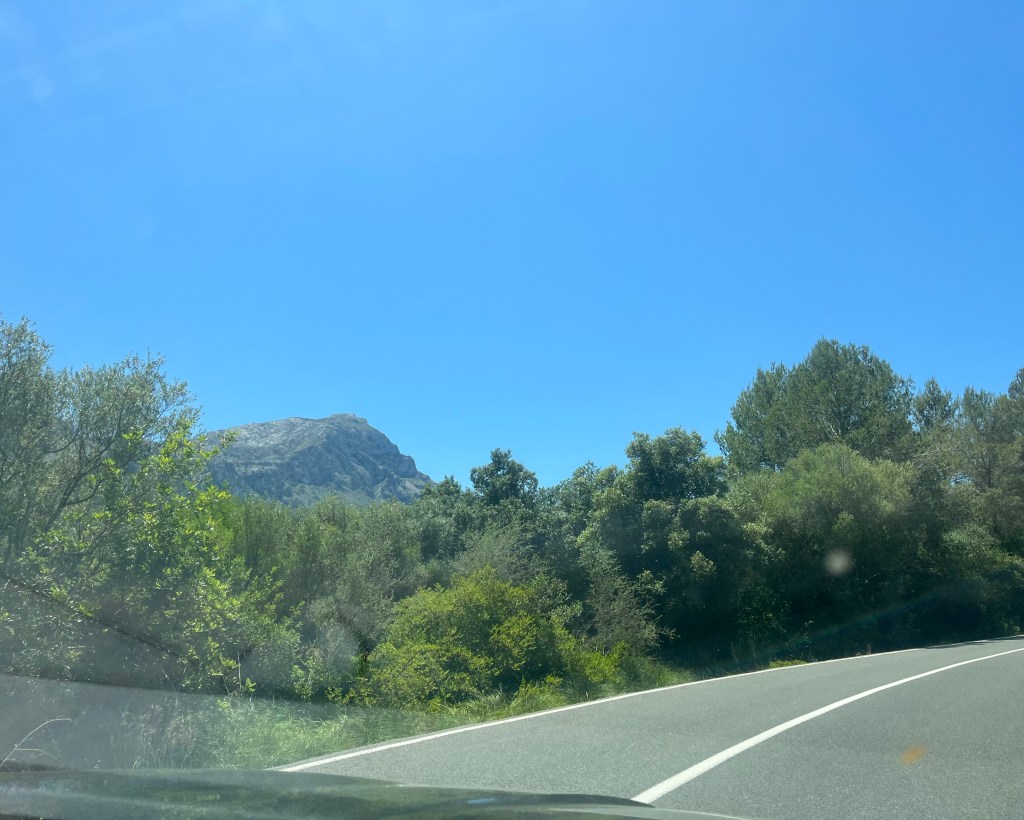
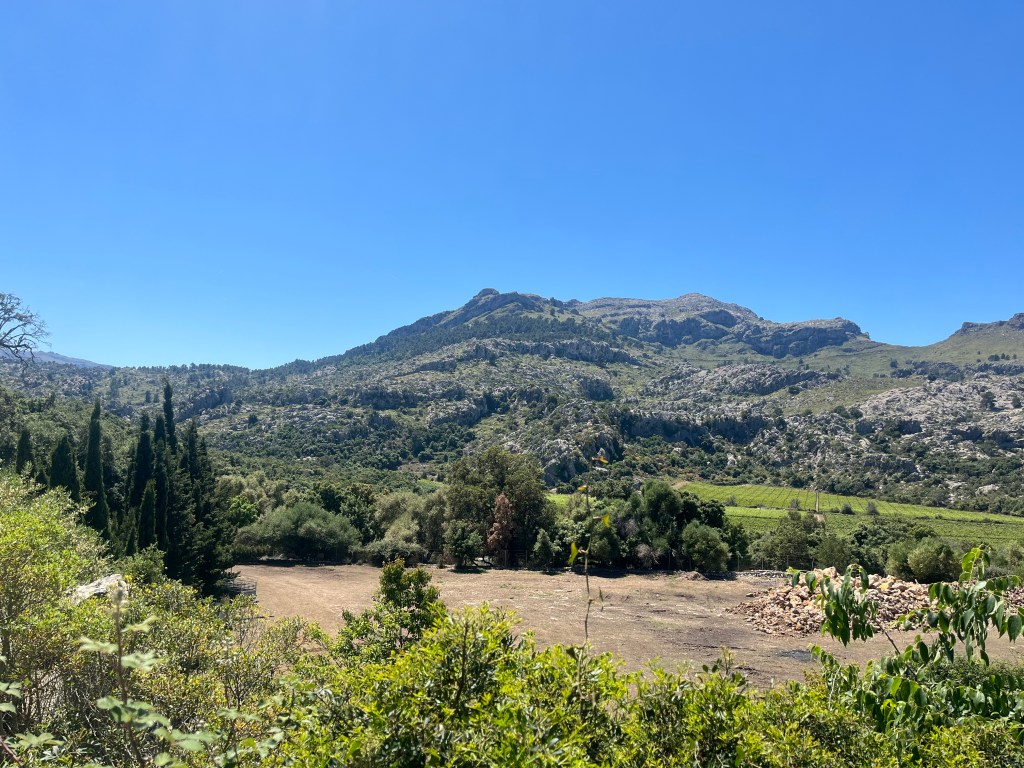
There were to be three main target species; the Griffon Vulture, the Black Vulture, and the jewel in the crown, the Bonelli’s Eagle, with a pair holding territory in the Mortitx Valley, the section of the Tramuntana Mountains we were travelling through. The Serra de Tramuntana is a UNESCO World Heritage Site, complete with dramatic landscapes, rocky outcrops and diverse flora and fauna. It is also one of the most breathtaking places I’ve ever been lucky enough to visit, and boasts Mallorca’s highest peak, the Puig Major, at a height of 1436 metres above sea level. The Mortitx Valley certainly fits the bill, with its rugged terrain offering a blend of habitats such as woods and vegetation, coastal cliffs, rocky ridges, and mountains.
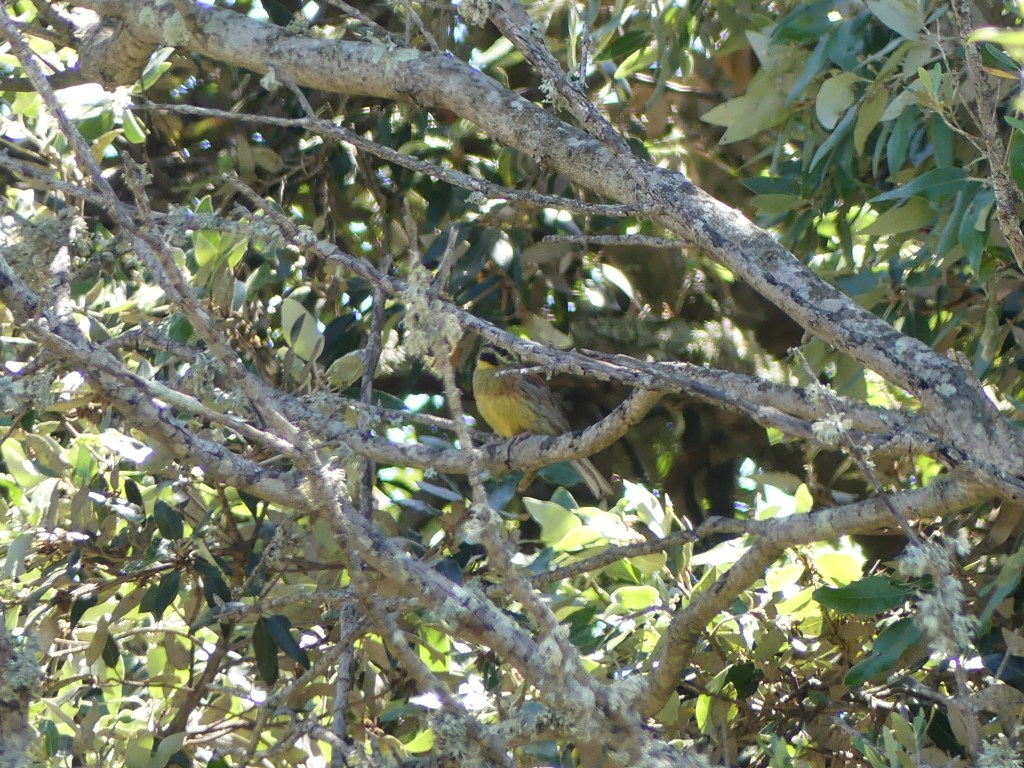
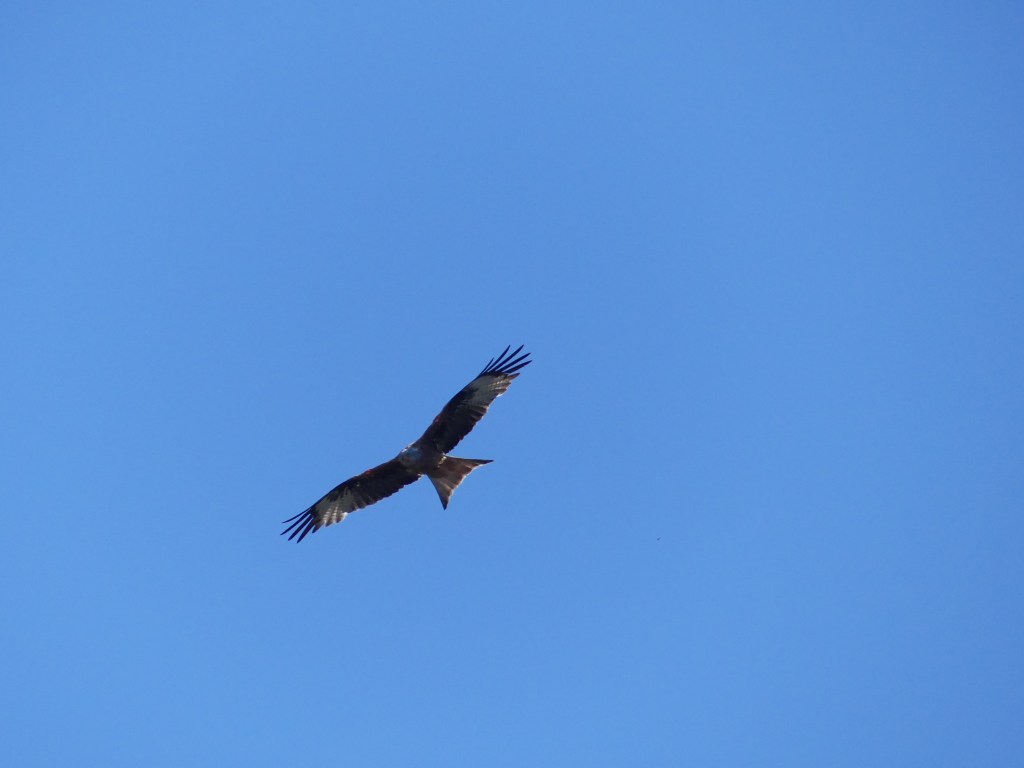
Instead of one of the three species mentioned above, we kicked things off raptor-wise with a Red Kite, flying low over our heads before soaring off over the rocks and disappearing over a ridge. We were quite high up at this point, but soon the path took a downwards route, and we trekked down into the valley. We stopped to identify and admire a pair of Cirl Buntings trickily concealed within a bush. Cirl Buntings, while they may be relatively common on farmland in Mallorca and across the continent, are currently restricted in the UK to small patches in the south of Devon and Cornwall, under the unyielding protection of the RSPB. They were once widespread across Britain, but due to the intensification of agriculture, they experienced huge, rapid and devastating declines that left them on the brink of disappearance. However, the population has bounced back admirably, going from 118 pairs in 1989 to just over 1000 recorded last year in 2024. If all goes well, hopefully this striking bird will be all over UK farmland once again in the years to come.
By now, it was mid-afternoon, and the heat was really starting to kick in. There was little shade on the scrubby mountainside, and we paused beneath stunted trees every so often for a well-earned rest. Sardinian Warblers, a Mediterranean specialty, were everywhere around us, calling loudly and flitting from bush to bush. The male birds are truly stunning, with their jet-black head making them unmistakeable on the island. As we leaned over a fence and scanned a vivid green vineyard, we caught our first sighting of one of the Tramuntana Mountains’ most famous residents. High over our heads flew a Black Vulture, its huge wings broad like barn doors. It scanned the ground below it with merciless determination, and quickly used the thermals the heat was forming to circle higher above us. The Black Vulture is the largest bird of prey in Europe, with its wings able to grow to 3 metres (9.8 feet) long! It’s sheer size was clearly evident even from our viewing point far beneath the bird, and you could see how it earned its title!
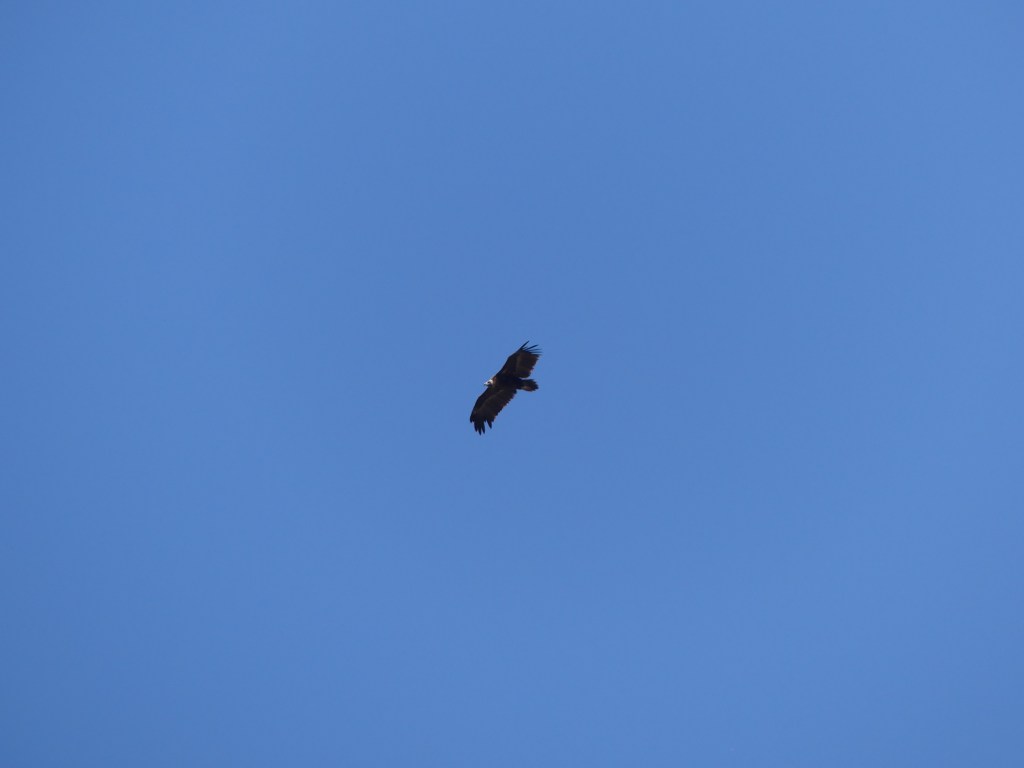
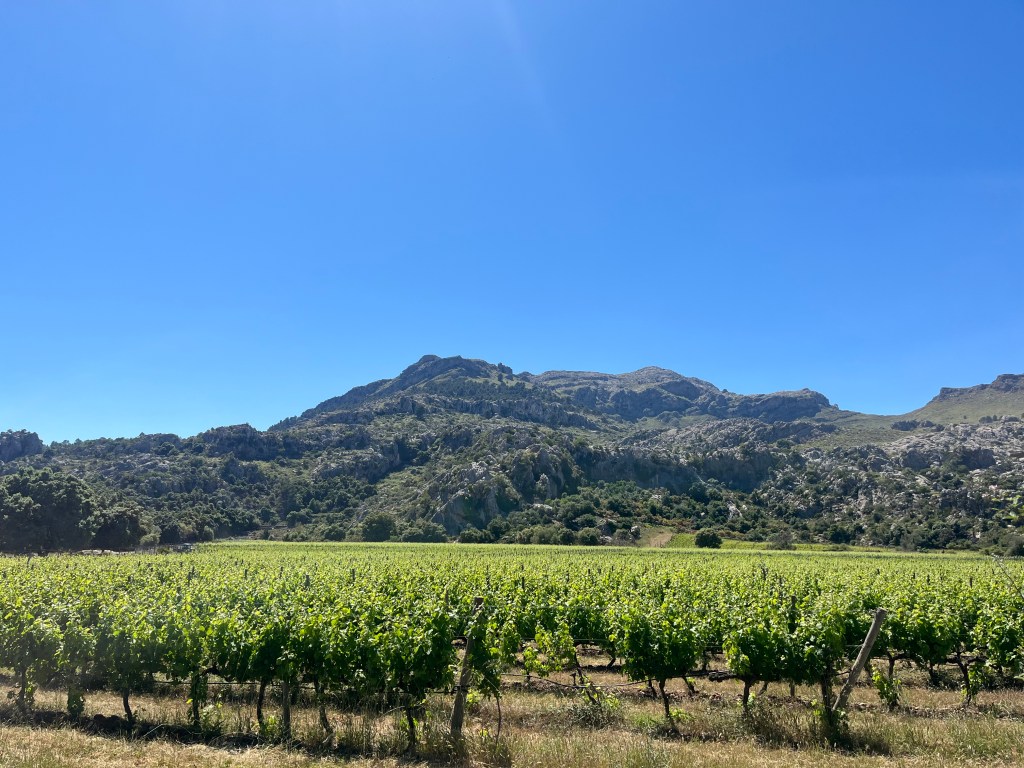
Abruptly, as if telepathically summoned by the first bird, more vultures began to arrive. They congregated to wheel even higher above in the cloudless sky, and very soon another raptor, the Griffon Vulture, arrived to join the party. Its size was considerably smaller compared to the now seven Blacks, and it was a lot paler. Its wings also did not give off the barn door impression like that of the Black Vulture, but rather they curved slightly, with shorter ‘fingers’ at the end of the wings. Another more astounding difference between Griffons and Blacks however, is their feeding adaptations.
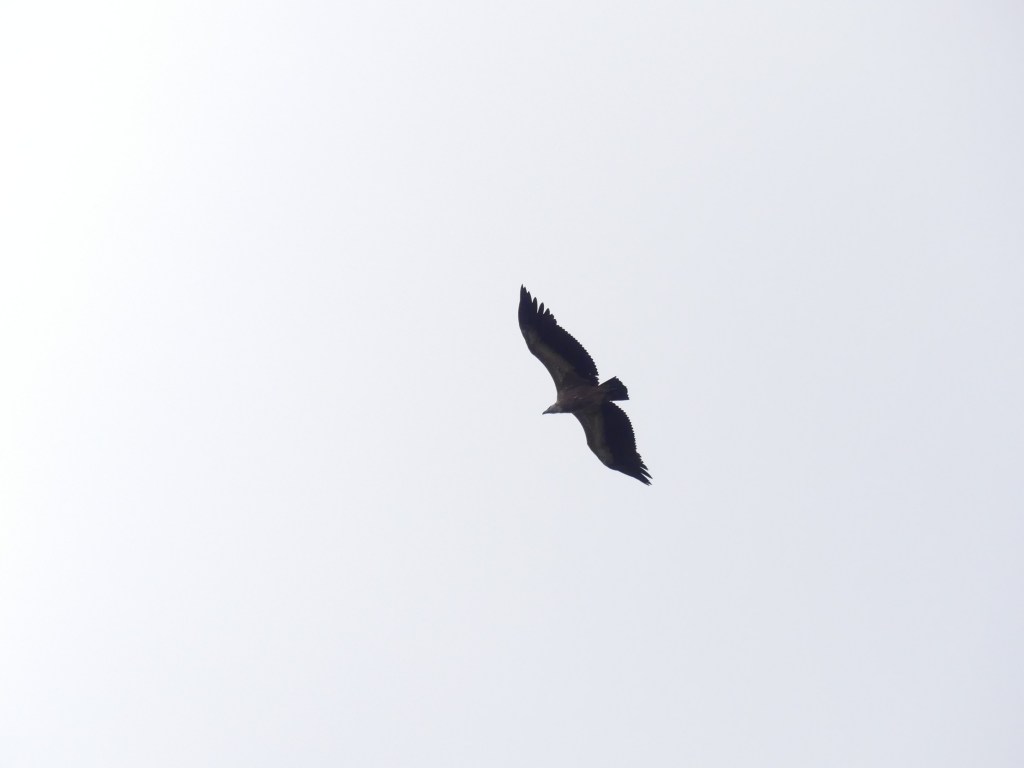
Black Vultures, being considerably larger, will gain access to a carcass first out of sheer dominance. Their feathers extend along their neck, so if they were to shove their whole head deep into the carcass, the feathers would become sticky with blood, potentially restricting their flight ability. This is why the Blacks are adapted to eat the muscles and flesh of the carcass, essentially the outer bits. Whereas the Griffon has no feathers on its neck, only down which does not affect its flight and can be shed and regrown in a matter of days. The Griffon accesses the carcass second, and therefore must eat the bits the Blacks didn’t touch. So, with no ‘nice’ meat left, they must eat the organs and tissues deeper inside the carcass, and they must get their entire head and neck inside to reach it. So they come out of the carcass dripping with blood and fluids, without that effecting their ability to fly. This means that queues at carcasses will always be as orderly as possible, but it also allows the Blacks and the Griffons to thrive alongside each other without the need for competition. Evolution at its finest!
Eventually we managed to tear our eyes away from the spectacles directly above us, and I realised my eyes were watering from staring at the sky for too long. Pere led the group onwards, which also consisted of birders from both Germany and the USA, which are coincidentally two places I hope to visit someday in order to do some more birdwatching. It was great to meet birders from different countries, and hear about their experiences, as well as their views on various topics such as the Bonelli’s Eagle reintroduction.
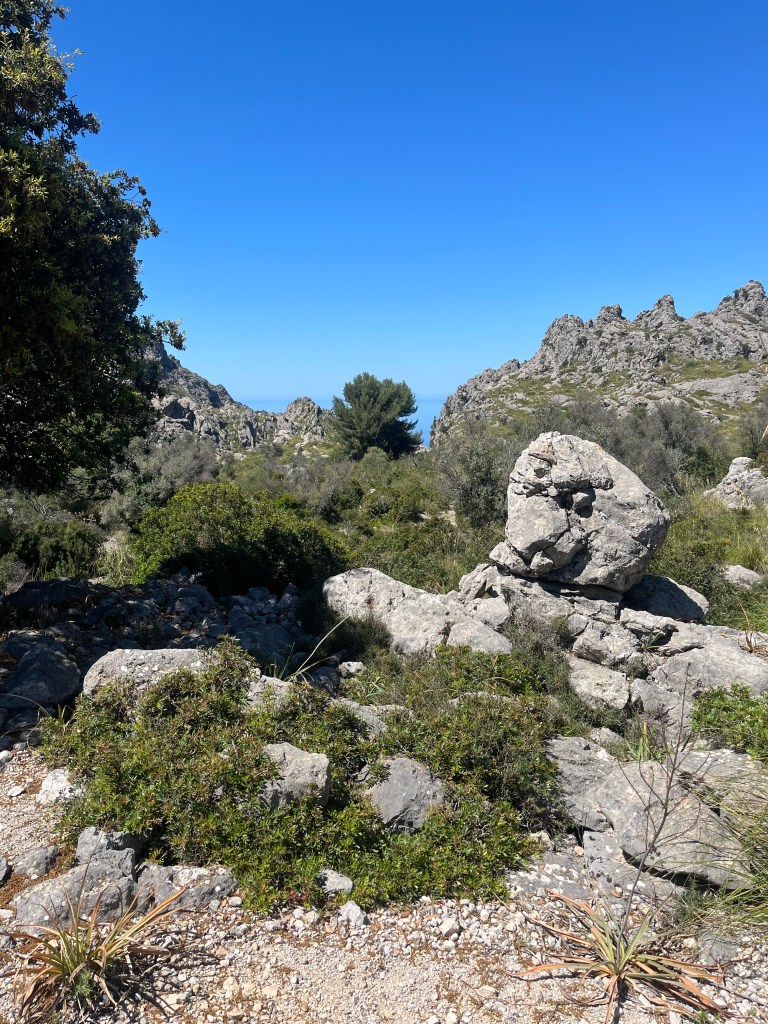
We hiked further into the mountains, eventually coming to a pause at a vantage point that allowed us views all the way to the Mediterranean Sea. This was, according to Pere, one of the best spots to watch the Bonelli’s Eagle pair hunting, as there was more prey compared to other parts of the mountain range. This was due to the fact that the soil was deeper, less rocky and better quality here, so more vegetation could grow, allowing cover for prey animals such as rabbits and Red-Legged Partridges.
The Bonelli’s Eagle was a species that was only reintroduced back to Mallorca in 2011, after going extinct during the 1970s due to intense human persecution, collisions with power lines and habitat degradation. As one of the top predators on the island, they were crucial to the food chain within Mallorca’s ecosystem, so they were (relatively) swiftly reintroduced in 2011, with 25 juvenile birds from mainland Spain released on the island. By 2014, the first wild chick had been born, and by 2021, there were 40 birds on the island, including around 9 breeding pairs.
However, despite this majestic bird having returned, its also had an intriguing effect on the Booted Eagles which were once common in these valleys. The Bonelli’s Eagles are a very territorial species, hence the fact that there was only one pair in the Mortitx Valley. And the Booted Eagles just disappeared as soon as they arrived. The exact reason why is still puzzling ornithologists on the island, but its suspected that the Bonelli’s were just quite agressive towards their new neighbours. In fact, there is even video footage of a Bonelli’s Eagle parent feeding their chicks the carcass of a Booted. However, there’s no need to worry for the Booted Eagle. Their population is still really high on the island, and they are thriving in other spots.
After a while, we’d had plenty of black vulture action, but little sign of the Eagles. Although we always had to keep in mind that there was a single pair in the Mortitx Valley, and if they didn’t want to play ball, we were unlikely to get a sight of them. However, the valley ran down to the coast, and it was possible to view the coastal cliffs and the Mediterranean Sea through our binoculars . Flitting around this little coastal opening were several birds which were immediately reminiscent of Common Swifts, but were clearly smaller. They were also more rounded, and their wings were a lot less pointy as well as being noticeably shorter. Given that Crag Martins nest on sheer cliff faces, and that was exactly where I was seeing them, I couldn’t think of another likely species these birds could be. So that was how I got my first lifer of the day, one I wasn’t particularly expecting in the Eurasian Crag Martin.
Another species we saw on that trip wasn’t actually a bird, but it was equally interesting and exciting. The African Monarch, also known as the Plain Tiger, is a species of butterfly whose food plant, milkweed, is not native to Mallorca but has recently established itself on the island. The African Monarch is certainly a stunner, with its orange wings with black borders and white spots and streaks. We saw several on our foray into the mountains, which is perfect habitat for these butterflies despite them being non-native, as the species favours open, arid areas such as those found in its native Africa.
By now, it was getting on towards four o’clock, and still we had seen no sign of the Bonelli’s Eagles, despite enjoying even more great views of both Black and Griffon Vultures. So everybody came to the conclusion that it would be wise to call it a day, and we turned around and began the trek back through the valley towards the cars. On our return to the lay-by, we paused to watch as two Red Kites glided low over our heads, flying off towards the woodlands on the opposite mountainside. Raptors, after all, were the Serra de Tramuntanas’ specialty, and we couldn’t leave without one more view of a breathtaking bird.
Before our visit that day, I’d never really ventured into the Mallorcan mountains. On our two previous trips, we’d mainly stayed at a lower elevation, visiting sites such as the Reserva Natural de S’Albufereta and Son Bosc. I’m very grateful I had the chance to experience such a dramatic, awesome landscape, which is teeming with life if you know where to look. Those mountains are a place where I felt completely free from the constrains of daily life. After all, how could routine reach me up here? It was exhilarating, even if the sun decided it wanted to bake me to a crisp.
At first glance, the Tramuntana Mountains might just seem like unforgiving, remote rocky outcrops; home of vultures, not humans. But alongside Pere, I’d say we conquered those mountains, and saw some pretty great birds as well. Whatever Mallorca has in store for me next, I say bring it on!

