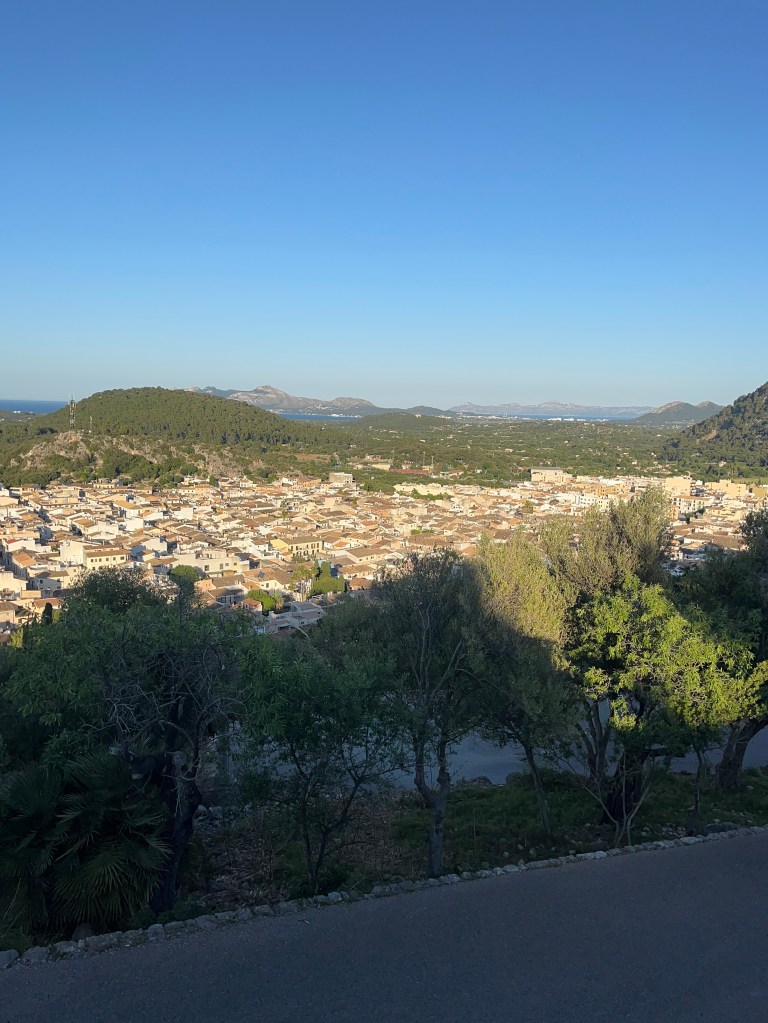
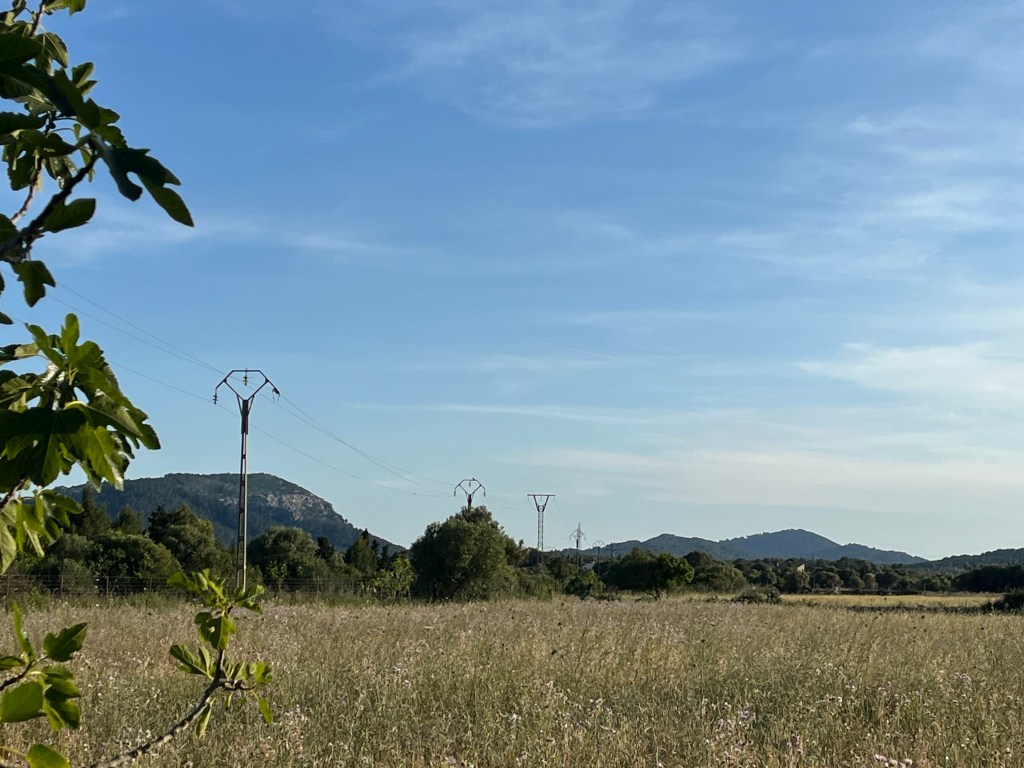
Two weeks ago, I went on holiday with my family to the tiny island paradise of Mallorca. But, despite being one of the most popular holiday destinations in Europe, its also brilliant for birdwatching, as I’d found out in my two previous visits. You can read about them as well in the blog archives, but I will warn you the writing about my first trip is nowhere near as, uhmm, established as it is now, mainly due to the fact that I was about 8 years old then! It was still an incredible trip, though, as was the second one, just two years ago. Anyway, looking at the maps, you could see that the villa we’d be staying in this time around was ridiculously close to the site that had given me so many memories in previous years, the incredible wetland known as Reserva Natural de s’Albufereta. In fact, it almost backed onto it! Around most of the villa was agricultural land, but unlike most of the UK’s, it was truly buzzing with life. But more on that later.
To my slight frustration, it was to be a family holiday, so (regrettably) I couldn’t go off birding every day. We spent a lot of time exploring both Pollenca and Port de Pollenca, as well as relaxing and just taking a bit of time off around the pool and table tennis table. I did my best to communicate with the parts of Spanish I can speak, with mixed results (I still have a lot to learn!). The food and drink was incredible, and there was nothing but warm weather over the whole trip, which was a big change to adapt to after spending so much time in the UK. And after a few days we were all coated in mosquito bites. But that was one of the few negatives of a highly enjoyable trip, which did thankfully incorporate a few day’s birdwatching.
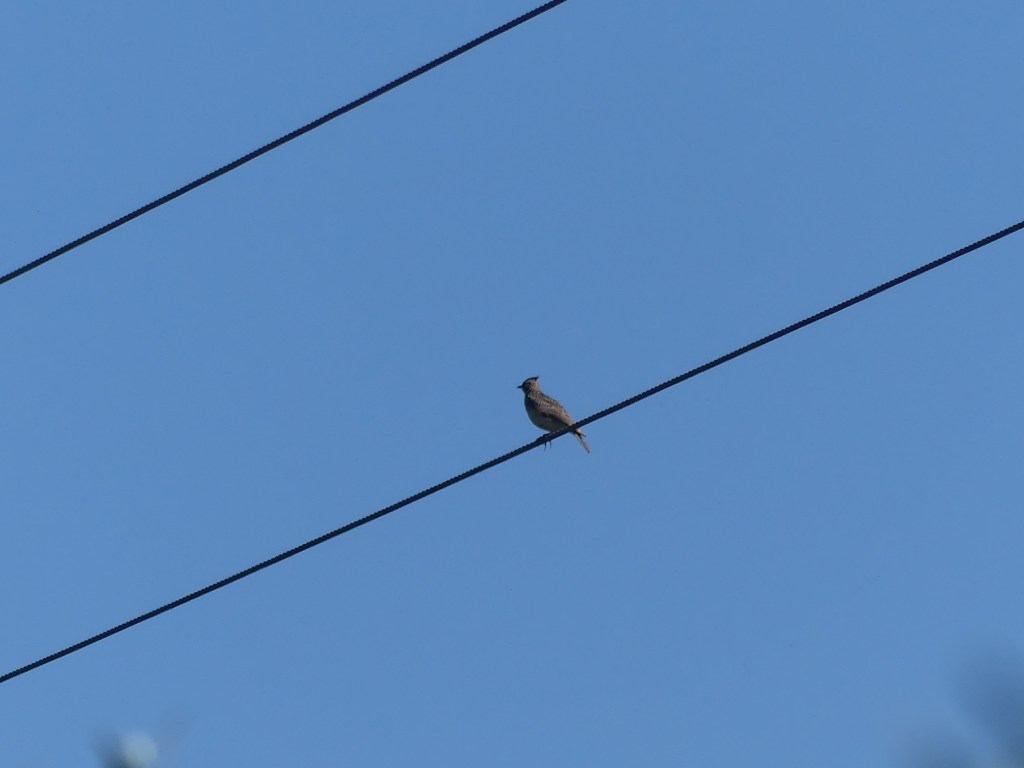
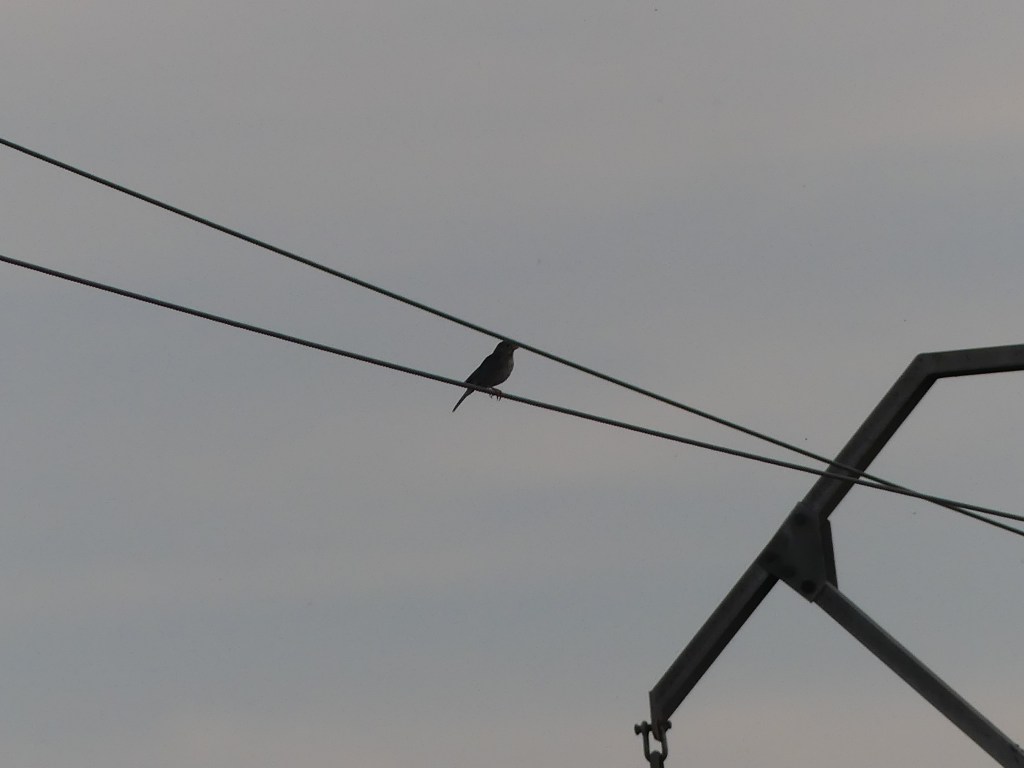
We arrived at our home for the next week in the dead of night, and with the bleating of goats echoing through the darkness, we settled in rapidly. But as soon as I woke up the next morning, I could tell that this was the perfect location, from a birding perspective. Serenading me from an above power line was a Thekla’s Lark, a small, brown, speckled and streaked bird flashing its elegant crest in the moist morning air. It’s song was soft and tuneful, and stuck a smile on my face as I watched my first lifer of the trip. These Larks thrive in grasslands and scrubby areas, and given the meadows we had next to us, you could see why this individual was here. They are smaller than a Skylark, but their main confusion species in Europe is with the shockingly similar Crested Lark, which luckily for me and my ID skills, only occurs on Mallorca as a rare migrant or vagrant. They get their name from Alfred Edmund Brehm, who named them after his late sister, Thekla, in 1857.
Soon the Lark flew away, and my eyes panned around my surroundings. To the right of the villa’s garden lay a tall meadow dashed and dotted with blue, orange, red and yellow. But the noise was astounding. It was absolutely heaving with insects, with what sounded like thousands of crickets and grasshoppers buzzing like there was no tomorrow. I’d genuinely never heard anything quite like that, definitely not anywhere in Britain.
And then, extending around the back and the right side of the villa’s garden were olive groves, literally teeming with birds, which must of course mean that it was also full of insects. There were Zitting Cisticolas, Serins, House Sparrows, and Great Tits flitting between boughs. There were also chickens being kept in a section of the grove, clearly enjoying the abundance of insects as well.
So there I was, stood on gradually warming tiles with a glass of apple juice, silently taking in the sounds of so many insects and birds living happily on the agricultural land around me. Curious, I ducked behind the hedge that separated me and the olive grove and found on its far fringe a waterless stream bed, that must fill up during the wetter part of the year. Who knows, maybe it even led into the very nearby s’Albufereta?
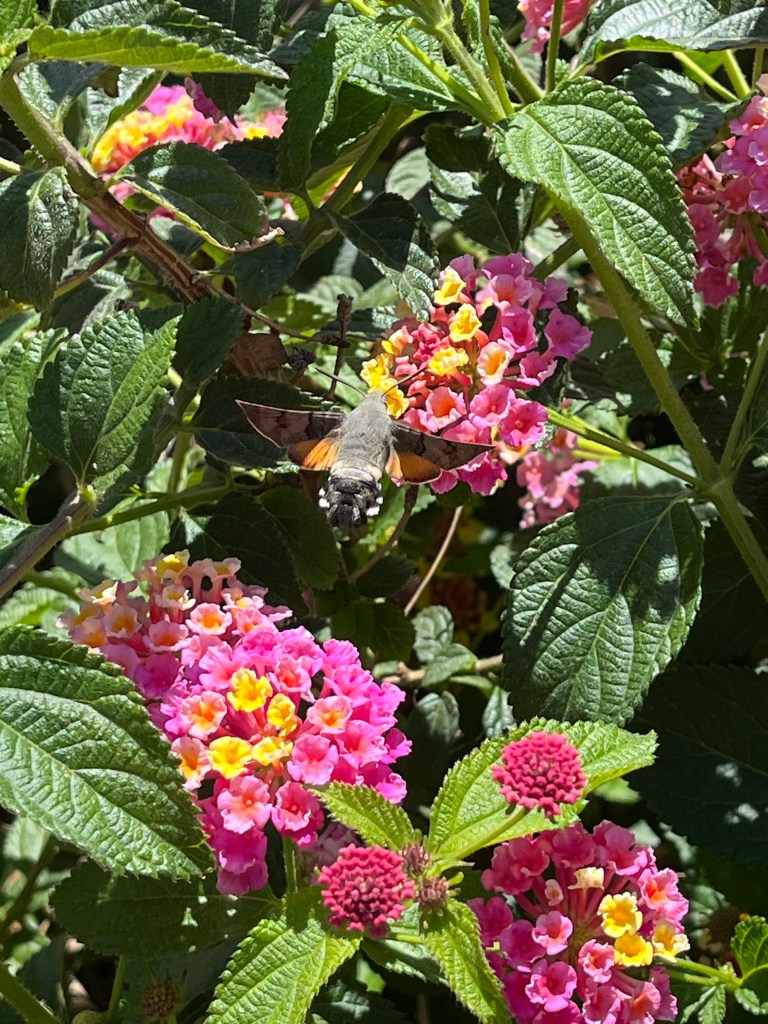
Around the front of the villa lay a bed full of flowering plants alive with bumblebees, butterflies and Hummingbird Hawkmoths. Purple, red, orange and yellow flowers adorned shrubs and bushes, while insects zoomed between blooms. I had hardly ever seen such an abundance of insects, and it was mesmerising to watch them go about their lives.
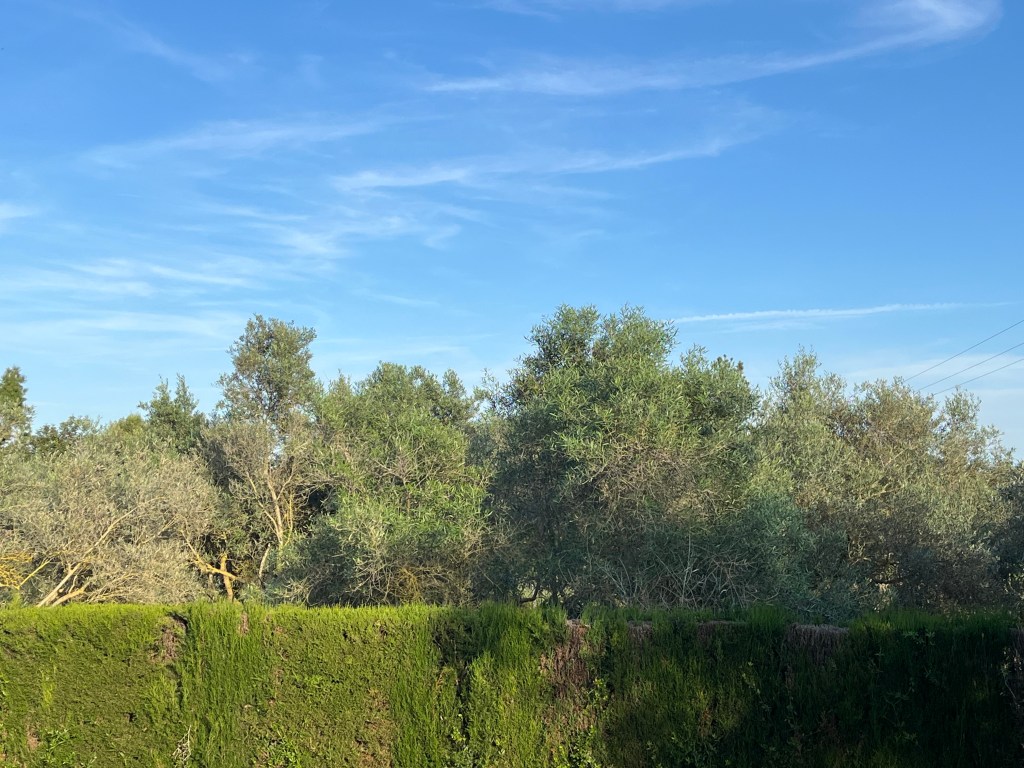
The villa, as I said previously, was right on the back of Albufereta, which would explain why we had a Marsh Harrier flyby later in the week. But that was honestly just the tip of the iceberg in terms of what we had around us. There were two sets of mountains either side of us, looming over the farmland and meadowland that sat beneath them. Mallorca’s mountains are crucial habitats, supporting many special species including the only island breeding Black Vultures in the world, which are coincidentally the biggest raptor found in Europe, with a wingspan that can be up to 3 metres.
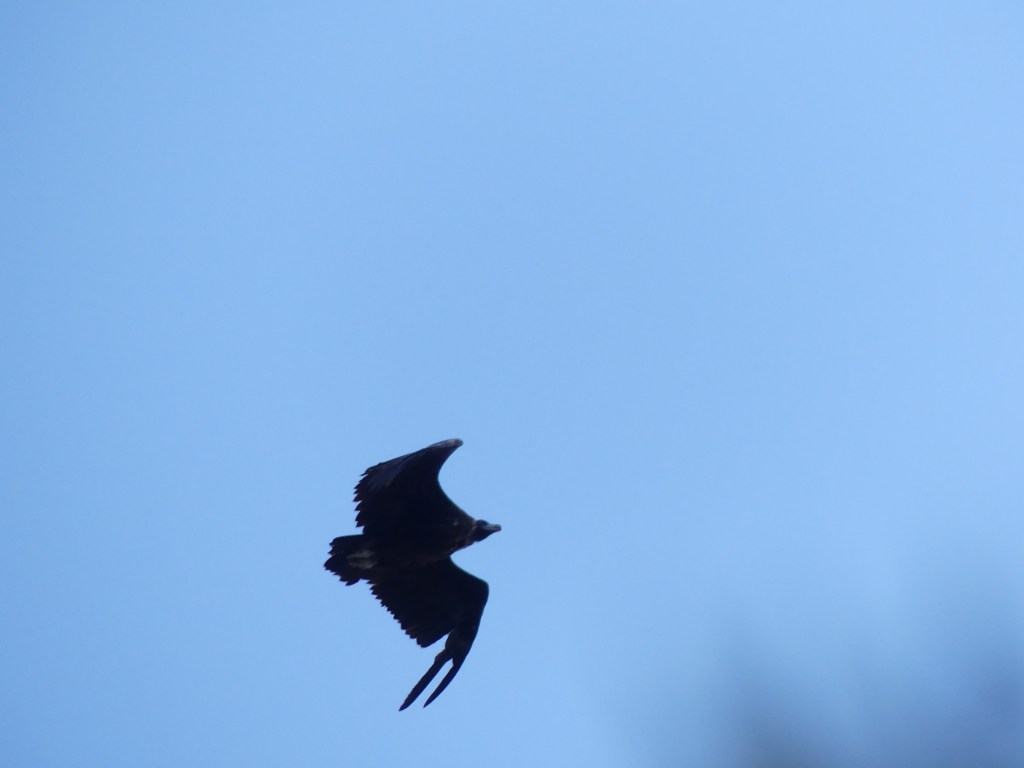
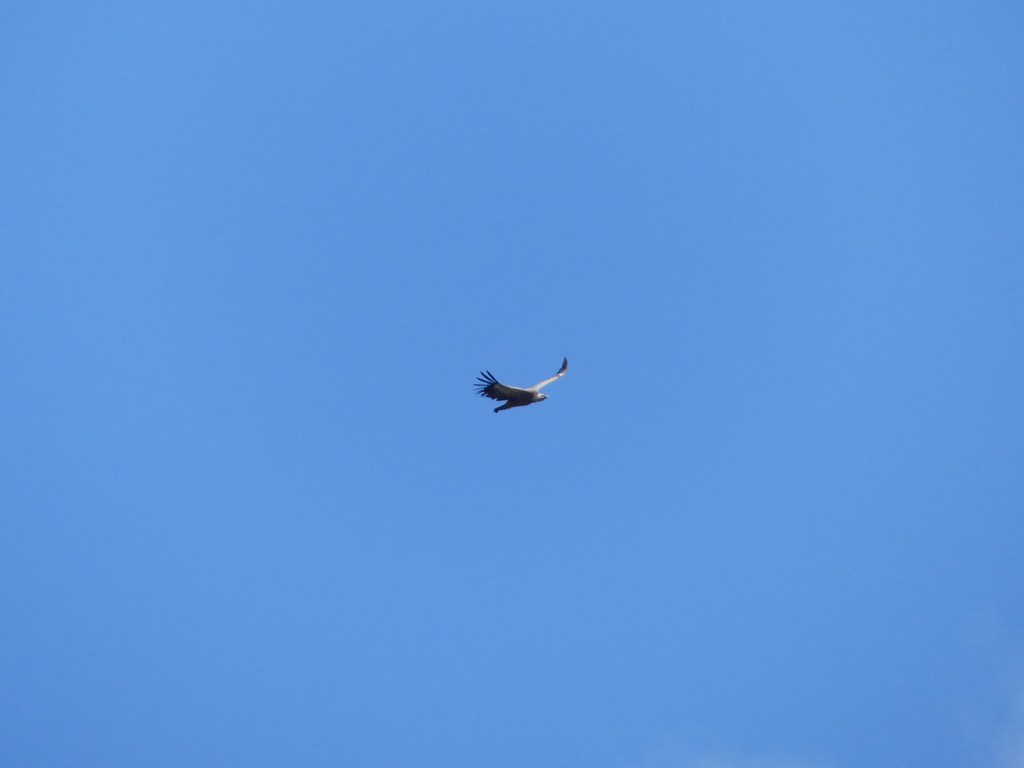
Speaking of vultures, I had quite the encounter on our third morning in the Balearics. I’d just ducked inside the villa to grab a glass of water when suddenly there were shouts from outside calling me back out again. I rushed out, sweeping my binoculars and cameras up in my arms as I went, and found myself looking up at four huge birds, with another trailing a bit behind them in the distance. Three out of the four birds directly above me were black vultures, huge dark beasts, with a smaller, paler Griffon Vulture in amongst them. The bird behind them was a medium sized eagle, and as it came over the pattern on the underside of its wings was reminiscent of a honey buzzard. I was fairly shocked to discover that this was in fact a Bonelli’s Eagle, which I confirmed via google and my bird guide. My heart was actually beating faster than normal as I watched those birds glide effortlessly overhead, and towards the mountains.
As dusk fell that night, we heard several Stone Curlews, their calls almost eerie in the twilight. They are, here in Mallorca, a relatively common farmland bird, camouflaged amazingly well against ploughed soil. All you can really look for when scanning fields like those is the yellow eye ring, that stands out from the rest of the streaky brown wader. They sounded very nearby, and I felt sure that they would be enjoying the bounty of insects this particular stretch of farmland provided, just like the Corn Buntings we’d been watching earlier. Corn Buntings are rather large buntings, of a stocky build. They’re brown and streaky, and their primary food source is seeds and grains. But in the breeding season, they supplement their diet with insects, which explained why I’d seen one with a huge grasshopper in its beak. The amount of insects also explained the amount of Eleonara’s Falcons we’d seen over these fields, an island specialty here in Mallorca. But I’ll talk more about them in another post.
So, there are a lot of insects. Which ones were we actually able to identify? Well, we saw a lot of cool ones, including an Egyptian Bird Cricket, which was absolutely humongous and apparently liked climbing trees. One evening, it literally just sprung over the stone wall separating us from the buzzing meadow, and leapt onto the trunk of an olive tree. It’s called a bird cricket because of its slight flight capabilities and its size, meaning that when seen from a bit of a distance, it’s often mistaken for a small bird! We also saw several Milkweed Bugs, their stark red and black colouration a sign of their distastefulness to any potential predators. Another kind of cricket, the European mole cricket, appeared in the villa garden, a species that is now critically endangered in the UK with a single known colony in the New Forest. Butterfly wise, there were what felt like hundreds of Clouded Yellows almost everywhere we went, which made sense as they are abundant on Mallorca in May due to the arrival of individuals from North Africa. There were also many Common Blues, fluttering around alongside the Clouded Yellows.
I hope that you’ve enjoyed reading this introductory blog to my holiday in Mallorca. I hope that you’ve been able to visualise what a biodiverse place it was from my writing, and to think it was right around our villa as well! Keep an eye out for the next one, which will include some of Mallorca’s most breathtaking birding sites, and why the island is really so good for birds.
Mallorca, in my opinion, is one of the places where I am happiest. The amount of biodiversity is incredible, and it just feels so much wilder than back home. A lot of it’s wilderness feels completely untouched, like the mountains. When you compare those to Dartmoor, it’s fairly easy to see which has had more human intervention. I haven’t mentioned him yet in this post, but another reason that Mallorca is just so good is because Pere Tomas, ornithologist, biologist, tour guide and birdwatching extraordinaire lives on the island. He is my good friend, and a good friend of my family too. He’s an incredible man, and I assure you he will feature heavily in this series of blogs. I always feel on top of the world in Mallorca, and I can truly say, with all of my heart, that it’s great to be back.