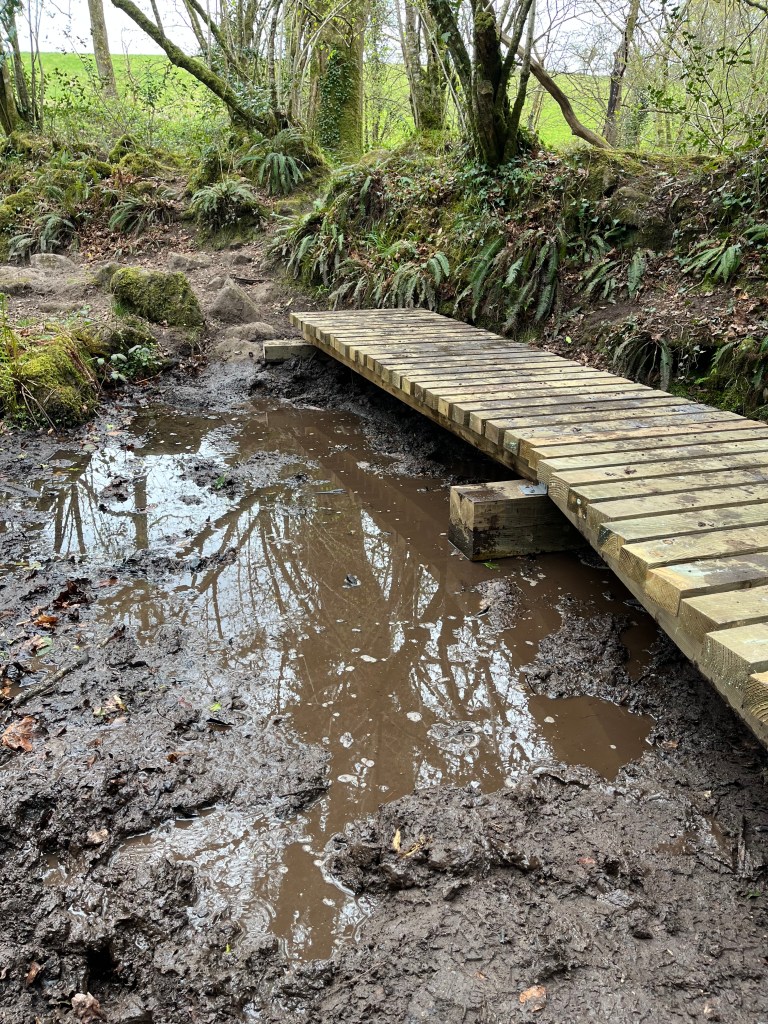
Boardwalks are a common feature of many popular sites for strolls and walks, whether alone with the dog or alongside a large family group. So its only natural that many people will take these feats of engineering for granted, despite them helping to keep their feet dry when walking in a boggy area! However, there is actually a lot of work and planning that goes into constructing a boardwalk. A 5 metre stretch took the Dartmoor Youth Rangers (me included) around 3 hours to build fully! Often, rangers and volunteers can spend weeks working on the same section of walkway! So, as I learnt today, they take a lot of work!
It was a grey and drizzly April day as the group of Youth Rangers and the team of fully-fledged rangers assembled in the Erme Valley near Ivybridge, preparing to head down into Longtimber Woods and build a section of boardwalk along a walking route popular with dog walkers and woodland-goers. We sat atop of a hill in a field, the wind buffering us slightly as the bitter cold set in. The Land-Rover was loaded with all the tools and equipment we’d need for the day, and we followed on behind it as we descended towards the woods. A stack of timber waited under the tree-cover for us, ready to be magically transformed into a boardwalk. But before we get to the construction, what actually is a boardwalk?
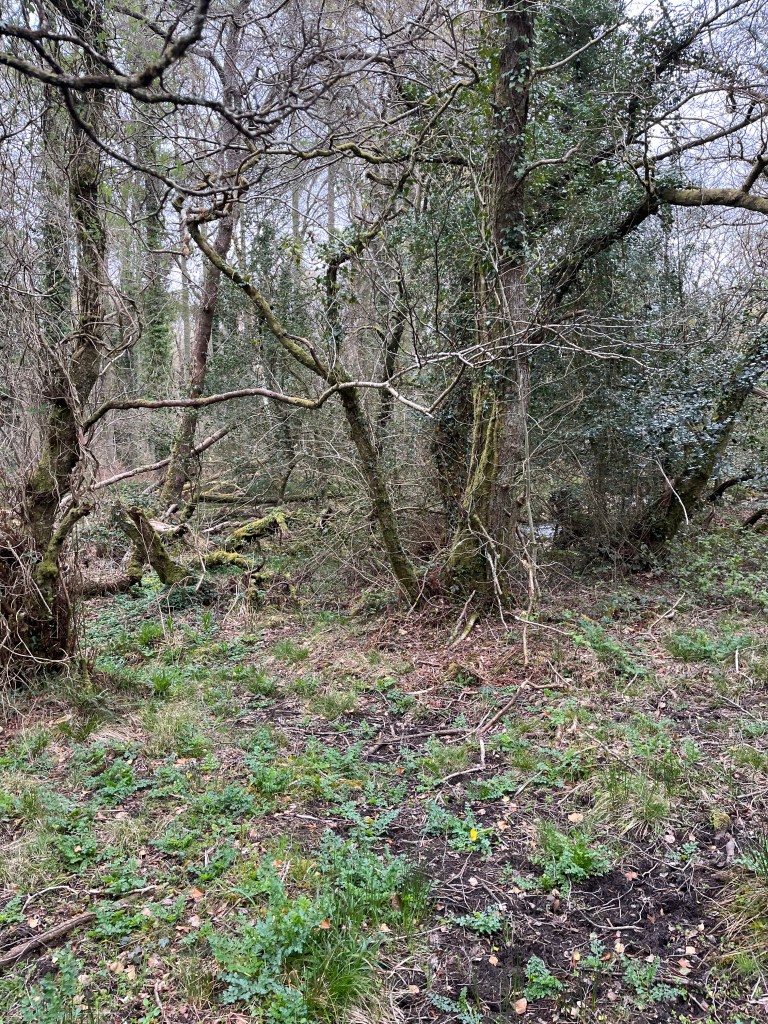
Well, a boardwalk is a raised path or walkway typically made up of wooden planks or boards, hence the name ‘boardwalk’. They are usually constructed over boggy ground, or over a section of path that often floods after rainfall. On Dartmoor, some examples include over a valley mire, such as at Emsworthy or around the edge of a pond. The main idea behind a boardwalk is to minimise the environmental impacts of trampling and erosion, while also providing a safe and comfortable route for walkers and explorers.
Boardwalks are crucial to preserving habitats like the many within Dartmoor, but also to educating people about the nature they are surrounded by. By providing a clear, obvious walking route preferable to taking an alternative course (in this case, straight through the mud), erosion to thriving ecosystems such as marshland and sand dunes can be avoided, while boardwalks also help minimise disturbance to ground nesting birds, which is especially important at this time of year on Dartmoor. Most boardwalks in nature reserves will also have signs and information about the species that live there. Plus, if walkers don’t fancy getting their feet wet, it’s the perfect way to keep dry while still fully experiencing the environment.
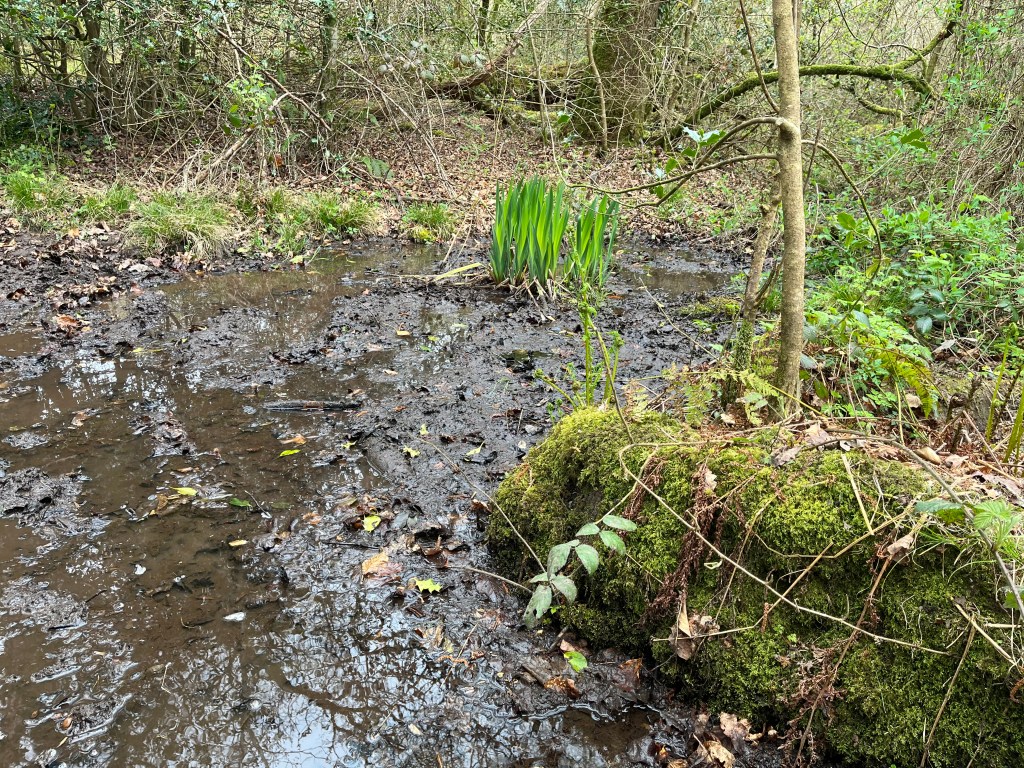
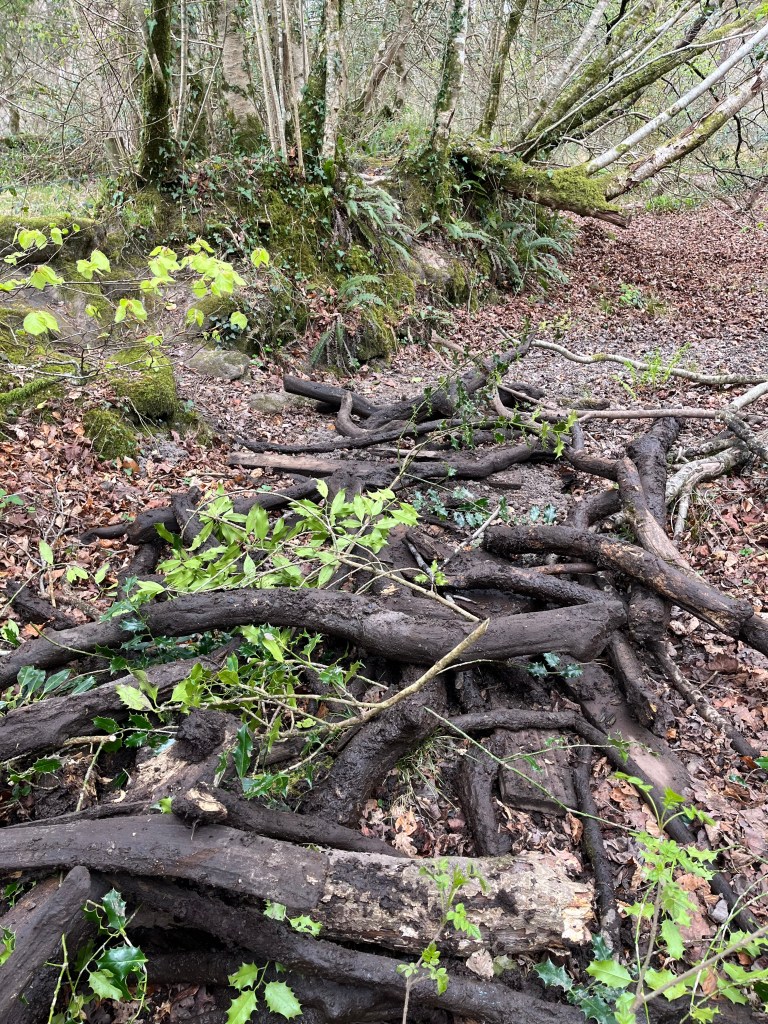
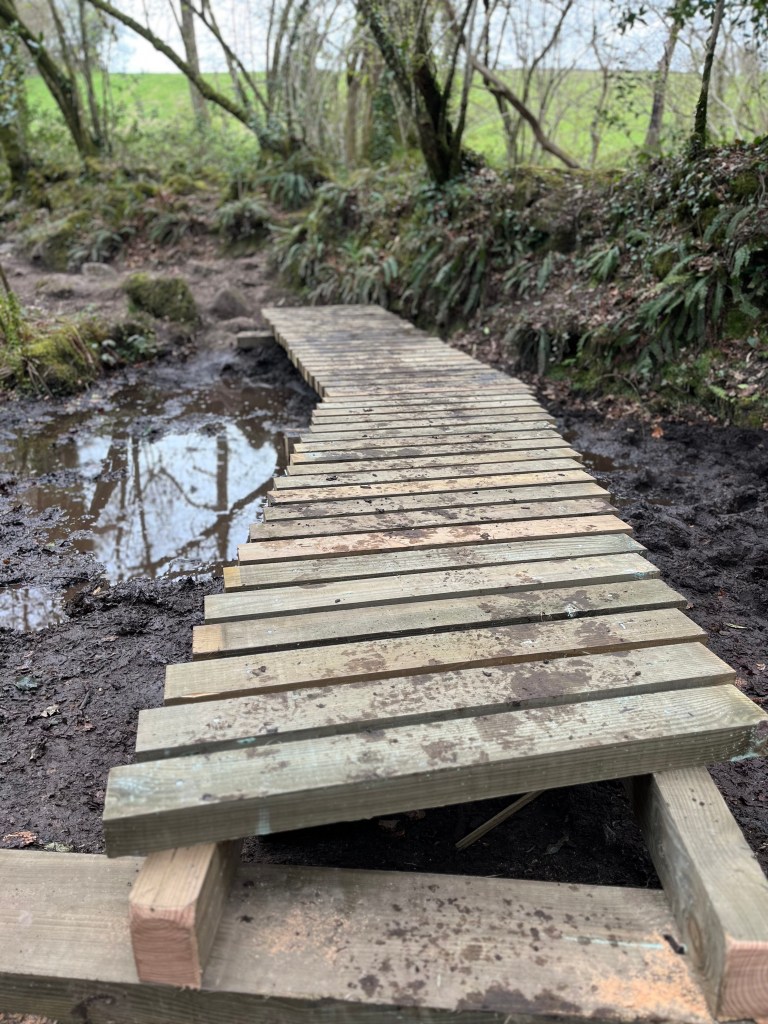
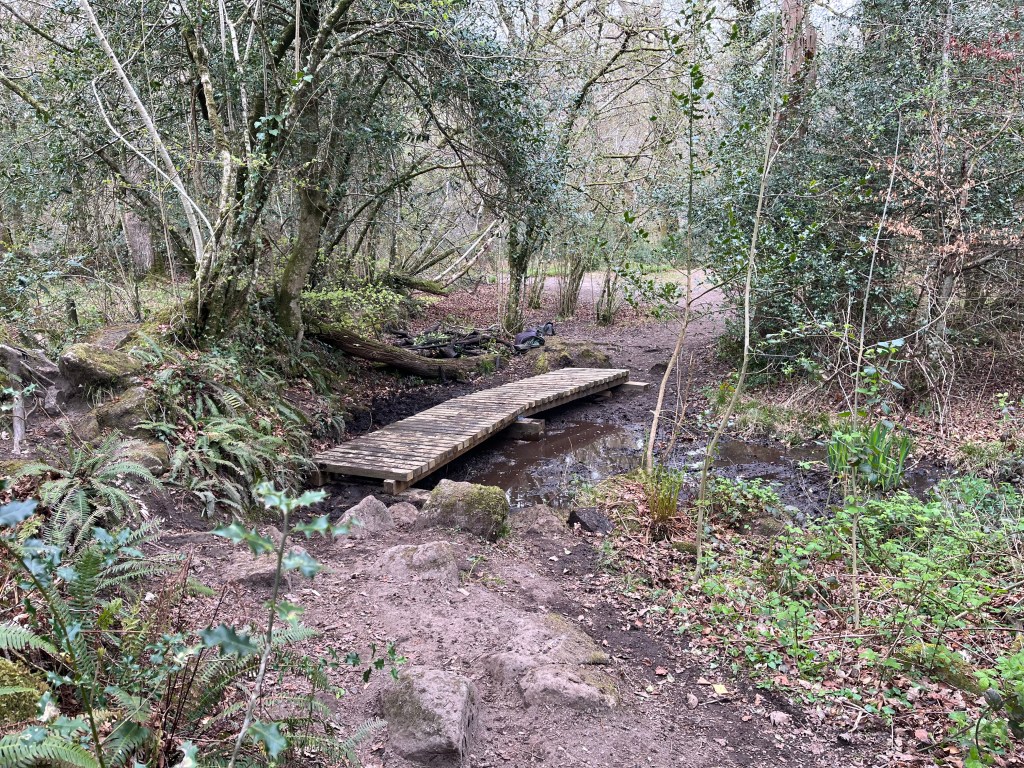
When we arrived at the spot we were to be building upon, it was pretty obvious why this small stretch of footpath needed it. Bearing in mind that we were visiting when the woods were relatively dry (it hadn’t rained for about a week beforehand), it was surprisingly boggy, with shin deep brown water and squelchy, oozing mud. There were several plants that love this kind of environment in residence, the most prominent of which was a large stand of iris out in the centre. The water level was actually higher than it would have been due to people having thrown in logs and sticks in attempts to create makeshift bridges and the ancient, mossy stone wall that ran down the side of the footpath was showing worrying signs of erosion from where people had walked across it to avoid the mud. Clearly here, a boardwalk would solve a lot of problems.
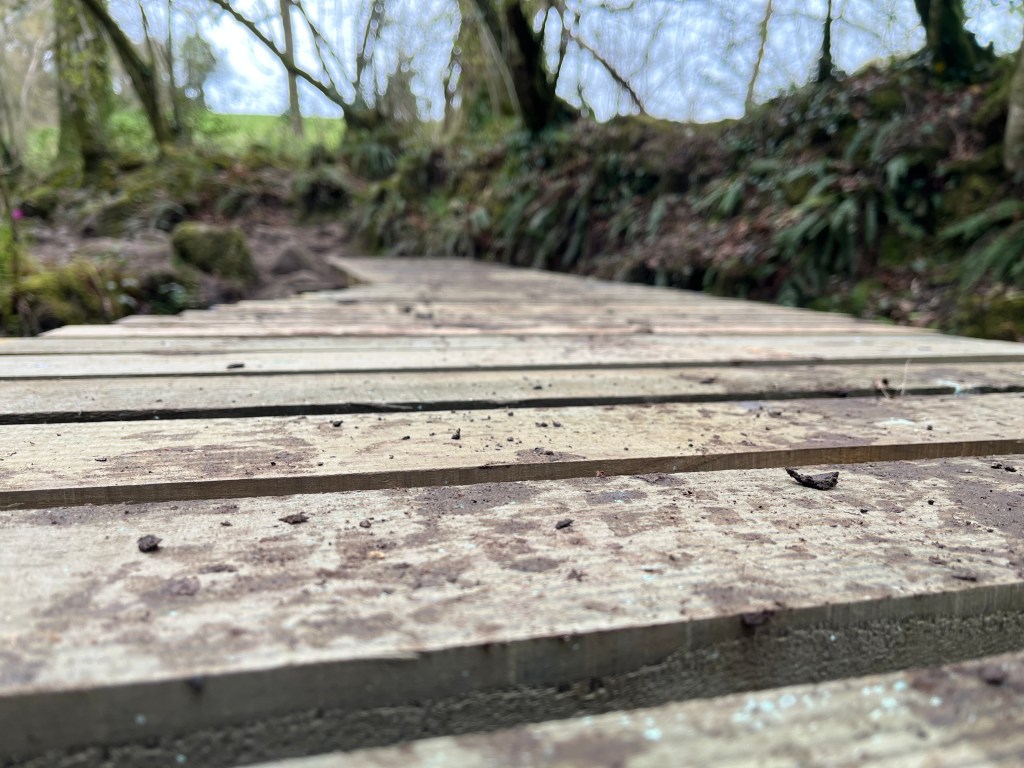
And so the hard work began in earnest. To start with, we sunk several thick wooden sleepers into the mud. Once they were stabilised and wouldn’t wobble when pushed, we bracketed two long stringers (elongated lengths of timber) at the edges of the four sleepers, that bridged the gaps between them. Finally, the 42 planks of decking wood, sturdy and just long enough to span the distance between the two stringers, were all arranged in formation across the boardwalk, before being nailed in place. There was a small gap between each decking piece, but don’t worry; it was difficult to fit your finger through them, let alone a foot! It was only a short stretch of boardwalk, but it was an efficient way of reconnecting the footpath. Now the popular dog walker’s route was saved, and nobody need get wet feet again (well, unless another section of path floods and becomes a bog). Also, the ranger team were very impressed with our handiwork!
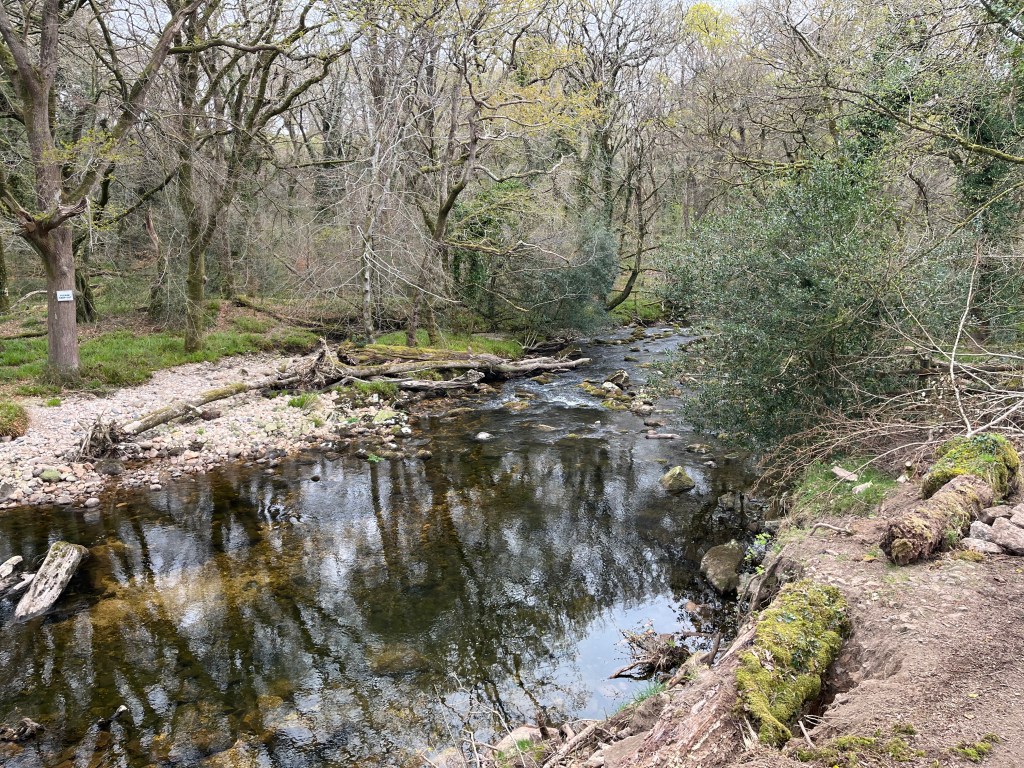
For the whole day the River Erme was deafening in our ears as we worked. It was a sight to behold, wide and tumbling but with large islands of rocks and pebbles that created slow moving stretches and still pools. This stretch of the river looked like perfect Dipper habitat in my opinion, fast moving-water with lots of rocks to perch on. The Erme passes alongside some of the best preserved archaeological remains on the moor, touring stone circles and rows, barrows and early tin mining workings. In the 4th and 5th centuries, the Erme valley floor was significantly altered by tin-streaming operations, which have in turn created a natural valley floor where the river now flows. The Erme is certainly a river with a lot of history under its belt.
Birdlife wise, there were a fair few species hanging around the woods to check out our boardwalk, the most exciting of which were my first two Swallows of 2025! Ladies and gentleman, they have returned! There was also a fishing Grey Heron, taking advantage of the slower moving parts of the river, and a loudly ‘yaffling’ Green Woodpecker (by yaffling, I mean it’s call, which sounds very much like some croaky laughter). Both the Chiffchaffs and Willow Warblers were out in force as well, their calls and songs serenading us as we worked.
All in all, it was a brilliant day, despite having the first grey clouds we’d seen in a while. Building the boardwalk allowed me to improve my skills with several tools including a saw and a hammer, as well as demonstrating to me the importance of exact measurements! A huge thanks to everybody who helped make the event happen, but especially to Ranger Ella and Assistant Ranger Ethan for opening up such a brilliant opportunity, and as always to Kats for organising it all! In the summer, I plan to take a walk up in Ivybridge and check out how our boardwalk is holding up! And the next time you use a boardwalk to traverse wet ground, remember how much work and effort went into building it so you can keep your feet dry.