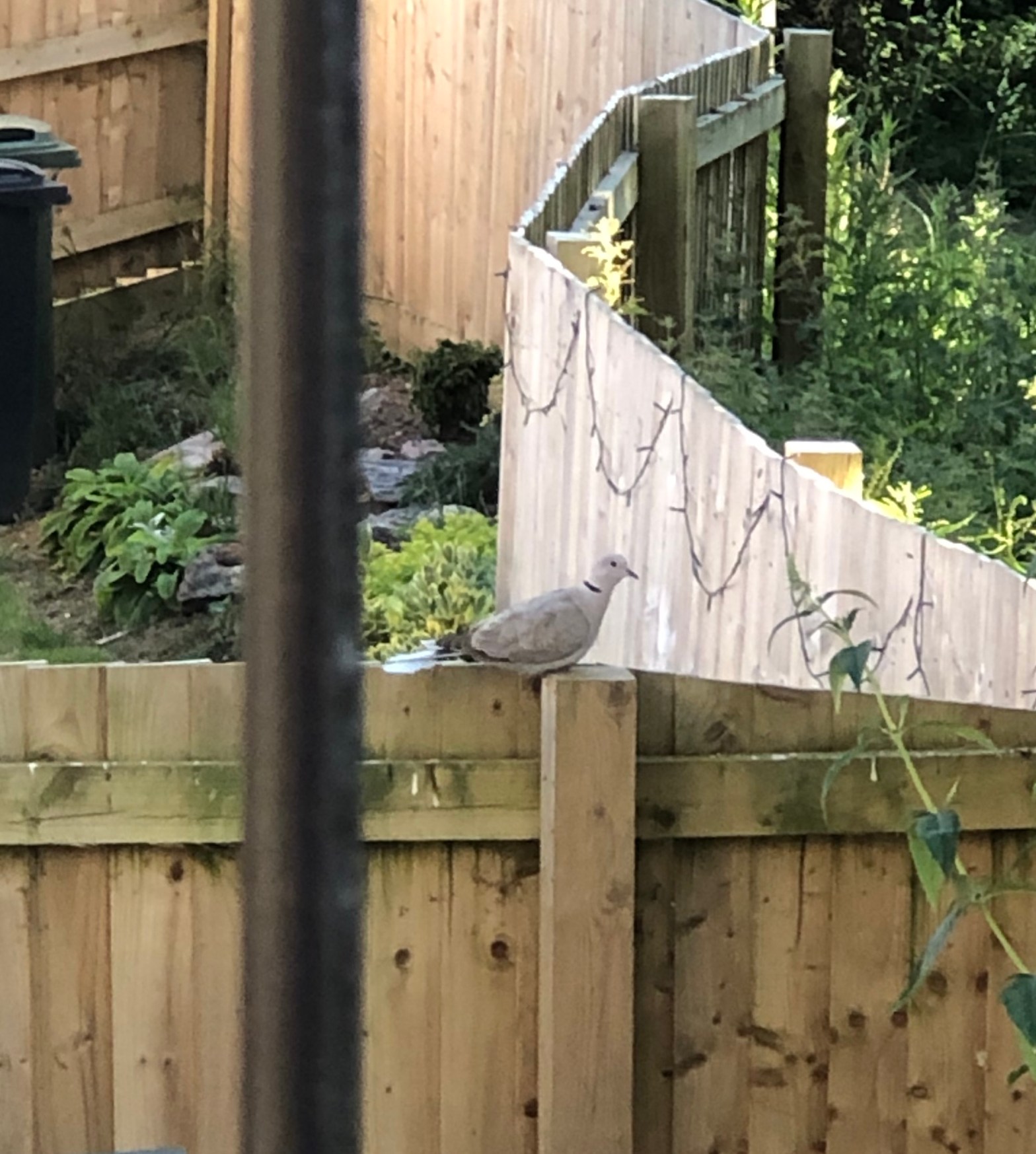
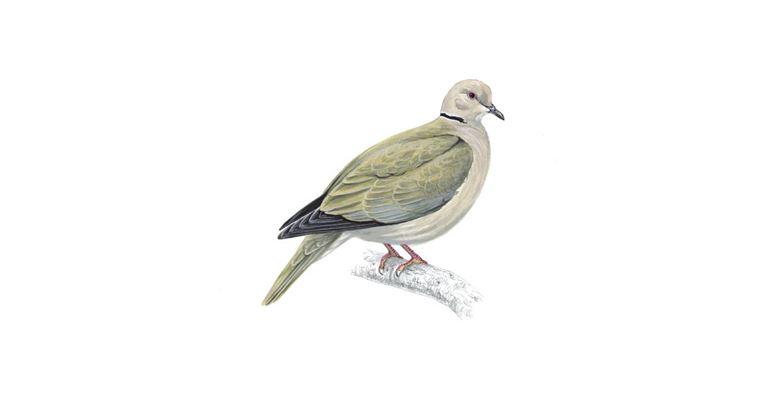
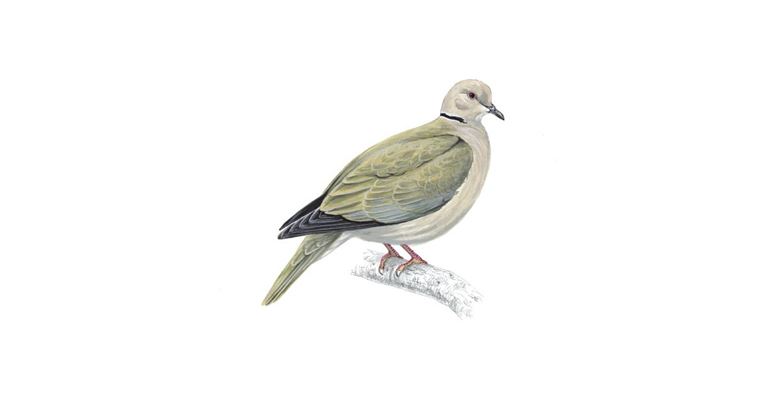
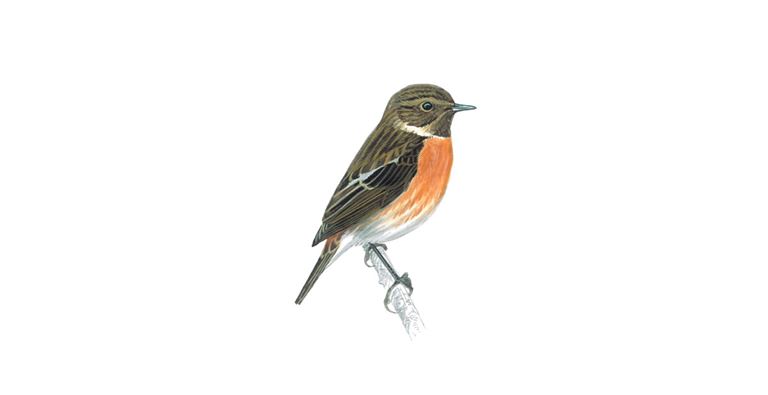
The collared dove only has one plumage and in this plumage, it has a white like coloured head, a black collar, a white like coloured breast and a white-green back.
The collared dove has a diet that mainly consists of mixed grain and wheat. They will also eat buds, shoots and seeds. A common garden visitor, the collared dove can also be seen on farmland.
This bird lives in a wide variety of habitats and favours open farmland with plenty of buds and grain to feed on. They will come into gardens and will also live in grassland, wetlands, woodlands and moorland.
My encounters
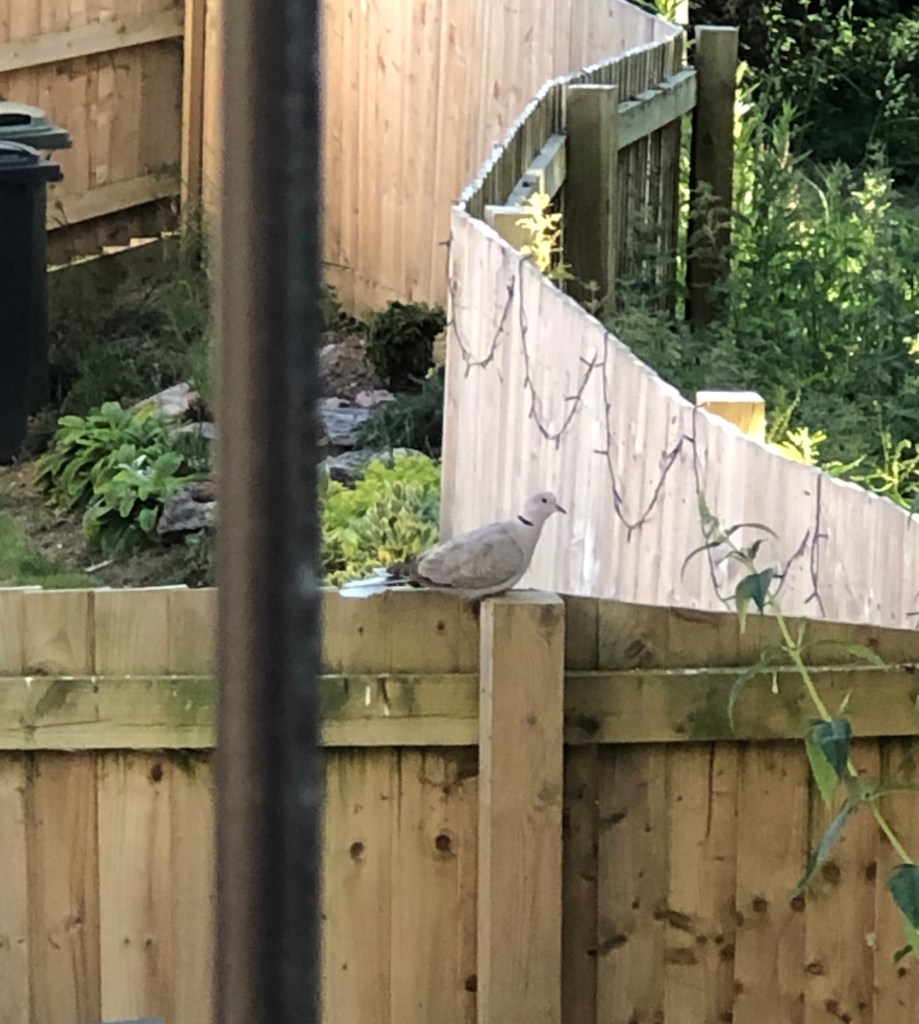
My only encounter with a collared dove was in the garden actually. I was sat upstairs when I was called to the window. I looked down and saw 2 pigeon like birds. They had a black collar and were mainly white. They were collared doves. I rushed downstairs and grabbed the camera. See my other blog, The White Pigeons for more info.
Conservation status
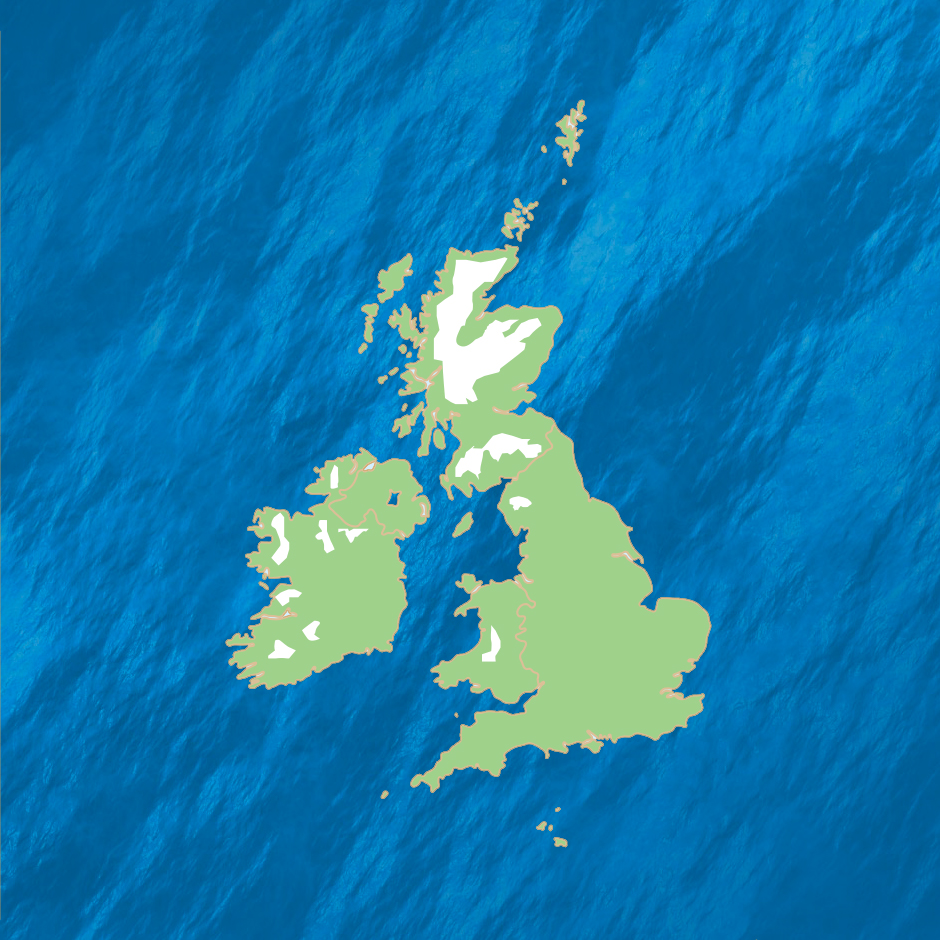
The collared dove is a recent colonist of the UK. It bred in Norfolk in the 1950s and rapidly spread all across the UK. It had little help from conservationists and spread due to the availability of mixed grain. It is still on the increase and is on the green list of conservation concern.
We were walking down the road. We had not seen anything yet but that was expected as we had just left the house. Then, a house sparrow flew out of the wooded area in the estate. Then, a wood pigeon also flew past. Our first sightings.
When we reached the end of the road, a magpie was flying by the houses. Its long tail extending in a typical magpie flight style. We crossed the road and then, something caught my eye. There was a dog like animal sat in the neighbouring field. I took out the binoculars and there sat a fox. I was amazed. A nocturnal animal out in broad daylight and in that heat! Just incredible. This was also my first ever fox which was absolutely fantastic. This place is always full of life.
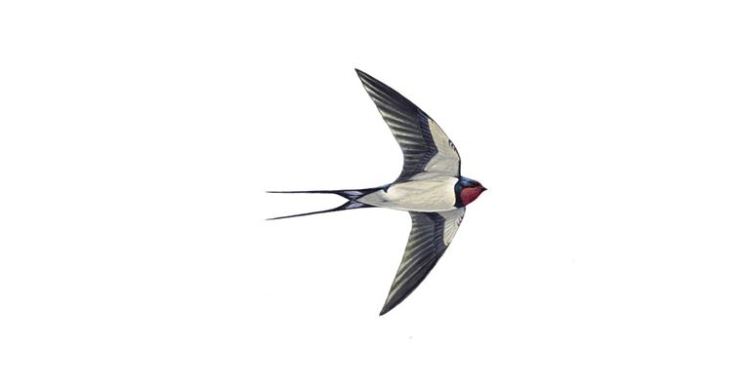
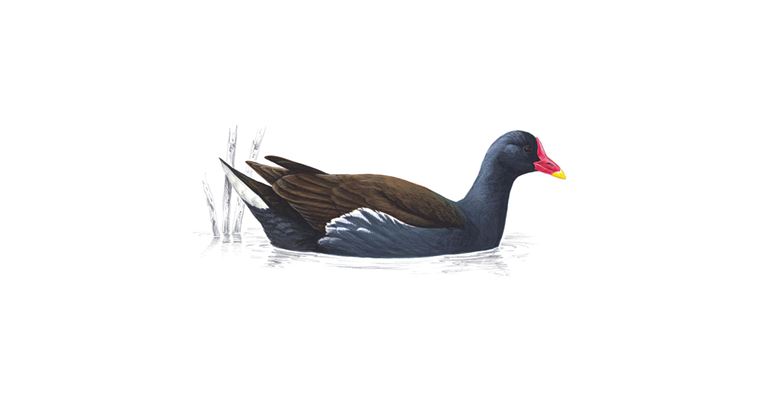
We left him behind and on the hedge, little robin red-breast sat, singing his heart out. We started strolling through the field and there was a lone swallow flying off to the right. A herring gull flew to the left. We got to the ponds and there was not much there. There was a blackbird pecking over on the other side and a moorhen on a jetty. Apart from that, nothing else.
We decided to cross the little stream and go to a different set of ponds that lay ahead. We strolled calmly through the serene woodland to reach them. We took the left path around the ponds and went to the clearing to check on our moorhen nest. Sure enough, there was an adult with a single chick.
We carried on and found a female mallard sat on the sunken jetty. The bird became quite amusing and allowed close-up views before jumping into the water. We carried on round and found a blue tit hopping around in the trees. There were plenty of dragonflies around but these definitely did not allow close-up views according to the absence of a photo below.
We carried on and did not get any more views of the moorhens so we decided to go back to the clearing where we saw the first ones. This time, there were 3 chicks! Just hopping along the lily pads, following their mother. They were just like little fluff-balls.
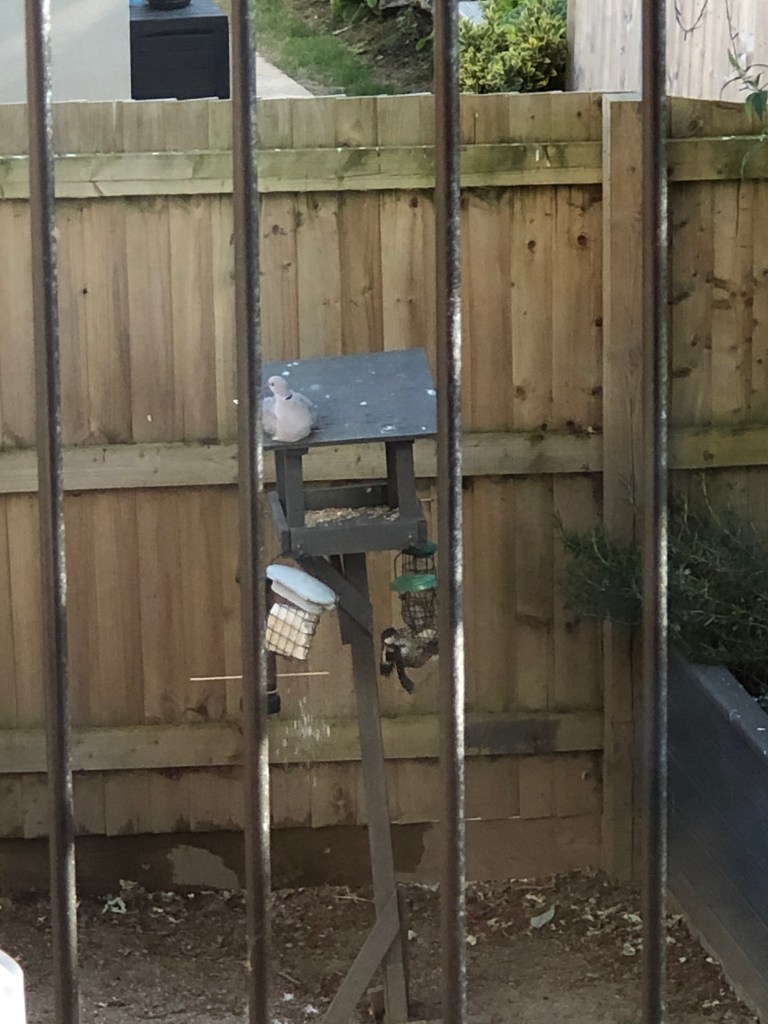
When I came home, there was a collared dove sat on top of the bird table and a great spotted woodpecker was climbing up the stand. Also, a blackbird was feeding its fledgeling, trying to show him where the food was and how to get it.
All in all, a good day’s birdwatching with some unexpected spots.
I was sat inside the house, reading my bird books. I was quite comfortable until I was called to the window that looked out over the garden. When I looked down at the bird table, 2 pigeon like birds sat, one on the fence and the other on the roof of the bird table. At first, I assumed they must be wood pigeons as they were taking the same roll but when I took a closer look, their plumage was nothing like it. Mainly white and a black collar. They were collared doves.
I rushed downstairs, grabbed the camera and slowly opened the door. I was able to observe them for a bit but then they flew off into the bramble patch. I was ecstatic! A new species for the garden! Not just for the garden though…I had never seen one before anywhere! For the next part of the morning, I sat out on the balcony, waiting for them to come back. One flew in but it was on the neighbour’s fence. I was so amazed I had witnessed this.
It had been a week since my first try at finding a cuckoo but that one was in vain.
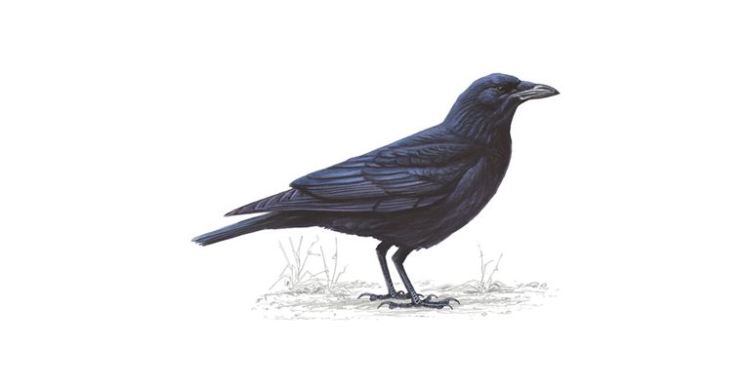
This time, I was back on Dartmoor, headed for Emsworthy Mire. We parked the car and started the hike. To get to the mire, we had to go down a slope. As we walked down, we didn’t see anything. In the end, we got to the entrance to the reserve and there were 2 carrion crows flying above us.
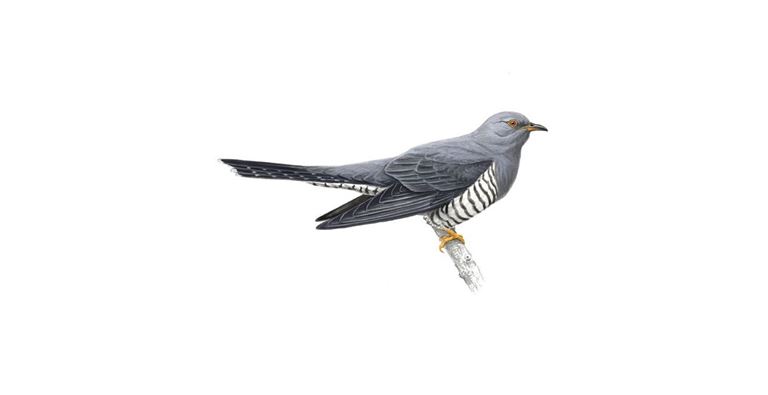
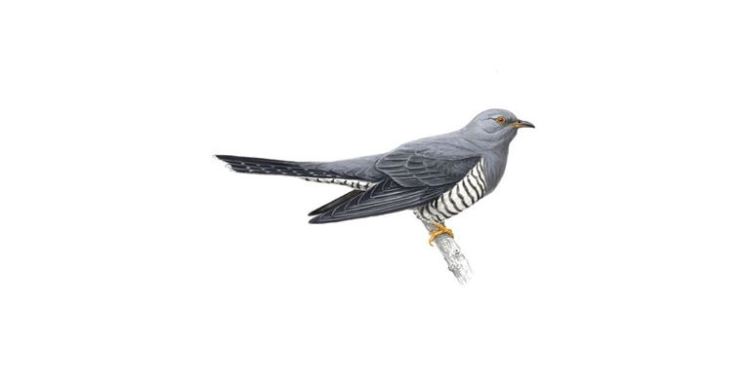
We carried on down after opening the gate. The conditions were blue and sunny and there was a warm breeze blowing. There was a swallow up in the sky and while I was watching him, I heard a cuckoo call. This was the first time I had heard one and it was shocking. It carried on calling and it became quite a comfortable and calming experience.
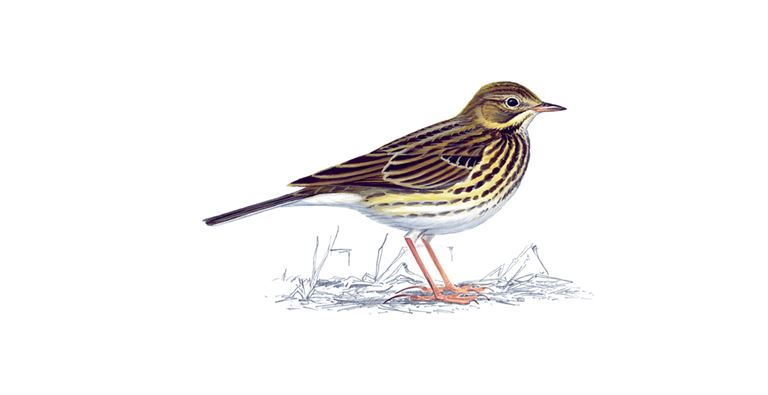
I carried on down to the mire and stopped by the pond. I sat on a large rock to have a rest then suddenly, a bird flew into a nearby tree. I quickly lifted up my binoculars and there, a meadow pipit sat. He stayed there briefly before fluttering away.
I decided to head back up. I carried on up through the mire and when I got to the wall, I clambered over. Then, I heard the cuckoo again. He was very close.
I headed towards where the call was coming from, constantly monitoring with my binoculars as I went… then, I saw one. It was very brief because as soon as he saw me, he jumped onto the ground. That was the last I saw of him. I was so happy about this as this was my first ever cuckoo.
I carried on back towards the car park. I didn’t see anything as I went back up towards the car. When I reached the car park, I clambered in and drove off.
Today I am going to review labrador bay from my perspective. The RSPB reserve was purchased to help the rare cirl bunting. This is the closest RSPB reserve to my home so it is quite special. Address: RSPB labrador bay, Teignmouth road, Shaldon, torquay, TQ1 4TP.
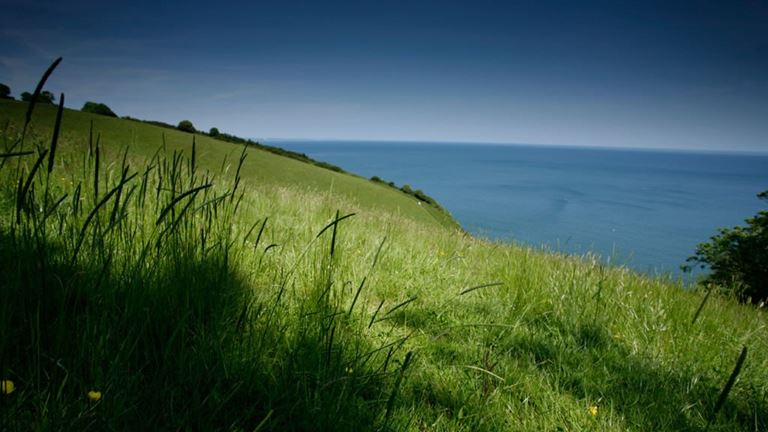
The car park is quite small and is on a steep cliff. There are some steps that lead to a sign and a gate. When you go through this gate, you have a wonderful view out over the bay and you can sometimes see dolphins here. Then you can take 2 ways. You can go down the steep slope and head along the path there or you can go left.
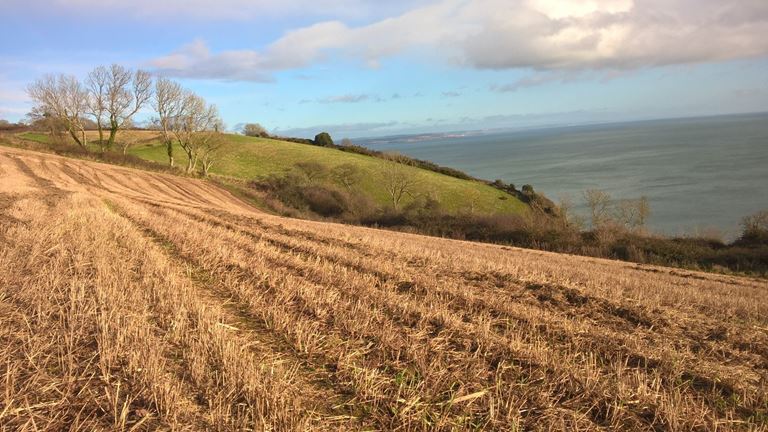
I would suggest going left. As you walk along the grass, you’ll notice a tree that really stands out in the landscape. This was where we saw a flock of birds fly over and assumed they were cirl buntings. Carry on and you will come across another really steep hill and you do not want to go near the edge as there are no barriers to protect you from falling. Stick to the path and you should be fine. It isn’t surprising because the south west coast path joins the reserve.
If you carry on from here, you will leave the reserve for a bit but will rejoin it again soon enough. This path leads through a forest area with a steep hill on one side and a wire fence on the other. This path gets a bit steep as you carry on and it will get steeper. This is where you rejoin the reserve. Head up the steps and it will take you to the clifftop.
You can’t see the bay because of the trees in the way but don’t go running close trying to see the bay as you could easily fall and the edge of the cliff can be loose. Carry on through here and you will eventually come to another field. If you go through this field, you’ll reach the first place with the view of the bay and you’ll be right by the car park.
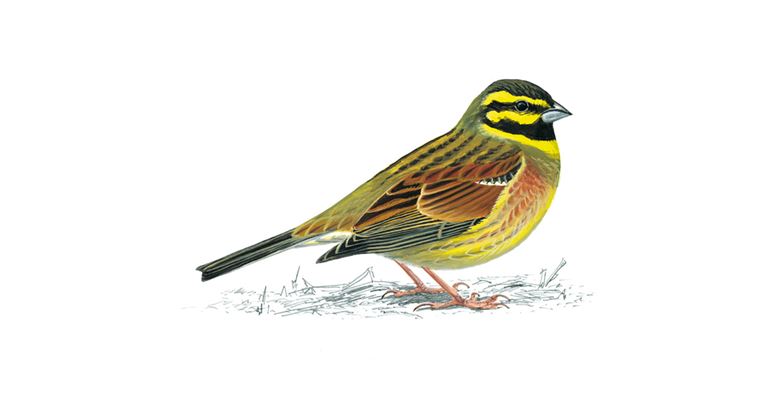
Once a common bird of farmland across southern England, the cirl bunting was almost lost from the UK in the 20th century. Now restricted to the coast of south devon, the cirl bunting is a wonderful bird though the female can be mistaken for a yellowhammer.
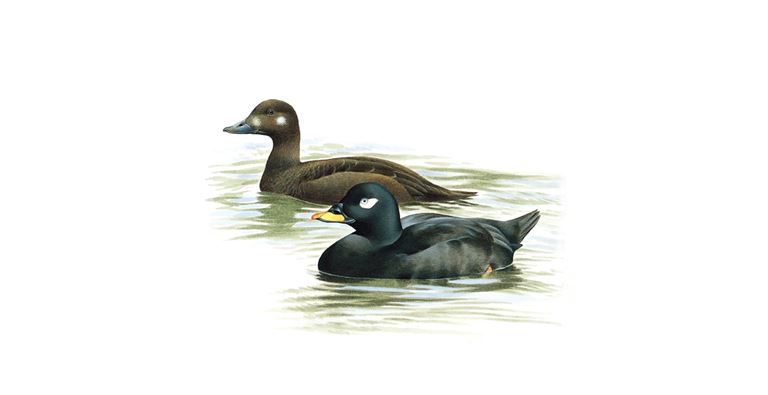
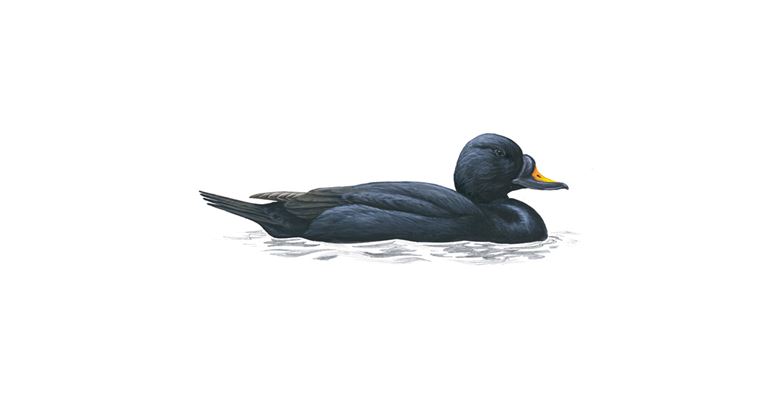
The velvet scoter is a scarce sea duck that is mainly a winter visitor though single birds may be spotted in summer. They are usually well offshore but sometimes in sheltered bays. Quite a sociable bird, it will joins groups of about 3 other birds.
The common scoter is a very rare breeding duck and your best bet is to look offshore in winter. At labrador bay, they are regular visitors in small numbers. Occasionally large flocks.
In a nutshell, I would give labrador bay 4 out of 5 stars. It is a wonderful reserve with a large diversity of species. The reserve is quite steep though and when I visited, I found it quite hard with the steep bits and it took ages to get up them. Also, the weather can change very quickly and I am not just saying this. When I tried to visit a second time, we were driving and could see the reserve. It was bright and sunny but when we got there, it started crashing down with rain and everything backfired. There is as much going on out in the bay as on land so this reserve fits both birdwatching types.
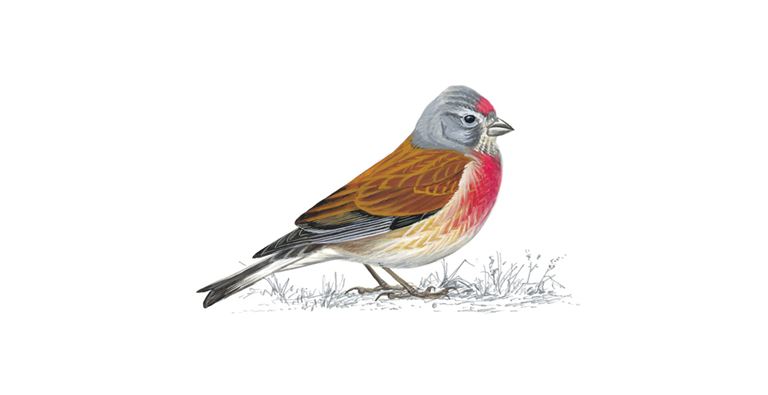
The male has a grey and pinky red head, a pinky red breast and a golden brown back. The female has a grey head, a faintly striped breast and a brown back.
Like most finches, the linnet has a diet of seeds mostly and occasionally insects in the summer. When looking for seeds in the winter, the linnet will join mixed finch flocks as they roam from field to field in search of seeds from farm crops.
Distribution
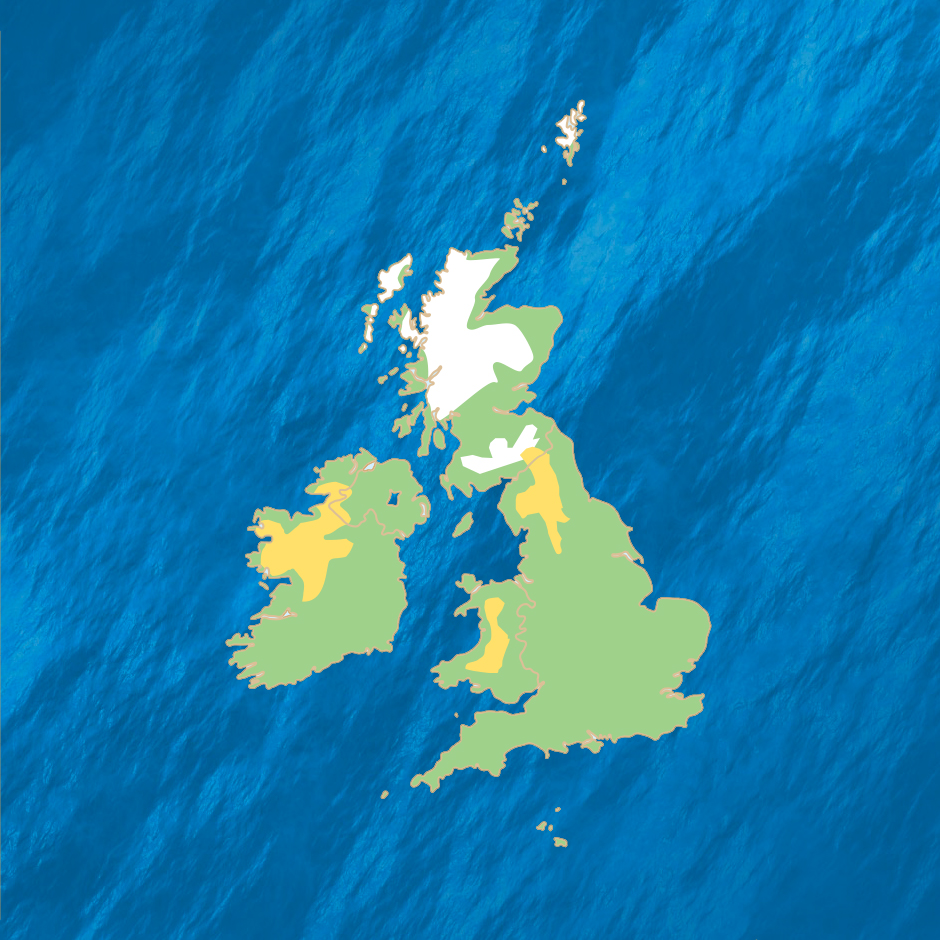
Yellow is where it visits in summer and green is where it lives all year round.
The linnet’s preferred habitat is farmland though they can be seen in grassland, heathland, moorland, wetlands and even urban areas! Your best bet is farmland or moorland if you go looking for one.
My encounters
My first encounter with a linnet was at Darts farm on one of their guided walks. I was trying out a scope they had brought and we were walking up a steep, crop filled hill. We stopped and set up the scope at the top. We scanned the field, hopeful for a bird to appear and then, out of nowhere, a flock of birds appeared above the crops. Then, they dived down and started demolishing the seeds from the crops. We then spotted that most of them had red breasts. These birds turned out to be linnets. My second encounter with a linnet was up at the old granite tramway on Dartmoor. We were walking along and saw a brown bird drinking at a pond. It turned out to be a linnet. See my other post, Up With The Lark for more information.
My view of the linnet is a beautiful bird that has a nice pink red colour and is not that hard to find. The linnet makes my top 10. When I first found it at Darts Farm, it was a wonderful bird to watch.
Conservation status
The linnet has declined by 57% in the UK since 1970. The reason for the decline is mainly agricultural intensification. This bird also suffers in bad weather. Because of this, the linnet is placed on the red list of conservation concern.
We were in Mallorca as my parents had just got married. It was a sort of celebration. A week in a private villa, with our little family, and no other worries, in north eastern Mallorca near Pollenca. Amazing!
We had just arrived at the villa where we were staying. There was nothing about yet but the best was yet to come. We started unpacking and went into the villa. When we came out, there was a flock of goldfinches flying around in the garden.
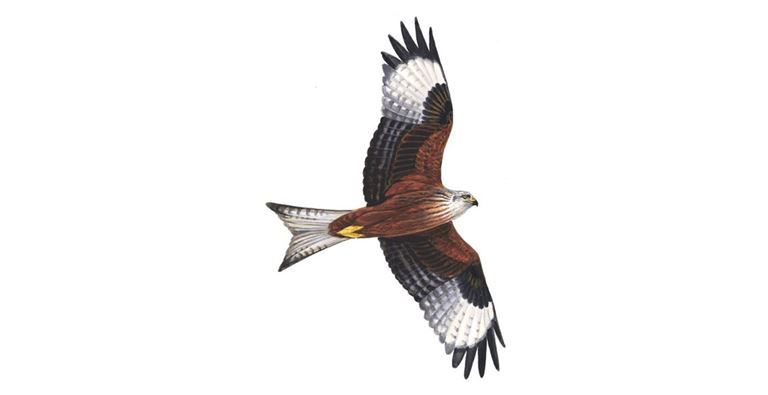
The next day, we were sat outside and there were a lot of birds of prey around. It was mainly red kites up and around the mountainside. It was a joy to look at. They kept on circling up and around, gaining altitude as they collected air currents.
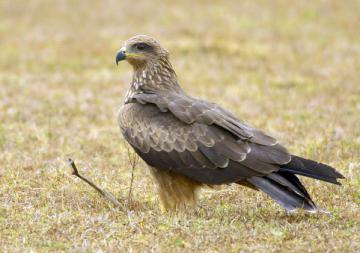
The next day, there was another kite drifting over. We could not identify it from a distance so we rushed inside to grab the binoculars and field guide before it left. When we came outside again, he was closer. We lifted the binoculars and scrolled through the guide until we came across the black kite. We decided it was actually a black kite which was a first for me.
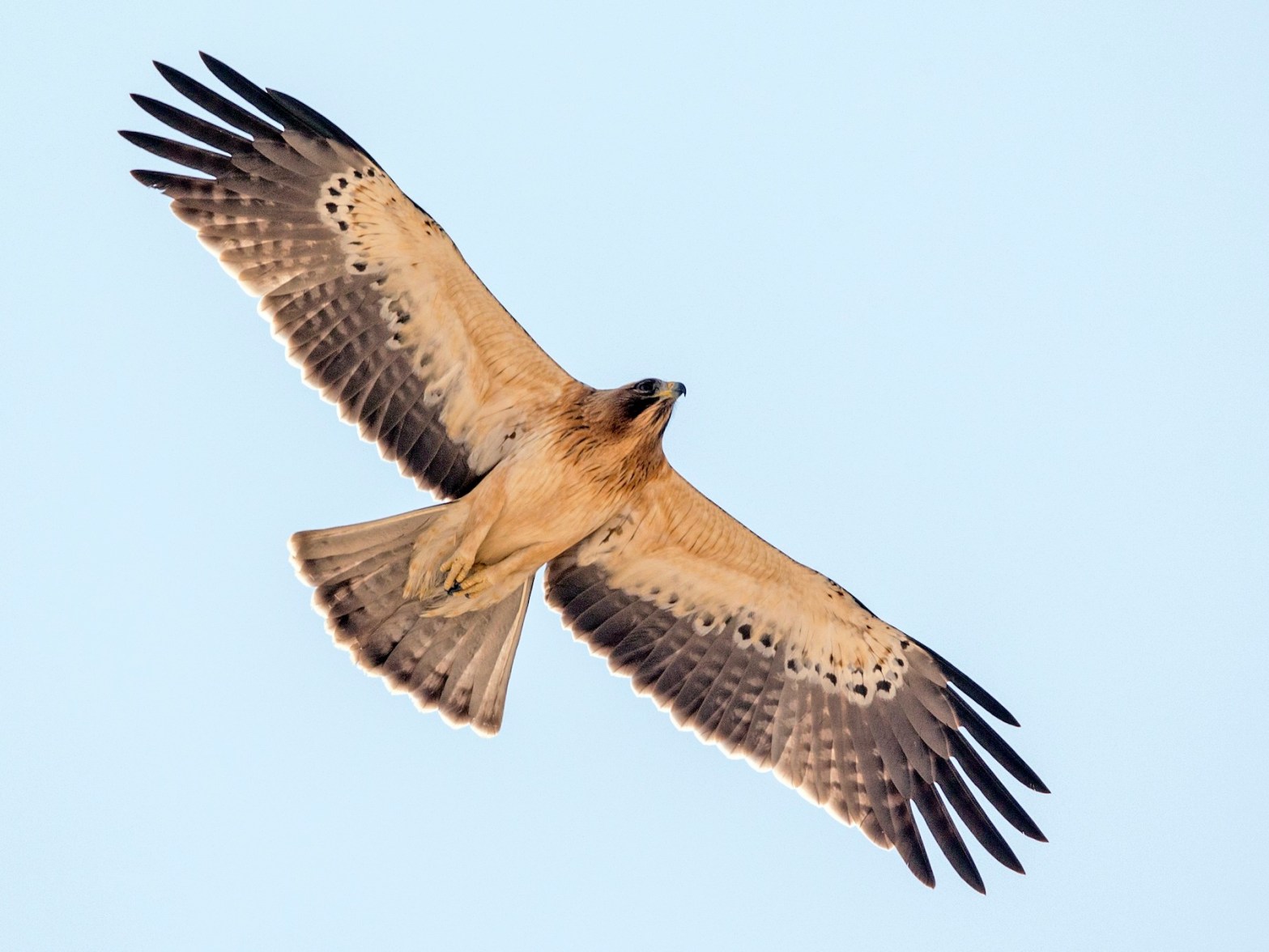
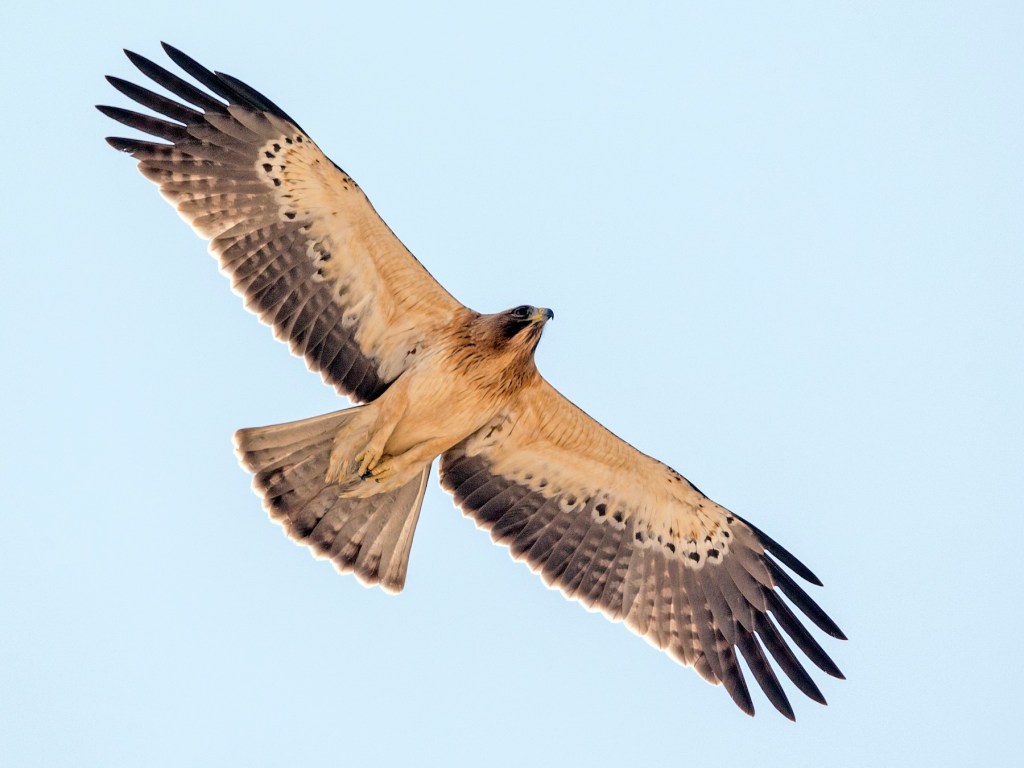
A few days later, there was something else drifting overhead. It was quite big actually, but we did not know what it was. We grabbed the binoculars and field guide again and quickly looked up! After we had observed it, we had a look in the guide. Turns out, it was a booted eagle, another first for me!
This Photo is from Omar Alsaheen.
I felt really pleased to see all these new raptors. It was a joy to watch and that day was ended with a kestrel. Lovely. I had no expectations of seeing all of these birds and from the garden! Just amazing.
This is just an early taste though. There is still a lot more to come…
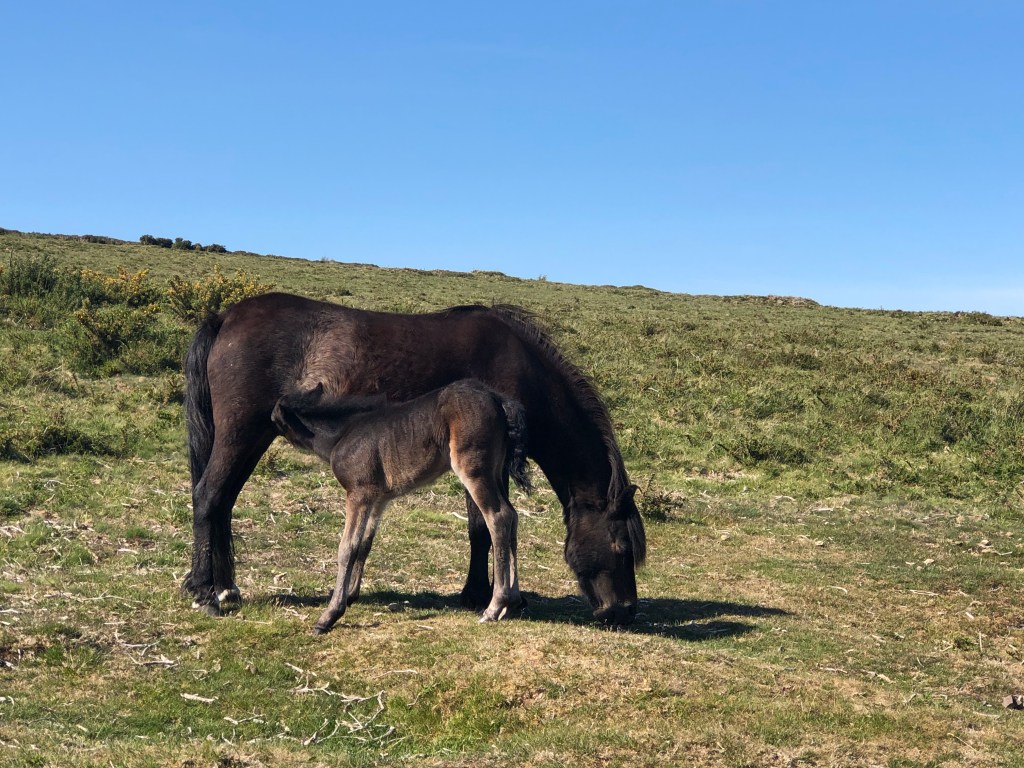
We had parked the car and had started the walk. We were up near the old granite tramway on Dartmoor. We were walking on a path that sloped downwards and there were a lot of ponies around including 2 foals, one of which was really young and was having milk from its parent. We managed to get through the obstacles on the path and carried on walking. Eventually, we came to the tramway.
The rocks were lumpy and the lines of granite stretched for miles across. It’s hard to imagine that workers (back in the day where there were no building machines) built this with probably a chisel and hammer! It was absolutely magnificent.
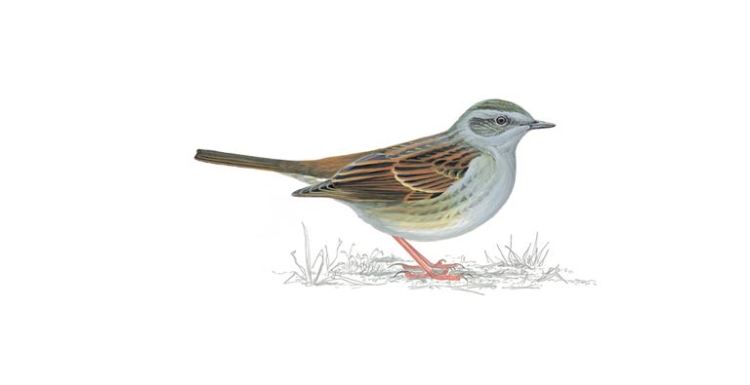
We decided to follow the tramway and this led us to our first sighting of the day. 2 dunnocks were hopping around on the path in front of us. We looked with the binoculars and saw 2 grey breasts and a lot of people know that is a key trait for a male dunnock. We carried on along the track.
We carried on and came to a muddy pond. Then, 2 birds flew in. One, a pied wagtail, hopping from rock to rock. The other had a brown back. We did not see his face until he turned around. It was a linnet. We carried on and saw 2 more on the path! I had never seen 3 linnets together! Amazing!
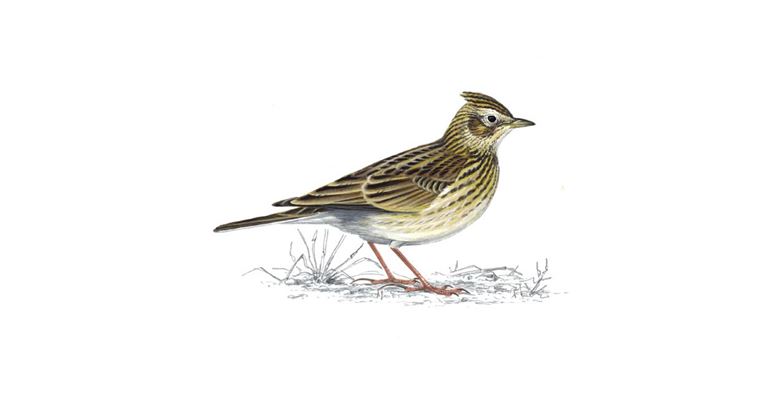
Gorse and rough grass seemed to engulf the land and everywhere was sprinkled with granite. The bits of granite we picked up were beautiful and so sparkly. I could see why they built a granite track up here. It was everywhere. Then, we heard a familiar call but could not confirm the identification. We carried on and a skylark was floating in front of us and I say this because it wasn’t flapping its wings. Then, it glided down into the gorse.
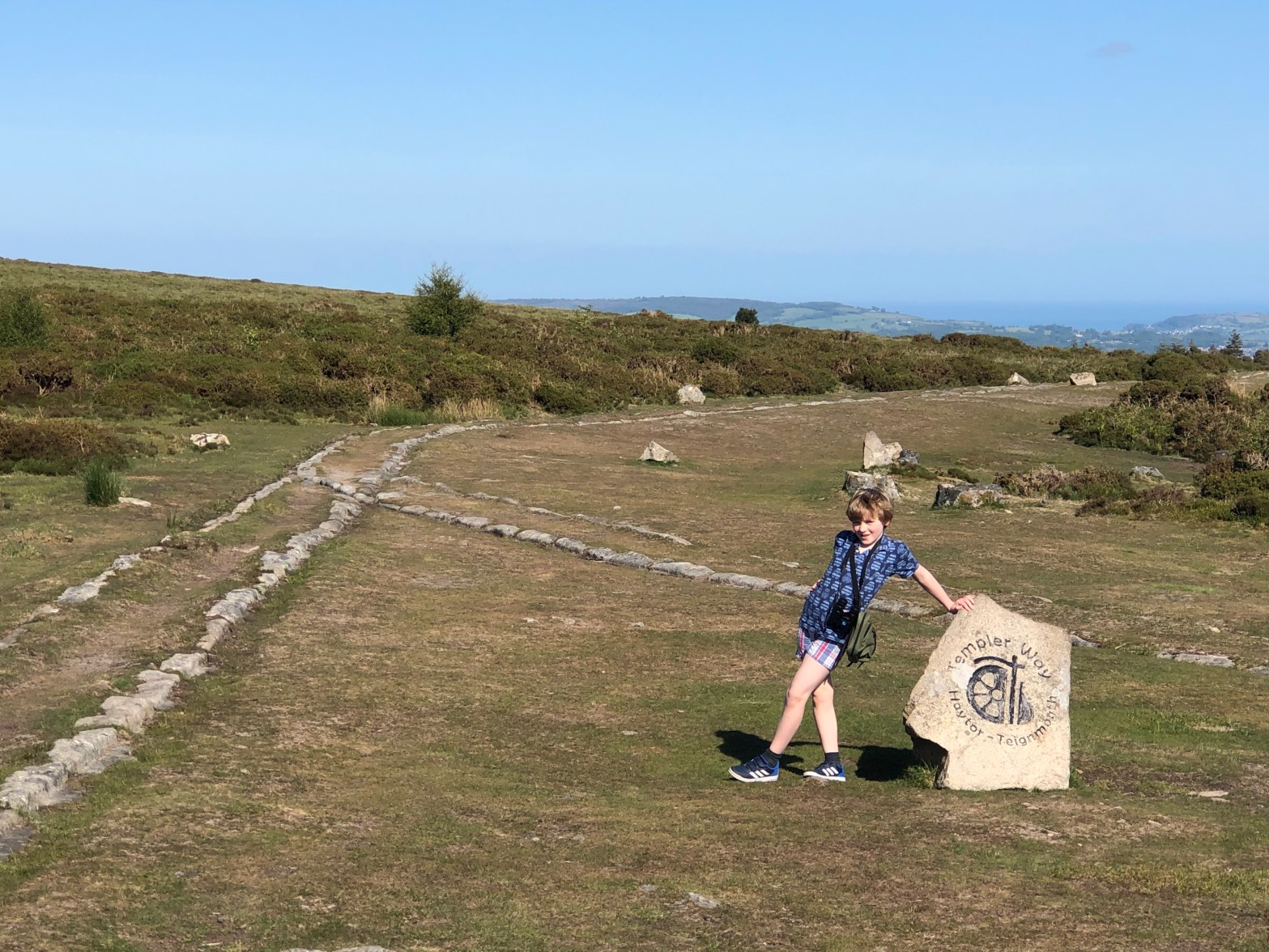
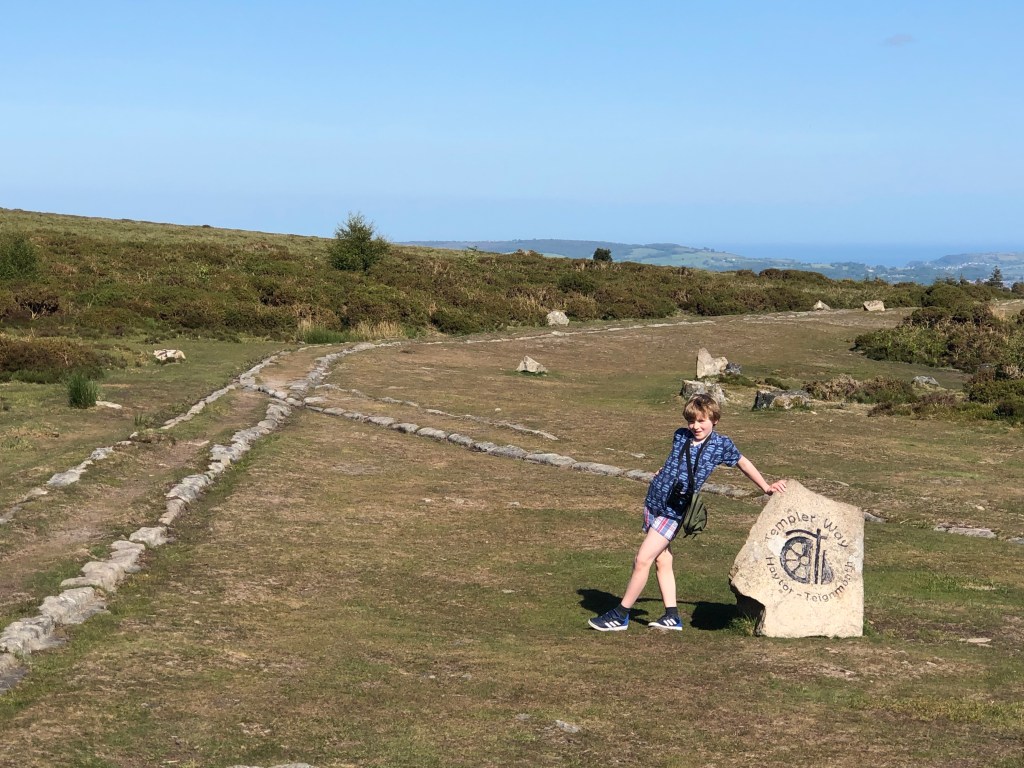
We carried on and came to a sign that marked Templers way, the long footpath that if you carried on, it would take you to Teignmouth down by the coast. In the photo below, you can just about see the bay! Here, the tramway split. One way went across a bridge that led to where people used to store the spare rocks from the quarry and the other way carried on up. This was where we saw 2 skylarks hopping around. One had a crest and the other did not.
Me with the sign
We carried on and saw another species. There, a female stonechat was sat on the gorse. The call of the stonechat actually sounds like 2 rocks being scraped together! I think this is a great way to remember the stonechat call.
When we got to another split in the tramway, we stopped to have a rest. Just then, we heard a skylark call again and we looked up and heard him singing and flying at the same time. This is called a song-flight.
The first video was one we got while on the tramway. The skylark was low beside us and really close. This audio is pretty good in my opinion though the wind interferes quite a lot.
This video was in slo-mo and I thought that was a pretty good opportunity to take! It basically shows the different elements of the skylark song and how it is put together.
I was amazed at the number of skylarks that I saw today. To see that many in one place really is incredible!
I decided we couldn’t beat this and headed back to the car.