
Plumage
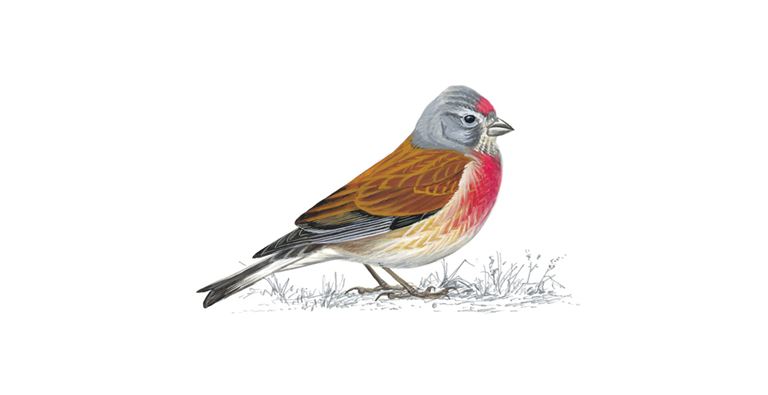
The male has a grey and pinky red head, a pinky red breast and a golden brown back. The female has a grey head, a faintly striped breast and a brown back.
Diet
Like most finches, the linnet has a diet of seeds mostly and occasionally insects in the summer. When looking for seeds in the winter, the linnet will join mixed finch flocks as they roam from field to field in search of seeds from farm crops.
Distribution
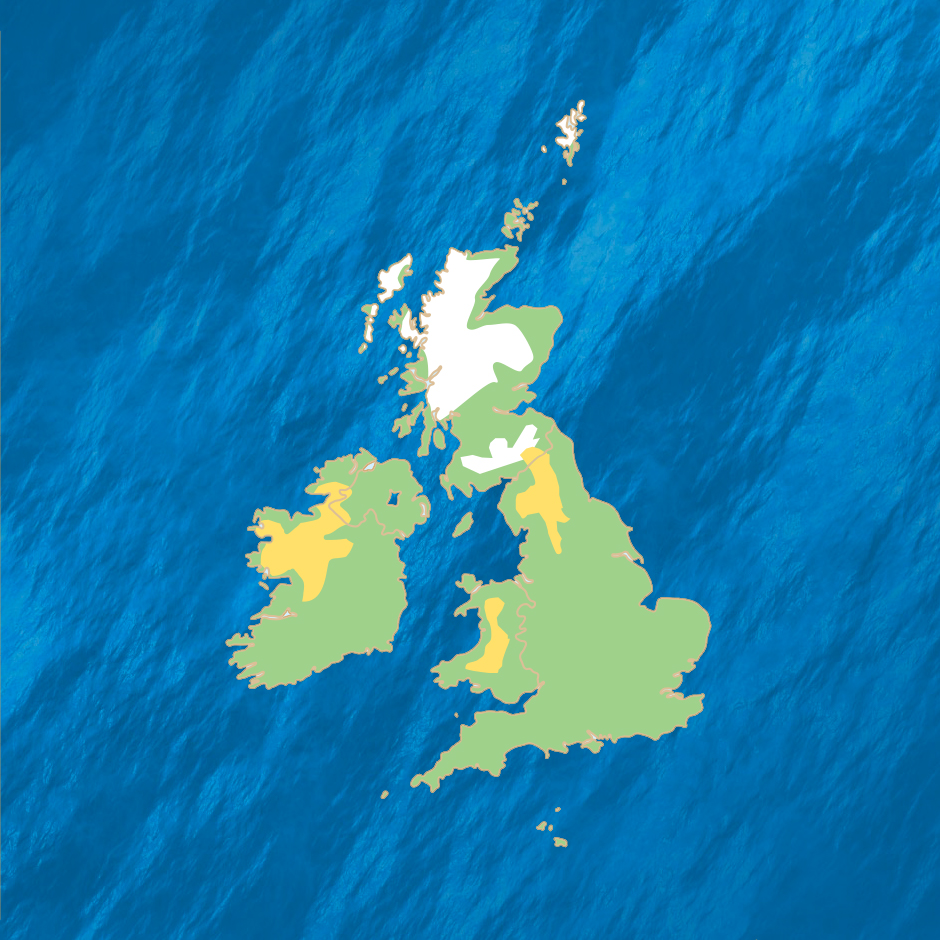
Yellow is where it visits in summer and green is where it lives all year round.
Habitat
The linnet’s preferred habitat is farmland though they can be seen in grassland, heathland, moorland, wetlands and even urban areas! Your best bet is farmland or moorland if you go looking for one.
My encounters
My first encounter with a linnet was at Darts farm on one of their guided walks. I was trying out a scope they had brought and we were walking up a steep, crop filled hill. We stopped and set up the scope at the top. We scanned the field, hopeful for a bird to appear and then, out of nowhere, a flock of birds appeared above the crops. Then, they dived down and started demolishing the seeds from the crops. We then spotted that most of them had red breasts. These birds turned out to be linnets. My second encounter with a linnet was up at the old granite tramway on Dartmoor. We were walking along and saw a brown bird drinking at a pond. It turned out to be a linnet. See my other post, Up With The Lark for more information.
My view of the linnet is a beautiful bird that has a nice pink red colour and is not that hard to find. The linnet makes my top 10. When I first found it at Darts Farm, it was a wonderful bird to watch.
Conservation status
The linnet has declined by 57% in the UK since 1970. The reason for the decline is mainly agricultural intensification. This bird also suffers in bad weather. Because of this, the linnet is placed on the red list of conservation concern.

