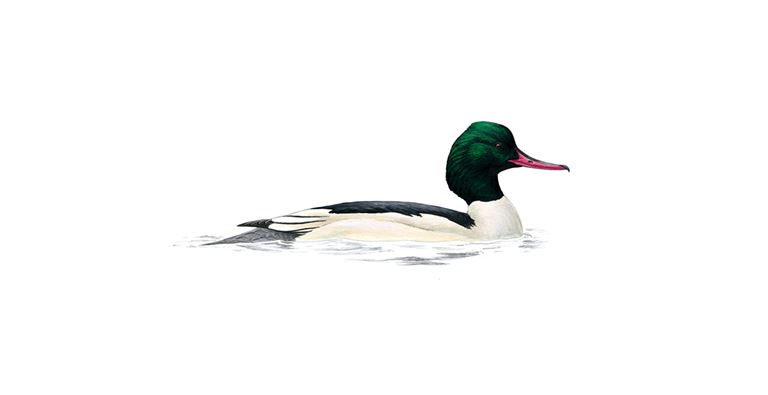
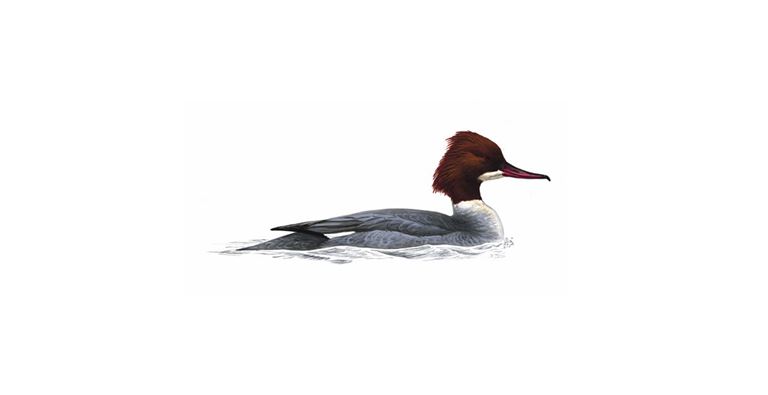
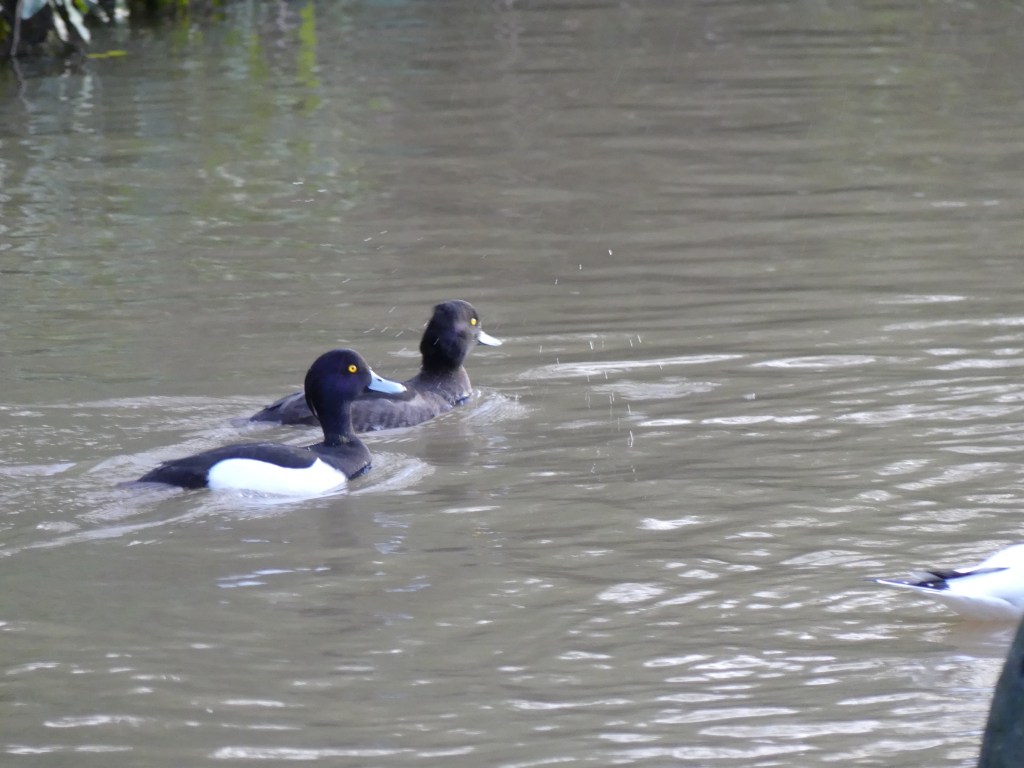
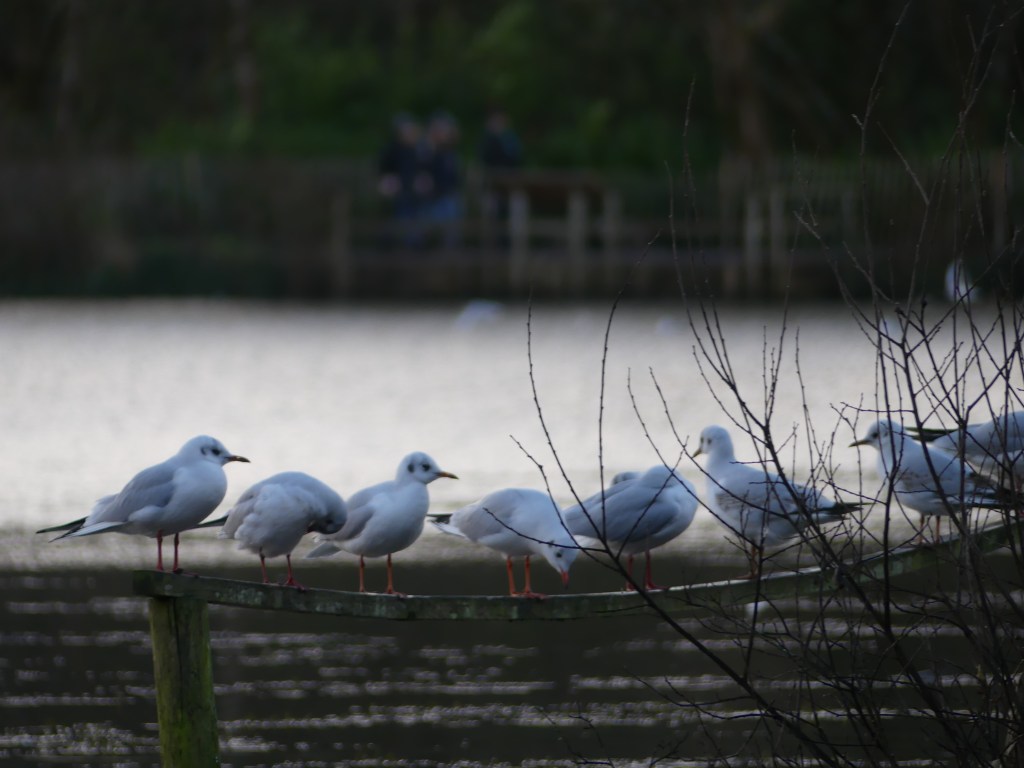
As we walked down the street, a white flash caught my eye on the river. I stopped and stared in utter shock. 2 large ducks, one white, the other grey. Goosanders.
Sadly, I wasn’t equipped with any optics at this time so views were distant but still scarce ducks nonetheless. This comes as only my 4th observation of these utterly graceful ducks.
Still quite infrequent birds in the UK, the breeding population is only 3,800 birds but is on the increase.
It was early evening as we trudged through the mud, coating the path like a blanket. We were at Slapton ley NNR and looking for some birds. Again, my piece of essential gear was my DMC – FZ330 camera.
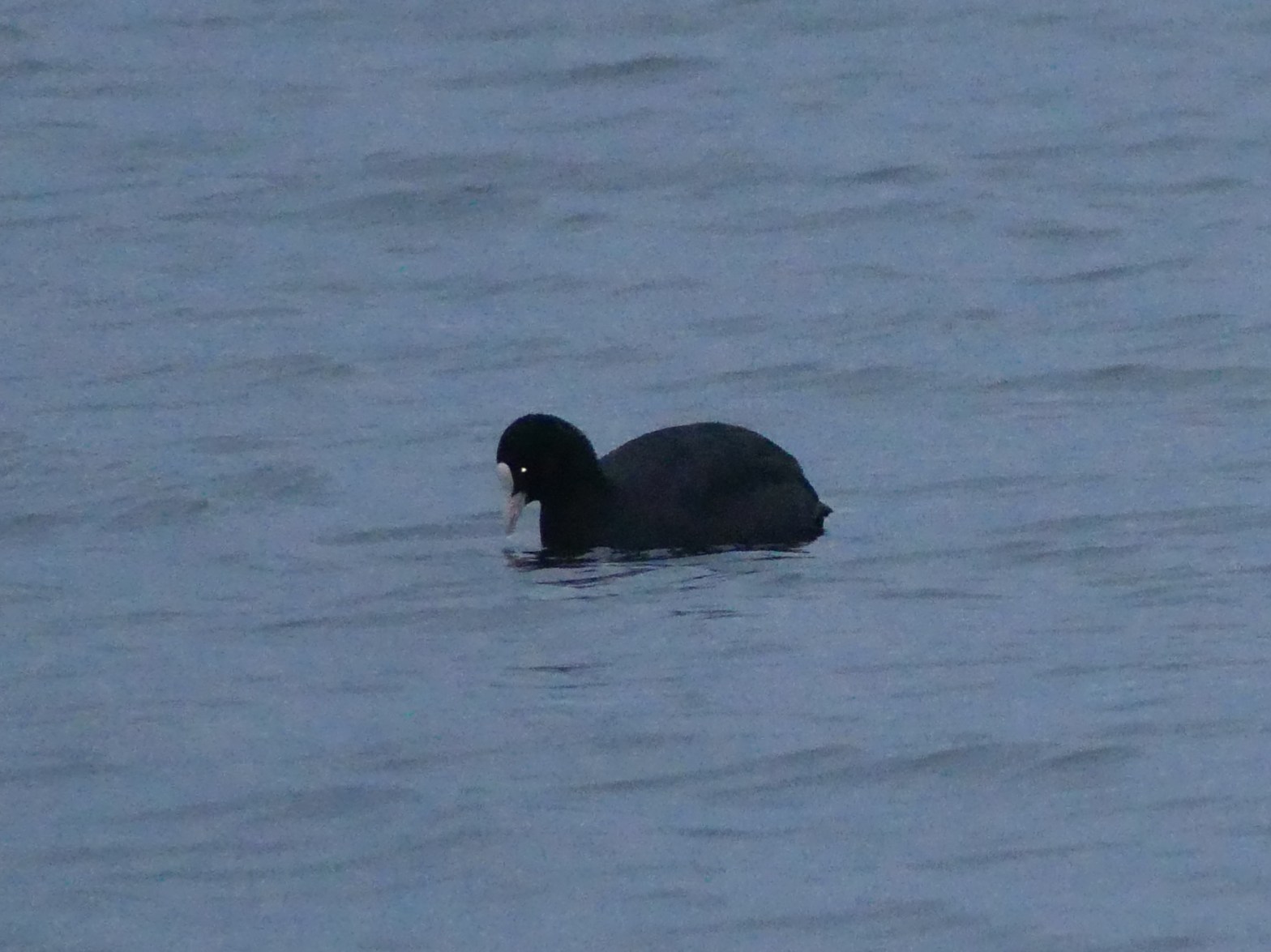
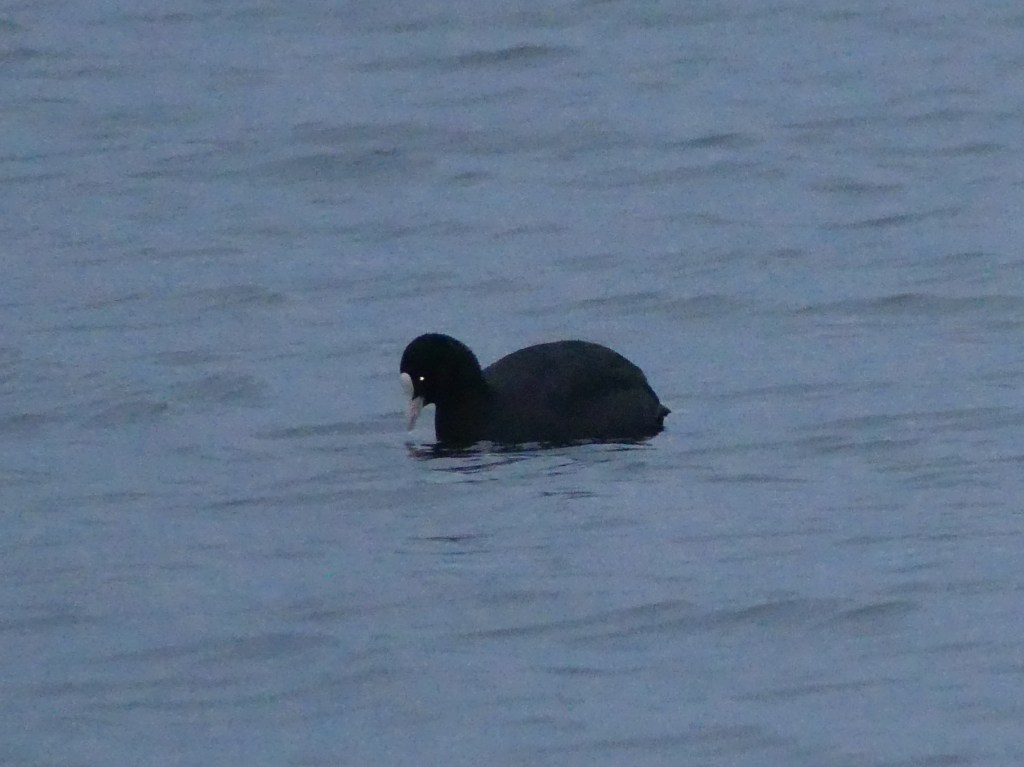
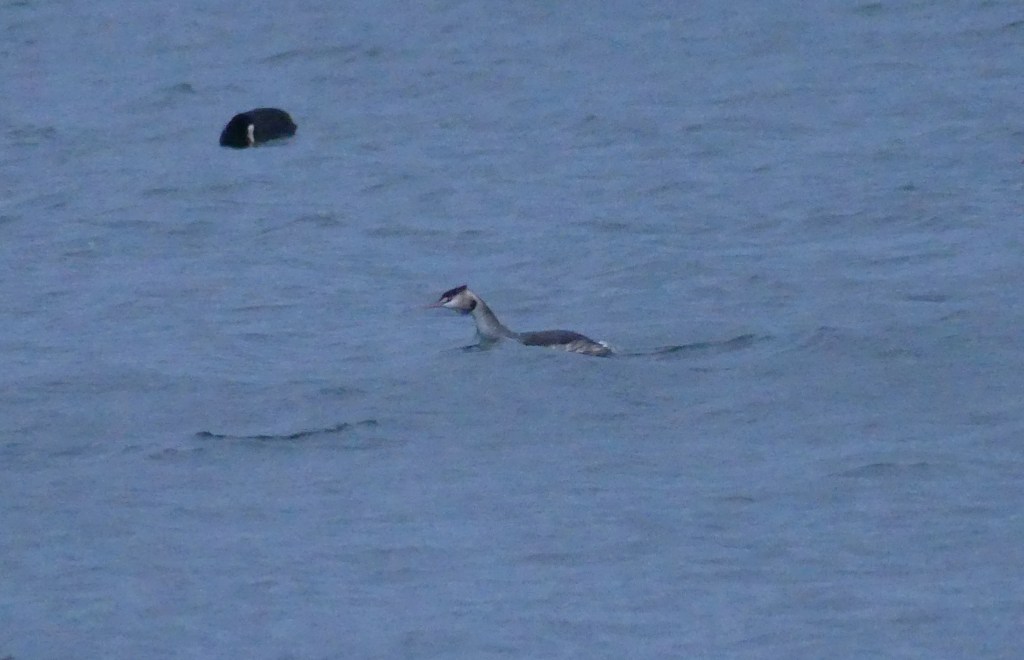
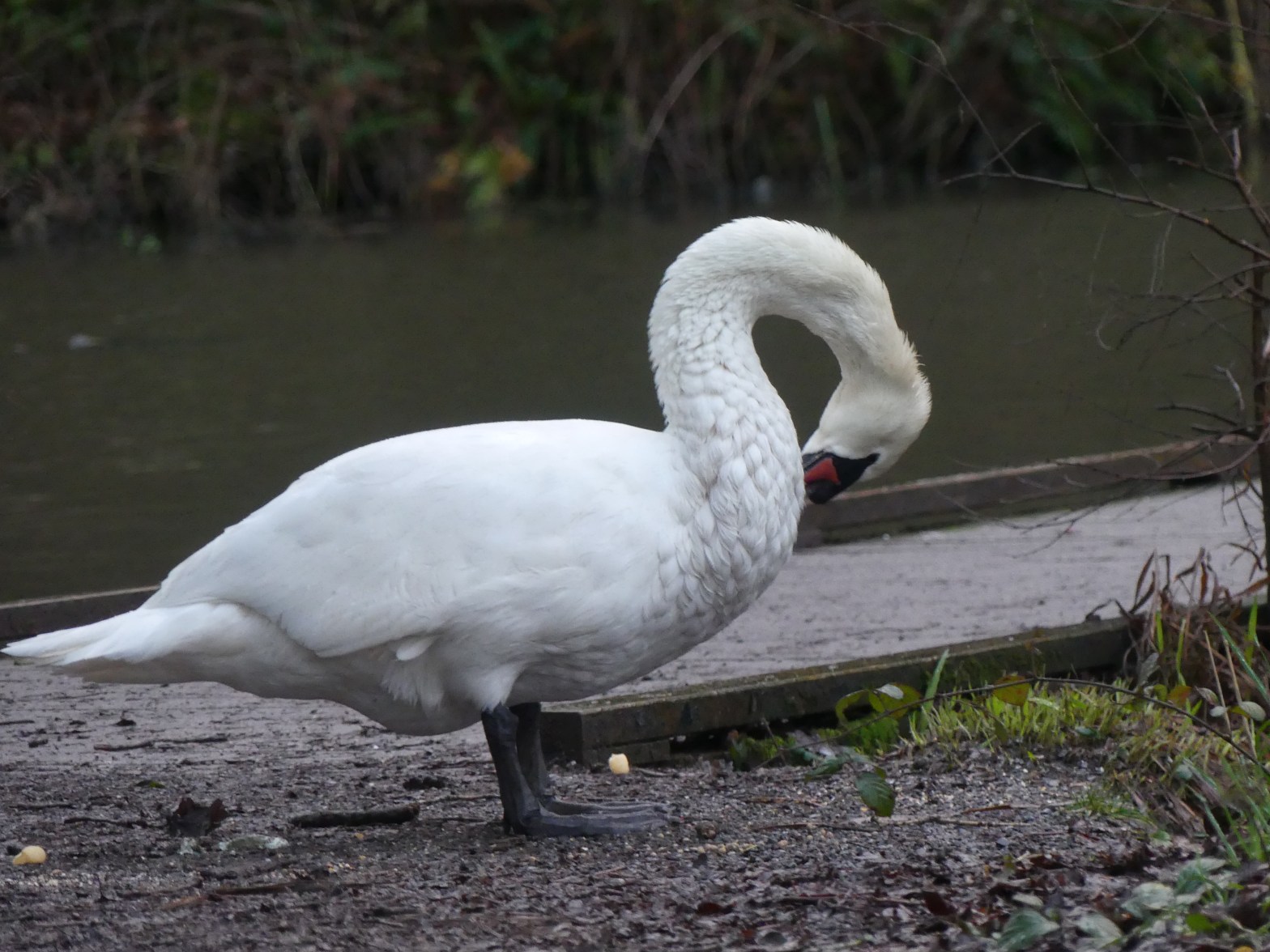
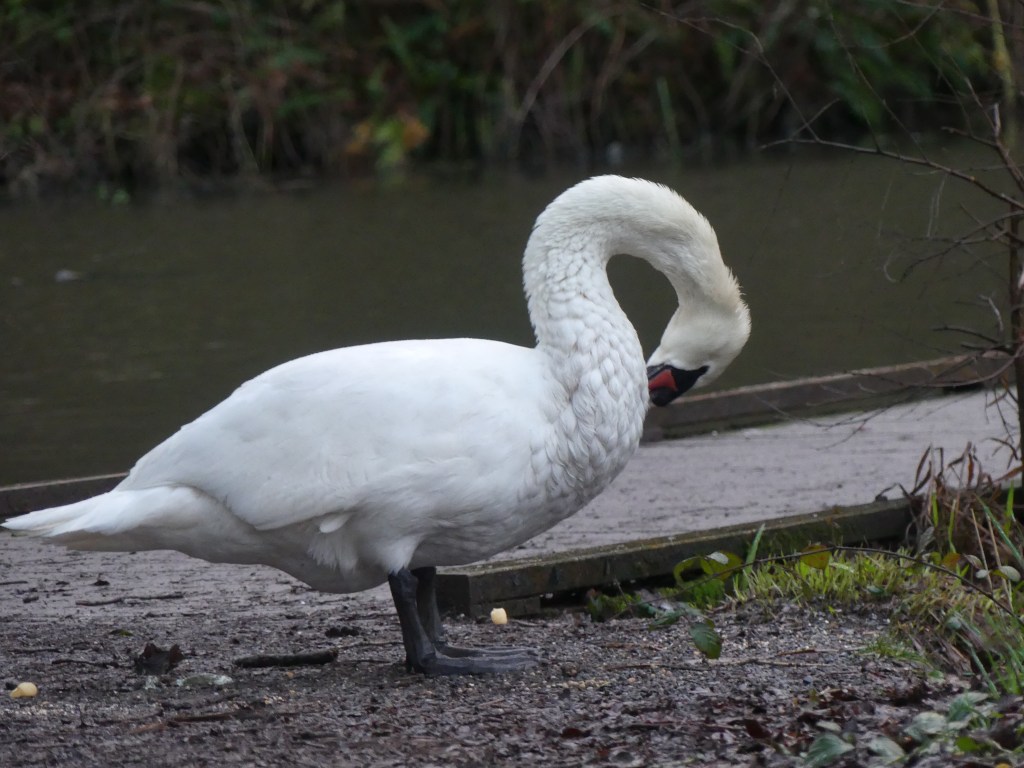
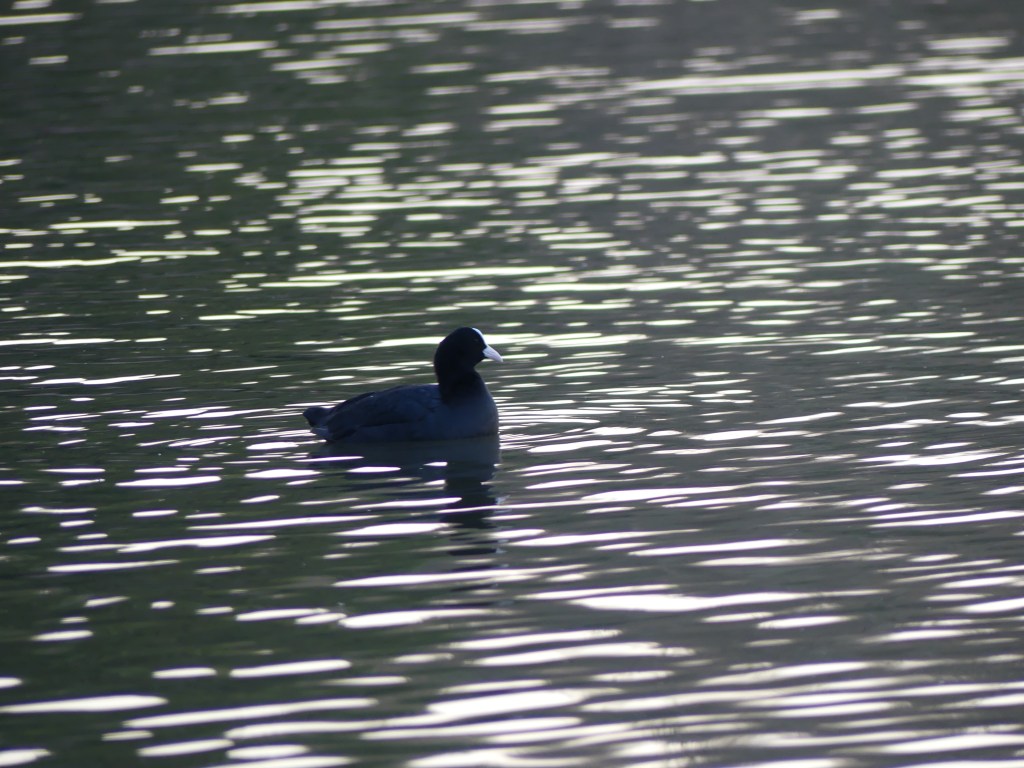
As we strolled down the trail, conditions looked promising. There was plenty of coots on the ley and some more waterbirds screamed further along the path. We stopped at a jetty which gave a good view over the water. I managed to photograph some coots and at the same time spotting some great crested grebes further out on the ley. I got some good shots of the grebes and with the addition of two mute swans, I looked forward to what was next.
Trudging clumsily over the mud stricken steps, we headed for a viewing platform that gave a good vantage point over a group of ducks. I scanned the flocks with my viewfinder and noticed about 5 or 6 had strayed from the largest group. I zoomed to my camera’s full capacity and even though they were very distant, I managed to make out mainly grey plumage. My heart skipped a beat. A long awaited lifer was staring me in the face. Gadwall.
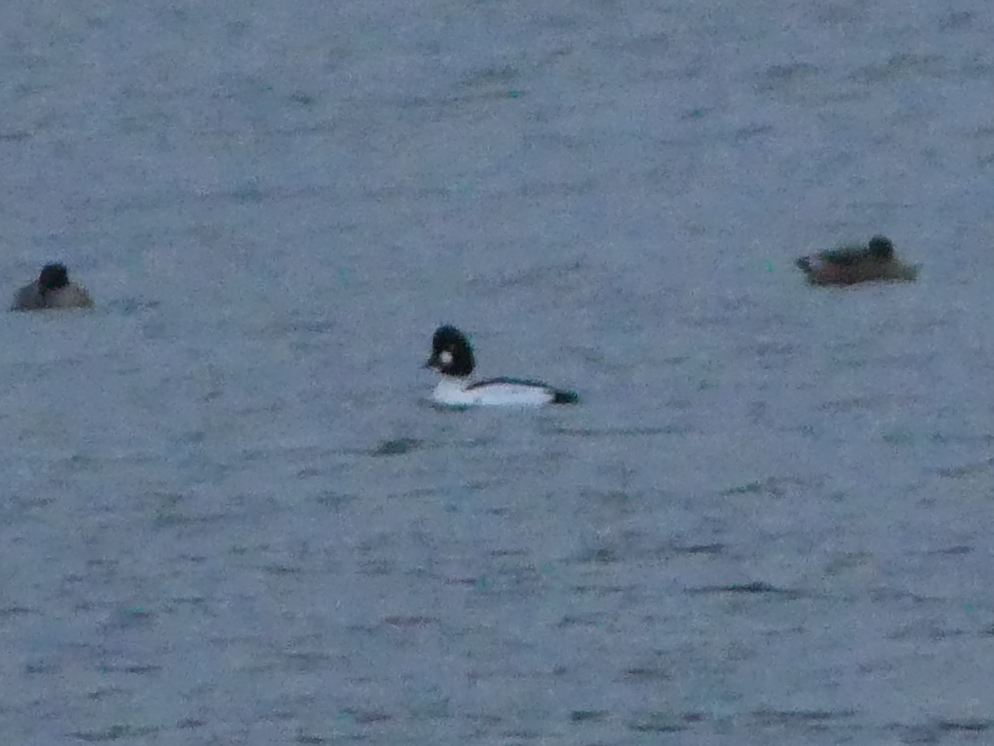
Dumbstruck, I flimsily fired a few record shots before them taking flight towards nearby Torcross. I started to focus on another grebe when I was alerted to a white speck ploughing its way through the flock. It wasn’t hard to find. I took in a doorknob shaped head, a glittering golden eye and a white back. It couldn’t be anything else. A male Goldeneye.
Amazed by its brilliant plumage, I couldn’t look away as I stared in disbelief. The only thing my body would allow me to do was fire the shutter and take a photograph. Annoyingly, this encounter wouldn’t last long as the bird skimmed the water and flew away undulating in the glistening sunset.
A Goldeneye is a scarce bird and you’re unlikely to see them. They’re pretty much a bird only to be found by chance and even then, they can only be found in winter. A very shocking bird [and lifer].
All in all a pretty good [and lucky] birding evening.
It’s that time of year again! Each year, the RSPB hold the Big Garden Birdwatch where Thousands of people across the UK report their sightings of birds in their garden or area to help conservation work. It’s easy. Dates: 29-31 January
How to do:
All you have to do is kick back for an hour and watch the birds come and go. Binoculars aren’t mandatory but they do help. Make sure you make a note of your sightings you can report them later.
It was October Half term. We’d arrived. Every step drew us closer and closer to Lizard Point, Cornwall. Mud squelched and puddles splashed as we made our way along the messy path.
We were surrounded by vast, steep fields as they twisted and turned, climbed and dropped, all trying to get a foothold on the peninsula. They were separated by messy hedgerows swarmed with brambles, making a perfect habitat for our smaller birds. A good example of these is the dunnock, prunella modularis and even better, we managed to flush a male as we walked past. As for the weather, we were able to cope.
As we took the steep, winding path along the sheer cliff face, the winds became violent and raging. If the fence wasn’t there, we’d probably have been be forced to take the big leap. We were lucky to find any good viewpoint at all as the cliffs were crammed with people. I focused in on the skerries to see if there were any birds. There was indeed two herring gulls, larus argentatus but that was not what I was looking for.
Suddenly, the bird I wanted to see hopped right into view. A rock pipit, anthus petrosus. These birds made their homes on tall, abrupt coats across northern europe. A scarce bird in the UK, it made me absolutely ecstatic to see these birds in such large numbers. About 15 were bounding around all over these unworldly rocks rising out of the ocean. The only surprising thing though, was that hardly anyone noticed them and walked straight past, oblivious of their brilliance.
But it wasn’t just the pipits that I was drawn to. Great black backed gulls, larus marinus wheeled in the wind, searching and scanning the cliffs. Another delight to see at this point (maybe even the highlight of the trip) was a grey seal. It’s curious eyes would stare into the binoculars and every so often, it’s head was swallowed up by the waves, only to pop back up again.
As we walked down to a particularly good viewpoint, I raised my binoculars to see what I could see before we headed back inland. Cormorants and shags were commonplace and black headed gull too. I got a call from the others and we started on the path.
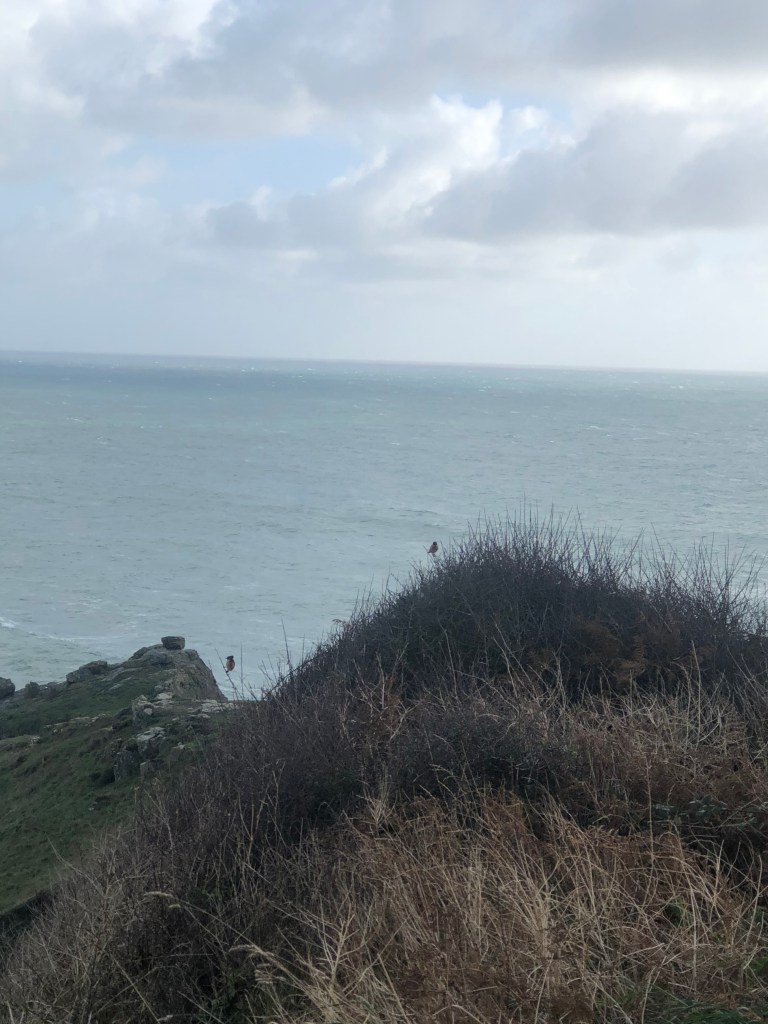
As we walked, the cliffs were still visible and the winding path was still apparent. We could see the turning point back to the car park quite in plain sight. The only obstacle was a huge drop in the path corresponding to the cliff shapes here. Suddenly, a very distinctive call. 3 stonechats sat on an entanglement of bushes, grass and weeds. A constant reminder that if they lived here, we could definitely pass through. I took a deep breath, and started down the steps.
Stonechats in very unlikely habitat!
Underfoot, the stone was slippery and smooth, making it hard to get a grip. Finally, we made it to the path. I though the birds would be over by now but how wrong I was!
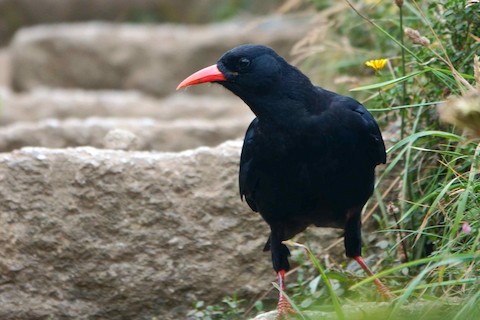
An unknown crow started calling from a field. I trained my binoculars on it and noticed it was quite strange. Even though it was silhouetted, the red bill gave it all away.
Chough
Automatically, I started screaming with joy. Lifer
Today we were at Riverside Valley park. Out with my DMC – FZ330, I predicted some good shots and I would be right, I just didn’t know it yet.
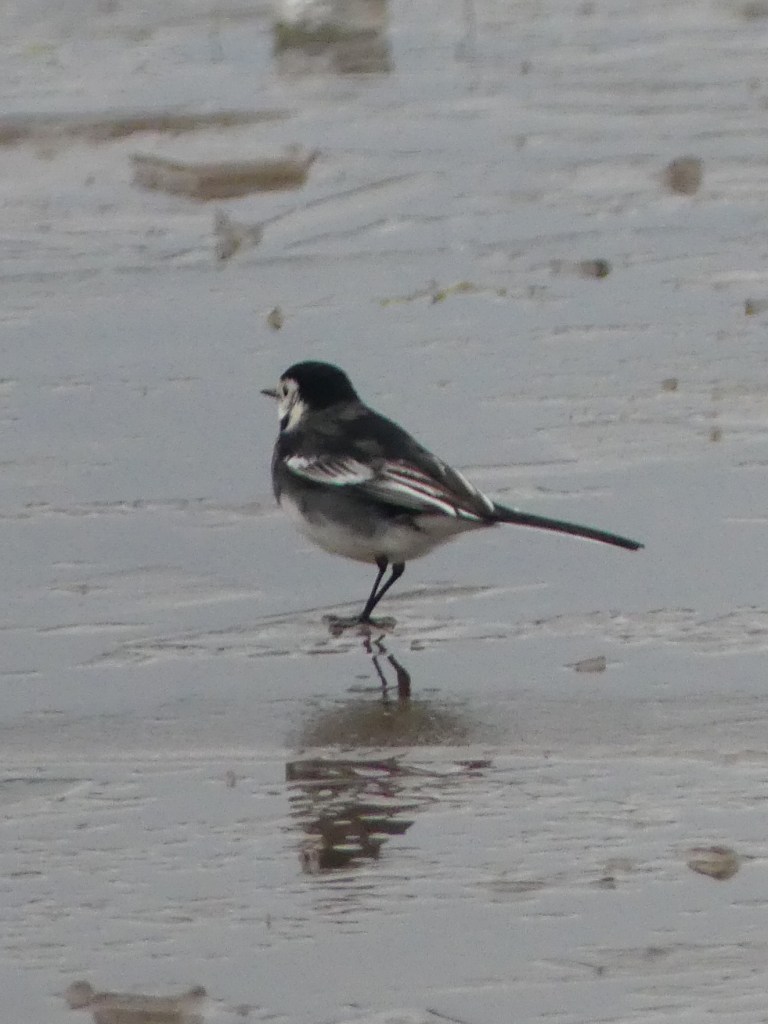
We started on a path which took us through some ponds and overall marsh areas. Being very cold indeed, most of the ponds had frozen over but had left little small holes. Our starting shot was of a pied wagtail hopping along the ice, surrounded by large shards of the stuff.
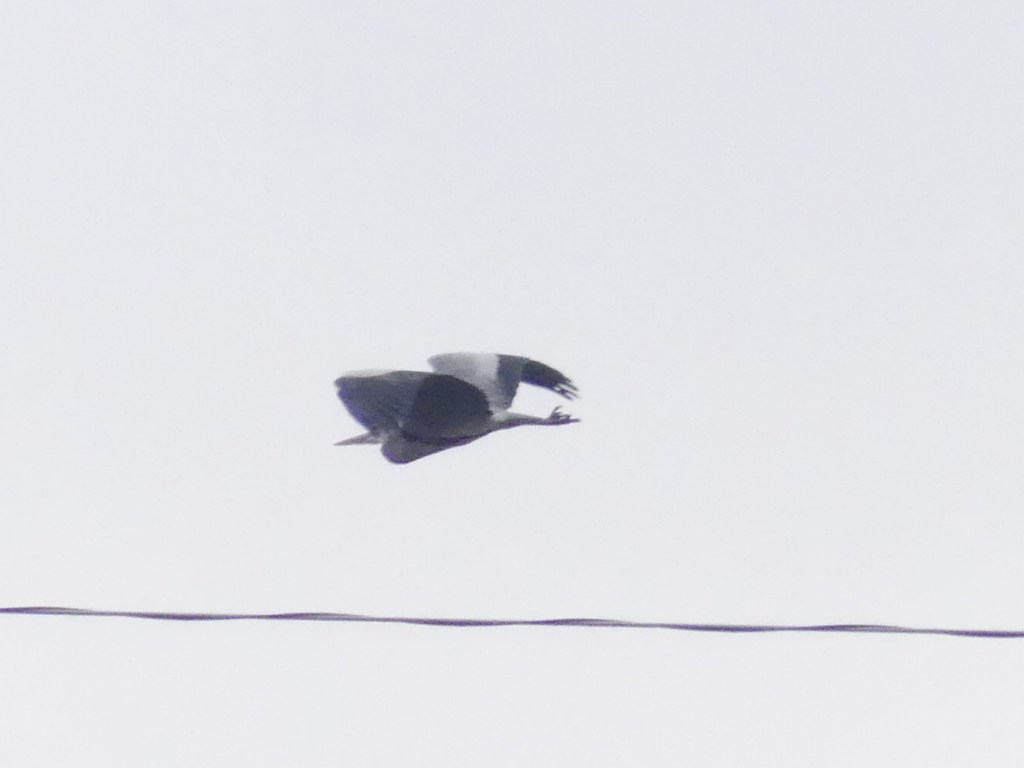
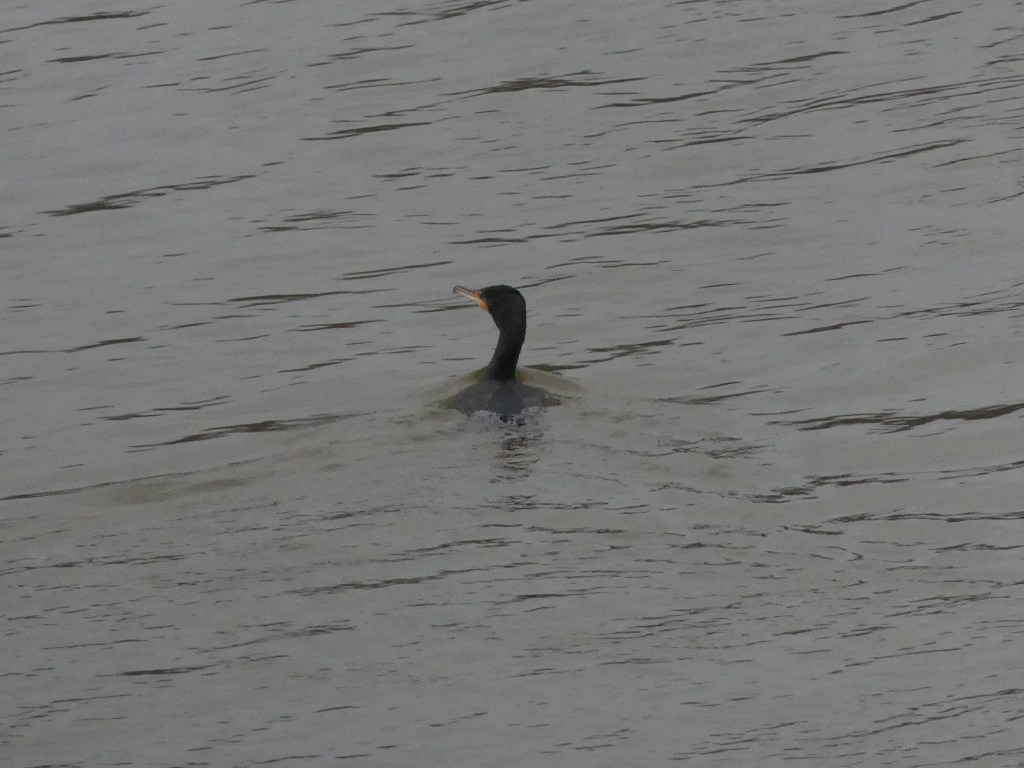
The very messy trail was splattered with freezing cold bogs and deep, icy puddles. The path gave good views out over the river Exe and the fields and trees. This was perfect habitat for Cormorants and there was absolutely plenty filling the skies here. As a bonus ,a distant Little egret was very welcome and it even posed for photograph. In an adjacent field, a grey heron soared low over the telephone wires.
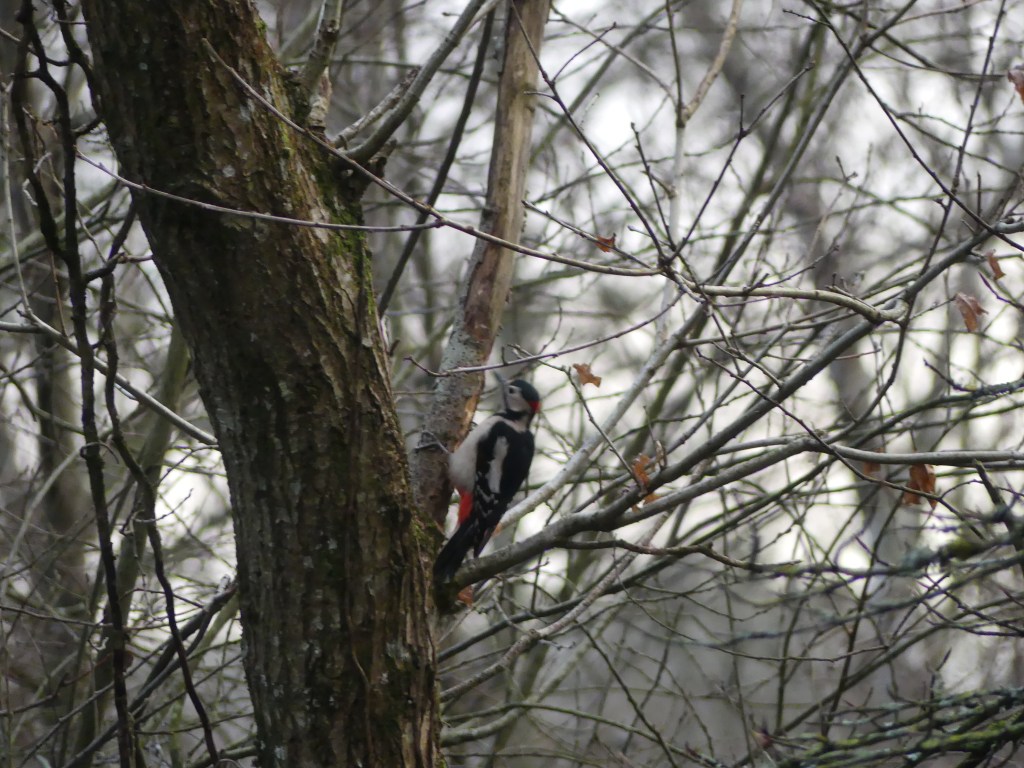
After about 5 minutes after the egret, a Great Spotted Woodpecker started to drum in a nearby oak. I started to scan the higher branches with my viewfinder and just about found him. He was nestled deep in a crevice, demolishing the wood around him. This was a welcome sight and it happened there was two, both fighting and jostling for space.
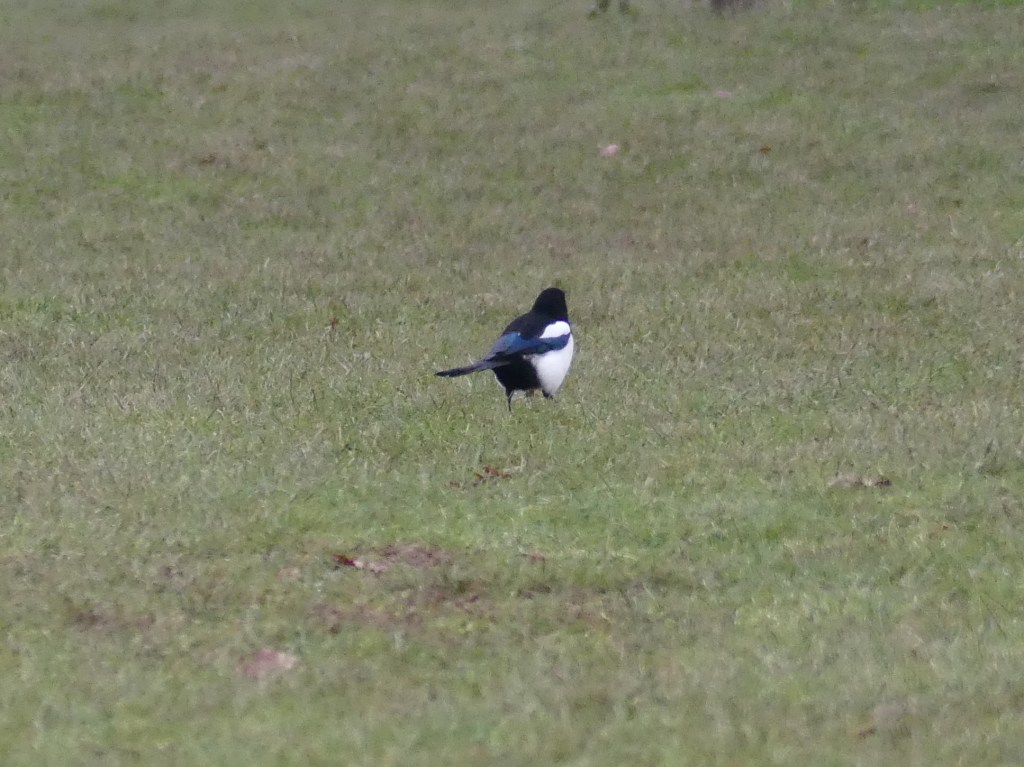
The fields around us, even though people were everywhere at this point, there were still plenty of scavengers such as Carrion crows and Magpies.
We carried on walking well into the evening and V-shaped formations of Herring gulls started to fill the skies. This behaviour is common throughout winter as hundreds of gulls fly to their roosting places.
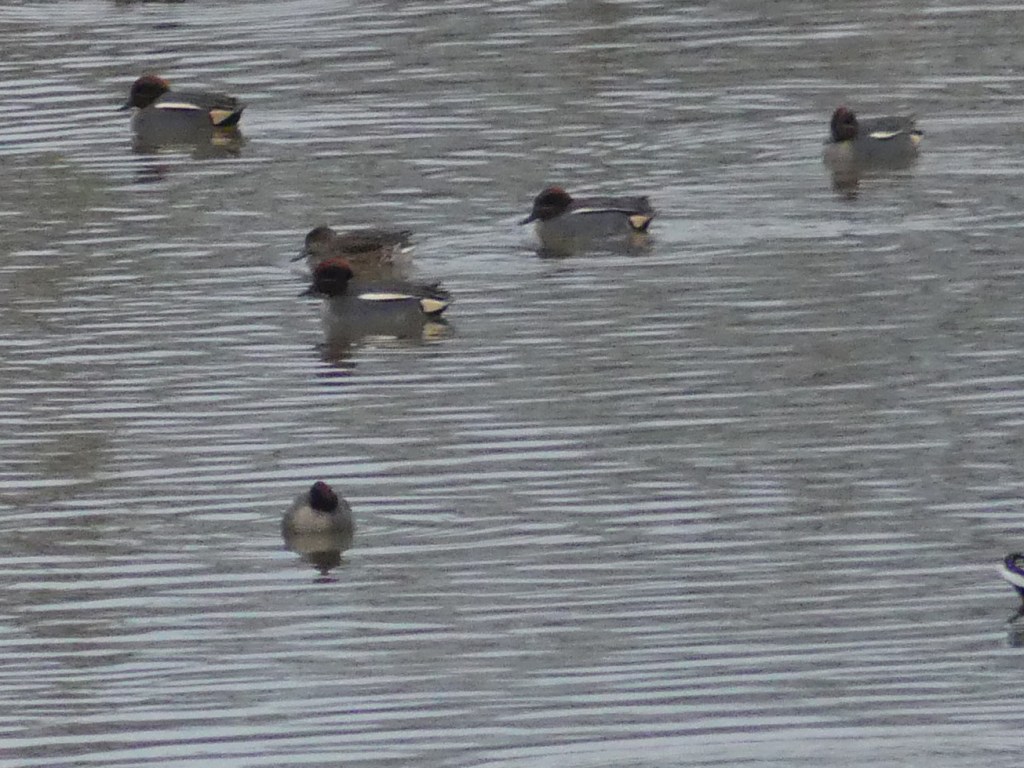
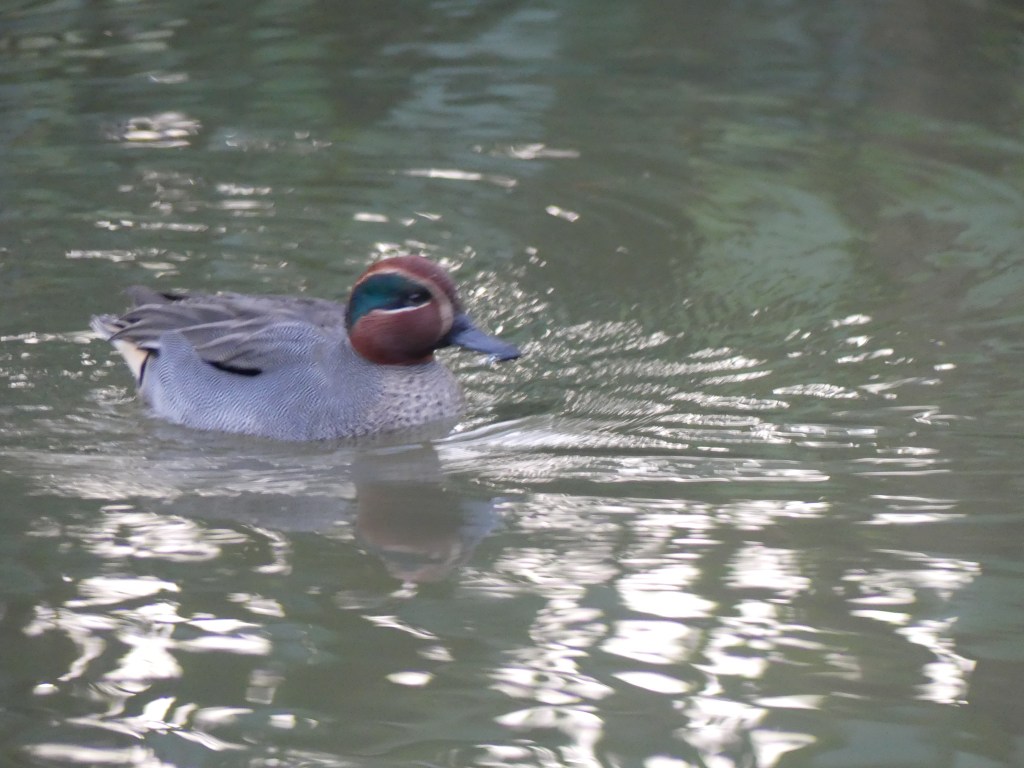
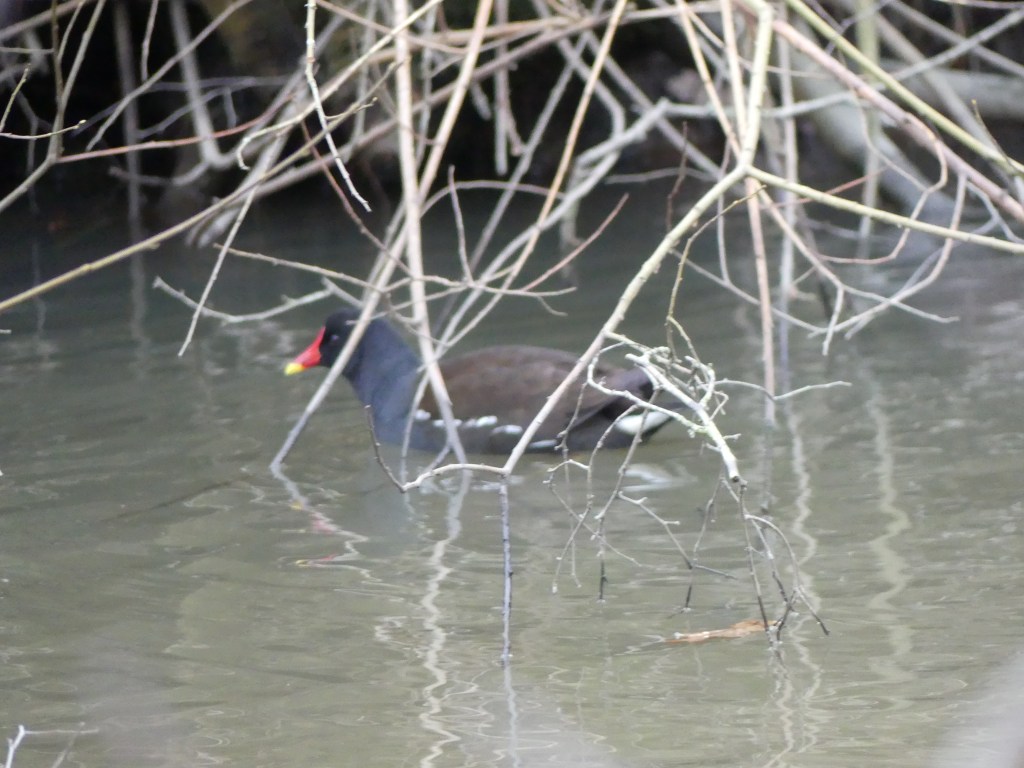
We carried on strolling and soon enough, there were hardly any people left. We took a path that led up to a bridge over the river and the views were magnificent. On one side about 40 Teal and Mallards. On the other side a Moorhen, 5 Mallards and a Canada goose.
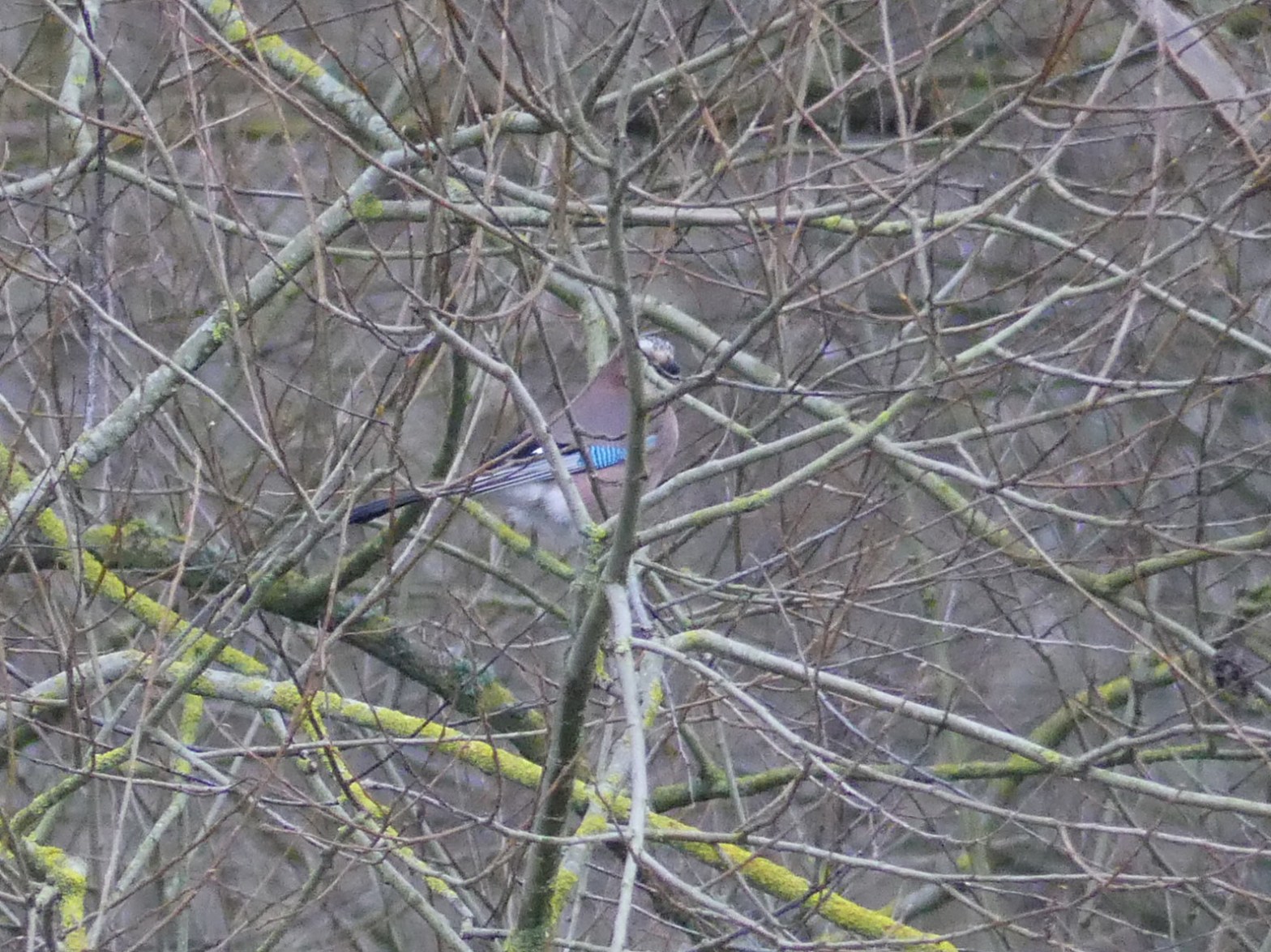
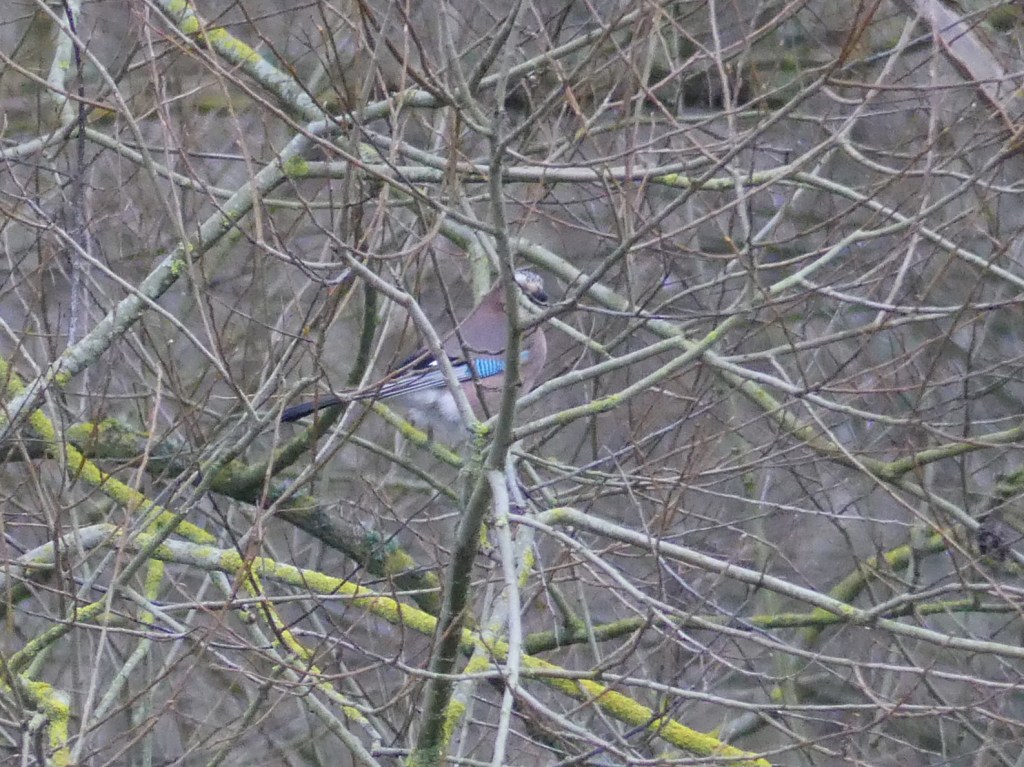
Some other welcome additions were a Buzzard and a jay which posed nicely in some neighbouring trees.
Deciding we’d seen loads already and it was unlikely we would see anything else, we headed back to the car and a lovely sight was all the cormorants we’d seen previously, gathering on a single pylon. There must have been at least 50, the highest figure i’ve ever seen in one area, especially so close.
We finished with 21 species which isn’t too bad for a public park in the middle of Countess Wear.
Hi everyone! I know I haven’t wrote for a while but I have been very busy indeed!
I have been counting up my gift money from Christmas and have finally got a new camera. I’ve only used it twice but it is of really high quality. I think it’s called the Panasonic Lumix DMC – FZ330.
I’ve been out in the field at stover country park, a lake with adjacent native and coniferous woodland complete with a bird hide and bird feeders. Here’s some more information:
We have visited stover quite a bit in lockdown and nothing different today. Out with my new bridge camera, I was hoping to get a good few snaps of the local wildlife. We got plenty of photos at the duck feeding area. The Photographs were of good quality but were mainly everyday species here which included black headed gulls, coots, moorhens, mallards and mandarins.
We carried on to the bird feeders on the other side of the lake where we also got some good shots of great tit, blue tit, chaffinch, great spotted woodpecker and surprisingly a brief view of a marsh tit. From there we headed down the boardwalk back to the lake.
Back on the lake path, I managed to photograph a swan and a robin [see below] on the way to the bird hide. From the hide, I managed to photograph more coot and mallards but the best sight of all was of a roosting pochard. A female. These birds are winter visitors to Devon and becoming increasingly rare. For now, it was OK to watch it sleep while rounding off some more shots of it. We headed back to the duck feeding area and I managed to get some good shots of the long staying Teal and 3 little grebes quite far out. Both of these species I have only seen twice here at stover.
All in all a pretty good day’s birding if I do say so myself.
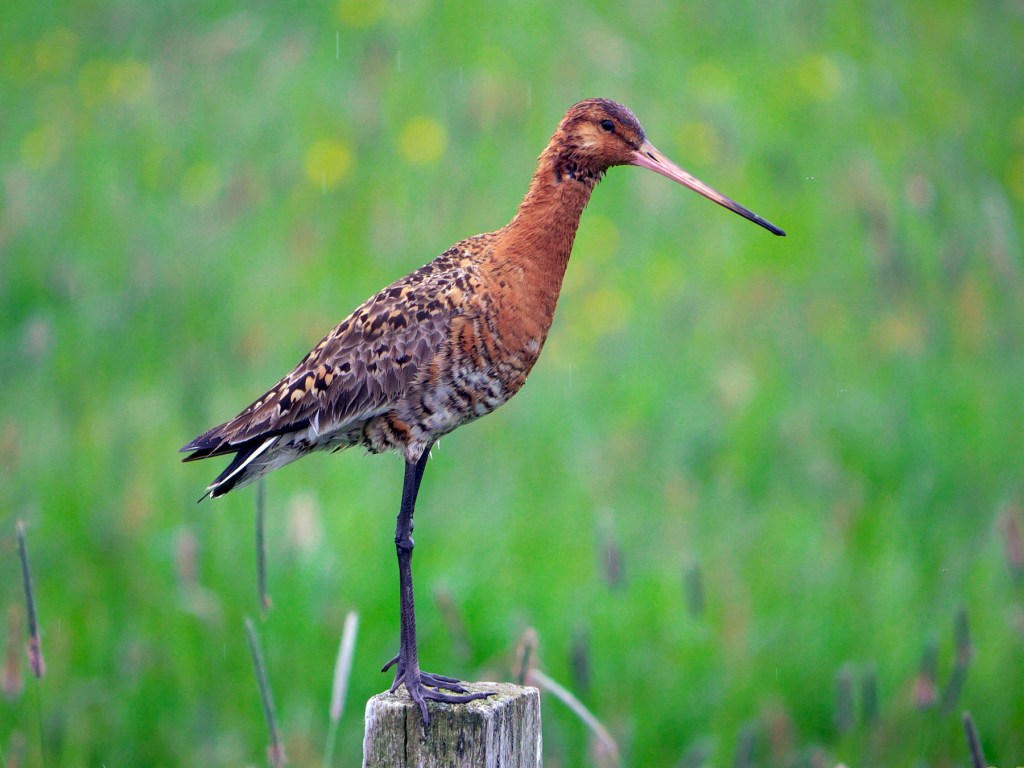
We were outside on the drive, looking up at the sunset. Suddenly, a distant flock of birds came into view. Their flight was very undulating, seeming to be going everywhere. At first, because of the formations they were making, I thought they might be geese but just to confirm, I ran into the house and grabbed my binoculars.
I focused in on the flock with my binoculars, then it hit me. We were dealing with some kind of wader. Getting excited, I rushed in and grabbed my field guide. Black tailed godwit seemed to be a strong possibility but I swept that away because it would be very strange to have these birds away from an estuary.
The tails kept showing and some produced a characteristic white rump patch, the evidence was overwhelming for black tailed godwit. But, it couldn’t be. Yes, it could! These did turn out to be black tailed godwits.
We started the walk going down the road that led to the reserve. Just when we’d left the car, we heard a sound. We looked up and saw a green woodpecker flying right above our heads. First catch of the day. As we walked further, the sound of brent geese was everywhere. In a field by the road, we managed to get a glimpse of the flock. So many!!!!
After about 5 minutes, we reached the hide. We quickly had a rushed look around the feeders and the gardens. We counted 1 great tit, and a blue tit. Not too exciting but eh, birds are birds.
We entered the hide and saw 2 ladies sitting and watching. We had a very nice chat. I took a good long look at the birds outside the hide. A grey heron was sat on the nearest bank and in a far off tree, a silhouetted buzzard and two pigeons sat. Hundreds of Canada goose were taking up the majority of space on the mudbanks and in with them were a few black headed gulls. Now onto the ducks. There were shovelers, wigeons, teals, Pochards, moorhens. Plenty for all. Suddenly, one of the ladies called out to me. I went over and she told me she was looking at a group of teals. She then went and said to me. “One of the ducks in that group is a lot larger than that other lot. Do you know what bird that is?”. I started watching it in the scope. Its head was a very distinctive shape and it had a white wing flash. A juvenile garganey. Only my second sighting for this species. Lapwings were among the stars of the show. There were about 13 birds, flying around everywhere. Literally wherever you look, bagsy there’ll be a lapwing there. Another bird we saw was a common sandpiper, bobbing along the shallows.
We left the hide behind and started the walk to the viewpoint. When we were nearly there, a blackbird popped out in front of us. We reached the viewpoint.
There was plenty out on the mudflats. A few black tailed godwits were very mobile around the estuary. At least 10 birds were flying around. In with the godwits were many waders but I was only able to ID a small minority of them. Among these were dunlin, redshank, greenshank and many others. I took a look among the rocks near the old stone wall, usually a favourite domicile for little egrets. Sadly there weren’t any egrets but there was a great black backed gull (GBB gull, to many birders) sat on a pile of seaweed. To top it all of, a robin landed on the wood right in front of us!
The walk back didn’t give much, but 16 starlings did fly over. What a lovely way to end a good morning’s birding.
I was up in my bedroom and was reading my bird book again. Suddenly, I heard a shout from the front door. I rushed down the stairs to see what was up.
I was told by my Dad that he had seen a strange bird fly up into the trees at the top of the building site. I grabbed my binoculars and slowly started scanning the trees. Surprisingly, I didn’t have to look for long. A medium sized bird of prey glided with a high speed to the nearest tree. I managed to get him in my binoculars. From this distance, the breast looked bright pink! This could only mean one thing. Sparrowhawk…… He frequented the building site for about 10 minutes, gliding and gliding low over the sand.
The place for birds, Dawlish Warren’s Bird List is 199 strong! The place is especially good for terns and assorted wader species such as sanderlings. It’s a very nice walk. You can walk either along the beach or through the actual nature reserve.
Where I saw my first black throated diver, Slapton Ley National Nature Reserve (NNR) plays host to many different species of birds. Its unique habitat means that you will often see seabirds and waterbirds at the same time. A small barrier of land separates the fresh water from the sea. There are a couple of bird hides there and there are very nice walks. 174 species of birds have been seen here.
A wonderful place for birds, in spring and summer this place plays host to reed and sedge warblers. The trail comes around the Turf Locks pub and it loops back around to the car park. In winter, the area around Turf Locks can be great for waders. If you choose to walk here, make sure you keep an eye out; 171 species of birds have been seen here!
On the other side of the Exe from Exminster Marshes, Bowling Green marsh, located in Topsham is the Ultimate place for waders and wildfowl. 169 species have been seen here and the view from the hide is incredible. Likely birds in winter include wigeon, pintail, avocet and curlew. Advise against going here for walk as is just road with entries to hide and viewpoint.
I have never actually been here in person but lots of other birders tell me that it is great for birds. Apparently, 135 species of birds have been seen here. The landscape is basically a beach with a view out onto the sea.
Great for seawatching, either land based or pelagic. One of Berry Head’s specialties is its guillemot colony. Other seabirds can be seen here too though. These include gannets and fulmars. Lovely for walking but cliffs very steep in some parts.
7. Lundy Island
The place for seabirds in Devon, Lundy is the norse word for puffin. “Puffin Island” is not only famous for puffins but for all its other seabirds. Guillemots, razorbills and kittiwakes are just a few. On the northern half of the island, you can often see gannets offshore feeding.