
DISCLAIMER: You’re probably wondering about the origins of the title of this one. I won’t give too much away, but I will say that no butterflies, or any creatures for that matter, were harmed in the making of this blog.
Bracken. That was the reason I stood upon the crest of the hill at Pepperdon Down (an area of access land, meaning that the public can go there and stray off paths) at 9:23AM, looking down the slope at a whole field of the stuff, packed close together and at head height. Apparently, the view from here is meant to be outstanding, but all I could see was green fronds, and after that white. The mist didn’t bode well, but it was still early doors. Afterall, a little mist had no chance in stopping the Dartmoor Youth Rangers doing what they did best. Brutally massacring bracken.
Well, it wasn’t that simple. The aim of the day was to channel our inner bovine, and to become cows. Graze like cows, move like cows, sound like cows. Well, maybe not that last one, but we did have to mimic cows in our approach. That meant that we had to try and carve wide paths and channels through the bracken, that twisted and met up with one another. Essentially, we were looking to build a maze for flying insect customers, with one species forming our target market.
But first, in case you didn’t know, what is bracken? Bracken is the UK’s most common fern, and is found in every continent except Antarctica. It’s fronds appear all over the UK, and unlike many other ferns, it dies off in winter, leaving crunchy brown bracken everywhere. It’s success is owed to its sometimes annoying ability to completely dominate a landscape, growing in such densities that is blocks out the light and prevents any other plants, the bracken’s competition for sunlight, from growing, which isn’t very good for biodiversity.
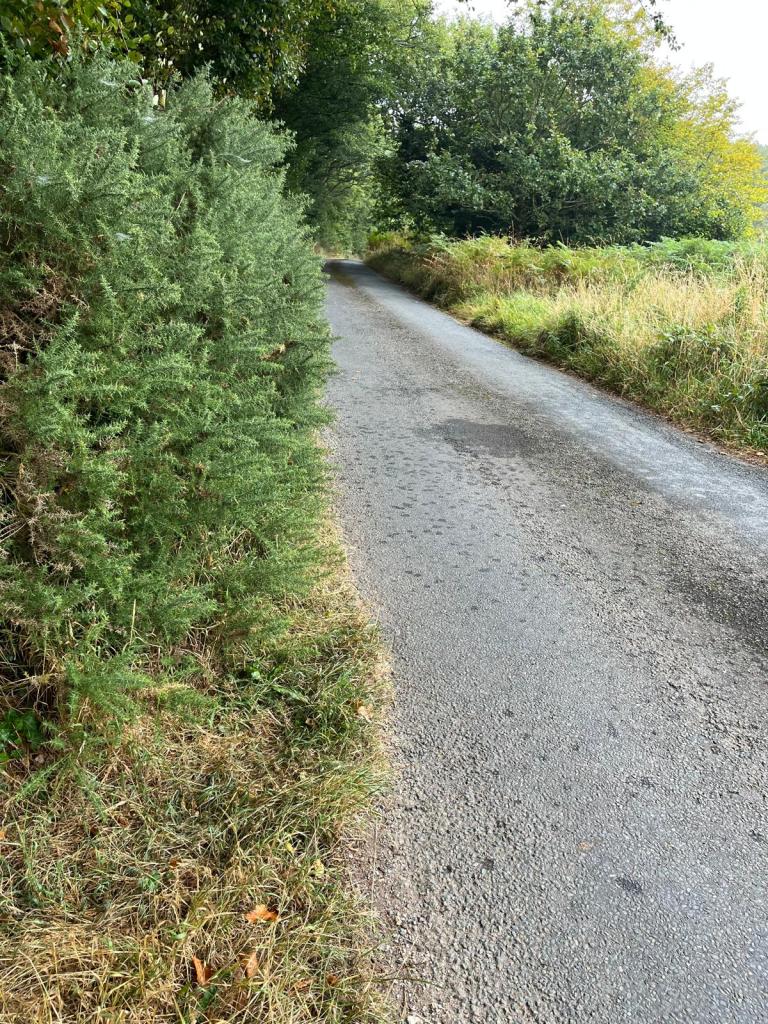
The Pearl Bordered Fritillary is one of the earliest Fritillary species to emerge, with them often being found as early as April in woodland clearings and hillsides complete with some bracken. Emphasis on ‘some’ bracken. Well, as I stood on the road, I quickly noticed that we had both of those: a woodland clearing on my left, and a hillside with bracken on the other. Just too much bracken. And too high as well, because Pearl Bordered Fritillaries generally like to fly close to the ground.
It is a bit of a looker, with two large silver pearls and a row of seven small pearls along its underwing (not actual pearls, this is Dartmoor not Monaco), but they are one of Britain’s fastest declining butterfly species. Once widespread across Britain, they’re now only commonly found in northern Scotland, south Cumbria, Devon and Cornwall. Thanks to habitat fragmentation and a loss of woodland clearings, such as those left by coppicing, have contributed to a huge drop in numbers.
So, this was a habitat restoration project. Pearl Bordered Fritillaries lay their eggs on dead bracken in late summer, which thanks to its fronds, create air pockets and therefore warmth. They’re usually laid near to violet flowers, the Fritillary’s main food plant, but by the time the caterpillars are ready to eat, sometimes the violets are nowhere to be seen. You see, the eggs usually hatch after 10-14 days of being laid. After that, the caterpillars eat very little, if anything at all, and enter a period of dormancy, essentially hibernation, during the winter months. They awake from their slumber during March and early April, but soon after they awake the bracken can become dominant, blocking out the light and preventing other plants from growing, including the violets.
So our aim was to bash the bracken. By hitting it near to the base of the stem and bruising it there, the bracken will continue pumping nutrients straight out of the hole, eventually self destructing. By carving a network of around three foot wide channels ( the wider the channels, the less likely the bracken was to become dominant again) and forming isolated pockets of bracken, we could make sure that the butterflies can have both their nesting sites and their violets, hopefully for years to come. And now, you see the meaning of the title!
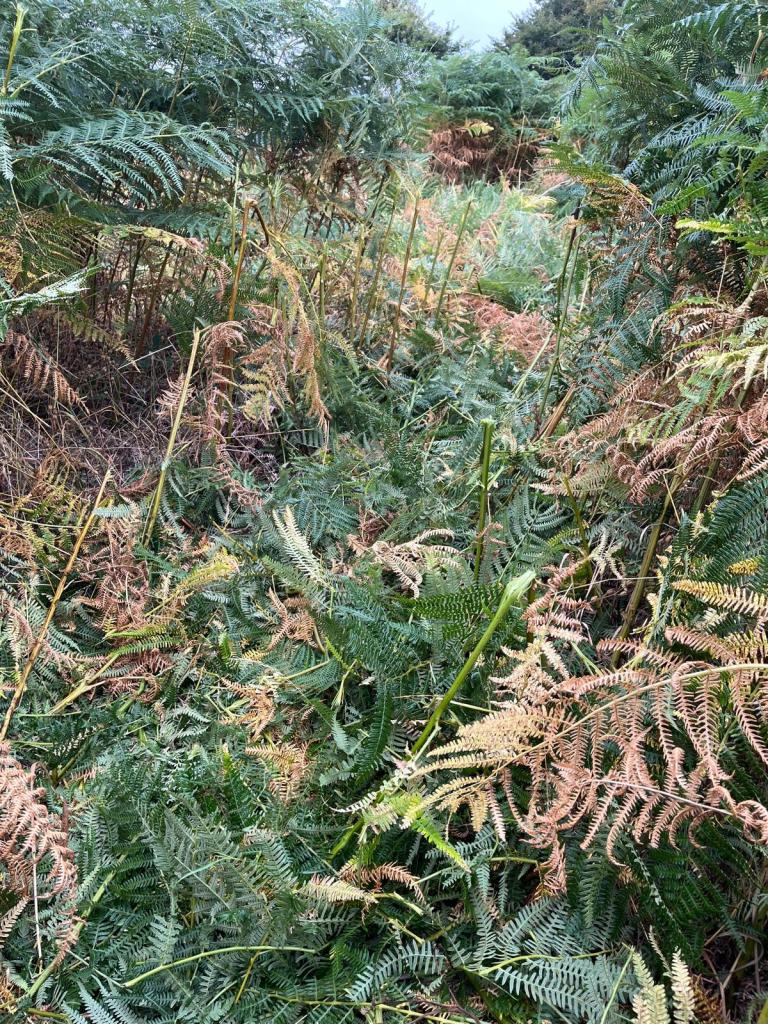
And so we began bashing for butterflies. Armed with logs, branches and bamboo canes, we set to work, creating a surprisingly intricate and complex network of channels and paths, relishing bashing the bracken. To be honest, a lot of conservation work is destruction. Trapping, removing, bashing. It’s important work! But don’t go getting the wrong idea. There’s also restoration, reintroducing, planting and lots more nicer stuff. It’s not all damaging plants!
But even from the destruction, an immediate positive impact was made. At around lunchtime, the mist was banished by the suddenly blazing sun, and everyone who was anybody (in the insect world) came out to play, exploring our maze and whizzing through it. Bumblebees, moths, butterflies and hoverflies all returned to the jungle of the bracken, free to fly at their preferred low altitudes. It was incredible in its instantaneousness, and despite the fact that we didn’t see any Pearl Bordered Fritillaries, I’m sure that they can’t have been far away and are right now, as I write this, enjoying the corridors we built for them. As soon as the flowers start coming up, which will be hopefully be sooner rather than later and probably begin with some dandelions, I’m sure Pepperdon Down will become an insects’ Ibiza.
And I really hope it does, because more than half of UK butterfly species have been shown to be in long-term decline since 1976 by the UK Butterfly Monitoring Scheme. 2024 was the fifth worst year on record for butterflies on our shores, resulting in all but 8 of 59 species showing a decline from the previous year; and nine suffered their worst year on record. But one of the most shocking figures was that common butterflies, the ones that everybody sees in urban parks and gardens, suffered their second worst year on record. Peacock, Red Admiral, even the Large White are all in trouble. The Small Tortoiseshell, an instantly recognisable species once common across the UK, has declined by 89%. That’ll be why I don’t see them anymore.
I know that this makes for bleak reading. But all of these figures are true, and it’s largely thanks to us. The merciless destruction of crucial habitats rich in food and nesting sites, the use of pesticides and the acceleration of climate change have all played a role in these depressing numbers you have read in the above paragraph. And if the planet keeps going the way it’s going, with weather becoming more extreme and unpredictable, its not going to stop. 2024’s wet spring and cool summer had a big negative impact on butterfly populations. But unless climate change is slowed down enough for the natural world to adapt, that’s going to keep happening. And it’s only going to get worse.
On a more positive note, incredible people are working their socks off every day to save Britain’s butterflies. Charities like Butterfly Conservation and the Wildlife Trusts, are working on projects to restore habitat, conserving the species most in need, conducting citizen science projects like the Big Butterfly Count, which you can do annually (find out more here), to monitor declines and raising awareness wherever they go. You can help easily, simply by planting a few nectar rich flowers in your garden, for the adult butterflies to feed on. I hope that we managed to make a difference today, but so much more work needs to be done to reverse these declines. But the work being done is having a positive effect, and given time, should make a big difference.

