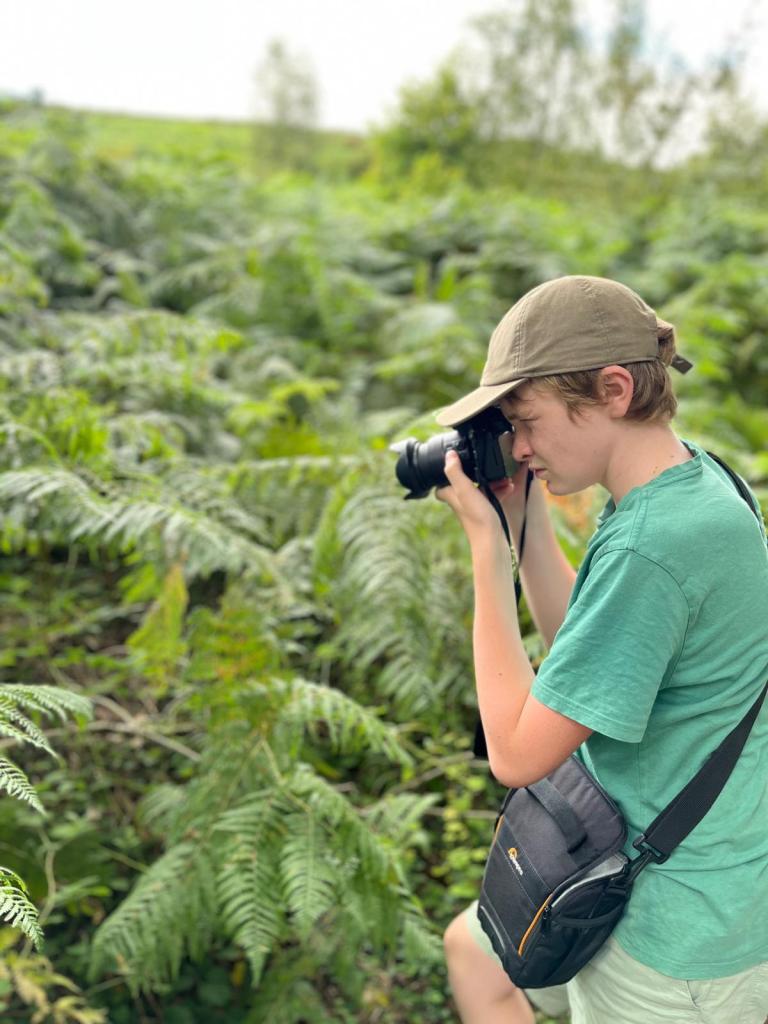
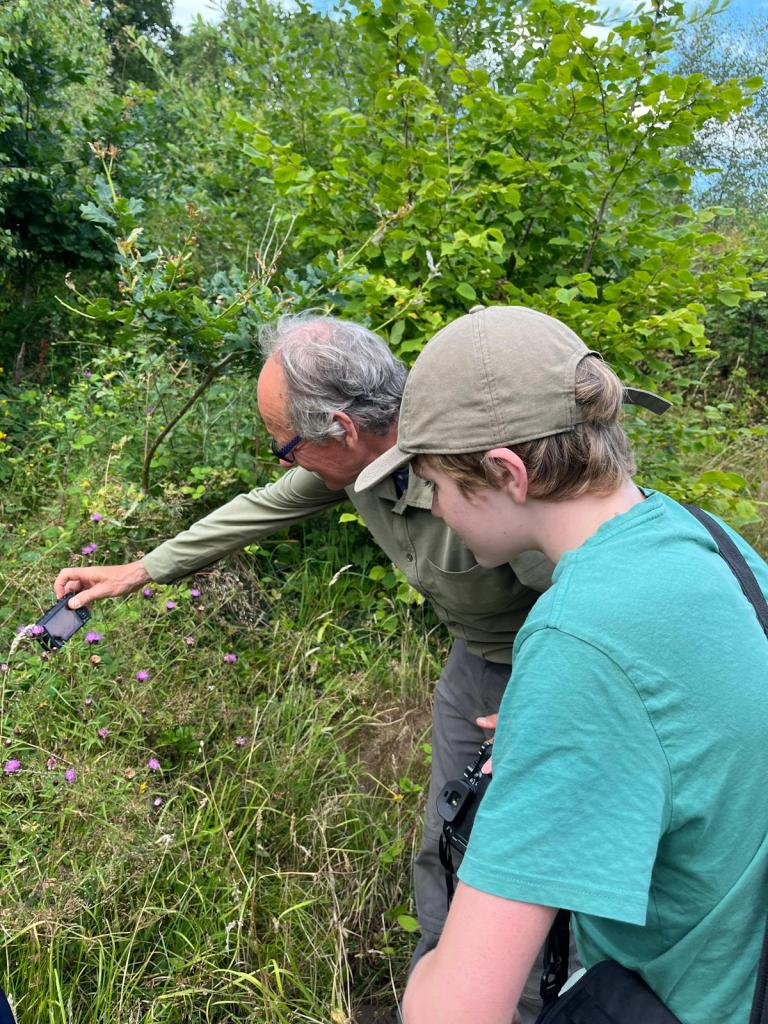
Last week I was lucky enough to head out on a bug hunt alongside a small group, landowner Fiona and renowned entomologist John Walters. We were nearby to Newbridge on Dartmoor, where the River Dart tumbles towards Dartmeet in a spray of white and grey. It was a brilliant afternoon, where we used several different methods to search for and survey the insects hiding in the field. The field in question, by the way, was an absolute nature haven. It was messy and unruly, with narrow paths weaving through the wonderland. I loved it, as did the insects. Hard to believe this place was once a Christmas tree farm!
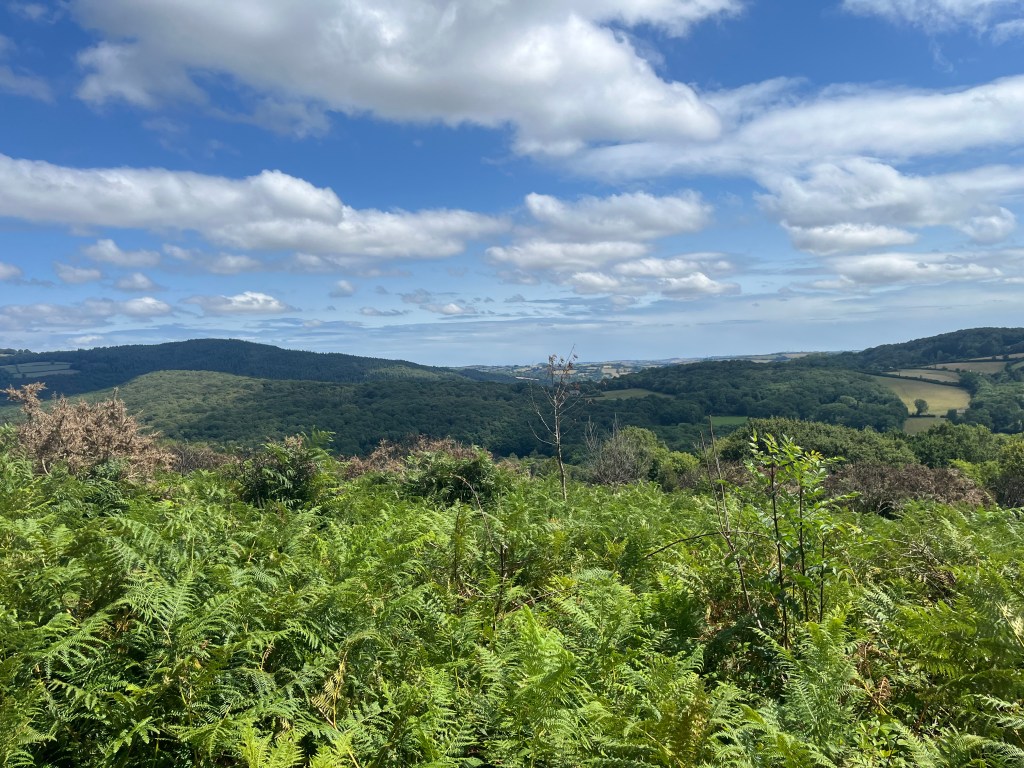
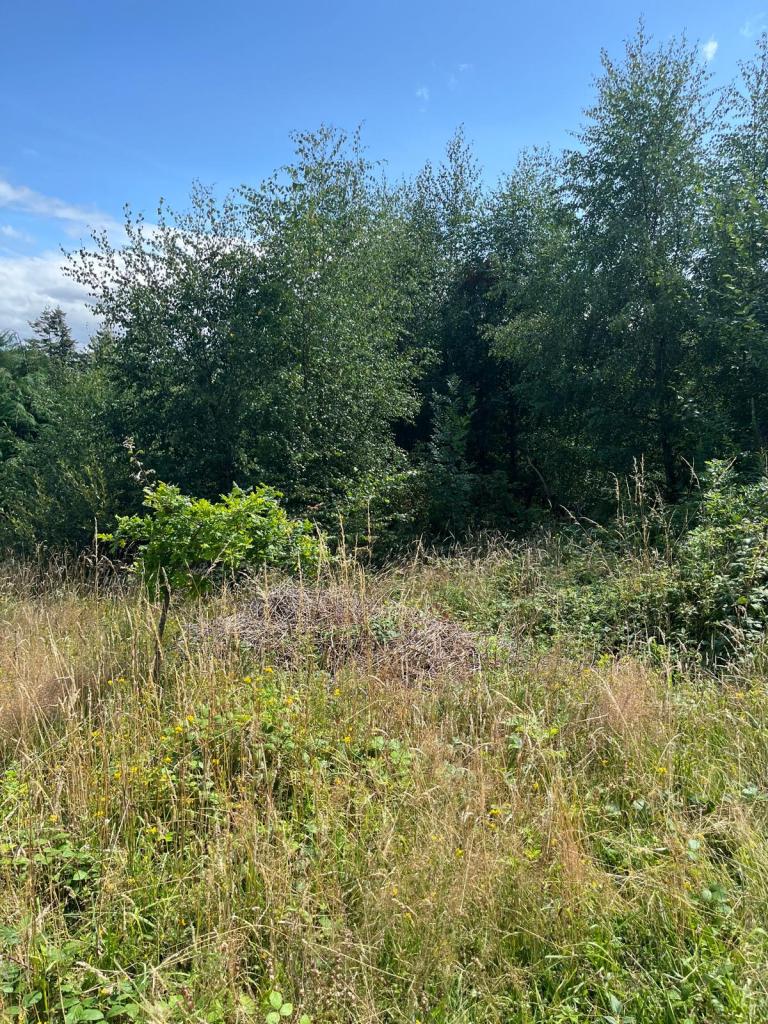
But what’s the story of this little piece of rewilding? Well, to start with it was bought so that a phone mast wouldn’t be built upon the land. Now this was about seven years ago, and back then it was full of young coniferous trees. In fact, there are still remnants of this as you walk along the paths. A suspicious looking Christmas tree here and there. But they are largely gone, and thankfully they don’t seem to have harmed the soil quality with their acidity either, as many deciduous trees have cropped up, such as silver birch. Silver Birch is often the first kind of tree to crop up in an open area, a pioneer of sorts, and these slim trees can be home to around 300 insect species. But don’t worry, there are still lots of areas that have been kept open, so as to create a mixture of habitats and promote biodiversity.
These open areas were full of long grass, short patches of grass and bramble patches, which is many an insect’s perfect idea of an idyllic paradise. Tall vegetation, whether that be lofty meadow grass or knee high brambles, is home to everything from tiny aphids to butterflies such as the Meadow Brown. And for good reason too, as it provides very good shelter from the elements and predators such as birds, food sources such as nectar and pollen from flowers like Cornflower, and places for insects to lay their eggs and overwinter, like in bracken. However, longer grass can make it harder for insects to navigate, especially flying ones, and this can potentially hinder their search for a mate.
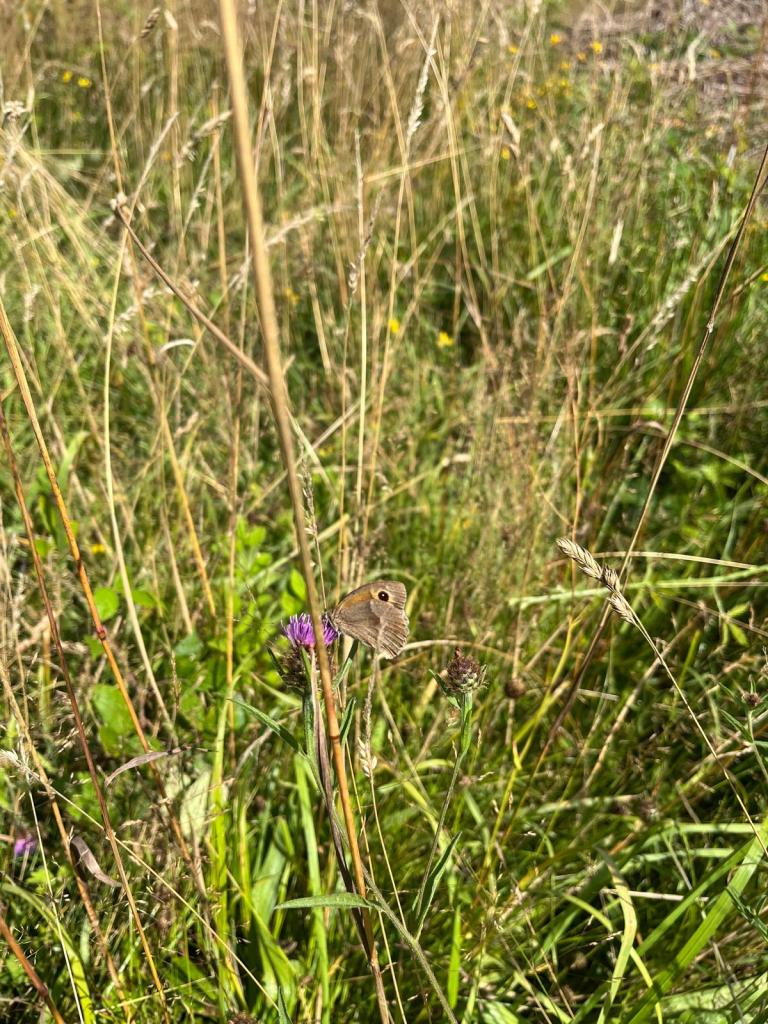
Others, such as ants and mining bees, are attracted to shorter grass. It provides easier foraging opportunities, such as seeds that are more evident than in taller vegetation. The mining bees use the short turf and exposed soil for nesting and digging their burrows into the ground. The exposed soil is easily warmed by the sun which penetrates the surface, warming the bee’s larvae. Additionally, flowers like clover thrive in short grass, and this can in turn provide food for lots of pollinators. However, the problem with short grass is that it doesn’t provide any shelter from the elements unless you burrow down, so many species can’t live there long term.
And finally, there’s the insects that like wooded areas, whether they be wood-boring insects such as the Deathwatch Beetle, or ground dwellers such as centipedes, or even flying insects like the Lobster Moth. Trees provide food, shelter and places to breed thanks to the availability of dead wood, leaf litter and diverse vegetation. The only downside with a woodland is that the kind of vegetation that creates so much biodiversity, like long grass, is unable to grow to a decent height due to the shade created by the trees.
The whole field is managed diligently, but also left to go wild a bit. It’s lightly grazed which stops the growth of scrub, there are log piles and sheets of metal left around for insects, reptiles and amphibians to bask under and feed on. The paths were kept clear so that humans could observe and enjoy the natural bounty, as well as for the use of ants, and therefore Green Woodpeckers too (favourite food: ants). Striking the right balance between management and allowing nature freedom is crucial for biodiversity.
Overmanaging an area can hinder the natural processes that would be carried out without human interference, and this can potentially lead to a loss of habitat and biodiversity. Overgrazing is probably the most common example of this in the UK, and it just ends up creating a monoculture where little can thrive. You may think that the rolling green hills of England are full of nature, but really they’re anything but thanks to decades of intensive agriculture.
Whereas undermanaging the land can have a completely different effect. Letting nature go completely would cause this mosaic of habitats to degrade, and eventually become scrub, and if left unchecked even woodland, neither of which are as good for biodiversity, especially the insects enjoying the field.
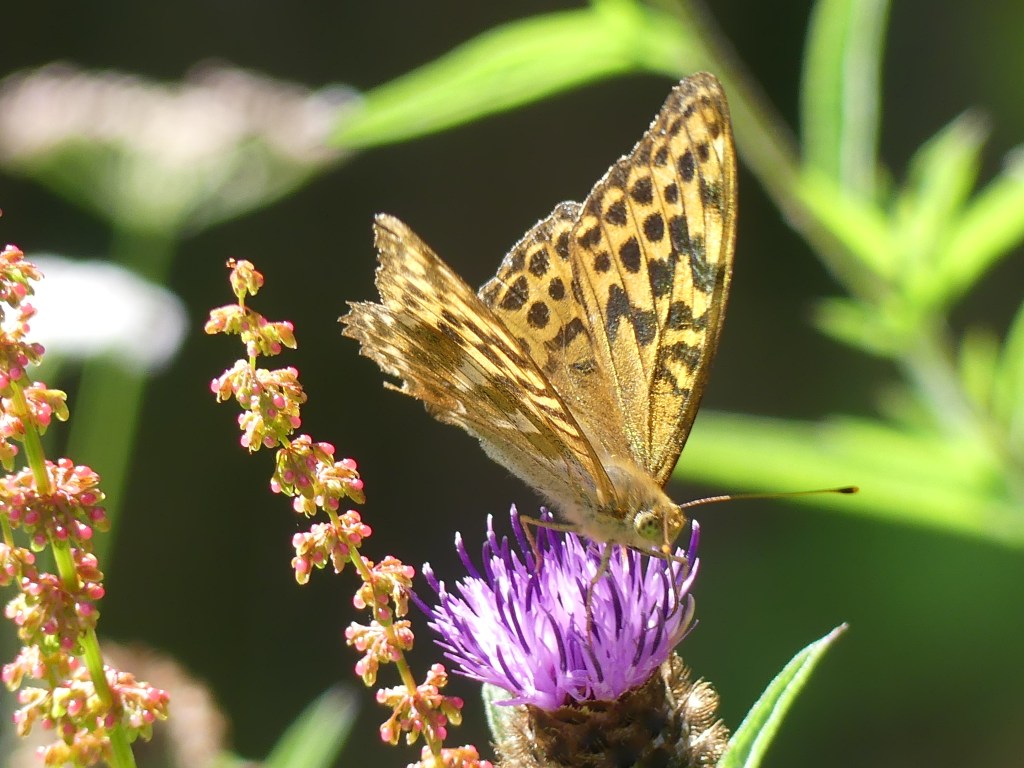
The mosaic of habitats seemed to be working perfectly, as the whole place was buzzing when we arrived. Butterflies, bees and hoverflies were the most obvious residents, fluttering, buzzing and whizzing from bramble to thistle flower. The diversity was incredible. I saw at least three species of bumblebee and five species of butterfly before I even walked through the gate. One of these was a particularly engaging Silver Washed Fritillary, who landed on a flower adjacent to the path and allowed me to take in its beauty. The first impression I’d had of it was as a big orange flying thing as it dashed past my ear. They are the UK’s largest fritillary species, and are recognised by the silver streaks on its underside.
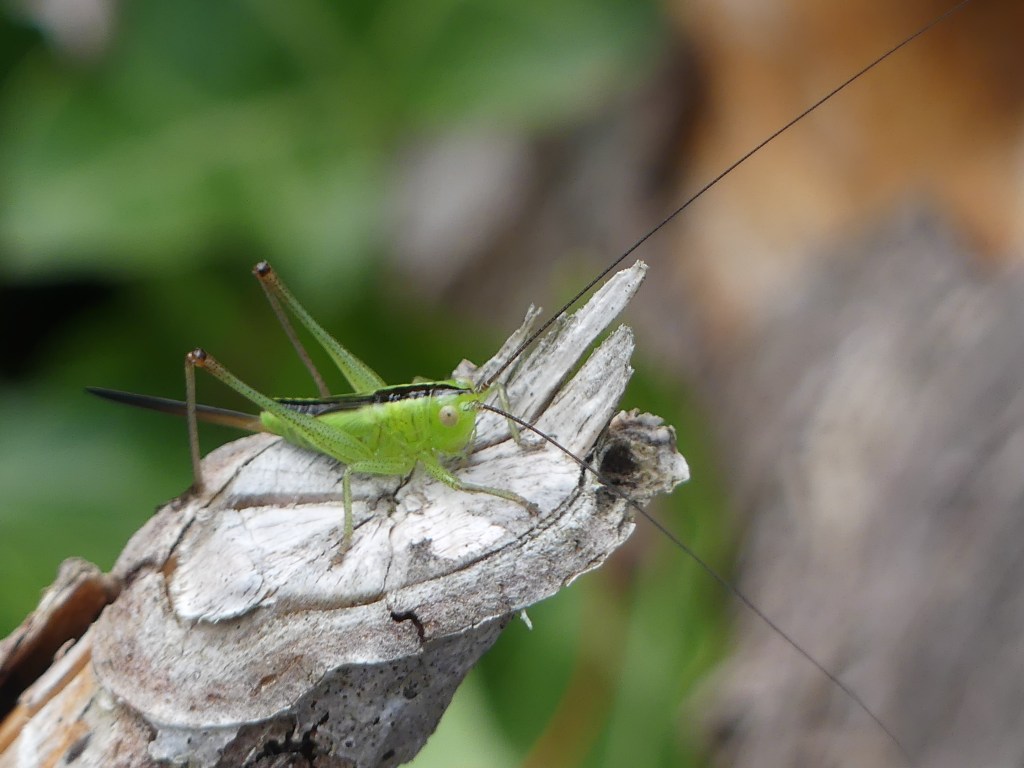
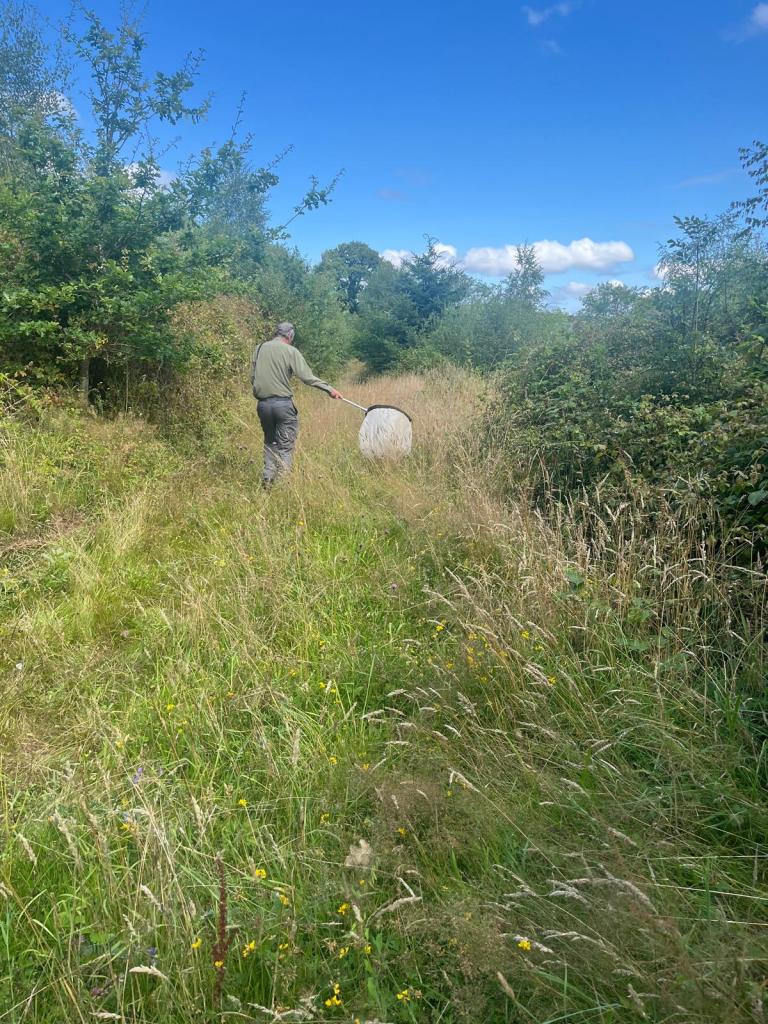
But now, let’s crouch down and look along the ground. Even just sitting there, the grass was crawling with life, from shieldbugs to caterpillars. We used sweeper nets, which you swish back and forth close to the ground so it picks up all the insects hidden in the grass, and an upturned umbrella as a substitute for a beat sheet, which you hold underneath a tree while you shake it so you can observe the insects that fall from the tree. We found some beautiful insects, my favourite of which was a Tortoise Bug, a kind of shieldbug so named for its back being patterned similarly to a tortoise’s shell! Another species which I enjoyed close up views of was the Long Winged Conehead, a type of Cricket so named for the angled shape of its head. There were several individuals enjoying the sun, which by now was getting really quite warm!
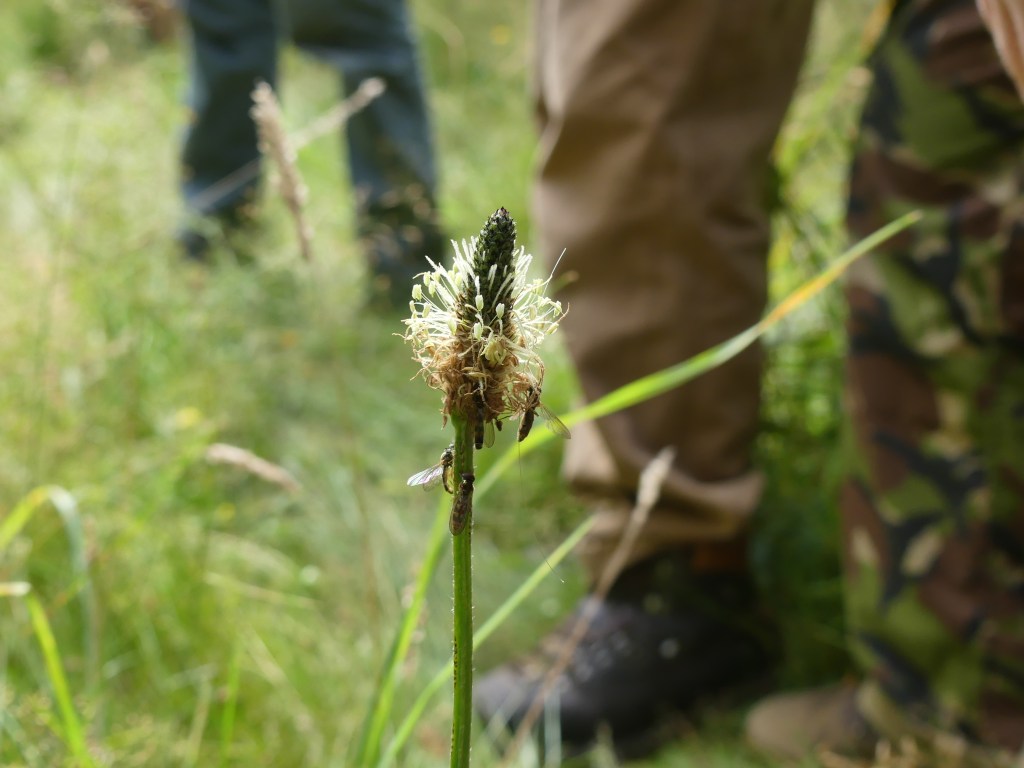
We even found a plant with several dead flies at the top. This was when John gave us a lesson on a fungus that infects these creatures, and takes over their nervous system, forcing them to climb to the top of a plant against the fly’s will. When the fly reaches its final destination, it assumes a position in which it’s abdomen faces upwards; ideal for spore dispersal and the targeting of the fungus’s next victims. The motive was revealed. You know, a zombie apocalypse might not be so far fetched if such shocking yet fascinating things are happening in the natural world, right under our noses. But, to be honest, I wouldn’t have even noticed if it wasn’t for John and his generosity in sharing his expansive knowledge!
It was an incredible session, which despite only being a couple of hours long, afforded incredible views of just a fraction of the UK’s 24,000 (and then some) insect species, as well as being a brilliant learning opportunity for somebody who is primarily a young birder! Huge thanks to John there. Some people have their misgivings with these creatures, but they really are phenomenal when you get to know them, or see them up-close for the first time. But whether you like it or not, we need them, and they (to a lesser extent) need us. However, they’re in trouble.
The results of the Bugs Matter citizen science survey, where volunteers are asked to count the number of insect splats on a car’s number plate after a journey revealed a 63% decrease between 2021 and 2024, which is quite alarming. Let’s not forget that if we lose our insects, we lose the lifestyle that we have built across centuries, that is all centred around pollination. Without bees, hoverflies, butterflies, moths, beetles, wasps and others, how would we produce food? And without insects, the entire food chain could collapse, resulting in mass extinction and a planet full of problems for humanity. So please, don’t say they’re disgusting. Don’t kill them without a second thought. Lot’s of common human practises, like pesticides, are doing that well enough already. Spare them a thought, and also a thought for what could happen to humanity if they were finally wiped out.
On a more positive note, there are many organisations, charities and volunteers working to save the UK’s insects. Whether that’s habitat restoration, which I have had a hand in when out maintaining habitat for Marsh Fritillaries with the Dartmoor Youth Rangers, reducing the use of pesticides, conducting citizen science projects like the Big Butterfly Count or even just raising awareness, organisations such as Buglife, Butterfly Conservation, the Wildlife Trusts and others too are all making progress in pushing for an insect-filled tomorrow. After all, who wouldn’t want that?