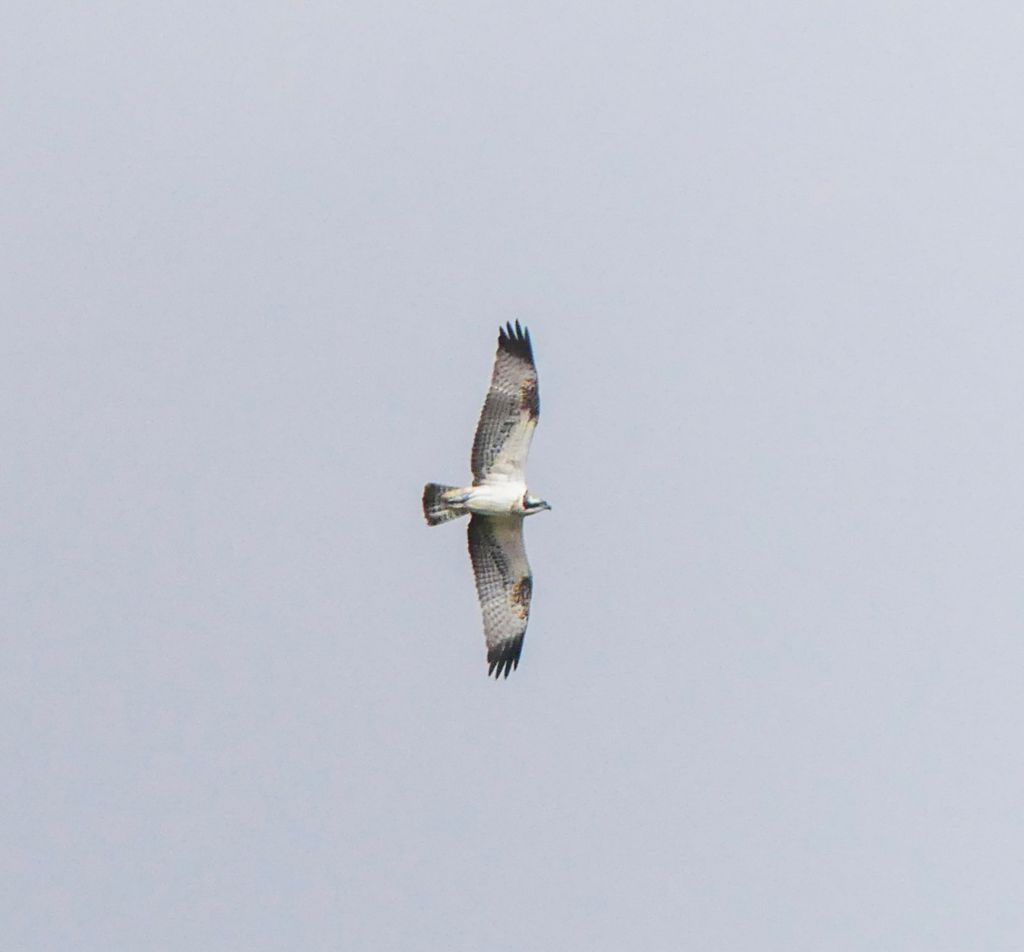
Last week, I was lucky enough to head out with the Birds of Poole Harbour Young Birders Group, on a trip in search of birds of prey. The main target species? It was, of course, the Osprey. Poole Harbour is at the forefront of Osprey reintroduction to the south of England, and here at Carey’s Secret Garden was one of two pairs currently nesting, following their extinction in the country in 1847. I was bubbling with anticipation to see these incredible fish-eating raptors, but also to learn more about their story here in the area.
Birds of Poole Harbour is a charity whose main aim is to raise the profile of and increase accessibility to conservation, preservation and observation of birds in the Poole Harbour area. The Harbour itself is a RAMSAR site (a wetland area of international importance designated under the RAMSAR Convention on Wetlands) and hosts internationally important numbers of many bird species such as Black Tailed Godwits and Avocets, so the study and monitoring of it’s avian residents is crucial to conservation efforts. And by connecting the surrounding locals and tourists with the harbour’s special qualities, they are ensuring a bright future for the site.
The Harbour is now famous for it’s Osprey reintroduction efforts, 109 years on from the last original breeding pair in the UK nesting at Loch Lyne, Scotland, in 1916. Despite being the second most widespread bird of prey in the world after the peregrine falcon, they were persecuted by farmers, egg collectors and gamekeepers, leading to their extinction. Fortunately, a pair of Ospreys of Scandinavian origin set up camp at Loch Garten in 1954. Thanks to nest protection and public engagement by projects like Operation Osprey, led by George Waterson, then Director of RSPB Scotland, the population began to slowly increase.
By the 1990s, there were over 60 pairs in Scotland, with the population having overcome barriers such as egg-collecting and DDT (a widely-used chemical banned in 1972), as well as young ospreys having a tendency to return to the same place where they fledged year upon year. This is known as nest site fidelity, and it also hampered the spread of the birds. Frustratingly, this meant there were still no Ospreys in England, 40 years on from that first pair nesting at Loch Garten. And so began a huge translocation project at Rutland Water in the East Midlands. With the support of Roy Dennis, the project began in 1996, and 5 years later, breeding Osprey returned to England, with a pair at Rutland and another in the Lake District. As of 2023. 250 chicks had fledged from Rutland Water, making this a true conservation success story.
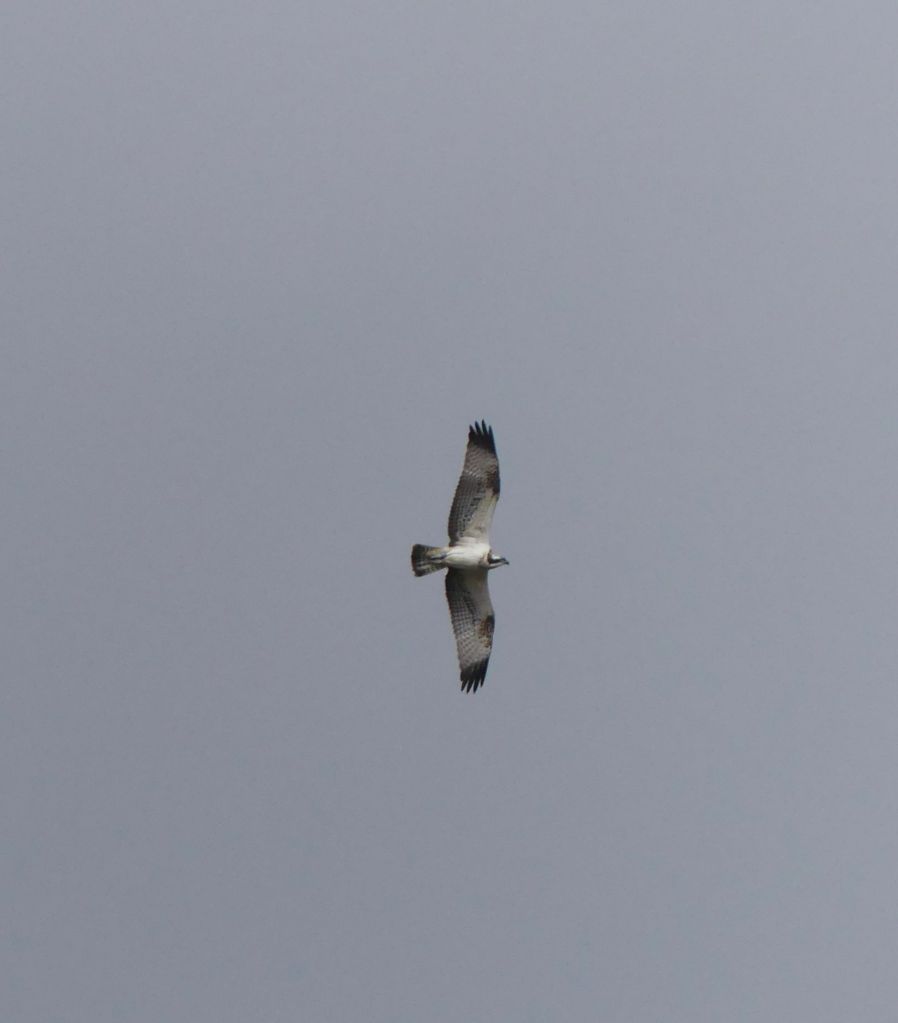
But what of Poole Harbour? Well, in 2017 Birds of Poole Harbour joined forces with the Roy Dennis Wildlife Foundation to translocate up to 60 Scottish chicks to the area. Since 2017, the flagship Osprey individual has been CJ7, who was hatched at Rutland Water in 2015. She was attracted to the site by the young birds released through the project, and in 2019 bonded well with young male LS7. Breeding looked almost certain for the next Spring, but LS7 didn’t return to the Harbour the following year. Step up 022, another young male from the translocation project who arrived back in the Harbour in 2021. Him and CJ7 bonded, and in Spring 2022 they fledged two young, one of whom was predated by a Goshawk. The other, however, safely left on migration, and since then the pair has bred every year, rearing three young in 2023, four in 2024 and another four this year, in 2025. Just to put into perspective how rare it is to rear four chicks two years in a row, there is around a 1% chance of an Osprey having one brood of four!
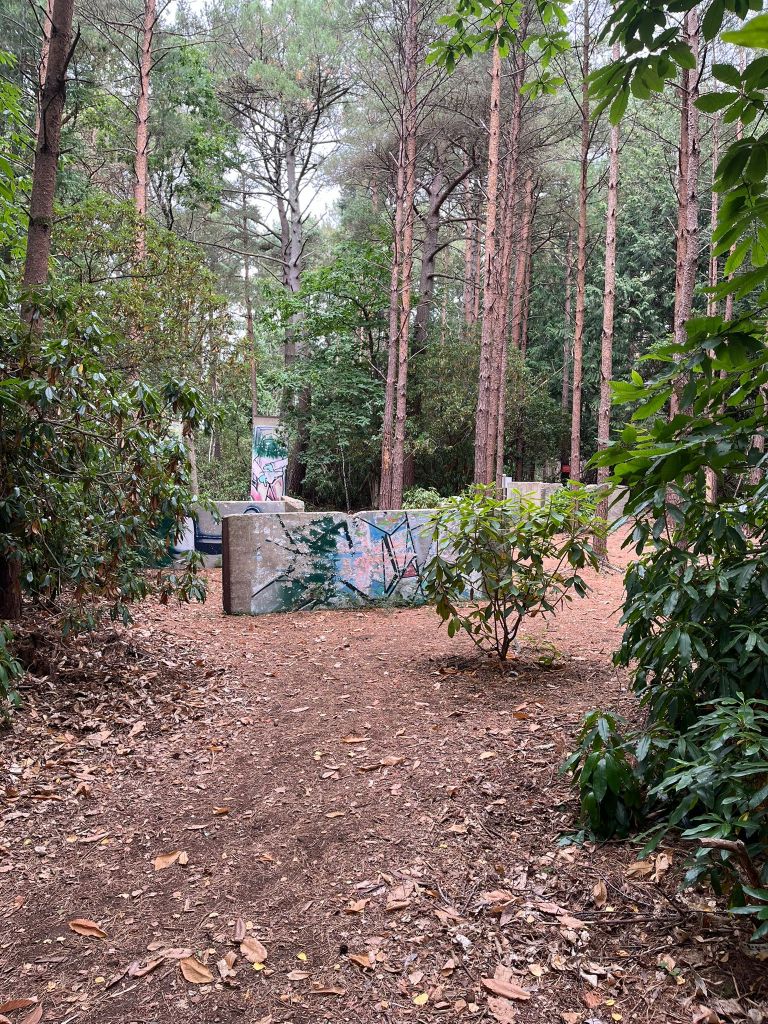
Anyway, back to the trip! We arrived at Carey’s Secret Garden, a beautiful spot complete with a walled garden, a disused Goshawk nest and several large chunks of the Berlin Wall purchased at an auction. The seven full sized fragments make up an exhibit designed to highlight the contrast between itself and the peace inside the walled garden. Essentially, it highlights the contrast between walls that divide and walls that unite. Anyway, there was also a viewing platform looking out over an active Osprey nest! The Young Birders Group met in the walled garden, under the expert leadership of Mya Bambrick, an events assistant for Birds of Poole Harbour, and a young naturalist that I had admired and been inspired by for several years via social media. After a quick introduction, we headed off through the woods towards the Osprey Viewpoint.
I could hardly contain my awe as I spotted the Osprey nesting platform, around half a kilometre (by my likely incorrect estimate) from where we stood upon the viewing platform. Between us lay a meadow teeming with butterflies and a woodland edge teeming with Spotted Flycatchers. It was an incredible view, and I thoroughly enjoyed watching the small flycatchers flit from branch to branch. But absolutely nothing could have prepared me for the jaw-dropping performance the Ospreys put on for us.
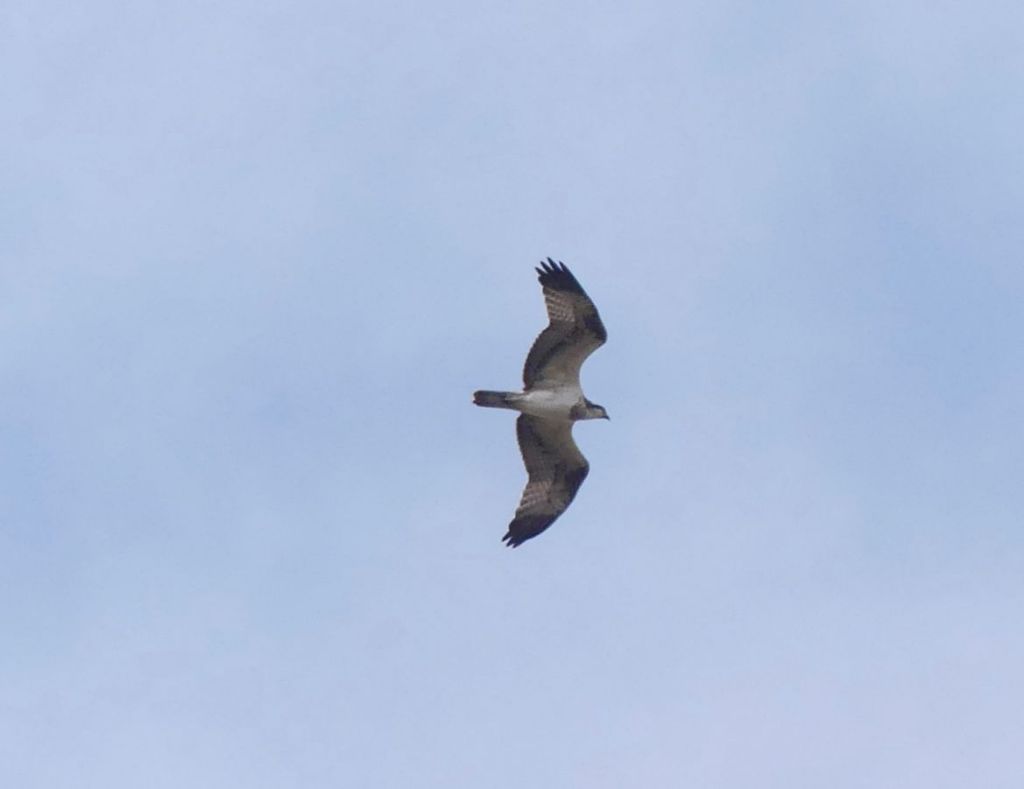
It began with this year’s recently fledged young flying right over the viewpoint, soaring against the pale grey cloud. They had browner backs compared to their parents, and were practising spreading their wings in flight before their looming migration. Then, in swooped CJ7, carrying a decapitated fish in her talons and depositing it on the nest. The four youngsters, 5R5, 5R3. 5R4 and 5R6 all immediately went crazy, and streaked towards the nest, hoping for a fishy prize. And when all the commotion finally calmed down, 022, hidden beneath the canopy, began alarm calling, clearly agitated by something. Could it have been a menacing Goshawk? Sadly, we never got to find out thanks to our session ending far too early for my liking. I would have stayed there all day if I could have! If you want to see these majestic birds for yourself, check out the Osprey webcam here. Highly recommended!
It took me a while to catch my breath on the way back, still replaying the aerial acrobatics of the young Ospreys in my mind. I worried for them as well, and hoped that 022’s sudden alarm wasn’t for something too serious. But no matter what, nothing will ever take away the exhilaration and sheer joy I felt at seeing these majestic, piebald birds alive and kicking once again in the South of England.
This Osprey project is a great example of an ongoing success story, but there are pros and cons to reintroductions. For example, the ongoing Capercaillie reintroduction project in France has met lots of challenges from even conservation groups and organisations, because the issues that led to their disappearance have not been solved. Problems such as high levels of predation, rising temperatures, altered weather patterns and increased tourist activity have even led to a court case against the project. So reintroduction, to work properly, has to be in the perfect habitat, with measures in place to control predators and human disturbance. However, the Poole Harbour Osprey Project is an example of a perfect reintroduction, as is being shown with the success of it so far, in only a few years. I just hope that the Osprey recolonises Devon fairly sharpish!