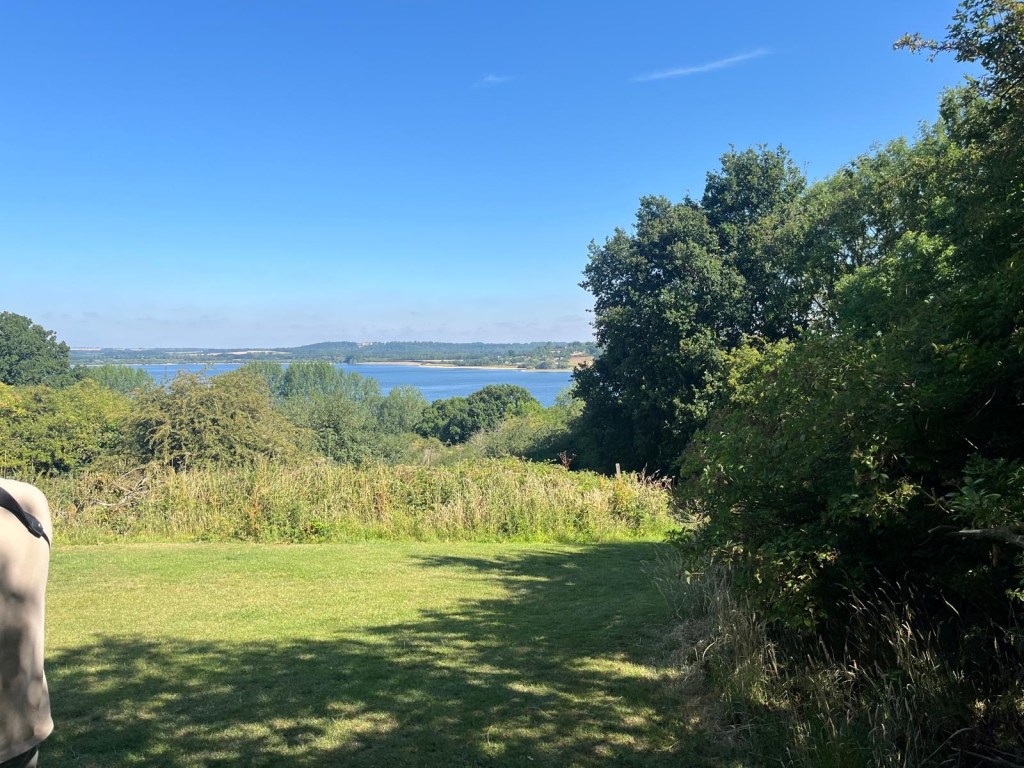
On Sunday, about two weeks ago, we returned to Global Birdfair, following an action-packed Saturday. We were in the heart of England’s smallest county, Rutland, on the south shore of the aptly named Rutland Water. The Global Birdfair is a celebration of all things nature, from birds to bugs and everything in between, but it also actively supports and fundraises for conservation efforts around these species. It’s a three day festival, with a packed schedule of walks, talks, workshops and entertainment, as well as hundreds of exhibitors. It’s a must-visit for any wildlife enthusiast, not just birders!
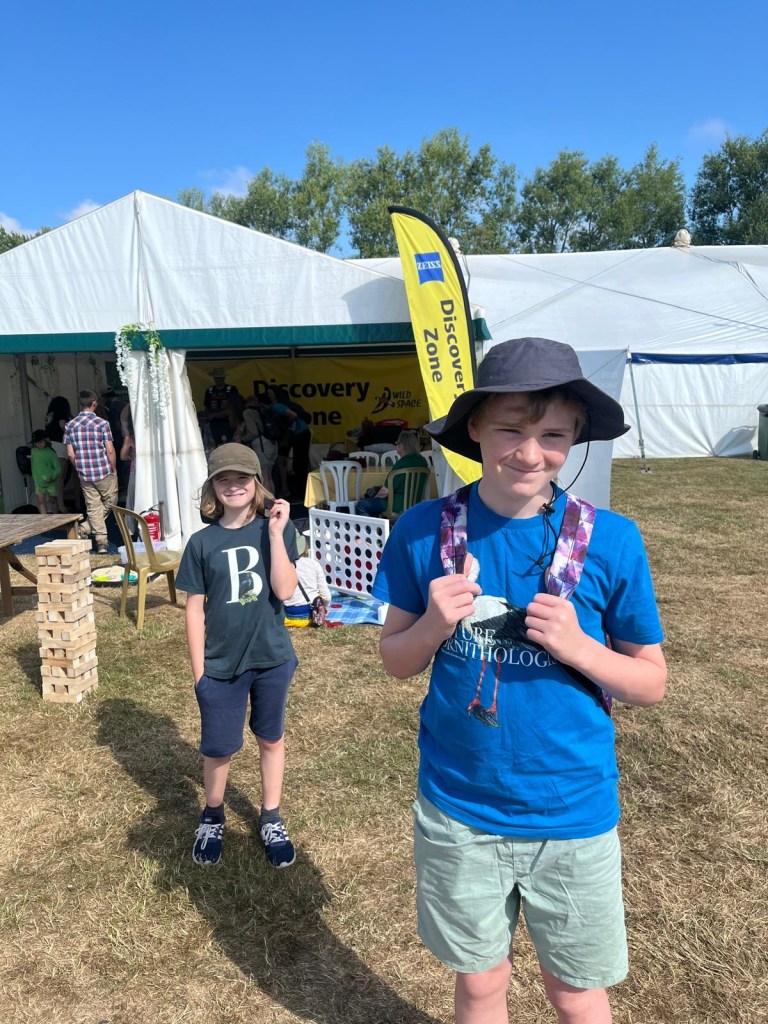
And, on the way to Lyndon Top Caravan Park (where Birdfair has been held since 2022), it must be said that I was really feeling the anticipation. I was excited for a day that could potentially top its predecessor, but there was also that ever-present sense of bittersweet, that all good things come to an end far too soon. Of course, this would be the last day of Birdfair, and despite looking forward to going home as well as the day ahead, there was definitely a twinge of sadness.
We spent the first part of the morning dashing from stand to stand, on a mission to complete the challenge devised by the Birdlife International team. We had been given a ‘Flyways Passport’, and we had to answer a question at the stand of each of Birdlife’s partners (those at the Birdfair), in order to collect a stamp. If you collected all the stamps, you were entitled to a free pin badge. The stands we had to visit were spread across three marquees, and we had to get around all of them fairly quickly. See if you can answer one of the questions we were asked; several birds migrate from England through to Spain in autumn, but there is one bird that migrates from Spain to England. What is it? I’ll post the answer at the end of the blog! Anyway, after cashing in our passports to collect our pin badges, we had to quickly run off for a walk with Luke Massey, Leica ambassador and one half of the incredible team running Wild Finca.
Luke Massey is a wildlife photographer and filmmaker, who recently embarked on the brilliant rewilding project known as Wild Finca alongside his wife, Katie and their two children out in Asturias, Spain. He and his family, since 2018, have been managing 10 hectares of pastureland, wildflower meadows, scrub, woodland and ancient orchard for both nature and the family’s self-sufficiency. But the site wasn’t always like this. It began as a dairy farm, nothing but overgrazed, monocultural pastureland. But now it’s a vibrant mosaic of biodiversity, home to hundreds of species. It just goes to show that both humans and nature can thrive easily alongside each other, if we allow nature the space to do so.
The walk through the grassland along the south shore of Rutland Water was fruitful, despite the unimaginable heat, with species such as Little Egret, Common Tern and Cormorant featuring prominently. The Whitethroats were also out in force, flitting between the sturdier stems and their highly concealed nests with insects to feed their young. A Green Woodpecker’s call betrayed its presence immediately, and we watched as it flew, undulating, over our heads. But the biggest surprise by far came as we were headed back, in the form of a Golden-Bloomed Longhorn Beetle hitching a ride on my back! These species, unlike most other Longhorn Beetles, lay their eggs in herbaceous plants such as hogweed.
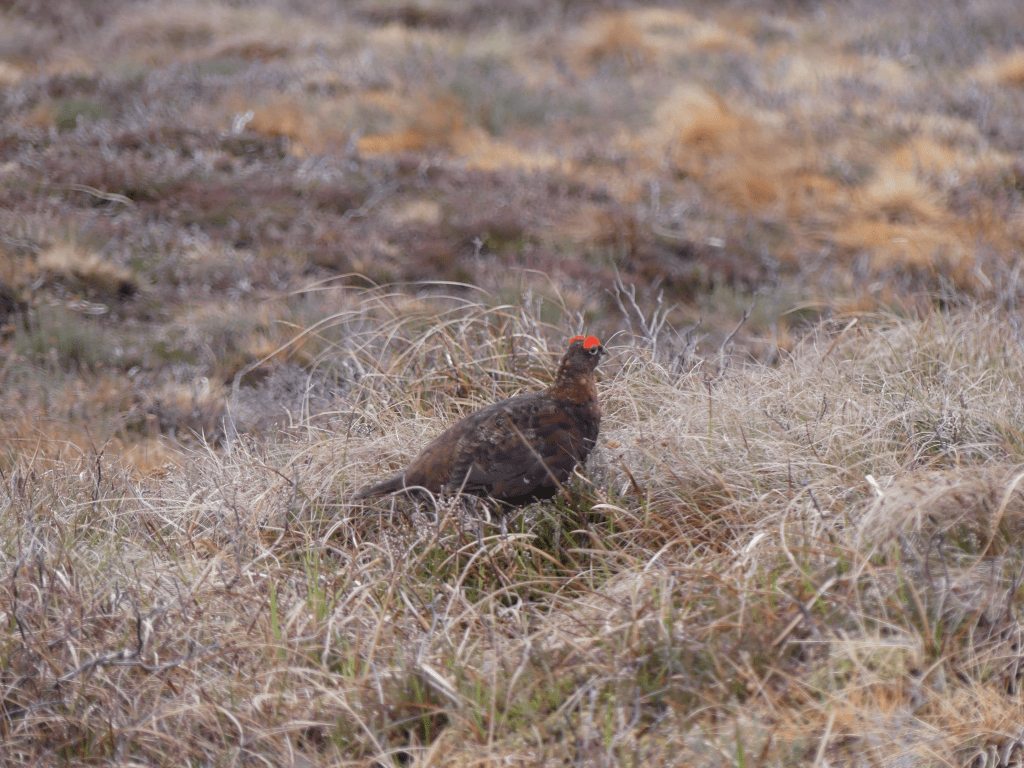
We had another nature walk to look forward to later on, but for now we had a window of time to further explore the many stands exhibiting at the fair this year. We began by popping back to the Grant Arms stand, where we met Simon and Marion again and learned more about the recent fires that engulfed Dava Moor. According to landowners, the fires were the biggest Scotland has seen in its history, and with Simon and Marion both based in Grantown, a stone’s throw away from the moor, the effects were felt. The town was full of smoke, and anybody with an ATV was asked to help fight the fire. Though the full extent of the damage to local bird populations is not yet known, accurate guesses can be made. The fire hit at the exact time when birds were on the nest, eggs were being laid, chicks were being fed and fledglings were starting to come out. It’s heavy and saddening to think about, especially having been to Dava Moor when the breeding season was in full swing. But the quick reaction from everybody involved, whether that be the fire service or somebody living in Grantown with an ATV, was truly inspiring, and without that response, I dread to think about how much worse it could have been.
Marion told us to visit Chris Rose, an artist in the Puffin Marquee who was also based in Grantown. His paintings are absolutely incredible, probably the most realistic and stunning I’ve ever seen. And they’re all of birds, so that ticks another box in my book. Chris and his wife, Dogna, also told us about their experience of the fires, and how there was a wall of smoke that descended on Grantown. On a lighter note, he also told us about the process behind his paintings and about how many less people you see when out birding or even driving in Scotland.
We also paid a visit to the Curlew Action stand, where we met Mary Colwell, the director of the organisation, who is also a TV and radio presenter and a published author (Curlew Moon. Highly recommend a read). Curlew populations in the UK have experienced around a 50% decline since 1995. I should know better than most, as this enigmatic wader and its bubbling call were once common on Dartmoor. Now there are, at most, two pairs left, and I was lucky enough to see one of them at Emsworthy Mire last year. Curlew Action was founded in 2019, and aims to reverse this decline before its too late by raising awareness and coordinating conservation efforts such as headstarting. But the challenge remains a big one. If you want to read more into Curlew conservation on Dartmoor, check out my blog on it here.
And now it was time for our fourth and final guided walk of the weekend, alongside two Leica ambassadors that we had met last year. Harry Read is a wildlife photographer, ecologist and tour guide who is currently based in Norfolk. He is an incredibly experienced birdwatcher despite still being in his 20s, and is always willing to share his wealth of knowledge.
Elle Kaye is an award-winning bird taxidermist, who was selected as the taxidermist for the Natural History Museum’s recent exhibition ‘Birds: Brilliant and Bizarre’ (read my blog on that one here). She is also a TV and radio presenter, as well as the co-leader of the Feminist Bird Club. She can also identify many feathers at a glance, as I learned last year when we found a Kestrel feather on a walk.
By the time we set off, it was starting to cool off a bit, and there were high expectations for species to emerge, looking to enjoy the break in the heat. Again, out on the water it was largely Little Egrets, Cormorants, Common Terns and Gulls, with the occasional Oystercatcher. The Whitethroats from earlier had been joined by a group of Linnets, and both were taking advantage of the insect buffet on offer. But the big difference here was a special butterfly. The Gatekeepers and Meadow Browns were still around, just like earlier. But on the head of one plant, basking in the sun, sat a beautifully monochrome butterfly, striking against the background of green. A Marbled White, one of Britain’s most striking butterflies. They are an incredible species to see, and they were actually a lot bigger in person than I had expected!
But sadly, soon after the sighting of that butterfly, the walk ended, and that was our last hurrah at Global Birdfair 2025. I just managed to catch Henry, who I’d met yesterday, on our way back towards the car, and we had a quick chat. He’s been in Wales, so do go and check out his Instagram, @naturetasticwh. Of course, I’m going to miss spending a whole days surrounded by those who share the same passion as me, many of them my age as well. I’m also going to miss the learning experiences that I had from all the talks, walks, quizzes and shows I went to across the weekend. But I’m also going to remember it all, and use it in my journey to becoming a conservationist and an ornithologist. Watch this space.
Answer: Balearic Shearwater


Nice photos
LikeLike