The Dartmoor Youth Rangers is a scheme run by the National Park that aims to engage young people, and get them actively involved in conservation activity. I have been lucky enough to be part of the group for over a year now, and we have worked on various tasks and projects across the moor, from peat bog restoration to invasive species control. However, we went on a bit of a different trip on Sunday, and paid a visit to the Barn Owl Trust, a conservation organisation and charity based near Ashburton, on the southern edge of Dartmoor.
The Barn Owl Trust is, as you can probably guess from the name, a charity dedicated to the conservation of Barn Owls, their prey and their habitats. They do this in various ways, such as managing land specifically for them (open fields, with a lot of tall grass), educating people and raising awareness, rehabilitating and releasing injured birds back into the wild and putting up nestboxes for the birds to use. They also play a major part in educating the construction industry in nature friendly practices, and train people in surveying sites for the presence of Barn Owls. The Trust was founded in 1988, and has come a long way since then, now running their own small sanctuary for owls that cannot be released back into the wild and their own reserve, known as the Lennon Legacy Project.
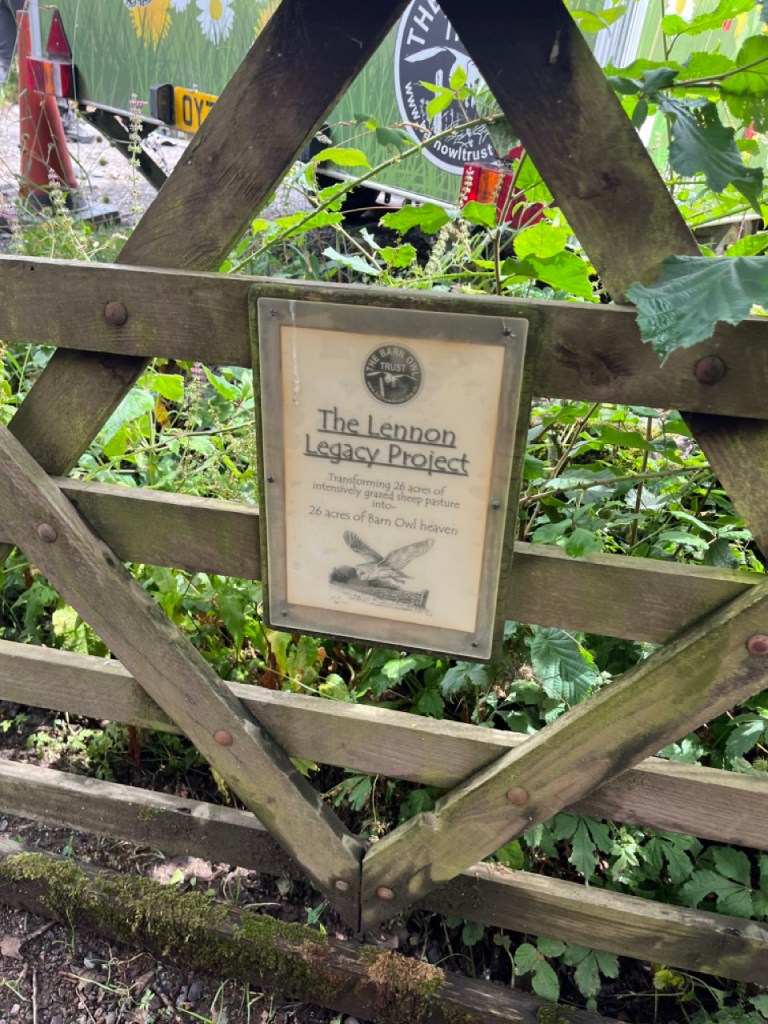
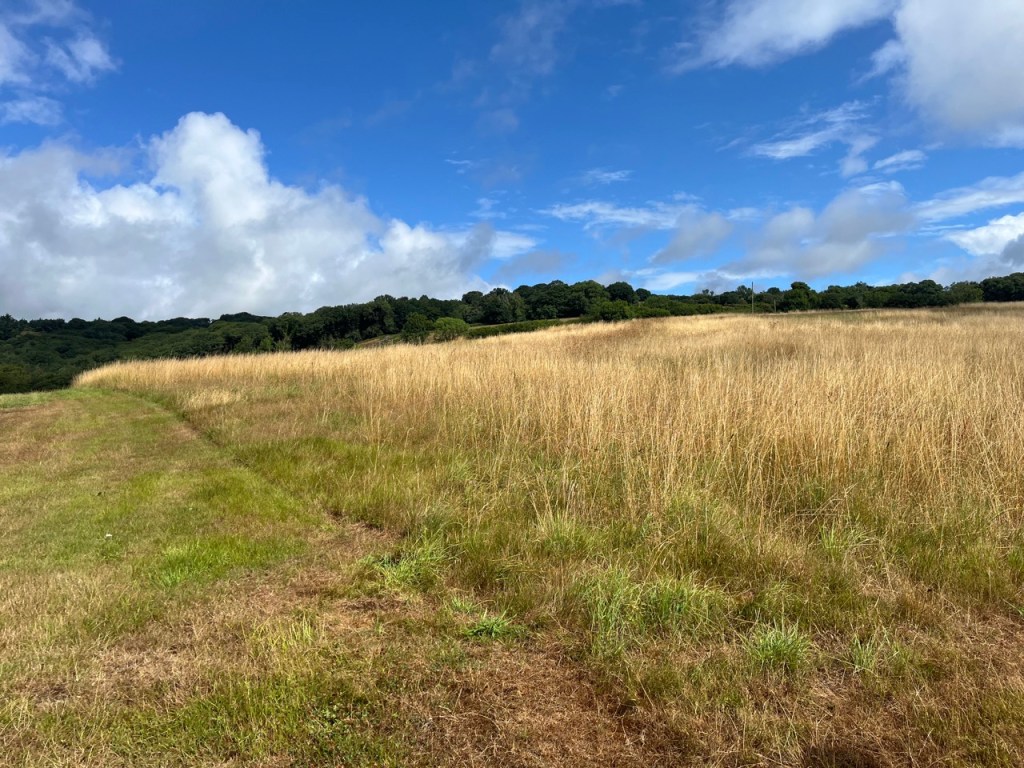
The Lennon Legacy Project is a reserve managed by the Barn Owl Trust that covers 26 acres, with large parts of it managed specifically for the Barn Owl. In order to increase Barn Owl numbers, you need field voles. And a lot of them. So by managing land for field voles, you are also managing it for the owls. But by managing land for the field voles, you are also managing land for so many other species, from insects to the flock of Linnets that was enjoying the seed crop from that year. But its not just grassland. They have wildflower meadows, an orchard, several ponds and even a strip of woodland. The Barn Owl Trust’s reserve is one of the most biodiverse places I have ever had the pleasure to visit, and on such a small site as well. Also, it’s not generally open to the public, so we were very lucky to be able to experience it!
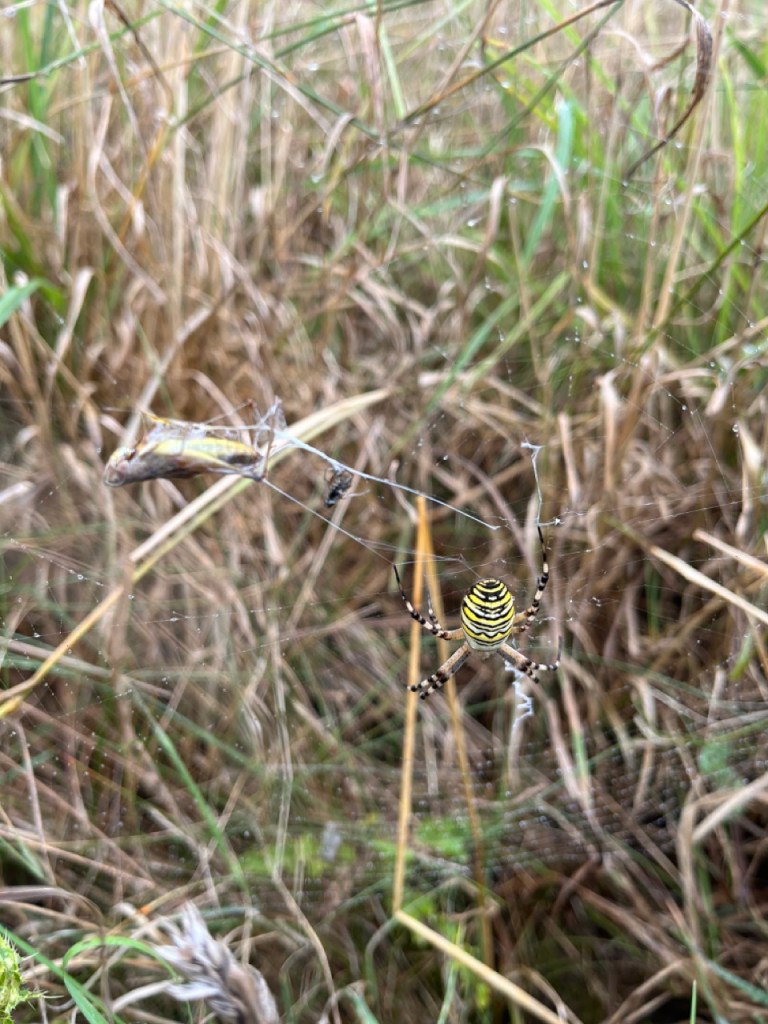
But we weren’t just there for fun. As the Youth Rangers, we were also there to work. Luckily, part of that work was surveying one of their fields for insects, plants, birds and any other species we could find. Armed with sweeper nests and bug pots, we set to work trawling through the long grass, as the plentiful grasshoppers and crickets hopped out ahead of us. It proved to be an amazing half hour, with some of the best finds including a stunning Six Spot Burnet Moth, a Cabbage Bug and lots of Wasp Spiders. But one of these striking arachnids treated us to a special bit of cinema.
We watched as a grasshopper, caught completely unawares, leapt straight into the orb shaped web. The spider, sensing the vibrations in her silk, immediately began to move towards its struggling victim. Taking the grasshopper, who was kicking out wildly with its hind legs, the spider spun him around, enwrapping him in inescapably strong web. The spider, grimly sated with her work, took a step back and became motionless in the centre of the web once more. She had given the grasshopper her dreaded bite, one in which a paralysing agent and a protein dissolving enzyme is injected into the insect and she seemed to have decided to save her snack for later.
I was snapped back to reality as the spider became motionless once more, and I realised that we were now off bracken bashing around the edges of the field. Bracken is a dominant species, one that is fast-growing and blocks light to the ground underneath it, preventing biodiversity and forming a monoculture when allowed to grow without restriction. Of course, one of the main aims of the reserve was to increase biodiversity, so the bracken was a problem. And to prevent the use of pesticides, the Barn Owl Trust regularly hosts bracken-bashing volunteer days. Today, we were the volunteers, and were tasked with clearing the bracken around the edges of the field. To prevent the bracken from growing anymore, we were given broom handles to hit the plants with. The aim was to bruise them low down on the stem, so that the plants flopped and hung limply on their side. This weakens the rhizomes, the creeping underground stems that store nutrients and allow the plant to regenerate after damage. Destroy these, and the plant can’t repair itself.
While I take out some frustration on the bracken, why don’t I tell you a little bit about Barn Owls? They are one of 5 British species of Owl, and were once very common on farmland and open countryside across the country. But they have declined significantly since the 20th century, and their population is at a vulnerable stage. Their decline was due to a number of factors, one of the main ones being the use of rodenticide left in bait for rats on farms. Funnily enough, if there is food left on the ground, the rats aren’t going to be the only ones gunning for it. The Barn Owl’s main source of prey, Field Voles, along with other small mammals, are also going to go for it. Small mammals make up 90-95% of a Barn Owl’s diet, and when an Owl ingests a creature packed to the skin with poison potentially potent enough to kill a human, what chance are they going to have? This is known as secondary poisoning, and it’s still a significant factor in UK raptor declines today.
On a more positive note, Barn Owls are an evolutionary marvel thanks to their adaptations for silent flight. There are several reasons they are able to do this, and most of them lie in the design of their feathers. The leading edges of the Barn Owl’s wings are lined with special feathers that have a serrated, comb-like structure. The serrations break up airflow into smaller, more stable streams, creating what are known as micro-turbulences, which are less disruptive and quieter than normal air flow. The trailing edges of the wings are fringed, which further reduces noise as air flows off the wing. And then there are the owl’s velvety down, covering their wings and legs and acting as an absorber of high frequency sounds and friction between feathers. These three adaptations are all immensely important to the Barn Owl’s silent flight, but it also does a much simpler thing. It flaps its wings less, and when it does the wingbeats are slow and measured.
Now I’m back from bashing bracken, let’s talk about the rough grasslands maintained around the reserve that are perfect for the Barn Owls. They have the landscape regularly grazed by cattle, in order to promote biodiversity and prevent the field from becoming scrub. The grazing is done at a low density, meaning that only a small amount of cattle are allowed onto the reserve, but recently an interesting trend has appeared that means there might need to be a slight tweak to the strategy. Even standing at the gate, you can see that there is a lot of False Oat Grass in the field, more of it than any other type of grass. And this is because of its higher silica content than other species. It grinds the cattle’s teeth down quicker, so they tend to leave it until last when grazing. And if they don’t get around to it, it stays there. So the Trust is currently working on a strategy to control the high amount of False Oat Grass, as since the reserve’s main aim is to increase biodiversity across that 26 acres, a single species of grass dominating a field is not really helping towards that goal. The perfect mix is, according to Defra, over 15 plant species per square meter, which seems reasonable to achieve a lot of biodiversity goals.
Moving away from the grassland, the reserve also contains an orchard. In the orchard, the Trust have been experimenting with two methods of laying hedges, to see which supports a greater number of species. The traditional Devon way of laying a hedge is to do it on top of a bank, made of earth. The trees are generally planted in rows of two along the bank, and eventually they entwine thanks to their close proximity. But they’ve also tried the South of England way, where the hedge is cut and laid over to create a ‘double brush’ on both sides, which is then intertwined with hazel. I can’t wait to see the results in the future as the hedges mature, and I’d love to go back and survey them in a few years to find the differences between the two types of hedge. Hedges are such an overlooked part of the British landscape, but they are actually vibrant ecosystems in themselves. However, I never knew that there were different types of hedge, and this knowledge adds to my perspective as a young conservationist and naturalist.
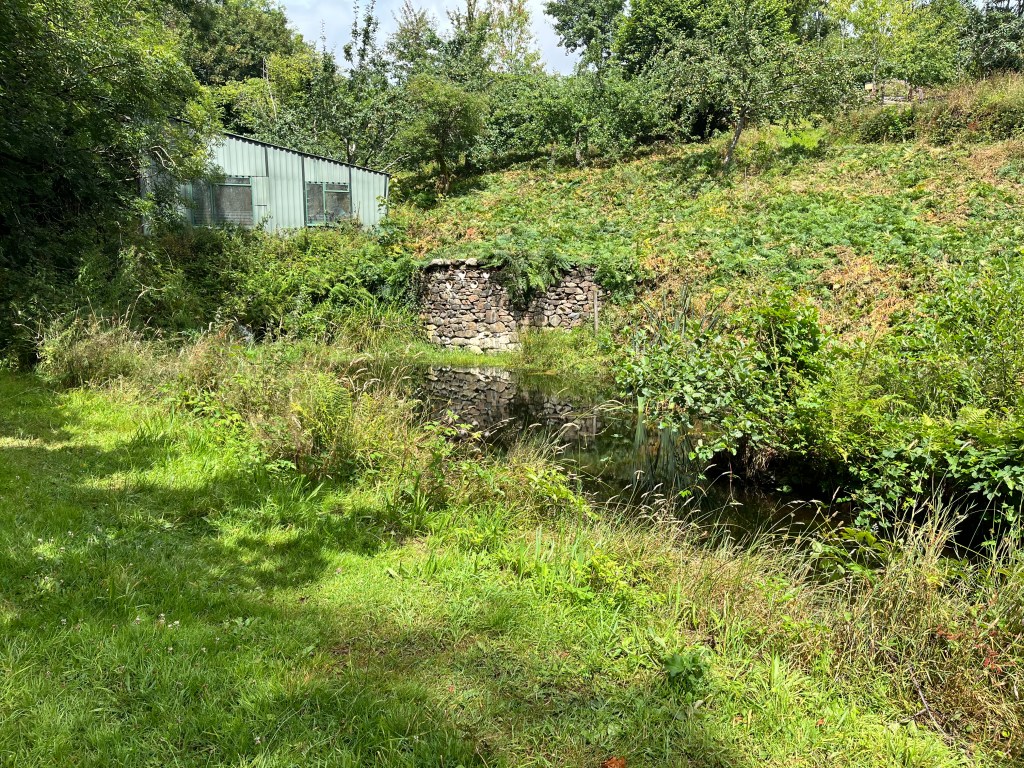
Further down from the fruit trees of the orchard lie the ponds, full of everything from frogs and newts to the occasional group of minnow. These fish attract Otters, which are regularly sighted visiting the pond and preying on the fish. There are also regular Kingfishers and Grey Herons, and even Roe Deer popping down for a drink. The ponds are fed by abstraction pipes leading from the River Ashburn, which keeps the water levels right for the wide variety of species using the ponds.
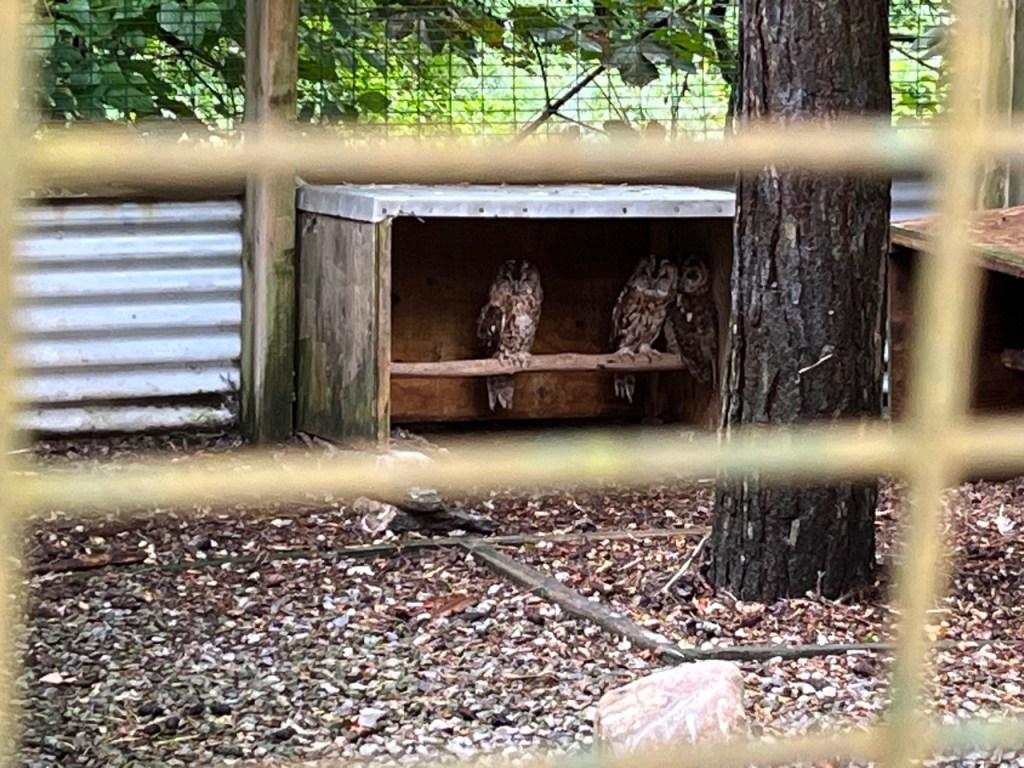
And I can’t write a blog about the Barn Owl Trust without talking about their owl sanctuary, in which they keep the owls who can’t be released back into the wild. There are not only Barn Owls in here, but also several Tawny Owls, who all enjoy a quiet life and a diet of freshly killed chicken chicks. It was amazing to see these birds up close, when normally I’d be lucky just to catch a glimpse of one. They are truly majestic, whether cryptic, brown and wise like the Tawny Owl, or pale, powerful and endearing like the Barn Owl. Huge thanks to Harry and the Barn Owl Trust for such a great day!
The Barn Owl Trust do incredible important work, whether that be campaigning for raised awareness about the birds or rehabilitating injured birds and releasing them back into the wild. It was really interesting to get an insight into their behind the scenes work, and I learned a lot from the wealth of knowledge possessed by Harry, who led the bug survey and took us on a tour of the Lennon Legacy Project reserve. As I said earlier, its not usually open to the public, so it was a privilege to be able to experience the place!

