Last week, we travelled to Rutland, the smallest historic county in England, to visit Global Birdfair, the brilliant festival celebrating and raising money for birds, nature and conservation efforts across the globe. It has been held at Lyndon Top, on the south shore of Rutland Water since 2022. The large annual event brings together birders, wildlife enthusiasts and conservationists from around the world, culminating in an event that aims to raise awareness about conservation and climate change, and to raise money to aid these efforts. It is an experience in itself, and just being surrounded by people with that same passion for nature feels incredible.
So, to give you a brief history of the fair, it was founded in 1989 by Tim Appleton MBE (who I was lucky enough to meet this year, more on that later), and it was run by the Leicestershire and Rutland Wildlife Trust on the Rutland Water Reserve for 30 years. Birdfair was known as a force for good by wildlife enthusiasts across the globe, thanks to its tireless fundraising efforts. From 1989 to 2018, it had raised over 5 million pounds. Indeed, in 2018 alone the fair raised £322,000 to support the creation of a flamingo haven on Mar Chiquita in Argentina. Birdfair continued to climb and reach new heights until the Covid-19 pandemic, when disaster struck.
In 2021, the Leicestershire and Rutland Wildlife Trust made the decision to end their association with the fair, citing the worsening climate crisis and the event’s carbon footprint as their reasons. But in 2022, Tim Appleton and Penny Robinson founded the Global Birdfair, moving from the actual Rutland Water reserve to a campsite on its south shore, called Lyndon Top. And since then the show has continued to evolve, reaching the prominent stage it is at today.
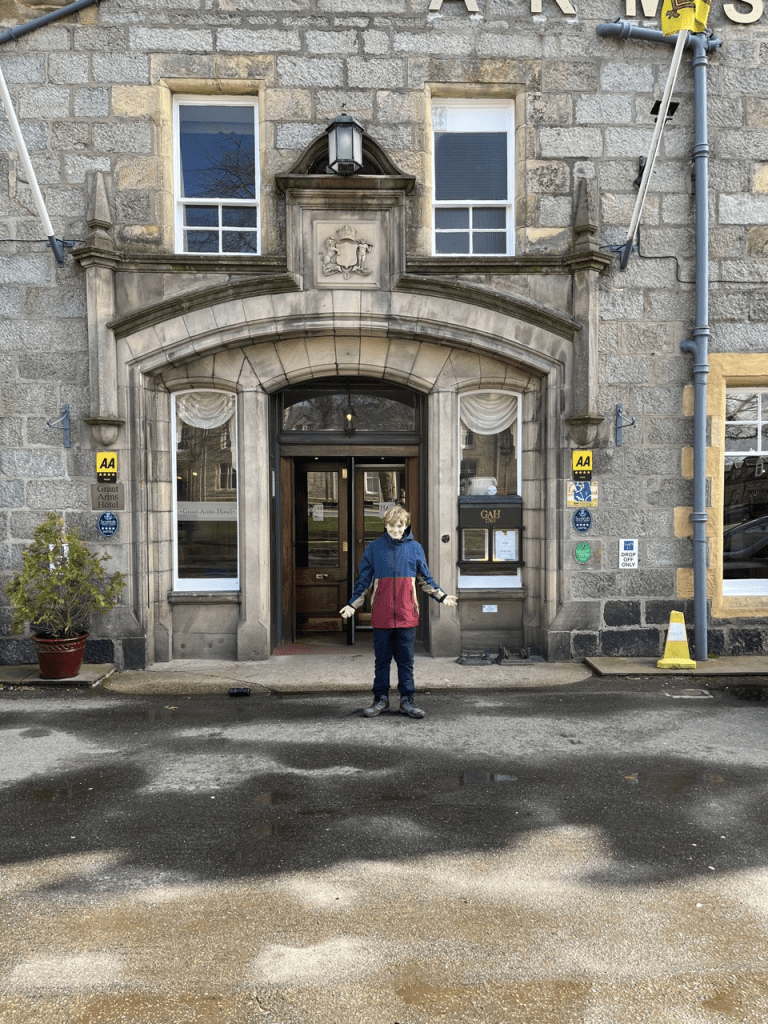
I’ve been at Birdfair for the last three years now, and since 2023 it has received glowing reports from me, my family and everybody I have spoke to there, which is a lot of people! The first time I visited was due to my winning the Zeiss Young Birders Award, which was presented to me at the Global Birdfair. That was a day that I still remember fondly, and shall for years to come. In fact, I still use my prize, a pair of Zeiss Terra binoculars, every time I go out birding. It was also thanks to Birdfair that I was fortunate enough to go birding in the Scottish Highlands, while based at the incredible birding hotel, the Grant Arms. If I hadn’t met Simon Pawsey at Birdfair 2023, I would never have had such a memorable, life changing trip alongside himself, Nick Baker, Will Hall, Iolo Williams and Dawn Balmer, to name a few. So I think its fair to say that Birdfair has played a big part in my life since that fateful 2023.
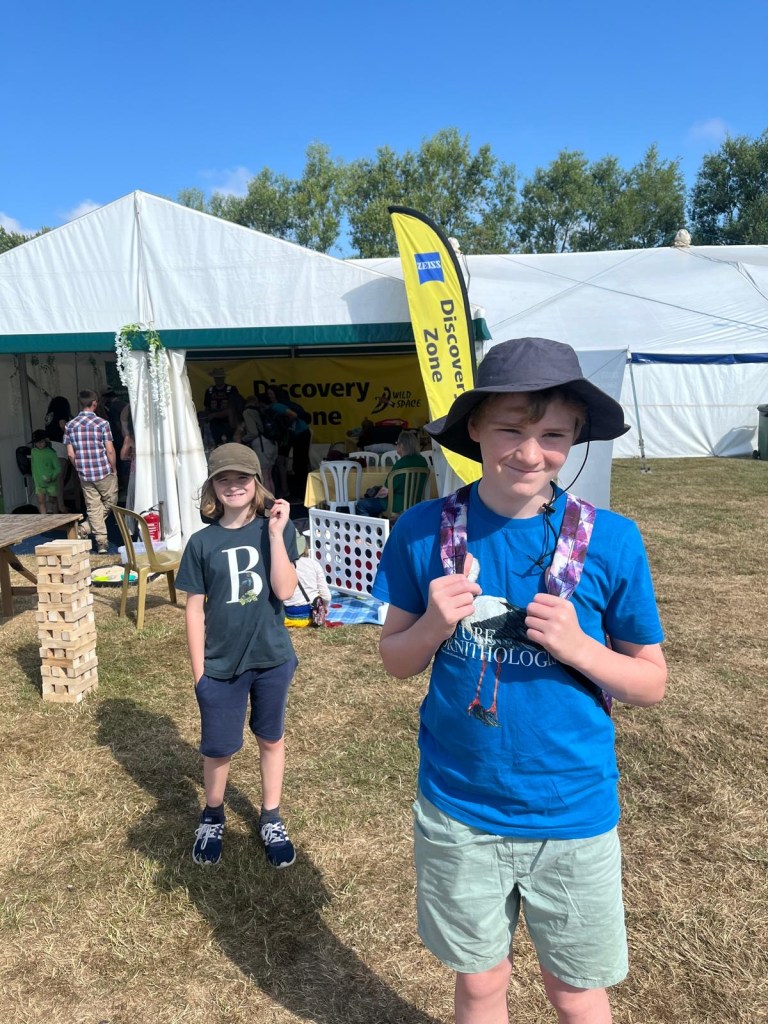
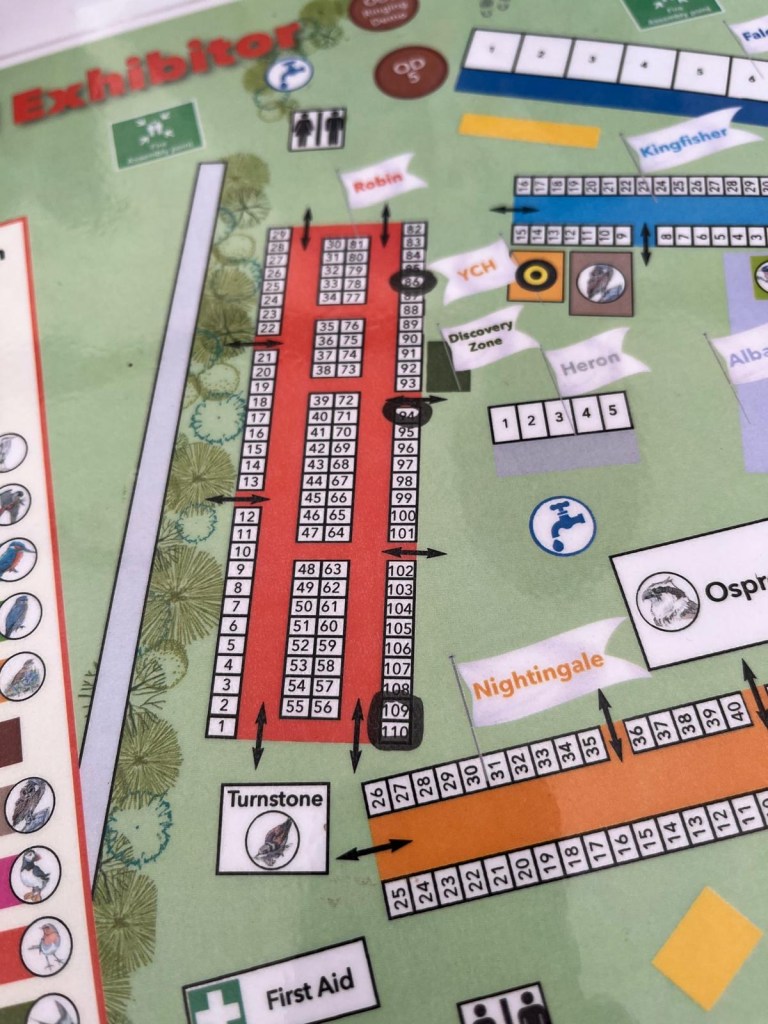
But thats enough about 2023, this blog is about 2025! We arrived at Lyndon Top at 9:23AM, strolling into the show-ground (after we’d had our tickets checked, of course) and taking it all in. The field we stood in heralded several Marquees, stages and smaller gazebos and tents, each named after a different bird species, from the Puffin Marquee to the Whinchat Podcasting Station. We began at the Nightingale Marquee, and literally as we walked in, we found the Grant Arms Hotel stand to our left. There were Simon and Marion, greeting us warmly and shaking hands.
Of course, I had met them for the first time at Birdfair 2023, and then again on my trip to Scotland. Simon, whom I hadn’t seen since Birdfair last year, immediately struck up a conversation and started telling me about the tale of a Nightjar he’d found. Nightjars are one of the Scottish Highlands’ rarest birds, with the last confirmed breeding record all the way back in the 1970s. Simon had been out driving in the night looking for the northern lights, when he saw a Nightjar literally just sat on the road in front of him. It quickly flew away, and a search ensued over the next few nights until two Nightjars, one of them likely the same bird Simon had originally reported, were found flying together, in good breeding habitat. Whether they bred remains to be seen, but it appears fairly likely that they might have done!
However, soon we had to say goodbye to Simon and Marion, and dash off towards the Zeiss stand, for a guided nature walk with the one and only Toby Carter. We had first met Toby last year, and as a Business Development Executive at Zeiss, he certainly knew what he was talking about. He regaled us with tales from his trip to Lesvos (now firmly at the top of my bucket list) as we walked along the south shore of Rutland Water, with Gatekeeper and Meadow Brown butterflies out in force around us. Whitethroats and Linnets flitted between the sturdier stems, carrying food back to their heavily concealed nests.
Due to the dry spring we’d had, there was a long, thin island visible out on the water, coated in Cormorants, gulls and Common Terns. According to Toby, who had grown up in the area and was an expert on the water, the island hadn’t been visible for ten years, and thanks to the very little rain we’d had this season, the water levels were at a record low. And it became obvious as you scanned the edges of the reservoir, the banks and beaches seemed surprisingly visible compared to the photos we’d taken last year and the year before.
Abruptly, deranged laughter blew in on the breeze, and the group turned to watch as a young Green Woodpecker, still with a speckled underside, flew along the hedgeline into the branches of a dead tree, posing at its crown. Toby quickly trained the scope upon it, and the whole group managed to admire it before it eventually dropped down and flew away, calling its ‘yaffle’ sound again as its undulating flight bobbed further away.
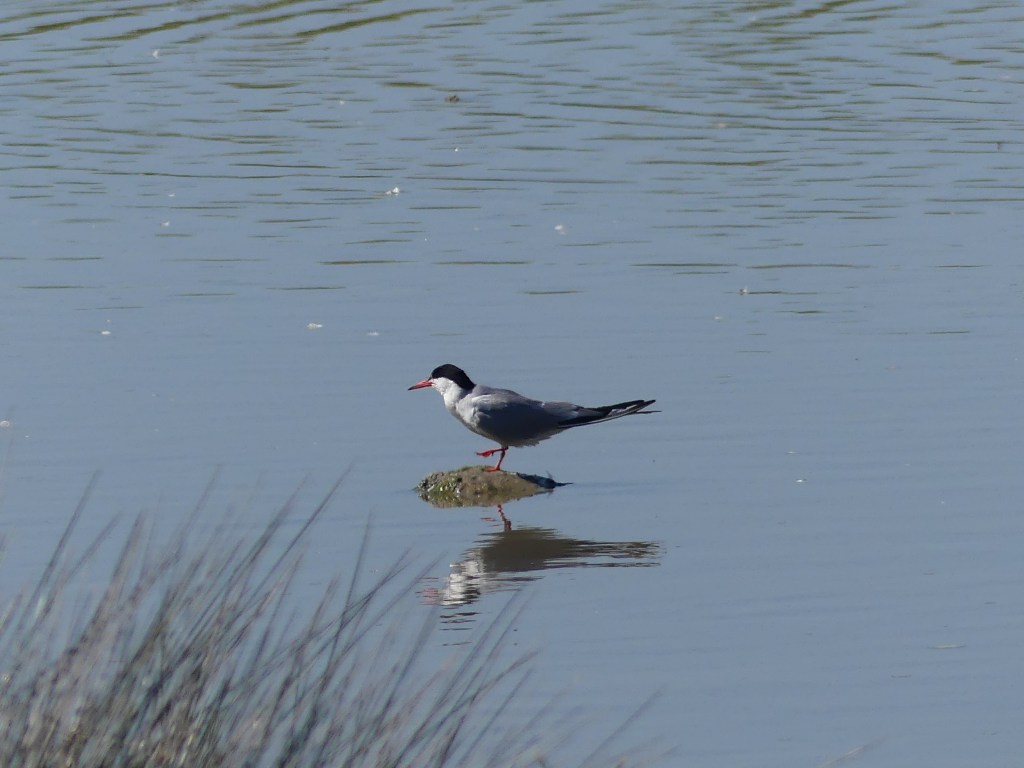
The heat that weekend was impenetrable, with highs of 33 degrees in Rutland. Thanks to this, there was little more about in the way of birdlife, except for several Little Egrets and distant swans. What was a surprise was a fly-by from the Red Arrows, zooming over Oakham with frightening speed and agility. And we were just on our way back, enjoying the numerous butterflies when we passed another group, just as a shout of ‘Osprey’ went through them.
Ospreys are breathtaking raptors, specialised in hunting fish on the surface through their distinctive plunge-dive. Rutland Water is famous for these birds, having had a hugely successful reintroduction project beginning in 1996. Since 2001, over 250 chicks have fledged from the area, highlighting how well orchestrated the plan was. And now we were watching two Ospreys drift over Oakham, at quite a distance. But even here they were distinctive, with their m-shaped wings unlike any other UK raptors’.
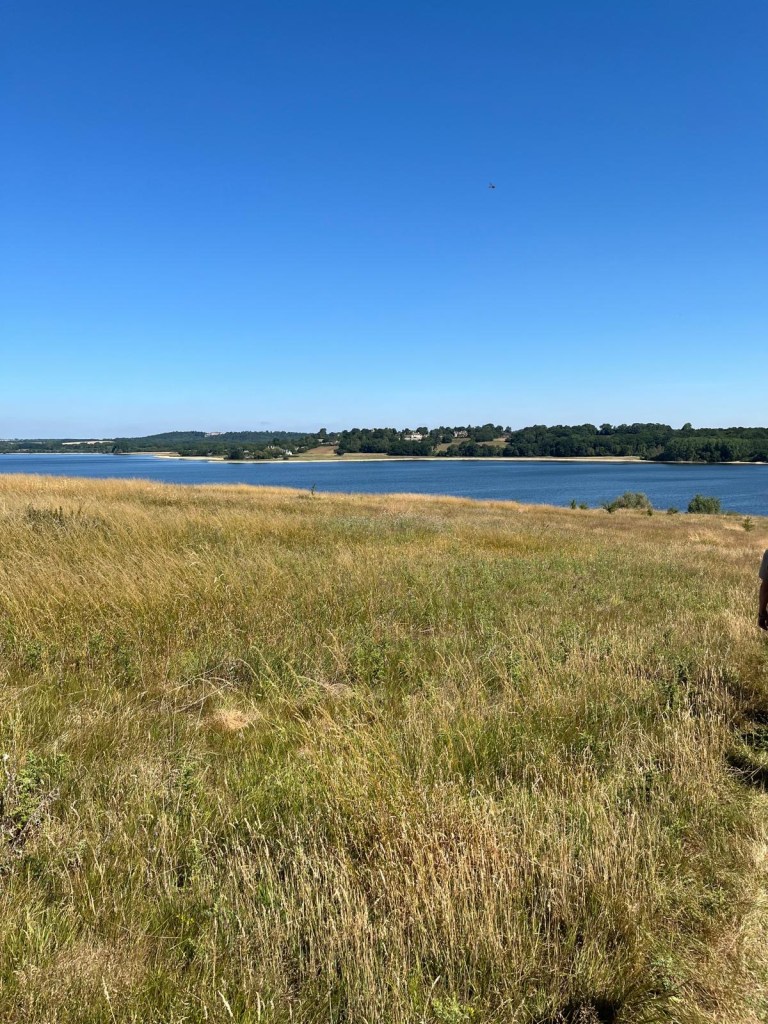
Mind still reeling from the distant encounter, we headed back towards the Zeiss stand, where we received goody bags and said our farewells to Toby (to be fair though, we’d probably see him again before the fair was over). And at 12:00, I was lucky enough to meet up with three amazing young people before the other Zeiss nature walk we had planned that day with Nick Baker. One of them was Dexter, otherwise known as the Mustelid Man on Instagram, a mammal expert with deep knowledge and a friendly nature. Another was Henry, otherwise known as Naturetasticwh, also on Instagram. He was giving a talk on citizen science later on in the Osprey Leadership Foundation tent, and was also somebody I had been following on social media for a long time. And then there was Benji, a talented writer and artist who also knew a lot about nature. It was great to meet them, especially since I had been following their adventures on instagram for a long time!
It was a lot of fun exploring the Birdfair with them, as well as browsing the incredible array of RSPB pin badges on offer. But soon me and Dexter had to run off towards the Zeiss tent once again, gearing up for another nature walk, this time with famous naturalist, entomologist and TV presenter Nick Baker. I had met him for the first time when he presented my award in 2023, and it was great to be out with him again. It was a fairly sizeable group that would be heading out into the fields, but that would prove to be highly beneficial as we would be spreading out and searching for bugs and butterflies, and attempting to catch them in the insect pots we had brought with us.
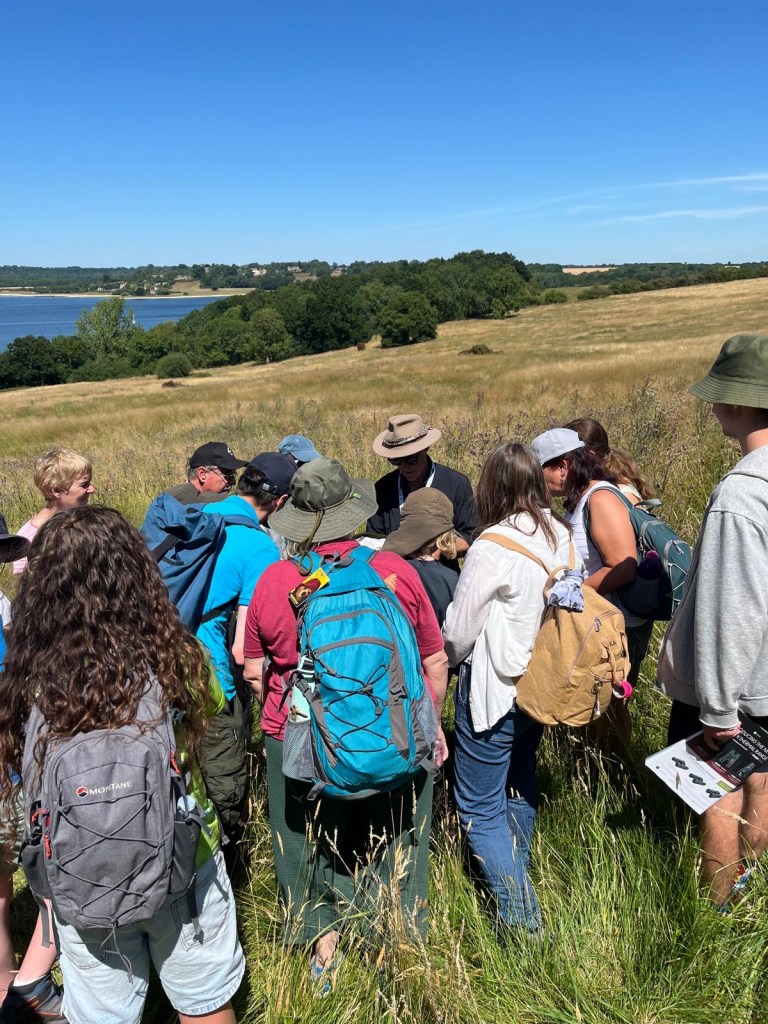
The long grass was humming with Roesel’s Bush Crickets and grasshoppers. Trudging delicately through the grass, watching as the inhabitants of another world hopped, flew or crawled out in front of you was quite the experience, not dissimilar to immersing yourself in another dimension. Everywhere you looked, Meadow Brown and Gatekeeper butterflies fluttered around you, with almost every stem covered in Red Soldier Beetles. And then seeing species like lacewings close up, and really getting a sense of how beautiful and fragile they were was incredible.
Of course, such an incredible walk would be hard to beat, but up next at 2:30 was the next activity, which would be a young writers workshop led by award winning young writer Emily Hunt. The workshop went smoothly, with everybody in attendance creating both poetry and a piece of writing from the point of view of a species of bird. I also met Dexter, Henry and Benjamin here once again, and it was really interesting to hear their viewpoints on several different matters.
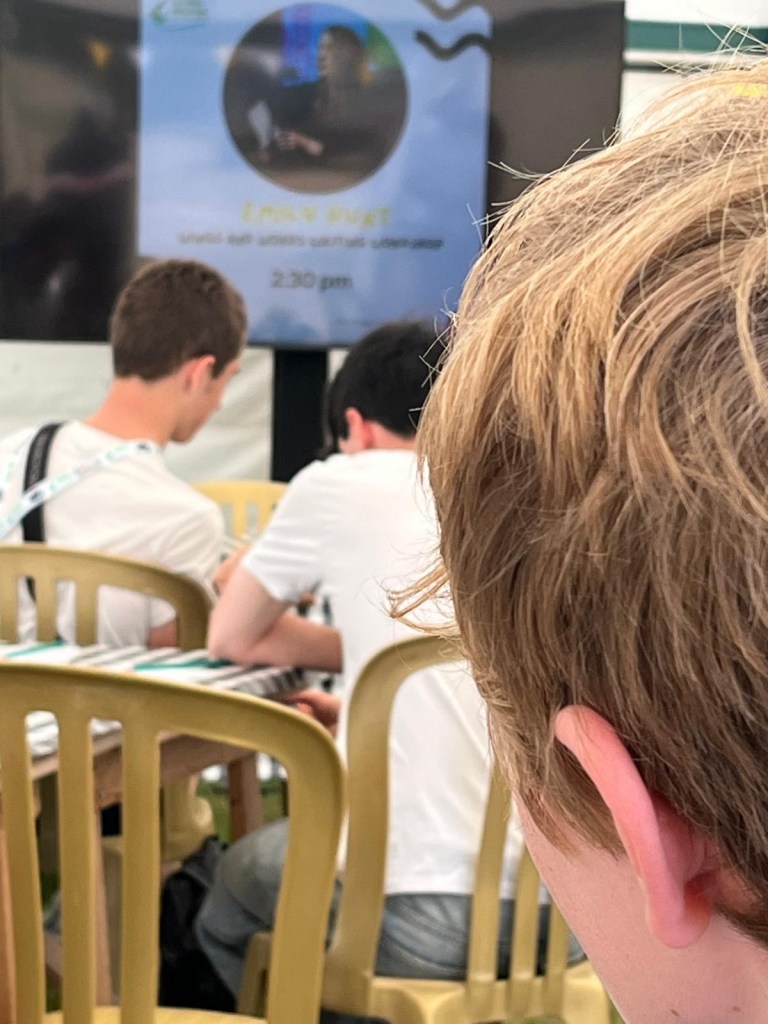
We stuck around in the Osprey Leadership Tent after that for Henry’s talk on his experiences with citizen sciene, which I mentioned earlier in the blog. It was informative, well-delivered and passionate, and it made me want to get involved with more citizen science projects than I already am. I for one really enjoyed it, and I thought that Henry spoke confidently and clearly, captivating the gathering audience in the tent. Great work, Henry! Speaking of citizen science, I also highly recommend that you get involved do too, as it often takes little more than an hour with projects such as the Big Garden Birdwatch and the Big Butterfly Count. And yet, it provides incredibly valuable data in such a high sample size that would be unachievable for a small team of scientists. There was also another talk after that by Hubert Pollard, who shared with us his experiences of being a young birder, with his stories being informative, gripping and sometimes funny as well.
By now, the evening was beginning to roll in and as we settled down to eat dinner, we were approached, completely out of the blue, by Tim Appleton, who as i mentioned earlier is the founder of the Birdfair. He complimented my brother’s drawings, which he had been compiling in his sketchbook all day, and said he really liked my shirt, which that day featured a white stork. It turns out he had been really interested in the young people around the show all day, and just wanted to comen and say hello and see how we were all doing.
This was amazing. To start off with, Tim Appleton had founded not only the Birdfair, but the Rutland Water reserve as well, where he was the reserve manager for over 40 years. He also orchestrated the Rutland Osprey Project, alongside Roy Dennis. In 1995, they drew up the proposal to relocate young Scottish birds to the reservoir, which was seen as the perfect Osprey habitat. Large waterbody, full of fish and with enough space to cater for several pairs of birds. And he did a very good job, because just six years later, in 2001, the first pair bred. Since then, over 250 chicks have successfully fledged from the site! A conservation success story and a half!
And now, the finale of the day. What felt like everybody at the fair piled into the Osprey stage tent, ready for a pub-style quiz led by celebrated author Stephen Moss. The quiz was really enjoyable, with our team of me, Dexter, Henry and Benjamin managed a respectable 40/75, an even better score when you consider the average age of our team was 12. On top of this, many of the questions weren’t even nature related at all, and just about random songs and actors from the 1980s. So yes, we were very happy with 40!
The first day of Global Birdfair had been many things. Successful, enjoyable, informative, fun and full of surprises. I’d met several amazing people for the first time, met several amazing people for the second or third time, and bought a lot of pin-badges. There were talks, walks and activities galore, and we tried to take advantage of this packed schedule throughout the day. But could 2025 be the best Birdfair yet? Stay tuned for the second and final day.

