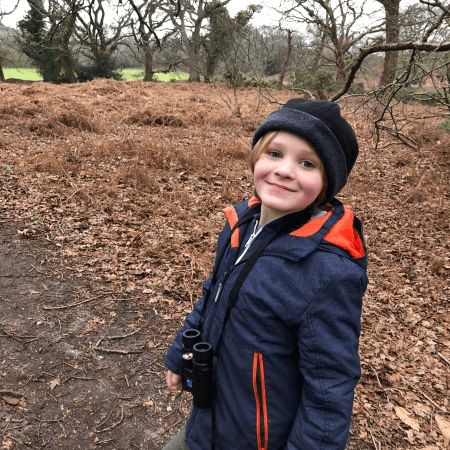
It had been four years since I had visited Arne. Back then, I was a bird-crazy 8-year old, who got a buzz whenever he looked through a pair of binoculars. I’d certainly changed a lot since then, in many respects. Many special times in my life had been and gone, and I’d grown alongside them, both in mind and in body. I’d met people, I’d visited places, and I’d seen a load more birds. The nostalgia was crazy though, and I really felt as if I could remember everything. There was the bench that looked out over the harbour, and there was the towering oak tree that dominated the centre of the trail, forcing it to split off around it. That was the strangest thing. It felt like Arne hadn’t changed a bit.
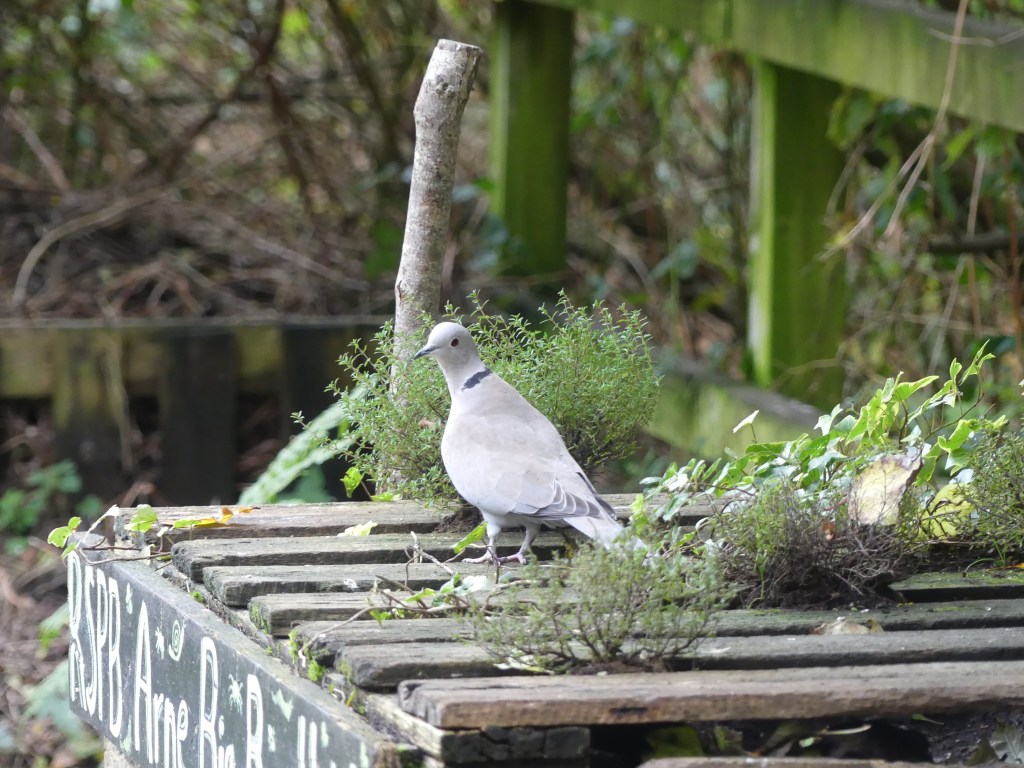
A pair of Collared Doves sat beneath the feeders, a frantically hopping Dunnock whizzing in between them. All were pecking eagerly at the damp ground, littered with the bird food dropped by the rather keen Woodpigeons above them. The Blue and Coal Tits took their morning meal with better manners, flitting to and fro to eat. The feeding station lay next to the RSPB tent and sightings board, and seemed to be constantly busy, now swarmed by half a dozen Chaffinches. Following a brief look at this board, we set off along the Shipstal trail, marked red on the map.
Even as you begin to walk on the trail, it becomes clear that Arne is very special indeed, thanks to its huge array of habitats. Just from where we stood, we saw farmland, woodland, heathland and Poole Harbour. Its a bit of a cheat code really, and the wildlife here is nationally important. Did you know that all six of the UK’s reptile species live on this one reserve? And its mosaic of habitats makes for some brilliant birding!
As I walked, a Cattle Egret glided down onto the fields to my left, its yellow beak glinting in the morning sun. As its name suggests, the Cattle Egret has a habit of tailing cattle, and snapping up the insects from the churned up ground. Sometimes they’ll even sit on top of a cow! That was actually my first Cattle Egret of 2024, so I ambled on feeling pretty happy. I hoped this was a good omen, but the clouds seemed to be getting darker and darker.
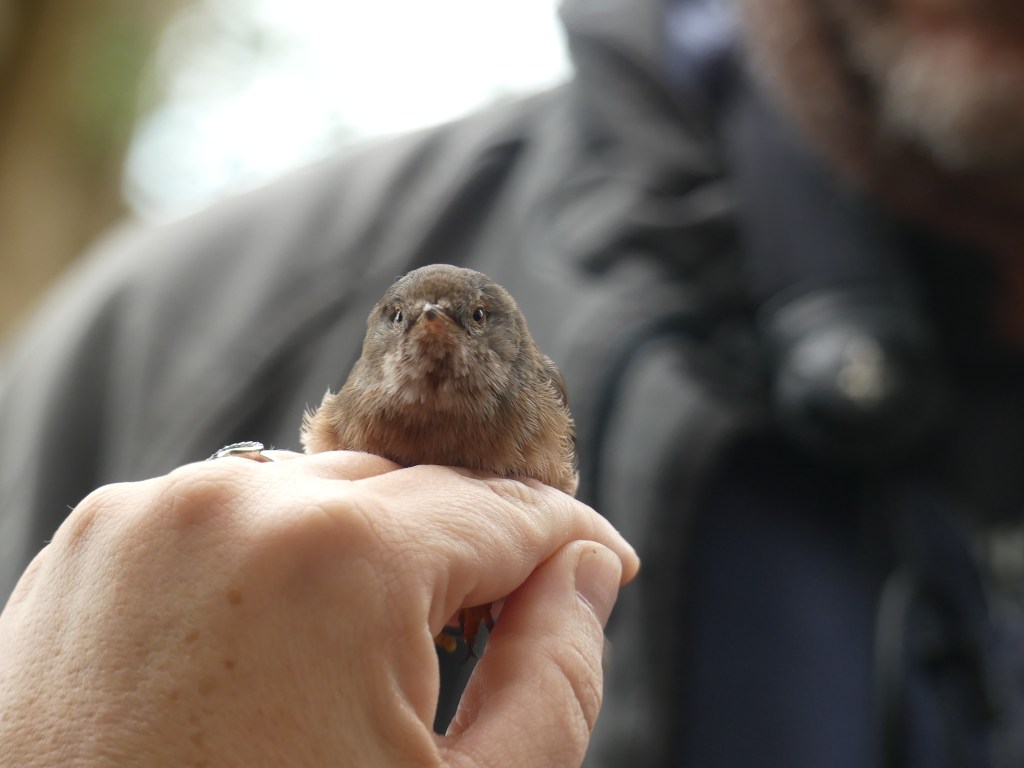
It was a blustery day, and the tops of the trees swayed in the breeze. The heath was windswept and almost looked deserted, with nothing but two Meadow Pipits getting tossed around above it. As I watched on, eyes drifting over the heath towards the waves crashing on the sandbar, a dark bird with a fairly long tail bounced up from a gorse bush, and flew right past my eyes, giving me a split second to ID it. I recognised it from the weekend, as we’d seen a fair few of them on the Wild New Forest Camp. A Dartford Warbler, a heathland specialist and a tricky customer to find.
After it had become apparent that I wouldn’t find the Dartford again, the bird having disappeared within a second stand of gorse, we carried on, conscious that the clouds looked as if they would open up any moment. Here, the path took an incline, and followed the curve of the cliff which looked out over the water. A small group of Oystercatchers, hunkered down against the elements, sat on the shoreline among the wind-tossed seaweed. As I watched through my binoculars, a Shelduck flew in, and immediately started bullying the resident Mallards, as even from here, the substantial size difference was apparent. The sleepy Mallards shuffled along the sand obligingly, and finally the Shelduck settled down.
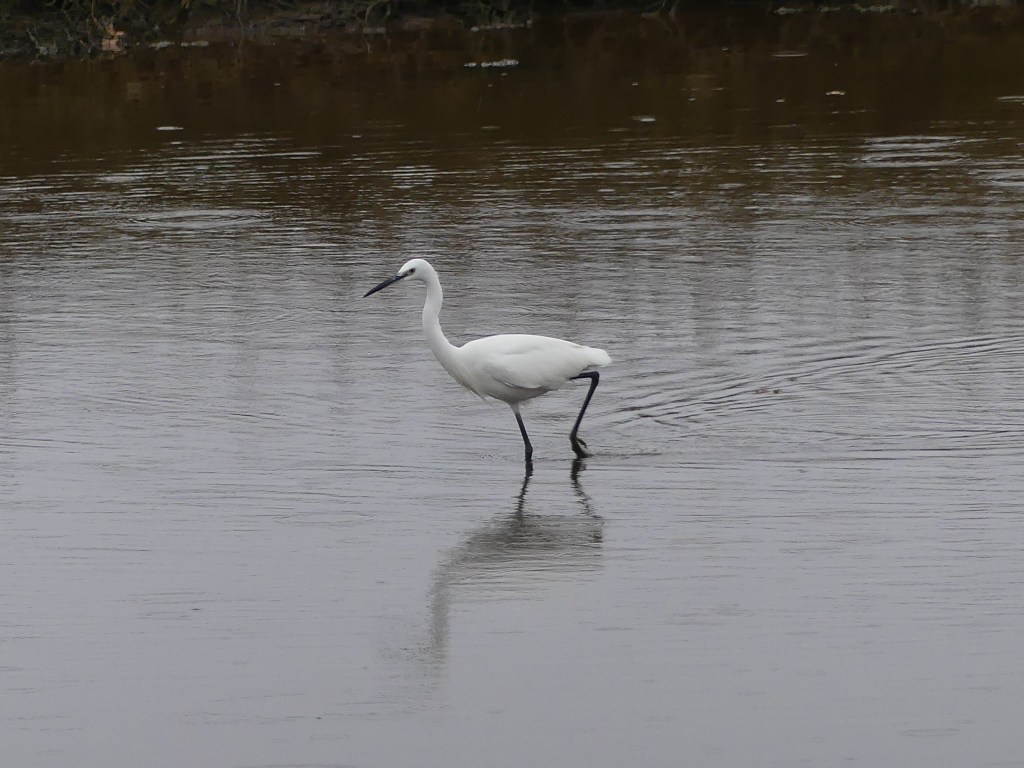
Just metres from the drama, a hulking grey mound crouched in the long grass, watching with its beady eye. A Grey Heron, hunched, waiting for an opportunity to strike for its fish lunch. That opportunity did not arise for the entirety of my time at that viewpoint, however, and the bird seemed content to sit and watch the other birds. It didn’t even bat an eye as a Little Egret flew, and took up position beside the original occupant. Snowy white with a pitch black bill, these two herons were quite different in their appearance, but both belonged to the same family, Ardeidae.
In a thick holly shrub beside my vantage point, I abruptly became attuned to the constant twittering emanating from within. Suddenly, out flew about two dozen Long Tailed Tits, fluttering away to my right to hide in the heathland that I was surrounded by. The high pitched ‘seee’ of a Goldcrest sounded in the stretch of woodland that now beckoned to me, and I started off down the wooden steps, binoculars at the ready. But no sooner had I entered the woods than another call was brought to my attention. Four high and thin notes, a zit zit zit zit. The call of the rarer of the two British kinglets, a Firecrest, was now somewhere in the boughs above me! However, my scanning efforts proved fruitless, and the bird soon stopped calling.
Further along the path lay a two-storey hide, looking out across the marshland, yet another habitat on the grounds of RSPB Arne. The hour I spent in there proved to be particularly fruitful, with a large group of Teal full of other interesting birds to pick out. A pair of Wigeon for example, hunkered down among the many Teal. Or a Redshank, picking its way through the shallow water among the ducks, disturbing them from their slumber. A group of Black Tailed Godwit came in to land, further scattering the Teal, much to their annoyance. Within the group, I managed to pick out a Godwit which was shorter and stockier than the rest, and with a very zoomed in picture, I could just make out the pixelated image of a barred tail. The Bar-Tailed Godwit is a bird which turns up on our shores often during their migration, and hangs around with the overwintering Black-Tailed birds.
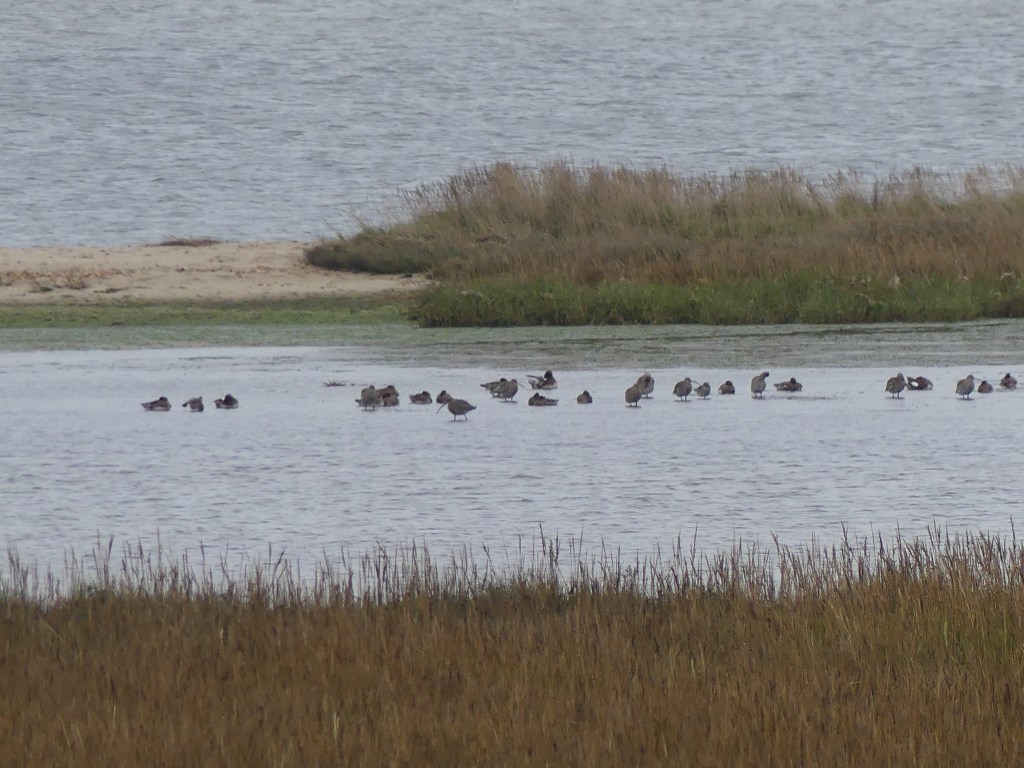
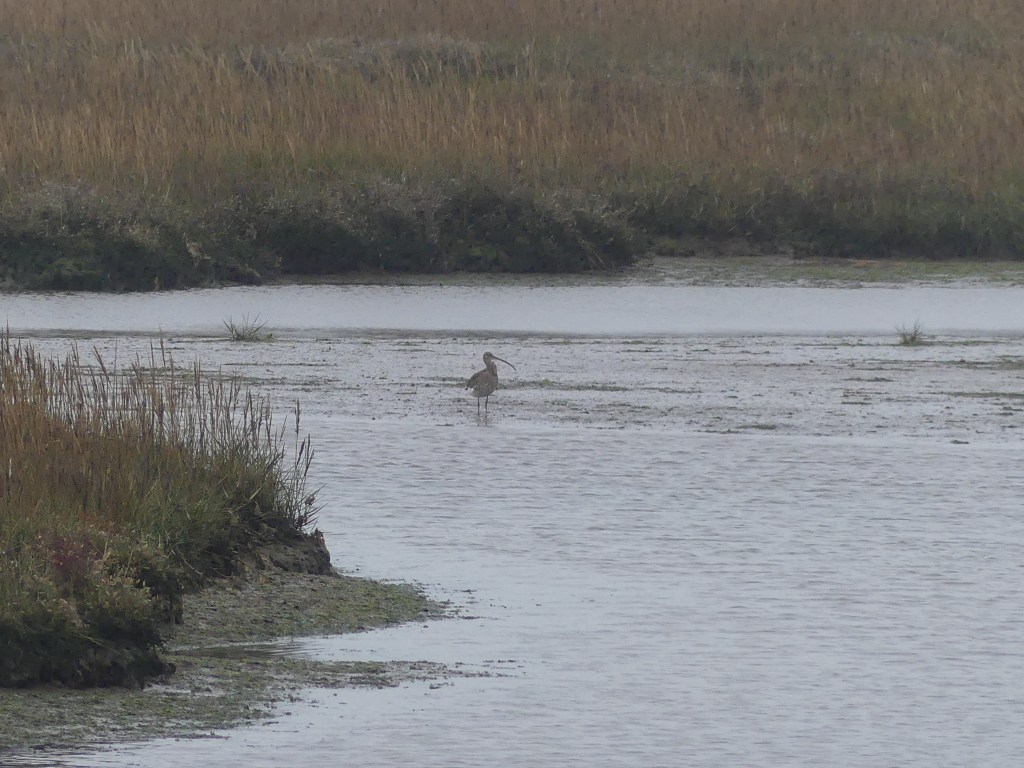
But something that looked nothing like a Godwit had flown in alongside them, and stood out like a sore thumb. It looked like a rather small Curlew, with a shorter bill and a dark stripe on the top of its head. A Whimbrel, another migrant wader passing through, had dropped in to visit Arne! I still don’t know why it was in with the Godwits though. You wouldn’t expect it, would you?
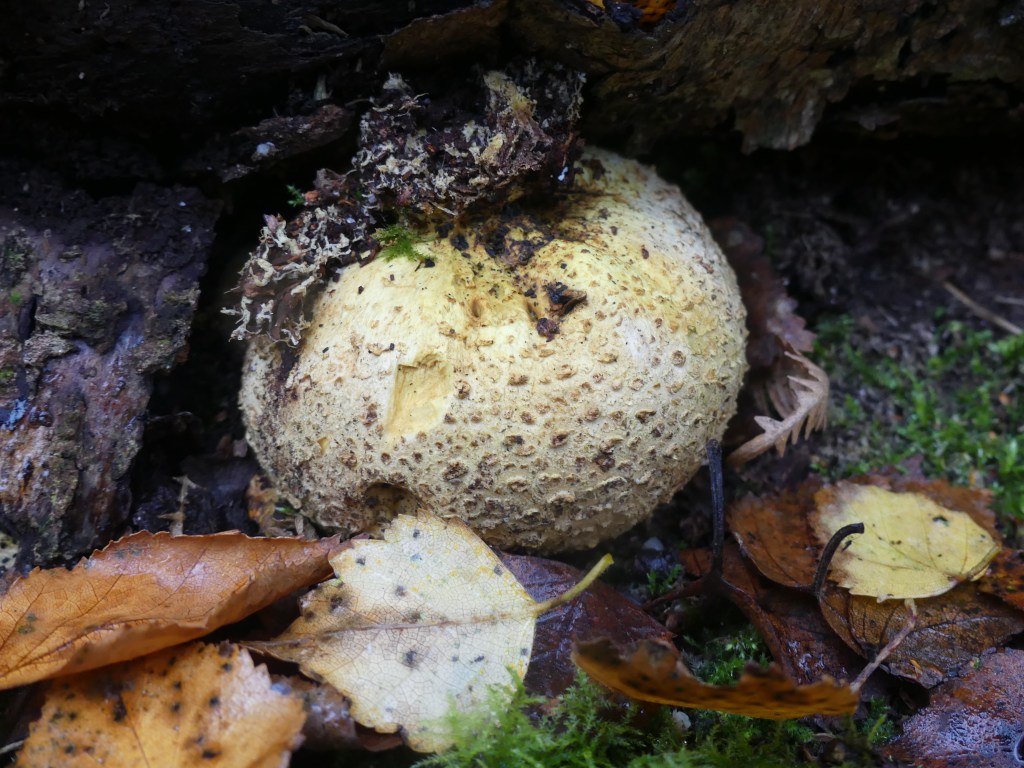
By the time we left the hide, the heavens had finally opened, and after a frantic rush to pull on coats and hoods, we walked promptly off to the next patch of woodland, this boardwalk interspersed with puddles and ponds on either side. However, here we found a large yellow fungi, looking very much like a puffball. But it was actually a Common Earthball, a mushroom often mistaken for the Common Puffball, of which the latter is edible. The Earthball is responsible for many mushroom poisonings each year, but its is not deadly. Very cool to look at though!
Up ahead, the path opened up into a wide metal gate, which then gave way to a narrow path between two fields of a working farm. A charm of Goldfinches roved through the one on our left, which was full of seeds and stubble from the year’s crops. As we walked, a big red tractor came through, carrying what looked like a bundle of stubble from the other field. Nature friendly farming is actually what humanity used to do, and it worked out fine. If we use it properly, we could feed the entire population and still provide for and support nature, not push it into the corners of the country. The hedge was dripping with the water from the rainfall, and many a drop from the overhanging shrubbery dripped down our backs. But it was in good spirits that we soon found ourselves back at the RSPB tent and cafe, and we were glad to get inside and escape the elements.
Now to explain a bit more about Arne, now I’ve given an account of what we saw there. Arne covers more than 565 hectares of the Arne peninsula, and is a mosaic of habitats supporting a huge range of flora and fauna. As I mentioned earlier in the blog, it is one of the few remaining places in the UK where all six species of our native reptiles can be found, and this is thanks to its blend of ancient woodland and open heathland. If you were wondering, these reptiles are the Common and Sand Lizards, Slow Worm, Adder, Grass Snake and the rare Smooth Snake.
Autumn is rutting season for the resident population of Sika Deer, an East Asian deer that was introduced to British deer parks in the 1860s. There are now small pockets across Britain, and the rut is a true sight to behold. But they have also caused problems by overgrazing and hybridising with the native Red Deer, so they are classed as an invasive species, and are a mixed blessing. And because they have no natural predators in Britain anymore, they are multiplying a little too rapidly. So wildlife agencies and charities often employ deer-stalkers, people who hunt and kill the old and the sick deer, therefore still adhering to natural selection as would a wolf or a lynx. This helps to keep the population down.
The Arne peninsula looks over Poole Harbour, with internationally important numbers of waders gathering in the harbour each winter. This includes crucial numbers of Avocet, and a population of Spoonbill that is growing each year. Poole is Europe’s largest natural harbour, and a popular tourist destination. The famous Poole Harbour ospreys, which were reintroduced to the area in 2017, had their first breeding attempt in the Spring of 2022, hatching two chicks. Sometimes Ospreys can be seen fishing on the reserve.
Arne is a true gem in the crown of the southwestern natural world, and is internationally important for many species. The RSPB manages it specifically with these species, and others, in mind, and as a result, they are working hard to maintain this beautiful mosaic of habitats. I highly recommend a visit, as at any time of year, you’re always likely to see something that will take your breath away, and leave you wanting to witness more.


At least you will have a record, through your blog, when you do go to back to a place, to be able to see if things have changed. It’s a few years now, since I’ve been to Arne. The thing that had changed between visits was the addition of the visitor centre and cafe. But the habitats and wildlife were just as good as I had remembered.
LikeLike