
Hyde Park is a patch of green among the greys of city life, a wonderful space in the heart of the English capital. The Serpentine Lake, so named for its snake form, slithers through its heart, populated by birds and pleasure boats alike. A popular spot with the inhabitants of London, the lightly wooded grass is coated in family picnic blankets and different attires, creating a patchwork quilt of colour and pattern. We were at Hyde Park for an afternoon visit, before the next morning’s outing to the Natural History Museum, for Birds: Brilliant and Bizarre. If you want to read about that special exhibition, head over here. For now, enjoy the birds we found there.
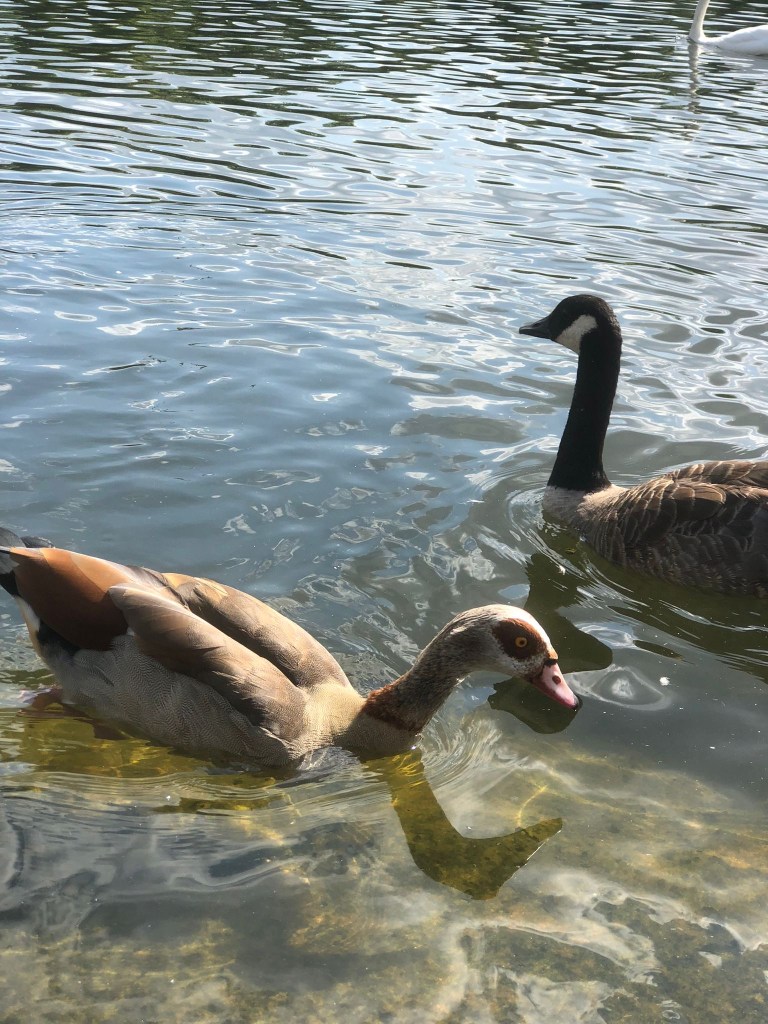
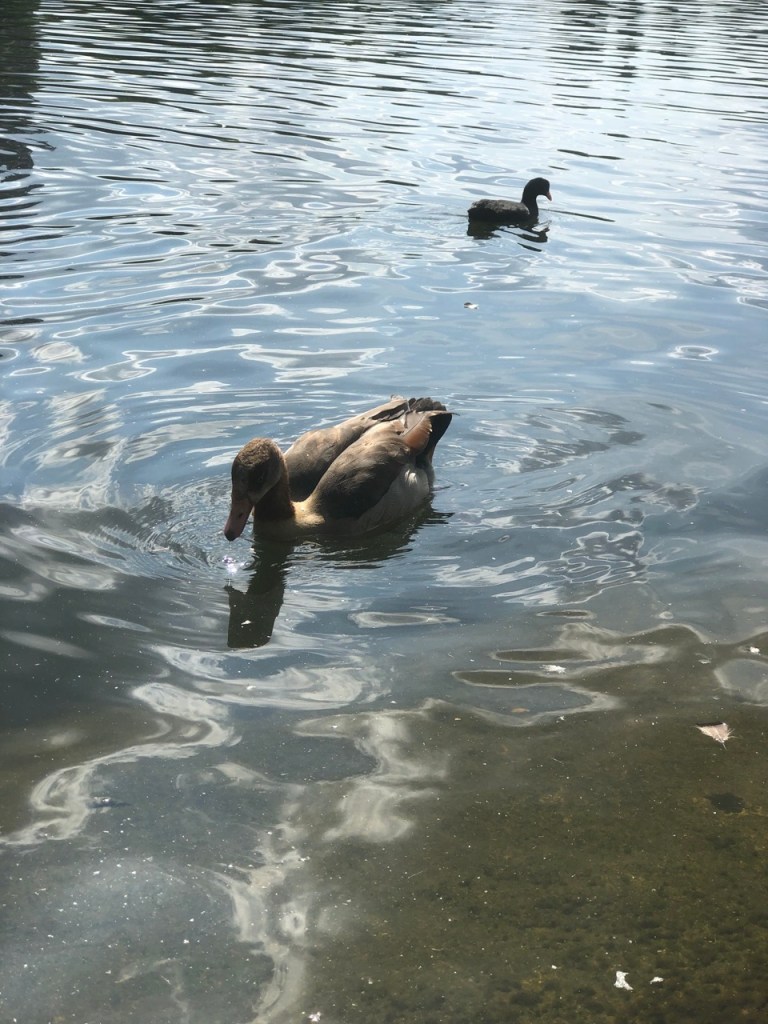
The Egyptian Goose was the first lifer I’ve had in a while, and there were several interspersed with the other geese, Canadas and Greylags. Except, there’s a catch; they’re not actually Geese. They’re really members of the Shelduck sub-family, Tadorninae, but they don’t want you to know that. Their native land is Africa, in the Nile Valley and from south of the Sahara onwards, but they were introduced to Britain and Europe to be kept in zoological collections, and to confuse the crowds at urban lakes like the Serpentine. They did, of course, escape and start to breed in the wild. They’re now at their most common in the south-east of England, but their populations extend across the south of the country.
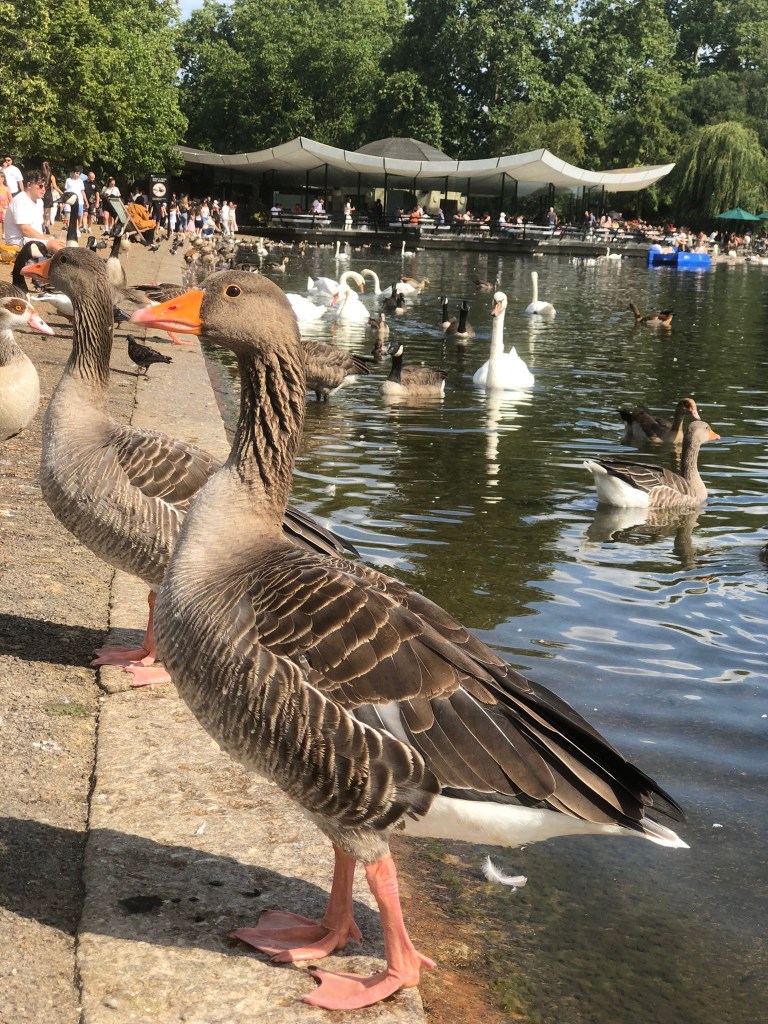
Alongside the Egyptian Geese (or should it be Egyptian Shelducks?) swam scores of Greylag Geese, a common sight across much of the UK. They are like your typical imagined goose, one of the basics of wildfowl watching in Britain, and the ancestor of many domesticated geese. But much of their population is introduced and released, and the small wild population in the south has been greatly supplemented by the arrival of these identical birds that are so different in practise. Its essentially impossible to tell the difference, and to see truly wild Greylags I highly recommend the wintering flocks in Scotland. They are some of the few in Britain to still hold a truly wild essence.
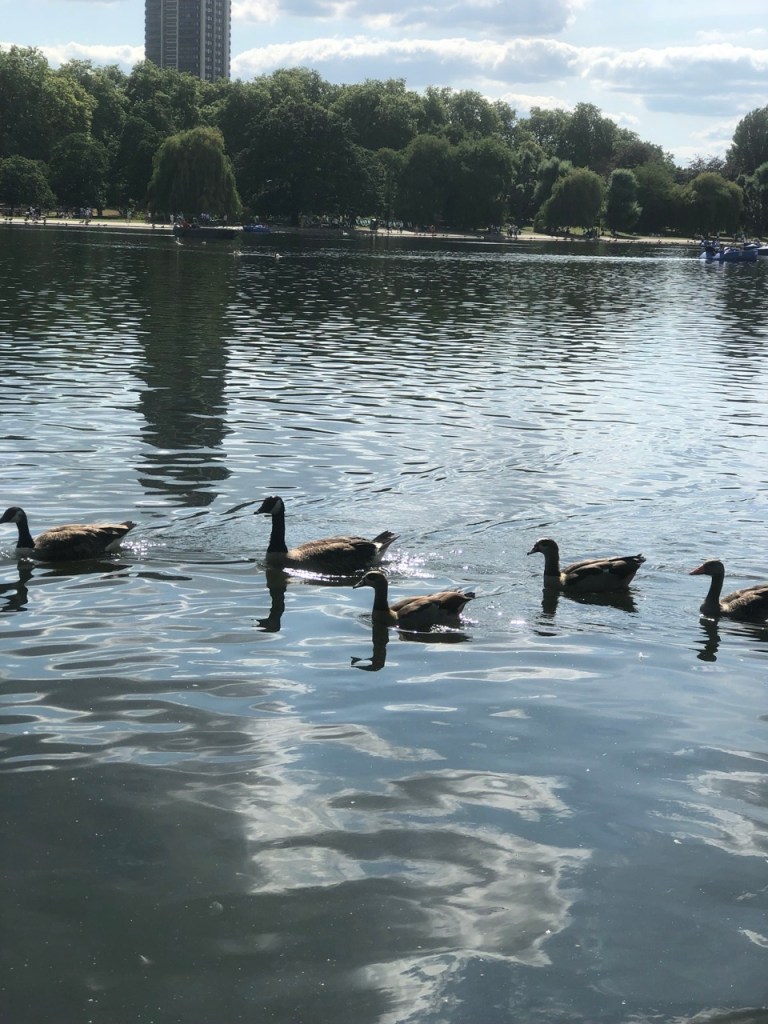
A common cooperator with the Greylags, the resident Canada Geese numbers almost reached the heights of the above species – the key word there is ALMOST. Unlike the Greylags, these birds have never been native to the UK, or the rest of Europe for that matter. They are originally North American, but are now widespread here after being introduced, as well as to several other nations including France, Sweden, Denmark, New Zealand, Japan and Argentina. Did you know groups of geese have several different collective nouns? When on the ground they are known as a gaggle, in flight a skein or a wedge, and when flying close together they are often known as a plump!
Moving on from our three geese, although it should really be two, we come to a bird I honestly didn’t expect to find here. The Common Pochard is an elegant gangster, with its rusty red hood pulled up over its face. It swims among the geese flock undetected, and when the time is right it strikes! No, I’m just kidding, it doesn’t strike anything, except waterweed and invertebrates. The Pochard is a diving duck, and is a scarce breeding bird in the UK, with around 700 pairs thought to nest here. The Common Pochard is listed as Vulnerable by the IUCN, the stage before endangered. Our breeding population is important, and we must work to protect it.
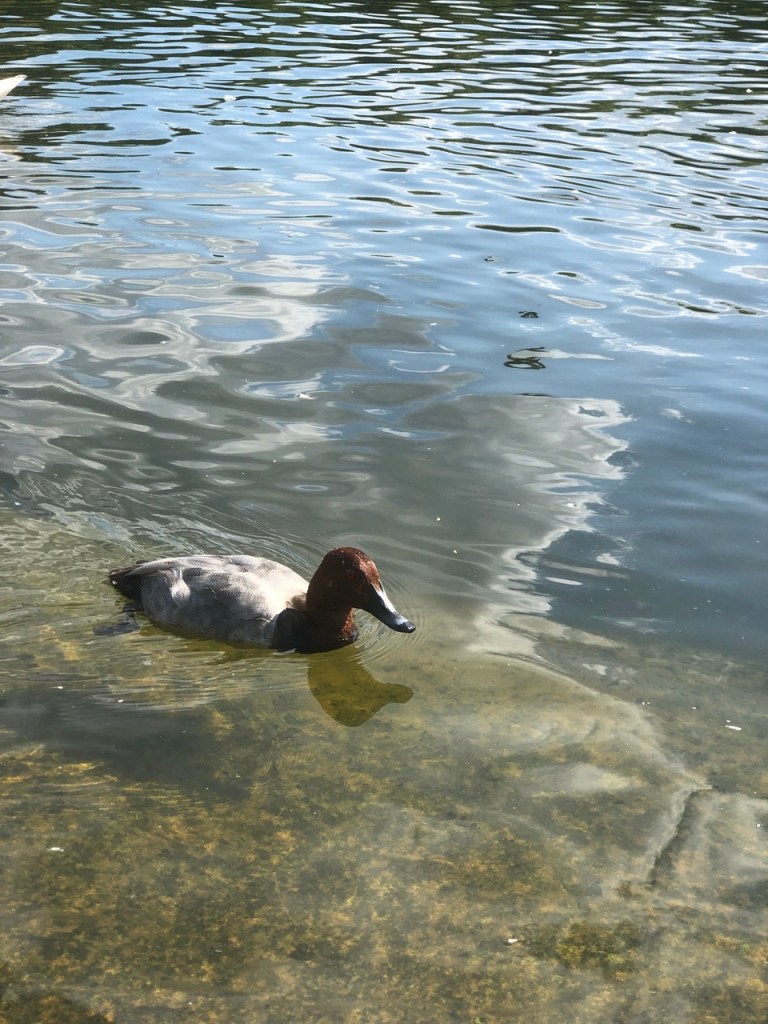
Its cousin by name, the Red Crested Pochard was introduced to the UK, and has now become an established breeding bird, thriving in urban lakes and parks. The Cotswold Water Park is this plump duck’s main stronghold, and counts reach their highest in winter, when an average of 600 birds are here. One of these birds was sat before us, nestled on the still water beneath the low hanging boughs of a willow on an island in the centre of the Serpentine. In the right light, this bird’s apparently huge head seems to glow. When you catch one at sunset, its quite a special sight.
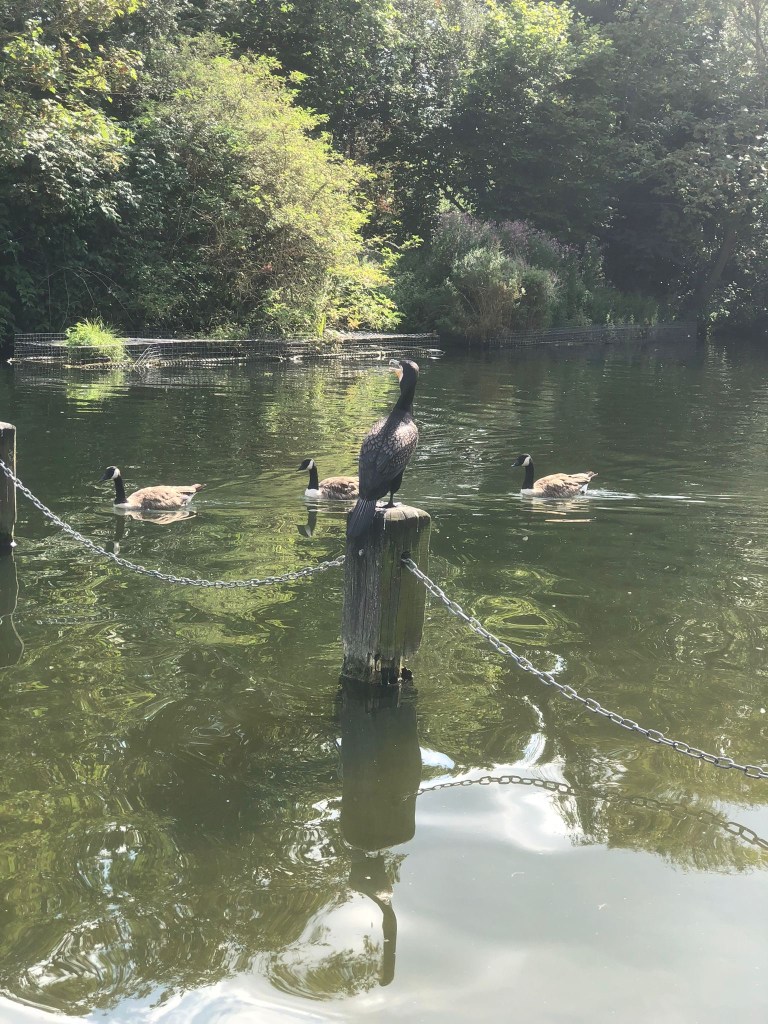
Just metres from us flew in a Great Cormorant, landing on a partly submerged post within touching distance from the bank where we stood. Cormorants are fairly common on our shores, and more are starting to move inland from the coast. They are one of the avian world’s best fishers, streamlined and rapid underwater, as well as being able to gulp down huge fish. But their one evolutionary flaw is that their glossy feathers are not even waterproof, forcing the bird after every dive to sit out of the water and allow its outstretched wings to dry in the sun! This bird’s plumage was glorious, beautifully scaled and shiny. It had either gone through moult already, or was yet to undertake the transformation that all birds face. At this time of year, they’ll often lay low and grow completely new feathers, a gruelling process.
The Cormorant dived, and left us face to face with a Grey Heron, dagger like bill and snake-like neck poised. It stood stock-still, eyeing us up without moving a muscle. It quickly lost interest in us though, and went back to its search for sustenance. Like the Cormorant, its fish, but it will take frogs, eels and chicks of surrounding birds. Grey Herons are the largest member of the heron family, and their special technique for fish-munching is tossing their terrified prey into the air, and catching them head-first, sliding into darkness. This prevents the fish’s tail or scales catching in its throat.
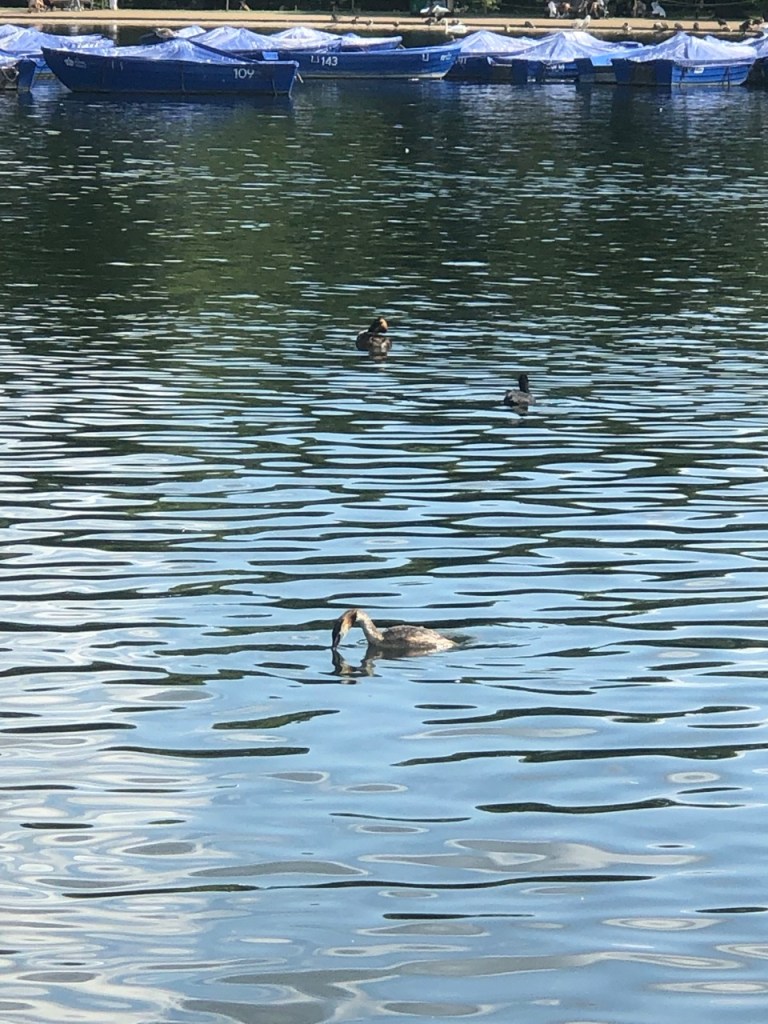
By the way, you might want to remember a part of the Heron’s diet, namely bird chicks. Because guess what? A pair of beautifully plumaged Great Crested Grebes sat on a nest nearby, encouraging several tiny striped babies into the water! I bet you’re scared for their live now! But it was incredibly late in the season to have such young offspring, and it really took me by surprise. Maybe their first brood had failed, and they’d had to start over? Anyway, these birds were once hunted for their fabulous crests, and were one of the most affected victims of the plumage trade. The formation of the RSPB changed that all, and their protests forced the government to pass the Importation of Plumage Prohibition Act, back in 1921. To read more about that, you can either check out my Birds: Brilliant and Bizarre blog here or head up to the Natural History Museum to see the exhibit for yourself! I promise you won’t be disappointed!
And drumroll please for our final pair of birds… two red billed rails called Moorhens, clearly interested in each other. It may have been courtship, or it may have been a display of dominance, but both upended their rear ends, their bodies following suits while keeping their head, neck and breast flat across the top of the water. The noises that followed were similar their common bubbling call, but seemed more like a vibration, a whirr. It was really cool to watch! And did you know that a Moorhen’s seemingly nervous flirting of its tail are actually a nervous tic?
Hyde Park is more of a birding site than meets the eye, and brilliant nature sites are actually dotted all over London. From Hampstead Heath to RSPB Rainham Marshes, the capital is full of birdlife. This buzzing, historical city is home to a lot more biodiversity than an outsider looking in may think, and from Short Eared Owls to Water Voles, its a home for so many of our native species.

