
This weekend’s journey to London had began with a birdy purpose. That purpose was to visit the Natural History Museum’s new exhibit – ‘Birds: Brilliant and Bizarre’. The Museum has partnered with the RSPB to create an unforgettable experience, its main aim to showcase how amazing our natural world is. Both adjectives mentioned in the title are flawlessly fulfilled, with both organisations working hard to produce a masterpiece that demonstrates how we can help our feathered friends, because at the moment we are on track to lose these natural wonders. It is an exhibit that is immersive, inclusive and with something for everyone. I was also really excited to see some of Elle Kaye’s taxidermy work, as I’d met her at Birdfair and some of her pieces were on display here. Welcome to Birds: Brilliant and Bizarre.
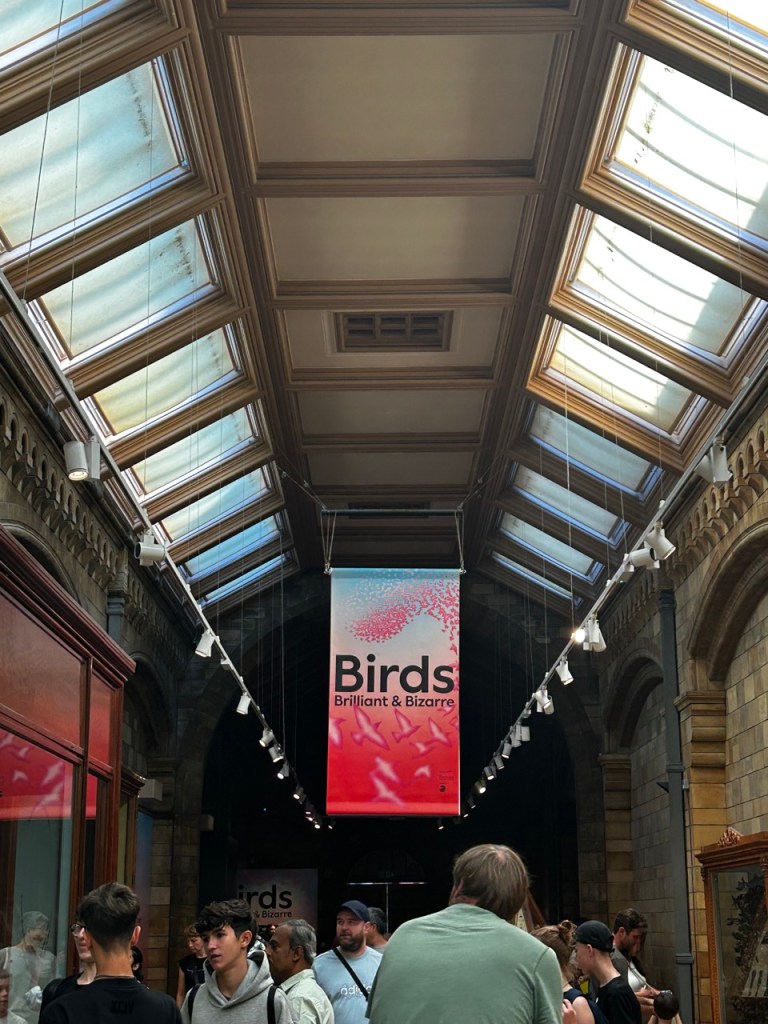
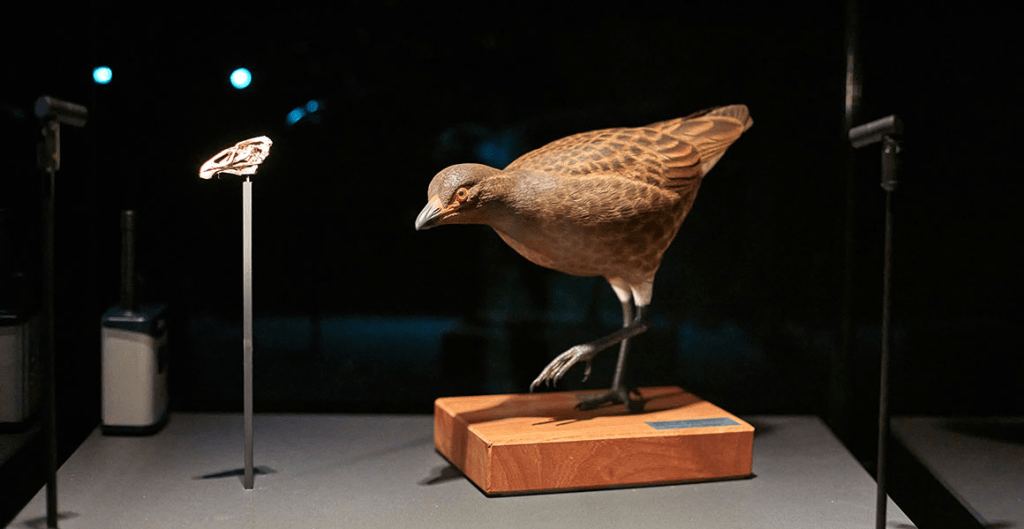
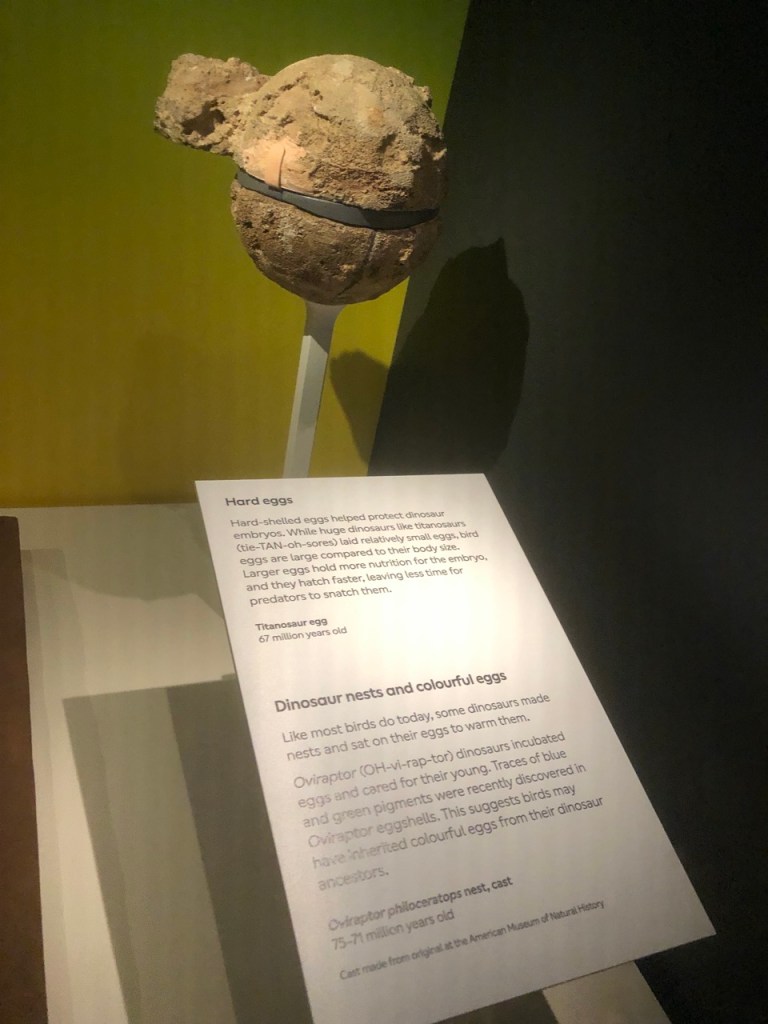
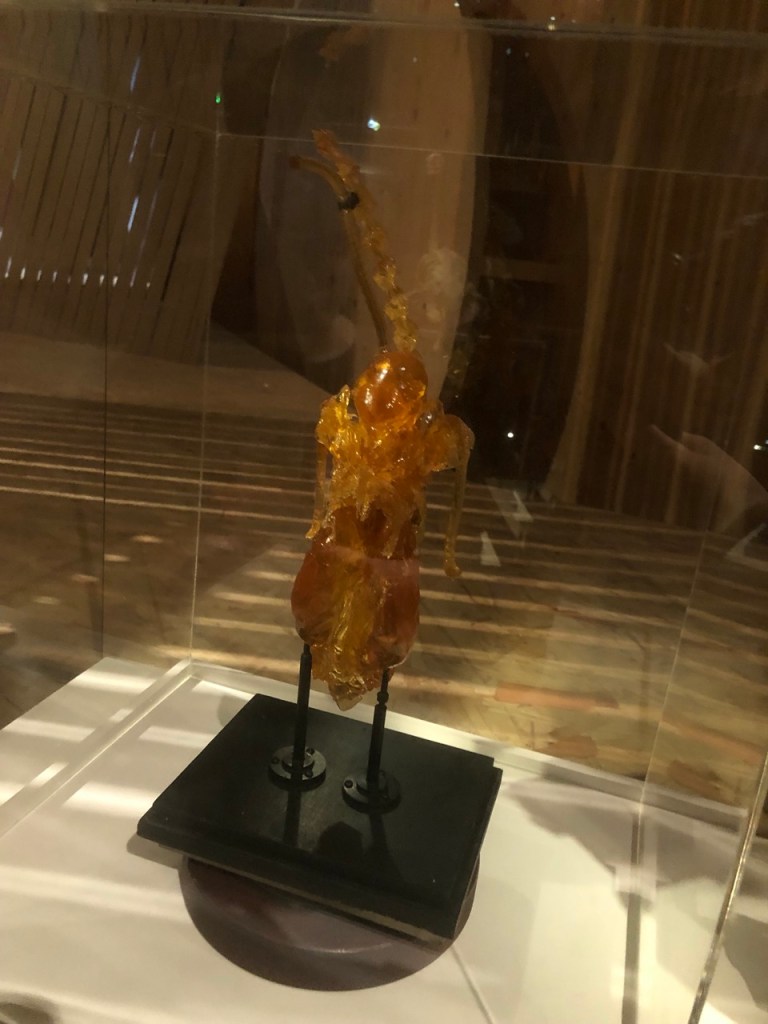
As we walked into the first few rooms, the theme was immediately apparent. The dawn of the birds, via dinosaurs, evolution and a reptile we call Archaeopteryx, led to the 11,000 species we know today. This is brilliantly illustrated by the creature nicknamed ‘Wonderchicken’, a fossil dated to 67 million years ago, that is currently the oldest known modern bird. It and a small gang of specialists survived the great extinction episode of 66 million years ago, simply due to the fact that they could adapt to their new surroundings faster than their dinosaur counterparts. Wonderchicken formed the foundation of modern bird species today, and why they are so successful across the globe.
Through evolution came what possibly characterises a bird to most people, apart from flight of course. Their ability to create such an array of songs, calls and alarms. Songs are usually reserved for courtship, and play special parts in a bird’s life. As we wound our way through the exhibit, we came across many of these romantic songsters. Most birds have approximately 175 different muscles, the largest of which is the pectorals, which controls the wings. But a bird’s syrinx is located at the bottom of their trachea, instead of the vocal folds of mammals. The syrinx is the vocal organ of birds, and their sound resonates from deep inside their body, creating the powerful yet beautiful sounds that emanate from a bird’s beak. Did you know that some birds even sing to their eggs? Superb Fairywren mothers teach the embryos inside their eggs a one-note vocal ‘password’, which they have to incorporate into their begging calls to get fed. Thus far, these birds have learnt to combat brood parasites like Cuckoos, for if an egg is laid in the nest late and doesn’t get to learn the password, the chick won’t get fed. Incredible!
And so we move onto one of those subjects that is lesser known. Learning time people! Today’s subject is mimicry in birds. The Superb Lyrebird is one of the world’s largest songbirds, and would make a great secret agent for its disguise skills. It can mimic almost anything it is exposed to. A car alarm, a crying baby, a creaking door. You name it, it could quite easily come out of this bird’s syrinx. One of the interactive features of this part of the exhibit was a rather tricky quiz. You would be given ten sounds, and you had to identify whether the sound was made by a Lyrebird or the actual source (I have to admit, I did get 10/10).
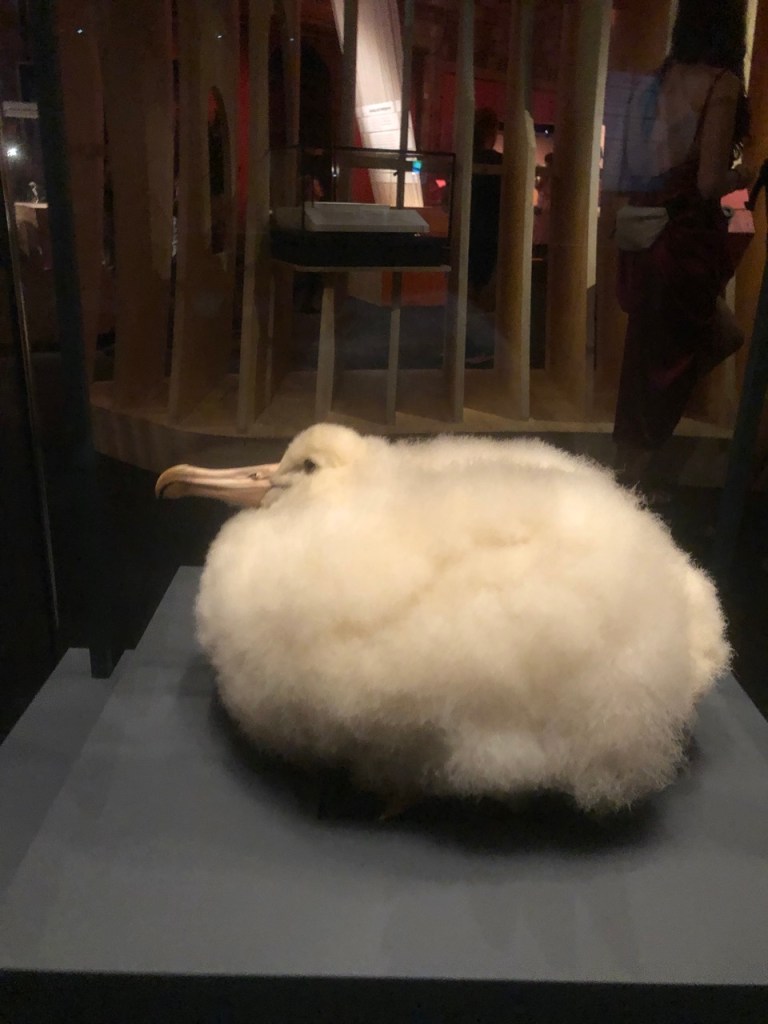
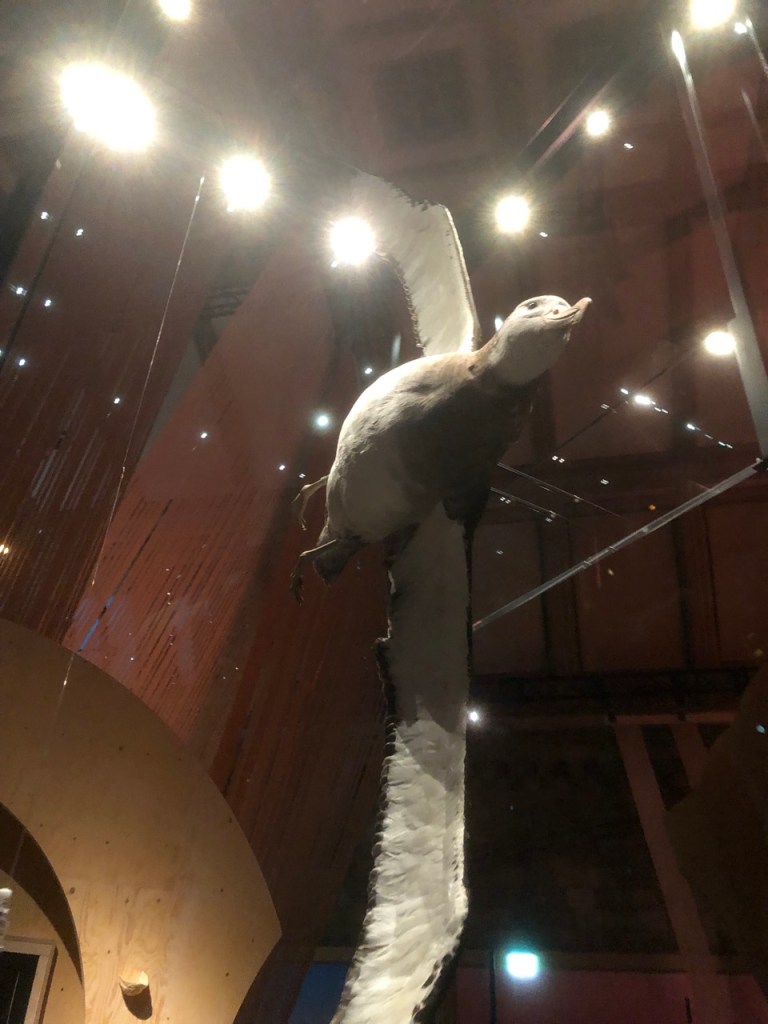
Continuing the romantics side of things, we now move onto breeding. In the centre of the room sits an albatross chick, huge and fluffy and genuinely cute. Above it flies its mother, with a wingspan certainly taller than me! Albatrosses generally have a wingspan of 8-11 ft, and considering I stand just above 5ft, they really are huge compared to my height! A bitter story in the next case shows just how deadly our actions can be. The Guam Flycatcher was, unsurprisingly, an endemic species living on Guam. Here’s the catch; it had very little in the way of natural predators. So when humans accidentally introduced Brown Tree Snakes to the island the little birds were defenceless. Eggs, chicks and adults disappeared into these animals, and to this day Guam is still full of these slithering skulkers, and no flycatchers.
Invasive species have the capacity to not only wipe out single species, but to reduce biodiversity by a large chunk through competition. Some invaders do it rapidly, like the Brown Tree Snakes. And this is due to the fact that we have found a way to take evolution and adaptation out of the equation. Us introducing these invasive species leaves very little time for the native ones to evolve and adapt to their new predators or competition. That means they can very quickly go extinct as in the case of the Guam Flycatcher.
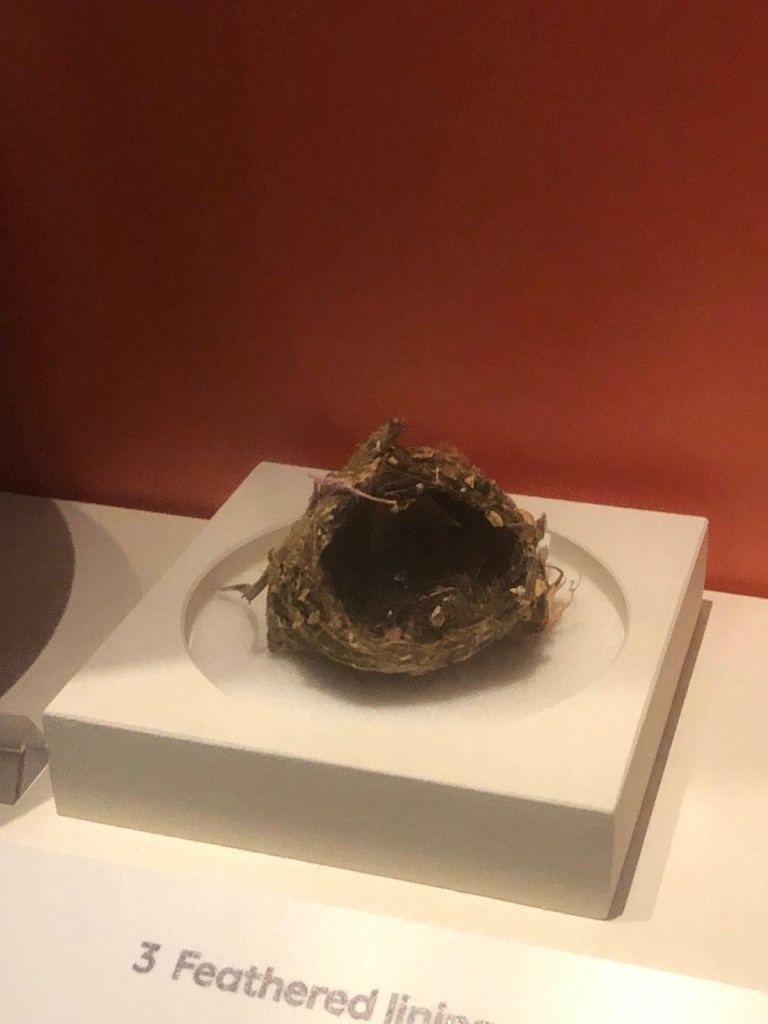
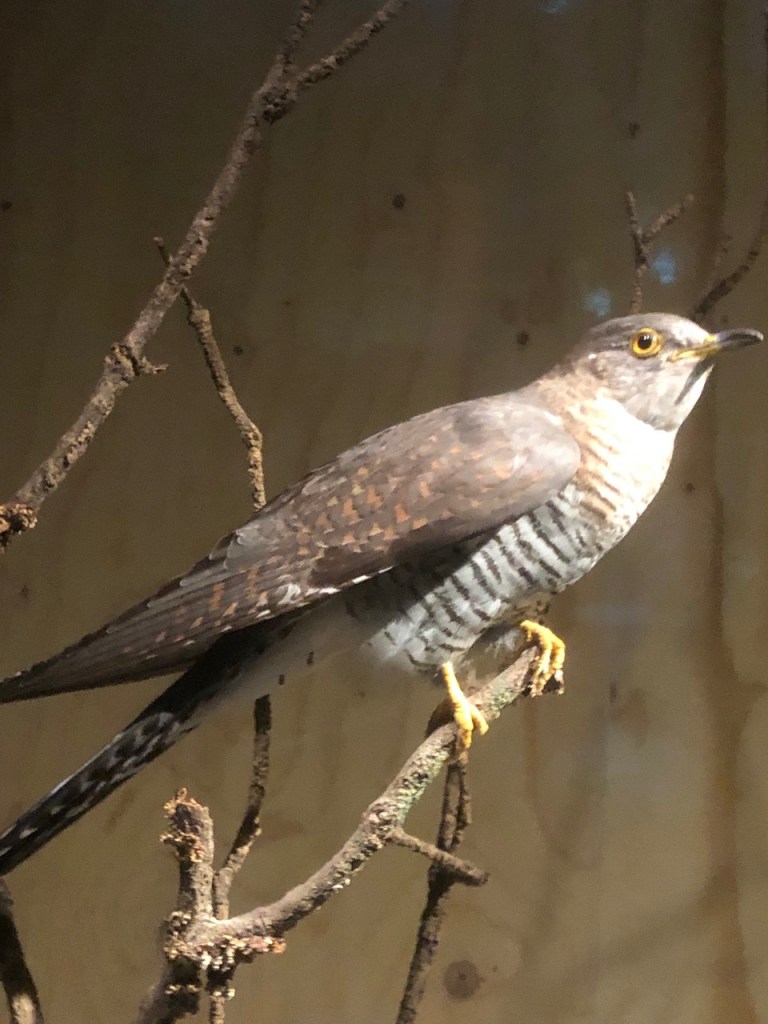
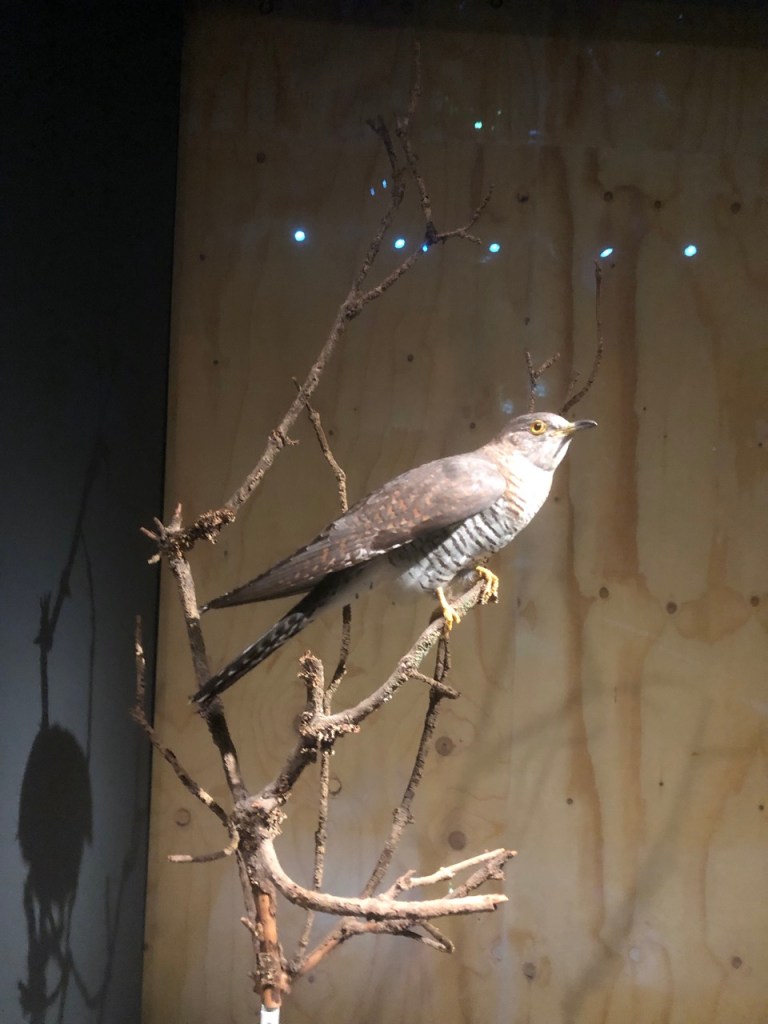
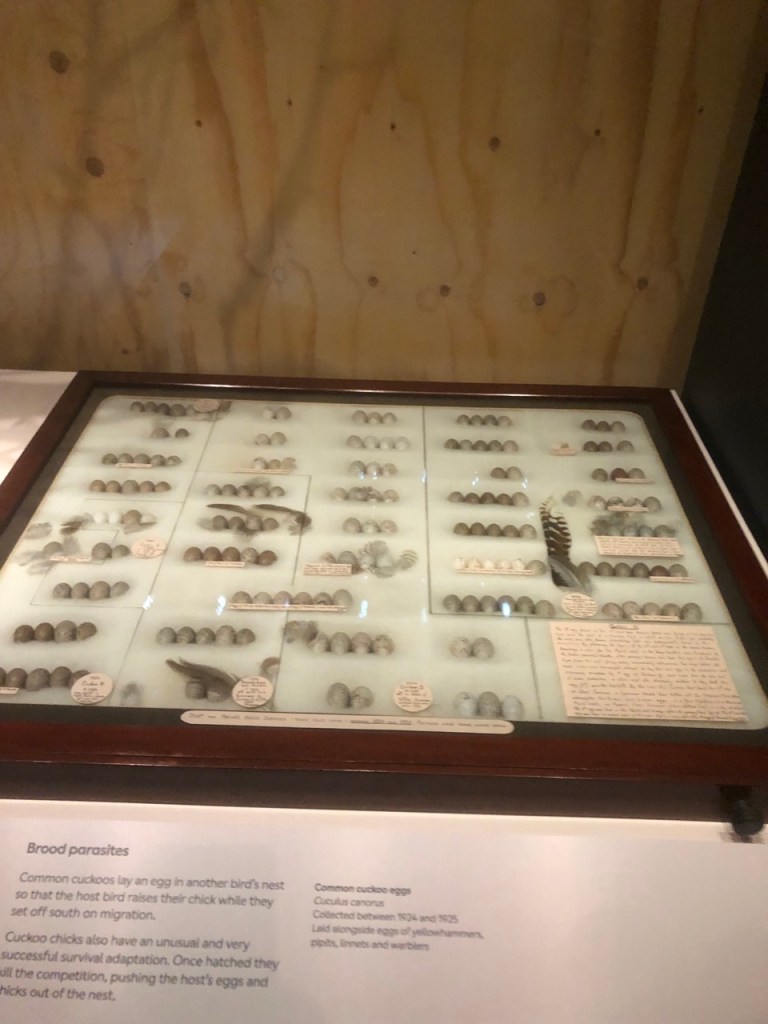
The Cuckoo case sat opposite us, featuring a Common Cuckoo perched in a leafless tree, and row upon row of labelled eggs. A brood parasite that lays its eggs in the nest of other birds, the Cuckoo referenced here was a certain Flappy McFlapperson, a satellite tagged bird that had been named by schoolchildren in China, who tracked the Cuckoo’s journey from Mongolia to South-East Asia. Flappy captured the world’s gaze and held it, but he isn’t the only Cuckoo to be satellite tagged. In fact, there are hundreds that have been tracked across the globe in an effort to learn more about their migration routes, and why they are declining so fast. Organisations like the BTO have run these projects in a bid to understand what’s behind these declines, and a lot of their data is made public through their website. I’ve learnt a fair bit about these birds from the maps, like the fact that European Cuckoos take several routes through Africa, and the threats they may face depend on the route they take. For example, if a bird flies across the Sahara it might die of heat and exhaustion, but if a bird skirts it, they’re more likely to succumb to illegal hunting.
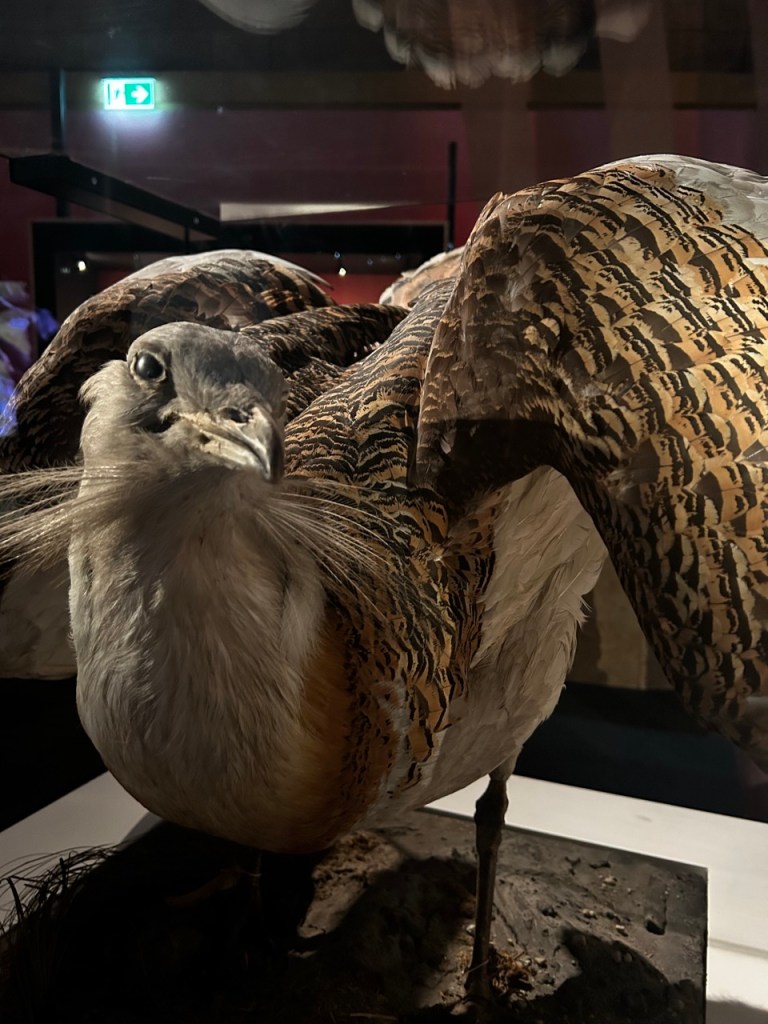
As we walked on, a displaying Great Bustard sat in the case before us, flanked by an adjacent Ruff lek. A Great Bustard’s display is known as a ‘foam bath’, when it tucks its head under its wings and exposes it’s white inner feathers, with this display beloved by females. There is a reintroduced population on Salisbury Plain, as the birds ceased to breed in Britain in 1832. It hasn’t been plain-sailing for the world’s largest flying bird here, having taken them four years to begin breeding, but the population is currently at a healthy 100 birds, and the Great Bustard Group is doing everything they can to restore this bird to its former glory. They are huge, majestic birds and their appearance hands them a certain wisdom. In the years to come, let’s hope their display comes to be a common sight across the country.
The Ruffs meanwhile, have several different morphs which the males put to good use on their display grounds. Morphs happen when birds of the same species regularly develop different colours and plumages. There are three male Ruff morphs; independent morphs aggressively defend a territory to impress the females, and Satellites build alliances with them. 1% of Ruffs are the rare Faeder males, that look and behave just like females. They can avoid any form of conflict, and sneak in to fertilise the ladies under the radar of their loud, cocky counterparts.
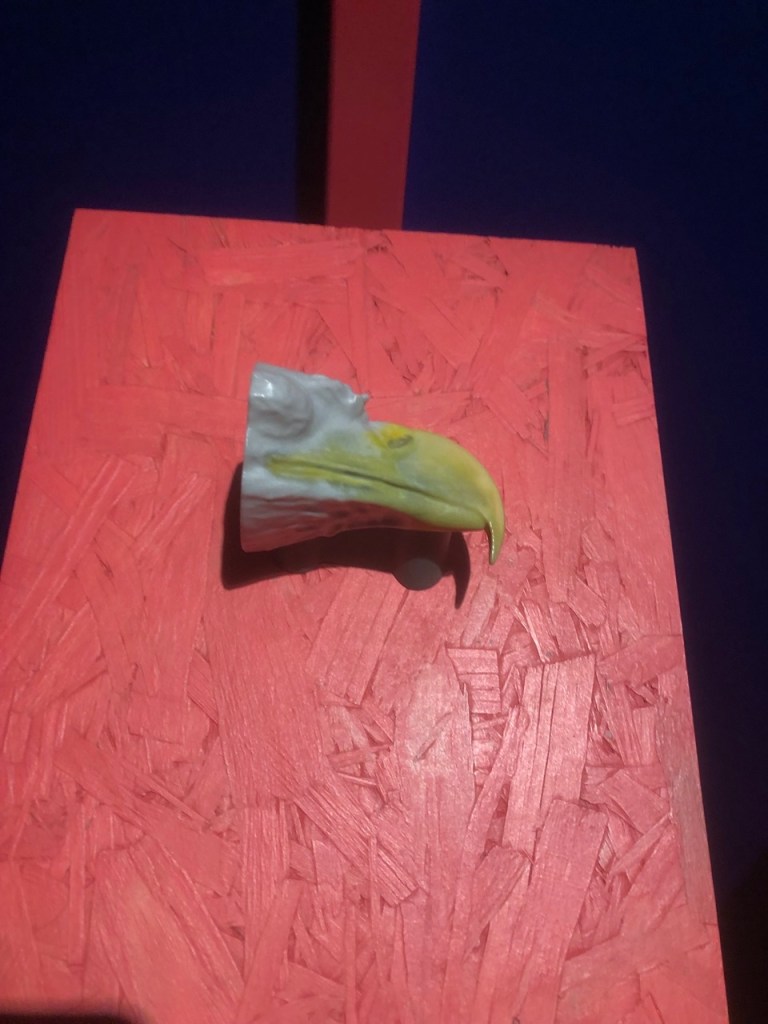
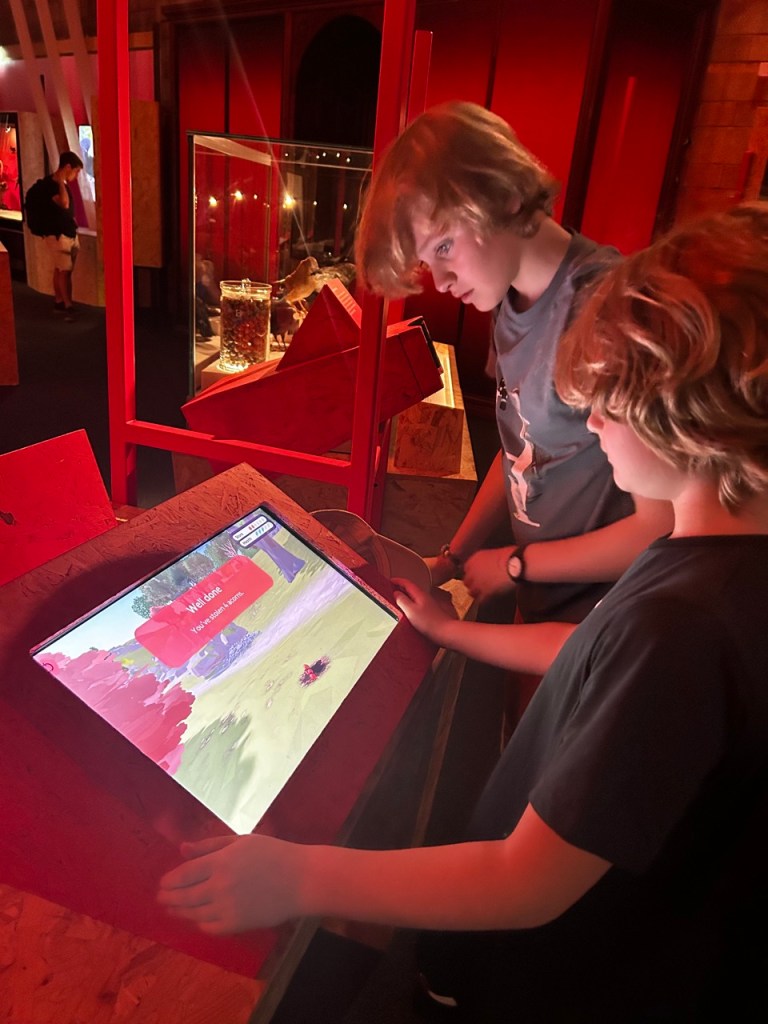
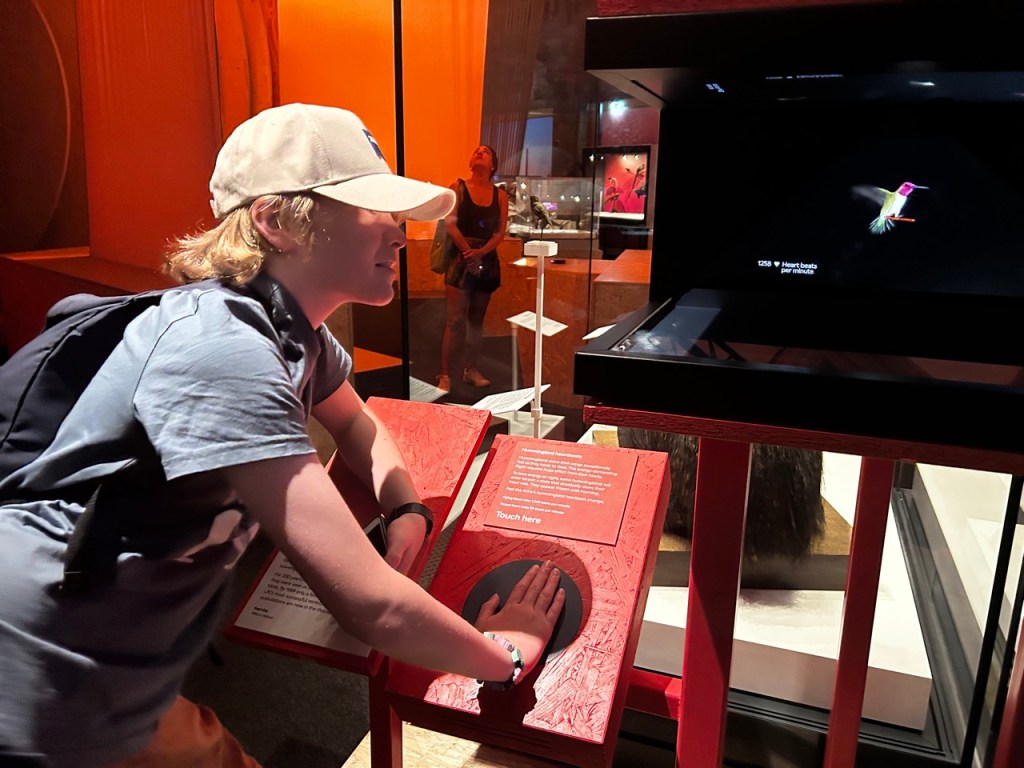
One of the best things about the exhibit was the interactivity that went alongside these amazing avian abilities. You could sit and be surrounded by a starling murmuration, awaiting a Peregrine Falcon’s arrival as the mesmerising birds swirl and twirl around you. A computer game simulated a Jay’s year, and anybody who attempted it had to try and survive from Spring through to Winter, by hiding acorns, stealing them and having to remember where you hid them! You can touch amazingly realistic models of dinosaur eggs, different bird beaks and bones. You can smell Hoopoe preen oil, or seabird guano. You can see as many birds would, through ultraviolet light, and you can watch as Hungarian Great Tits munch on bat brains, and witness a Vampire Ground Finch, one of Darwin’s finches on the Galapagos Islands, fashion a nasty wound in the back of a Blue Footed Booby in order to drink its blood. Inclusive and immersive for all, that’s what makes this exhibit special. The atmosphere of birdsong, the lighting and everything else makes this a masterpiece.
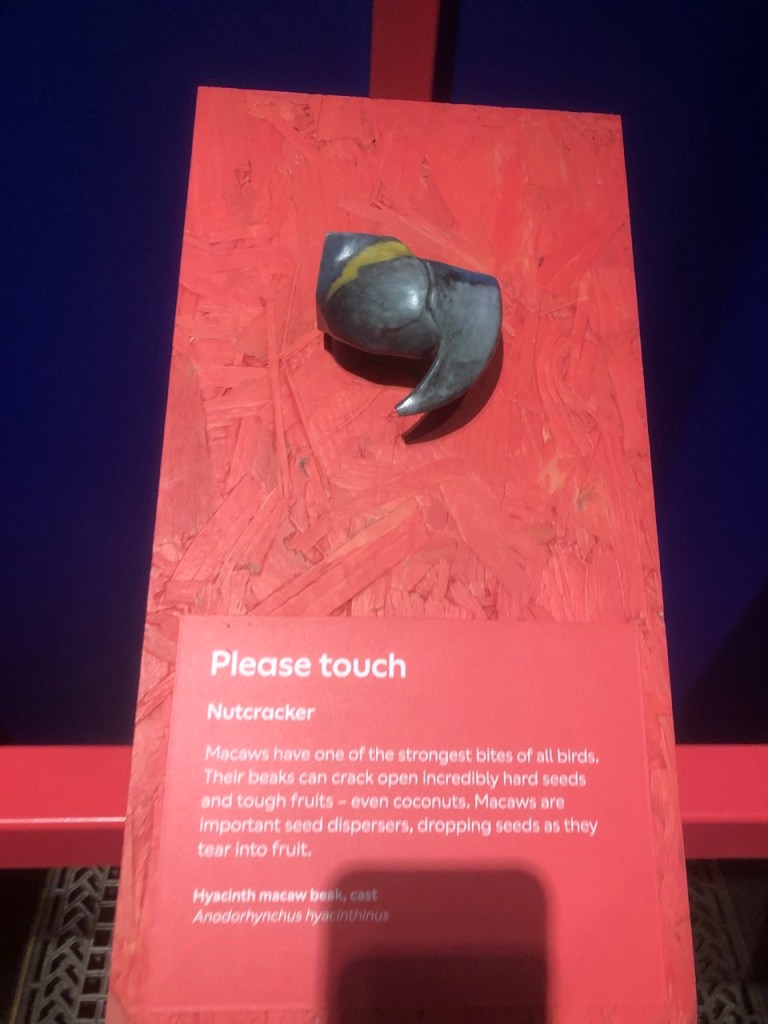
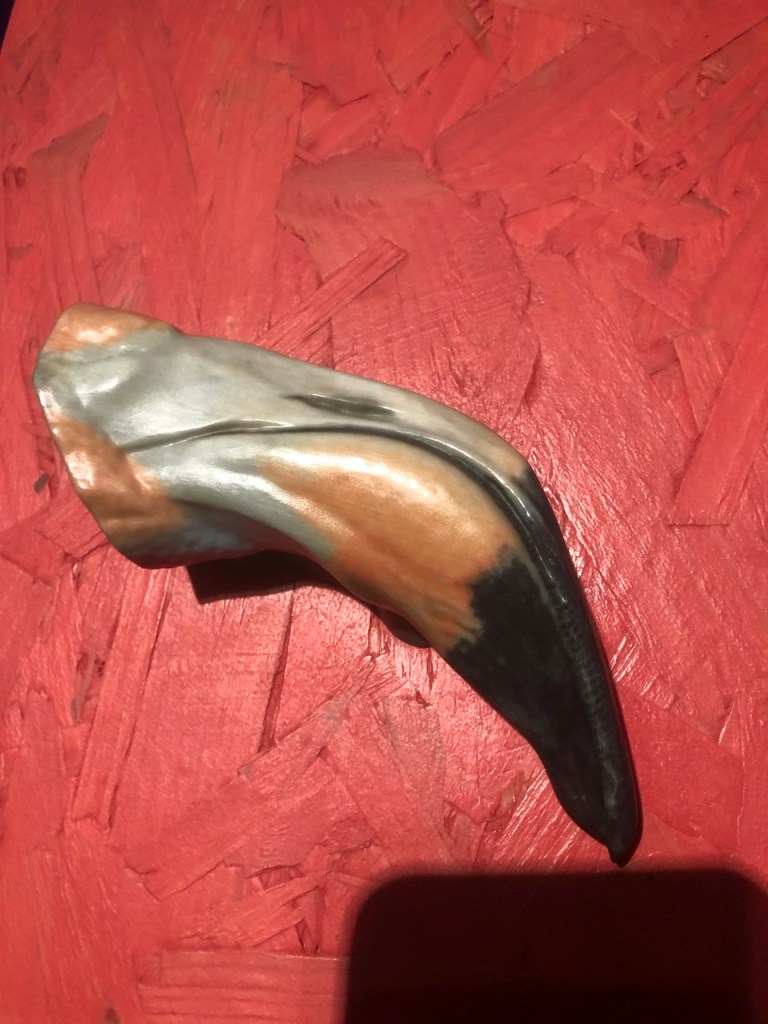
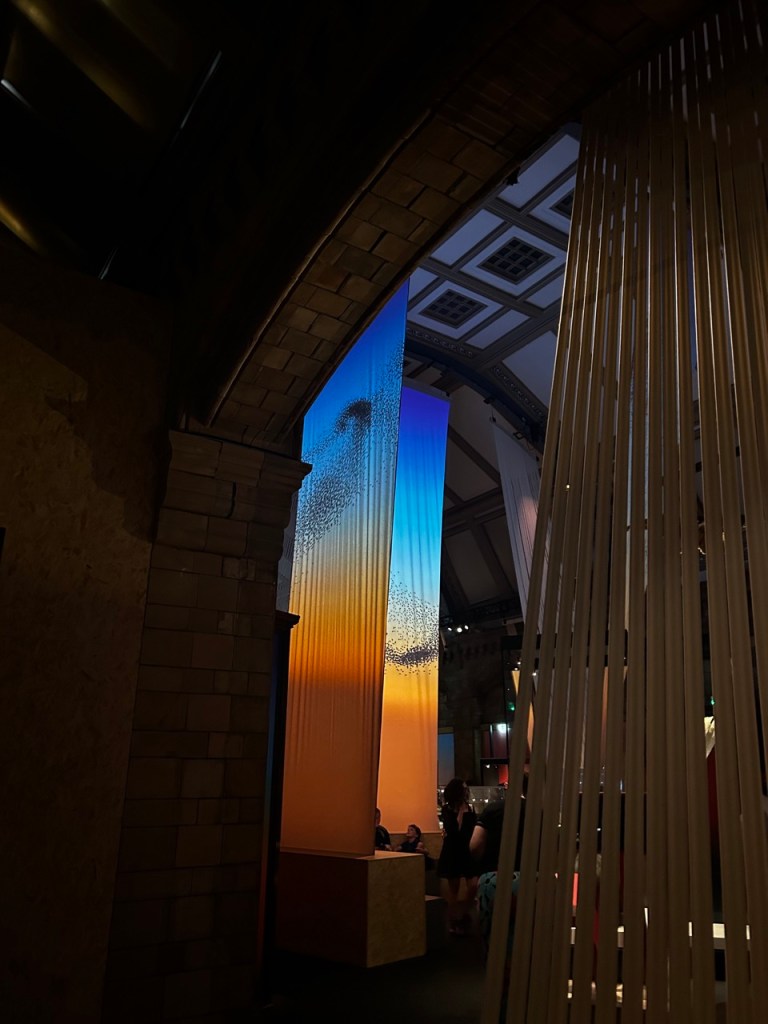
I haven’t even mentioned the Honeyguides yet! These birds prefer to work with tribes and honey-hunters to find and access bees’ nests, and the arrangement benefits them both. When looking for honey, a person calls to attract a Honeyguide. Honeyguides in one area get to know the calls of the people it works with regularly, and the birds are less likely to respond to a foreign call. Once summoned, the Honeyguide will lead a person to where it knows there is a bee’s nest, with loud chattering calls. On arrival, the people use smoke to remove the honey, and share the wax with the birds. Win win!
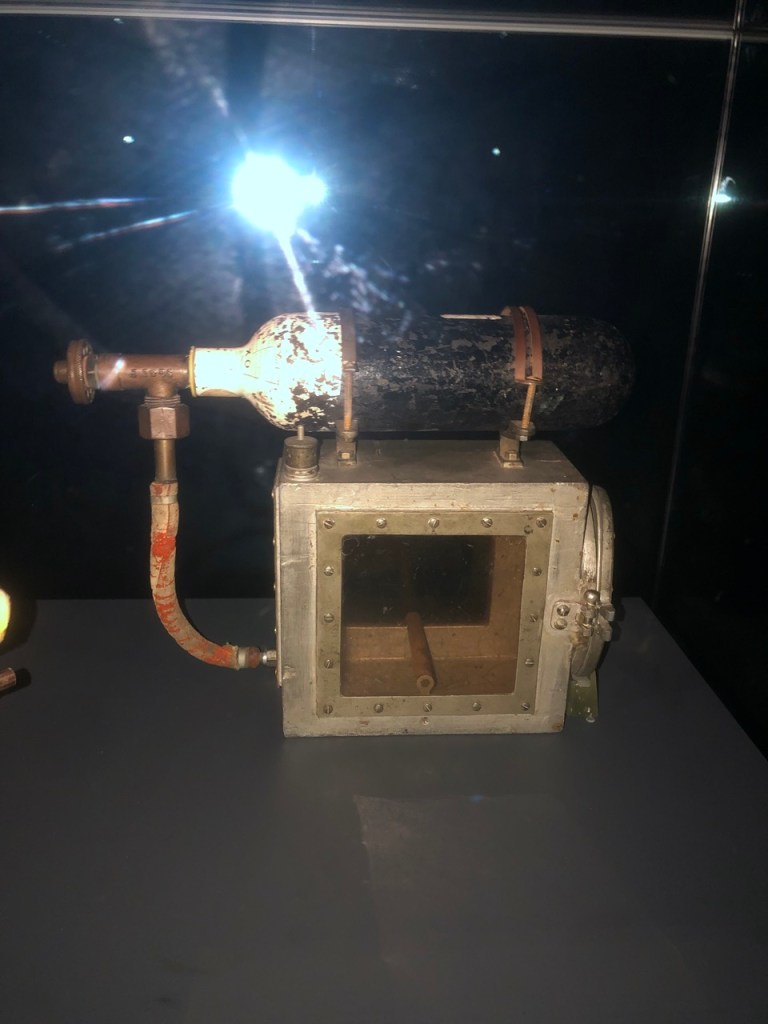
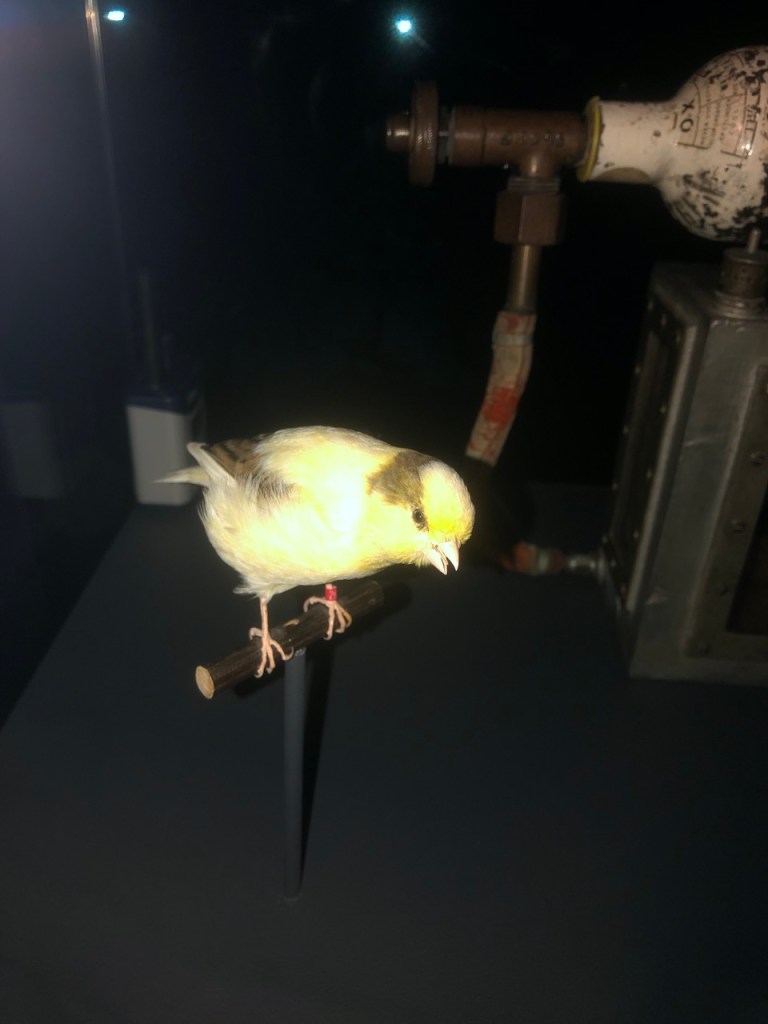
The penultimate room was slightly darkened, and an intriguing contraption sat in a case off to my right. An old canary cage, taken down into the mines as a precaution. If the canary stopped singing, there was toxic gas in the air, and the miners knew to get out. An oxygen pump on top revived the canary if it fell unconscious. We needed those birds, and in captivity, those birds needed us.
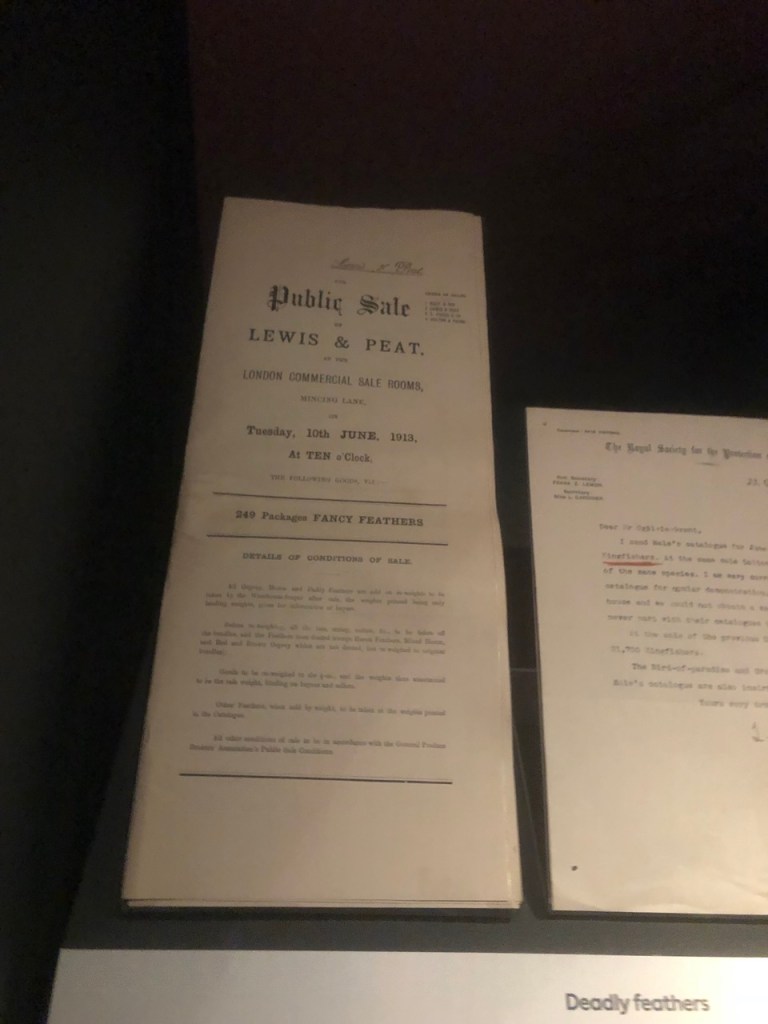
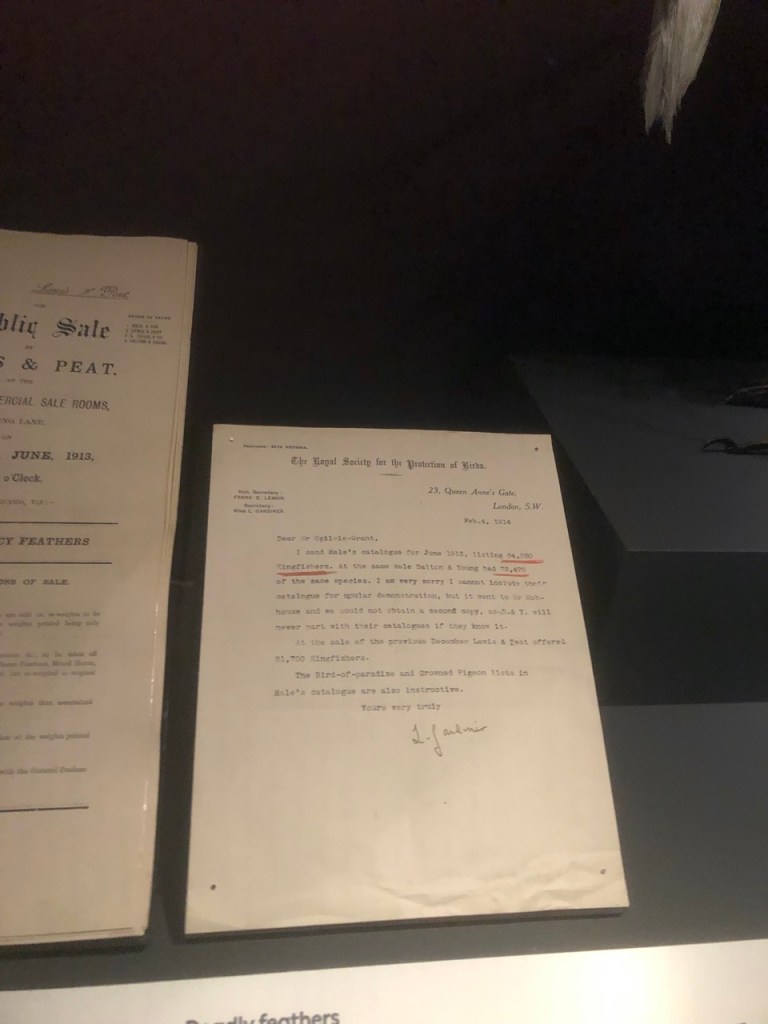
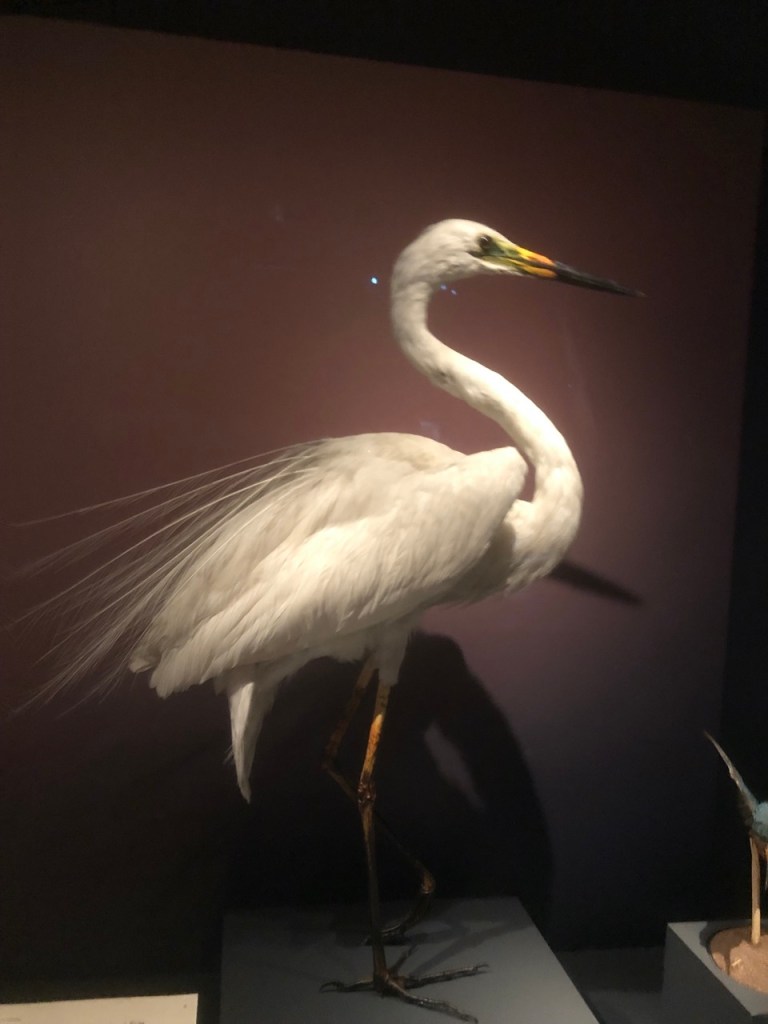
The RSPB was formed in 1889, when Emily Williamson founded the Society for the Protection of Birds, in order to wage war against the plumage trade. Fashion had been driving birds like Little Egrets and Great Crested Grebes towards extinction, for the simply daft reason of having a pretty feather in your hat, or in some cases a whole bird. The all-women movement received a Royal Charter in 1904, completing the full acronym and making them the Royal Society for the Protection of Birds. By 1921, the Importation of Plumage Prohibition Act was passed, and that was the RSPB’s lift-off. The exhibit featured documents, headrests and hats all highlighted in this gruelling campaign that ultimately culminated in a victory for nature.
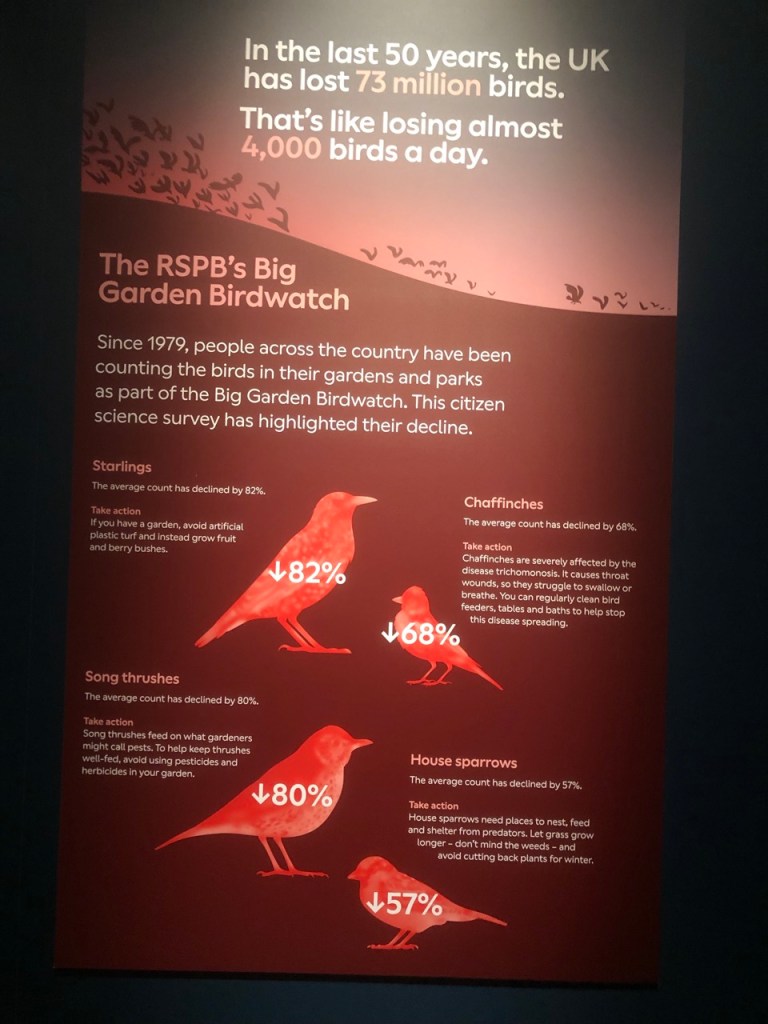
To reach the exit, you had to pass through a vision for the future. By 2050, if the government listen and everybody takes action, our country could be full of birds and nature. The UK is one of the most nature-depleted countries in the world, but we can change that. The immersive experience in this final room shows it. Wind turbines and solar panels on the roofs of buildings, as well as trees and entire farms. Rivers surrounded not by concrete, but by patches of woodland and meadows. White Tailed Eagles, powerhouses currently restricted to parts of Scotland, roam the city skies once more.
This and the other birds of prey whose numbers have been restored will counteract overgrazing, and keep numbers of animals like rabbits down. Kestrels and Owls will prevent large numbers of mice, rats and voles, and Hobbies will eat the plentiful insects. Who needs pest control when you’ve got these guys on the case? It may not be time just yet to reintroduce wolves and lynx, but if our raptor populations are strong then they can do a good job at keeping prey numbers and overgrazing to consistent levels.
And most importantly, everywhere is teeming with insect and pollinator life, allowing our rooftop farms and wildflower meadows to thrive, and don’t forget the birds have a plentiful food source now! Its perfectly possible, if people stop underestimating the threats to our natural world. If we start making changes for the good of the planet and our biodiversity. Its perfectly possible. If everybody, from the government to the young people of Britain, takes action. Perfectly possible.
Think about London. There’s the Thames, a huge river that runs through the centre. But did you know that there’s a River Fleet that runs beneath Fleet Street? London once had many rivers, teeming with life. But in the name of modernisation, these 12 rivers were forced underground, their size and flow greatly reduced, and became nothing more than sewers, teeming with waste instead of the life they once supported. If we could clean these rivers up, and reveal them once again to the city of London, surely that would be a huge step in the right direction to cleaning up our cities. And if we want to reach Net Zero by 2050, we’d better start now.
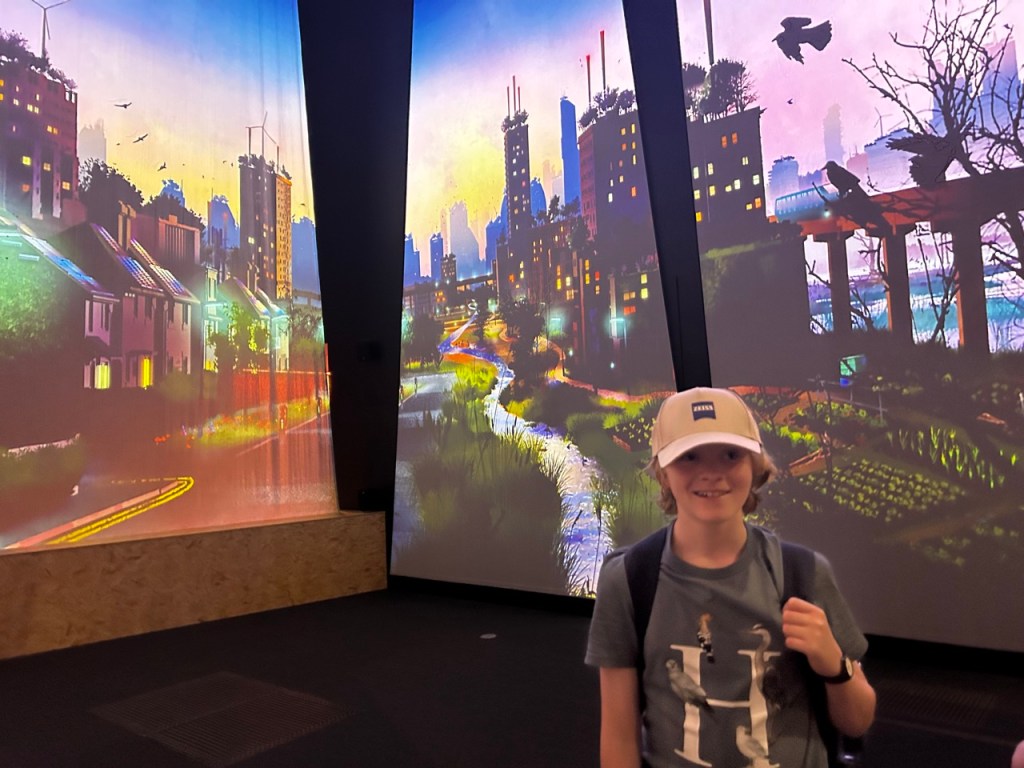
The message behind this exhibit is that birds and nature need our help. Awareness is key to that, and the more people who know about the wonders of the natural world and how we need to save it, the better our chances will be against the great beast that looms ever closer on the horizon; Climate Change. If we can restore our biodiversity to its former glory, we can stop this. We need to learn to live alongside nature, not push it away into the far corners of the globe. So, despite what I said earlier, there are two messages behind this exhibit. One of beauty and wonder, and another of a call to arms. To win the fight for our planet. And to save nature, so that it shall never need to be saved again.


2 thoughts on “Birds: Brilliant and Bizarre Exhibit”