
Most people will never have given a seconds thought to Peat Bogs, or perhaps even know what they are. Until very recently I was one of those people, however a days hard work with the Dartmoor Youth Rangers has opened my eyes to their importance, and how vital it is that we protect and restore them!
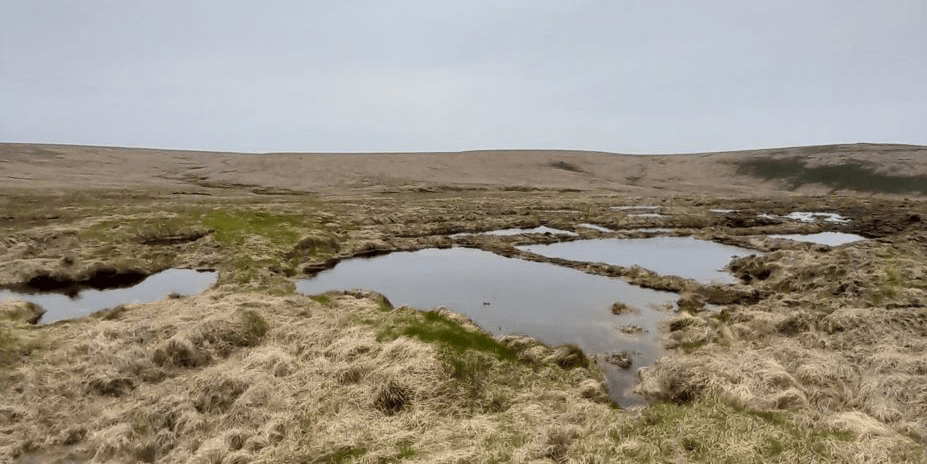
A peat bog is a dense mass of partially decayed vegetation. Both the bog’s acidity and its waterlogged wetland form stop the vegetation, on Dartmoor mainly sphagnum moss, from fully decaying and decomposing when it dies. Instead of this, over thousands of years it builds up to create what we know as peat. On Dartmoor, the layer of peat can be up to nine metres deep! Many Dartmoor hills are covered at their peak by blanket bogs, so named because their peat lies across the hilltops like a blanket. However, just 1% of peat on Dartmoor is estimated to be healthy, peat-forming bog. The rest of it has been damaged by drainage, cutting, drying and erosion. And that’s what the Dartmoor Youth Rangers were helping to do just a few weeks ago, and what the Southwest Peatland Partnership has been trying to do. Restore the peat bogs.
So, in the above paragraph I mentioned briefly the amazing sphagnum moss. Sphagnum moss is a genus of moss that form multicoloured, boggy carpets in Britain’s wetland, heathland, moorland and of course our peat bogs. But they have a certain superpower concealed within their unsuspecting spongy shapes. These moss species can hold water long after the surrounding soil has dried out, and it helps to prevent the decay of dead plant material. This, of course, is part of the formation of peat, and these mosses are compressed over thousands of years to make it.
And why are they important? Well, peat bogs across the UK store an estimated 3.2 BILLION tonnes of carbon, according to the UK centre for Ecology and Hydrology. Whenever peat is damaged or eroded, it emits the carbon its holding into the atmosphere, and with climate change currently one of the world’s biggest catastrophes, we don’t want to be fuelling it if we can help it. Peat bogs capture C02 through photosynthesis, as the plants that grow on peatlands do not fully decompose under these wet conditions, and they don’t release the carbon which would otherwise be released into the atmosphere. This carbon then goes into the peat as the moss is decomposed.
So how were we attempting to restore the peat? Well, the Southwest Peatland Partnership had recently put in several columns of peat bunds; walls of peat and turf where the peat had been exposed or eroded. The walls are designed to hold back rainwater and cause it to pool, and get the peat wet again. The peat, if its dry, becomes the colour and texture of charcoal and loses its carbon holding properties. So, by re-wetting it we can restore it, and return it to its natural form. But up there in the elements, the peat bunds had a few holes. It was our job to repair these holes for some of the bunds, and the Youth Rangers spent a day doing that.
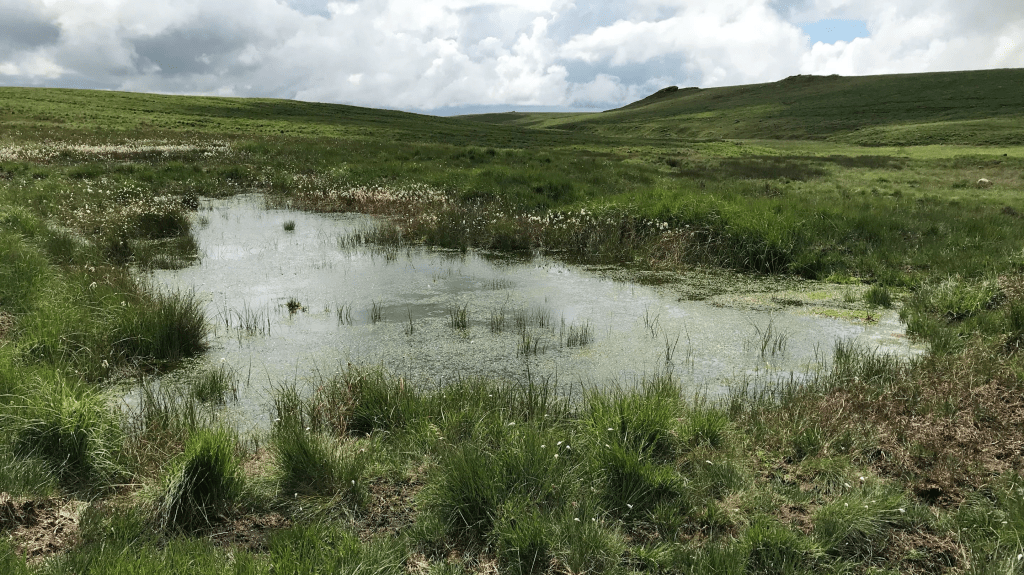
But now what’s left is to explore why we need to restore our peatland. Often its for agricultural purposes, with land having been drained, or large sections of peat broken up for the rich compost it is. Worst of all, the peat is dried and burnt for fuel. This is a risky source of power, as the peat emits all the C02 its holding into the atmosphere, and therefore fuelling climate change. Also, where peat bogs and grouse moors overlap, the vegetation on top of the peat is burnt to encourage new heather growth, the preferred vegetation for Red Grouse. This exposes the peat, and it quickly dries, rendering it useless for the natural world. These are just some of the reasons that this work is necessary, and there are many others.
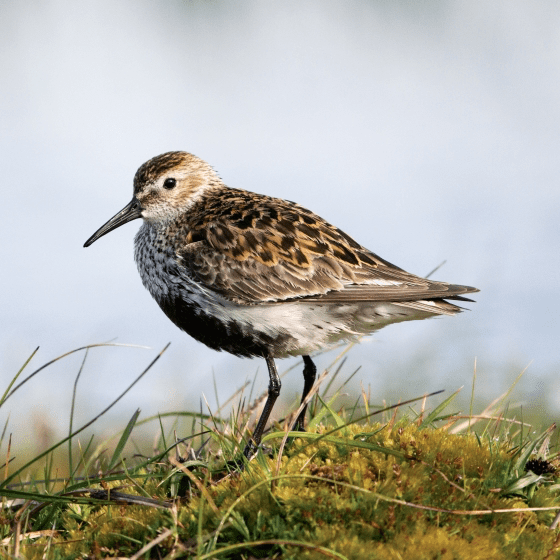
And then, there’s another question. What lives on the peat bogs? Well, to start with there’s the sphagnum mosses that form it, along with cotton grasses and other vegetations. Dartmoor also hosts Europe’s most southerly breeding Dunlin, which are also southern England’s only breeding population. Crucially, the species relies on blanket bog with its network of open pools. On Dartmoor, it is not present below an altitude of 500m above sea level. A fragmented population of breeding Golden Plover may also still exist on Dartmoor, and if they’re there, they’ll rely on these peat bogs. Scotland’s peatland are an example Dartmoor should be following. While 80% of their peatland is degraded, it still provides a home for Curlew, Hen Harrier and a host of invertebrates and amphibians.
One last thing. 12% of the UK is made up of peatland. So where are the others? As I mentioned above, most of it is in Scotland, among the mountains and the Highlands. Some of the most extensive lowland peat lies in the East Anglia fens, as well as in the Somerset Levels. The hills of Northern Ireland and Wales also play host to numerous peat bogs, as well as Exmoor and Northern England. However, 80%of this is degraded and needs restoring.
How can you help? One of the biggest drivers of peat damage is its use in gardening composts and soils. Try and go peat free when you visit the garden centre. There’s bound to be several other options for you and your plants, and if there isn’t, get in contact with your local garden centre, and ask them to stock more peat free options. Remember to spread the word! The more people we can stop using peat soils, the better!
To conclude, Dartmoor plays host to widespread peat bogs, both at high altitudes and low. As does the rest of the UK. But with drastic amounts degraded, damaged, eroded or sliced open, we run the risk of losing the special plants and wildlife that need this habitat, and what could be a huge factor in working our way out of this mess that is commonly known as Climate Change. We have 30,000 square kilometres. The world has 4.23 million square kilometres. That holds over 600 gigatonnes (according to the International Union for the Conservation of Nature) . Think about it. Restoring our peat bogs could be crucial in combatting Climate Change. And that’s what I’ll leave you on.

