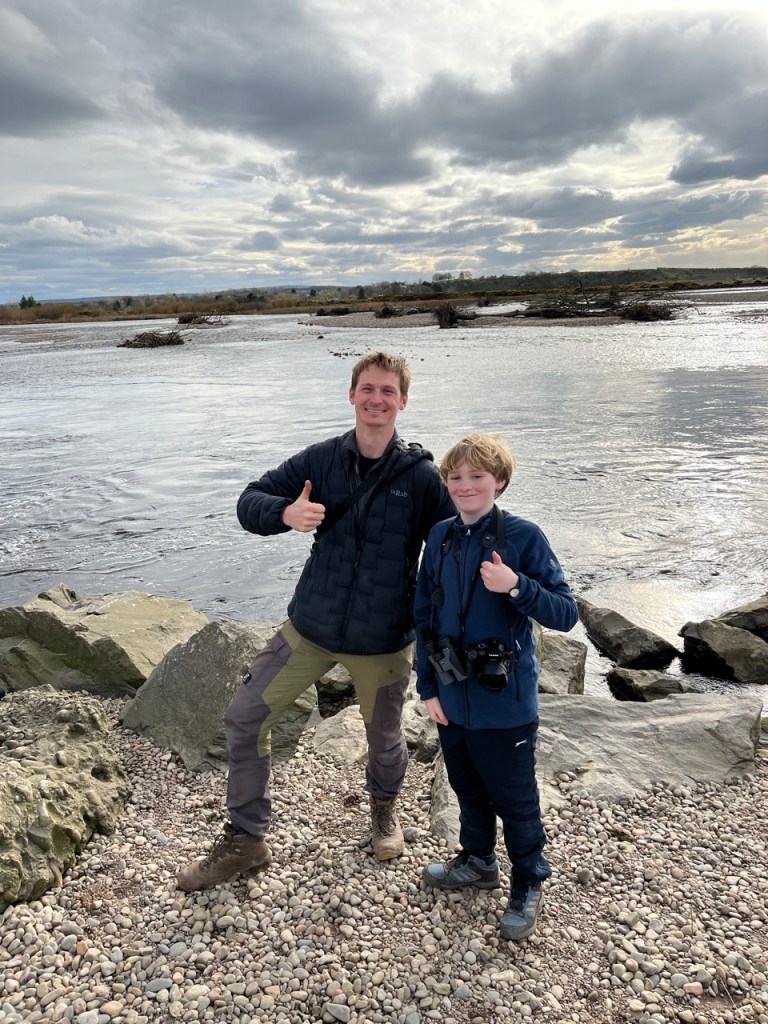
Will Hall might not be a familiar name to you, but he will become one I’m sure. A talented zoologist, photographer, presenter and filmmaker, he has extensive knowledge and skill in the wild from skulls and taxidermy to on-point wildlife ID. Not only this, but he’s spent years getting involved and teaching young people, the next generation, the vast swathes of knowledge he holds, and he was very generous with sharing his knowledge. His grasp of local history, as well as the wildlife in the area, makes for an exciting trip, and you will always learn something from him. Naturally, when Sue told us we would be going out with him, I couldn’t wait!
After another early start, we spent breakfast calm with anticipation (it doesn’t make sense, but its true!), with the Daily Chirp laid between us. It was a fairly rapid affair (all serene thoughts forgotten) and we rushed back upstairs to pack bags for the day ahead, at exactly 8:55AM we ambled down the grand old staircase to meet Will and Sue in Reception (reception was essentially the hub, with all the comings and goings centred there). Despite this being the first time we had met, there was never an awkward moment and arrangements were swiftly made before we followed Will outside.
Findhorn Bay was to be the first stop along the line, as today the plan was to spend some time away from the woods and stick close to the sea. Yet we still ended up driving through plantations, and here we learned a lot about the actual trees around us. Spruce is an invasive species (introduced by humans) and was brought here from Scandinavia to fund Britain’s wood production. It played a huge part in the 1940s war effort due to its swift growing capabilities, only taking about 50 years to become ready for use. But we were soon left with so many of these Spruce plantations that we still use them, and most of them still dot the countryside with foreboding pine-green.
But then there were the Scots Pine plantations, which supported Scotland’s original famous tree, known for towering over the once vast Caledonian Forest. But these were nothing like the impressive woods of old, and these trees were cramped and just paces apart from each other, to maximise output. They let in huge amounts of light compared to the Spruce, with their thinner, less than leafy branches higher up their nimble trunks. But these plantations, as I mentioned before, had nothing on their ancestors, which had inhabited the kingdom of Caledonia (Caledonian Forest. Colourful name, right?). These woodlands were not dominated by Scots Pine, but interspersed with many species of tree and bush, supporting such a vast variety of wildlife.
But our desperate ‘need’ for industrial quantities of pine-wood led to us wiping out this beautifully scenic habitat, which gave us tonnes more than we realised (before we cut it down). And humanity simply cannot perfectly replicate nature’s expertise and placements, meaning we might never regain this habitat to its greatest extent. The small pockets we have attempted to replicate will never be flawless, and are interspersed with birch (an indication of young woodland) when the best friend of birds and bugs is ancient woodland, centuries of age.
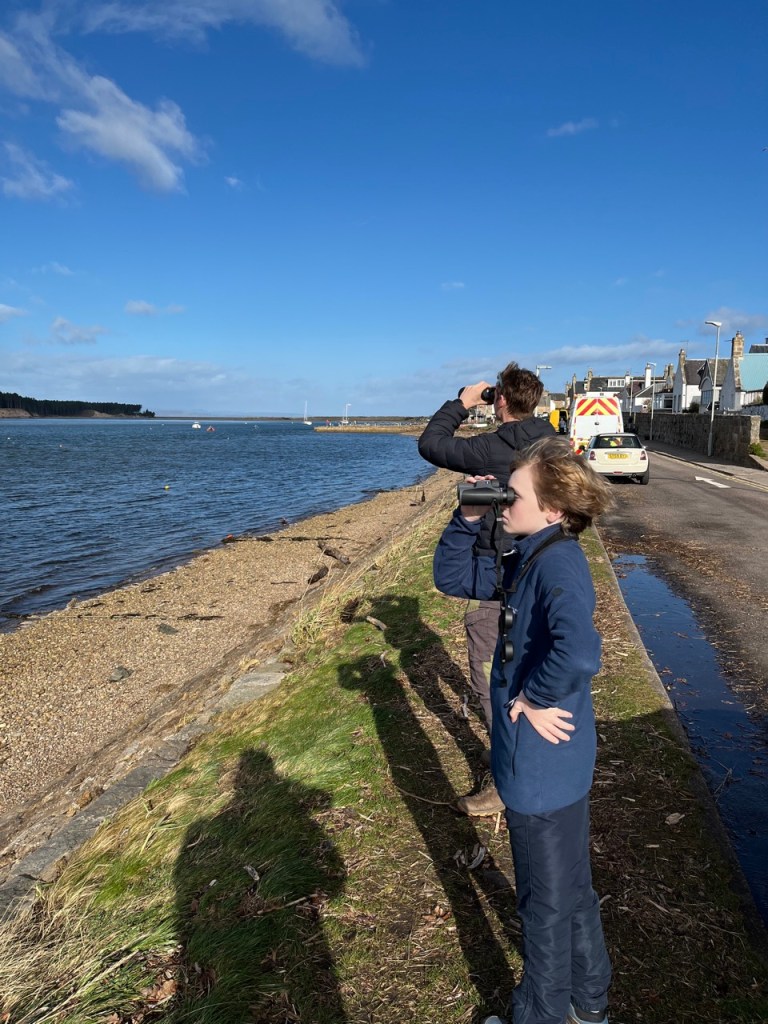
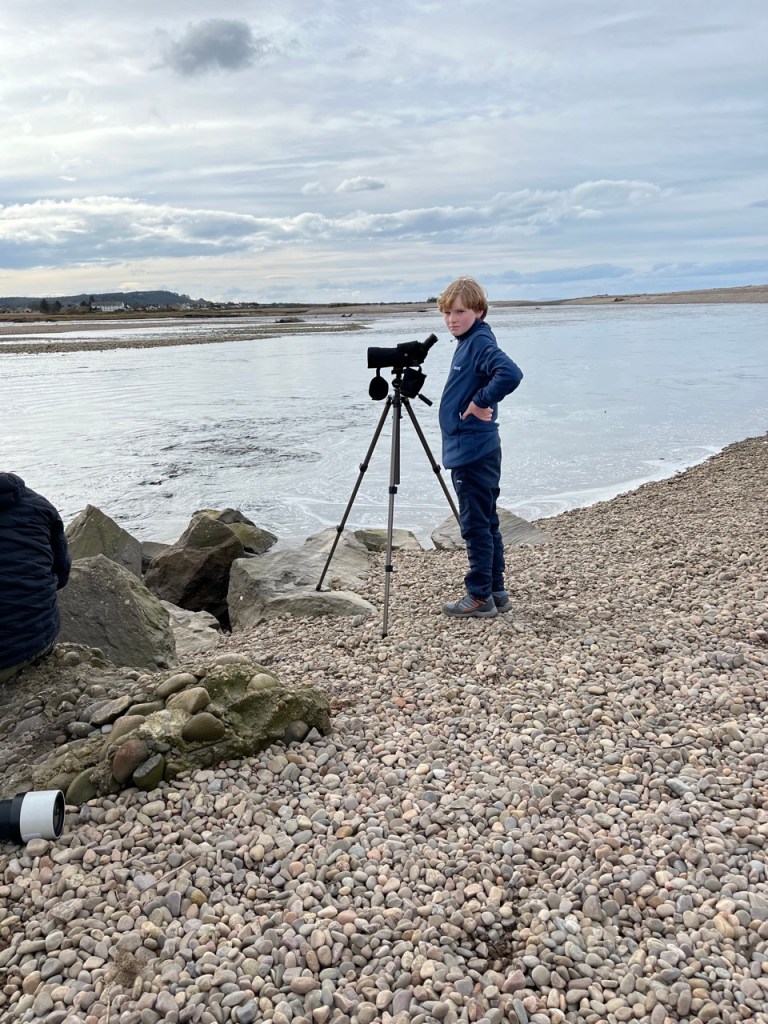
On a more positive note, we continued up past the River Findhorn and came to the village of Findhorn, bordering the east side of the Findhorn Bay (immediately south of the Moray Firth). A quick drive along the harbour wall and we came to a halt, beginning to stroll down the narrow road. This place was truly as wild as a village can get, with gulls screaming in the air and darting Terns plummeting with the expertise of an Olympic diver and emerging with a beakful of sandeels. Nobody seemed perturbed by the presence of so many boats, with Mute Swans and Mallards weaving in between. Well, even the Turnstones scampered across the decks!
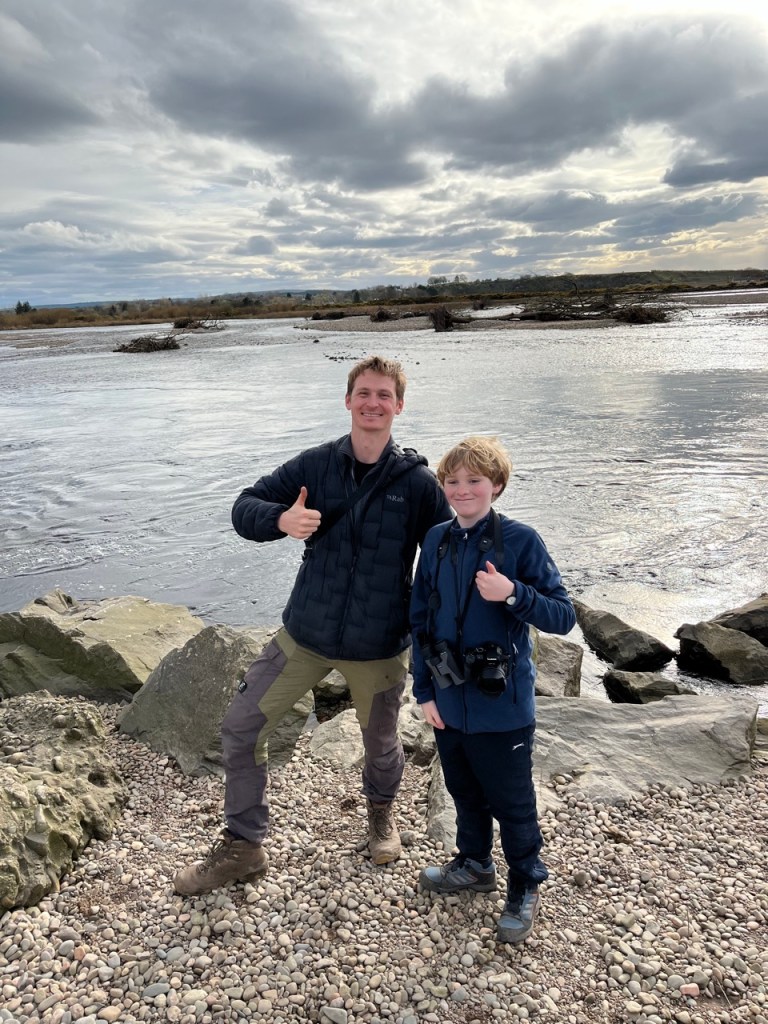
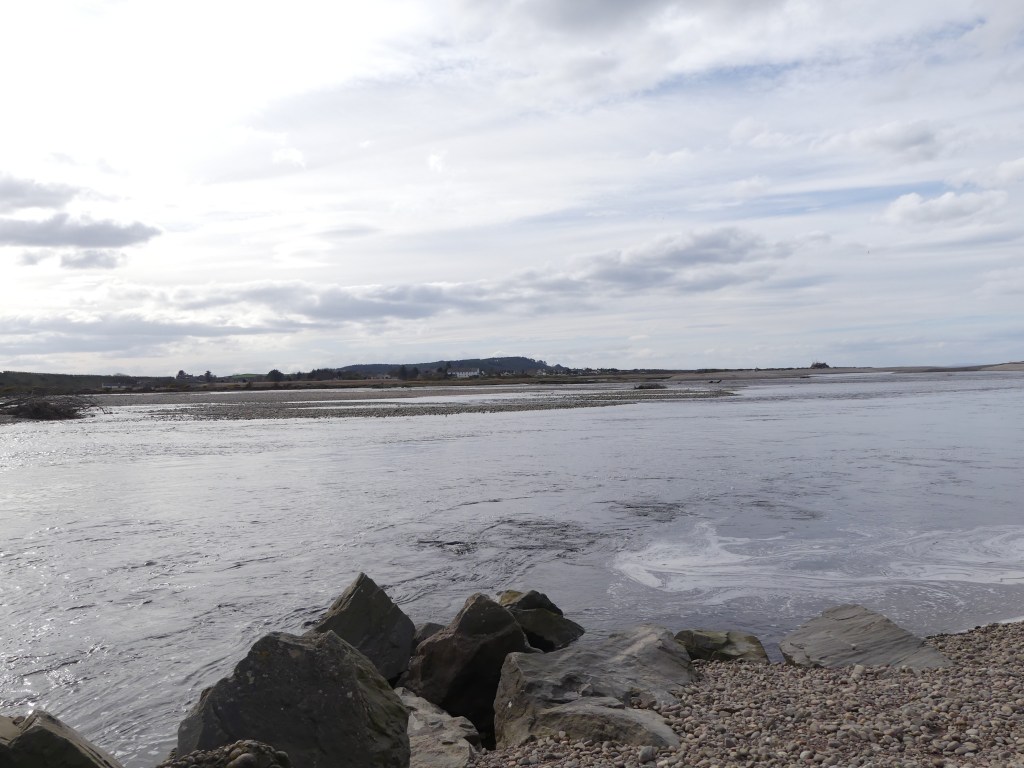
And the geography of Findhorn Bay was made it so many unique compared to so many other river mouths along the coastline. Where the river met the sea was a surprisingly narrow channel, a spit enclosing the rest of the Bay from the Moray Firth. This also highly increased the spot’s cetacean potential, with the Findhorn’s fish being funnelled through this channel, and this is where the Dolphins (and others of course) cut them off, effectively creating a pinch point where all the predators have to do is lie in wait for their prey.
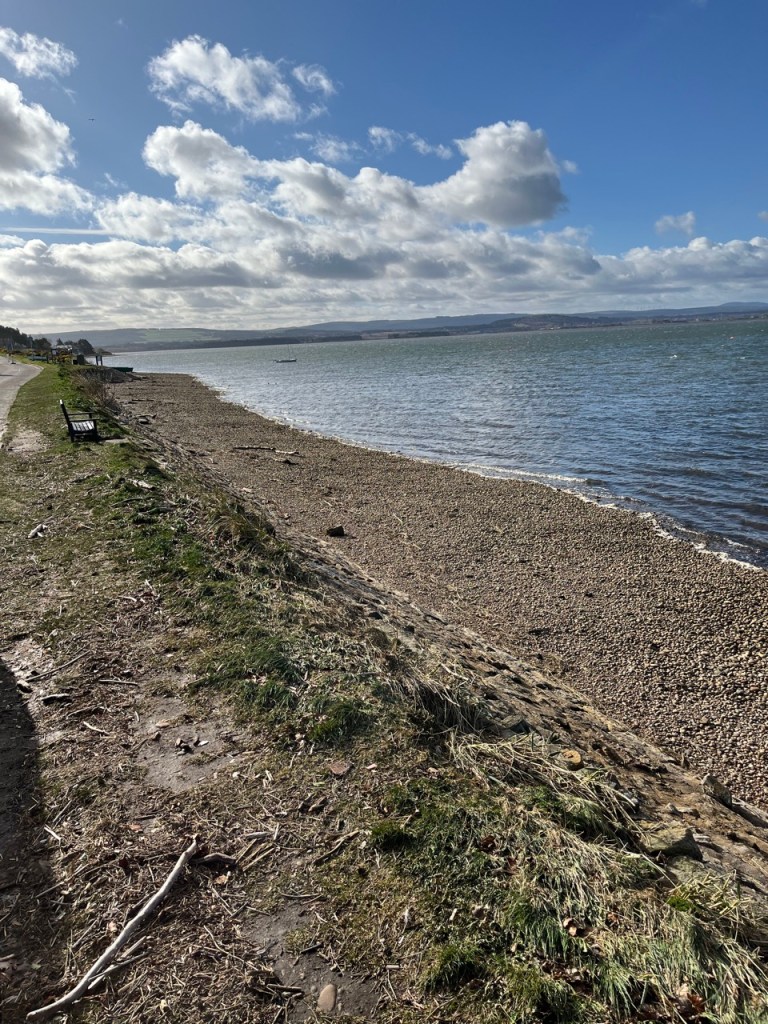
But bang in the centre, away from all the boats and warring gulls, five duckie gems floated and dived intermittently. Long-Tailed Ducks, two males and three females. Their plumage just seems like their favourite Scottish Season (they over WINTER here. Big clue) the males a snowily patterned white with patchy browns, and the females chocolate brown with sporadic white. And the males certainly lived up to their billing, with delicate arrows protruding from their rears. The path was lined with seaweed and stones, among which a Crow posed and poked in the early morning light. But this was not the glossy black we were used to down south, but a much more balanced blend of grey and paler blackness. A northern specialist, the Hooded Crow, a new bird sighting for me, had decided to give us the tour of its domain.
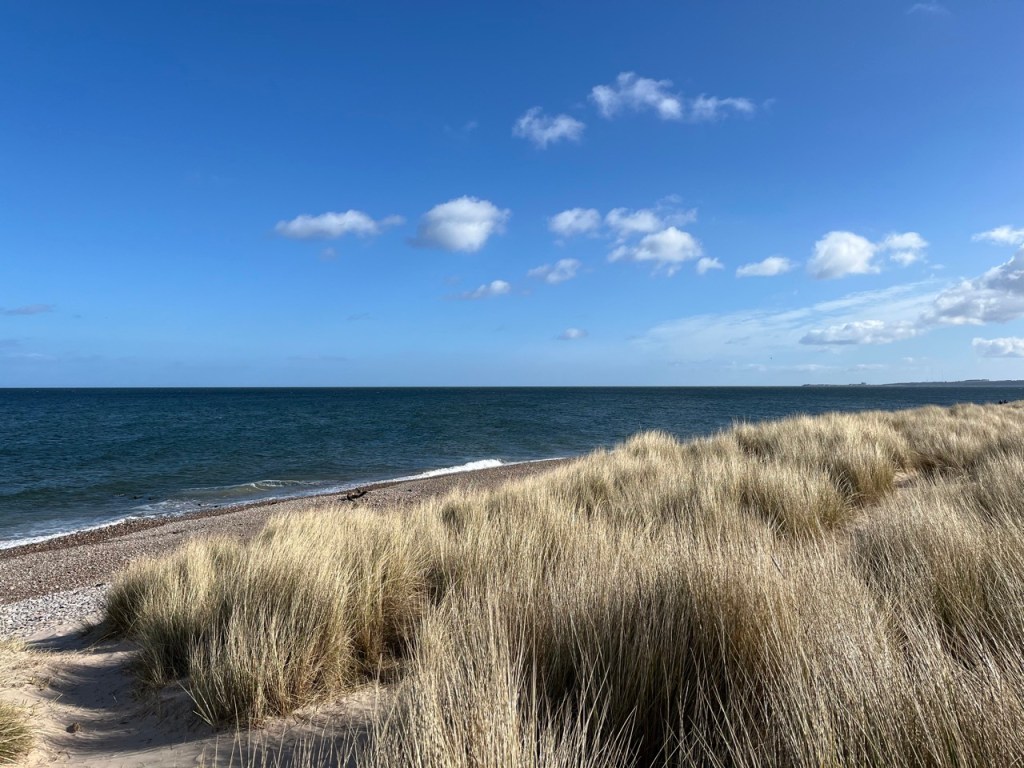
The dunes were mightily grassy, yet welcomed us through its narrow tracks. What lay on the other side was truly breathtaking. We were now stood on that spit I mentioned earlier, and the Moray Firth lay before us, ocean as far as the eye could see straight ahead (not if you looked left or right). We sat on the fidgety pebbles, and scanned the lazy, lapping waves which hid such a bounty. Nothing in the way of cetaceans put in an appearance (this was a really good spot for them, but our luck was maybe slightly dry here), but fishing Gannets and more Long Tailed Ducks provided some well-earned entertainment.

After a while however, we set off once again, following the coastline until we reached the former Pictish Capital, AKA Burghead. The Picts had built their fort on the sandstone headland, and in its shadow was where we began, scanning the seas from the harbour walls, scattered with skittish Turnstone groups and slightly too trusting Feral Pigeons. Immediately you would notice the proudly vain Cormorant that dried its wings in the emerging sunlight, perched on a jutting raft of driftwood bobbing with the waves. But the Black-Throated Diver trapped in the gusty turbulence and choppy seas was a little bit more of a challenge, with the bird in its dandy breeding plumage continuously moving in and out of our eyeline.
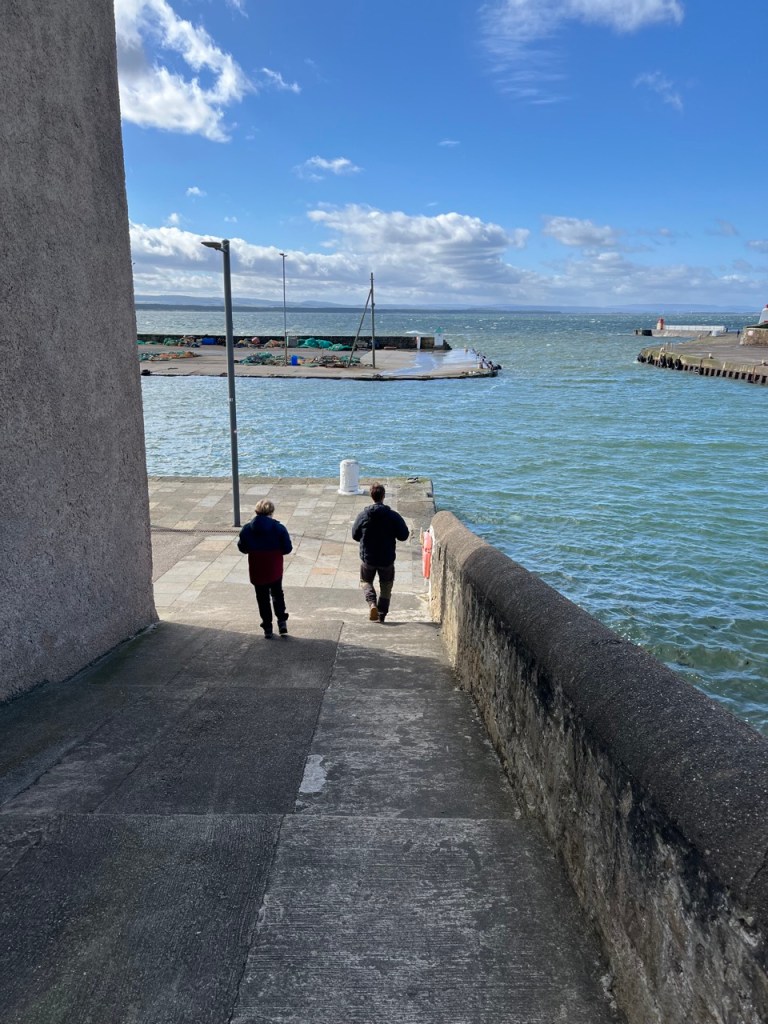
The next port of call was the calmer (but still blustery) behind of the clifftop, which provided ‘some’ respite from the chilling, skin-assaulting gales. And immediately we all managed to lock on to a Red Throated Diver, rolling in its winter plumage, blacks and whites contrasting against the azure. Just as we were watching this splendid bird, 7 birds flew in and out of frame within moments, chunky and flapping like mad. Razorbills, their heavy bills easily visible at this range. Almost immediately, its Auk cousin flew in the same direction, 5 Guillemot individuals (also known as the Common Murre. Very fun to pronounce). Also, two more lifers!
We continued along the wall, accompanied by Turnstones bobbing and weaving before us. Occasionally, they were startled by our presence and skipped away, but they would always come back. They were used to the people who inhabited Burghead, and three individuals weren’t going to bother them that easily. But we lost them as we came to a winding clifftop path, which, somewhat precariously, led to the top of the sandstone headland and the worst of the wind. Naturally, we had to go up, and keeping in close to the rocks, we meandered up to its peak.

Soon, these cliffs would be alive with breeding Fulmars, but for now one or two birds wheeled above the waves, their tubenoses at the ready. These specialist apparatuses extract the high levels of salt from the seawater, allowing them to drink to their heart’s content. And despite their apparent similarity to the Gull family (a common misconception that they are in fact part of it), they actually belong to the Shearwaters and Petrols, relating them to birds as wizened as the Albatross. Pretty great, eh?
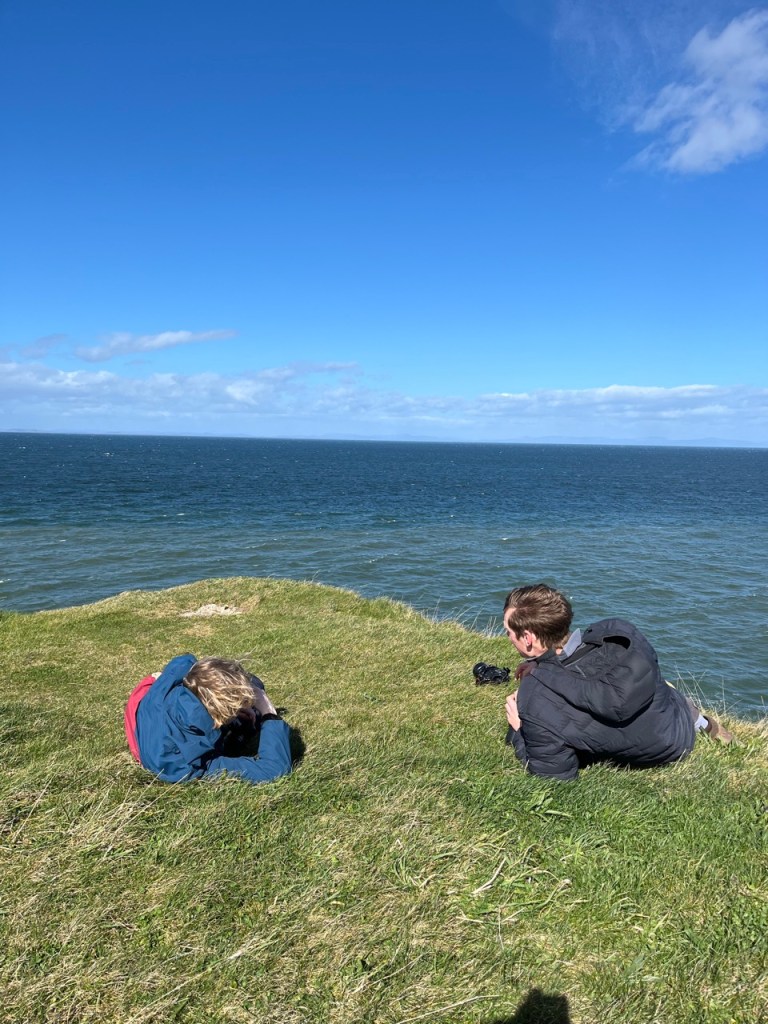
As expected, the flat crest of the sandstone rock jutting out into the currently unmerciful weather was certainly being battered by the elements, and we ended up sitting and lying among the swaying grasses in a bid to avoid being swept away in one of nature’s greatest powers. As we watched, more Razorbills flapped their wings furiously against the gale, but seemed to be going slower than they should be. In fact, all the birds who were flying higher than sea level seemed to be struggling. A skein of Pink-Footed Geese, their v-shape under great pressure, looked as if they had been edited into slow-motion. It felt very exposed to be up there, alone against nature’s unpredictable grasp. Yet it also felt truly wild, and this was enhanced by the distant presence of an extinct volcano, a dark smudge in the horizon. But it also felt like an experience that all should have at least once in their lives, to experience the elements and their capabilities.
Eventually, we set off again on the long winding road that led us towards Lossiemouth, home to one of Scotland’s main RAF bases. You could hear the roar of the Typhoon jets as they practised landing and takeoffs, and it echoed through the town all the way to the estuary, a beautiful sight almost unaffected by the presence of these defence planes. We didn’t pause here, however, and continued on the road before heading down an unsuspecting lane guarded by watchful pines on both sides. We emerged from this small pocket of trees into an area of ploughed fields, and then turned down what looked like a farmer’s dirt track, for tractors and pickup trucks. But that was the illusion. What this apparent ruse hid was something special, bathing in the now scorching sun.
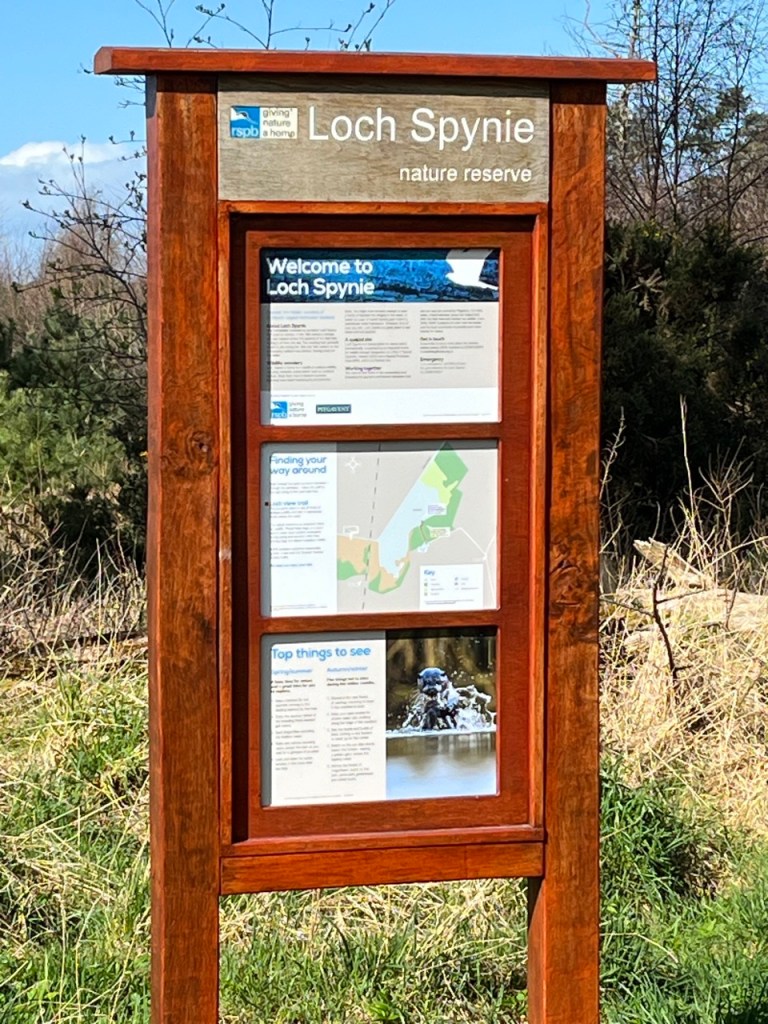
Loch Spynie was a loch drained to a large extent, and is connected by an intricate canal system to Spynie Palace, home to the Bishops of Moray for 500 years. The amount of different habitats here, all working in harmony, is a great example of nature at its best, and the alliance here between the RSPB and Pitgaveny and Spynie Farms sets a great example for the rest of the country, that agriculture and wildlife can coexist, alongside each other.
The car park was small, but the usual mud had been cracked to the bone by the all-powerful sun, that had reared its godly head for the first time of our trip. As soon as we had emerged from the car, a falcon flew low over our heads, bound for the reedbeds that thrived around Loch Spynie. We had seen a Peregrine on the previous day, out in Strathdearn, and this bird was more streamlined, smaller with a longer tail. Will confirmed that it was probably a Hobby, one of our few migratory raptors. It comes in the Spring to breed, and depends on the abundance of our insects, from dragonflies to midges. This was a bird that was high on my British bucket list, and it was incredible to see one in such an unlikely spot.
The Hobby is an incredibly scarce breeder in Scotland, compared to the English and Welsh populations, and to was a bit of a surprise to see one here. They nest in open, mature Scots Pine Woodlands, and use disowned crow nests, as in similarity to other falcons, they do not build their own nests. They are opportunists when it comes to hunting, and they have been known to take almost 100 bird species as well as their main insect food.
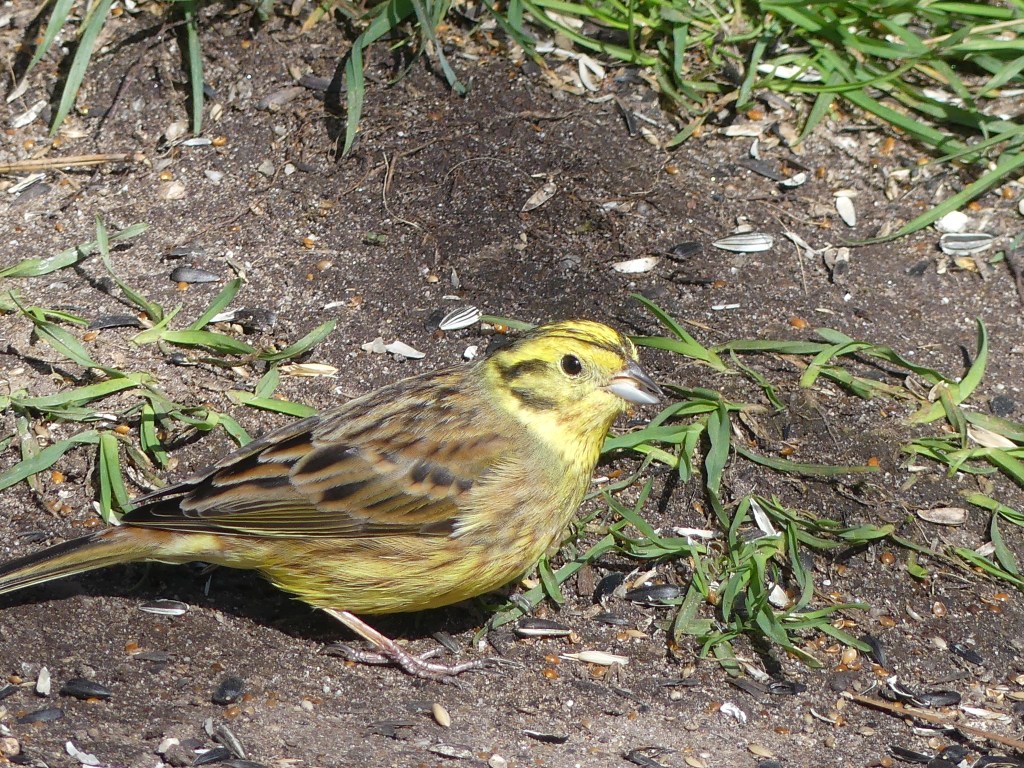
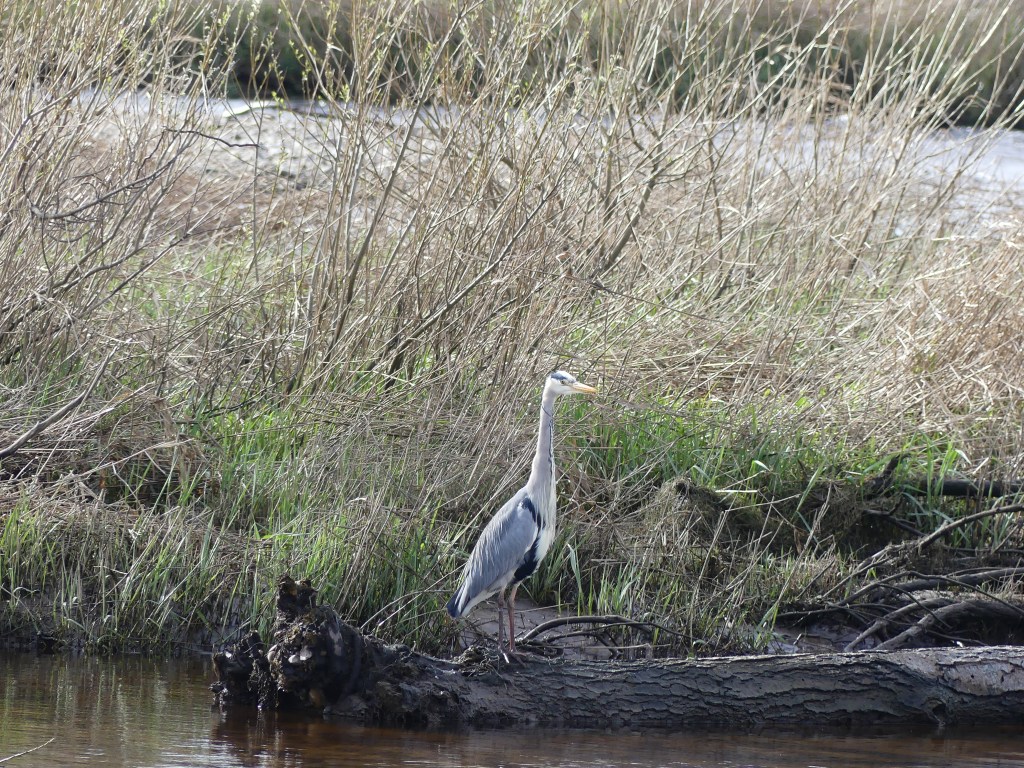
Following the bird’s departure, we sat on a bench facing a scattered set of feeders, for squirrels and birds alike. Proof of the farmland-nature alliance was abundant here, with a count of around a dozen Yellowhammer feeding here. This was a bird which had declined by over 50% across the UK, and a bird which had suffered greatly due to rapid changes in farming practices. Will knew of a Grey Heron heronry just through the trees, and pointed it out to us. Within weeks this would be alive with these huge birds, deafening noise drowning out motors and engines. They would breed here, and eventually their enormous chicks would be sent on their way.
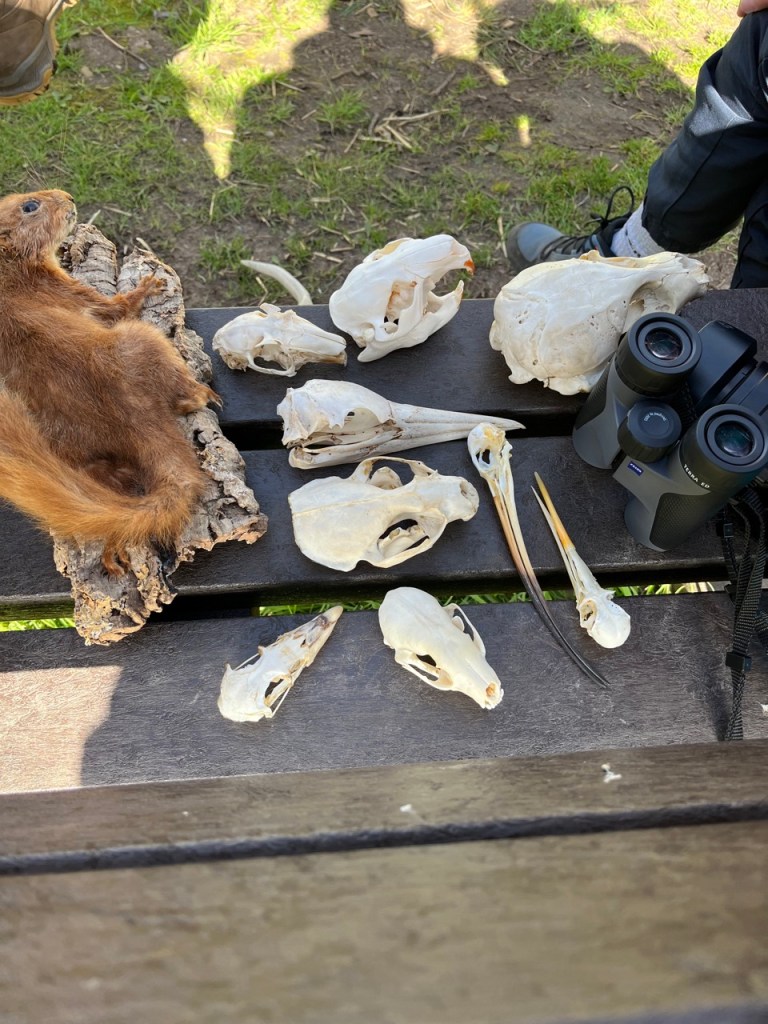
While we rested here, taking stock of our surroundings, Will brought out a deep red box, filled to the brim with skulls, wings, and taxidermied roadkill. First out was a Red Squirrel, preserved well with its original foxy fur. We spent well over half an hour on this (very much like the Corridor), with some skulls easily guessable and others taking a little bit more brain-power. We got there in the end with most of them, and their was incredible variety, from Curlew to Otter, and Porpoise to Grey Heron. As daft as it sounds (given the fact that I am a child), I felt younger than I had been for a long time, and it felt freeing to let out a bit of childish and silliness at this point, with guess the skull the perfect way to do it.
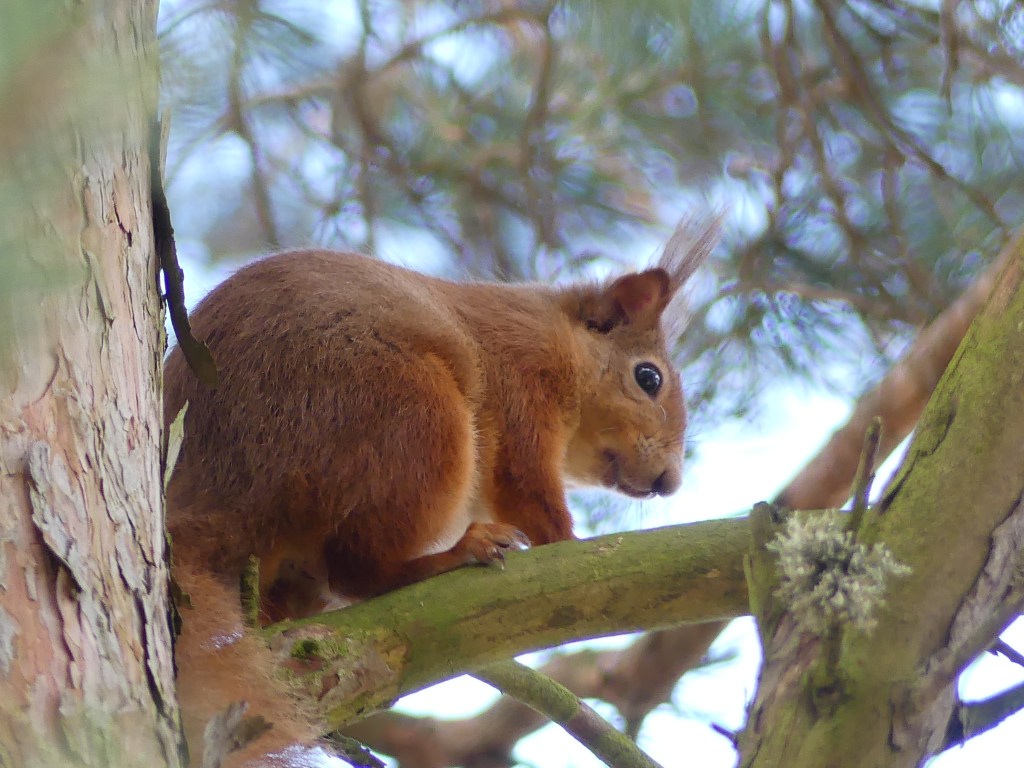
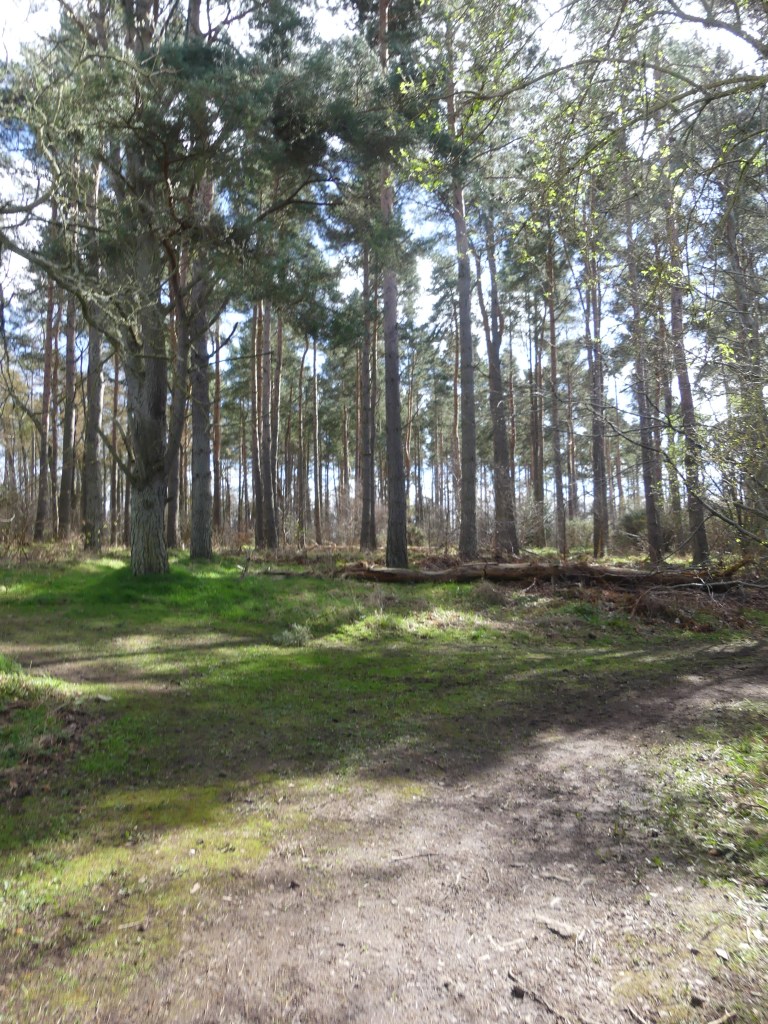
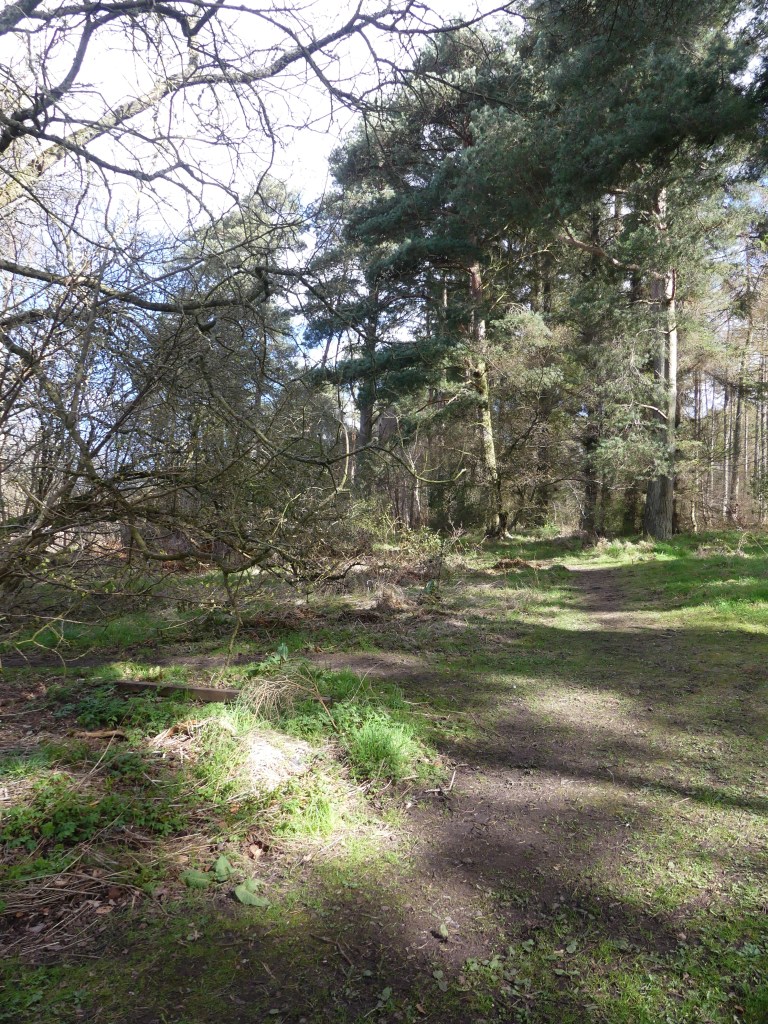
With that, we ambled into the wetland’s woodland, and the calls of ducks and gulls emanated from the Loch just through the reeds. But first came the wizened trees, still considered young by their ancestor’s standards. Birch lay scattered along the edges, an indicator of a still fairly young woodland (as I mentioned earlier). And the first find among these trees would prove to be a true Scottish specialty, driven north by its originally American counterpart. A Red Squirrel, scampering up the trunk of an oak. It crouched in one of its many forks, munching something out of our sight. It was one of those moments, when you feel the connection to nature is no longer estranged, as the human’s lifestyle suggests, but is very much interconnected and most importantly, real.
We would get to the main hide in good time, but first Will took us to the banks of the Loch, where the alders hung tangling tendrils over the reedy water. Otter spraints, a whole set of them, scattered around us. White and brown, encased in fish scales, these droppings provided a convenient way to mark out territories, but also gave us an invaluable insight into their lives. Some of them held fur and bones, as well as the inevitable fish scales, and some even encased feathers.
Now we headed to the hide, and the main source of the din was immediately obvious, with a Black-Headed Gull colony scrapping for space on an artificial breeding island. They seemed to be surprisingly averse to the outcrop’s counterpart, another one seemingly the exact same, but empty. Out of the side window facing into the reeds, a male Reed Bunting (very original name), smart and dandy, hopped with surprising agility from stalk to stalk, each one bending ever so slightly with his momentary alighting.
But he hopped away as a pair of Little Grebes emerged from beneath the surface, male and female, both dainty and long necked. The male had a rich chestnut neck, glorious in the sunlight glinting off the water. The neck of the female was a sandy brown, so that it blended with the reeds. When she went through a thicker patch, it was as if a detached head floated from the body. They were in suitable breeding habitat, and seems to be sticking together, so it seemed more than likely that there was a nest somewhere nearby.

There was so much more out on the Loch, from Tufted Duck and Mute Swan, to Mallard and Goldeneye. That’s another difference between north and south. Goldeneye are on almost every body of water up here, but down in Devon they are a true scarcity, and I have only seen them thrice back home. They breed a fair bit up here too, in trees along riverbanks.
After a while, we (almost) silently exited the hide and headed back into the boggy woodland, such a perfect habitat for life. And there were many a treat to be found here, as Will found a particularly large patch of Wood Sorrel (highly recommended), which actually tasted like green apples. Will’s knowledge, not just of wildlife, but foraging and bushcraft, was on point, and it would continue to show through as the day went on.

And on our return to the car park, we would get that day’s first taste of a spectacular creature, as it glided effortlessly overhead with M-shaped wings. Through the binoculars, you could just make out the black and white, contrasting greatly in colour. The Osprey flew off into the horizon, vanishing behind a distant treeline. Surely it could only be a good omen?
So we set off back down the farmer’s track, bound for Spey Bay, where the River Spey (for which Grantown is named) ricochets around rocks and islands to meet the sea, forming bands of bays and pools, and creating a unique habitat. It was better for us to leave now, in order to make low tide, when the Osprey’s preferred to hunt, when the shallower water made it easier to fish.
This was also the site of the Scottish Whale and Dolphin Centre, a hub of conservation and observation, complete with a museum and live web cams. We had a brief lunch here, and then set up facing the river mouth, complete with vegetated islands and shingle bars.
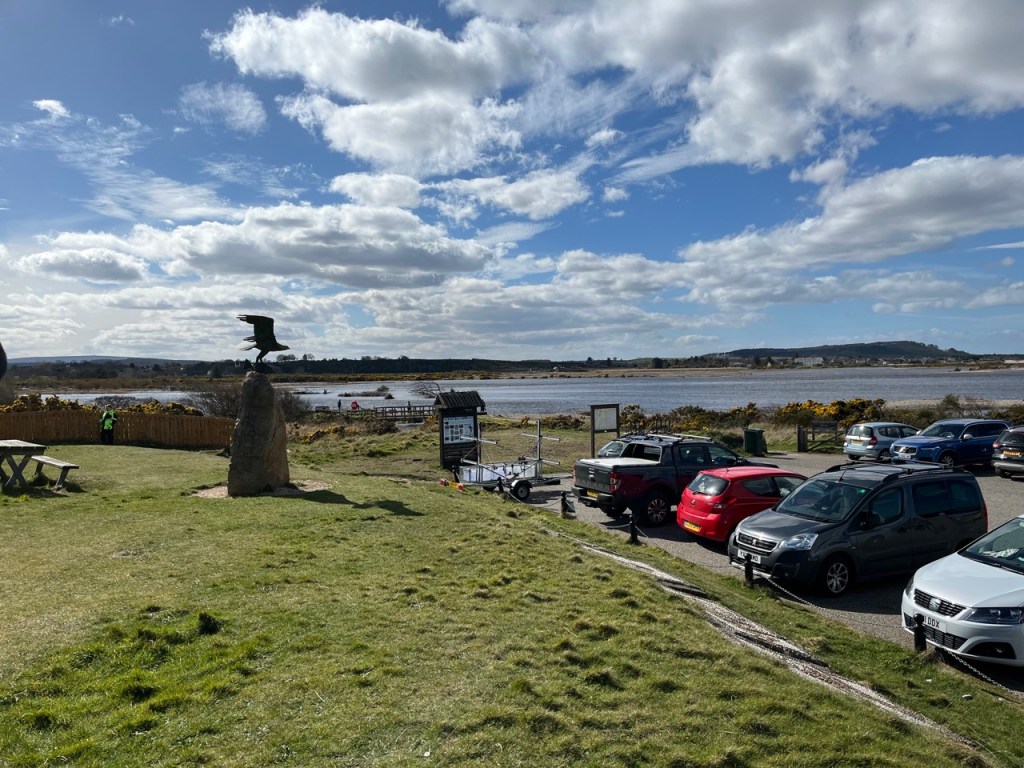
The water was alive with waterfowl and waders, the air filled with avian noise. This was usually a brilliant Osprey spot, but none showed up in that first hour, so we set off down the track towards Garmouth Bridge. It followed one of the many channels that fed into the Spey at this point of its journey, and it was lined with House Sparrows, Reed Buntings and the occasional Grey Heron, intent on the water. But all of them hid in the cover of the many alder and birch trees that lined the banks.
Patches of Dog’s Mercury were also abundant, indicating that this was ancient woodland and therefore incredibly beneficial for wildlife. It actually has nothing to do with dogs, but is highly toxic to them, as well as us. But it does seem to provide a good habitat for many species. Many bugs and insects find it a suitable home, and for some reason it seems to draw many ground-nesting birds, such as Woodcock.
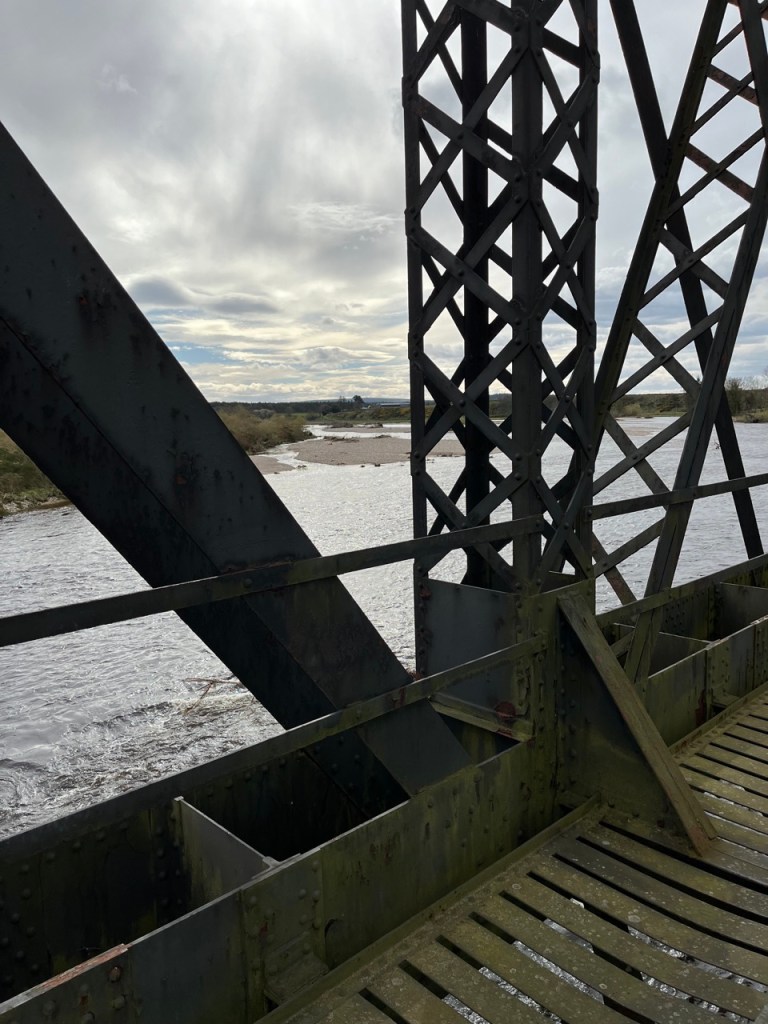
After a while, we came to Garmouth Bridge, an old railway bridge that spanned the Spey. Oystercatchers piped overhead, and a Kingfisher squeaked softly from somewhere hidden. Looking through the slats to the river below was dizzying, and I tended to try to stay on the solid central path!
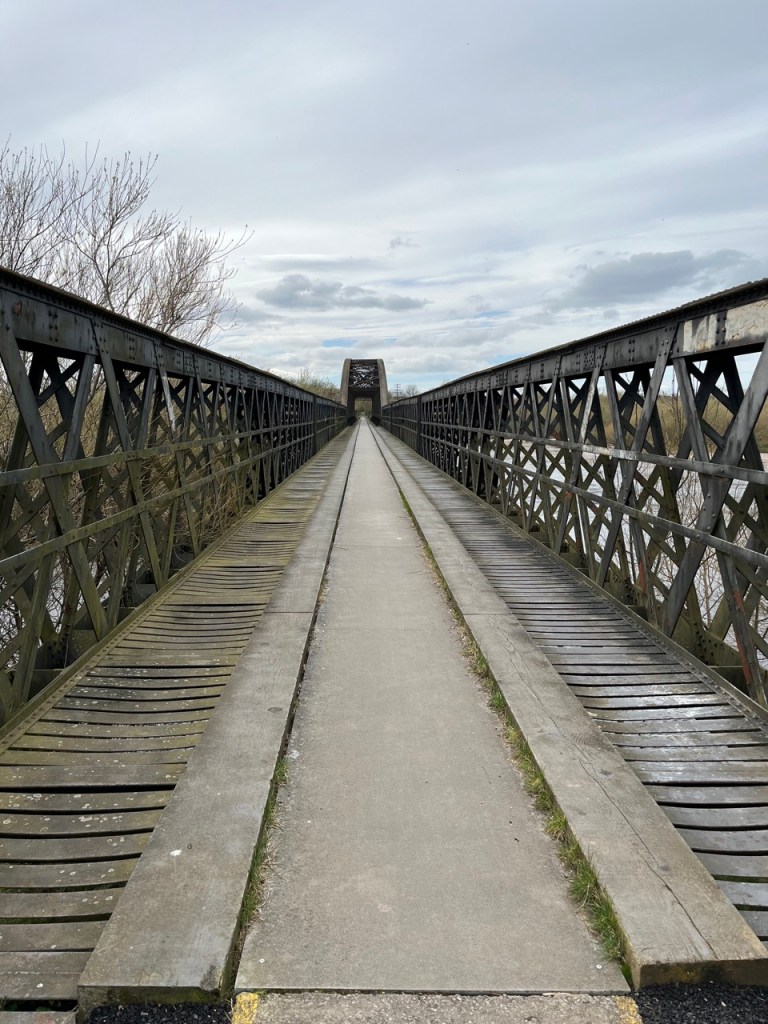
Following an inspection of the iron bridge and its surroundings, we headed off the beaten track (literally) and into the undergrowth. Will had found several mammal signs here before, and together we crept down the stone wall. Will challenged me to search for and track the signs. Although this was out of my usual skillset, it was really enlightening to see and follow in the steps of elusive creatures that we otherwise might not see. We found more Otter spraints, fox scat and several badger latrines, where they had dug holes to soil the leaf litter. Recommended day out, searching for scat in brambles!
We made it back to the mouth with heaps of time to spare, and set up scope and cameras, before hunkering down to see what would put in an appearance. Funnily enough, we weren’t actually watching for an Osprey, which was our target. From this distance, it would look just like a gull in with all the birds currently in the air. But by watching the gull flocks for a behavioural reaction, such as louder noise or grouping together or even divebombing, we could probably find it without too much scanning. The gulls would chase and harry any raptor that turned up, and that could just be our Osprey. That was the master plan, anyway.
And it did end up working. 20 minutes later, just after being told we had missed it, the gulls went crazy, climbing higher into the air and creating the din of hundreds of individual threatening squawks. And then there it was, pursued by seven brave Lesser Black Backed Gulls, one of them even going for a tail-feather. By now the drama had drawn closer so as it was almost directly above us! Purely majestic and composed (even when being chased by a mob!), its M-shaped wings were incredibly dynamic, moving from a hovering position reminiscent of a Kestrel, to far spread and clearly black and white. At regular intervals, it would fold in its wings and swoop vertically at the surface. It dropped so rapidly, that it didn’t feel conducive to the effort it had to put in to get to the desired height.
However, its hard to believe that we had to travel this far to see a bird which should be widespread across Britain. Here in Scotland, you have one on almost every loch. Across the rest of these islands, the same would be true if it weren’t for illegal persecution, and loss of nest sites to egg collectors and shooters. But it really isn’t that simple, with many factors intertwined in their decline. Chemicals and pesticides leached into the environment affect the entire food chain, but those at the top receive the worst. Another is persecution along their migration route. Of course we’ve never been the only one who wish the death of Ospreys, and its the same story across the world. The beautiful and wondrous must die, for ‘the greater good’ (AKA giving us more opportunity to overfish, which is already a huge problem). If it wasn’t for the unnecessary follies of the human race, they would be everywhere, coexisting perfectly with their ecosystems.
But there is proof that we can feel some affection for this specialised raptor, and that it’s presence can in fact be advantageous. Some fish farms are plagued with Ospreys, which is natural (not the presence of the farms, but the attraction of the food). But many are willing to pay to get up close and personal with the birds, and one of the best places to do this is at a Hebridean trout farm. So we can live alongside these birds, and humanity has essentially contradicted themselves here. The argument was shaky, after all. And surely this proves that a lot of our prejudice towards nature is, as we are only just starting to realise, unfounded too?
Yet the exhilaration of the encounter was heightened by the species’ plight, and it makes you realise that you want this to be close to you, every day of your life. This is what motivation feels like, saving nature the end goal. But this is a plight that nobody can listen to alone. People need to be doing more, because if everybody does a little, we can do a whole lot more than you realise. If nature goes, so do we. And I’m going to leave you to stew on that point now.
The bird, to our delighted surprise, was not Spey Bay’s famous returning individual, but a new bird with a blue ring, not a yellow one. It looked like it could be one of the younger birds, ringed in Lossiemouth just up the coast. We tried not to lose sight of the bird as it drifted further down the river, until just a speck above the now distant Garmouth Bridge. It stayed in this area for a rather long time, and even the scope could only see it as a pointy dot. But we knew it was our Osprey, having not lost sight of the individual since it had left the mouth of the river. However, the excitement was about to be increased greatly, in the form of a local Spey Bay celebrity. Again the Gulls grew raucously restless, and even the Greylag Geese took flight through agitation, as the yellow ringed bird, over 10 years of age, flew over surveying his kingdom. This was his domain, and he knew it, flying with a confidence only the avian world could truly understand. The gulls still attacked him, but everyone else present became hesitant, and everything certainly quietened down. It seemed as if the mouth of the Spey was in fact an Osprey dictatorship, ruled over by this black and white fish stalkers.
Eventually he followed the same path as his previous counterpart, following the river upstream until reaching Garmouth Bridge, still followed by the same courageous (foolhardy may be the better word) gulls. We still hung around, and maybe slightly overran our time quota, in the hope of another special experience. But I guess the birds had given us enough of their time, and neither returned. And so we returned to the car, jovially merry and talkative (exhaustion might have been another factor!). The drive home was long, but the general chatting was enjoyable, both to listen and contribute to. And it felt sooner than it should be as we pulled back into Grantown and outside the Grant Arms once again.
We walked back through the rotating doors, and said our farewells to Will. It had certainly been one of the greatest few days and experiences, the like of which I had never really experienced enough before this trip. These last two days had really been the pinnacle, something I had dreamt of for a long time, and it seemed like it had ended too soon. But our Scottish Stay was not at all over yet, and there was still so much more to come!
We strolled back up the grand old staircase, and half an hour later we emerged again for dinner. The meal was again a pleasant affair, but we were bound by anticipation to sprint through it as quick as humanly possible, so as to be ready for Iolo’s talk on a ‘Career in Conservation’.
And at long last, we finished and took the short walk (don’t be deceived, you could so easily spend decades in there) down the Half-Hour Corridor through to the Club Room, and then to the library ( a true gem). But through these esteemed double doors lay the single room we had not yet thoroughly explored. The Osprey Suite, complete with stage, rows of seating and (naturally) brilliant bird photography hung from intermittent wooden bars.
It soon filled, not just with hotel guests but many from the Grantown-on-Spey community, with the talks open to all. Iolo was as funny as he is knowledgeable. Often the slideshow was paused to allow for hilarity, and he talked about his career in an anecdotal way, with never a dull moment. He’d done everything, from filming bears in Alaska, to helping save Red Kite nests in the Welsh Uplands. He got quite the applause by the end, I can tell you!
By then it was late, and time to retire back up the grand old staircase. It had been another unforgettable day, and I couldn’t wait to find out what tomorrow would bring!

