Sunday was an early arisal, in order to get to know the breakfast routine for the duration of our stay. As we rapidly got ready for the day ahead, I couldn’t help but remember the amazing events of the previous afternoon. Meeting everybody right off the bat made me feel welcome immediately, and there were some exciting prospects awaiting (including Grantown’s cake shops).
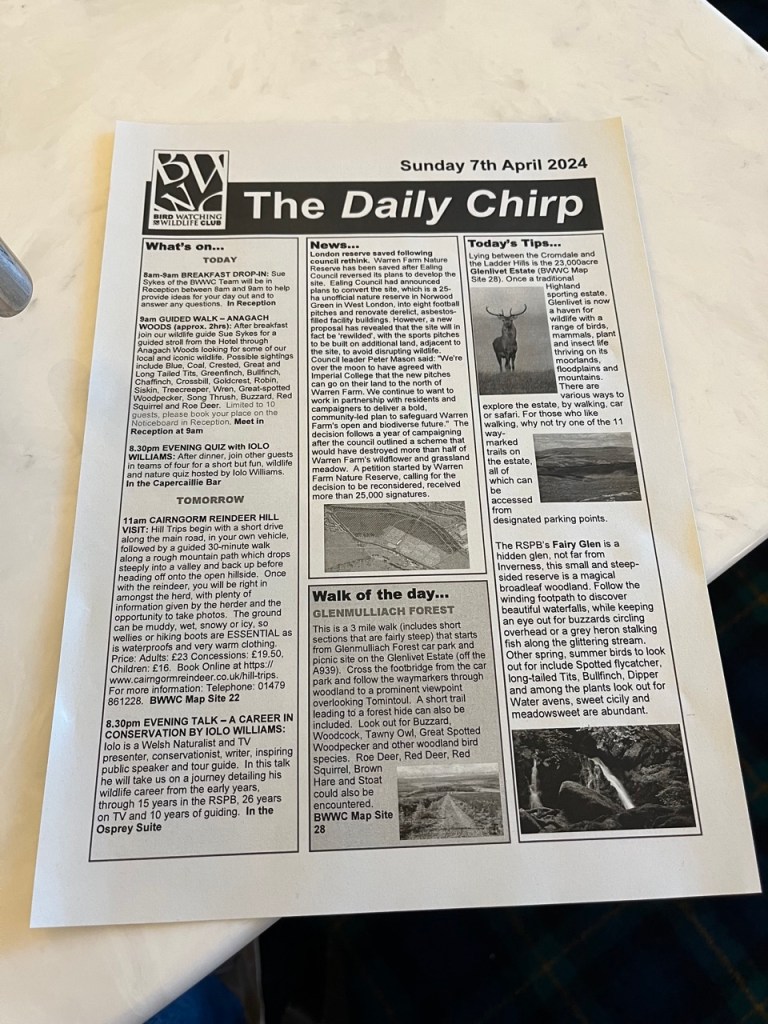
Breakfast was a delightful affair, with great food and service, as well as a few extras. One was the mornings newspaper, but the other was a very handy guide to the hotel for the day, giving advice on guided walks, places to visit, who to talk to and and another few features. The bold letters at the top of the page read ‘The Daily Chirp’, and it was a marvellous idea. I know of very few other hotels who offer this sort of service, but then again this is the UK’s best Wildlife Hotel, so I guess I’m not surprised that they pull out all the stops.
Today was also the day when Iolo Williams arrived at the hotel, to lead his guided week with his group. Iolo is about as much of a nature celebrity as you can get. He is phenomenal, and with me having grown up watching him on Springwatch, I couldn’t wait to see him in person! On top of his week at the hotel, he would be leading a quiz that night and a Careers in Conservation talk the following evening. More on Iolo later…
The hour after went by in a blur. The packing of bags, the dressing of layers and all the other jobs that had to be done. The skies were slightly grey outside, but hopefully we’d outrun the rain before it began its attack. Everything seems oddly familiar in the corridors, despite us having been there for just over a day. It felt almost as homely as my own home, to be honest! And when we got to the foot of the stairs, Sue and Nick were waiting by the doors.
This was to be one of the biggest highlights of the trip, a full day with one of the UK’s best naturalists and huge part of why I was looking forward to this trip as much as I was. When I first met Nick at Global Birdfair, I couldn’t have imagined that I would soon be able to spend a Sunday bird and wildlife spotting out in the wilderness of Scotland with him. It was truly the perfect plan, and it still felt surreal, despite us meeting up the previous evening to discuss the details. I’ve grown up watching him on TV and social media, and many people will remember him from the BBC’s Really Wild Show, but he’s also a superb writer, with some brilliant books already out and a few more in progress (keep an eye out) – I would particularly recommend ‘Rewild’ which I bought from the hotel bookshop while I was there and devoured on the plane home!
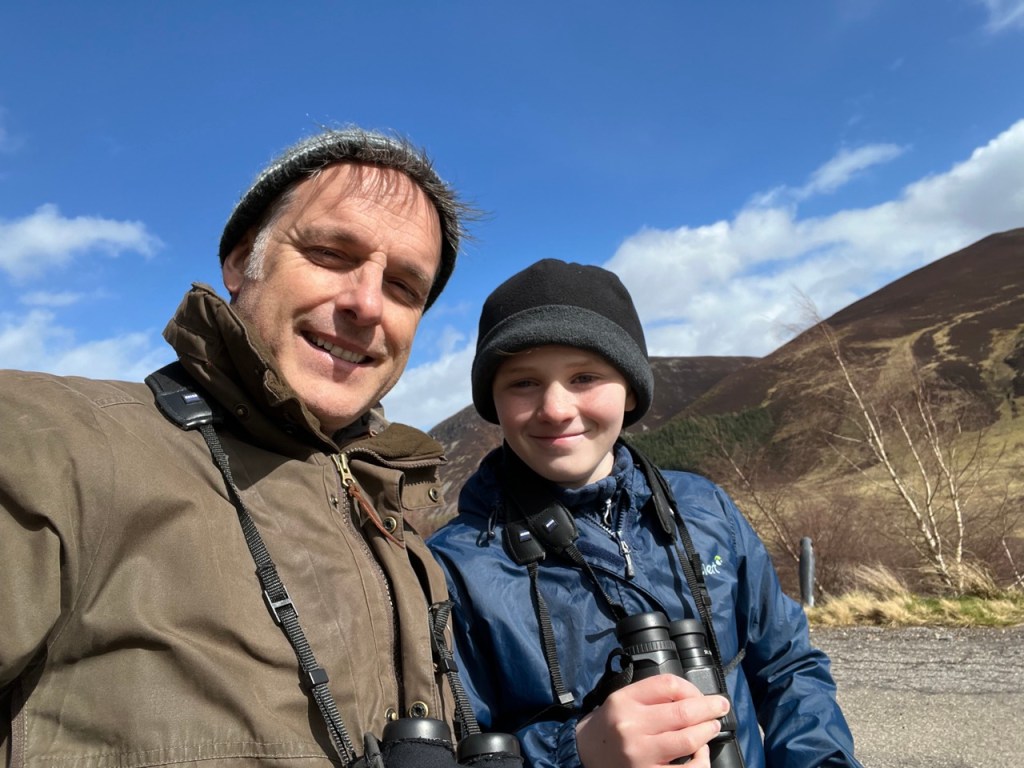
As soon as the travel arrangements were complete, we waved goodbye to Sue and all jumped into Nick’s truck. It was something else as we rumbled out of Grantown and onto Dava moor, before pausing at a large curving lay-by.
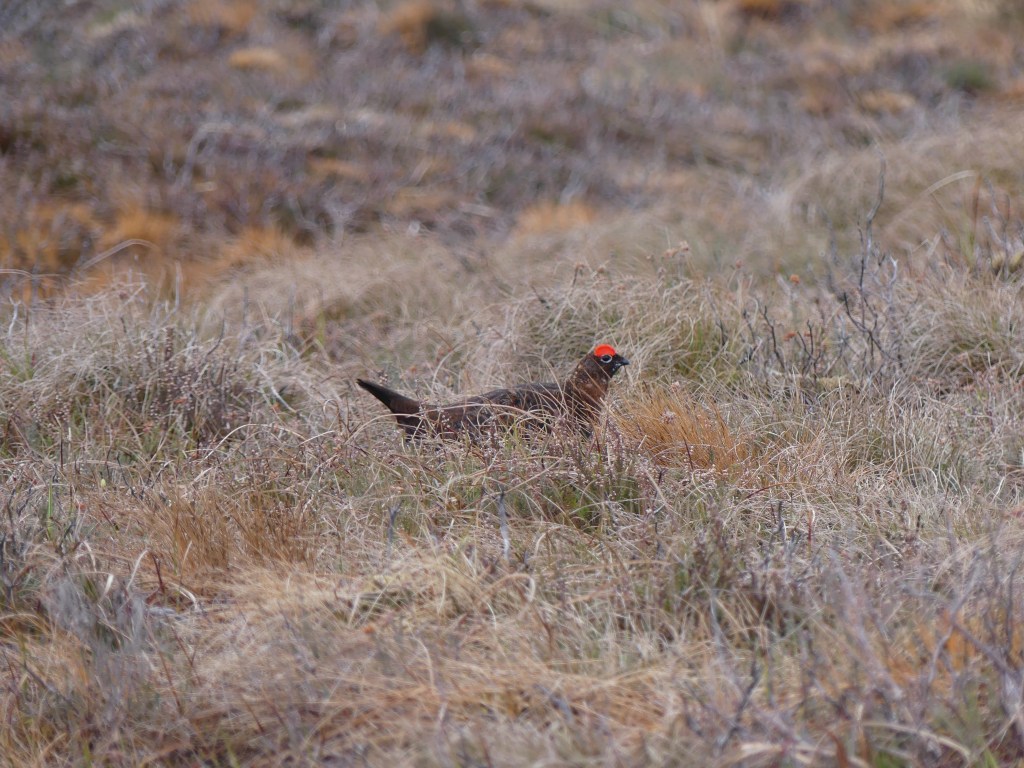
The moorland surrounding us was vast and heather-coated, with various ponds spread across it. A field of short grass perched upon a sloping ridge, and two Greylag Geese flew low over our heads, their calls deafening in the chilly morning air. Nick told us that we were on the lookout for Red Grouse, but this proved easier said then done, as they blended perfectly into the low layer of heather.
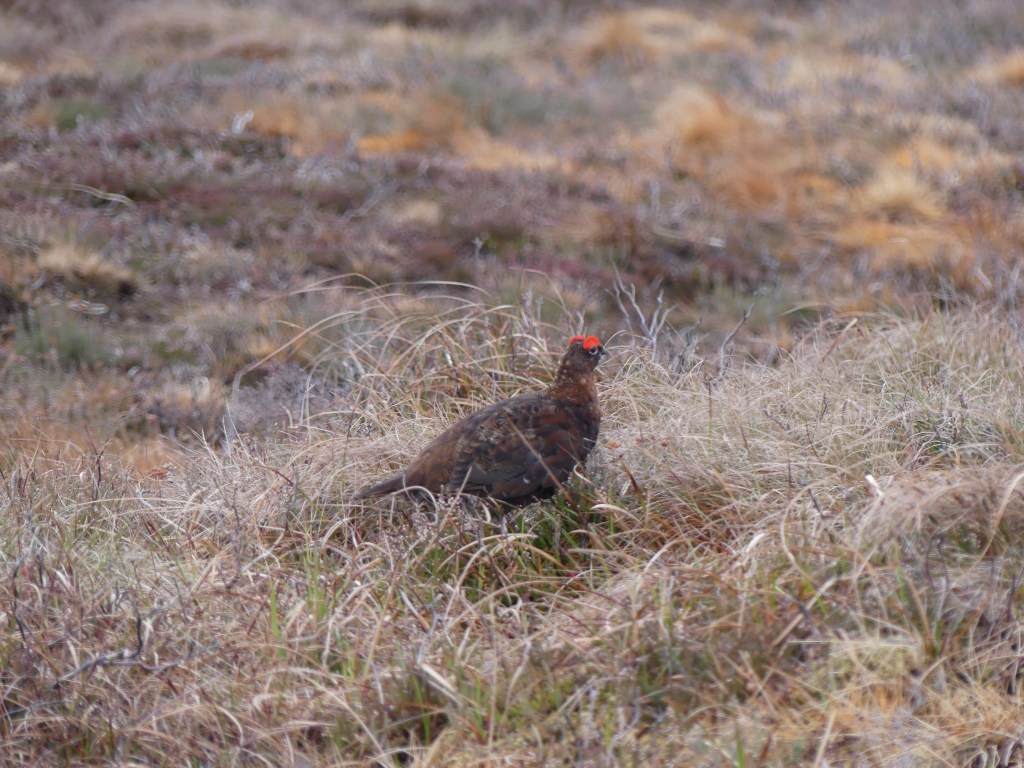
But Nick was experienced in this sort of thing, and soon he spotted one beneath a stunted tree, munching on the buds of the heather. Within moments we were all onto it, and with it around 20 metres away, we got decent views via binoculars and scopes. A lifer you would struggle for anywhere else in the UK, the Red Grouse is Britain’s version of the continental Willow Grouse, but as it remains Red all year round, it is likely to soon become its own species.
We continued on down the lane and came to a mass of squabbling Gulls, hundreds of them scrapping for space to nest. The ground was carpeted in them, and many pairs had already assembled. The best spots were in behind rocks and crevices, in order to shelter from the wind. But many had scuffed deep into the heather, and were relatively protected from the elements. It was incredible to see a real-life drama unfolding in front of us, and many were clearly unhappy with each other. Others were engaged in romantic interactions, and yet others surveyed the colony. And these were actually Common Gulls, a bird that isn’t actually very common down south. In fact, it could be considered a bit of a scarcity back home in Devon.
There is a fairly simple way to tell Common Gulls apart from other species, and this is the fact that they have white ‘mirrors’ (patches) on their otherwise black wingtips. Also, the red eyes are really cool!

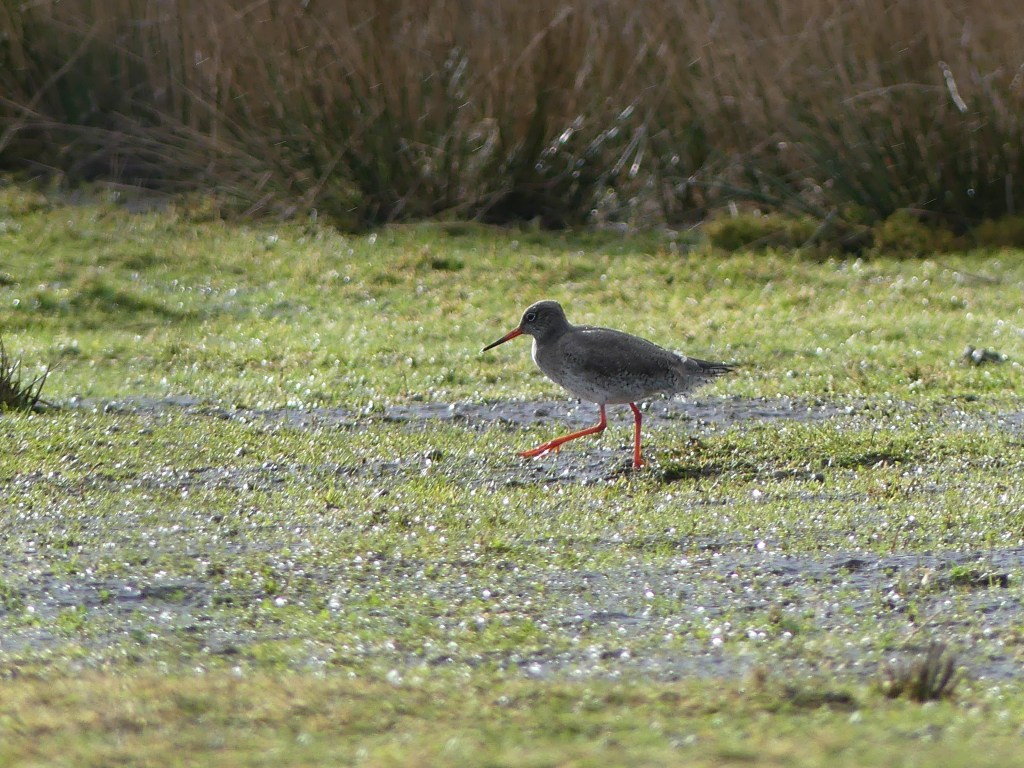
But something that really surprised me was the fact that we always seemed to be passing calling Curlews, scrapping Lapwings and Redshanks on fence posts. It all seemed a little abnormal, but I guess we’ve just lost so much of our biodiversity in Devon, and this is what it should be like driving on Dartmoor. But a certain Devonian did in fact put in an appearance on the banks of a loch (its a sensitive location and I’d rather not disclose it). An Oystercatcher, unremarkable to the naked eye bar two colour rings on its leg.
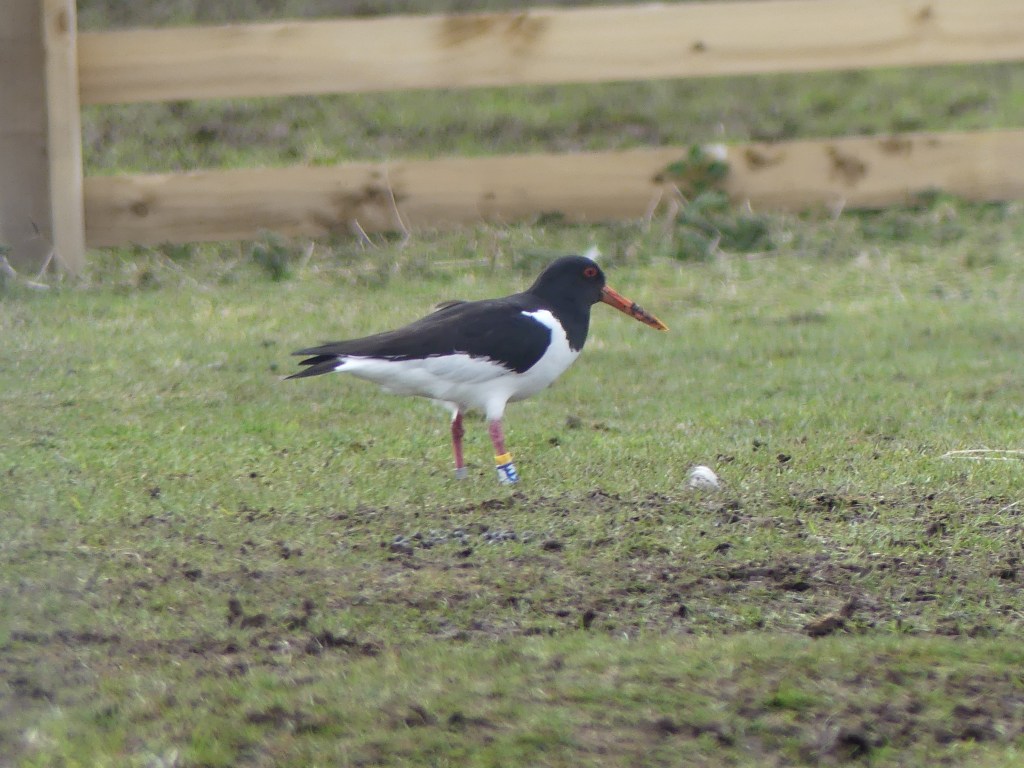
He had first been ringed on the Exe, an area local and well-known to us. Who knows, we might have seen him some time without realising quite how incredible he is? For the past six years it had bred in Scotland and wintered in Devon, completing the round trip every year. Nick had told us to keep an eye out for it, as this was a very special individual indeed. It looked ruffled and weathered in the wind, but the admiration for this bird showed in all of us. These stories make birding just that little bit more intriguing than it is already.
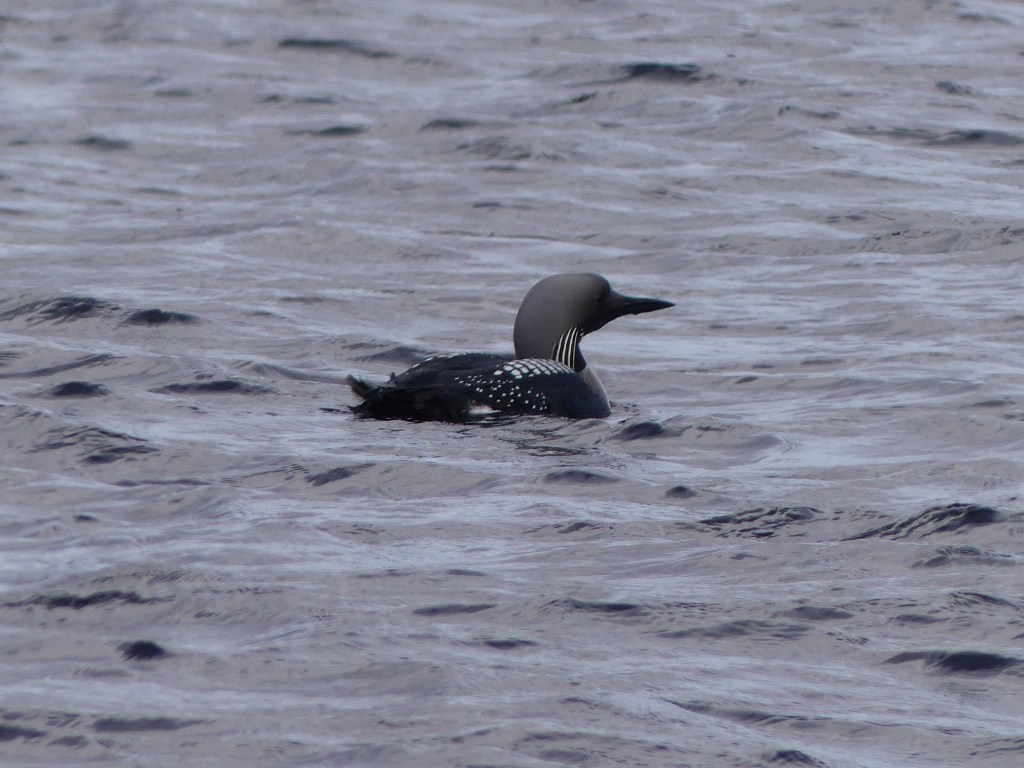
But then the winds of luck turned even further in our favour. Black Throated Divers, forced into the shore by the wind, and all in their glorious, suit-like breeding plumage. Again, it is a sensitive species so I’m not going to say anything more about the sighting, but I just felt so privileged to get such good views of a bird I’d only ever seen as a distant speck. We were mere metres away from the Divers, and it was one of those rare experiences where you just get to feel one with nature.
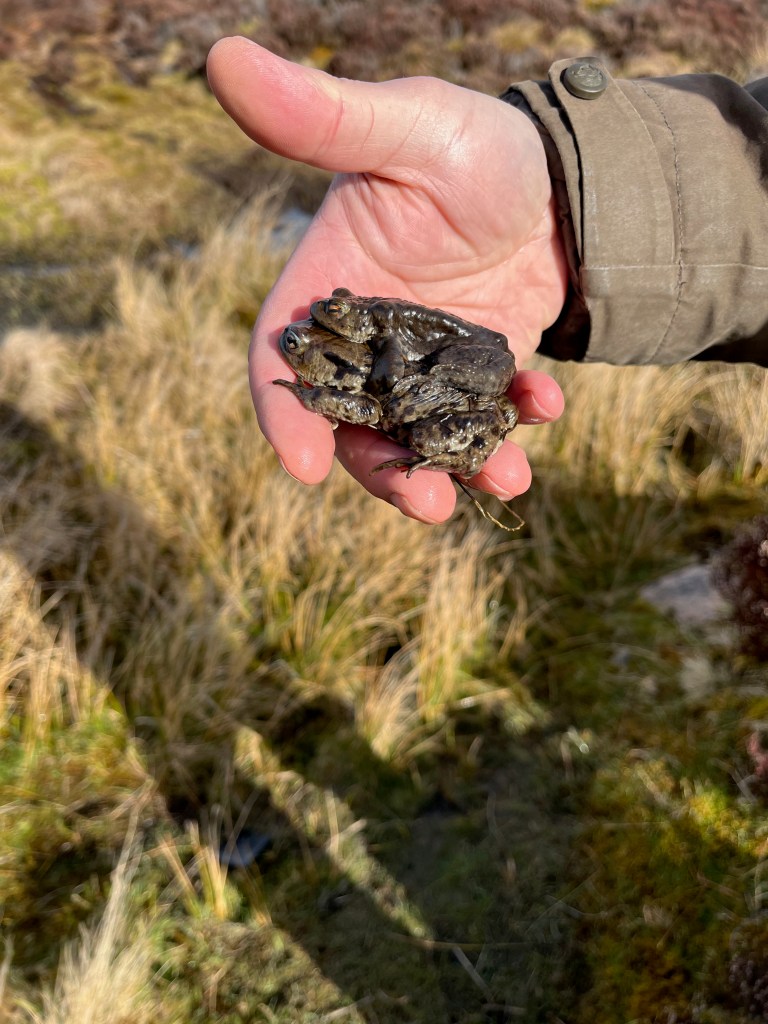
We left the loch and continued further into the moorland, but pulled over at a junction. We got out and strolled to the roadside (me still buzzing with excitement) and Nick reached into a pond and produced a mating pair of Common Toads. Their eyes bulged as they clung tightly onto each other, in a sort of piggyback position. And there were many more lining the shallows of this tiny, unsuspecting body of water. People drive past every day, and scarcely notice this natural wonder, the cycle of life.
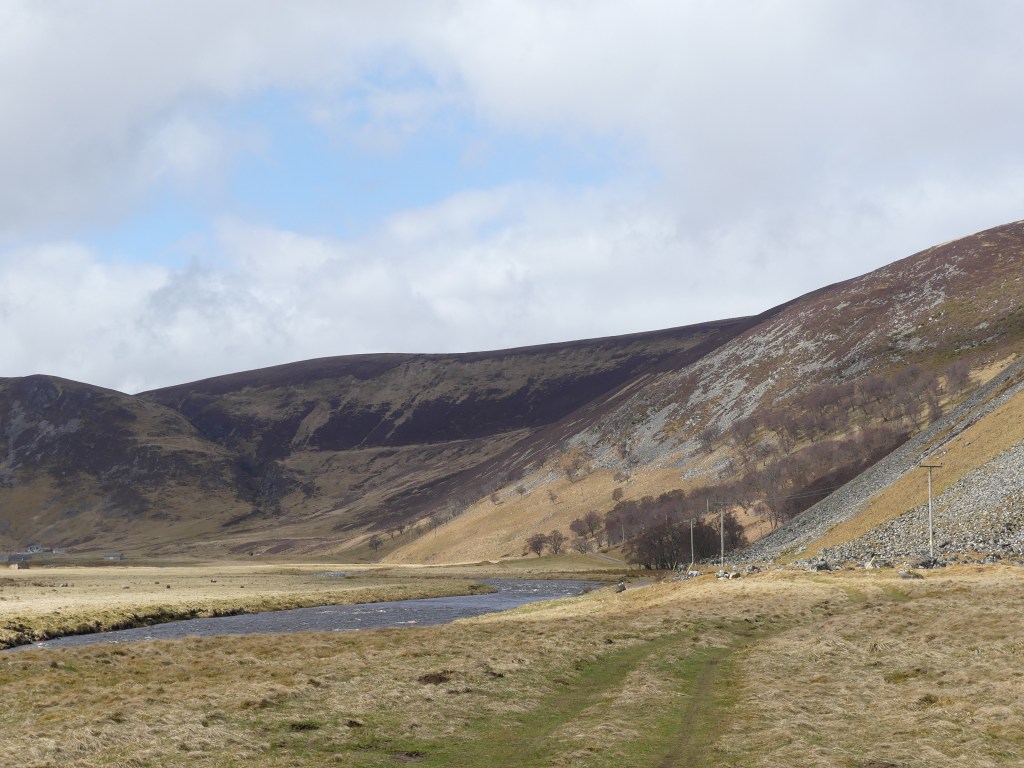
The next stretch of the journey was a slightly longer one, but definitely rewarding. After a quick stop at some services (the farm shop was closed sadly) in Tomatin, we set out into Strathdearn, AKA the Findhorn Valley, famous for some of the best raptor spotting in the area. Various car parks and lay-bys were scattered along the narrow road, and the River Findhorn lay azure in the centre of the Strath. It was so wide and wild that it looked like an American River, one that should contain salmon-fishing Brown Bears (I’ve noticed this a lot about Scottish Rivers, it just makes sense).
But why is this place so good for raptors? It’s all to do with the geography. Strathdearn is one of the foothills of the Monadliath Mountains, which is where many raptors are to begin with. The sheer ridges and hills of the Strath form a corridor to the Cairngorms, a route which raptors can take that still provides the right food and habitat. And if you actually nest somewhere hidden in the Strath, I guess you get the best of both!
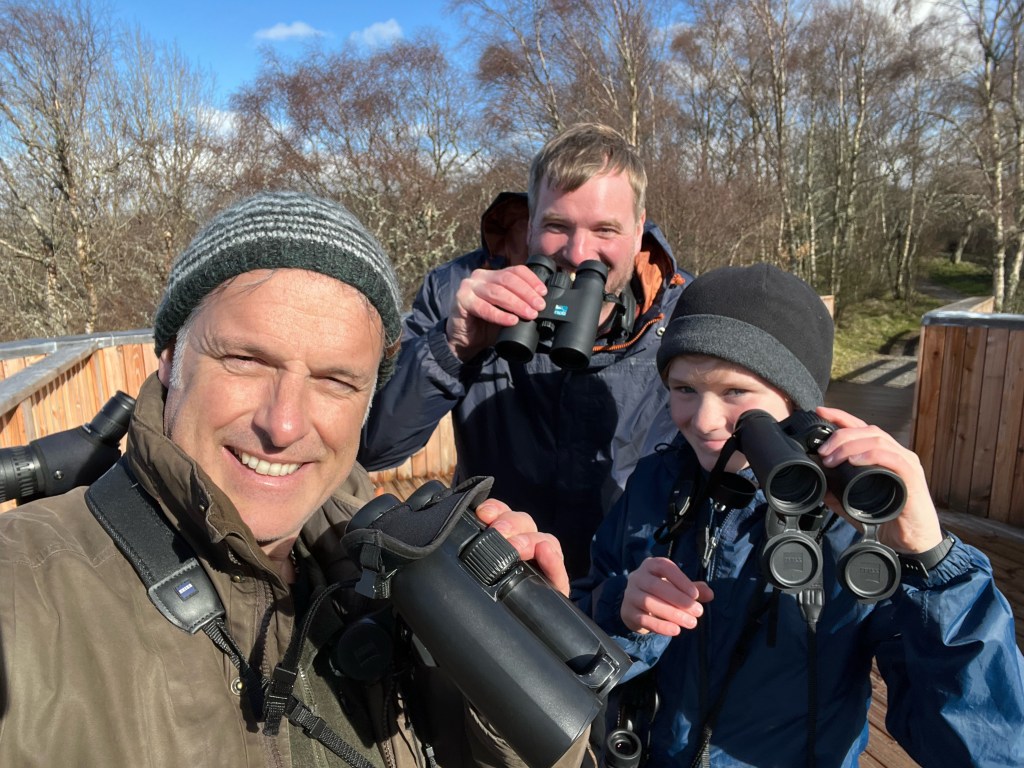
The first two spots we scanned were our first chances to try out the Zeiss ‘toys’ that Nick had with him. A thermal imaging camera proved a game-changer in scanning the hillsides, with it pinpointing the position of a huge herd of Red Deer, sheltering on the sheer, rocky ridge. I felt really privileged to be able to use this top of the range equipment, it was a real thrill to be able to use such amazing tech, so much so that I felt a little bit like I was filming a nature documentary! But yet, the best sightings were yet to come, and a flyover Kestrel could surely be only a good omen?
Well, it certainly looked that way, for at the third lay-by we faced the Findhorn head-on with the sheep fields on its far bank full of life. Lapwings screamed, and dive-bombed each other in a continuous aerial dogfight, while the haughtier Golden Plovers remained on the ground, handsome and dignified. Their golden backs glinted in the sun, and their jet-black breasts provided a suit and tie to contrast. They would likely breed in these fields, due to their adaptations as visual-hunters; with the sheep keeping the grass brutally short, it was easy for them to spot their insect spray and sprint after it.
But then it all kicked off. We were just packing up to continue on when a raptor stooped in and enclosed an enraged Lapwing in its unperturbed talons. The Peregrine flashed off upriver, laden with its prize, and pursued by virtually each and every Lapwing that had been in that field, around a dozen at least. Yet, just when it seemed to be getting away, it dropped its prey and vanished away. Hearts pounding in excitement, I continued to watch the rather ruffled Lapwing whose pride had been severely hit by such an encounter. However, he seemed unharmed and continued with his frolicking antics.
But the commotion had certainly attracted a few onlookers, and two falcons had appeared behind us and were warily surveying each other. One was quite clearly a Kestrel, but the other was identified by Nick as our smallest falcon, the magical Merlin. One of our upland loving raptors, the Merlin just doesn’t seem powerful enough to be a specialised predator to the naked eye, but they break through this stereotypical barrier every day of their life. Also, there were two lifers in that lot (Merlin and Golden Plover)!

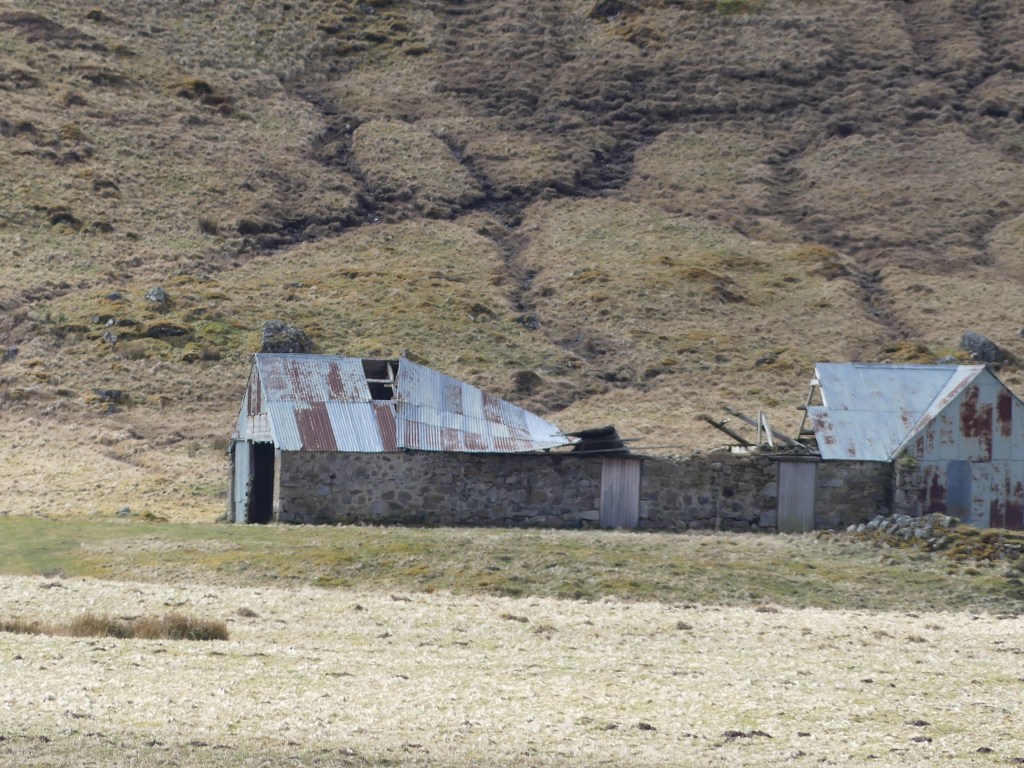
By now the heavy showers were on our tails, and we quickly leapt in the truck to flee it and head further into Strathdearn. The final car park had another mammal surprise, a group of Neolithic feral goats, living on the flat ground by the river, right next to the ruins of an old barn. But this was where the thermal imaging camera really came into its own, with the search for Mountain Hares. The camera used contrast to its advantage, turning the landscape grey with heat signatures coming up as white shapes.
And after just a few minutes, we spotted our first hare and Nick set up the scope to give us all good views of it. It was ‘one of the most obvious hares’ he had ever seen, so our luck had not given up on us. The Mountain Hares were beginning to turn from pure white to their summer fur-job, and this individual was slightly speckled-brown. A brilliant spot to end our Strathdearn endeavour, but the day was not over yet.
After a 30 minute car journey, out and away from Strathdearn (I was glad to finally stretch my legs), we were perched in a churchyard overlooking Loch Insh, with a male Osprey perched on the boughs of an island tree. He was incredible, stark black and white, returning to guard the site until the arrival of his mate. It felt surreal to be watching a bird that just decades ago was on the brink of extinction in Britain. They’re spreading rapidly now, and almost every Loch on Scotland has at least one pair of Ospreys.
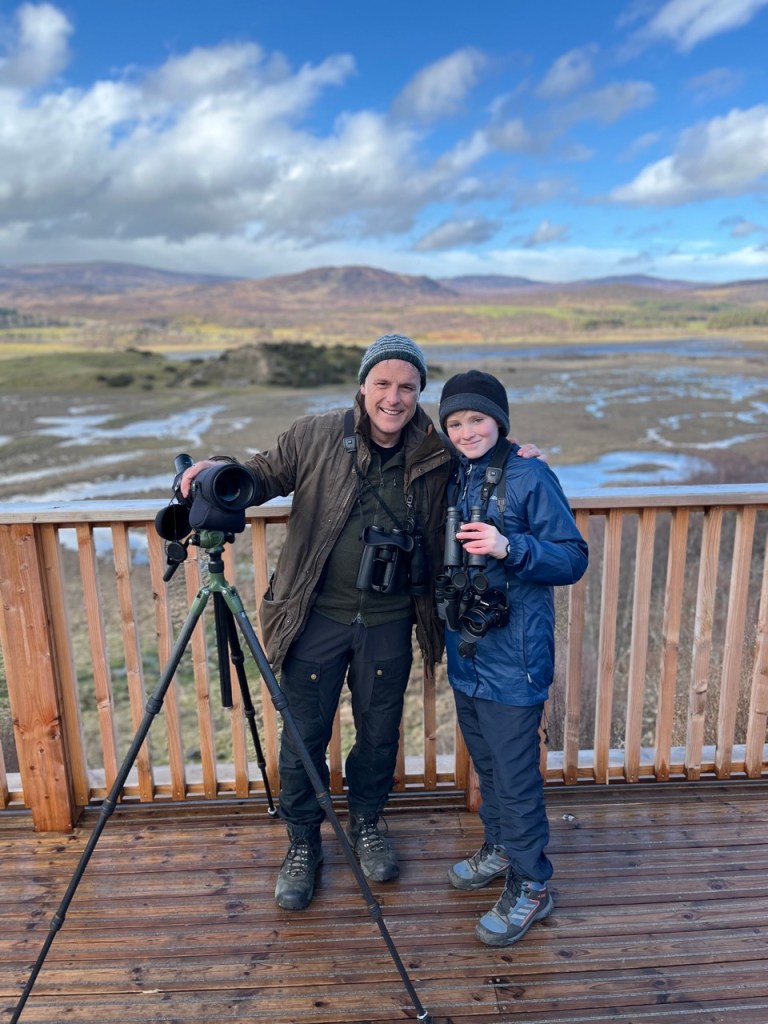
A cafe up the road meant we could still see the island distantly (knowing the Osprey was there in the minds-eye) and enjoyed the warm, clattering atmosphere. But we were soon off again, to the renowned RSPB Insh Marshes. Frustratingly, by now the rain had caught up with us, and was thumping down on us in droplets the size of bullets. Racing inside of the Lookout Hide, we stared out at the vast expanse of wetland that stretched way downriver. Wooded islands dotted the banks, and meandering channels criss-crossed the marsh. Huge numbers of Pink-Footed Geese lay to our right, in a slightly flooded field.

When the weather decided to calm down, we climbed the staircase to the open-top roof viewing point. With the wind tousling hair and splintering bare-skin, we scanned with the scope without the nuisance of glass hindering our efforts. But we didn’t see much else here, and we decided to head back towards Grantown.
Our next location was something not bird related but very special and important to the UK’s biodiversity, Nick showed us a place where Beavers were present on one of the waterways -though we didn’t see any actual beavers, as primarily nocturnal animals, it was wonderful to see how they have engineered this landscape, I picked up a couple of souvenirs – sticks worked by the beavers! An unexpected bonus to the day.
Before we bid each other farewell, Nick had one more surprise up his sleeve for us, and he took us through a suburban town and behind a good few gardens. But this was in fact Dell Woods, part of the Abernethy Forest. Nick had told us what we had a chance of seeing, and I was buzzing with anticipation as we strolled with purpose to the feeding station. When we got there the Coal Tits were surprisingly abundant. This was another thing about Scotland; they seemed to have more Coal Tits than Robins, whereas it was a bit of a treat for us to see this many Coal Tits down south.
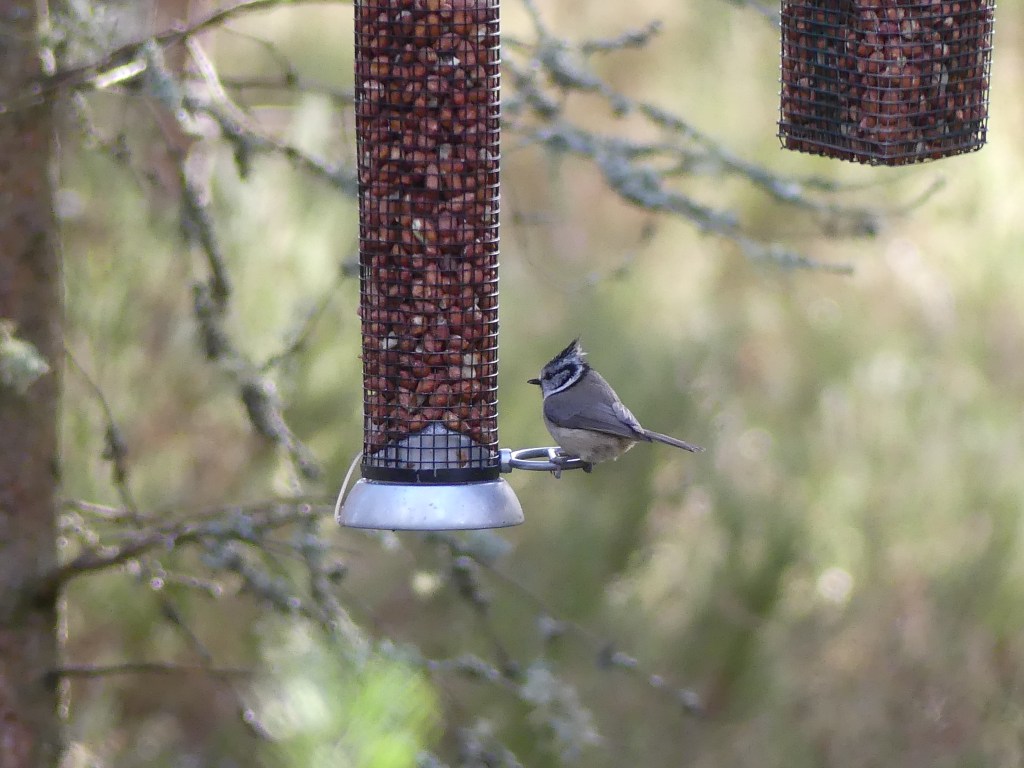
We did see Blue and Great Tits though, as well as a bristling Great Spotted Woodpecker savaging the suet squares. We waited for about a quarter of an hour, and were preparing to head back to the hotel when the pair appeared. Two of a species that you will not find anywhere else in Britain. Crested Tits, with their lichen-like quiffs stuck on their heads. They didn’t stay for long, but every moment was precious, and when they fluttered off with an electrical trill, we realised we had rounded off the wet, windy day perfectly.
We returned just in time for dinner, we snuck in through the door of the Capercaillie Bar and found none other than Iolo Williams sat writing up field notes with his guided group. Immediately Sue rushed over to us, and explained that dinner tonight was at the Speyside Hotel instead, due to a problem in the kitchens. And the bus left in two minutes! But Nick, who had been talking to Iolo, walked up to us and said that he could drop us off instead. An extra 10 minutes with Nick Baker was not something I could turn down, so we took the stairs two at a time and ran down changed and no longer laden with optics. The Hotel staff looked after us superbly, and they made sure the dilemma did not largely impact on anybody’s evening. The next day, all the meals went on without fail.
Dinner went on so late that Iolo’s quiz could not go on. Sue, however, came into the bar after everybody had returned and asked if I still wanted to do the quiz. So the quiz was back on, albeit on a smaller scale. Many of the people in the bar joined in, and soon we had a contest between two teams. Eventually, our team came out on top (yay!) but after Sue introduced us to two of the people who had been on our team.
Dawn and Pete were their names. Dawn had a bit of a dream job, being Head of Surveys at the BTO and Chair of the Rare Breeding Birds Committee. And both of their knowledge was second to none! We would spend more time with them during our stay…
After that, it was way past 10:00PM and almost certainly time to head back up the grand old staircase for some well-earned sleep. What a brilliant day it had been! Seven lifers added to the list! It was an experience (or many experiences) that I will never forget, and I felt really lucky to be able to spend this time with Nick.


2 thoughts on “A Scottish Sunday”