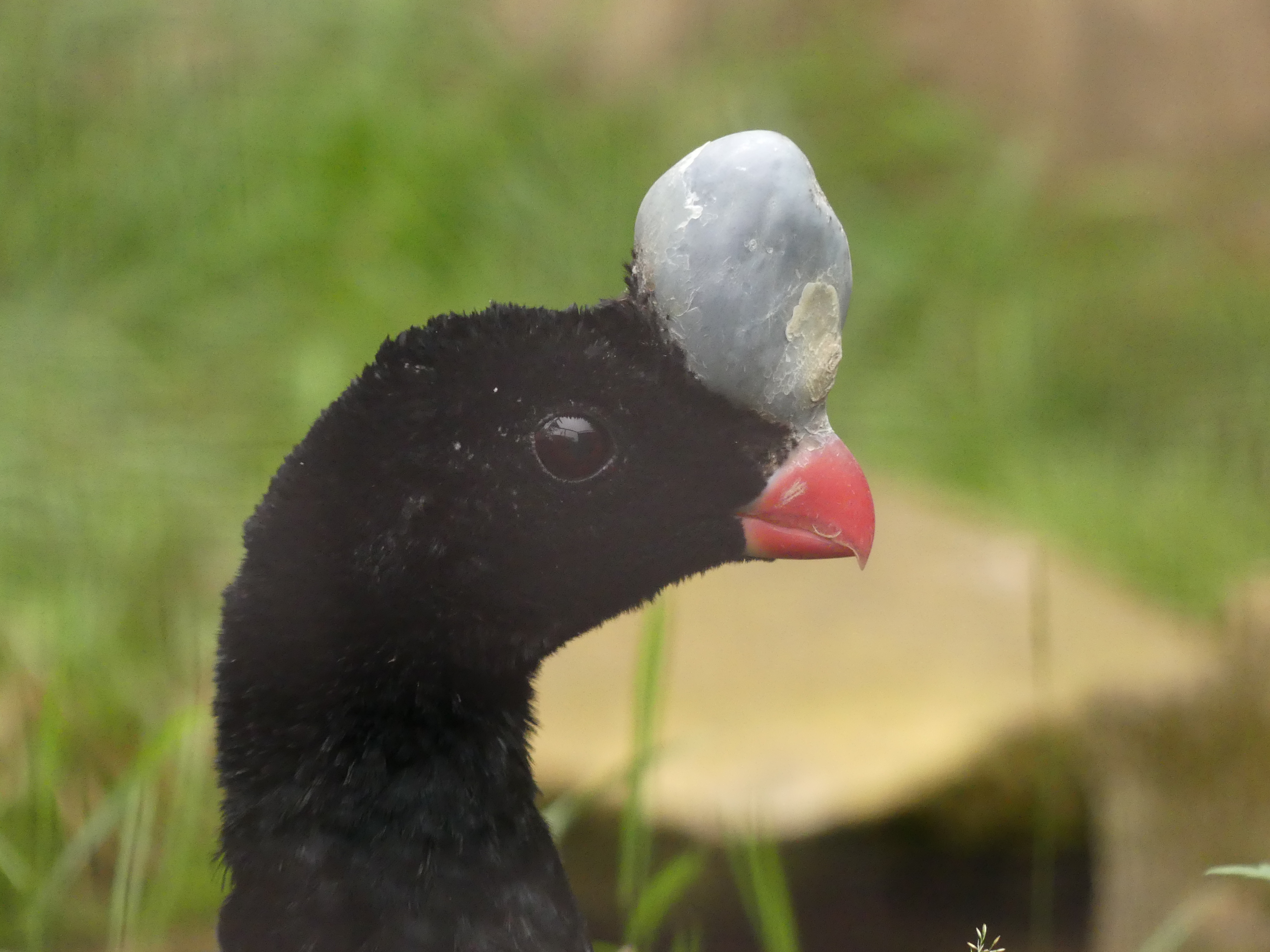
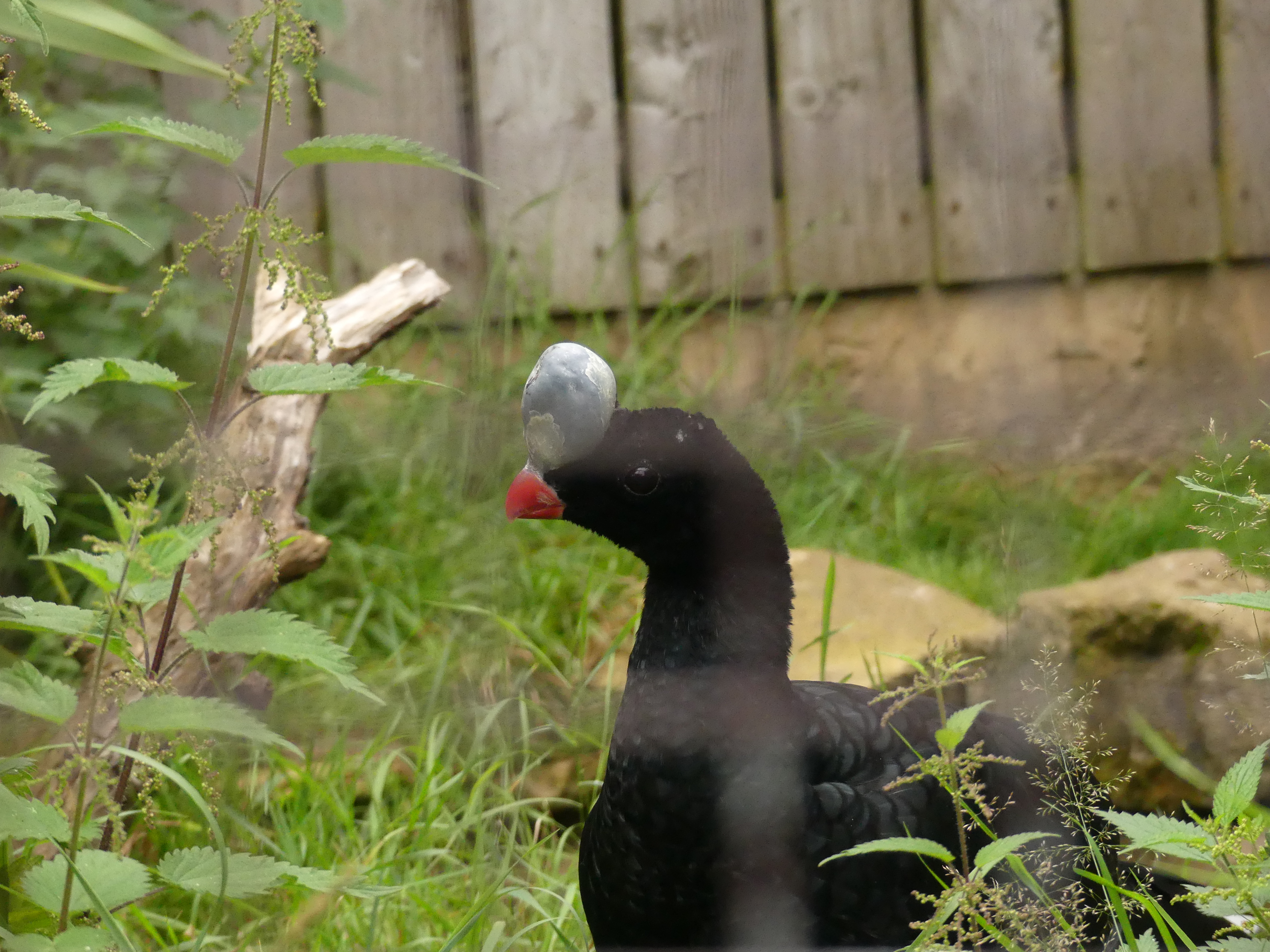
The Red Legged Seriema stalked away gradually to join its fellows. In an adjacent aviary, a black plumaged bird wandered around. It had a short, red bill and looked as if it had a pale blue stone perched on it’s forehead. A text attached to cage, complete with distribution map and photo, read Northern Helmeted Curassow. A beady black eye fixed on my lens as I clicked the shutter. He posed admirably. These birds live throughout the cloud forests of West Venezuela and North Colombia, and have a habit of eating stones and pebbles to help the digestive system. These birds consume a large number of thick and layered nuts and strong seeds which is why they swallow the pebbles to reinforce their stomach acids.
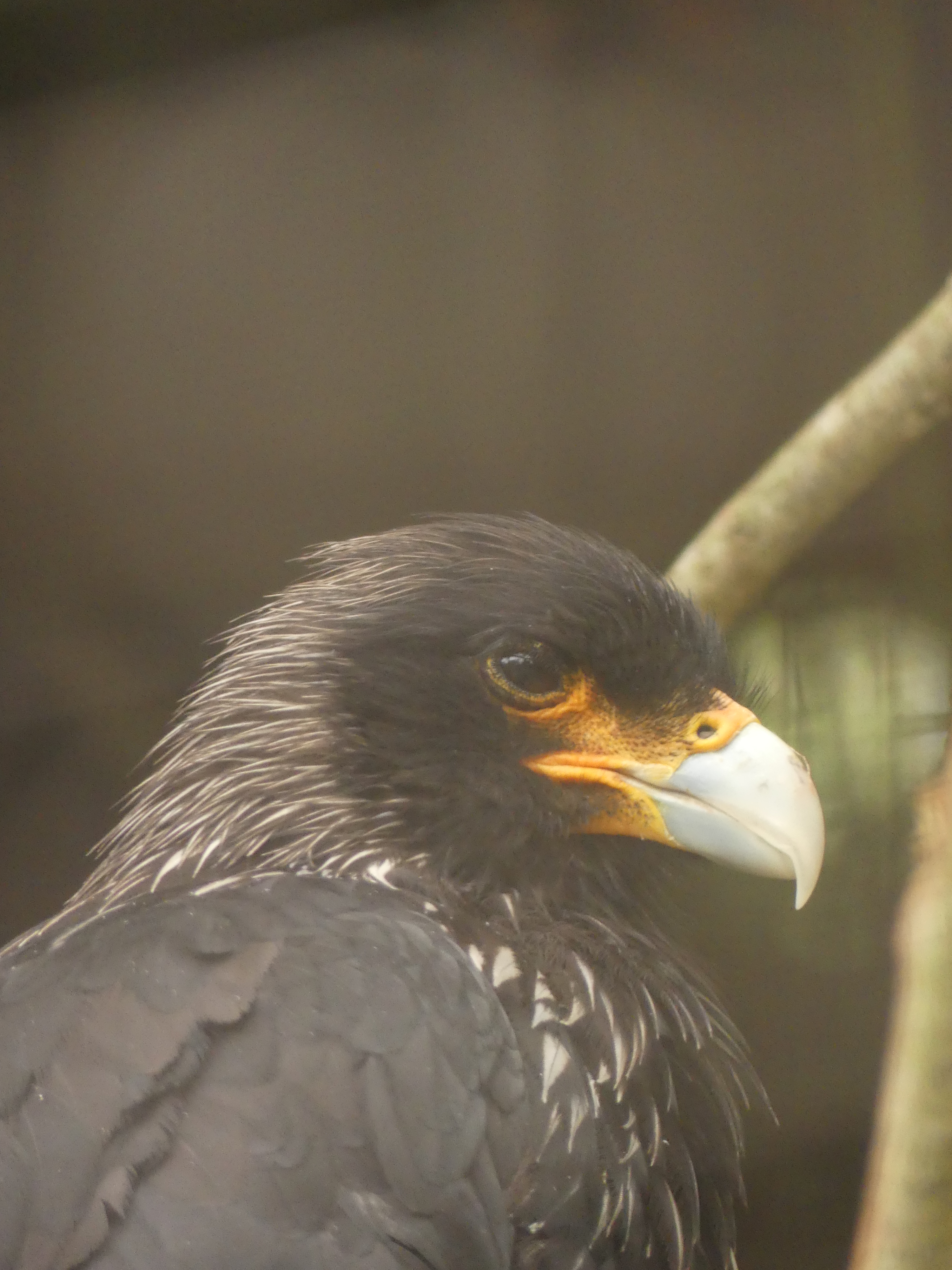
A lake was stretched out on the left side of the path, the river and the Caribbean flamingos on the right. A spacious aviary facing the lake held all sorts of perches and branches. Talons digging into the wood, a Striated Caracara, Birdland’s only bird of prey, perched. A mix of black and other colours blended into the plumage, and the yellow feet and bill contrasted with the bird. The species is classed as Near Threatened and it’s stronghold is the Falkland Islands. On the islands, they breed near albatross and penguin colonies, which provide a good supply of food.
On the lake were many mallards and a couple of swans. But these weren’t the normal white mute swans. These were red billed and black – feathered. These Black Swans originate from Australia, not including The Cape York Peninsula.
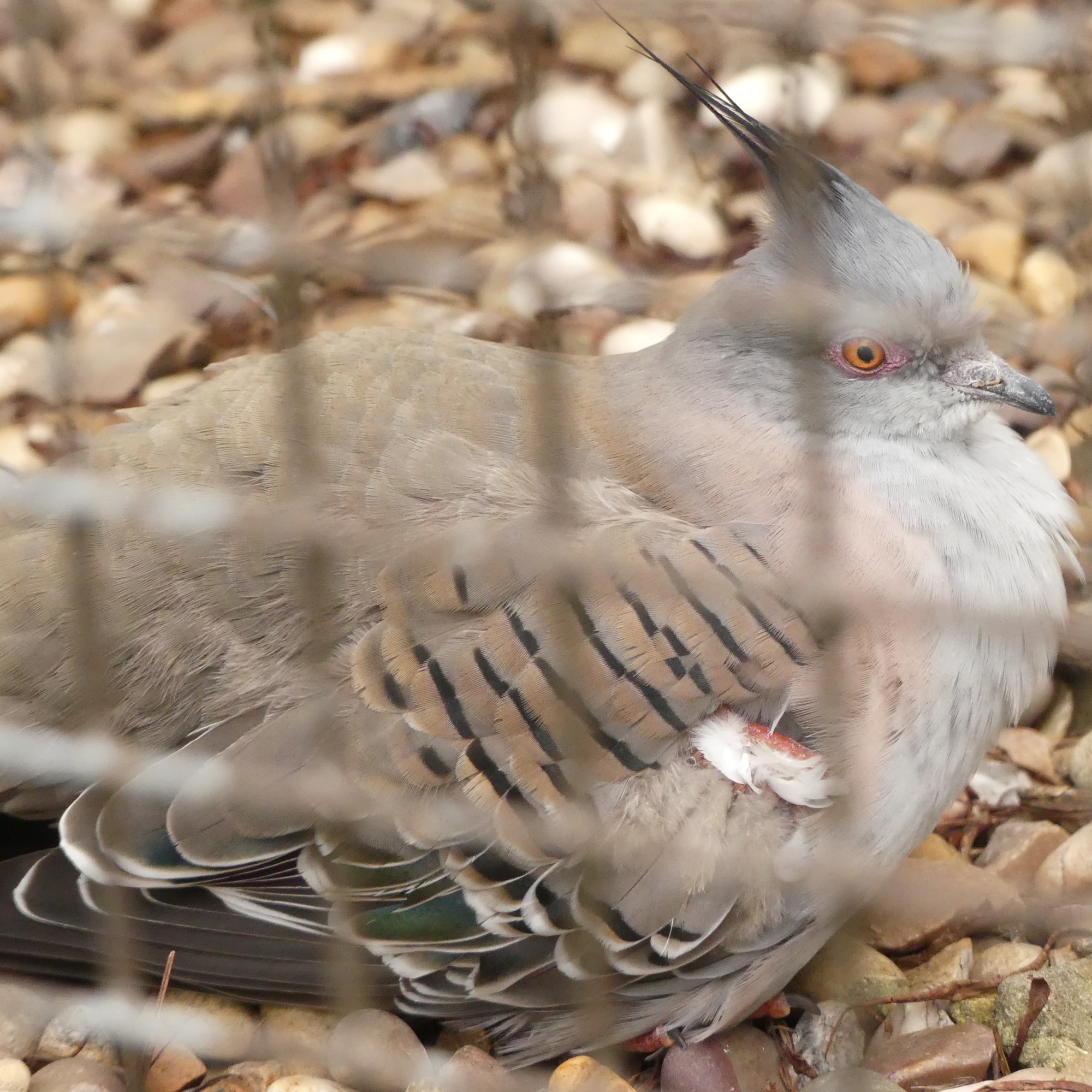
At the section where the detour re-joined the main path, there was a cylinder shaped enclosure filled with dove like birds with pointed crests, snuggling up in twiggy branches. A shallow, pebble enclosed pond held water that one bird was sipping from. These Crested Pigeons, like the Black Swans, originate from Australia but avoid the northern tropical parts.
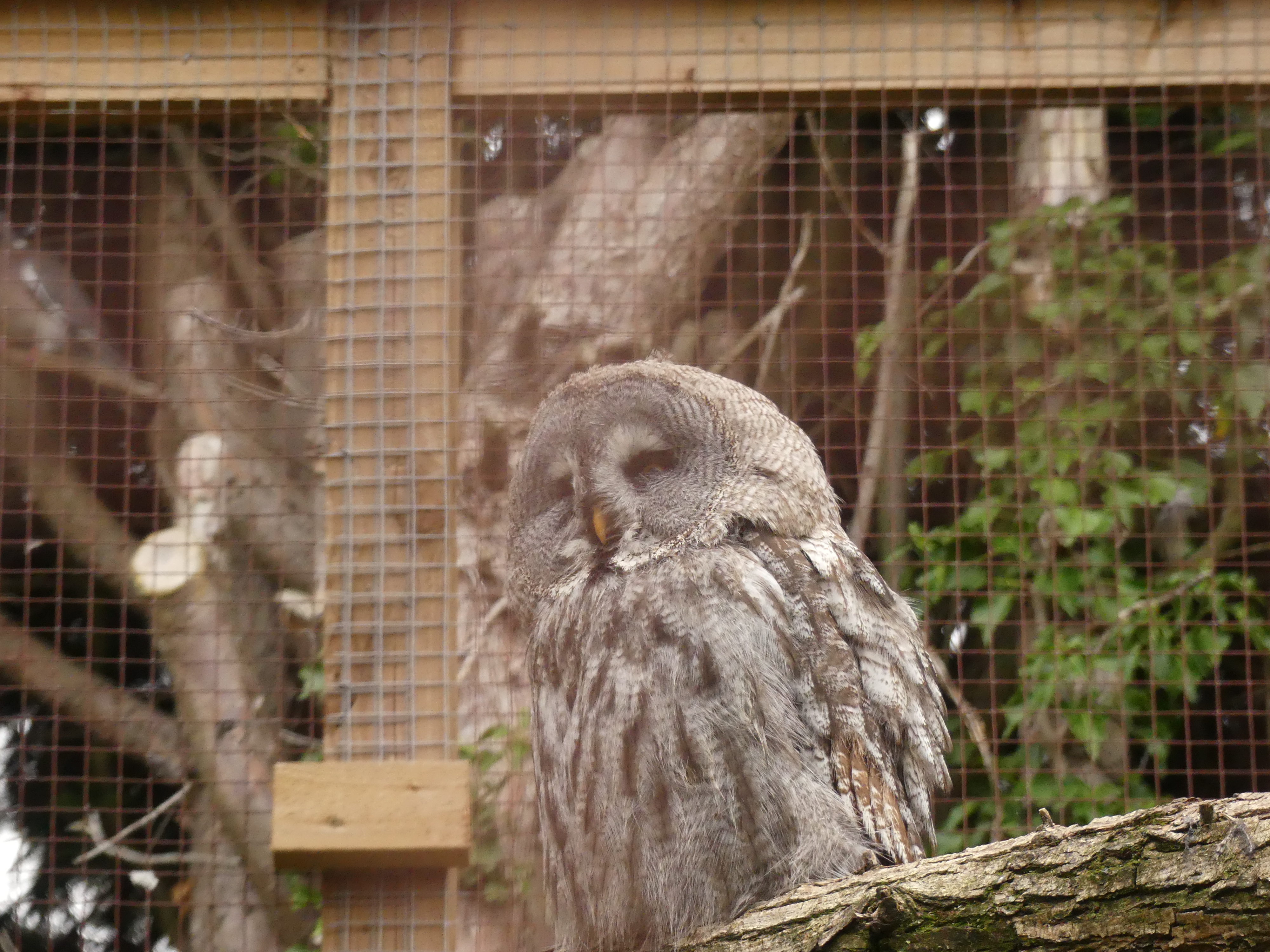
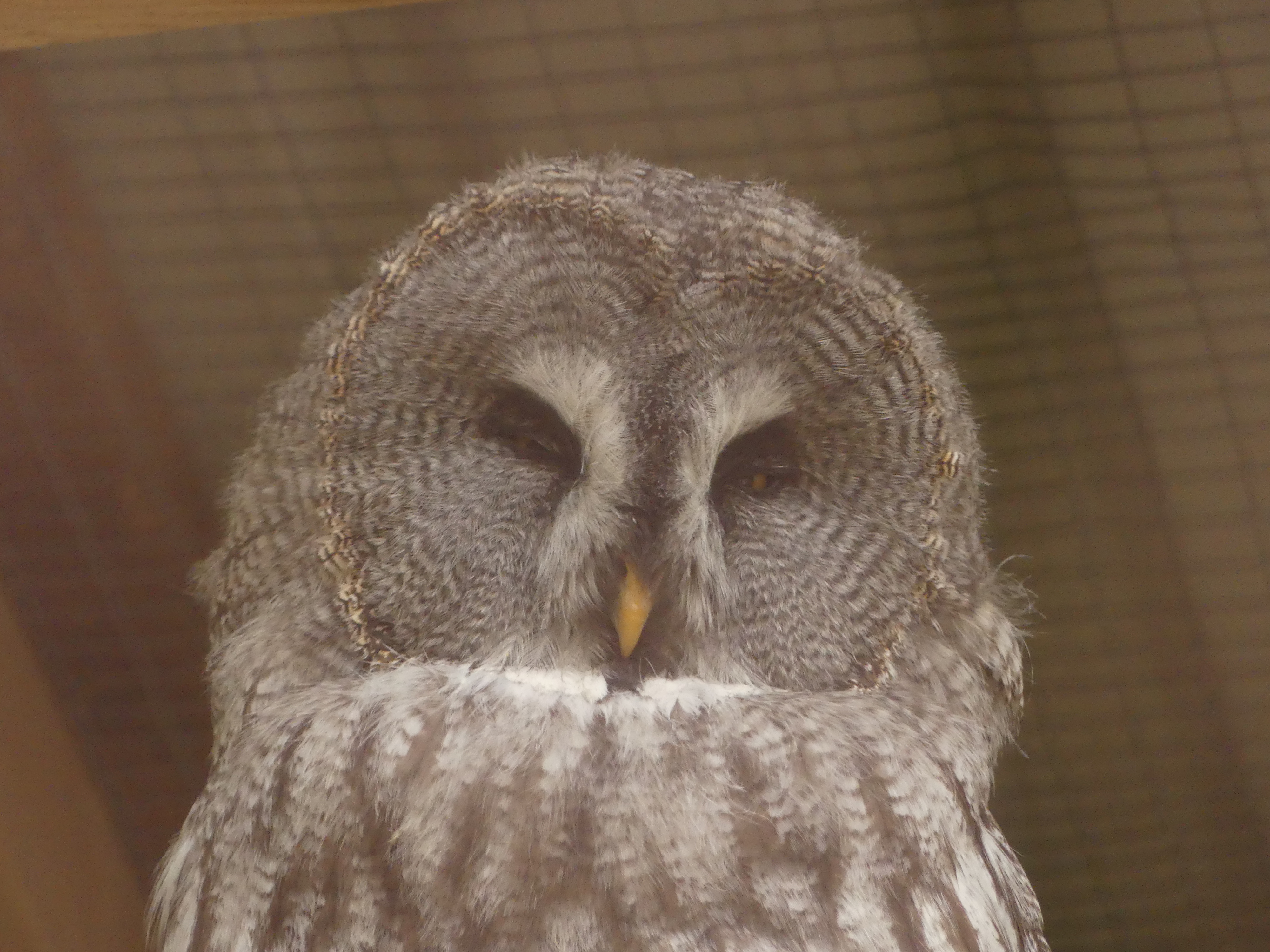
On the opposite side from the pigeons, a bird called an Occipital Blue Pie was being incredibly secretive and was only showing briefly and sparsely. Due to this, I was not able to capture a photograph. And so I proceeded past a small line of enclosures towards the Parliament of owls. The first enclosure held a couple of Great Grey Owls. Majestic, round faced and dark, slate grey, they all swivelled their heads to look at my lens. Large owls, their look pierced the photograph. When they hunt, they locate small animals burrowing in networks of tunnels beneath the snow. They then dive into the snow and can go as deep as their own body length. They lack ear tufts and have the biggest face disc of all raptors.
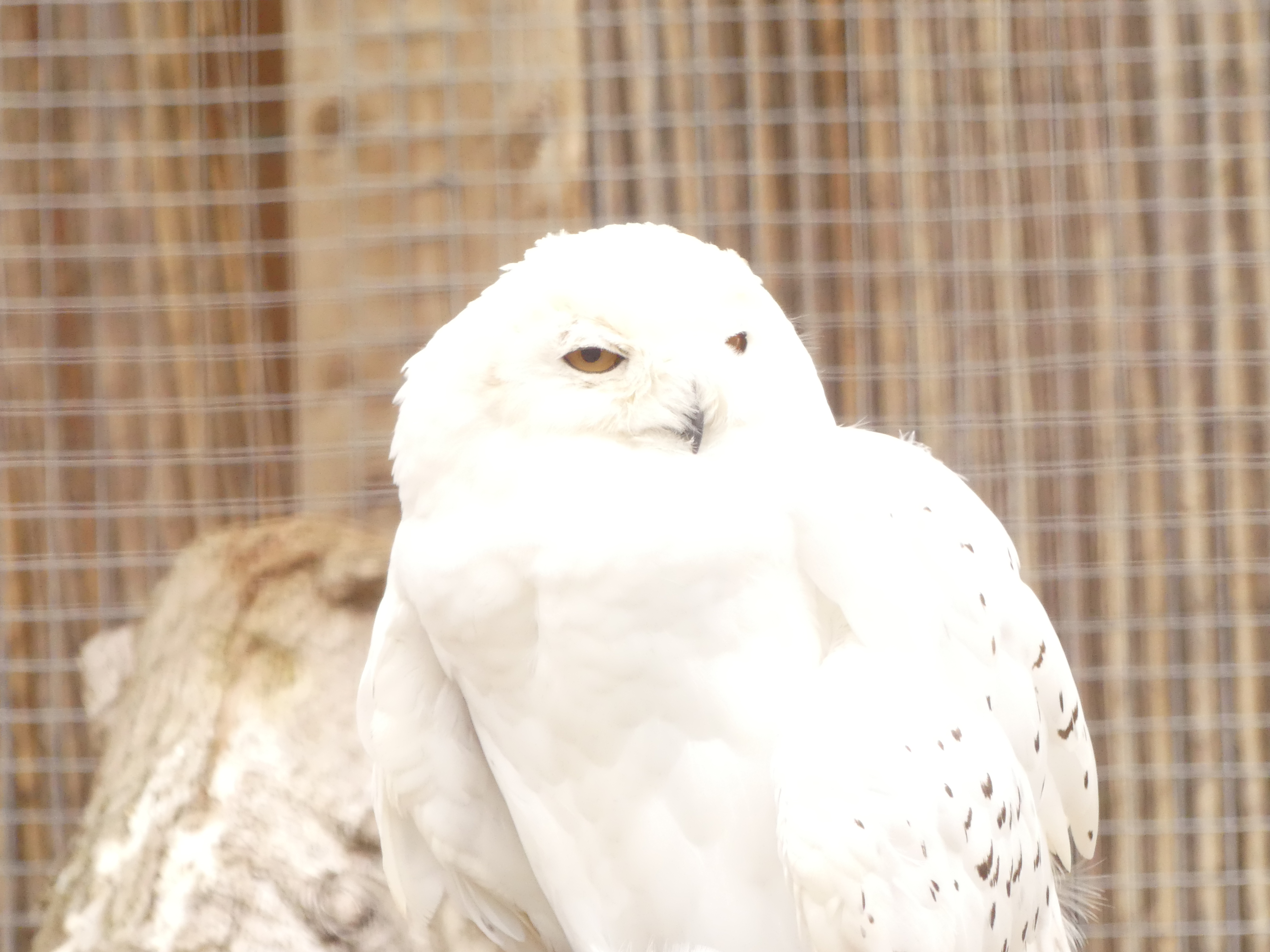
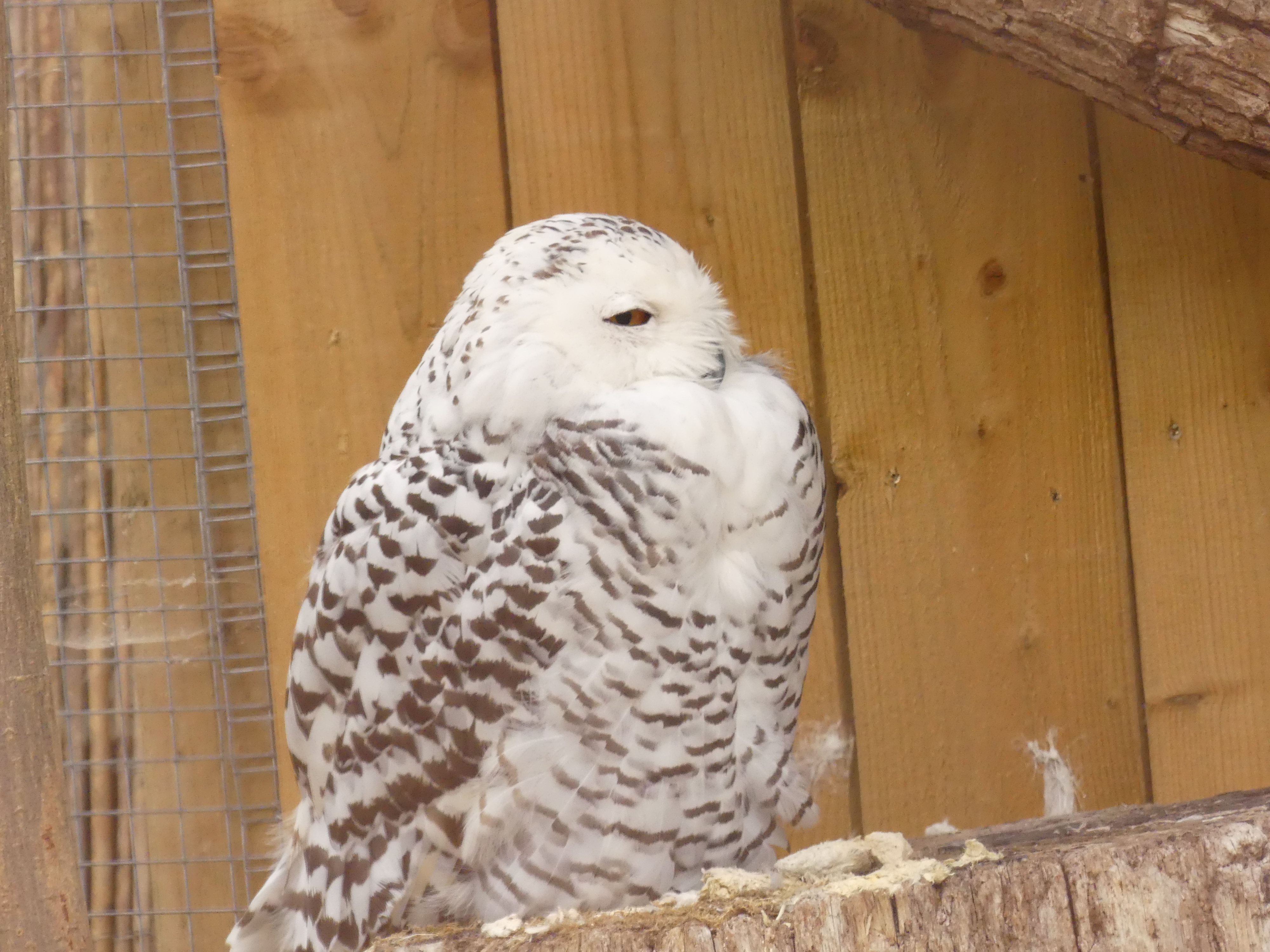
In an enclosure close by, glowing white snowy owls perched on stumps and their house. The males had small, raindrop like marks on their backs. The females, however, lacked these marks and were almost pure white. Nomadic birds, they hardly ever breed in the same place or partner up with the same owl. Some of the time, they wander down south in great numbers, in what is called an irruption.
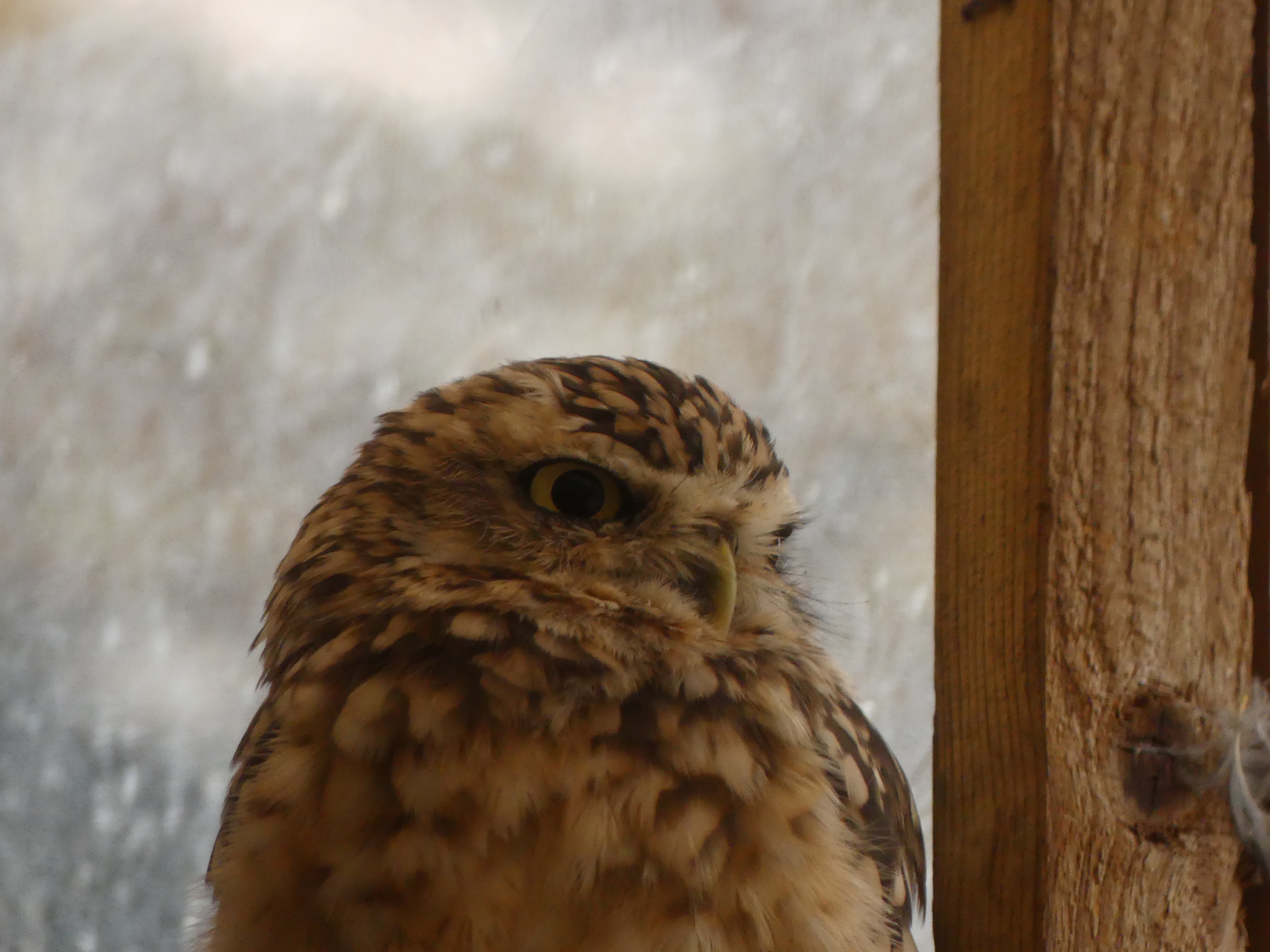
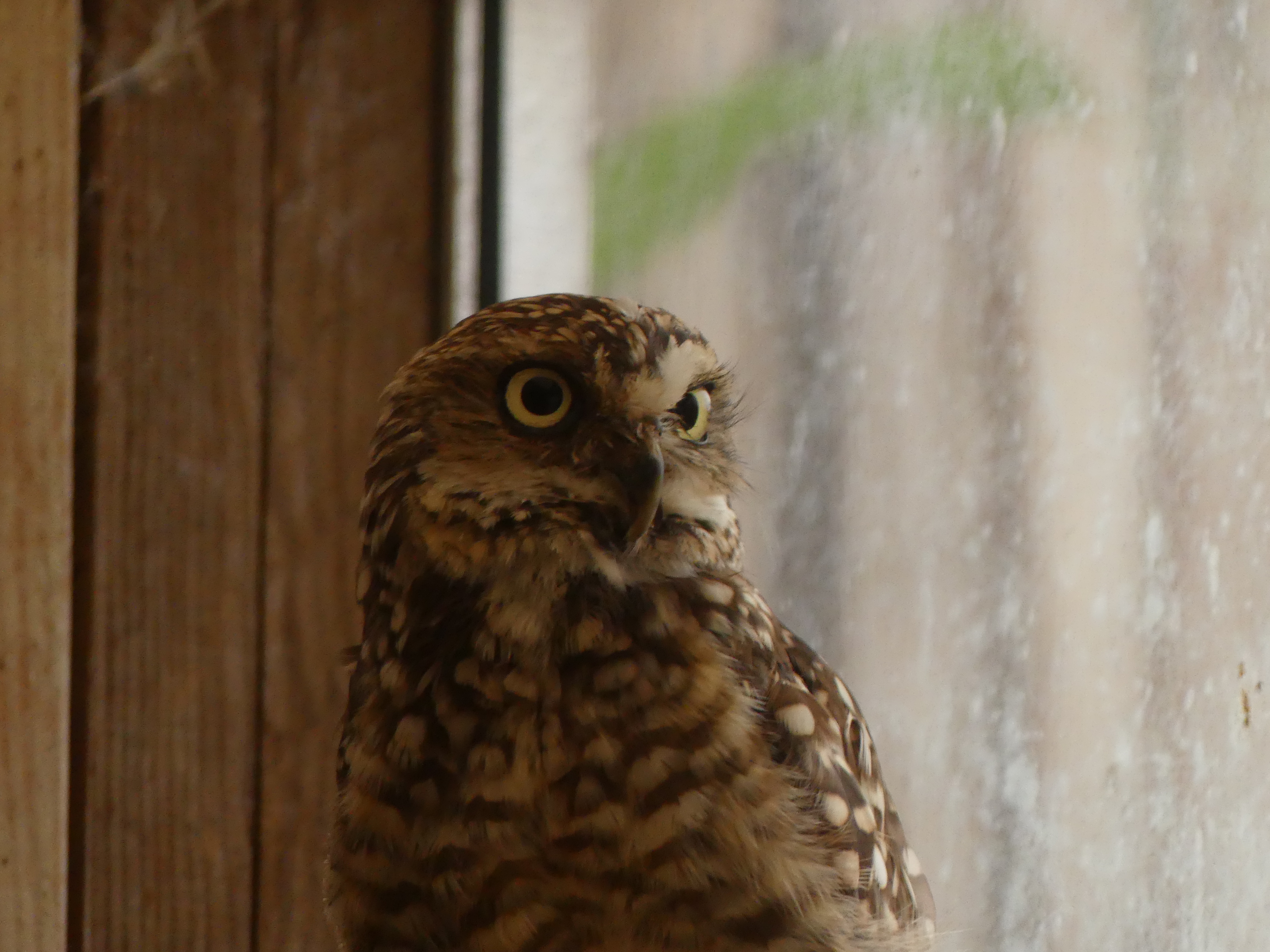
Finally, in the house separating the Great Grey and the snowy owls, there were cute little owls all perched up by the window, basking in the sun. Burrowing owls. Tiny little owls, they had pale yellow eyes, brown and white plumage and lives in open, dry parts of North and South America. Their brilliance stretches to a rather higher tolerance of Carbon Dioxide.
 The Bovey Birder