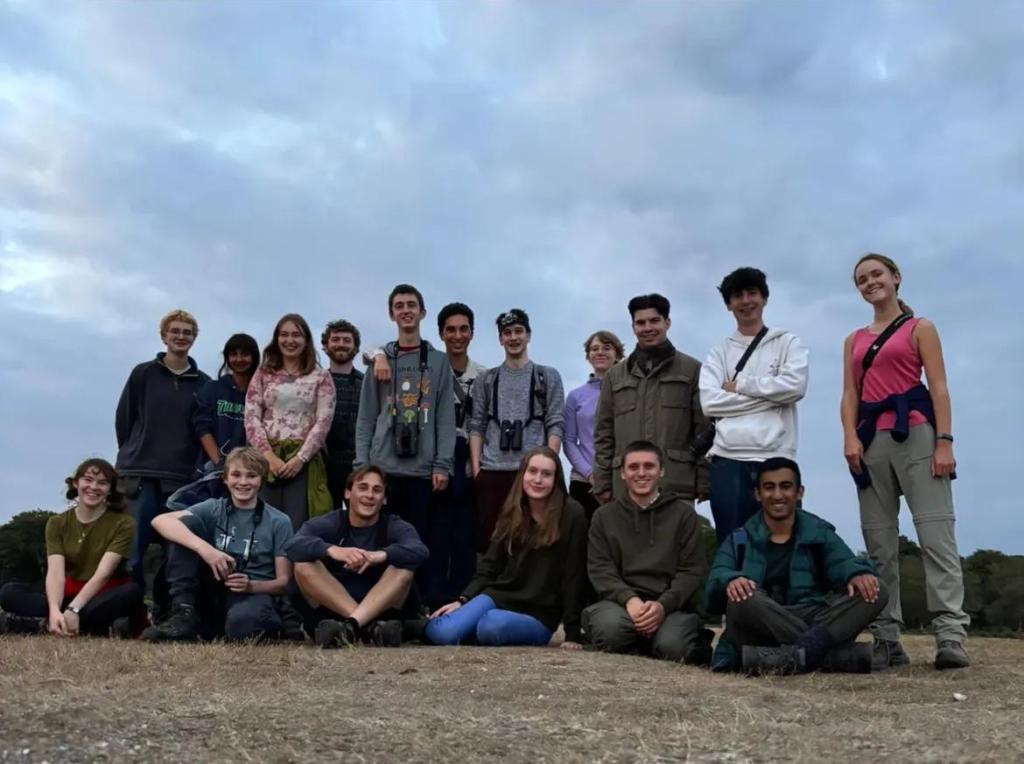
A couple of weeks ago, I headed off to a secluded spot in the New Forest, concealed behind a gate, a long gravel track and huge amounts of healthy trees. Organised by the dynamic duo of Emily Hunt and Andrew Millham, with support from the incredible Cameron Bespolka Trust and an all-star panel of esteemed guests including nature writing stalwarts Stephen Moss and Roger Morgan-Grenville, this was the Young Writer’s Nature Retreat. Despite being aimed at 16 – 21 year olds, this 13 year old aspiring writer managed to bag himself a place on a weekend to remember.
So, here are your hosts! Emily Hunt is a multi-award winning poet and nature writer, who was a youth voice in the creation of the new Natural History GCSE. She was named Warwickshire Young Poet Laureate for 2022, and is an incredible writer, naturalist and person. Andrew Millham is a 20-year-old writer, naturalist and nature writer from Essex, who received the Sean Corr Prize for Fieldwork Excellence. I’m very jealous of his broken down boat adventure (if you’re confused, check out this link), but he is a brilliant person and writer. They have both been involved with Reserva: The Youth Land Trust, who are fundraising to create the world’s first entirely youth funded nature reserve in the Ecuadorian Rainforest and they both put together a hugely inspiring weekend!
It was also amazing to meet so many young writers with a passion for the natural world. It felt like I was finally among my own kind! Nobody at school has the same interest, and in the past it has been a struggle to find people my age who share my obsession and awe for nature. This search has led me to find some brilliant young people, including those I was lucky enough to meet at the Camp! In Devon, there is sadly a lack of youth engagement schemes – however things are changing with the excellent work of the Dartmoor Youth Rangers and now, the creation of the Pebblebed Youth Rangers Scheme! While these are the only conservation groups for young people I could find near me, they are both fantastic examples of what can be done for the next generation of conservationists. So it was amazing to have so many young people for me to meet and get to know all under one roof, or tree canopy (of course, we spent a lot of time outside; who wouldn’t?).
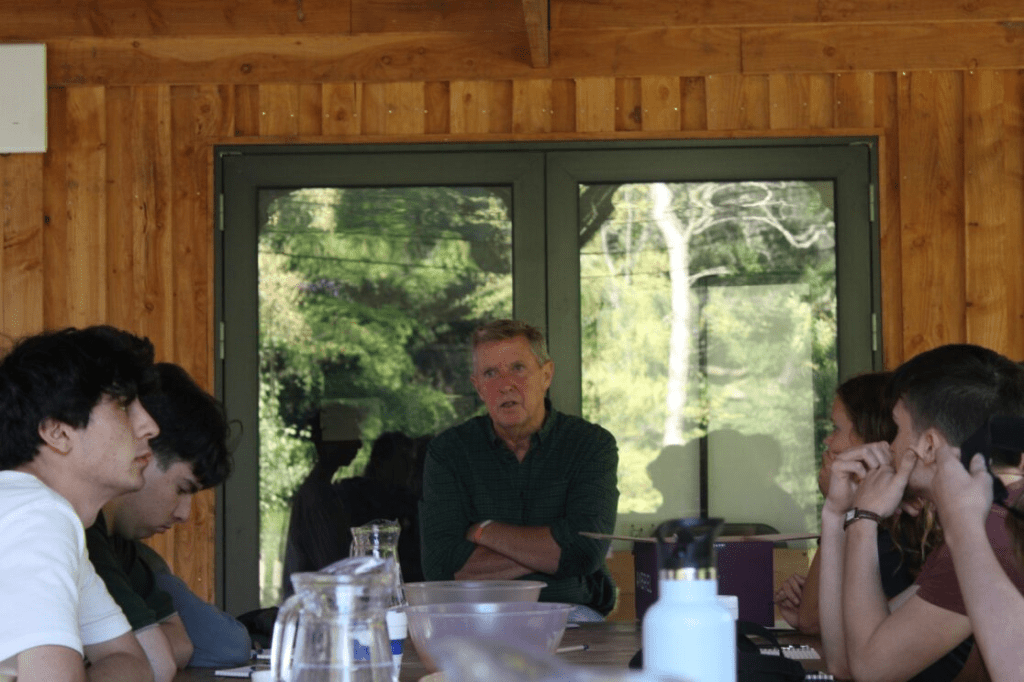
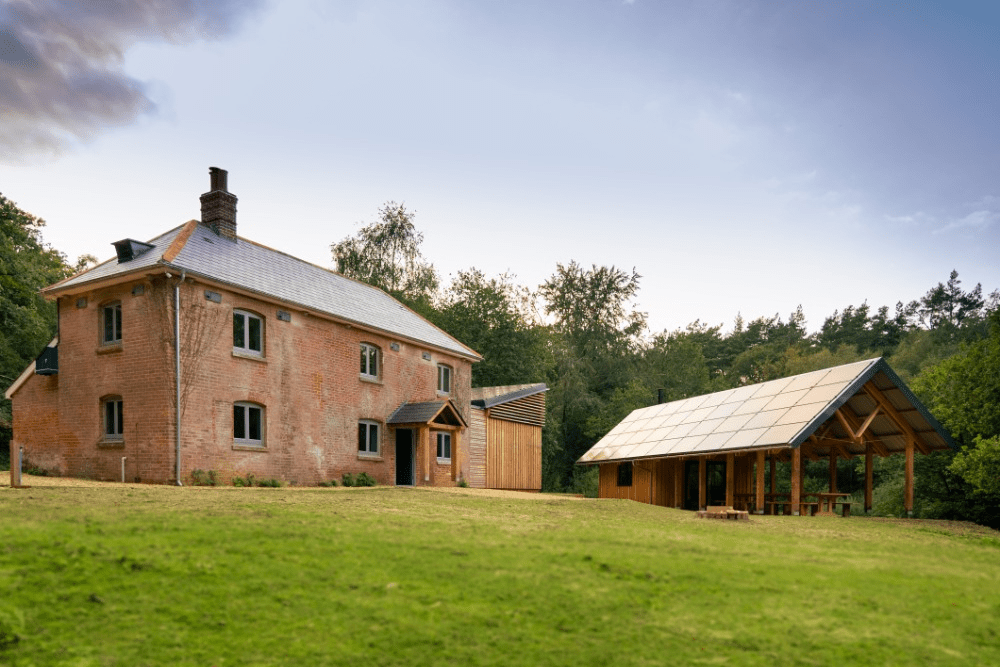
As soon as we arrived at Cameron’s Cottage, a brilliant spot specifically designed for young people coming to stay in the woods at RSPB Franchise’s Lodge, we set up and the fun began! We started with icebreaker games, which provided a fun platform for everybody to get comfortable with each other (I’d met very few of them before, but came away having made new connections and friendships!). Soon it was time for our first workshop of the weekend from one of the esteemed guests, who had all planned activities to share their expertise on improving our nature writing. Taking the floor was Roger Morgan Grenville…
Roger is a writer, speaker and campaigner on conservation and biodiversity loss, and as a story teller, he believes strongly that the power of persuasion and entertainment is, and should continue to be a huge tool in halting the mass extinction crisis currently facing the world. He delivered the 2023 Cameron Bespolka Memorial Lecture at Winchester College, and has authored several books including his new one, The Restless Coast (available from all good bookshops). He even founded Curlew Action alongside the brilliant Mary Colwell. I’ve just finished reading Return of the Grey Partridge by Roger – I thoroughly recommend this insightful, inspiring tale of nature restoration. Read more about him here.
His workshop sought to teach us how to introduce campaigning and activism into our writing, something I have previously approached cautiously, and probably not done justice to. However his passion for having the nerve to be challenging in subject matter or viewpoint was infectious and I hope to incorporate more of this in future pieces. My top takeaways from Roger’s workshop for introducing activism into your writing are:
1. Don’t be boring (people won’t read if its boring, its as simple as that!),
2. Prepare to be unpopular (you’ll always have those opposed to your views, even if it’s the truth!), and it’s not a bad thing to make people reassess their beliefs.
3. My personal favourite, ‘Twitter/X is a snakepit’. Make of that what you will.
Later that evening, we headed out on a walk into the woods surrounding Cameron’s Cottage which are part of the RSPB Franchises Lodge reserve, a unique place where where the public aren’t allowed! Only those staying at Cameron’s Cottage, or with special permission from the RSPB, may enter and explore these beautiful, untouched and unspoiled woodlands. The absence of human activity was clear as the woods were abundant in birdlife. The undergrowth hummed while the tree tops thrummed with everything from Blackbirds to Crossbills.
Upon our return was the Open Mic Night, sat out around the campfire, with thought provoking readings from books such as Curlew Moon by Mary Colwell, and some award winning poems. Important words, carefully spoken and carried on the wood smoke and out into nature where they belong. I felt privileged to be able to watch on as some of the best nature writers in the business and the talented young people around me read both their work and that of others.
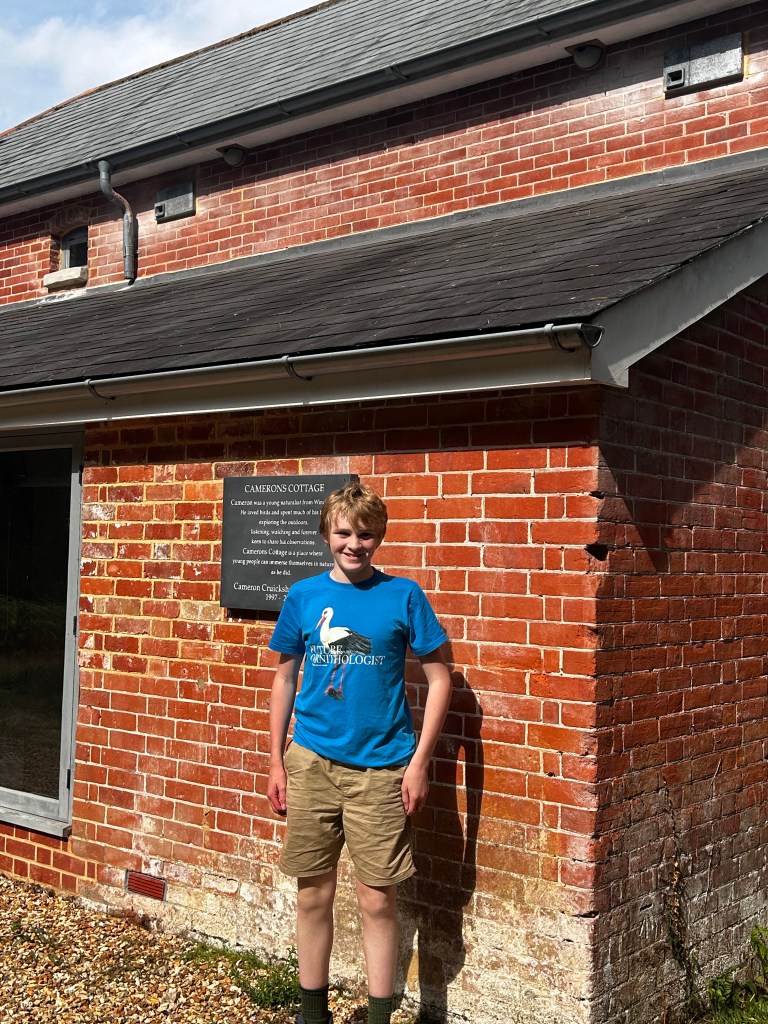
As darkness fell, and with moth traps set, we retreated back to the warmth of the cottage. For those who have not yet come across the work of the Cameron Bespolka Trust and Cameron’s Cottage, let me enlighten you about their important work and message. Created in memory of Cameron Bespolka, a young naturalist who sadly died at the age of sixteen, the Cameron Bespolka Trust works tirelessly to inspire and encourage young people to love and appreciate wildlife and our environment and the Cottage provides a dedicated space for young people to immerse themselves in nature, away from the bustle of every day life. It was once a derelict building, but after a huge amount of fundraising, the Cameron Bespolka Trust teamed up with the RSPB to renovate it. I have been lucky enough to visit three times now with various groups and it is such a special place. You can read more about their wonderful work here: The Cameron Bespolka Trust Website
I had thoroughly enjoyed that first afternoon, and I think my peers agreed! So, waking up Saturday morning after a much-needed nights sleep I was naturally quite excited and eager to get going again. We kicked things off by opening up the moth traps that had been set the night before…
Moth trapping is a method of surveying and enjoying the beauty of moths, and I feel that I must stress that it does not hurt the moths! While I am no expert on moth trapping, in essence, the bright light in the trap attracts the moths, and they then fall into the bucket. Unable to get out again, they rest and recuperate on the warm, comfortable egg boxes, until they are released in the morning, often to marvel at or study. Moths are incredible, with a far greater variety of stunning species than you might think. From the huge Privet Hawk Moth, to the many tiny micromoths, there’s a moth for everyone!
We found a nice variety of moths, including several I had never seen before. Hiding in the egg boxes were, to start off with a surprise, two hornets. The actual moth roster (don’t be surprised by any strange names, moths are renowned for it) included both Black and Dark Arches (so named for the barring across their wings), a beautiful yellow Brimstone moth, a subtly but brilliantly patterned Mocha moth, and many micromoths that even a seasoned expert would have struggled to confidently identify. Much of the knowledge in this session was provided by Max Cantrell, another young person on the camp who is one of the best entomologists I’ve ever met. We had a special guest of the non-moth variety join us too, ahead of his workshop later on – none other than author Stephen Moss.
Stephen Moss is a leading nature writer, broadcaster and wildlife television producer. He won a BAFTA Special Award in 2011 for his work on Springwatch, and he’s written well-known books such as A Bird in the Bush and Ten Birds that Changed the World, and is, at his core, a passionate naturalist. Of his books, I have particularly enjoyed the Robin, A Bird in the Bush, and his collection of articles published in the Guardian – This Birding Life. I was lucky enough to take part in his quiz at Global Birdfair – he is a true font of knowledge on the natural world.
Stephen led us in a workshop based around memory writing with a focus on childhood memories and ahead of the weekend, he had even set us a little homework task: to read, with several questions in mind, five extracts from books of memoir, and with aspects of memoir. We went through extracts from the five books: The Butterfly Isles by Patrick Barkham, On Gallows Down by Nicola Chester, This Birding Life by Stephen Moss (had to be included), Clay by Melissa Harrison and Waterland by Graham Swift. The last two are both novels, but still contain aspects of both memoir and memory writing, so are very relevant, even if the techniques used are somewhat different to the first three books which are memoirs.
So, we had a discussion over these books and what prominent techniques were used in the memory writing, which led nicely in to a little childhood memory writing exercise. The exciting aspect of this was that we were given license to roam around the woods surrounding the cottage, which encouraged a quietness of mind not always easy to attain amongst a room full of people, and an important technique to remember to draw upon when life is busy but work needs to be done! Check out more about Stephen here.
By then it was lunch time, and time for a well earned break. After some food we headed into the woods again as part of the action-packed schedule put together by Andrew and Emily. As I mentioned earlier, RSPB Franchises Lodge isn’t open to the public, and so there was a little firepit area with log seating arrangements just for the youth groups that are lucky enough to stay at Cameron’s Cottage. Just a short walk into the trees, it takes up its position in a beautiful clearing, ringed with bracken and home to a Sloe Worm, which was found under a stone and much admired by the group. Sloe Worms, despite the name, are actually legless lizards, a fact that became quite obvious when the reptile flicked it’s lizard tongue out.
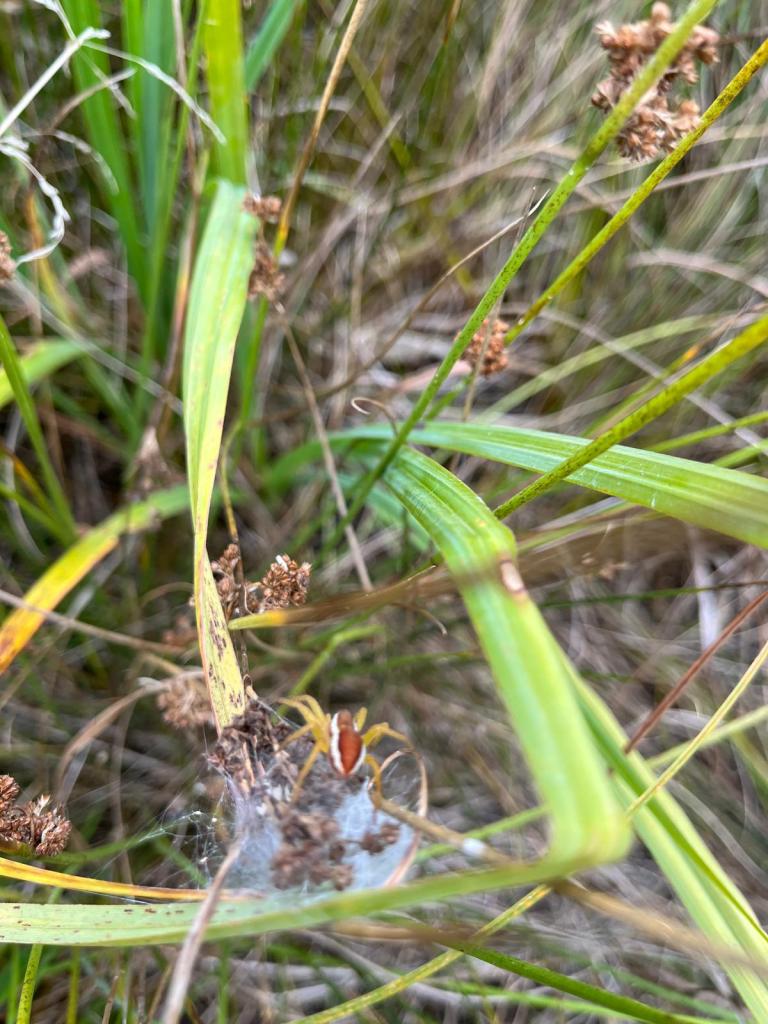
After several writing exercises, facilitated by Emily and Andrew, we continued on the path until the watchful trees became a brilliantly biodiverse, slightly marshy grassland habitat. The place was crawling with Wasp Spiders (this is a good thing), who were feasting on the copious amounts of Leafhoppers leaping from stem to stem. Another special arachnid find was a striking Raft Spider, reddish brown with two bordering yellow stripes. Swallows were constants, diving low over the grass and our heads, gorging themselves on the plentiful insects. Sadly, they’ll soon be gone on their migration back to Africa for the winter, so it’s important to enjoy them while they’re still here.
On our return to the cottage, it was high time for a talk by one Kabir Kaul, a brilliant naturalist and campaigner who has already done so many good things for nature by the young age of 20, such as his tireless work in promoting London’s varied green spaces and the wildlife within them. Looking at his journey, I cannot fail to be inspired and amazed by his prowess, and hope that I too can follow a similar path in the not too distant future. With the world becoming more and more digitised, and things like email and social media playing a huge role in our lives, his tips and tricks for things like writing an email to ask for an opportunity and how to showcase your writing skills in a short and snappy Instagram post were incredibly valuable, and I know they work because he’s tried and tested them all! Read more about Kabir’s journey here.
Dinner and an outing over the road to Telegraph Hill followed, on the hunt for bats and Nightjars. We managed to spot one of these cryptically camouflaged birds, albeit a very distant one, spotted flying over the treeline in the last light of the evening and identified by its slender shape and pointed wings. Armed with bat detectors, we did manage to pick up two of the more common species, in the Common Pipistrelle and the Noctule Bat. The bat detectors work by picking up a bat’s echolocation calls, which can’t be heard by the human ear, and converting it into an audible sound we can easily identify, clicks and chirps. Each bat species has a different frequency, and that’s how you identify what you’re hearing.
I slept like a log that night, happily exhausted by the day’s endeavours. There wasn’t an early wake-up call for moth trapping the next day, but instead a hearty breakfast to provide consolation. A morning bioblitz was the first order of business for the day, heading out into the marshy field from yesterday to conduct it. A bioblitz is a simple concept, but easier said than done in real life! The aim of the game (not that its a game, its often used for collecting scientific data) is to find, identify and record as many species as possible in one given area, whether that be insects or trees or fungi.
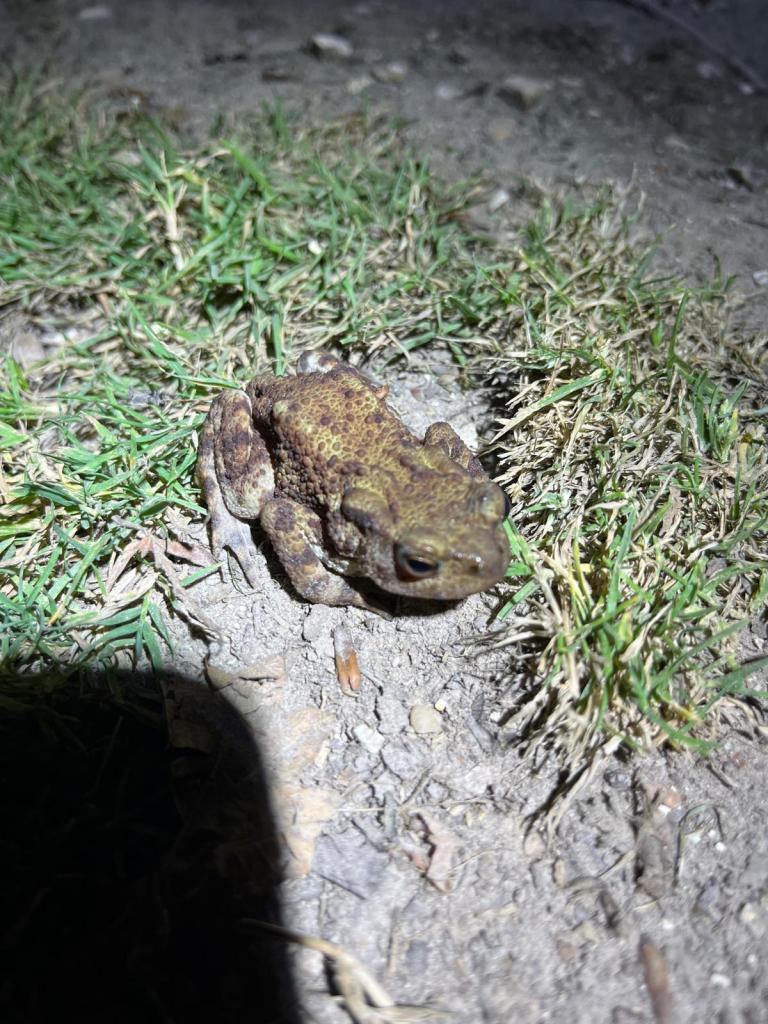
Some highlights of the morning’s survey included at least one more Common Raft Spider (if you’ll recall, one of these beauties was found yesterday as well), lots of Wasp Spiders and a Common Toad, among many other species. I think the highest amount of species found that morning was around 90, and it just goes to show how biodiverse a small area can be when allowed to flourish.
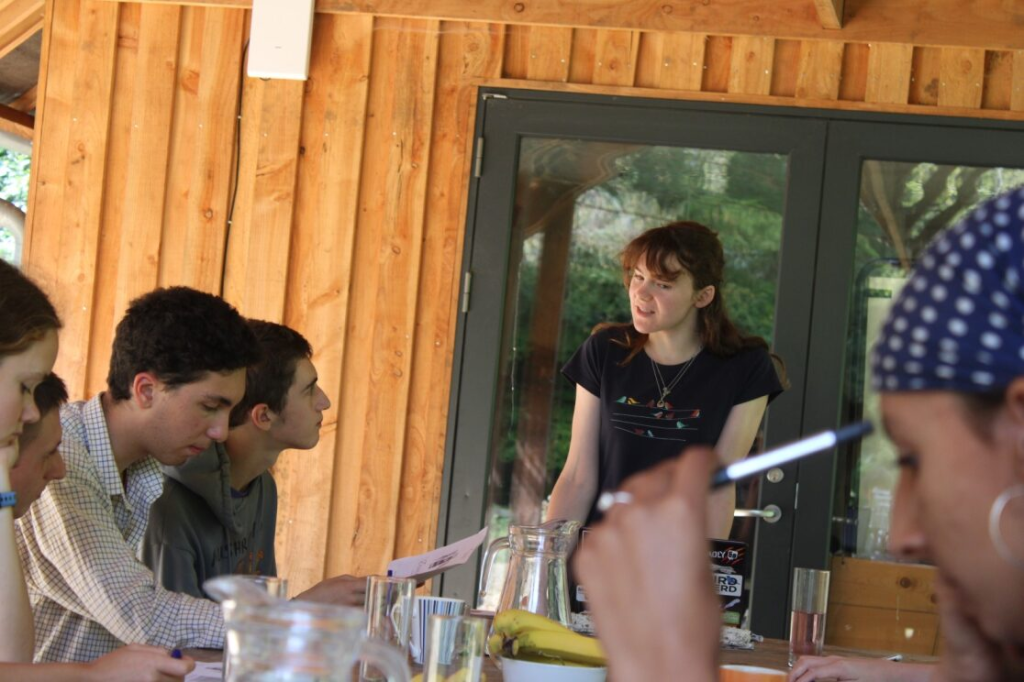
On our return, everybody was delighted to find that our next speaker had arrived. Jeni Bell is a talented writer and photographer, as well as an engaging, lighthearted individual and this comes across in her writing. Her workshop was titled ‘Confidence’, this was particularly pertinent to me as confidence is something I really struggle with, both in writing and in person and something I want to continue to work on, as I know how much self belief is required to succeed in this field, and in pushing myself forwards for opportunities. Check out more about Jeni here.
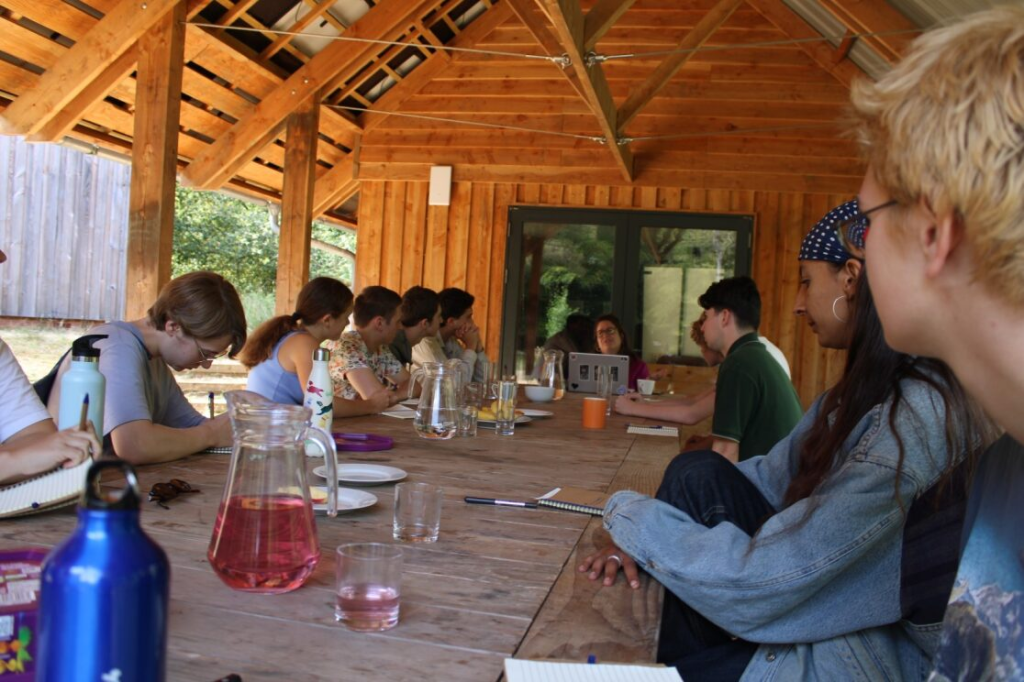
Post lunch, we gathered again to learn from Alicia Hayden and her workshop on Wildlife Artivism in Writing. Alicia is a committed wildlife artivist and conservationist. Artivism is probably a term you’ve not encountered before, but put simply its a way of promoting conservation and raising awareness of environmental issues through creative avenues. Writing is a form of art and expression and so it easily comes under the umbrella of artivism. We looked at several pieces of writing conveying environmental issues through fictional stories, including the script of a Studio Ghibli film, Princess Mononoke, and discussed the nature themes and how they were portrayed. It was fascinating to explore how serious issues were translated in a film aimed at a younger audience – the film covers the topic of deforestation and the conflict it brings into play between humans and animals. On another note, read more about Alicia here.
At this point, the whirlwind weekend drew to a close, and as I packed my bags and said my thanks and goodbyes, I was so honoured to have been able to witness and be a part of such a special gathering of important players in the world of nature writing, alongside the next generation of writers, activists and creatives. I am so grateful for Emily and Andrew taking a chance in letting me attend, I have learned so much from the experience, and have already begun to weave those lessons into my own writing. As we left our weekend woodland home to begin the long drive back to Devon, my head was filled with ideas and plans, and our retreat whatsapp group began to ping with notifications! I had taken so much value from the retreat, so much inspiration from both writers and fellow attendees and I am so grateful for the magic that Emily and Andrew have created. I must thank everybody who made it possible, Emily, Andrew, all the authors, the Cameron Bespolka Trust and the RSPB, I hope I can return again next year!