On a warm Spring evening a few weeks ago, I was sat inside Grace and Favour Home listening to a book talk, organised by Leslie at First Draft Books. The book was of a peculiar title; Black Ops and Beaver Bombing. The former was certainly an unexpected mention for a book on Britain’s mammals, but the second completely showed it up oddity wise. Who’s been bombing beavers? I mean, I know they’ve been a bit controversial with farmers since their reintroduction, but surely this was a bit drastic? Who would hate such a crucial keystone species this much? I can gladly tell you that it wasn’t meant as literal as you might expect, but all will be uncovered in this review of Black Ops and Beaver Bombing by Tim Kendall and Fiona Mathews. Read on…
But, back to the actual book talk, there were at least 30 people in that one room, all intrigued and expectant, young and old settling down to listen to the witty, anecdotal and brilliantly well-presented words of Tim Kendall and Fiona Mathews. They shared readings from the book, wonderfully surprising tales and the pros and cons of the proposed solutions to our scores of natural crises.
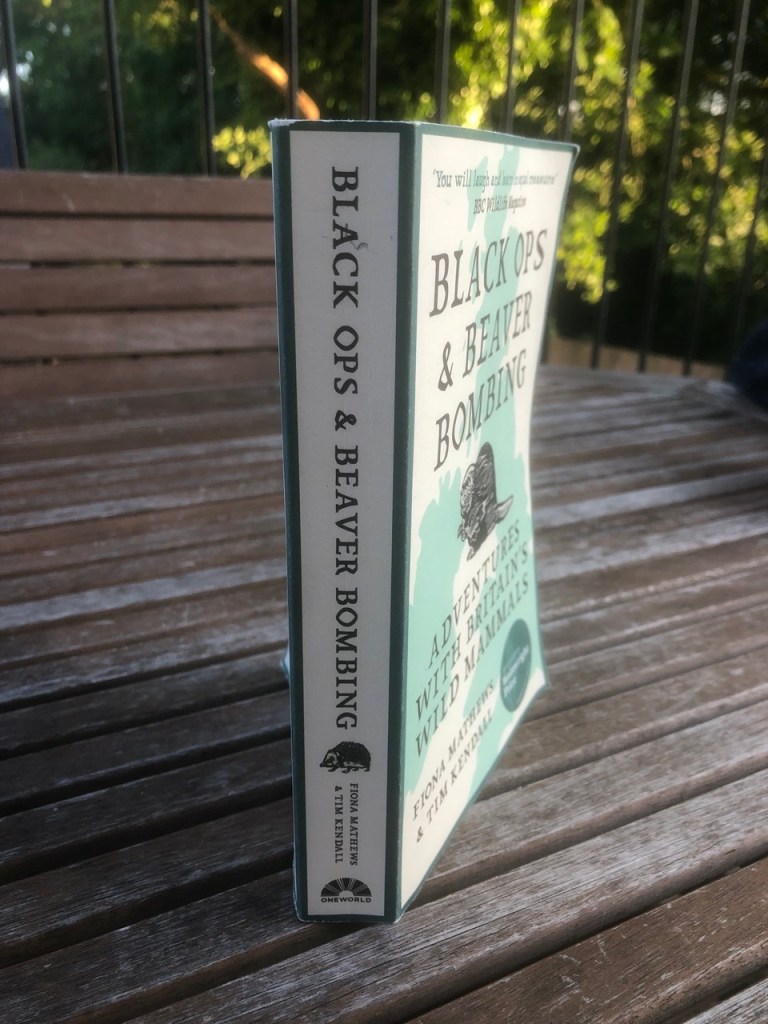
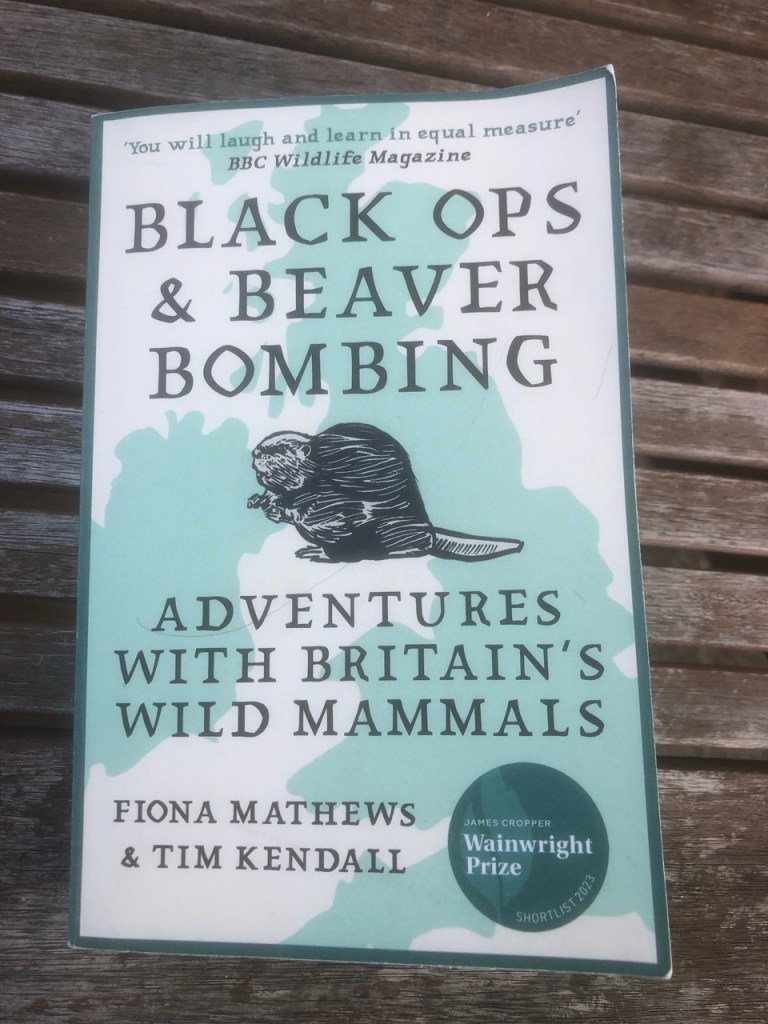
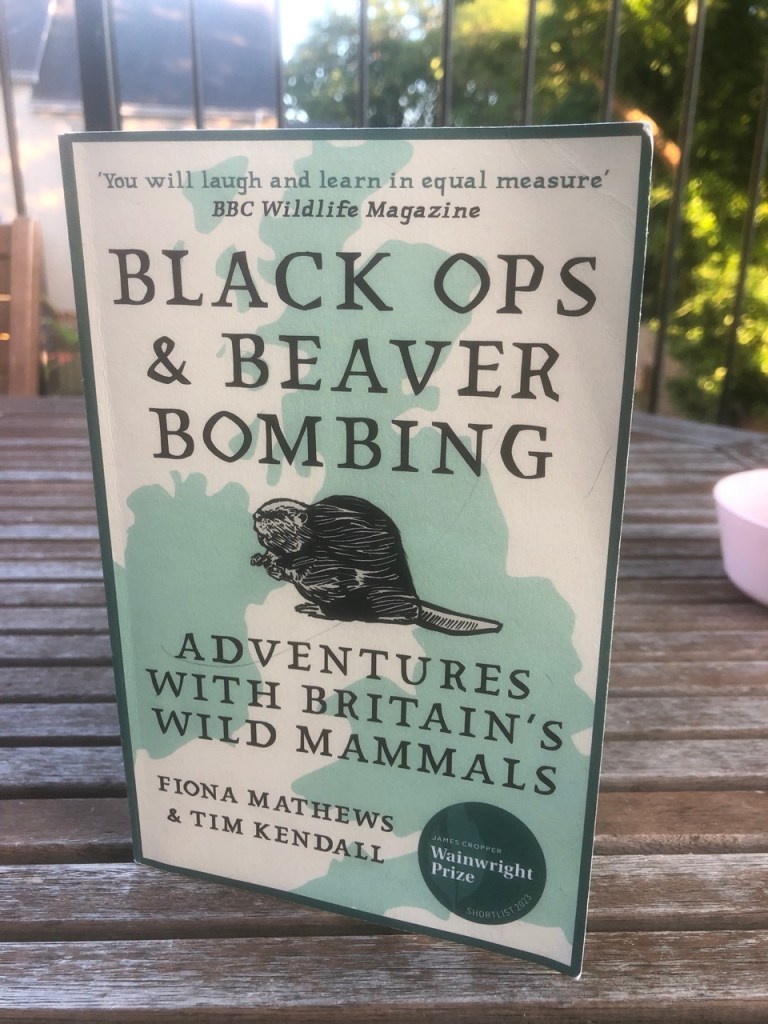
So, lets kick things off with the front cover. A calmingly pale colour palette, together with a flawlessly drawn Eurasian Beaver make for an intriguing beginning, and a map of the British Isles complete with curved edges gives a sense of what the national setting for the Black Ops will be (hopefully not the literal Beaver Bombing!). Its also helped on by a subheading titled ‘Adventures with Britain’s Wild Mammals’. If you haven’t already got my hints, the book is based in Britain.
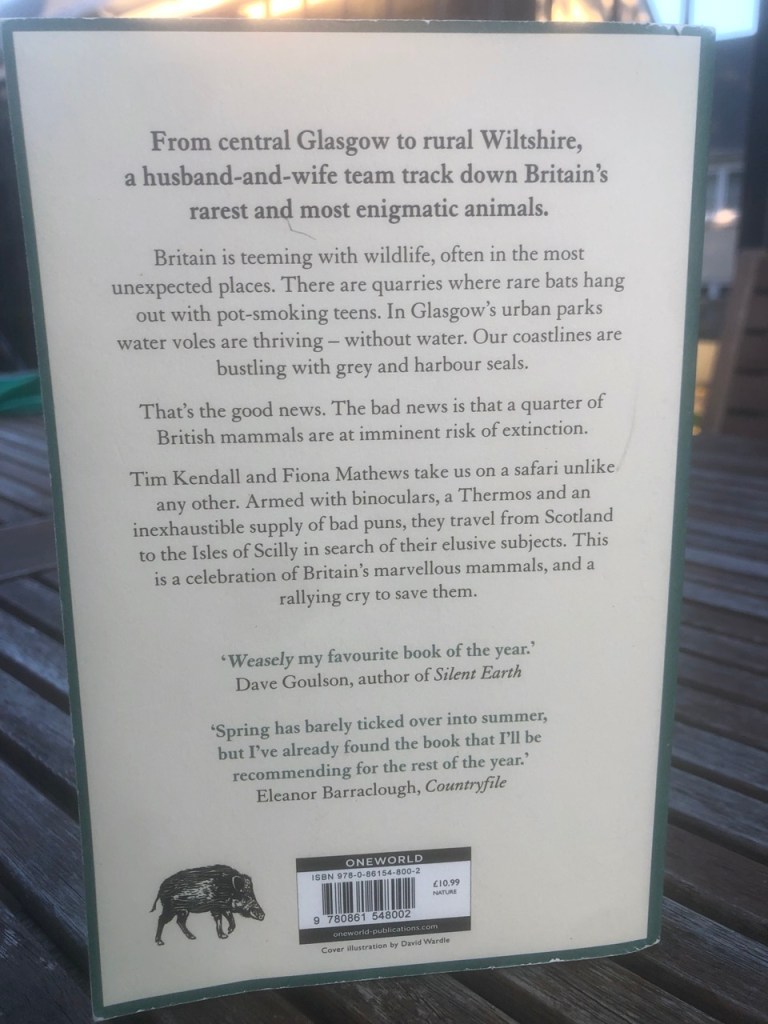
The 10 chapters of the book give detail and factual truths, combined seamlessly with some of the wittiest (and some of the worst) jokes relevant to Britain’s mammals. If you’re looking for cracker jokes, here’s your chance! But, on a more serious note, it really is a beautifully written book, and highlights the impactful and gripping stories, cliffhangers and romantics carved by these animals and our relationships with them.
And this book came out in expert timing, as many of the creatures that have learnt themselves chapters are, in Britain, struggling. Whether its, umm, accidental reintroductions or mass culling to prevent a 0.000001% chance of disease being carried by them, which may also have a 0.00000000000001% chance of being transferable to humans. So basically, we have done a lot of damage over the last few centuries that we now have to reverse.
And now a little segment on the authors. Fiona Mathews is Professor of Environmental Biology at the University of Sussex, and is the Founding chair of Mammal Conservation Europe. She spends a lot of her time advising the Government of various pressing conservation issues, and is also author of their official British mammal census. She had some good experience before writing this book then!
Then there’s Tim Kendall, Professor of English Literature at the University of Exeter (a little bit closer to home), and he also had prior experience to writing Black Ops and Beaver Bombing, as an author of poetry and literary criticism, as well as editing Britain’s Mammals 2018. Him and Fiona live in East Devon, with two daughters, two rabbits, a Labrador and a rehabilitating Common Pipistrelle. And with good reason too, for Devon has many wonderful mammal highlights; the Greater Horseshoe Bat has declined by 90% in the last century, and has chosen Devon and the south west of England as its stronghold. There is also discussion of a new Pine Marten project on Dartmoor, but it just depends on whether the habitat and inhabitant requirements can be met. Hopefully, we’ll be seeing these charismatic creatures make their Devonian return very soon!
But now for the moment you’ve all been waiting for. The exact definition of what is meant by ‘Beaver Bombing’. Well, one of the strangest stories I had ever heard was shared by Tim and Fiona during the talk, and it involved a plane, the state of Idaho and crates full of beavers. In the 1950s, Beavers in the wilds of Idaho were struggling under modern pressures, many of them by human creation.
So, Fur for the Future was launched, an animal translocation project quite unlike any other. Beavers were trapped from various other sites where they were faring well, and were sorted for even size and weight, before being loaded into a plane, enclosed in crates that came with their very own parachutes. The planes were used due to the struggle it would take to get to the release sites on foot or by car. So the craft flew over the release site, which were just as you would probably imagine an American wooded wilderness to look like.
And finally, the crates were dropped, and broke open on impact (they were designed to do this, and posed little risk to its precious cargo). The Beaver would go off in search of its favourite habitat, a river or stream to make its home (don’t worry, they were always dropped purposefully close to these kinds of sites). And that was that; The Idaho Fish and Game Department were doing some good for wildlife, even if a lot of it was for fur and hunting purposes, and the beavers were happy in their new homes.
I highly recommend the book, equally as an enormously beneficial source of learning and a humorously enlightening read. It has received brilliant praise, and quite rightly, as it is a simply wonderful book, a ray of light on any shelf. I also recommend taking into account the wise words of these two, as they sure know what they’re talking about when it comes to expertise in the area of Britain’s, and indeed the world’s, mammals. Enjoy the book!

