We awoke early on our final full day, a grey but dry Wednesday morning ready to welcome us. Unlike previous days, breakfast was a bit more of a feature in the day, with a few special encounters coming to call. So as we prepared for the morning’s outing to Spey Bay, we reflected on the last four days. It had truly been one of the greatest experiences of my life, with all that time spent either out in nature or with those whose passion is for nature. Nothing could’ve torn me away from it!
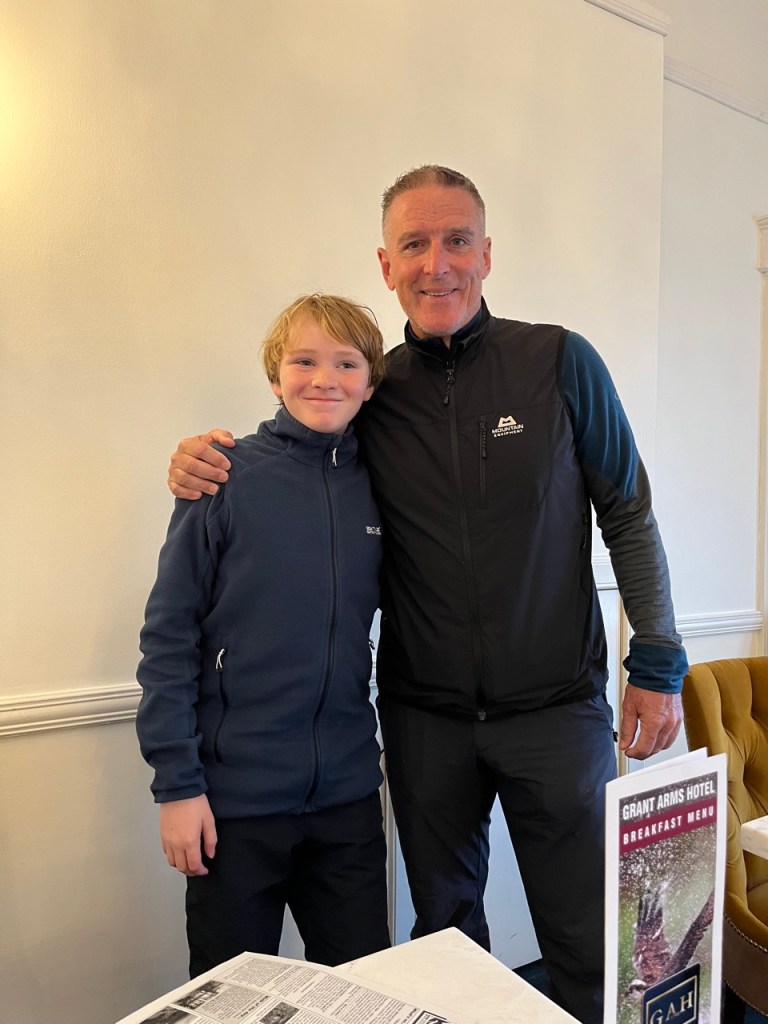
And now, back to breakfast. We’d just sat down when over came a certain Iolo Williams, whose guided group had last night visited a nocturnal hide, in search of Pine Marten and Badgers. We exchanged details and sightings from the previous day, and it was a really positive, if brief, talk, and it was incredible to be able to talk so casually to my childhood idol. But it wouldn’t end there. The next meeting would be with somebody who had played a huge role in making this all possible, and I had first met him at Birdfair on the hallowed Grant Arms Hotel stand. Simon Pawsey, of course, needs no introduction among Bovey Birder readers, but just in case you’ve been forgotten, Simon is an incredibly knowledgeable individual, who guides birding trips across The Highlands, and is rather clever in his methods, knowing all the tricks of the guiding trade. He also runs trips for the Hotel, and this week was out with Iolo’s group.
We discussed plans for the day, and recounted our previous Eagle story to him. And then he asked if we had seen the other famous Scottish species, the Golden Eagle, which of course we hadn’t. Suddenly, Daddy was sent off to retrieve our map and I was whisked over to the table of Iolo and his group, which was in the midst of breakfast. It was really quite incredible, and it all happened pretty quickly! One minute I was chatting with Simon, the next I was sat at a long table with Iolo Williams as its head! But all too soon, Daddy returned (he spent too short a time rifling around our room) with our large-scale map, and we played it out on a spare table. Simon proceeded to mark out two of the best sites in the area for Eagle-chasing, as this was our last day, so we could check some of the sites out before we flew back to Devon the next morning. Dorback Lodge became our next target, and it would yield great things in the next 24 hours. But first up was a quickfire trip to Spey Bay, alongside Dawn and Pete.
With little time to spare, we raced along the lanes for the hour to Spey Bay, and as we rambled through the little holiday town, memories of the Monday returned, of Osprey watching and Diver dating. On our arrival, the two leaders for the morning were up on the hillock, scanning the shingle streaked mouth of the Spey, for anything new that might have turned up. Before we get into this however, you need to understand the level these two were at when it cane to spotting birds. Years of experience and knowhow meant they were really a bit of a dream team, and the ability to find so much, not just skim the surface of the species here, was uncanny!
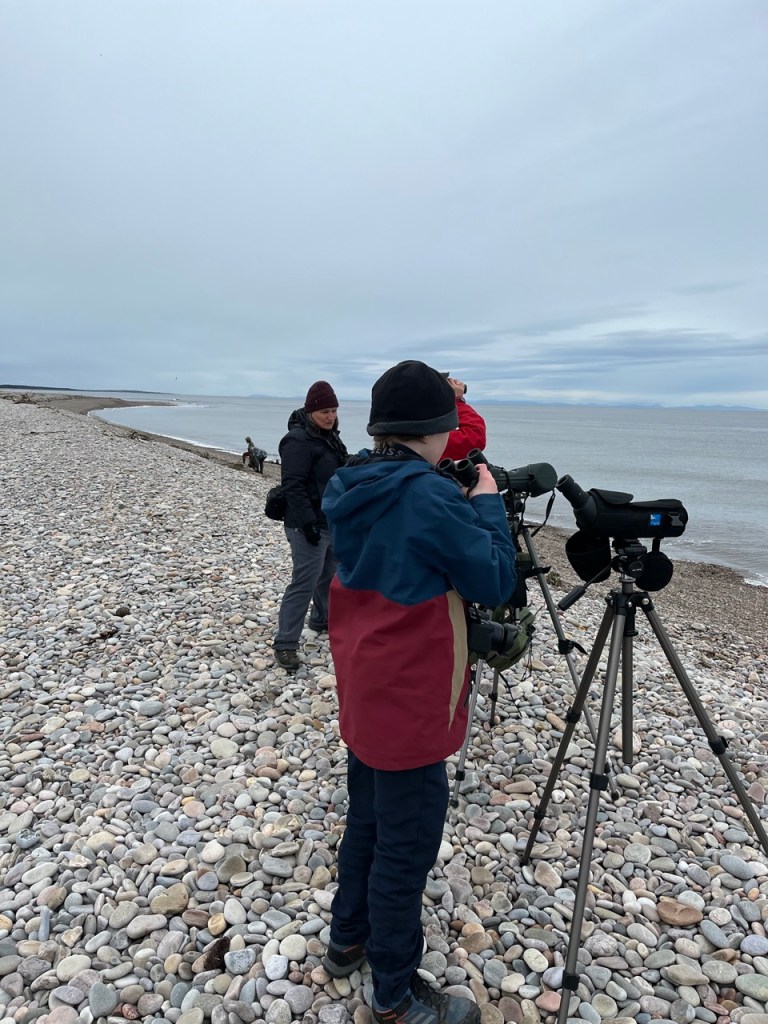
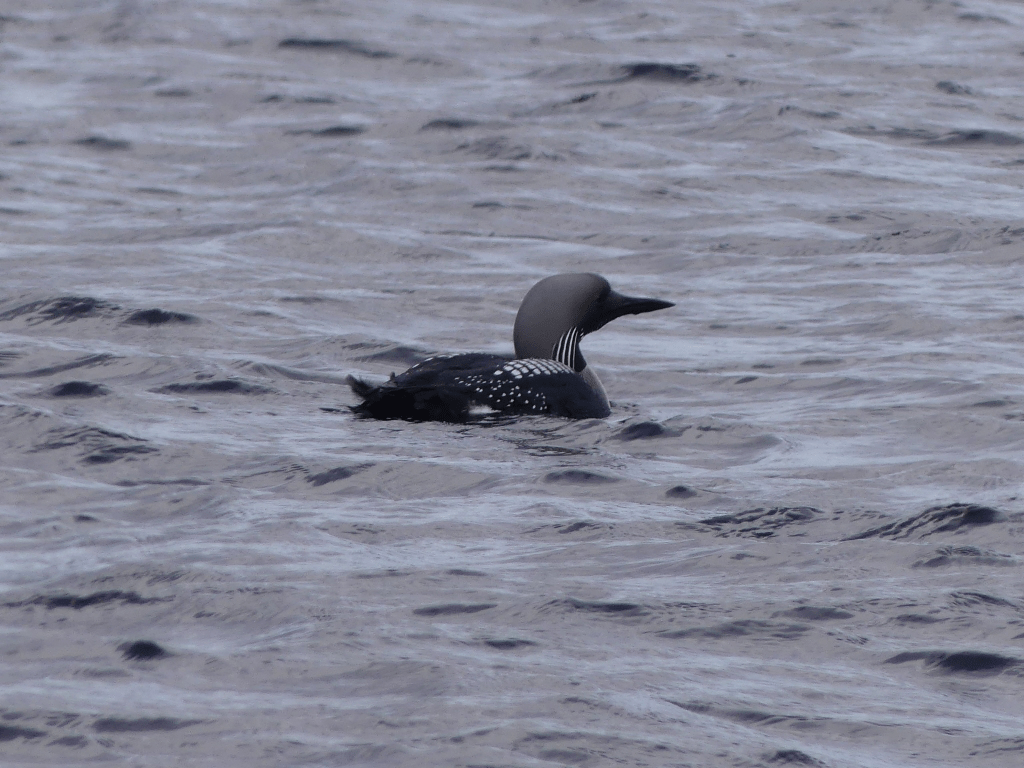
A high count of six freshly in Common Sandpipers kicked off the morning, and our guided group moved swiftly onto the beach, the pebbly ridge separating us from the sea a perfect vantage point. The choppy waves proved more productive than you might have expected, with all three diver species to begin our North Sea search, that is Black Throated, Red Throated and Great Northern. The birds are known as Loons in America, which is understandable, as their breeding attire does seem like something to come straight out of Cbeebies’ Mr Tumble! What was most surprising however, was the sheer numbers; 13 Red Throated alone, in this one stretch of the Moray Firth!
Another unexpected lifer, which I honestly had not given any thought to, was a lone flyby Black Guillemot, one of the smartest and dapper birds in the British Isles. Perfectly piebald, jet black and snowy white feathers gleaming against the dark skies. Everywhere we looked something new cropped up; Red Breasted Merganser, a ruffled Cormorant, even a plummeting Gannet! Variety sure is the spice of life!
After a quick check down the woodland path, we said our farewells to Dawn and Pete. They are truly incredible people, and sure know how to get a good morning’s birding in! I’m sure you know by now from previous blogs, but Dawn is Head of Surveys at the BTO and Chair of the Rare Breeding Birds Committee (RBBC). Following a tipoff on potential Corn Buntings, we snuck down a farming lane with no luck, and so we headed off for a rapid lunch before driving along some rather wild roads up to another, more remote tipoff site, Dorback.
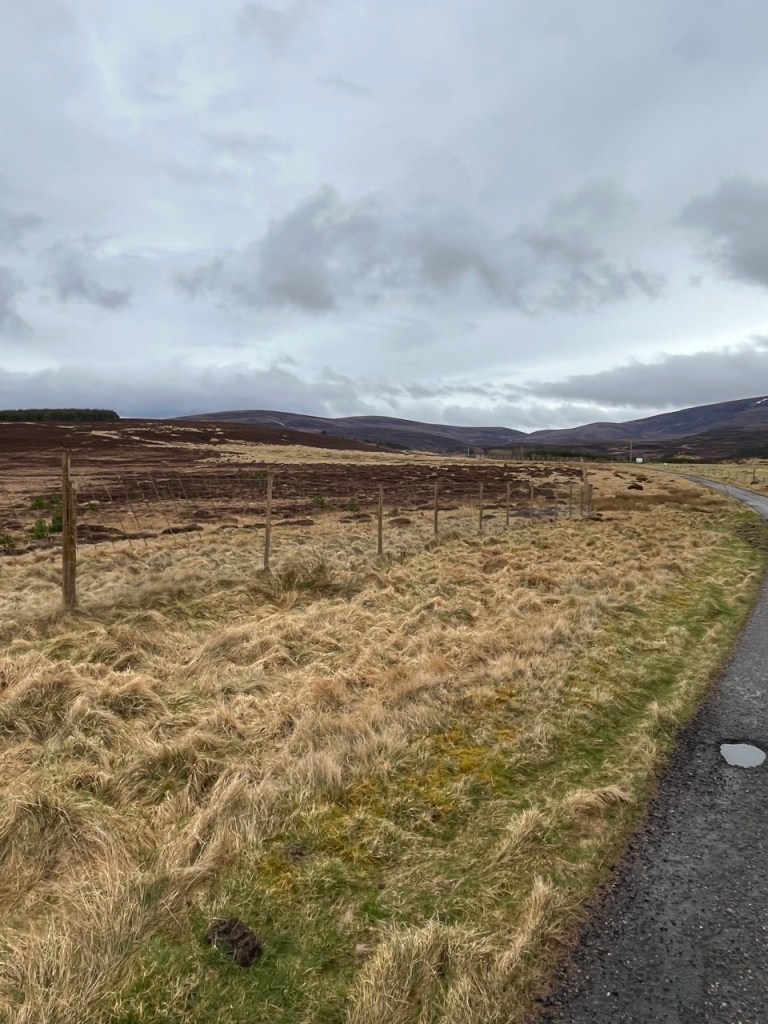
We pulled into an overgrown layby, and shivered in the cold gale determinedly as we scanned the skies for sign of life. There was little sign of human intervention up here, and it really felt like the wildest place I could reach within my current circumstances. The road ended within a few hundred metres, and a weathered deer fence ran alongside us, with the heather culminating into a ridge crowned with a young Scots Pine woodland, not planted within a plantation’s boundaries, but naturally spread out, young and regenerative. This was the kind of woodland that logging plantations could not replace, and this was also the kind of woodland that proves to support the most life.
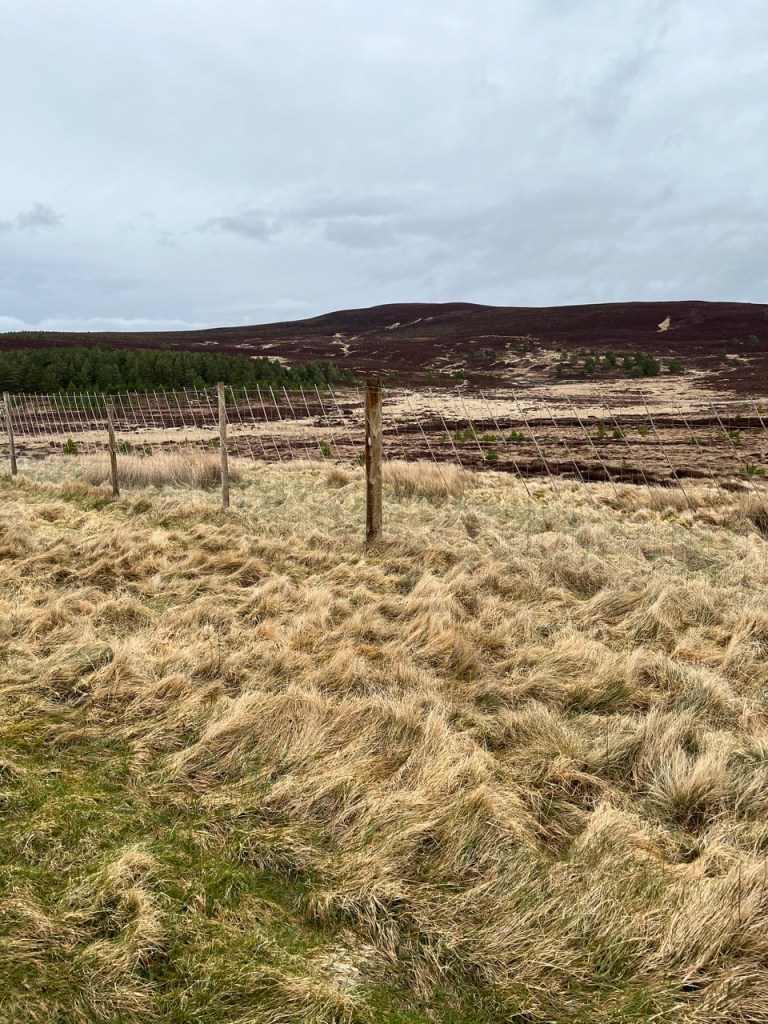
Suddenly, it all kicked off with four Buzzards rising above the ridge, mewing and giving chase to each other. A territorial encounter, it seemed, with their cries audible from open car windows. But the real fun was yet to begin (I know!). The wind was bitterly cold, streaming against our bare faces, but it would all turn out to be worth it, we just had to stick around.
And our patience paid off when a large gull-like raptor, M-shaped wings prominent against the blue, glided low overhead, black and white contrasting through the binocular lenses. As you’ve probably already guessed, an Osprey flew directly above us, magnificently majestic in Scottish skies. And then another joined it, coming in east over the a spruce plantation. They circled together, each equally unbothered by the other’s presence. And in came a third, as if it was the most normal thing in the world, joining the circling spiral vertically up from our craned necks.
And this was getting scripted now, with a FOURTH OSPREY entering our eyeline, calling out to its counterparts. His attraction was apparently great, as they all migrated over to the newcomer. But that wasn’t the end of it. Now a FIFTH bird (honestly!) put in an appearance, joining in with no reaction from ther other birds. What had we just witnessed? I had heard nothing of this sort of thing thus far in my birding adventures, and this felt as unprecedented as it was unexpected! By now they were all calling repeatedly, sometimes a rapid succession of whistling chirps, and sometimes a simple high pitched whistle. It fitted this bird’s majestic profile almost perfectly, not harsh and cawing like other raptors.
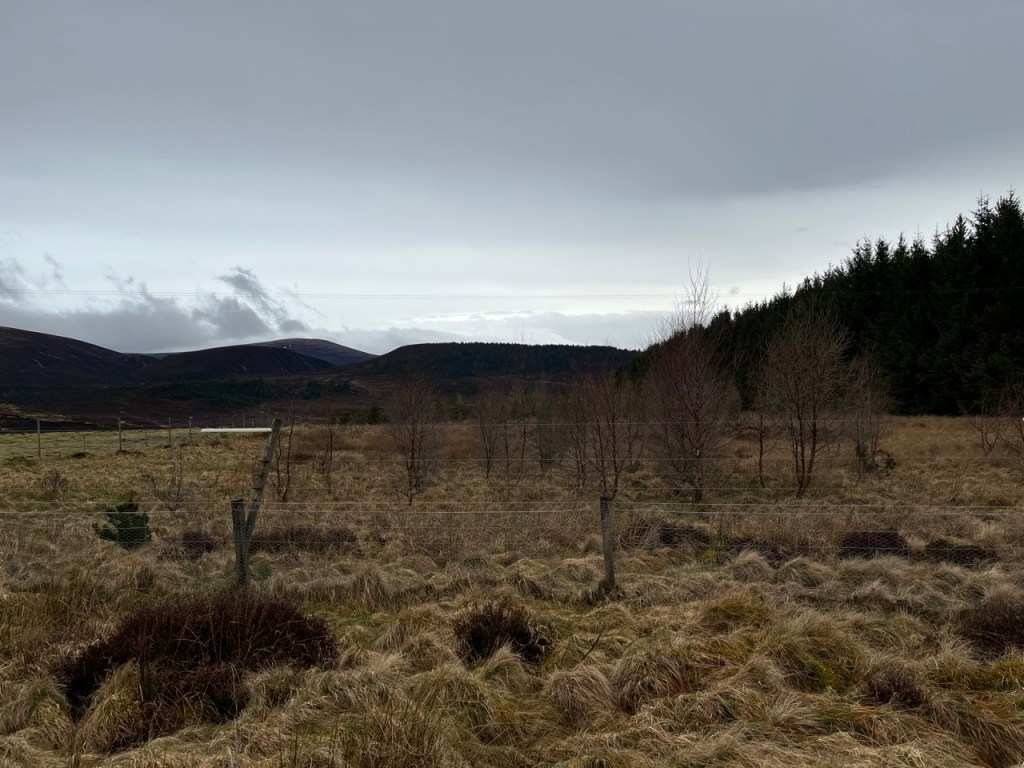
The wind by now was howling with vigour, and we crouched beneath the boughs of a small section of spruce, when a static electric trill ground into our eardrums. Both Nick and Will had alluded to the Crested Tit’s call fitting exactly the description I have given you, and the call which we heard at that moment. However, the trees were planted so close together (as this was a section of plantation) and the branches so thick with dark khaki greenery that it was hard to make out anything.
The visit was topped off by something else a little special, with a brief glimpse of a young Hen Harrier dipping beneath the ridge. Hen Harriers are persecuted highly across the UK, but with new science suggesting Scottish numbers are steadily on the increase, this raptor’s fortunes may just be swaying to the right side of the pendulum they have so unsteadily existed on for decades.
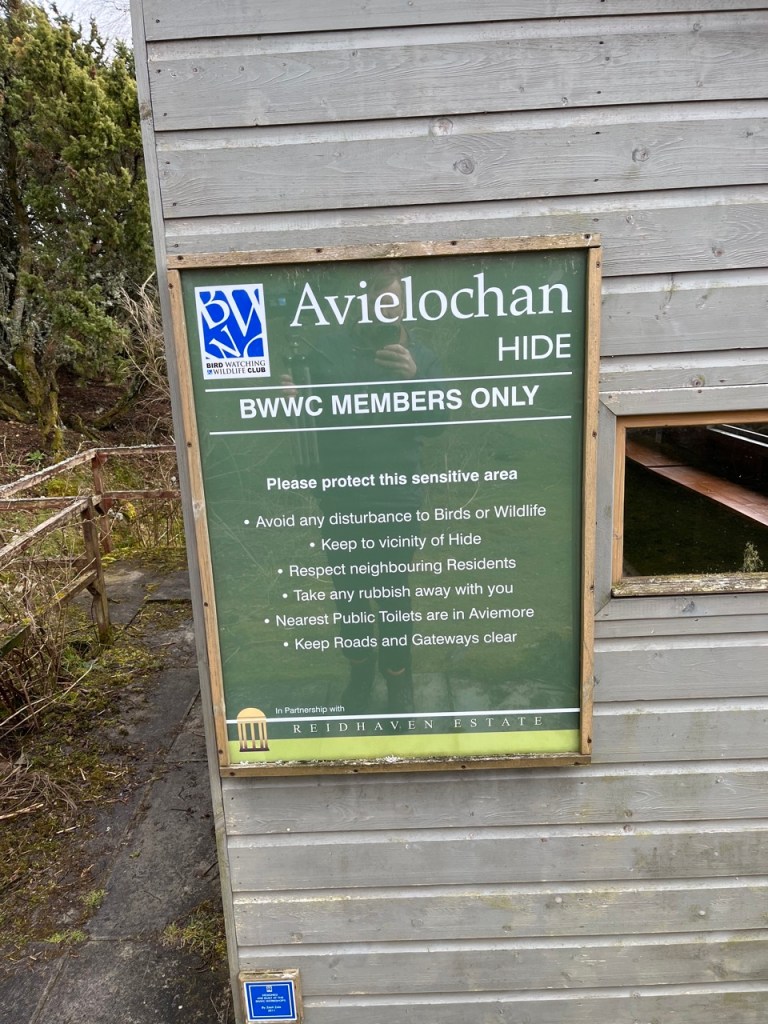
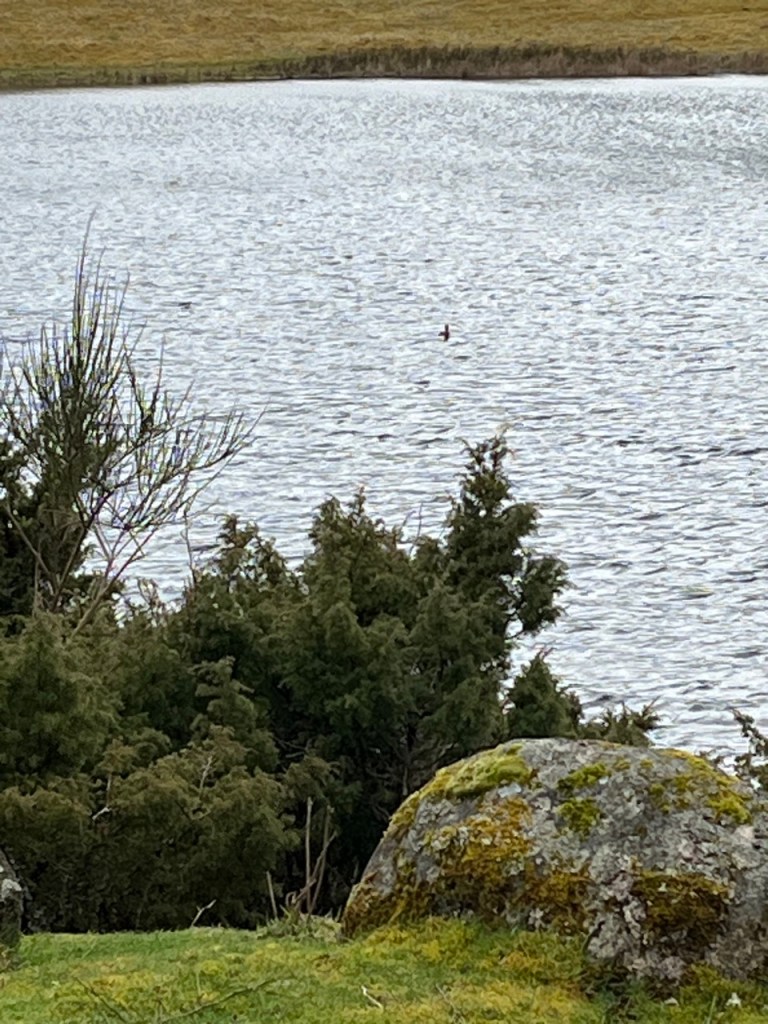
Our final stop of the afternoon would be Avielochan, a small lake that features Slavonian Grebes each year, beautiful richly coloured waterbirds, complete with macaroni crowns, crests and eyebrows. They truly are decked out, and treated us to some incredibly close views from the banks. These birds are among Britain’s rarest annual breeders, and are restricted to just a handful of Lochs across the Highlands, as are many species these days. A wonderful last hurrah, and with slightly heavy hearts but no regrets, we drove the short way back to the hotel.
But there was one last thing we had to enjoy that night. Directly after dinner, we funnelled into the Osprey Suite for the last time, taking the three successive rooms (Club Room, Library and aforementioned Osprey suite) in for the final time in a while (we will be back!). Dawn’s talk that evening was an A-Z of British Breeding Birds, describing the populations of one bird species for every letter of the alphabet, based off the latest BTO British Bird Atlas.
The bird atlas is a set of surveys completed in both the winter and breeding seasons, in order to provide accurate information for all Britain’s species. These take a number of years to compile, and the last one was in 2007-2011, although the BTO are planning to do another one in the near future. Dawn, as head of surveys at the BTO, had a big role in the completion of the atlas, and I think we are all rather grateful! We said farewell to everybody after an intriguing talk, and set off to bed again, for what would be the final time at the Grant Arms Hotel.


We really enjoy your blogs Henry, see you soon.
LikeLike
Thanks, hope to see you soon too!
LikeLike
Oh Henry,what an amazing time you have had in Scotland,the area has provided you with such wonderful opportunities and experiences and so many lifers.It’s truly inspiring to read your accounts which are so informative and make the reader feel part of your adventures.So many fantastic memories have been made for you on this trip and I hope you do get to revisit,maybe at a different time of year? Many thanks for writing these wonderful articles.👏
LikeLike
Thank you so much, hopefully see you soon!
LikeLike