
Vehicles rumbling along the narrow lane and across the bridge were few and far between, and as we got out of the car, the sound of fast-running water was loud and prominent. But somehow managing to make itself heard over the monstrous river, a high-pitched tsee sounded from above us in a spindly willow, with few leaves, making for an easy, unobstructed observation. It was joined by a young Blue Tit, yellow on the face, whereas an adults would be white.
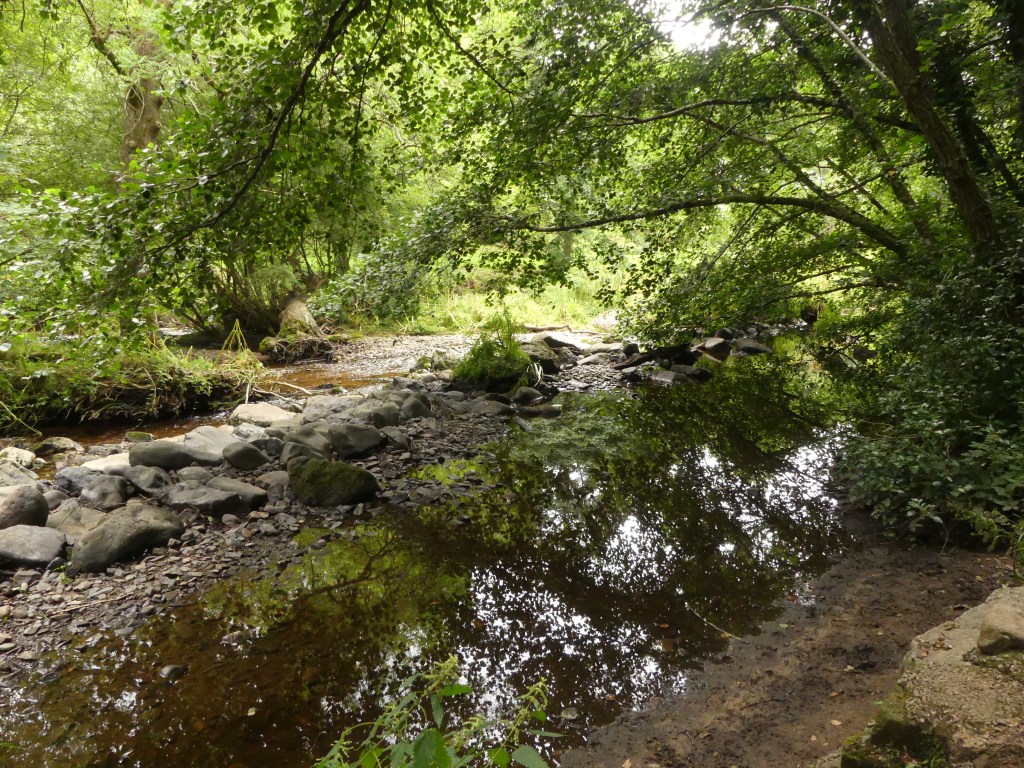
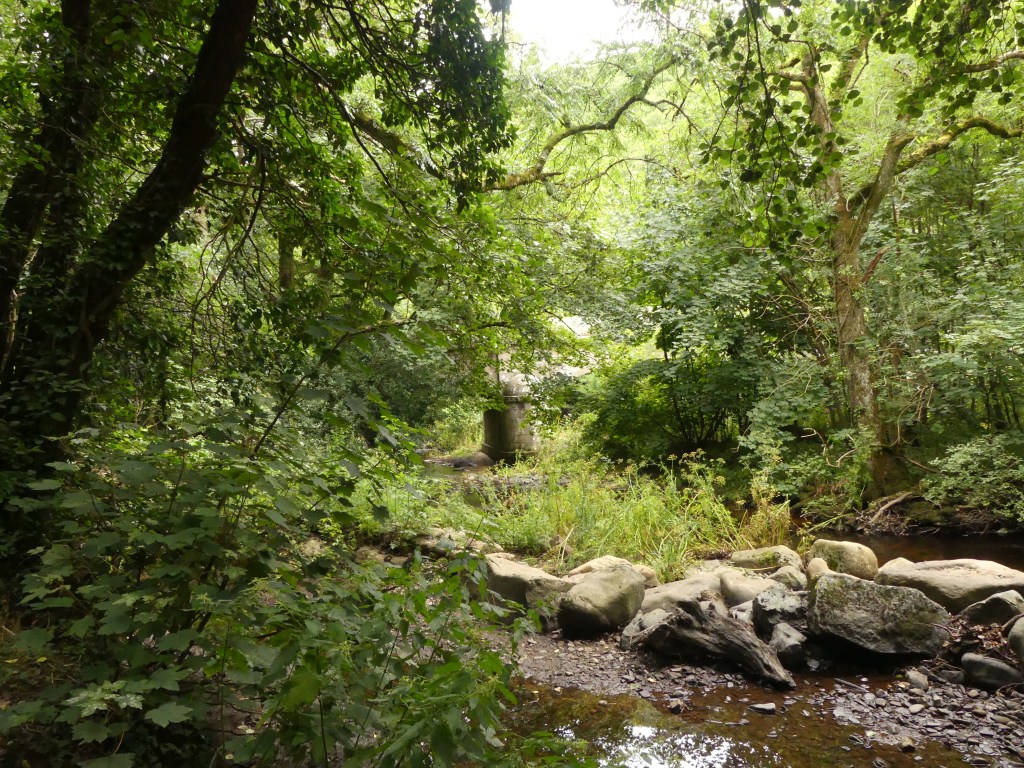
The path into the wood was wider, but narrowed out as we came alongside the river. At first glance, Dunsford Wood seemed a perfect, natural paradise, untouched by humans. However, signs of modern management and historical use were evident, such as a floodgate, for agricultural uses. The river was roaring here, with white water flowing violently over treacherous rocks, barely protruding from the water.
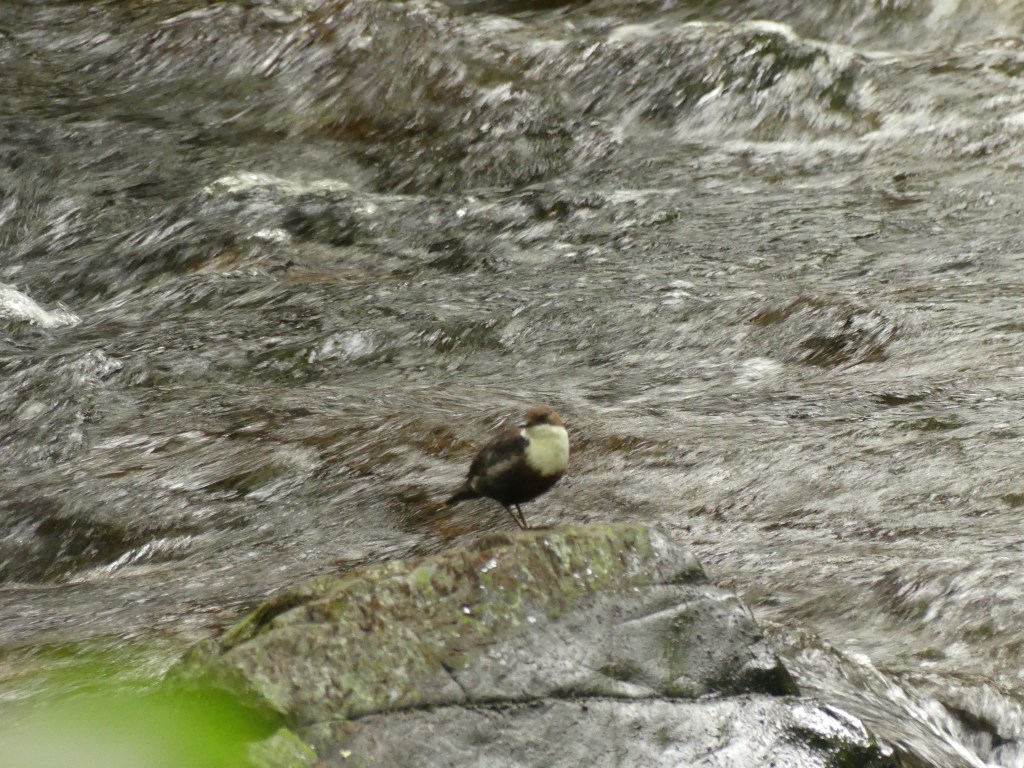
And fast-moving water is perfect for one special species. They were all over the sign at the entrance, all over the recent sightings here. The Dipper. And we had barely walked for 5 minutes when a small brown bird was spotted flying rapidly upriver and coming to rest on a slimy, slippery rock, constantly being attacked by the River Teign. It was chocolate brown, with a stark white breast. This was a Dipper, bobbing up and down with respect to its namesake.
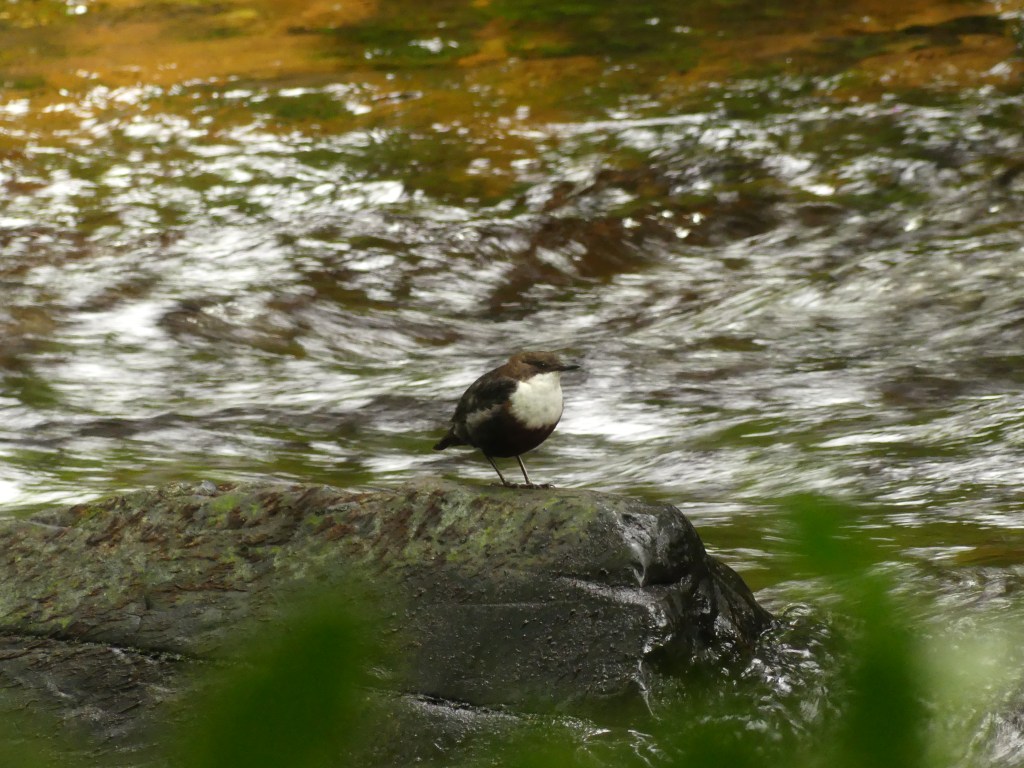
I have never managed to photograph a Dipper, but I swear before this encounter I had never taken so many photos of an individual bird! I must have taken at least 30! But the raging water behind it made for the perfect shot. We continued up the dusty path, interspersed with roots and stones. The Dipper came flying up again, and the routine was followed to the letter! Locate, crouch, photograph. The thing is though, this might just have been the same bird! We were in such close proximity to the last sighting that it just made sense! Dipper, Dipper, Dipper.
We kept eyes and ears open for Kingfishers as well as we made our way along the river, occasionally stopping for a drink and a biscuit (courtesy of Daddy) on the benches placed at strategic positions along the riverbank. You could see why Kingfishers would make their home here, as there was definitely fish in the river, and there were many nooks and crannies in the exposed far bank for nesting sites. We didn’t end up seeing a Kingfisher, but some of the scenery we witnessed along the way was brilliant.
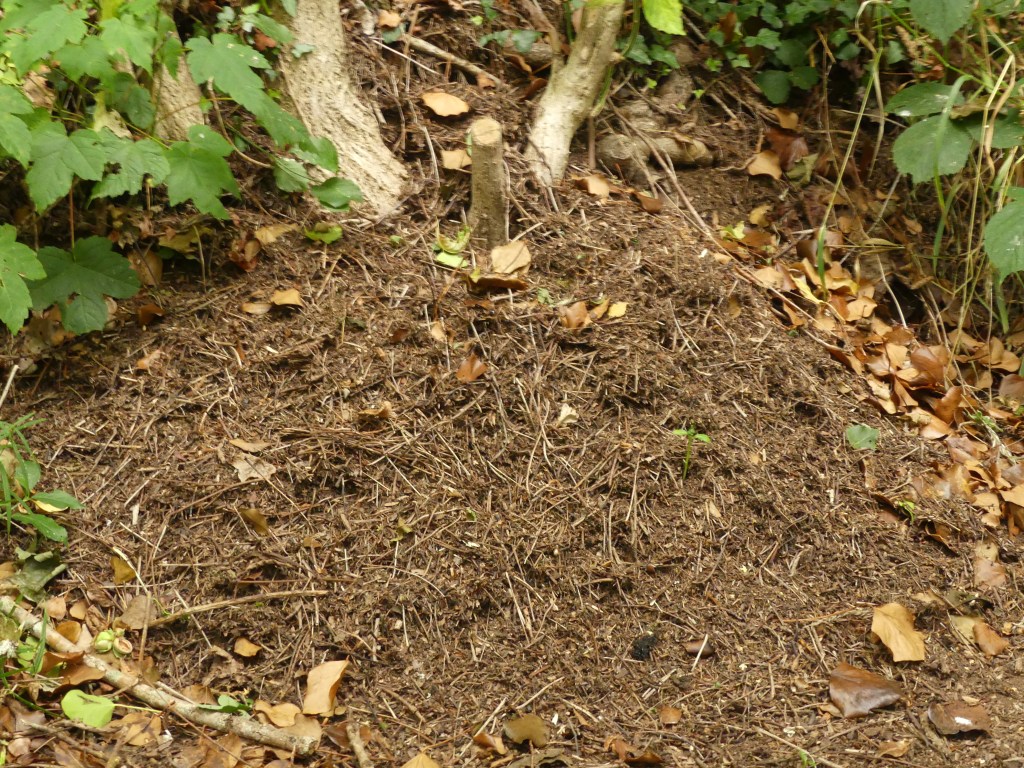
And there were also some giant ant nests…
The story was the same for a while, until we came to a shockingly steep incline that led up to the top of the valley. We are just stood down at the foot of that hill, wondering whether to take it on or continue down along the river. But Daddy talked of a viewpoint at the crest of the hill, so we started on up. It was the single steepest slope I have personally ever climbed. Starting off straight, but then winding off into the valley walls, evening out but then surprising you with yet another incline. There were dips as well, but these were shallow, and all the time the river and the path shrunk smaller and smaller below us.
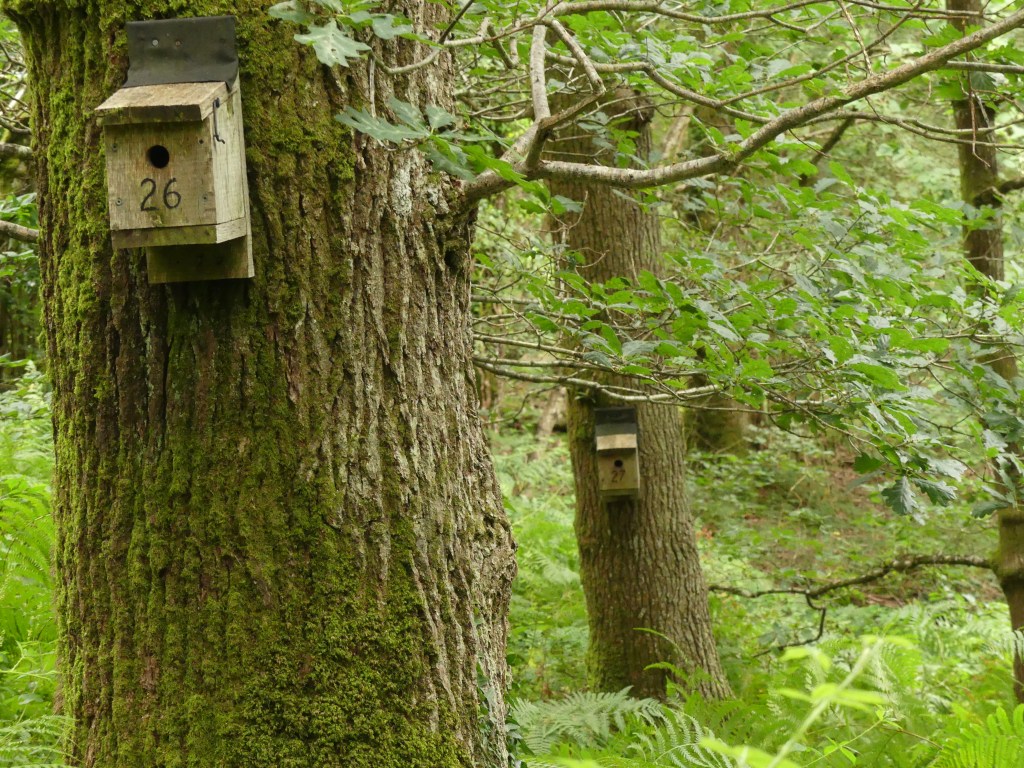
But from up here, you could see the effects of coppicing and management. All the trees on the side of the valley were the same age, many of the trunks almost identical. Many of them the same shade of brown, many of them with similar numbers of branches and leaves. There is, of course, nothing wrong with this, but for woodlands to support the maximum population of nature, you need a variety of tree ages. But distractions from this were common. Many nest boxes were placed in these trees, and it made me wonder: how on earth had people somehow got halfway down the crazy steep, crazy high slope, carrying nest boxes and things to put them up with (equipment), and then got back up again? It was certainly quite the achievement.
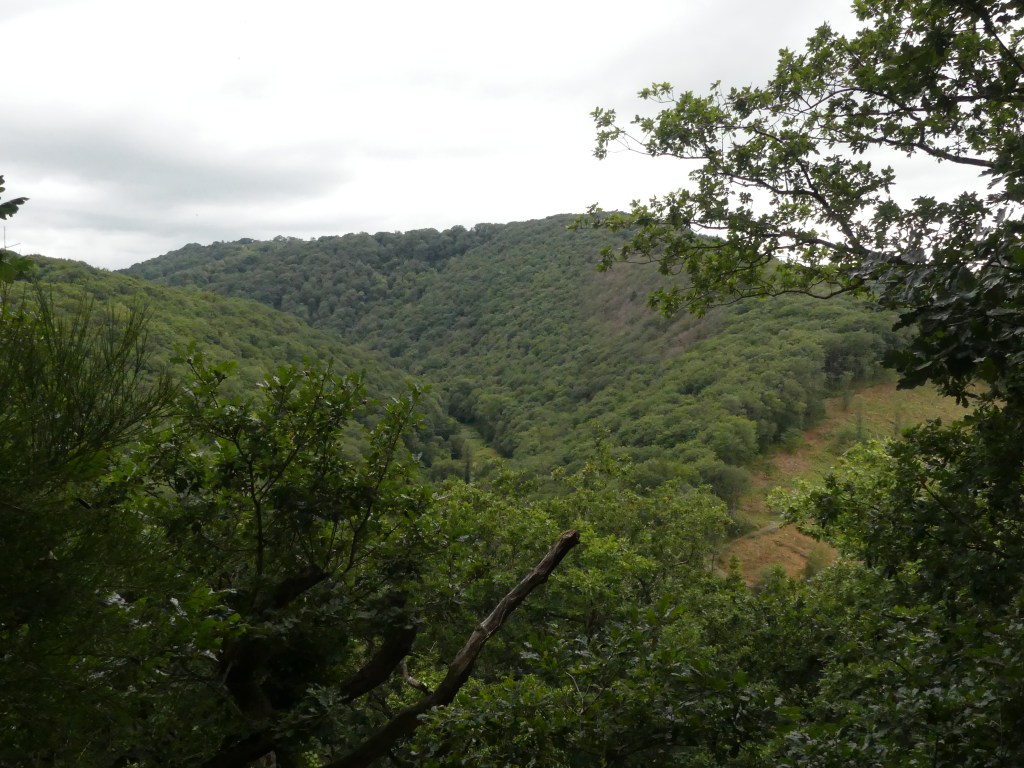
Eventually, we came to the viewpoint. And the view was absolutely breathtaking! A bench with (of course) a Dipper engraved on the side provided the perfect vantage point to stare out across the valley that held the River Teign. And something that had been calling all afternoon, finally decided to put in an appearance. A young Buzzard, partly obscured by the tree cover, glided past, before doubling back and swooping lower into the woods, all the time mewing its famous call.
We sat in awe for about ten minutes more, before deciding to press on along the final stretch back to the car. What goes up must come down, and surely getting down the valley was easier than getting up had been?
Answer: yes, it was easier. The paths were a little better and less steep as we cautiously walked down the valley. But just as we disappeared under the trees again, Daddy called me back. Around 10 small birds were flitting about above us, one slightly bigger than the others! Most of them were Goldcrests, and their calls betrayed them further. But Daddy said he recognised the other bird as a first for my British list. A Spotted Flycatcher. We caught brief glimpses of it, but only fleeting views until it eventually moved on. It had appeared to be rather agitated by the Goldcrests, and seemed to attempt to chase them away. But it was a really cool encounter, and great to see.
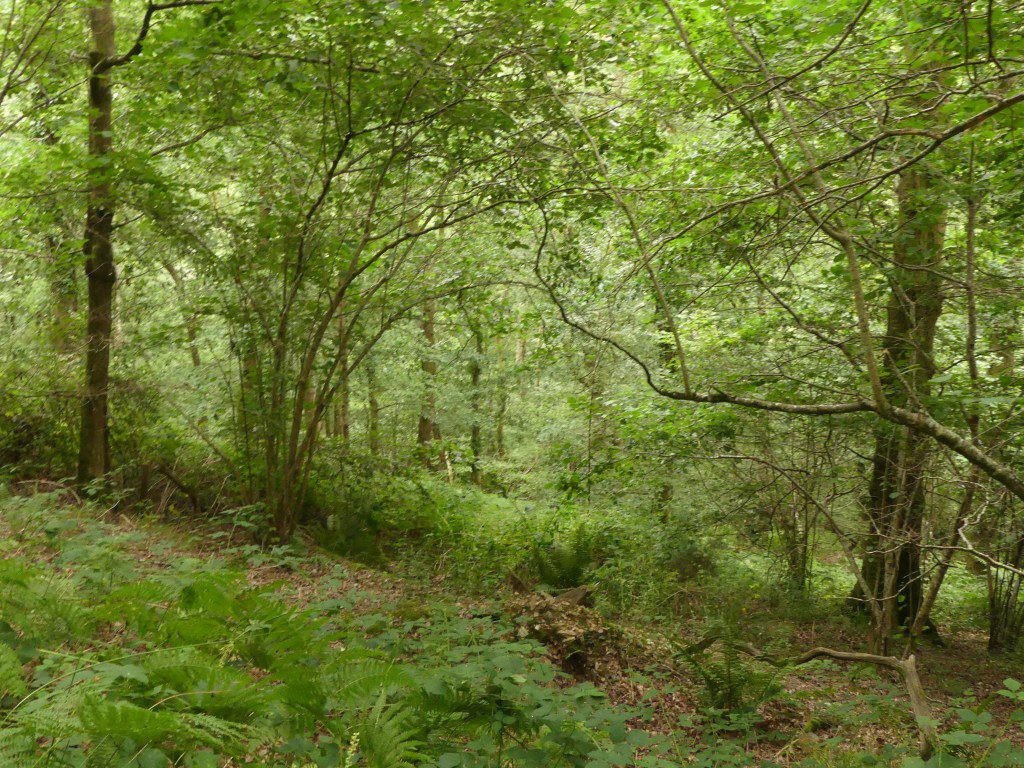
We continued on, and that would prove to be our final sighting of the trip as we came to the foot of the hill and the car. It had been productive, with some great photograph opportunities, but on top of that all, a great birding spot.

