
The gate creaked slightly as it was pushed open, and our feet almost made no sound on the wood-chip covered path. The sun was low in the sky, and it was around 5:00PM. Flies almost ate us alive as we walked down the side of the valley, towards the brook at the bottom. The path was steep and fun, and the water grew ever louder. A Great Spotted Woodpecker chirped above us, and a Blackbird called from the undergrowth, but the choir was minimal as we continued on, many of the quieter sounds drowned out by the thunderous stream.
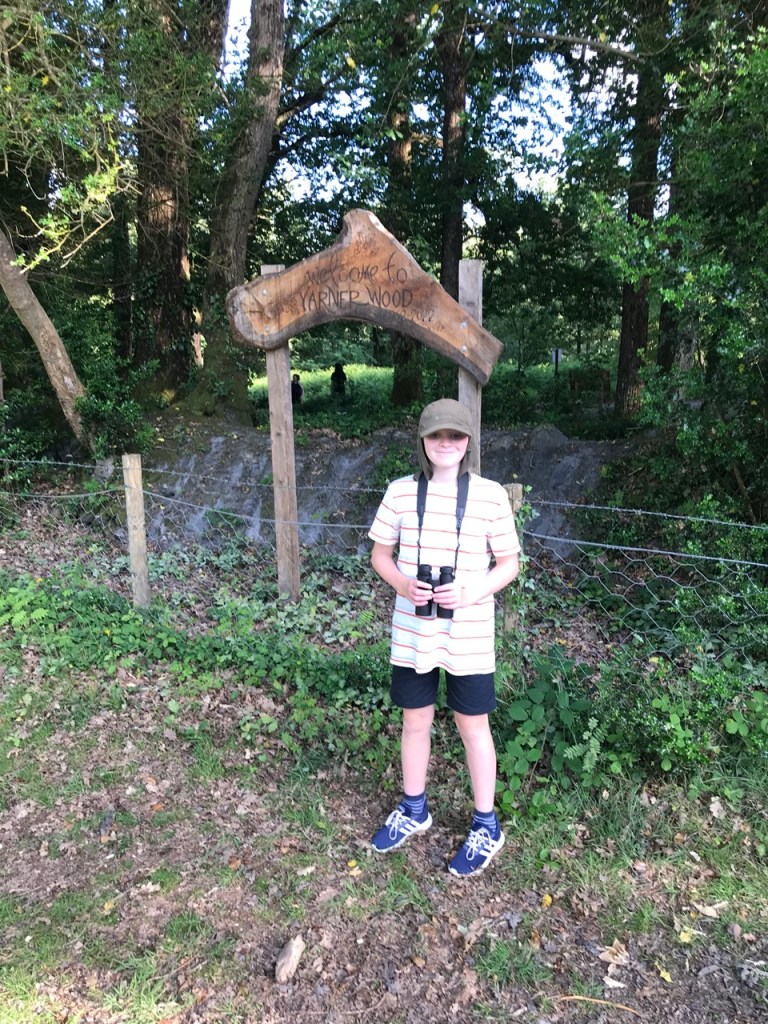
We all tripped once or twice before we reached the flatter, more even track at the heart of the valley. A Blue Tit hopped about in the boughs of a holly tree, making little noise thanks to the restless gush beneath it. At this point, the stream was spanned by two bridges just 10 metres from each other, each with a railing on one side and wire mesh coating the wooden boards that made up the floor. We crossed and began heading slowly up the other side of the valley, this one less steep and with better routes. We stopped for a breather on a carved bench, and scanned the woodland around us with the Merlin app, which could identify any bird by its calls. It could become confused, however, as it befuddled itself into thinking a particularly crunching set of footsteps was the hiss of a Mute Swan. But it did correctly pick out both a Goldcrest and four Goldfinches. I highly recommend this app, free on the App Store.
The path up the side of the valley led us further away from the car, and the sun was always getting lower; gradually, but all the time declining. So we headed back down into the valley, and decided to check out the open heathland that cloaked the hill on the other side. We stumbled upon a bustling Wood Ant nest while on our way, and watched as they scurried across the wood-chip, and sometimes even over our shoes, as long as we kept still! And still the flies assaulted our bare arms and legs, and I think we all realised we should wear longer clothing when we visit these sorts of places.
We came out onto the hill, and the breeze was chilled and refreshing. A few Gatekeeper butterflies fluttered about the gorse flowers, along with a glorious Red Admiral. I was watching the horses in the distant field when Daddy shouted and pointed upwards: a Jay glided low over the heath, before disappearing again and being lost in the woods. Suddenly, a cheep and a chirp floated towards us on the wind, repetitive and tuneful. A roaming finch flock flew lazily across the gorse and the heather, mostly made up of Goldfinches, with some of the younger browner birds, mixed in with the pristine adults. But on closer inspection, some of them seemed to have a bit too much red…
Four Common Linnets ate happily with their finch family counterparts, occasionally alighting on a twig to sing its heart out to the evening air. The rich golden brown on their backs blended perfectly with the stark contrast of the red breast and forehead. Linnets were not birds we saw often, and always a real treat. They are birds that rely on farmland in winter, feeding in mixed flocks on the seed stubble. It was also once very popular as a cage bird, thanks to its tuneful song. However, it has declined in the UK by 57%, and is currently red-listed. Great to see, though. And then yet another song sailed into our eardrums, until they were fit to burst! A Willow Warbler actually sat in a spindly Willow tree, warbling and trilling with its muted yellow and green friends. One of these seemed a bit scruffier than the others, and had a completely different call, not to mention being a smidge darker and browner than the others. This was a Common Chiffchaff, with possibly one of THE most famous calls in the UKs avian fauna, a repetitive cheep-chirp-cheep-chirp.
And then we were strolling quickly back to the car as the sun declined some more, and we drove off down the empty lane into the evening sunset.

