
We had previously met Pere Tomas on a chance tour of Albufereta, back before the Pandemic. It had been 2019, and we had spent a memorable evening birding. He was absolutely brilliant, his knowledge perfect, and if there was anybody I would choose to go out birdwatching with, it would be him. And this time around, we met again on the penultimate day of our stay. The arrangements were made, and we were off! Please enjoy this account of our trip.
It was 7:00 when a black car pulled into the villa driveway. We stood waiting under the porch, rucksacks crammed with essentials. We greeted each other. We (somehow) remembered each other from four years ago, and knew we were in the hands of an incredible local expert. It was around a 20-30 minute drive to our destination, and Pere heartily quizzed us on where we were going, and talked with Daddy in the front of the car.
We were heading to Son Bosc, on the fringe of the great Reserva Natural de sAlbufera, one of the most prominent and crucial reserves on the island. You cannot access Albufera from Son Bosc, but this lesser known site is one of the best Bee-Eater hotspots in Mallorca. The land, close to a working quarry, was once a beautiful habitat, filled with sand and soil mounds for the Bee-Eaters to nest, and luscious green spread all around (Pere asked us whether we had ever seen the Bee-Eaters, and of course we replied no). However, this all changed once the land was bought by a local hotel. They hoped to receive planning permission to turn Son Bosc into a golf course. This sparked uproar among the islands nature communities, and they fought against it. However, before they achieved planning permission, and despite the outraged cries all around, the hotel came in and flattened the entire thing.
Luckily, the golf course was never began, thanks to the efforts of people including Pere. But the damage was done. The mounds were gone, and in many parts industrial debris was scattered among the habitat. But many birds still remain, and just then the car turned down a dusty track with overgrown fields on one side and the quarry on the other. The vehicle came to an abrupt stop, and Pere lowered all the windows. He explained that the surrounding fields were a good spot for species such as Theklas Lark, and Corn Bunting. However, our first spot of the day was a Stone Curlew as we trundled gradually down the lane. Against the rich brown of the ploughed field at the end, it was incredibly hard to spot, except for when it moved around the fringes. And, just as we watched this, a Woodchat Shrike flew in to land on a towering conifer tree adjacent to the track. A good start, but more to come.
We began our walk down the track, leaving the car parked on the side of the road. Swallows flew low over our heads, and the swifts screamed. It was only around 8:00am by now, and the sun was low in the sky. A flock of finches squabbled over the grass they perched on, constantly flapping around and towards each other. There must have been about 30 of them, Goldfinches and Greenfinches, many young ones among them. It was odd seeing the Greenfinches out here, when we hardly ever saw them back home. This realisation showed the steep decline of English greenfinches even more obvious than ever.
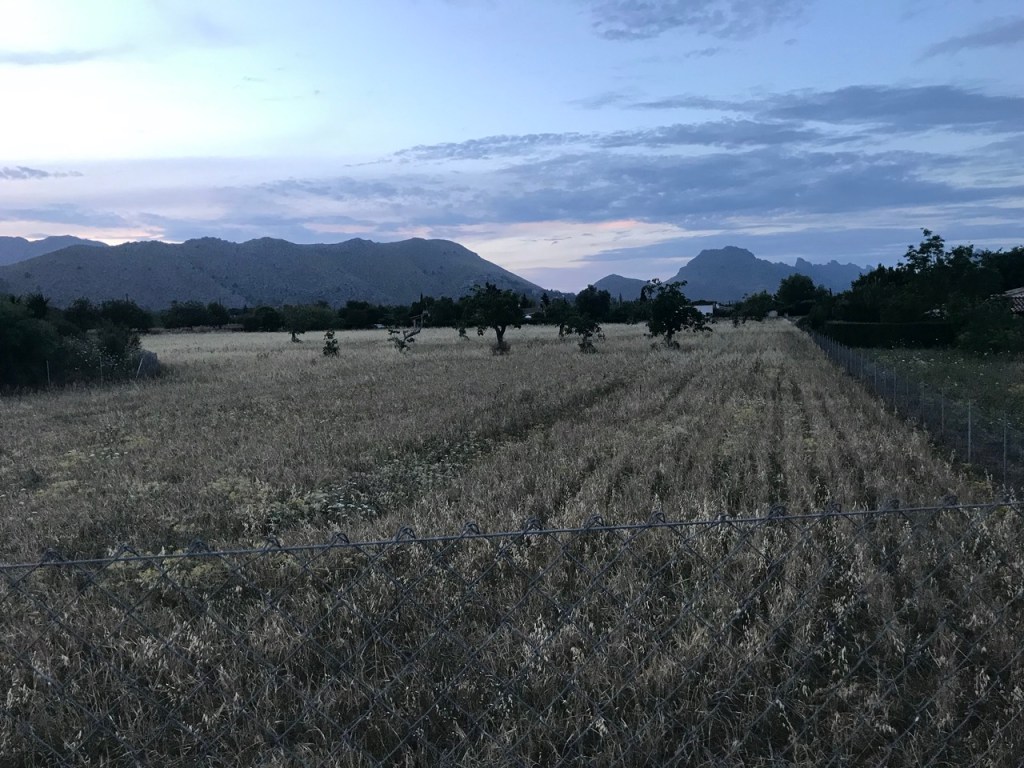
A sharp chirping call emanated from our left as we walked, in the densely vegetated ground on a slightly lower level than us ( clearly the hotel people hadn’t flattened the site very well). Nobody else seemed to notice, so I scanned the field of overgrown plants, and found a small brown bird precariously yet expertly perched on a swaying blade of grass. It was blasting its call out of its beak incredibly loudly. I pointed it out to Pere, identifying it as a possible Zitting Cisticola. It flitted away just as he got a brief glimpse, but it was enough for him to confirm my ID. In our previous trip to Albufereta, we had heard one of these special birds but not seen it. Now I had.
We had only taken another few paces down the track, when Pere pointed up and notified us of three bafflingly acrobatic birds, turning somersaults in the air on their quest to catch the abundant mosquitoes. On closer inspection, its plumage was glorious. Every bright colour you can think of, played a part in its grandeur. Blues, greens, yellows, reds, all blending together to create colours I can’t name when they mixed on their borders. This, of course, was the wonderful European Bee-Eater, which had recently nested for THE FIRST TIME in Norfolk, England. And this was my first time view of one as well! And the species this site is famous for. Me and Pere high-fived and we continued on.
We came to a small cluster of pine trees, tall and looming. And cradled in their boughs were about three or four of what seemed to be balls of messy, white hair. It looked to be some sort of nest, and Pere soon explained this. Pine Processionary Caterpillars had created these nests, a toxic species that can kill trees and cause severe allergic reactions in humans. People are encouraged to take them down before March, and burn the nests, but never make contact with the creatures. Sightings are on the rise back home, but they are a regular sight on the island.
But now onto a more positive note. A soothing, chirping tune played from these trees, one which I could not bring to mind, though it sounded familiar. Pere soon identified it though, but not before he checked if we recognised it. A Nightingale, singing its heart out for our audience of four. We attempted to find the bird, but it soon fell silent, and chances of seeing it were now slim. And just as we turned back, a flash of black, white and orange sped past, so close that if I had outstretched my hand, I could have touched it! Hoopoe! Happy, we pressed on down the lane. And just as we turned a corner, a Marsh Harrier drifted low above the tree-line. And, somehow, there was still more to come!
We came to a dead end, and turned back, heading towards the car, having just seen an elusive Cettis Warbler. This Warbler is a rich, rusty brown and really rather unremarkable, often going unnoticed; until you hear its song, of course. So loud and powerful, from such a small bird. Incredible stuff. And now we were back in the car, driving round to the quarry side. Pere told us to keep an eye out for Tree Sparrows in a large, metal, sort of barn, and the surrounding areas. But we didn’t see them, although we had heard them previously at the villa.
We continued to drive until the track got wider. A well-cultivated field was on our left, and, with quite the contrast, an overgrown one on the right. Pere had stopped the car with excitement, and directed us all to get out quickly. And I soon saw why. Two small birds of prey flew directly above us, so low we could see their plumage quite clearly. The body-shape suggested some sort of falcon, and both were a dark brown. Pere identified them at once as a pair of Eleanoras Falcons. But the strange thing was as they flew further away, they were joined by a third. And then a fourth. Then a fifth and a sixth. Rapidly, their numbers were increasing. They all seemed to be joining together, in a huge party. And then I saw why. The air was thick with insects, and they were all hunting them. And more birds were taking part. I think after about 20 minutes we were on 17, which was when we decided to move on. These falcons really were majestic, and this first sighting will remain etched in my memory for a long time. And to top it all off, Pere pointed out something else.
It was distant, and I will be honest, I had no clue whatsoever on its identity. But whatever it was, it was big. It almost seemed like an eagle, a creature I had only really ever seen on the television, or on the internet. But Pere pounced on the identification immediately. A juvenile Booted Eagle, circling the distant mountains. Wow.
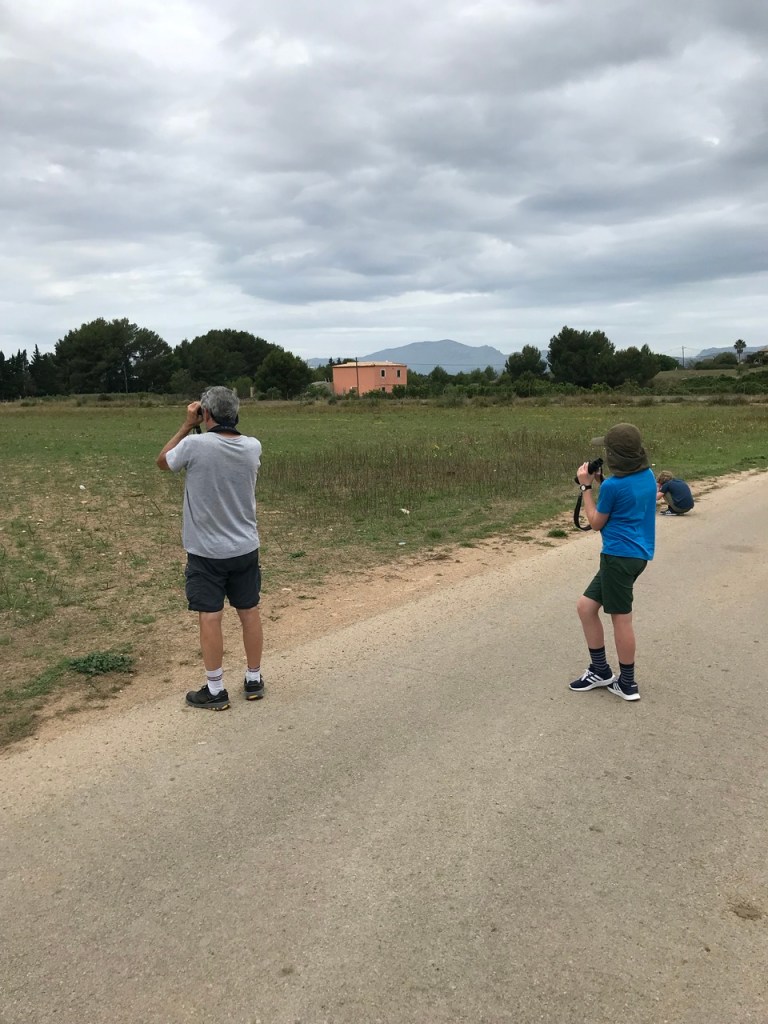
We walked to the other side of the track, and stopped by the barbed-wire fence. We watched as a Kestrel floated lazily on the breeze, and a Marsh Harrier glided across the tops of the trees, intent on something below it. When it became clear not much was going to show here, we headed back out into the track where the car was waiting, and a Hoopoe flew up to perch on the fence near where we had just stood. Its plumage was a pink -orange, with a black and white tail. The contrast was just so stark and striking. A short-lived encounter however, as it dropped into the long grass moments later.
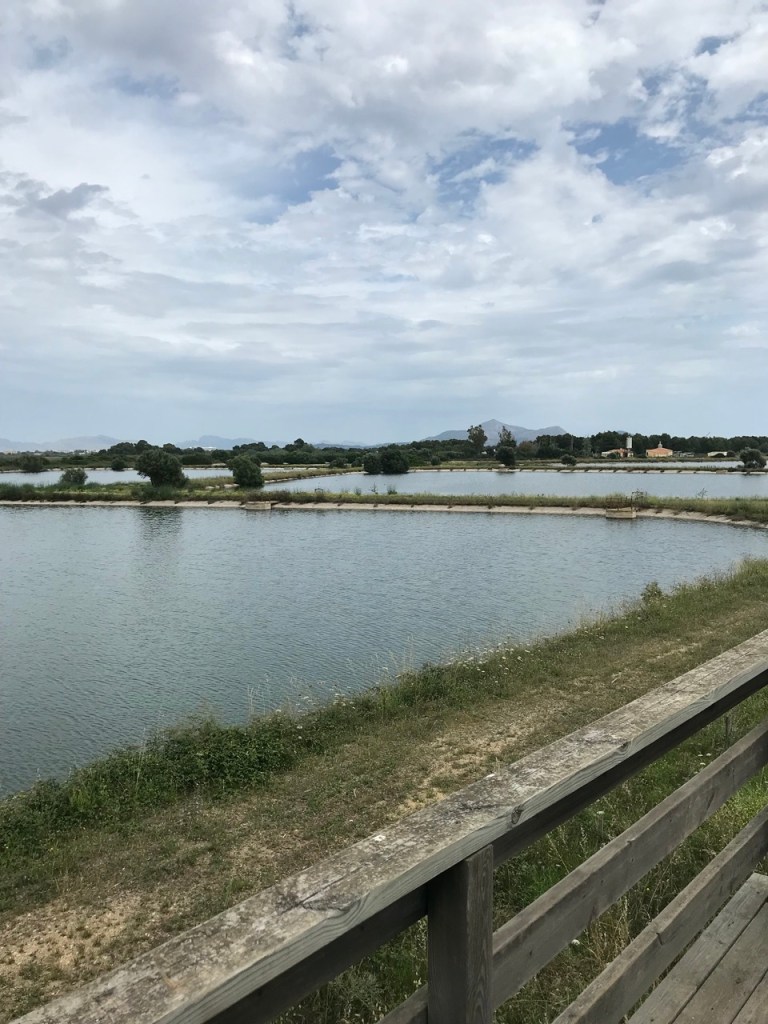
We parked the car by a gate, and strolled through on foot. It was a long, winding path, narrow right until the end. A large viewing platform, not unlike the one at Albufereta, loomed over a series of lakes, used by a sewage treatment plant. As we climbed the stairs, another song floated surprisingly close on the air. In a bare branched tree, at eye level with us, was a black-headed bird, with a blood-red eye-ring. A Sardinian Warbler, its operatic voice just for us. Beautiful.
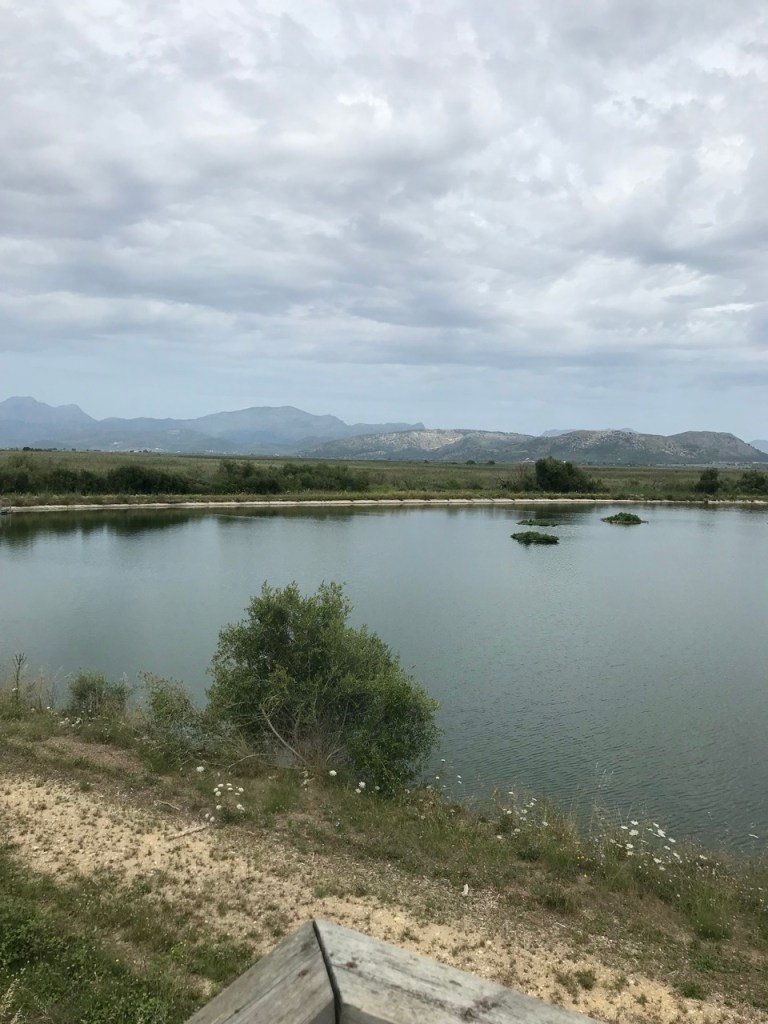
And the sight that met us at the top was twice as wonderful. I didn’t know where to start. It was a feast for the eyes, the amount of birds before us. Yellow Legged and Black Headed gulls lined the right bank, with around 30-35 Shelduck splashing about in the shallows. Mallards and Gadwall sculled across the centre of the water, and a Cattle Egret came in to land on one of the artificial islands. And on these precious few islands were Common Terns, about 10-20. And that was just on this lake. Pochard paddled about the next one, and Pere even found some Red Crested Pochards, yet another new species for me! A Marsh Harrier flew over, agitating the gulls and putting some to flight. Three Black-Winged Stilts took to the air, squawking raucously at the invader. But it soon passed, and calm was restored. A stonechat chattered next to us, perched on a reed. And that was when I noticed the expansive reedbeds on our right, stretching far into the distance right towards the edge of the mountains. It was such an extensive habitat, this whole island, which, despite SOME peoples efforts, like the hotel owners, still remained a natural paradise. Honestly, this whole outing was some sort of birdfest!
And as our trip neared its close, back at the car, the Booted Eagle put in another appearance. Except this time, it showed rather well. A brilliant way to round off our trip. But the end was not so quick in coming. As we drove home, Pere asked us if we had ever seen a Spotless Starling, and we, of course, replied no. So we went on a little detour round the back of Albufereta. And round there was a house. And on that house was the aforementioned starling. It was a smooth, glossy black, with no spots, unlike the ones back home. We got out of the car and watched this marvellous bird. We also saw Blackbirds here, and a Little Egret flew over our heads.
Back at the villa, farewells were said, and we promised to keep in touch. It had been one of the greatest birding experiences of my life, and as Pere pulled out of the driveway, waving cheerfully at us, I knew that I would never forget those goodbyes, and that I would be back someday. The island had me under its spell, and I happily jumped into its arms.


What a wonderfully expressive and colourful account of your experience birding in such an amazing environment.Making many happy memories for you to share with us.
Sent from Outlook for iOShttps://aka.ms/o0ukef ________________________________
LikeLike