
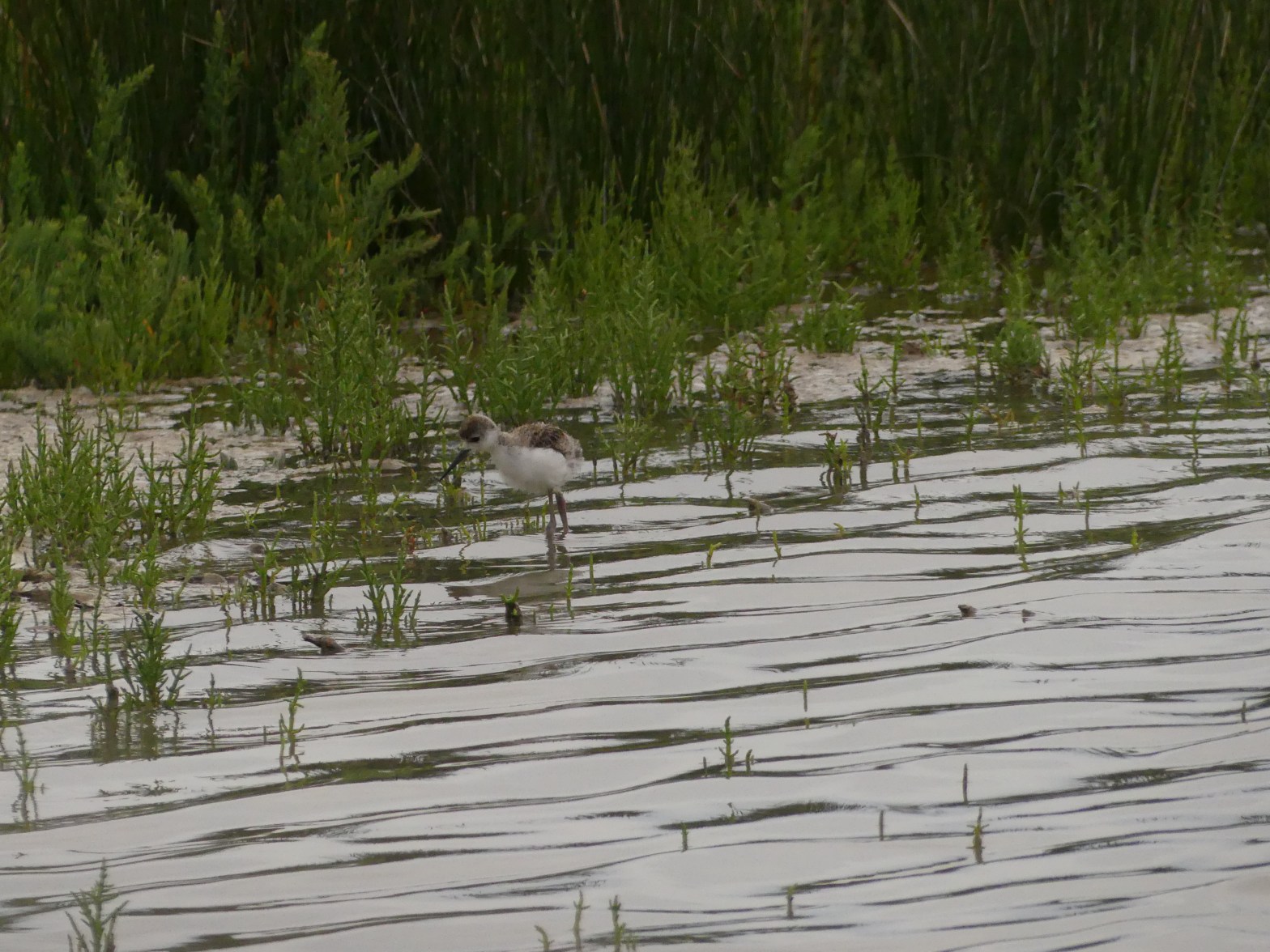
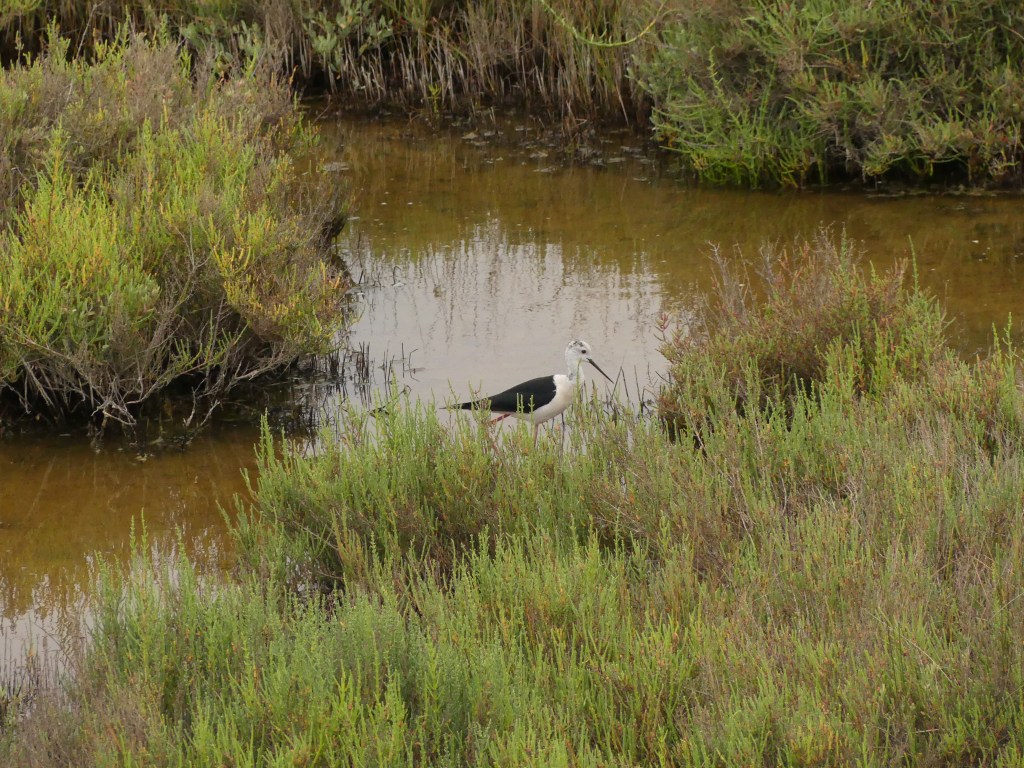
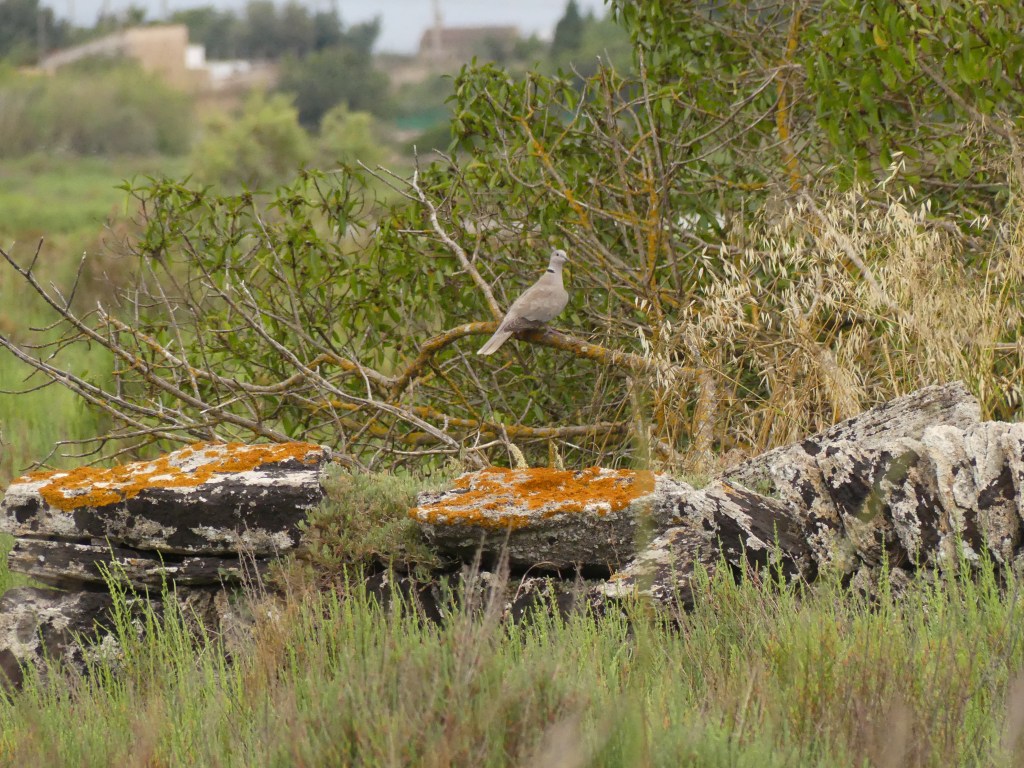
On the Thursday of our stay, me, Daddy and Bertie packed our bags and headed towards the site where I had my first proper birdwatching experience in Mallorca, around four years ago in 2019, before the pandemic. Reserva Natural de l Albufereta. It was here that I met Pere of Mallorca Nature Tours. He is a brilliant man, but more on him on the next post. If you would like to read about that first visit, there is a link here to one of my earlier posts. However, this time we were on our own with only memory to guide us, and we got off to a good start as we drove along the coast road-there was no wall, just open sea by the road- of the Bay of Alcudia. A bird with very distinctive wings flew over out to the bay to fish. A tern, although identification was tricky as I was leaning out a car window. However, it seemed a good omen, and this mood was improved as we parked, as a frustrated Black-Winged Stilt flew over, calling furiously. They’re smaller than you would realise, with long red legs and stark black and white plumage. It seems almost impossible for them to fly, with those huge legs dragging behind them. But they manage, and this one flew out to the extensive marshes, still rather grumpy.
We began our walk down the dusty track, Swifts screaming overhead and Collared Doves calling monotonously. As we heard the sounds of many Terns, our pace quickened. We took a wrong turning towards a section of private land, but were rewarded with a pair of Blackbirds showing well.
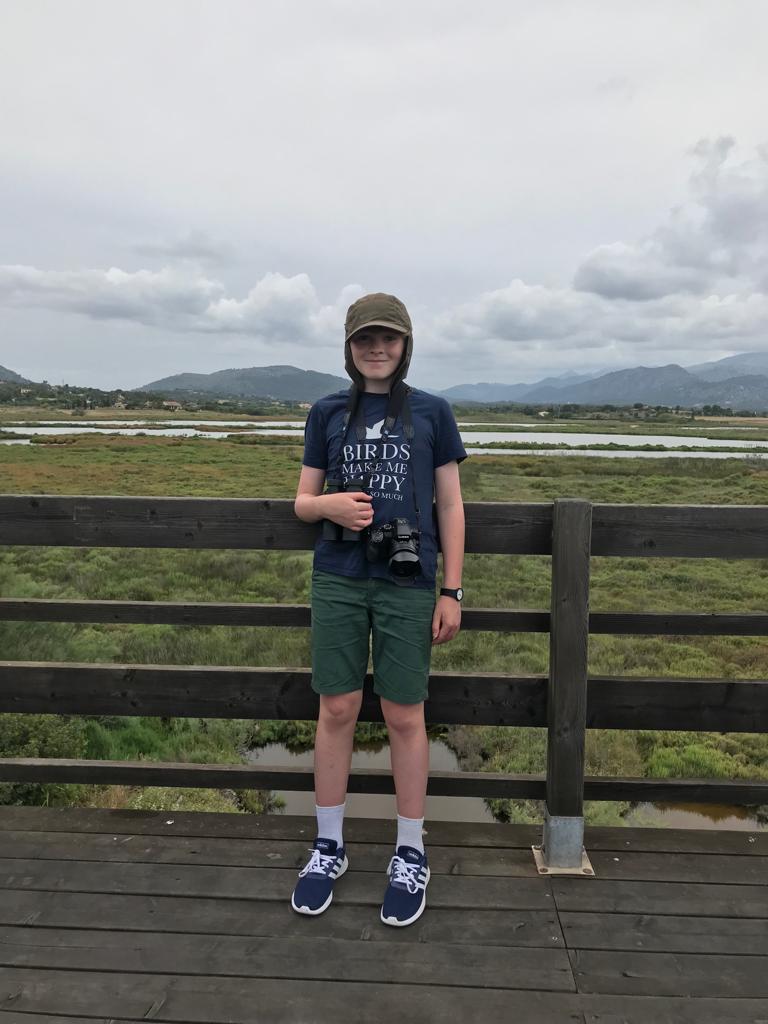
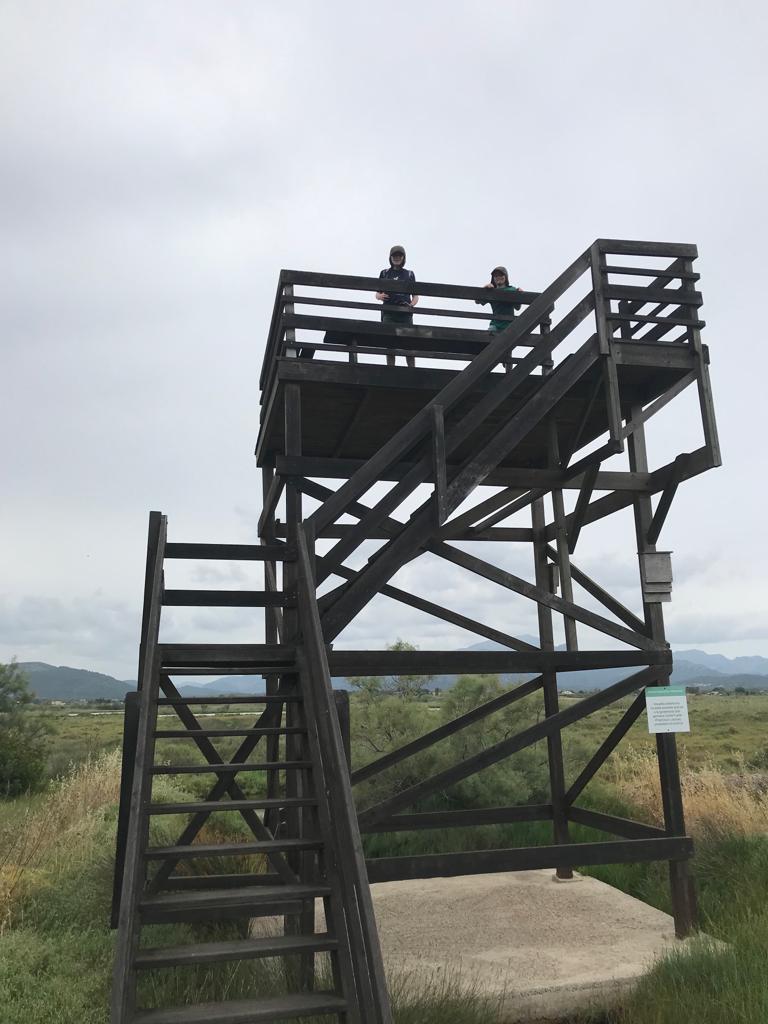
We continued up to our first stop, a towering viewpoint that loomed over the entire marshes. We climbed the stairs, and were met with the most breathtaking view. We could see for miles from up here, across the marshes, through the cluster of villas on the edge, and right up into the mountains. As we watched, a Kestrel glided past on the breeze, at eye level with us. It is such a special thing when you see these creatures at their level. Shelducks grouped in one channel, Mallards in another. Two Gadwalls came in to land on another patch of water. A Grey Heron wandered through the vegetation, its head swaying from side to side slowly in search of its next meal. The Swifts seemed much closer from up here, and you could appreciate their rich, chocolate brown plumage much more than you could have from ground level. Black Winged Stilts were everywhere you looked, and a Moorhens bubbly call sounded from the distance. Energised, we continued on into the woods towards the sounds of Terns.
We treaded quietly as we entered the woods, helped by the slight bed of pine-needles. What we had heard here last time was a Cetti’s Warbler. This time there was no Cetti’s, but a whole lot more. The first sound was the duel between two Greenfinches down in the undergrowth. The next was another finch, the Serin singing away from a prominent bough. The third came as a surprise to us. A Common Nightingale, an increasingly rare bird at home, trilled its beautiful song as loud as it could, just for us. A bird that had often appeared in the pages of folklore would now appear in the pages of The Bovey Birder. Just perfect.
Now the fourth… well its name was a bit of a tongue-twister. Try saying this three times fast: a Zitting Cisticola. Once known as the Fan-Tailed Warbler, it was moved to a different genus quite recently as it was more closely related to the Cisticola Family. It is the only Cisticola in Europe, and really is an incredible species. The way it squats between the flimsy reeds with one foot firmly fastened to each stem seems almost Physics-defying.
Anyway, as we came up to a stile on the edge of the woods, we heard another bird. But this one was especially special. A Eurasian Thick-Knee. Or, as I, and many others, know it, the Stone-Curlew. An oddity of the bird world if ever there was one, but a marvellous creature never the less. The cryptic plumage makes it almost impossible to see it against its preferred habitat. These birds are almost like a book that few have opened, it’s dusky brown feathers disguising its true behaviours, and meaning. For now, we rushed toward the hide with purpose in our strides, and closed the door silently behind us. I unloaded everything from my neck, and settled down to watch.
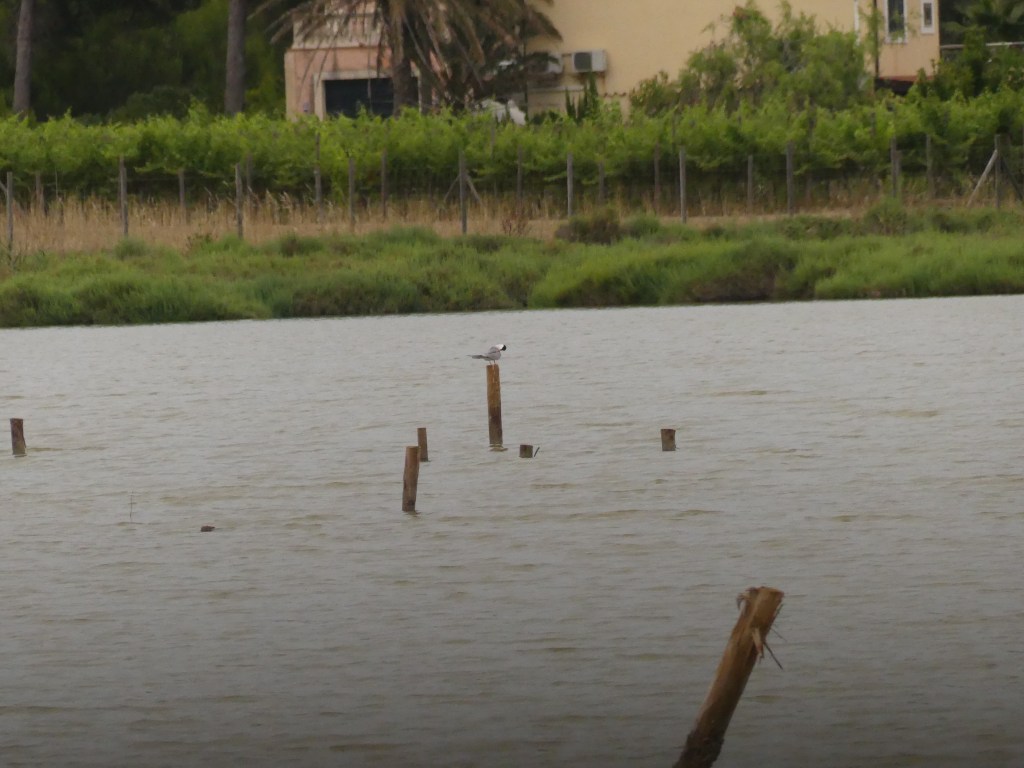
The first thing that struck me was three Avocets on the centre island out in the middle of the lake. This island was larger than many of its counterparts, and thinly vegetated. They all seemed calm, their upturned bills dipping lazily into the water. All calm, at least until the Common Terns began their ruckus. They were everywhere ,perched on wooden stakes jutting from the water, or harassing the now indignant looking Avocets. All of their blood-red bills were stuffed with fish. Their white and grey plumage and black caps all glistened with water droplets. Some even shook a little, in a vain attempt to dry themselves off. By now, the Black-Winged Stilts had arrived, and had joined forces with the Terns in their campaign to torment the Avocets, calling surprisingly loudly for a bird of their size, and the Avocets strutted around, clearly agitated.
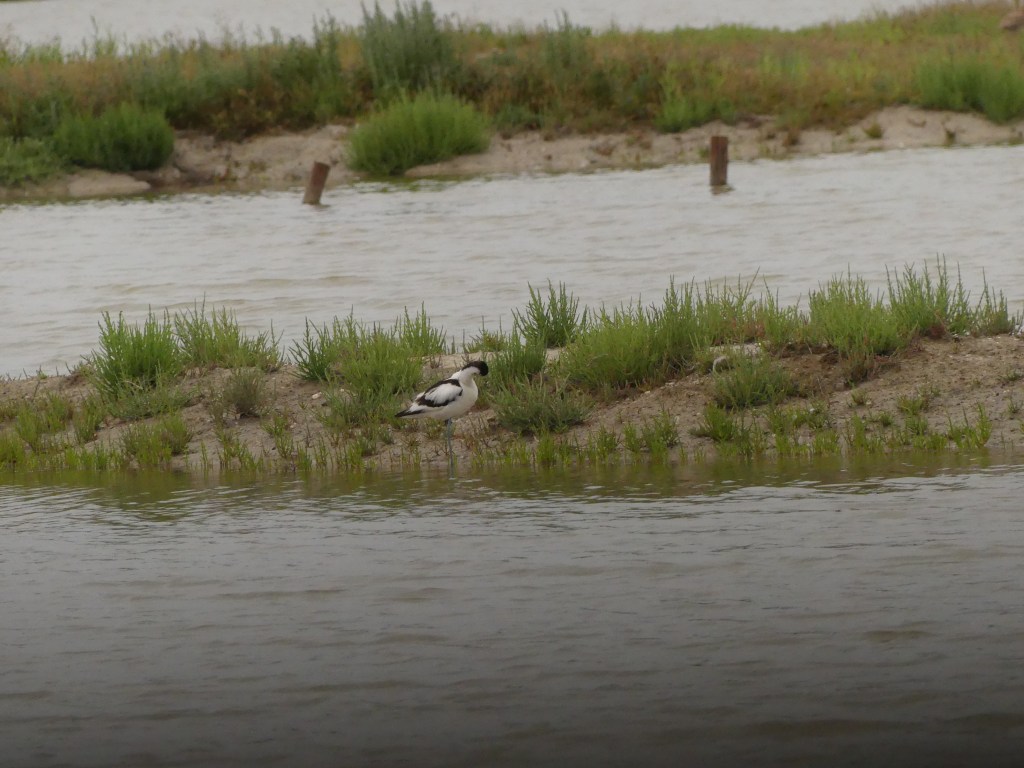
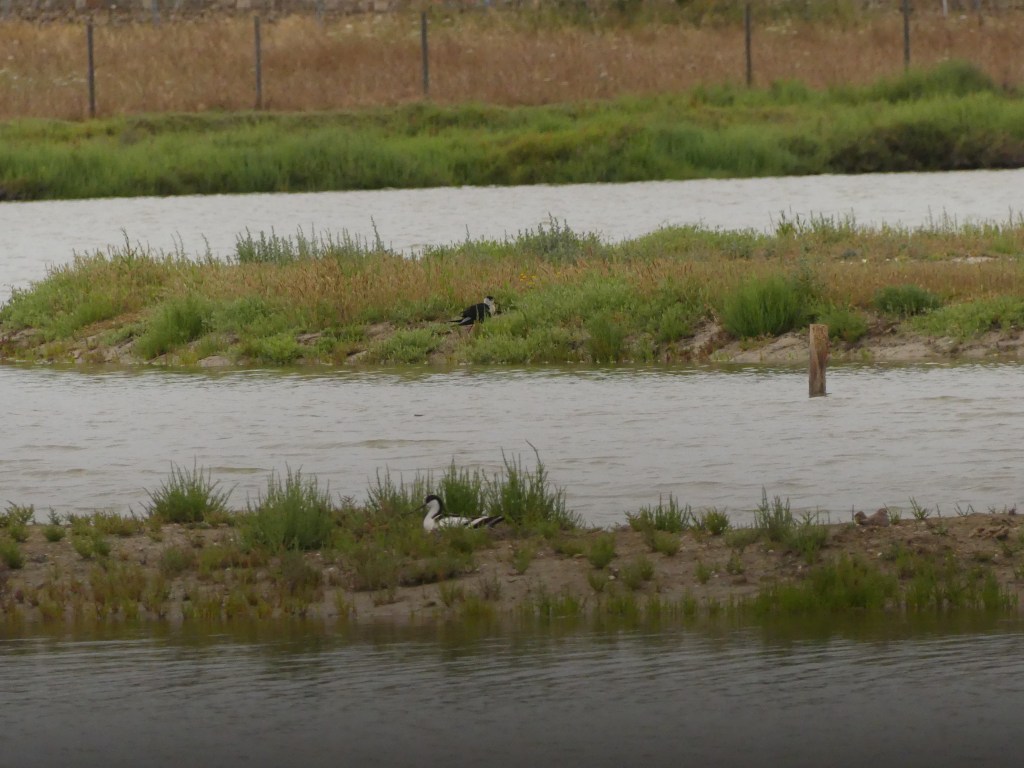
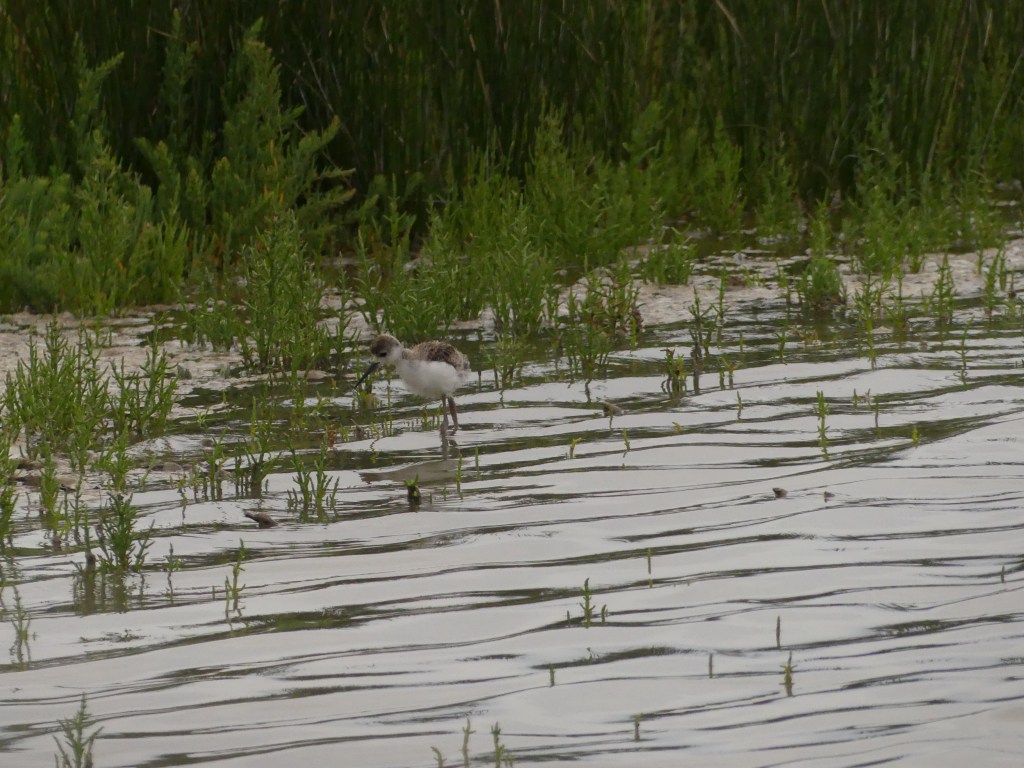
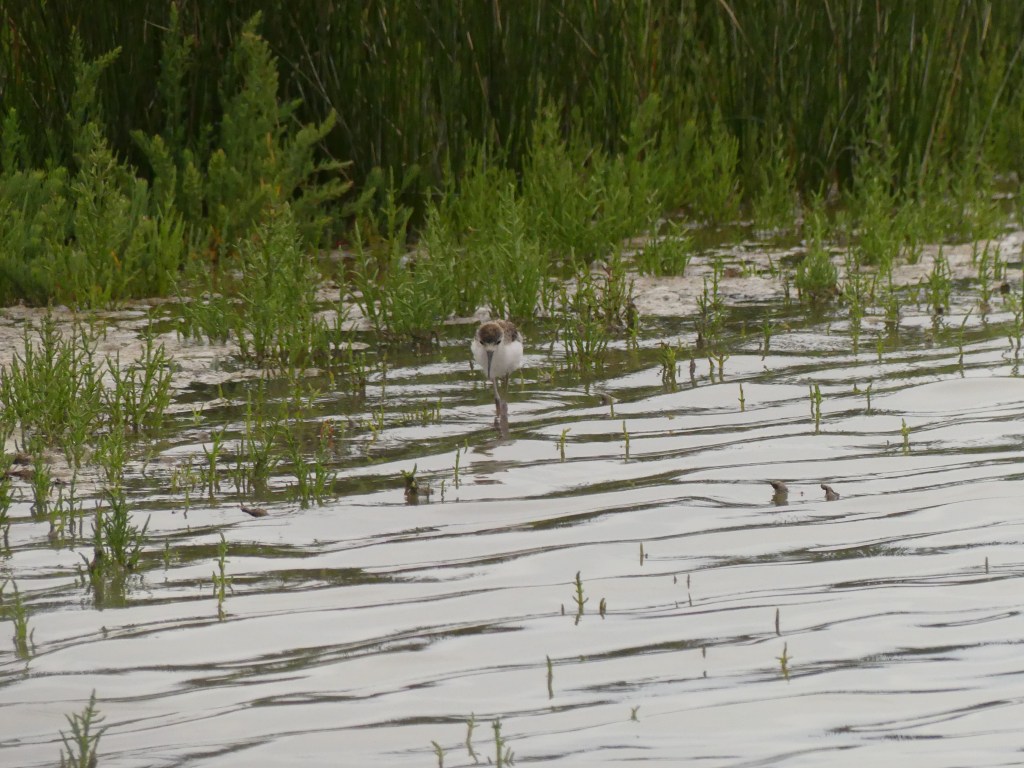
Suddenly, Berties voice cut through the sound of the birds. He pointed out a tiny Avocet chick stumbling about the shallows, with a watchful parent following it closely. It was really fluffy, with already rather long legs and a sandy beige back. Again, a voice pulled me out of my trance, but this time it was Daddy, and he had spotted three Stone-Curlews over on the far island! The binoculars swung round automatically. The birds cryptic camouflage came into play here, making it almost impossible to see them against the brown and green. But you could just make out the shape of the avian creatures. They seemed almost eery, the yellow eye ring almost glowing as the sun hung low in the sky.
My eyes were drawn to movement directly in front of us on a sparsely vegetated sandy stretch. Two small birds hurried about, seeming busy about something I did not know. They looked like a pair of plovers, although not one I was familiar with. One of them was rather fetching, with a rufous coloured nape, and a black streak across its white face. Its crown was the same colour as its back, a sandy beige. Its underside was the same white as its face. The second was similar, but had a yellowish curve behind its eye, and that sandy beige colour also on part of its white face. The crown was beige again. These could be none other than a pair of Kentish Plovers, a male and a female in their Summer plumage. Back home, this was a rare passage migrant or a vagrant, and a brilliant sight to see. Here, in its breeding plumage, these birds were wonderful to watch. Their antics were almost comical, darting about, retreating from the waters edge, ducking behind short tufts of grass.
Another new species. And still more to come!
A Cattle Egret flew over, and on that note, we decided to move on. We continued our trek down the path and came to our final pitstop. A wooden platform rose above the fields and marshes, and this was the place last time we had seen the Stone-Curlews, along with 2 young Ringed Plovers. However, not much turned up this time as the rain began to pour. The Black-Winged Stilts were still out in force, piping their alarmed cries into the evening air. At this point, we met a man who was also out birdwatching, and also spoke our language. We said hello, and he explained how he had just flushed two Hoopoes up ahead behind the stone wall. We talked for a bit, and then continued on.
We turned into the hide one last time. Nothing much had changed, except the Avocets had moved about a bit. But just as I watched a Common Tern dive into the water and come out with a full beak, a brown blur flew in and out of my binoculars in a split second. I lifted them down from my face and watched as a Stone Curlew disappeared around the corner of the hide, now incredibly conspicuous. It came as quickly as it went. The moment had lasted about three seconds, but had felt incredible nonetheless.
On the walk back we failed to see the Hoopoes, but were serenaded by a Serin which gave fleeting views, but its song was always there. It had been a brilliant evening, and as we walked under the screaming Swifts, everything felt at peace.

