
The Somerset Levels are a place I have been longing to visit for years. The Levels are an ancient wetland which have survived over the centuries. The Romans attempted to drain it, but did not prevail. However, they were drained eventually, and now lots of channels and lakes and reedbeds point to its former glory. And now here was my chance. RSPB Ham Wall is set in the heart of Somerset, a haven for birds and animals alike. We took a trip up there and it turned out brilliantly. We stayed over the night before in order to set off early. A light mist was rising off of the levels during the first few hours of our adventure, creating an air of mystery. And now, without further ado, enjoy…
I rushed across the car park towards the feeders. The feeding area was enclosed by a tall fence, with viewing ports cut out of the wood. I peered through the port closest to my height. 2 bird feeders, complete with guards, were hanging from a tree in the centre. Blue and Great Tits squabbled and jostled for places inside and outside the guards, while Chaffinches and a Blackbird hopped about beneath. A little Coal Tit was perched in the tree, waiting his turn. Suddenly, my ears were assaulted by loud voices from small birds. Looked like the Coal Tit would have to wait a little longer. The House Sparrows had arrived. They fought for space within the surrounding shrubs, and cheeped as loud as they can, some attacking the feeders, others waiting for the right moment.
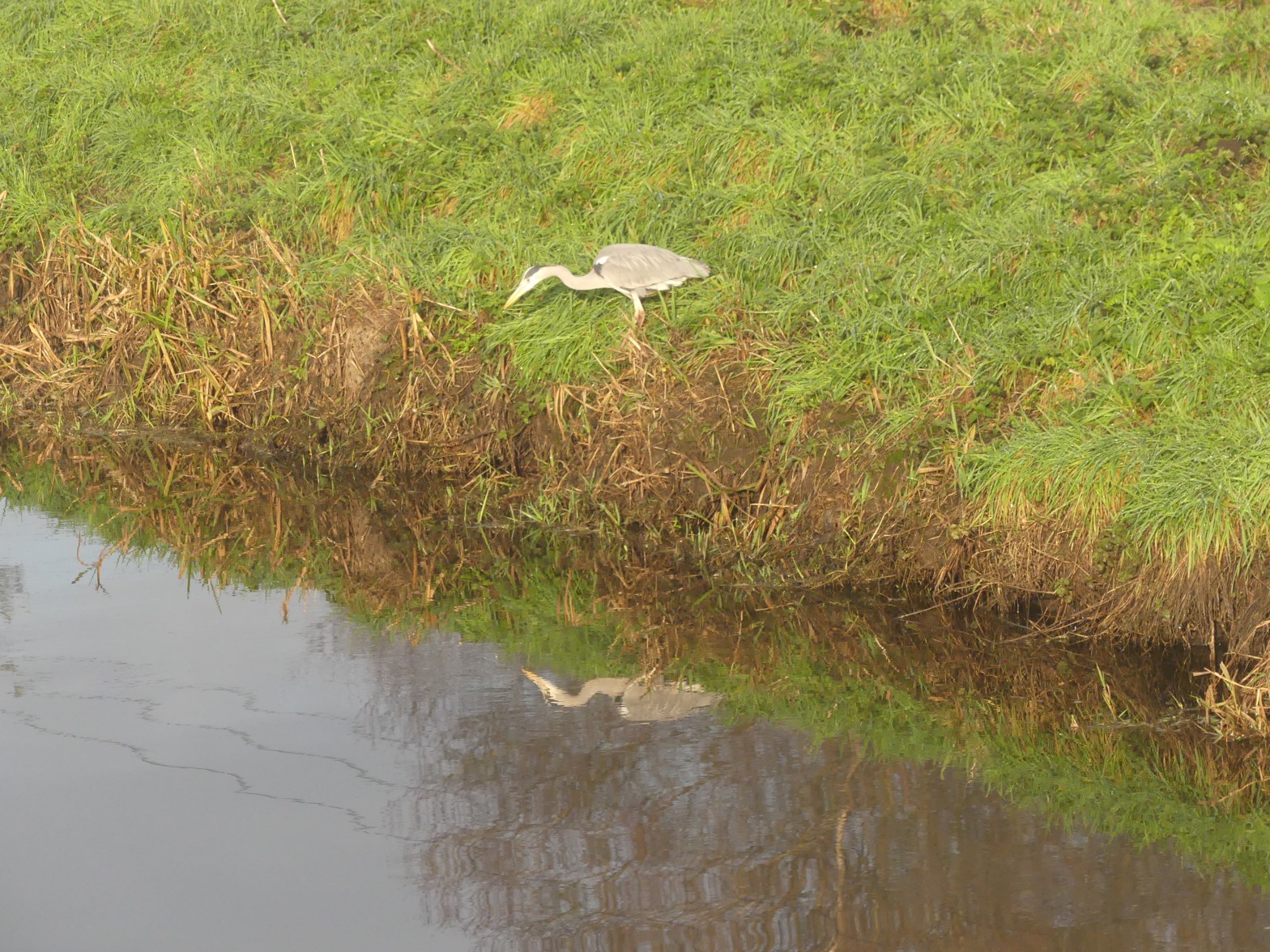
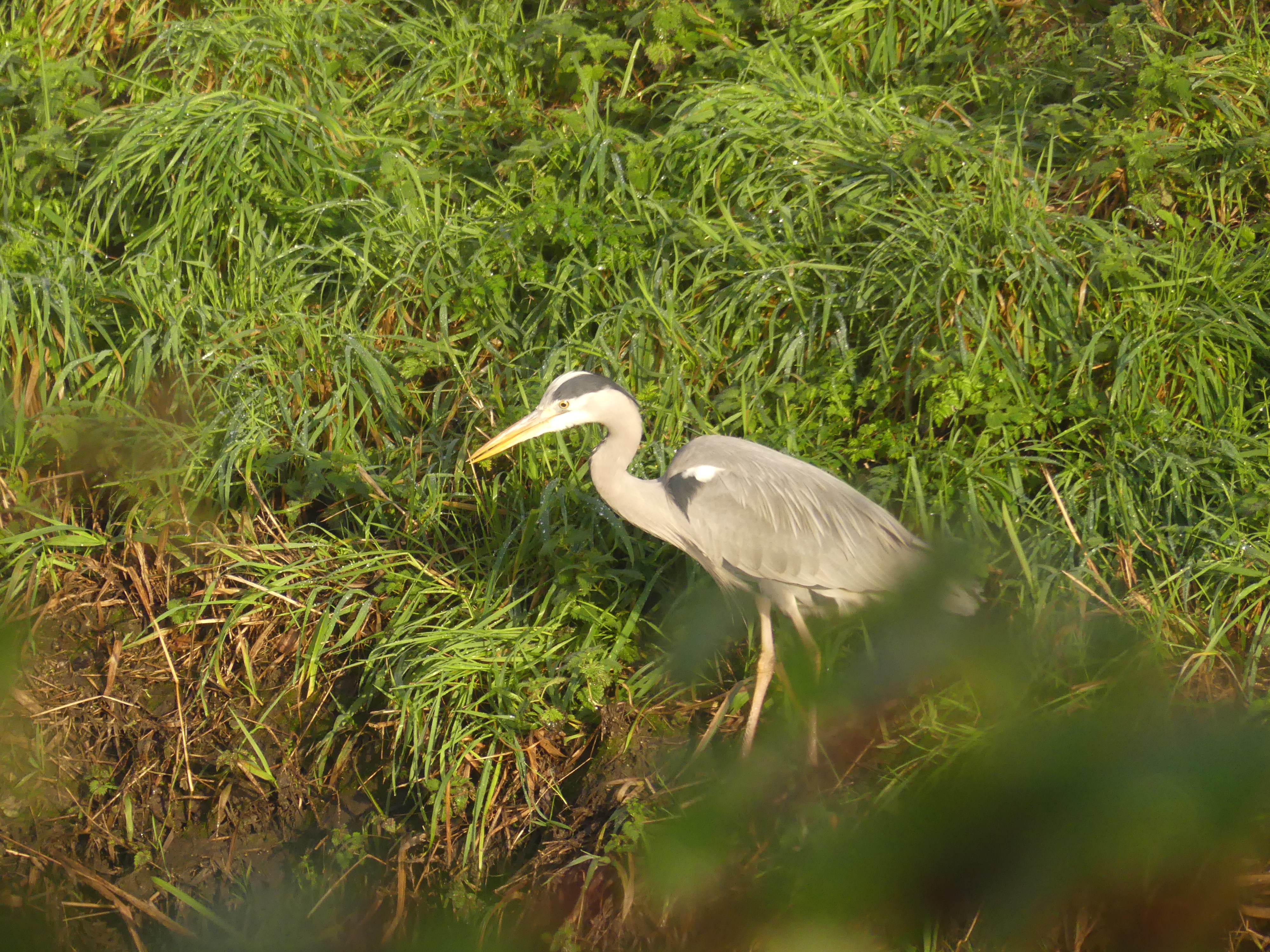
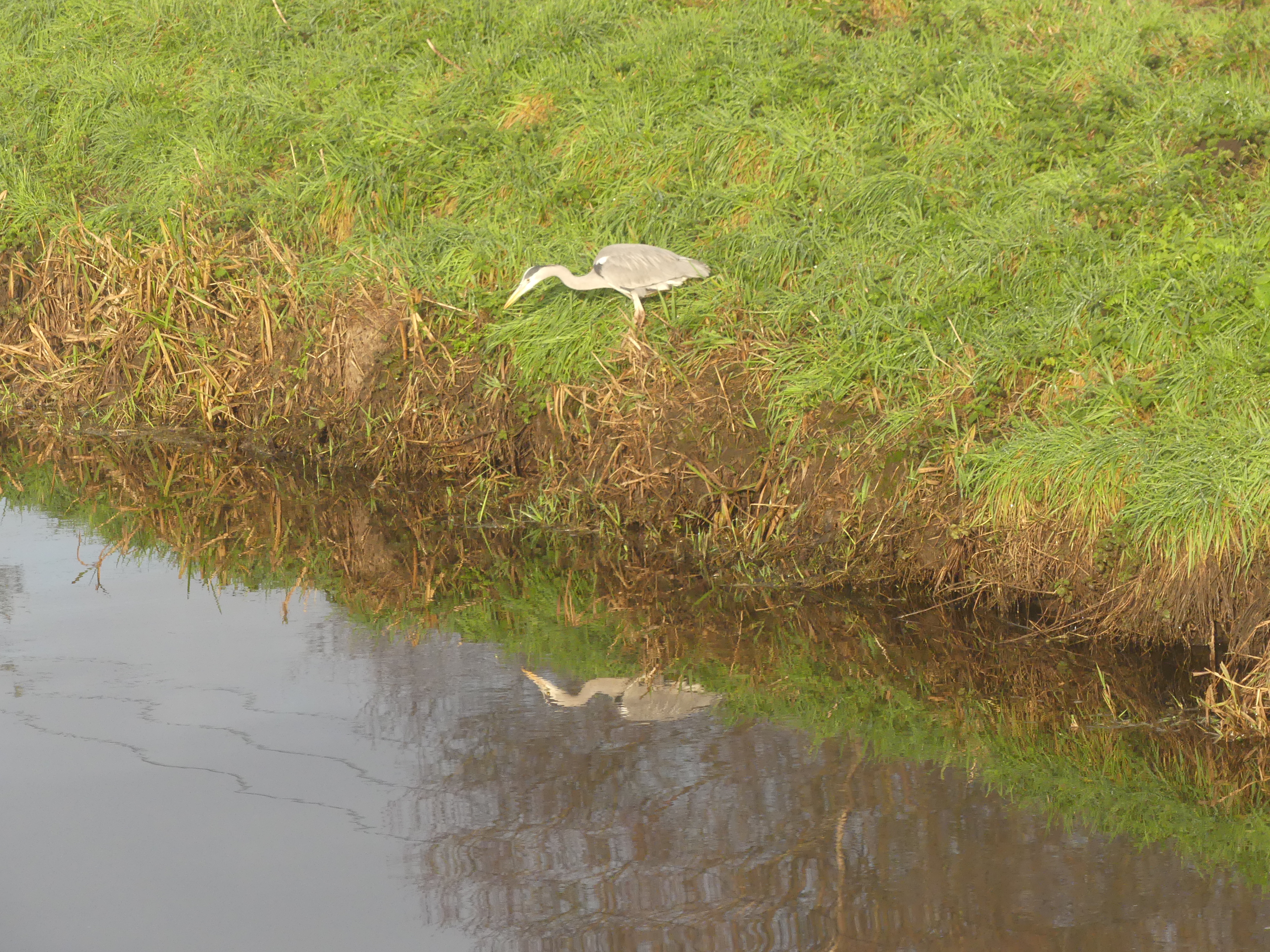
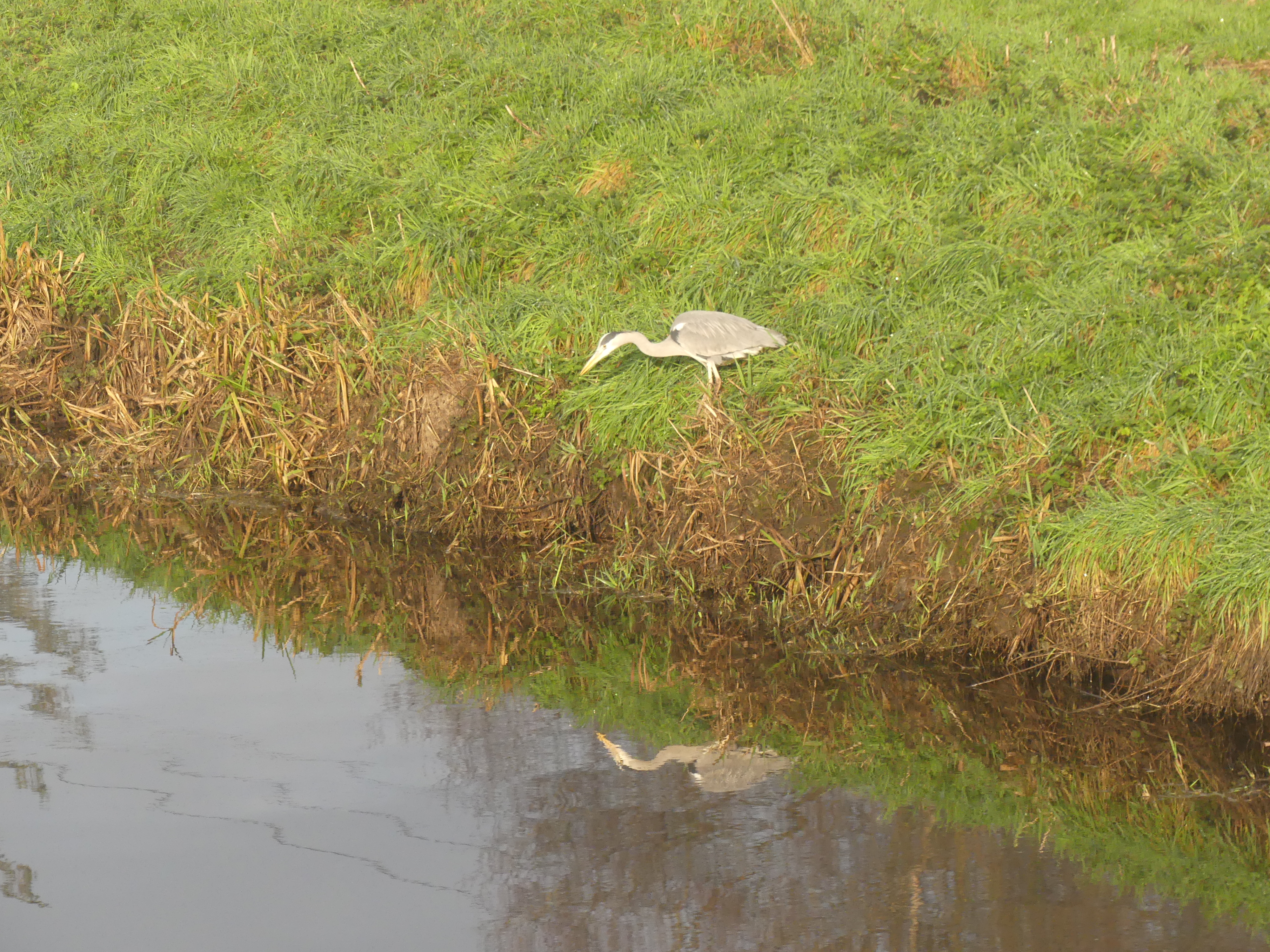
I kept watching, enthralled, until we had to start along the trail. The reeds around us swayed in the breeze, and ripples glided across the water that they concealed. Up ahead is a wooden walkway, which leads off to the left. We emerge on a broad, tarmac path leading up to a bridge. We stroll along for a few moments but then freeze in our tracks. A wide channel leads off below us and on the grassy bank stood a large bird, intent on its reflection. It’s dagger-like bill was a pronounced orange, protruding from a contrasting black and white face. It had a long, flexible neck which led to a strong grey back. A Grey Heron, stood proudly on the bank.
We carry on up the track, Robins often popping up in front of us. Lapwings swirled above us, not in huge numbers, but about 50. A viewpoint looms out of the early morning sun, and we then get our first glimpse of a large lake, surrounded by reedbeds. Lowering the scope off my back, we extend the tripod to see over the low wooden fence. A snowy-white bird suddenly glides low over the lake and alights on one of many tiny islets protruding from the water’s surface. It is not unlike the Grey Heron we saw earlier. But this was a Great White Egret. Its sharp orange bill jutted from it’s pure white face. These birds are recent colonisers, having moved north throughout Europe into Southern England. I tear myself away from the Egret, and scan the lake. Tufted Duck and Lapwing are everywhere you look, and Wigeon, Teal, Pochards and Mallards are dotted around. A deafening honking, and then a group of Canada Geese skim the water, before coming to a halt. From here they sail lazily around the lake. The variety of species on this one body of water excite me, and I soon begin to wonder what could be next.
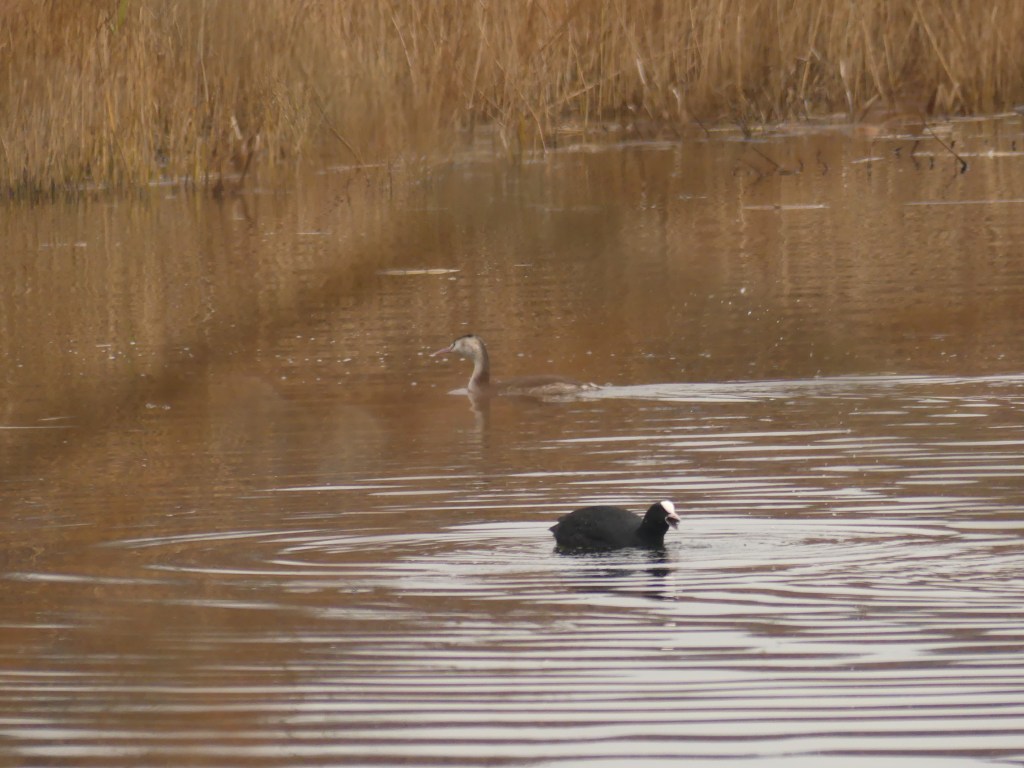
We carry on through a kissing gate where I have to be careful not to bash the tripod and scope and take a track which leads to several viewpoints teetering on the water’s edge. I lower the scope again and begin to scan with my binoculars, looking at the mass of ducks sitting on this lake. A close-by bird catches my eye, and I find it to be a Gadwall, and as I look further, it is revealed that there are at least 10 Gadwall in this duck flock. Again, Wigeon, Teal, Pochard and Tufted Ducks are here in force and another Great White Egret flies low over the far end of the lake but doesn’t drop in. A group of about 15 Shovelers appears overhead and begins to drop towards us. They skim the lake before coming to a stop with a large splash from each bird. Their bills are ginormous! Another bird catches my eye, and I train the scope on it. This bird was slim and looked as if it was wearing a very fancy crown! It had large black tufts protruding from its crown and deep chestnut all over it’s cheeks. A Great Crested Grebe, already in its breeding plumage!
Leaving on a high note, we strolled along a rather muddy track to a small bird hide. it had great views of the lakes and reedbeds. We set up the scope and I then trained it on a nearby female Shoveler. There were many lapwing on an islet and Tufted Duck were swimming near the reeds. We’d been in the hide for about 20 minutes when the man next to us shouted “Bittern!”. I raced to the other side and saw a great speckled brown bird rising from the reedbeds. It flew fast and soon dropped down into the reeds once again. We then spent another half-hour fruitlessly searching. But it didn’t matter that we couldn’t find it again. I had seen a Bittern. An actual Bittern! One of Britain’s rarest birds, and I had seen one! The reason they’re so rare is the destruction of their preferred habitat, extensive reedbeds. Due to this special need, they are limited to a few, precious sites scattered across Britain. And Ham Wall is one of those places. Bitterns, when breeding, make a booming sound, which led to the title of this blog. Such a majestic bird. BRILLIANT!!!!!!!!!!!!!!!!!!!!!!!!!!!!!!!!
We stayed in the hide to search for the reported Ring Necked Duck, which is sort of the American version of a Tufted Duck. Occasionally, a bird from another area will get lost in a storm or on migration and wind up here. A good example of what we call vagrants is the Ring Necked Duck. It appears regularly in Britain, though it is rare nevertheless. When a big storm blows across the Atlantic, it is likely we can expect some American visitors. We spotted it, but it only showed distantly. With the scope, however, it proved no problem. Suddenly, a bird of prey rose from the reedbeds and soared low over the lake. A Marsh Harrier. It flew effortlessly, and glided over the hide to the other side before alighting in the reeds once again. We spent at least an hour in that hide, and it proved incredible.
We headed back to the main path, from which we had good views of another Egret. Yet this one was smaller than the Great White, and had a black bill. This was a Little Egret. This bird was a bit more common than the Great White, but beautiful none the less. After about half an hour across the track, we came to a second viewpoint. From here we had great views across yet another lake. All the birds from the first viewpoint were there. But then a sight so glorious rose from the reeds. 1, no, 2 Marsh Harriers were gliding above the reedbed. They twisted and soared through the air, intent on each other. These aerial acrobatics carried on for a while until they both dropped back into the reedbed. What a magical sight that had been, and a wonderful way to end our trip.


Wonderful account and photos of your amazing trip to the Somerset levels for your birthday treat. It’s great reading your interesting blogs,you describe things so well that it almost feels like I’m there with you.Happy bird watching 🦆🦅💙Xx
LikeLiked by 1 person
Beautifully written, I enjoyed reading and rather jealous of the long list of amazing birds you spotted.
LikeLike