
Nightjars are a wondrous species. Fern Owls, we used to call them, a beautiful traditional name that is a nod to our long-standing fascination with them. Their mottled, cryptic plumage gives them a ghost-like quality, combined with the fact that they’re crepuscular, which means they’re only active at dawn and dusk. Their churring, mechanical song has inspired curiosity, fear and awe for generations, and their silent flight inspires the owl part of their nickname.
Dartmoor has hosted Nightjar populations for hundreds of years, and they’ve developed quite the relationship over that time. Habitat such as heathland and young plantations are perfect for the ground-nesting birds, and as such Dartmoor’s populations are of national significance. But people on Dartmoor have inadvertently damaged this bond in more ways than one. Local superstition labelled them ‘goatsuckers’, telling stories of them sucking on the teets of goats and poisoning their milk. They were also seen as omens of death, leading to their persecution in previous centuries. Even in the modern day, they are highly vulnerable to disturbance, and nests can be pushed to failure by dogs off leads or walkers straying from paths. The key to maintaining a positive relationship between Dartmoor and these birds is to strike a balance between allowing people to enjoy the National Park and preserving their habitat.
So, what do we know about Nightjar populations on Dartmoor? They arrive here from Sub-Saharan Africa in the Spring, and usually stay from late-April to September to breed. In the 20th century, there were huge declines in populations due to fragmentation of their heathland habitat, but populations have since partially recovered, to the point that they are now on the Amber list of conservation concern in the UK. Dartmoor is a crucial area for these birds, with strongholds including Fernworthy and Bellever Forest. They’re notoriously difficult to survey, so exact numbers are hard to estimate across the country (more details on that later).
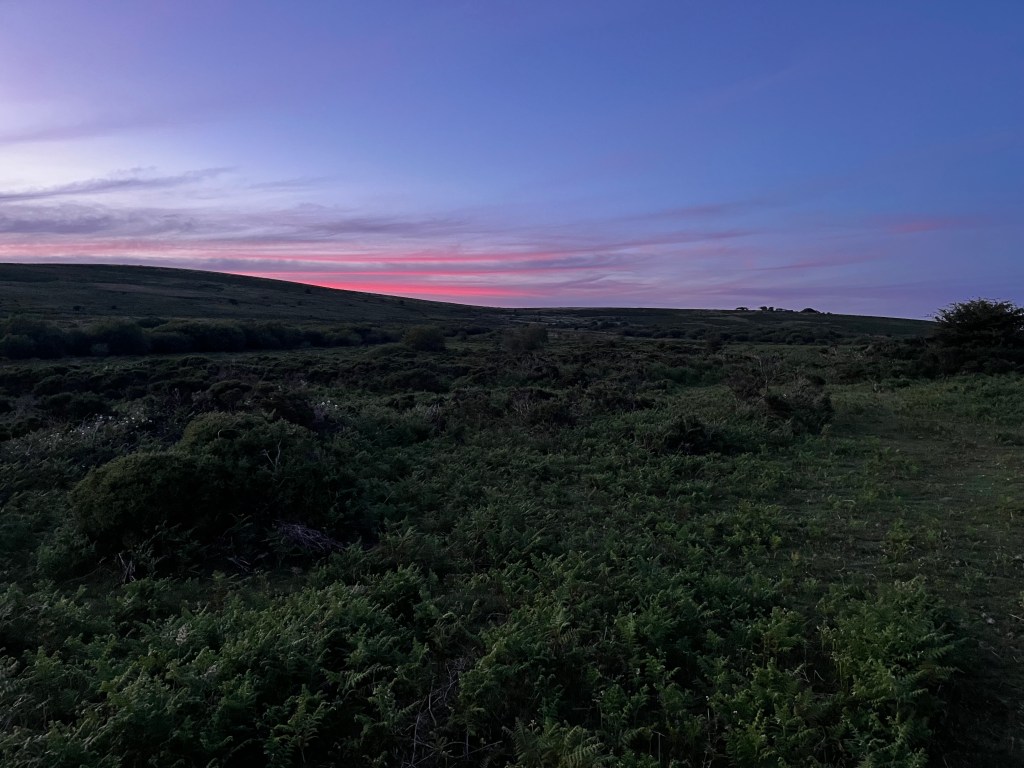
UK numbers have been on the rise in recent years. In 2023, there were just under 5000 breeding males in the UK according to the Wildlife Trusts, with that number steadily increasing due to conservation efforts. Haldon Forest, a crucial site for them on Dartmoor, hosts about 40-50 pairs. However, it’s really tricky to estimate a population on Dartmoor, because of how hard these birds are to survey and survey accurately. Numbers of volunteers are still fairly small, which means manpower is used up counting birds in the known strongholds, where we know where they breed and where they feed. For example, Brimpts Wood has some great breeding habitat and a river next door to attract insects for the Nightjars to feed on.
There are always going to be other, lesser known sites, where the Nightjars are definitely nesting, Rippen Tor being one of them (where I was lucky enough to survey; read on for more!), but where we know less about their breeding and feeding habits. Nightjars will regularly travel average distances of 3km from their breeding sites to feed, and knowing where this is could help the conservation picture enormously. But to do this, we need more volunteers and more people to help search and survey. Another way we can figure out where birds are feeding is by satellite tagging chicks. For this, trained ringers need to find nests, which volunteer surveyors can help pinpoint the rough location of.
Dartmoor’s so important for them because of it’s wide availability of perfect breeding habitat, such as heathlands and young coniferous forests. Nightjars need vegetated land with some open areas, in order for them to be able to feed on insects easily but also for their cryptic camouflage to protect them from predators while roosting and nesting. Speaking of nesting, Nightjars don’t actually build a nest. Instead, they lay their eggs in a shallow scrape on the ground. Dartmoor, with its huge range of different habitats, is obviously not all suitable Nightjar habitat, but there are large swathes of it, which shows it’s importance for the species.
Nightjar surveys on Dartmoor usually take place between May and August, when the breeding season is at its peak. Nightjars are crepuscular, meaning they are only active at dawn and dusk. This is why Nightjar surveys are not for those who require decent sleep, as they often involve very early starts or very late finishes. It’s also important to survey areas where not all of the habitat is suitable for Nightjars. Recently, I went on a Nightjar survey around the Rippen Tor Area alongside avid birder and Nightjar enthusiast Vince Pipe, and our survey route’s kilometre square only consisted of about one third suitable habitat. This is another reason why Nightjars are so hard to survey, because covering the right habitat at the peak churring time (Nightjars usually only churr for twenty minutes before beginnign feeding) is difficult but really important. A route must be planned out beforehand, and executed to perfection. We still found a healthy amount of territories, and had some amazing encounters with these birds. Huge thanks to Vince for taking me out that night, and teaching me some Nightjar survey techniques!
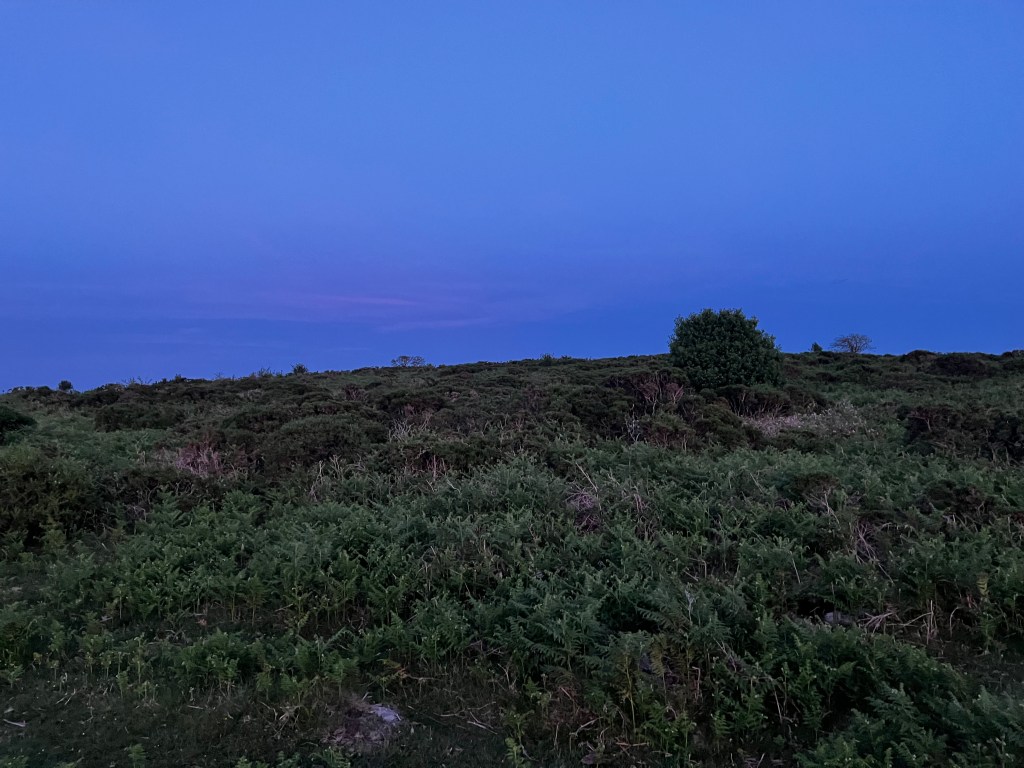
So let me pass on some of that information. First of all, a survey is never going to be entirely accurate, because they count calling birds as territories, and both males and females call. If you hear a churring bird on your first visit, you mark it down. But only if you hear it again in a similar area on your second visit can you count it as a territory. This way, we can put together a pretty good picture. We probably started our visit a little early, so we didn’t see or hear any birds until after around half an hour. We marked our sightings on the route map, with different codes; for example, you’d put a circle around if you heard it churring, but just note the code if you just saw it. There’s also a neat little trick that Vince taught me that can be very useful for figuring out the location of territories; a churr with a higher tempo usually indicates a bird more eager to attract a female. It’s tempo slows slightly when a female is on the nest within the territory, which often indicates breeding.
It’s really important work, and is often completed by volunteers. But why do we survey Nightjars? The most obvious reason is to monitor populations, and check in on how they are doing after their recent declines. Nightjars on Dartmoor appear to be doing quite well at the minute, although populations can fluctuate due to factors such as the weather. Surveying Nightjars also helps us to track the success of local conservation efforts, and see if they’re working or if a different approach is needed. A healthy presence of Nightjars also shows a well-balanced ecosystem, which can show us how newly restored habitat is getting on.
We use this data to help conserve our Nightjar populations for years to come. We want superstitious stories about them to keep coming, as long as they don’t negatively affect people’s views of the birds. The National Park aims to educate people about the Nightjars and other ground-nesting birds, and the importance of sticking to paths and keeping dogs on leads to avoid disturbance in the breeding season. They also manage habitat for Nightjars and conduct public awareness campaigns about the species and other birds too. Let’s hope that we can keep our Nightjar populations for years to come.


Really interesting Henry, I love the old name Fern Owl!
LikeLike