On our final morning, we were (thankfully) able to sleep for slightly longer, and woke up for breakfast at the Countryside Education Trust for the last time. After preparing lunch, the beds were stripped and the rooms were emptied. As we sat outside waiting for the last person to emerge, the Starlings flew over as if in farewell. A Green Woodpecker yaffled (this is what their call is known as) from behind the hedge.
The minibus rumbled out onto the lane and towards the coast, eventually parking up in a lay-by. The cacophony of noise emanating from the Normandy Lagoon was easily heard. We were at Keyhaven Marshes, a 500 acre site along looking over the English Channel. We were met by the Reserve Warden, who handed out leaflets about the site’s history and what we could expect to see. As a tiny sneak peek, I’ll tell you now that we saw around 45 species here!
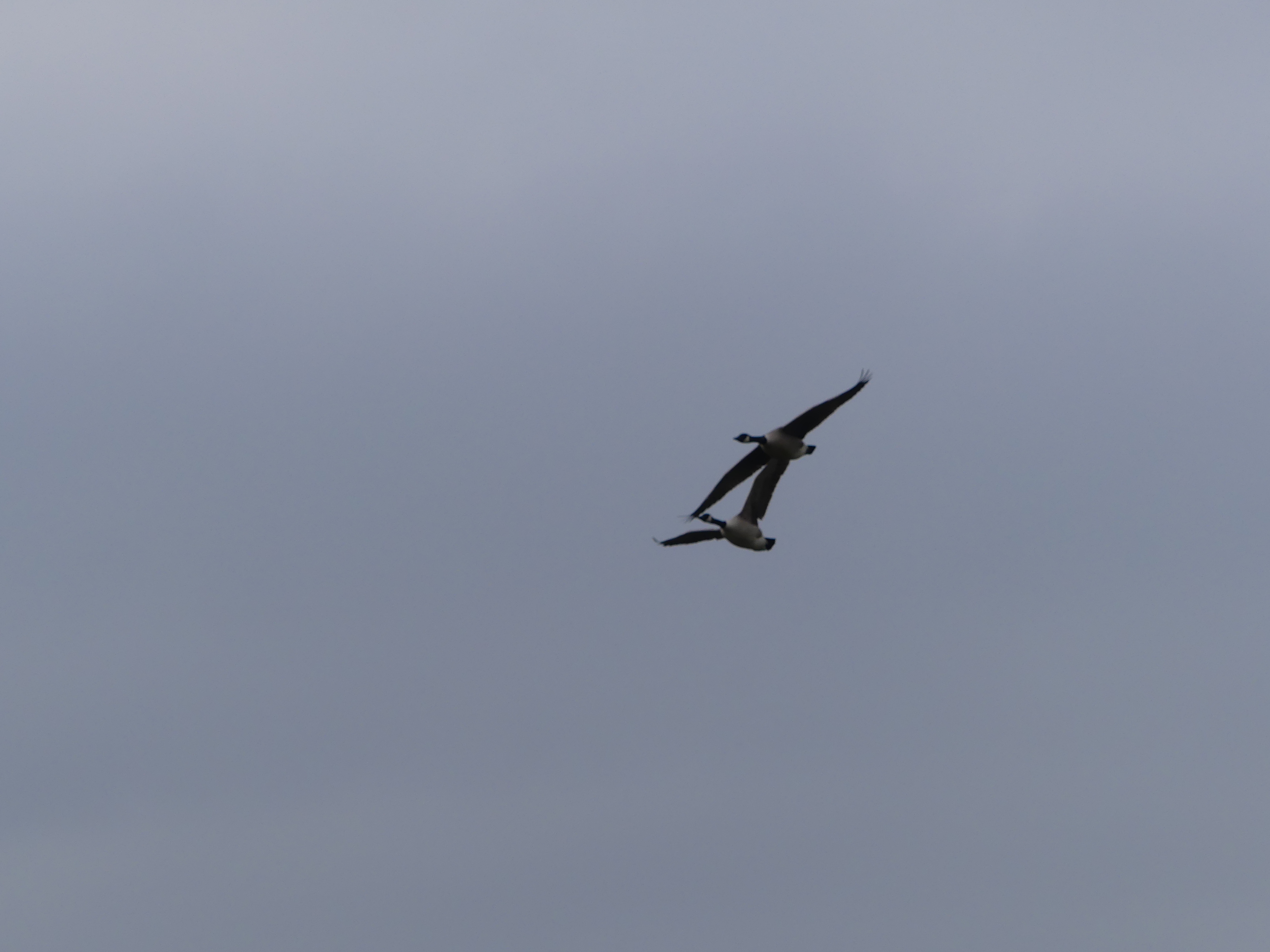
We walked up the lane towards the sound, and in a field nearby a group of Fallow Deer congregated by the hedge. There were five, some with their antlers fully grown and looking sharp. In the same field four Mallards moved or sat in a ring around two Canada geese, as if worshipping the pair. A Blue Tit sung above me in the boughs of a beech tree, and that made almost everything seem at peace in the chilly dawn air.

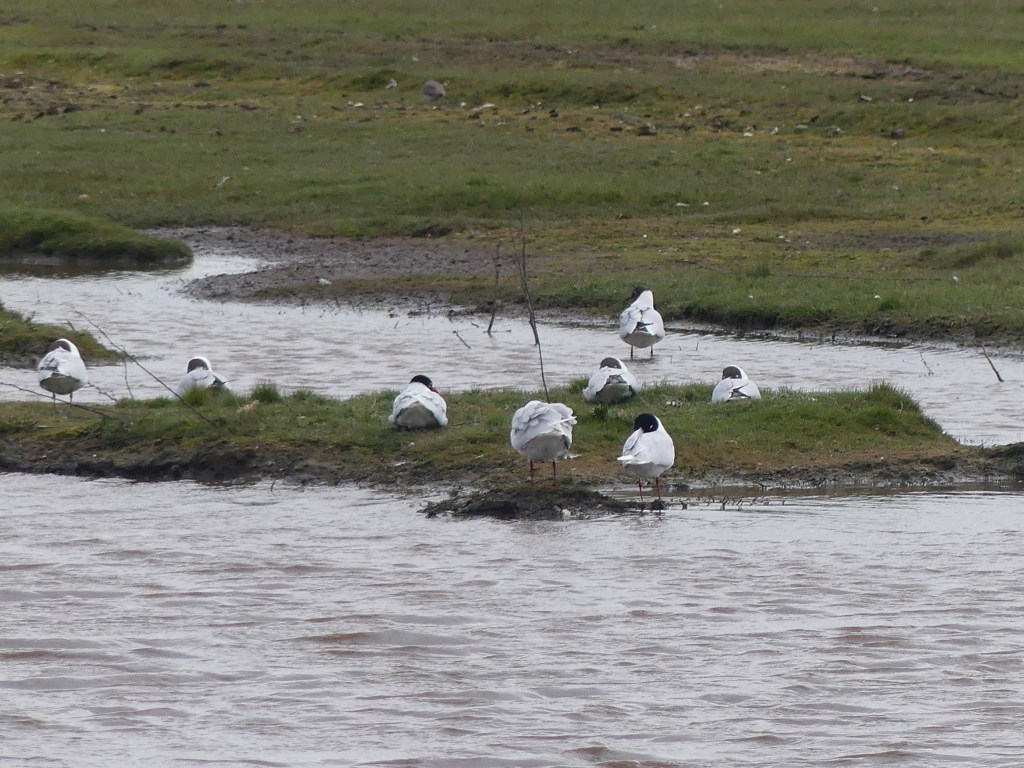
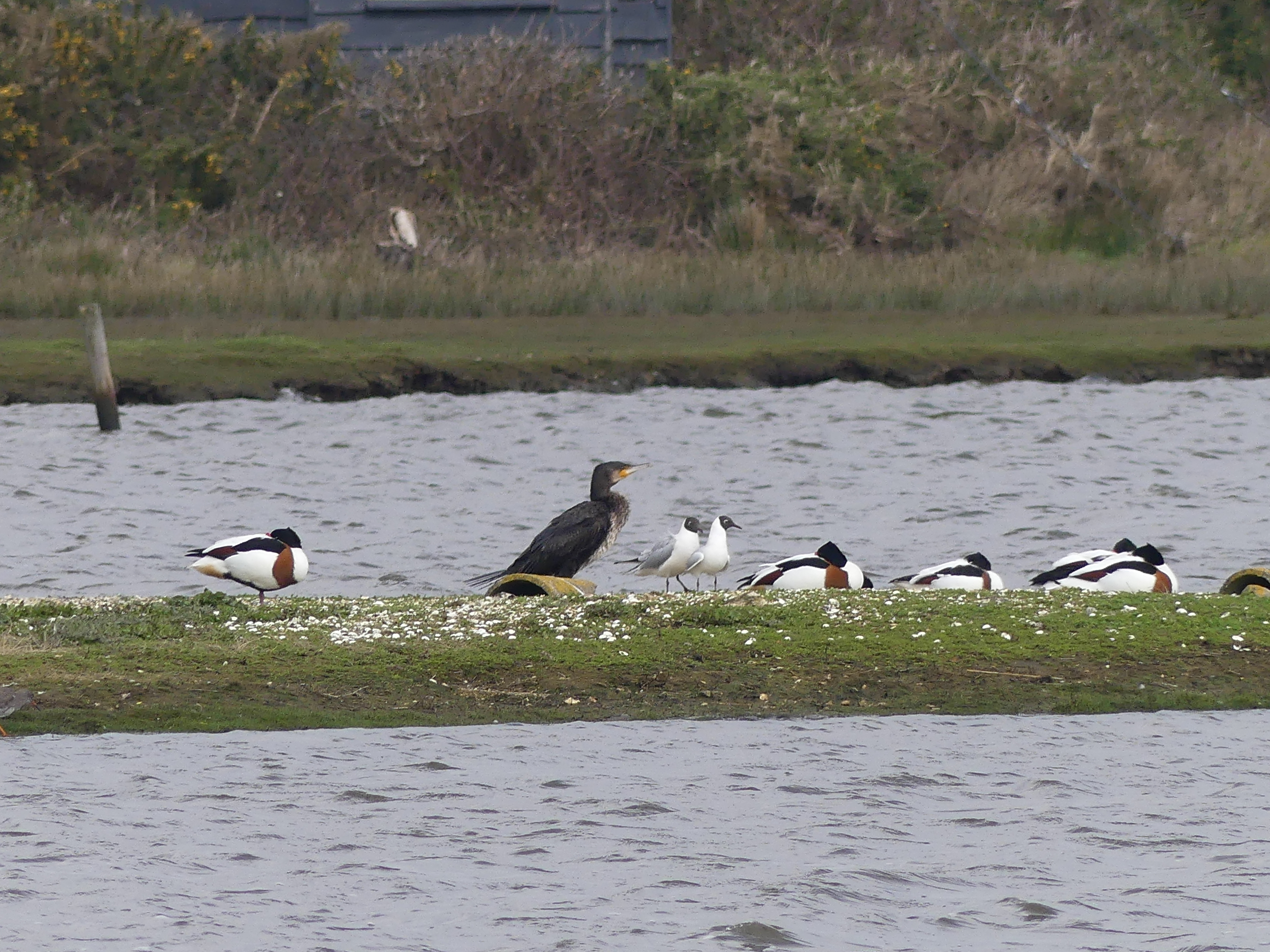
And then we saw the Normandy Lagoon; islands of shingle and marshy grass, so many spread unevenly across the wind-churned water. Each was painted in a thick coating of avian life. The one nearest us, stood on the sea wall, played host to Black Headed and Mediterranean Gulls, as well as Shelduck and Wigeon. Tommy sent up a shout of Red Breasted Merganser, and everybody flocked to the scope. Its a scarce bird, but you see it more often this time of year and its always a treat to come across one! It looked ruffled, but oddly proud and regal.
Black-Tailed Godwits, about a dozen of them, sat on a bar of shingle, crowded with Dunlin, Redshank and a lone Ringed Plover. A Little Egret crouched on the bank, moody with its head tucked beneath its wing. Mallards, Shoveler, Wigeon, Teal and Tufted Duck swam in the channels and the open water. Brent Geese flew in with a clatter of wings, landing with a delicate splash in the water. A Water Rail squealed in the reeds, and Turnstone sprinted over land.




We walked up before the lapping waves that lay adjacent, sea to lagoon. A pair of Great Crested Grebes in glorious breeding plumage bobbed in the inlet, and two Eider Ducks stood proud on the strips of rock that lay ahead of us, with a group of starkly pied Oystercatcher in their foreground. Curlew flew in behind us, along with something else special. Everybody noticed at similar times. A Spoonbill followed the Curlew, and rushed into the green banks at the back, among three more Little Egrets which had just arrived since we last checked. Eight Pochard rocked in the waves to our left.
We decided to head further down, in order to get better views of the Avocets and the nesting Lapwings, in the muddy banks of the far corner of the lagoon. But when we got there, a shout went up from those who had gone ahead. A Spotted Redshank, taller and paler than its Common counterparts, was moving about in one of the closer channels, nearby to the two Lapwing nests. It’s known as Spotted because in its breeding plumage, its pitch black with white spots on its underside. This one was in its winter plumage, however, and was likely passing through Hampshire on its way to its breeding grounds in Northern Scandinavia. Another lifer, and a very scarce passage migrant here in England.


The Avocets were out in force, many of the black and white pied birds running fast across the brown, silty mud. In complete contrast to their rapid neighbours, the Lapwings on the nest were docile and still, as if they were sleeping. However, above them, two males scrapped and clawed at each other in mid-air, clearly ticked off at each other.
Eventually, we decided to move on back into the New Forest for our final afternoon. We were going raptor spotting at Pig Bush (I don’t actually know what the reasoning behind it being called Pig Bush is), a place with a great mix of heathland and woodland, and that was good for certain birds of prey. So we bid farewell to the Lapwings and set off in the minibus back into the trees.
We ate lunch on arrival, and set off with binoculars primed and ready. A pale Buzzard circled above us, and Stonechats constantly appeared and called from all directions, us being surrounded by heathland. Eventually, we came to a hill where again we set up a temporary base and went off to explore for a while. There was a boardwalk at the foot of the hill, which led the way over an expanse of treacherous boggy land. While exploring this, a shout went up to signify something had been spotted.
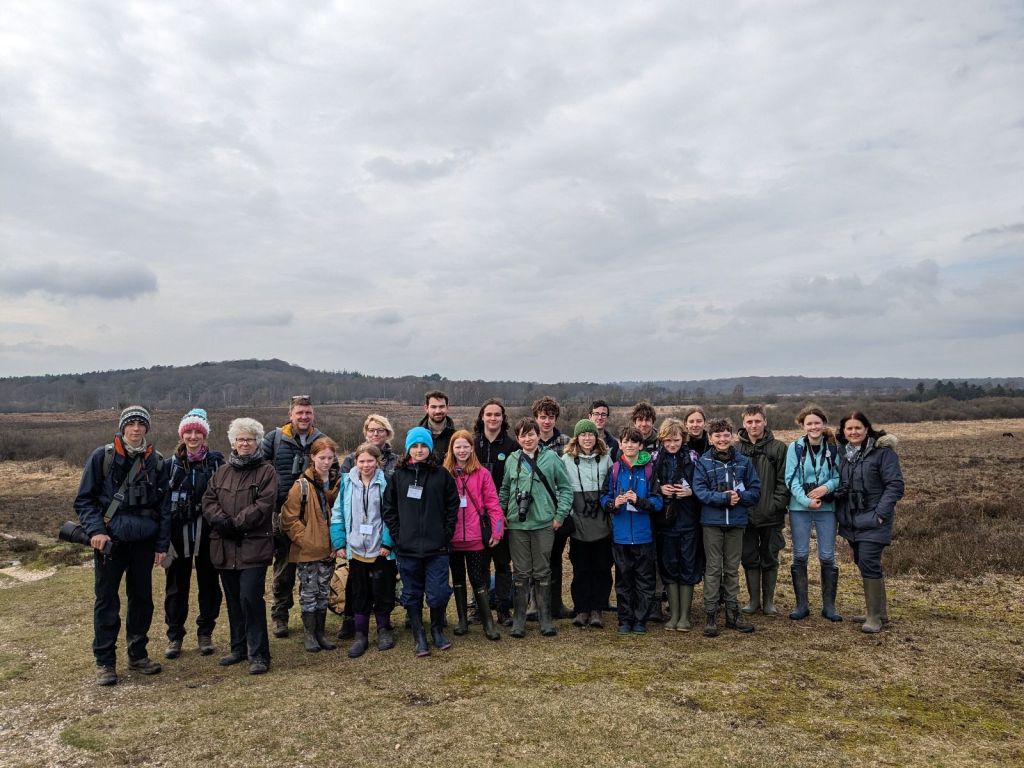
A Goshawk flew just above the treeline, barely a speck on the horizon. Binoculars and scopes made it clearer, however, and in comparison to some nearby Buzzards, it definitely looked smaller and hawk-like. That proved to be my final lifer of the trip, and as we took a group photo back on the hill, I knew that I would remember this experience, the entire weekend, vividly, forever.

As we strolled back to the minibus, the sun beat down on us kindly, drying out wet trousers and damp bags. Back at the CET, I said goodbye to everything for the final time, and we set off back to the South-West.