
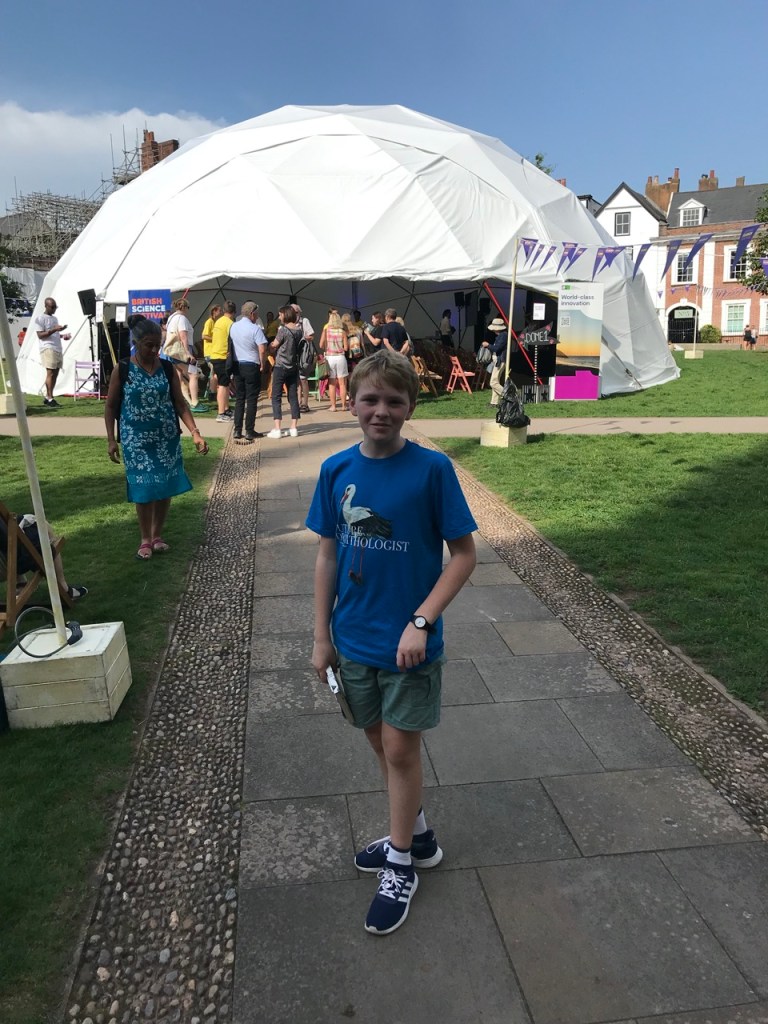
The British Science Festival is a yearly event that rotates around the UK and this year is being held in Exeter. We had tickets for a talk entitled ‘This green and pleasant land?’ – this particular talk was held in the gardens surrounding the historic Cathedral. A number of white, domed tents, varying in size proved the focal points, with deck chairs and info desks scattered in and around. By far the largest of these was the tent where one of their main talks was taking place, with an expert panel and presenter, all based around the dilemma that Climate Change provides.
First of all, the Climate crisis is decades old now, as spoken of by Sophie Pavelle, author of Forget Me Not and ecologist. Apparently, this sort of conversation was regularly held in the 1980s, and it was agreed that action had to be taken. Yet here we are, around 40 years later, and nothing has changed, except for the fact that the problem has expanded into a global catastrophe.
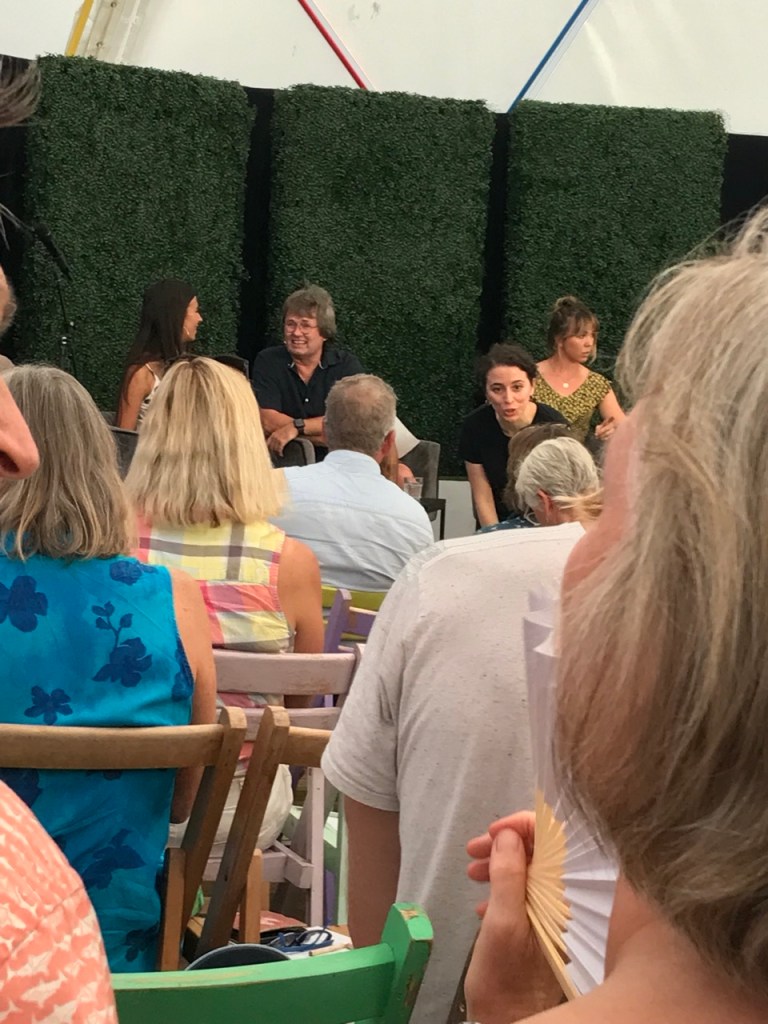
Professor Ian Bateman got us underway in the sweltering September heat, with a passionate 20 minute talk speaking of this exact dilemma. The environment, and this entire planet is made up of an intricate system, for want of a better word, basically the circle of life. His argument was that this country needs to tackle its food production, which at the moment is largely imported. Now, the government puts a small proportion of tax money into nature friendly farming, which essentially consists of things like larger field margins and planting trees in hedges and corners, although this isn’t the answer. And when you take this land away from agriculture, people are still eating the same amount. Which means that more products are imported, from regions where it is cheaper to produce, such as the Amazon, which is being destroyed more and more each day.
But there is by no means a quick fix that will last long-term, says Mya-Rose Craig, author and activist. Conservation is a huge ball of solutions that must be combined to create success. But it is impossible to forget crucial infrastructure and replace it with marshes and woodlands. You can’t just come along and say forget this hospital, flood this field and plant it up. The balance must be struck, but currently, there is no balance, and sadly, we are about as close to finding one as conjuring a griffin and flying into space. Furthermore, if you plant more trees and flood more fields, this takes up large chunks of land.
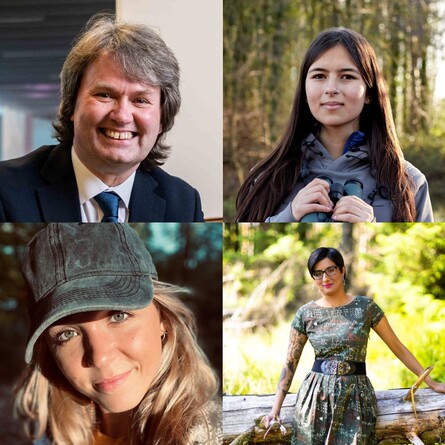
And many don’t factor this in, announces Ian, of Exeter University. If you take away this land from say farming or a housing estate, many will be without a home, or larger amounts of imported goods will arrive on shores, due to our limited land to produce it. And these goods will come from far away lands, where it is cheap to make them. One of the cheapest is the Amazon Rainforest, which is being destroyed at an alarming rate. In the panels words, by boosting the population of say the Carrion Crow slightly, you are losing Orangutang and Giant Anteaters worldwide.
Another example of human invasion is the humble seagull. This bird is (or should be) a seabird, along with gannets and puffins, yet has been pushed inland and is now considered a pest, to be waved away. But surely if it is here, living off a processed diet unintended for it and bad for it, the coast is no longer fitting to its needs.
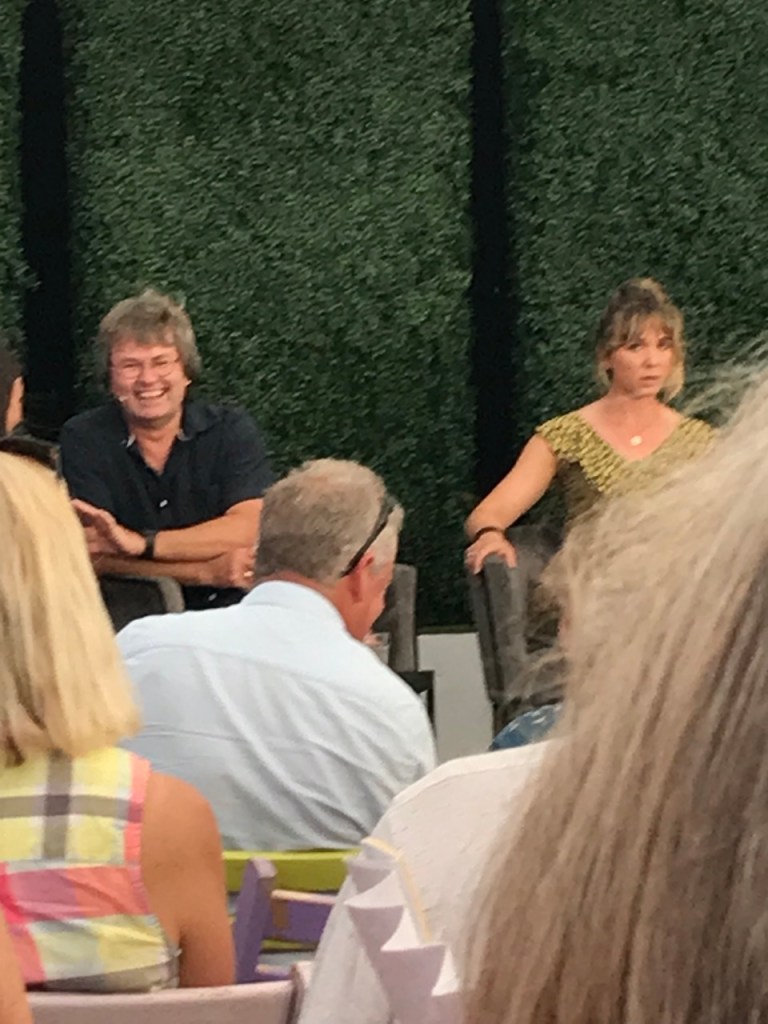
Overall, the talk was informative, thought-provoking and I’m sure that many people who were in that audience will keep this in mind, and make changes throughout their daily lives. And if all those people do this, it will help, however slightly. It was great!
 The Bovey Birder